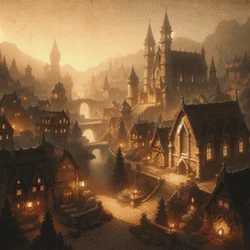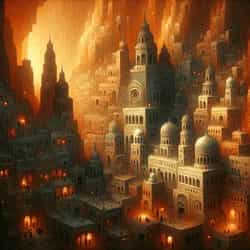
Dwarf City Names: How to name a dwarf city for your RPG?
When creating dwarf city names for your RPG, it's important to consider the culture and history of the dwarven race. Dwarves are often depicted as industrious and skilled miners, so their city names could reflect this aspect of their society.
One approach to naming dwarf cities is to incorporate elements of dwarven folklore and mythology into the names. For example, you can use names of legendary dwarven warriors, famous mountain peaks, or significant events from dwarf history as inspiration for city names.
Another strategy is to use elements of the dwarven language to create unique and authentic city names. Utilizing elements such as distinctive sounds, consonant clusters, and patterns of syllables can help to give your dwarf city names an immersive and believable quality.
Additionally, consider the geographical features of the dwarven cities. Dwarves are often associated with underground or mountainous dwellings, so using words related to these environments, such as stone, forge, cavern, or peak, can enhance the authenticity of the city names.
Dwarven Kingdom Names: Naming realms that span mountains
A dwarven kingdom name should convey the grandeur and permanence of an empire carved from living stone. Unlike individual city names, kingdom names often reference vast mountain ranges, ancient founding clans, or the precious resources that define the realm's wealth and power.
When creating a dwarf kingdom name, consider using compound words that combine geographic features with concepts of rulership. Terms like 'realm,' 'domain,' 'lands,' or the dwarven equivalents can be paired with mountain names, gemstones, or legendary ancestors to create names like 'Kazad-dûm' or 'The Mithril Throne.'
Many dwarven kingdom names in fantasy literature derive from the original founding clan or the first king who united the mountain halls. This approach grounds your kingdom in history and suggests generations of tradition, making names like 'Durin's Folk' or 'The Realm of Clan Ironbeard' feel authentic.
Consider whether your dwarven kingdom encompasses multiple mountain holds or a single vast underground domain. Kingdoms spanning several peaks might have names suggesting unity or alliance, while single-mountain realms often take their name directly from the mountain itself.
Dwarven Town and Village Names: Smaller settlements in the mountains
Not every dwarven settlement is a grand underground city. Dwarf towns and villages often exist as mining outposts, trading posts near the surface, or smaller communities carved into hillsides and cliff faces. These settlement names tend to be more practical and descriptive than the grand names of major cities.
Dwarven town names frequently reference the local industry or resources that sustain them. A town built around an iron mine might be called 'Ironvein' or 'Rust Hollow,' while a village known for its craftsmen could bear names like 'Hammerstead' or 'Anvil Rest.' This practical naming convention reflects the dwarven focus on honest labor.
Surface-adjacent dwarf villages often blend dwarven naming conventions with influences from neighboring human or halfling settlements. These communities might have names that sound slightly less harsh than deep-mountain cities, incorporating words like 'dale,' 'ford,' or 'meadow' alongside traditional dwarven elements.
When naming smaller dwarven settlements, consider their relationship to larger cities. Many towns serve as waypoints, guard posts, or resource-gathering outposts for major holds. Names might reference this connection, such as 'North Gate' or 'Ironhold's Watch,' establishing the settlement's place in the broader dwarven civilization.
Dwarven Fortress and Stronghold Names: Bastions of mountain defense
Dwarven fortress names carry the weight of military tradition and defensive pride. These strongholds serve as the first line of defense against invaders, and their names often invoke strength, resilience, and the futility of attacking dwarven positions. Words like 'bastion,' 'bulwark,' 'guard,' and 'shield' appear frequently.
A dwarven stronghold name might commemorate a famous battle or siege that the fortress withstood. 'Orcsbane Keep,' 'Dragonfall Bastion,' or 'The Unbroken Gate' tell stories of past conflicts while warning potential attackers of the defenders' capabilities and determination.
Many fortress names reference their strategic position within the mountain. 'Deepwatch,' 'Highguard,' 'The Iron Door,' or 'Cliffward Bastion' describe where the stronghold sits and what approaches it defends. This practical naming helps travelers and military commanders understand the defensive network.
Consider incorporating the names of legendary defenders or military orders into your fortress names. 'Thane Durgan's Stand,' 'Hall of the Stone Sentinels,' or 'Fortress of the Axe Brothers' honor those who built or defended these positions, adding layers of history to your worldbuilding.
What is a Dwarven Hold? Understanding dwarf hold names
In dwarven culture, a 'hold' represents more than just a fortress or city—it's a complete underground domain that serves as home to an entire clan or extended family network. Hold names carry immense cultural weight, often remaining unchanged for thousands of years as a point of clan pride and identity.
Dwarf hold names typically combine a descriptive element with the word 'hold' or its dwarven equivalent. Classic examples include 'Ironhold,' 'Karak Kadrin,' or 'Thane's Hold.' The descriptive portion might reference the founding clan, a geographic feature, the hold's primary export, or a legendary event in its history.
When creating a dwarf hold name, consider what makes that particular hold unique among dwarven settlements. Is it known for its gold mines, its warrior tradition, its ancient libraries, or its master smiths? The hold's defining characteristic often becomes part of its name, creating identities like 'Runehold' or 'Gemdeep.'
The suffix '-hold' (or variations like '-holm,' '-helm,' or '-hame') signals that a settlement is a major dwarven population center with its own governance, traditions, and clan structure. Using these suffixes helps players and readers immediately recognize the settlement's importance in your world.
Dwarven Mine Names: What to call underground workings
Dwarven mine names blend practicality with a touch of poetry, reflecting both the resources extracted and the dangers faced by those who work the deep tunnels. Mine names often become legendary in their own right, especially when rich veins produce exceptional wealth or when disasters claim many lives.
The most straightforward mine names describe what's being extracted: 'The Silver Vein,' 'Copperdeep,' 'Mithril Strike,' or 'The Adamantine Seam.' Dwarves respect honest labor, and these direct names honor the miners who work these tunnels by clearly stating their purpose.
Older mines often acquire nicknames based on their history or characteristics. A mine with treacherous unstable sections might be called 'Widow's Tunnel' or 'The Groaning Deep.' Exceptionally productive mines earn names like 'The Endless Vein' or 'Fortune's Hollow,' while haunted or cursed mines bear ominous titles.
Consider naming mines after the dwarves who discovered them or died working them. 'Durgan's Discovery,' 'The Thane's Folly,' or 'Twelve Brothers Deep' create instant story hooks and honor dwarven traditions of remembering ancestors. These names suggest histories that players might want to explore.
D&D Dwarven City Names: Names for your Dungeons & Dragons campaign
Dungeons & Dragons has established rich traditions for dwarven naming across multiple campaign settings. Whether you're running a game in the Forgotten Realms, Greyhawk, or a homebrew world, understanding these conventions helps create authentic-feeling dwarven settlements for your D&D adventures.
In the Forgotten Realms, major dwarven cities like Mithral Hall, Citadel Adbar, and Gauntlgrym follow patterns of combining precious materials or dwarven concepts with structural terms. For your own D&D dwarven city names, try pairing metals (iron, gold, mithral, adamantine) or stones (granite, obsidian, marble) with words like 'hall,' 'citadel,' 'delve,' or 'deep.'
D&D dwarven settlements often have both a Common tongue name and an original Dwarvish name. Creating both versions adds authenticity—'Ironforge' might be the Common translation of 'Kazad-Grungni.' This dual-naming convention lets you use harsh, consonant-heavy Dwarvish for formal occasions while keeping things accessible for players.
When placing dwarven cities in your D&D campaign, consider their role in the adventure. A city name like 'The Lost Halls of Durin' suggests exploration and mystery, while 'Hammerfast' implies an active trading hub. Let the settlement's narrative purpose guide your naming choices to create immediate player expectations.
Underground City and Cave Names: Subterranean dwarven settlements
The deepest dwarven settlements exist in vast natural caverns expanded over generations into underground metropolises. These underground city names often reference the eternal darkness, the strange ecosystems of the deep earth, or the geological wonders that make each cavern unique.
Cave-based settlements might take their names from distinctive geological features: 'Crystal Cavern,' 'The Glowing Grotto,' 'Stalactite City,' or 'The Echoing Halls.' These names help visitors understand what makes each underground city memorable and guide them through the maze of dwarven territories.
Names for the deepest settlements often carry an element of awe or dread. 'The Underhalls,' 'Deepest Dark,' 'The World's Root,' or 'Shadowdeep' suggest places far removed from the surface world where strange things dwell. These names set expectations for adventures into the unknown.
Consider how underground cities connect to the surface and to each other. Settlements near underground rivers might have names like 'Darkwater Port' or 'The Sunless Sea Docks,' while those along major tunnel networks could be called 'The Great Crossing' or 'Underway Station,' reflecting their role in subterranean travel.
Duergar City Names: Dark dwarf settlements of the Underdark
Duergar, the gray dwarves of the Underdark, have their own distinct naming traditions that reflect their harsh history and cruel society. Duergar city names tend toward the grim and oppressive, emphasizing toil, shadow, and the bitter pride of a people shaped by centuries of slavery and survival.
Where surface dwarves might name a city 'Goldenhall,' duergar equivalents carry darker connotations: 'Slave's Respite,' 'The Gray Furnace,' 'Grimstone,' or 'Toil's End.' These names reflect the duergar worldview where suffering is expected and joy is suspicious.
Duergar cities often incorporate references to their psionic abilities and their dealings with other Underdark races. Names like 'Mindforge,' 'The Silent Halls,' or 'Thoughtguard' hint at their mental disciplines, while 'Drow's Bane' or 'Illithid's Folly' commemorate conflicts with neighboring powers.
When creating duergar settlement names, strip away the warmth and community implied by surface dwarf names. Replace 'hearth' with 'ash,' 'gold' with 'gray,' and 'home' with 'prison.' This linguistic shift helps establish the oppressive atmosphere of duergar society while maintaining recognizable dwarven naming patterns.
Dwarven Empire and Country Names: Naming vast dwarven nations
A dwarven empire name must convey the scope of a civilization spanning multiple mountain ranges and countless generations. These names often invoke the mountains themselves, legendary high kings, or the unified purpose that bound separate holds into a single nation.
Empire names frequently use the definite article to suggest singularity and importance: 'The Everlasting Realm,' 'The Mountain Throne,' 'The Underkingdom,' or 'The Holds United.' This grammatical choice implies there is no other empire of equal significance—a claim most dwarves would defend vigorously.
Historical dwarven country names might reference the founding compact or the great work that united the clans. 'The Anvil Pact,' 'Realm of the First Forge,' or 'The Hearthbound Holds' suggest stories of how independent settlements became a single nation, providing rich lore for your worldbuilding.
Consider whether your dwarven empire still exists or has fallen into legend. Current empires might have proud, active names like 'The High King's Domain,' while fallen empires often acquire elegiac titles: 'The Lost Kingdoms,' 'The Broken Halls,' or 'Ancestors' Glory.' These names set the tone for how characters interact with dwarven civilization.
Types of Dwarven Settlements: From outposts to capital cities
Understanding the hierarchy of dwarven settlement types helps create authentic names for each. Dwarven civilization typically includes outposts, mining camps, villages, towns, holds, citadels, and capital cities—each with its own naming conventions reflecting its size and importance.
Small dwarven outposts and mining camps often have temporary or functional names: 'North Watch,' 'The New Diggings,' 'Camp Seventeen,' or 'Forward Post.' These names suggest impermanence, though successful camps frequently grow into permanent settlements that keep their humble original names as a point of pride.
Mid-sized settlements like towns and minor holds typically have names that balance practicality with tradition. They might be named for founding families, local features, or their relationship to larger cities. 'Bronzebeard's Rest,' 'Copper Falls,' or 'East Gate Town' serve this middle ground effectively.
Major holds and capital cities deserve the most impressive names, often incorporating ancient Dwarvish words, references to legendary figures, or grandiose descriptions of their magnificence. 'Karaz-a-Karak,' 'The Eternal Citadel,' or 'Throne of the Mountain King' announce that this is no mere settlement but a center of dwarven civilization.
How to create a dwarf city for your RPG?
When creating a dwarf city for your RPG, it's essential to think about the city's unique culture and architecture. Dwarves are known for their expertise in mining and metalcraft, so their city should reflect their industrious nature. You can describe how the city is built within mountains or underground, with intricate tunnels and grand chambers created by skilled dwarven engineers and artisans.
Consider the city's governance and economy. Dwarven cities often have a strong sense of hierarchy, and the rulers are usually skilled fighters and adept leaders. The city's economy could be centered around mining, forging, and trading precious metals and gemstones. Describe the bustling forges, bustling marketplaces or trading enclaves where the dwarves conduct their business.
Think about the city's defense and security. Due to their potential foes such as goblins, orcs, or even dragons, dwarven cities are usually well-protected. The city's defenses might include sturdy gates, watchtowers, and well-trained guards armed with the finest dwarven weapons and armor. Discuss the innovative defensive structures designed by the dwarves to withstand potential attacks.
Don't forget to explore the city's social life and daily activities. Dwarven cities are known for their vibrant taverns, feasting halls, and communal celebrations. You can paint a picture of lively festivities, storytelling sessions, and traditional dwarven competitions, all contributing to the rich tapestry of dwarven society.
What elements make for a compelling dwarf city backstory?
A compelling dwarf city backstory often incorporates rich details about the history and culture of the dwarven people. This may include their famous craftsmanship, close-knit community, and intricate underground architecture.
Exploring the relationship between neighboring cultures and events that shaped the city's development adds depth to the backstory. Conflict with other races, alliances, or trade interactions can all contribute to a captivating narrative.
Mysterious legends, ancient prophecies, or hidden treasures within the city can pique the readers' curiosity and create an air of intrigue. These elements can help set the stage for compelling adventures and plots within the dwarf city.
Incorporating unique elements such as magical artifacts, long-forgotten secrets, or natural wonders within the city's surroundings can add an element of wonder and fantasy to the backstory, making it even more captivating for readers.