


What Makes a Yuan-ti Name Feel Right?
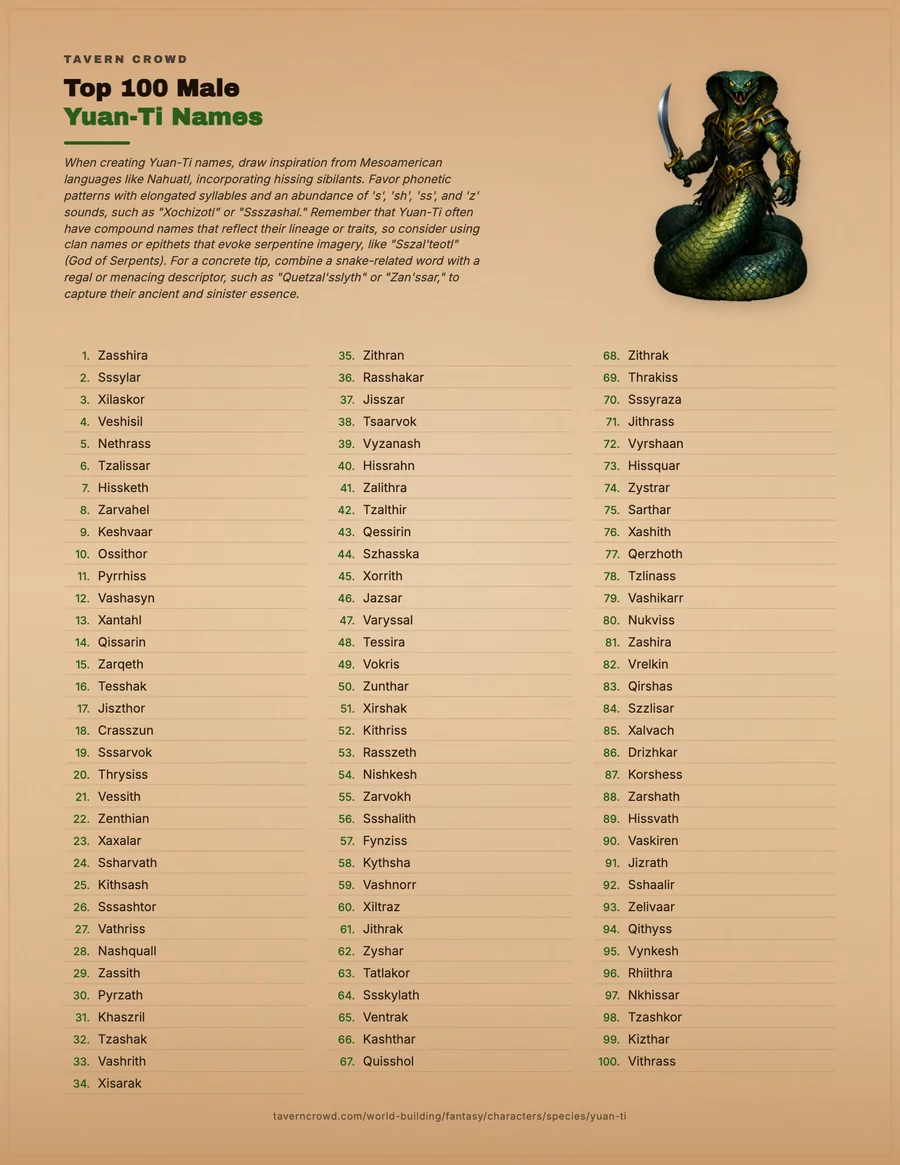
Yuan-ti names encompass a rich tapestry of cultural significance that reflects their serpentine lineage and mystical heritage. Understanding the key elements of yuan-ti naming can help Game Masters (GMs) and players create characters that resonate with the lore and mythology of these fascinating beings.
Serpent Symbolism
Yuan-ti names often draw inspiration from snake-related imagery, embodying the grace, cunning, and ferocity associated with serpents. Names can evoke the characteristics of specific snake species or allude to their mythical qualities, emphasizing the yuan-ti’s connection to their reptilian ancestry.
Hierarchical Identity
Yuan-ti society is structured around a strict hierarchy, and names often reflect an individual's status or clan affiliation. Names may indicate caste, lineage, or even specific titles that convey authority or power within their complex social structure.
Mystical Resonance
Names can also carry magical or prophetic meanings, hinting at the character's destiny, abilities, or aspirations. The significance behind a yuan-ti name can serve as a catalyst for plot development, unlocking hidden potential or revealing ancient prophecies.
Core Yuan-ti Name Types
Serpent Names
These names are inspired directly by snakes, evoking visual imagery that aligns with the yuan-ti’s serpentine nature. They often incorporate hissing sounds and syllables that mimic the qualities of snakes.
Examples: Viperscale, Serpenthorn, Ashtail, Slytheris, Nagael
Best for: Yuan-ti who embody the traits of their serpent heritage, such as cunning tricksters or deadly assassins.
Caste Names
Reflecting the structured hierarchy of yuan-ti society, caste names denote a character’s social standing, often indicating roles such as priest, warrior, or nobility. These names can be formal and ceremonial.
Examples: Zhen'thal, Ssethkar, Ythari, Kethraxis, Quetzalcoatl
Best for: Yuan-ti who hold significant power or influence within their community, such as high priests or leaders of clans.
Descriptive Names
These names are based on personal traits, achievements, or notable characteristics. They are often chosen to convey important aspects of the character’s identity or backstory.
Examples: Shadowfang, Ironheart, Silentstrike, Greathiss, Bloodwhisper
Best for: Yuan-ti looking to assert their individuality or those with unique stories, such as outcasts or adventurers.
Build Names That Sound Serpentine
Preferred Consonants
Yuan-ti names often feature sharp, hissing, and fluid sounds that emulate the qualities of snakes:
S · H · Z · T · V · L · R
Strong starting syllables: Ser-, Zha-, Vex-, Keth-, Asht-, Slyth-
Flowing Endings
Combine harsh consonants with smooth, flowing endings to create names that are both striking and memorable:
-is · -a · -en · -th · -el · -rax
Examples: Slytheris, Vexara, Ashtel, Zhen'thal, Kethrax
The Rhythm Rule
Follow the pattern: Harsh → Smooth → Emphasis
- Ser + pen + th → Serpenth
- Zha + rax → Zharax
- Vex + a + el → Vexel
- Keth + ra + xis → Kethraxis
If it flows smoothly and captures the essence of a serpent, it’s a fitting yuan-ti name.
Pronunciation Guide
Say It Like a Serpent
Yuan-ti = YOO-an-TEE (with emphasis on the last syllable)
Common Pronunciation Rules
| Pattern | Pronunciation | Example |
|---|---|---|
| zh | "zh" sound | Zhen'thal = ZHEN-thal |
| th | soft "th" sound | Kethraxis = KETH-raks-is |
| a | long "ah" sound | Vexara = VEH-kah-rah |
| i | pronounced as "ee" | Slytheris = SLYTH-er-is |
| s (final) | soft "s" sound | Serpenth = SER-penth |
Stress Placement
Emphasis typically falls on the last or second-to-last syllable, particularly on the more pronounced consonants:
- VEX-ara
- Zhen-THAL
- Sly-ther-is
- Keth-RAX-is
Name Meanings and Lore Hooks
Yuan-ti names often contain hidden meanings that can serve as captivating story hooks. Revealing the significance behind a character's name can create powerful narrative moments.
| Root | Implied Meaning | GM Story Hook |
|---|---|---|
| Vex | Deception, cunning | Master of intrigue in a power struggle |
| Sseth | Deity of serpents | Servant or chosen of the serpent god |
| Zhar | Fire, destruction | Tied to a prophecy of cataclysm |
| Thal | Strength, resilience | Survivor of a great conflict or war |
| Yth | Nature, primal | A defender of the wilds or an ancient protector |
GM Tip: Keep the meaning under wraps initially. Unveiling it later can lead to moments of revelation and character development.
Instant Name Forge
Build a yuan-ti name in seconds using this formula:
[Serpent Start] + [Flow Syllable] + [Caste Ending]
Quick Examples
- Vex + a + rax → Vexarax
- Slyth + er + is → Slytheris
- Zha + r + th → Zharath
- Asht + el → Ashtel
- Keth + ra + xis → Kethraxis
Descriptive Name Alternatives
Choose a name based on traits or concepts:
- Silentstrike (stealthy assassin)
- Shadowfang (master of deception)
- Ironheart (unyielding warrior)
- Bloodwhisper (dangerous negotiator)
- Greathiss (legendary figure within their clan)
GM Usage Tips
Match naming style to character role for maximum impact:
| Character Type | Recommended Style |
|---|---|
| Villains | Longer, elaborate caste names (Zhen'thal the Deceiver, Quetzalcoatl the Serpent King) |
| Heroes | Shorter names or descriptive names (Vex, Silentstrike) |
| Young yuan-ti | Serpent names or unique traits (Viperscale, Greathiss) |
| Elders | Full ceremonial names with titles (High Priest Ssethkar the Wise) |
| Outcasts | Names that reflect their uniqueness or struggle (Ironheart, Bloodwhisper) |
The ultimate test: If players remember the NPC's name after the session, you chose well.