
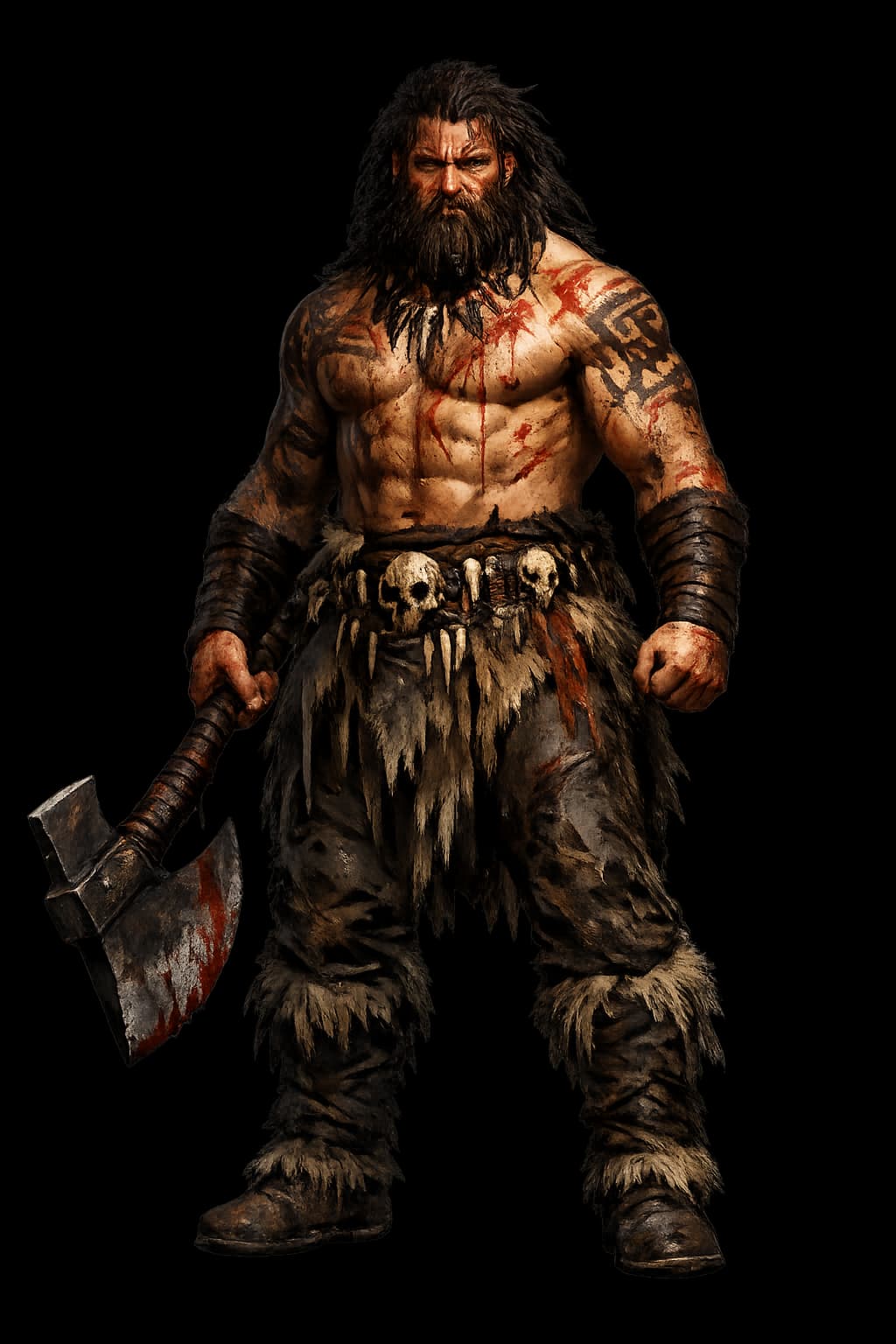

Barbarian
The class that turns anger into a combat mechanic and dares you to stop thinking before you start swinging
What Is a Barbarian?
Picture this: the party has spent ten minutes debating whether to sneak through the side entrance or bribe the guards. The barbarian kicks open the front door. That's the class in one action. The barbarian fantasy has never really been about low intelligence, whatever the ability score recommendations might suggest. It's about trusting your gut over your planning, choosing action over deliberation. The barbarian charges in because waiting has never solved any of their problems.
Mechanically, the barbarian is the rejection of civilized combat. Fighters train in formation. Paladins swear oaths. Rangers pick their shots. The barbarian just gets angry, and that anger is powerful enough to warp the physics of violence around them. Damage halves. Endurance stretches. Mortal limits bend because the barbarian is too furious to notice them.
There's something satisfying about that fantasy precisely because normal life asks constant restraint. Be polite. Follow procedure. Defer to authority. The barbarian is what happens when someone simply stops doing all that. Not out of cruelty, but the way a storm isn't cruel. The barbarian is a natural force wearing a person like a suit, and the results are spectacular and terrifying.
“Civilization is three missed meals away from collapse. The barbarian has been living in that collapse since birth and learned to thrive there.”
— Gamemaster proverb
How Rage Works
Rage is everything. Every barbarian ability radiates from this central mechanic like heat from a bonfire. When you rage, you gain bonus damage on melee attacks, resistance to bludgeoning, piercing, and slashing damage, and advantage on Strength checks and saves. You can't cast spells or concentrate on them. You must attack or take damage each turn to maintain it. Once you're in, the only way out is through.
Unarmored Defense gives barbarians a reason to skip heavy armor. Your AC equals 10 + Dex modifier + Con modifier while unarmored. This isn't just a math choice; it's an aesthetic one. The barbarian fights bare-chested or in furs, relying on toughness rather than steel. Combined with rage's damage resistance, a barbarian can absorb punishment that would drop a fully armored fighter.
Reckless Attack is the barbarian philosophy in one feature: you can choose to attack with advantage, but attacks against you also have advantage until your next turn. It rewards aggression and punishes caution, which is the opposite of how most combat-focused classes work. The barbarian's best defense is making enemies dead before they can capitalize on the opening.
- Rage (bonus damage + resistance)
- Unarmored Defense (10 + Dex + Con)
- Reckless Attack
- Danger Sense (Dex save advantage)
- Extra Attack
- Brutal Critical
Rages per day scale from 2 at level 1 to unlimited at level 20.
- Rage (enhanced scaling)
- Unarmored Defense
- Reckless Attack
- Primal Knowledge (skill versatility)
- Relentless Rage (improved)
- Epic Boon at 19
The 2024 version improves rage scaling and adds weapon mastery for more tactical depth.
Rage resistance halves incoming physical damage, effectively doubling the barbarian's hit point pool in most combat encounters. Combined with the highest hit die in the game (d12), barbarians can absorb roughly three times the damage of an equivalent-level wizard. The math behind the muscle is impressive.
Literary & Mythological Origins
The barbarian archetype predates fantasy literature by millennia. Greek writers used "barbaros" to describe anyone who didn't speak Greek — the word is onomatopoeia, mimicking what foreign languages sounded like to Hellenic ears. "Bar bar bar" — nonsense sounds from nonsense people. The prejudice embedded in the word has never fully dissipated, and the barbarian class carries that uncomfortable inheritance.
Conan the Cimmerian, created by Robert E. Howard in 1932, is the direct ancestor of the D&D barbarian. Howard's Conan wasn't stupid or simple — he was a thief, a pirate, a general, and eventually a king. But his defining characteristic was vitality. He was more alive than civilized people, more present in his body, more attuned to danger. He could survive anything because nothing had dulled his survival instincts. Howard contrasted Conan's vigor with the decadence of civilized societies, arguing that comfort makes people weak.
The Norse berserkers provide the mechanical inspiration. These warriors reportedly fought in ecstatic trances, impervious to pain, biting their shields before battle. The word "berserk" means "bear-shirt," suggesting warriors who channeled animal spirits or wore animal skins as ritual armor. Whether berserkers actually existed as described is debated, but the myth stuck: warriors so consumed by battle-fury that they broke past normal human limits.
Key Literary and Mythological Influences
| Source | Era | Contribution to the Archetype |
|---|---|---|
| Greek "barbaros" | c. 500 BCE | The outsider-as-threat, civilization vs. wilderness framing |
| Norse berserkers | c. 800–1100 CE | Battle rage, animal spirits, pain immunity in combat |
| Conan (R.E. Howard) | 1932 | The capable savage, vitality vs. decadence, the wandering warrior |
| Fafhrd (Leiber) | 1939 | The northern barbarian as adventuring partner, humor mixed with menace |
| Wulfgar (Salvatore) | 1988 | D&D-native barbarian archetype, hammer-wielding berserker hero |
Each source stacked another layer. Strip Howard away and you lose the swagger. Strip the berserkers and you lose the rage.
Evolution Across Editions
The barbarian's mechanical history in D&D is a study in how a class finds its identity. It didn't appear in the original 1974 game. Fighters covered everything from knights to savages, and the game's assumptions were heavily medieval European. The barbarian first showed up as a distinct class in Dragon Magazine #63 (1982), written by Gary Gygax himself, before being formalized in Unearthed Arcana (1985).
That first version was strange by modern standards. The barbarian was essentially an anti-magic fighter with higher hit dice and the ability to detect illusions. The rage mechanic that defines the modern class didn't exist yet. Instead, the barbarian's distinctiveness came from restrictions: they couldn't use most magic items, couldn't associate willingly with magic-users, and were expected to destroy magic items they found. The barbarian was defined by rejection of the magical world.
Third edition (2000) transformed the class entirely. Rage became a defined mechanic: bonus to Strength and Constitution, penalty to AC, limited uses per day. This was the version that stuck. Suddenly the barbarian wasn't just a fighter who hated wizards but a berserker who could toggle superhuman power on and off. The tactical question was immediate and satisfying: do you rage now and risk the AC penalty, or save it for when things get worse?
Dragon Magazine #63
First barbarian class by Gygax — anti-magic warrior with high hit dice and illusion detection
Unearthed Arcana (1e)
Formalized as official class. Still no rage mechanic; defined by restrictions on magic use
Player's Option (2e)
Barbarian as fighter kit with berserker variant. Rage-like abilities begin to appear as optional features
D&D 3rd Edition
Rage becomes the core mechanic — Str/Con bonuses, AC penalty, limited uses per day. The modern barbarian is born
D&D 5th Edition
Rage grants damage resistance. Primal Paths add subclass identity: Berserker, Totem Warrior, and more
BG3 / D&D 5.5e
Barbarian refined for digital play. Wildheart replaces Totem Warrior. Wild Magic barbarian enters the spotlight
The Archetype in Practice
Playing a barbarian well means understanding that rage isn't just a combat buff. It's a character choice. Why does your character carry this anger? What broke the dam that most people keep between themselves and violence? The mechanical toggle of entering rage doubles as a narrative moment: the instant when the character stops negotiating with reality and starts rewriting it with their fists.
The best barbarian players find variety within simplicity. Yes, you hit things, but how you hit them, why you hit them, and what you're protecting when you hit them tells a story. The barbarian standing in a doorway, absorbing punishment meant for wounded allies, is doing something the wizard with their area-of-effect spell can never replicate. They're making violence personal and sacrifice visible.
The Berserker Path
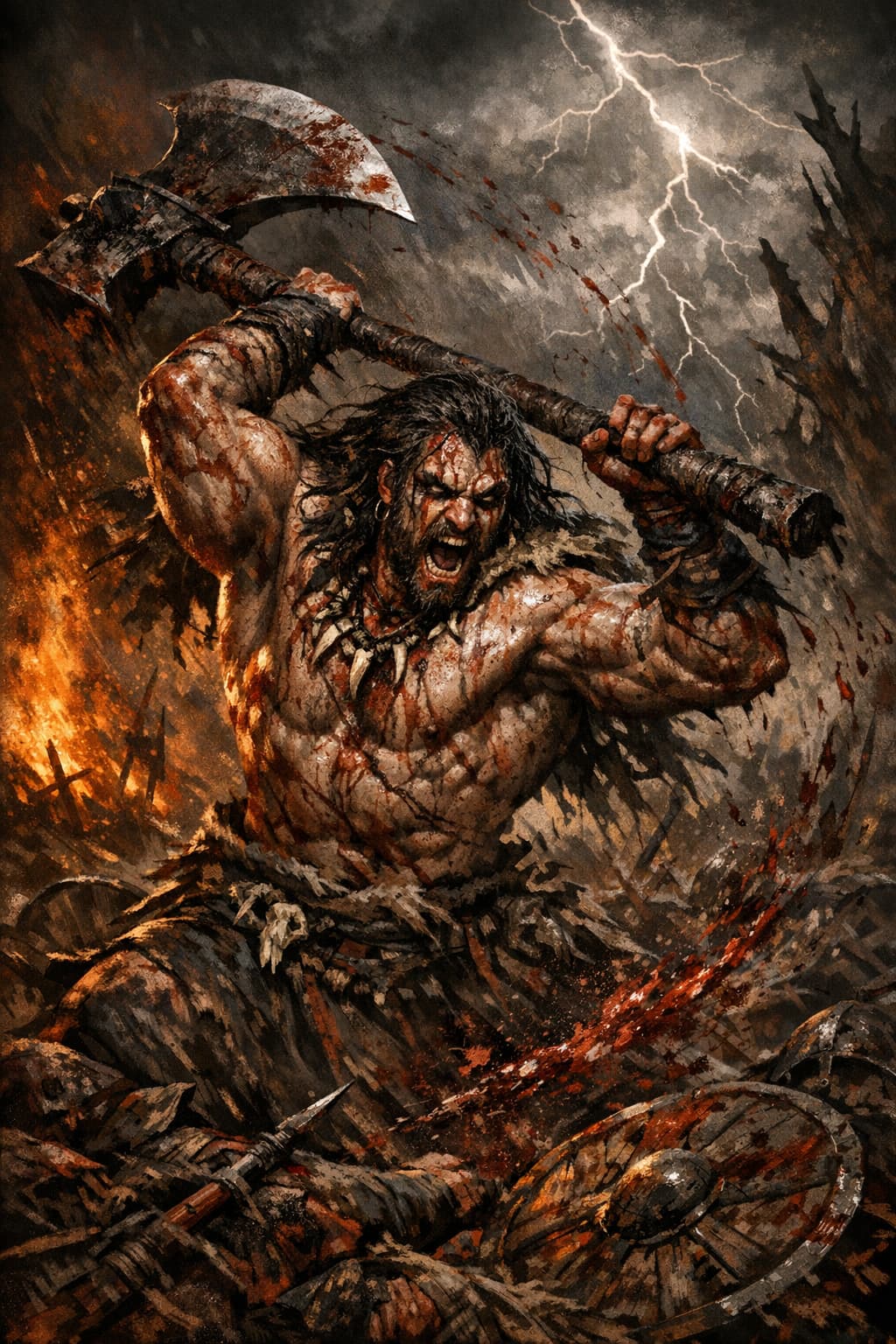
The Berserker doubles down on pure aggression. Frenzy grants a bonus attack each turn while raging at the cost of exhaustion afterward. This is the subclass for players who want to embody the Norse berserker — magnificent in combat, wrecked when the fighting stops. The exhaustion cost isn't a bug; it's the story of a body pushed beyond mortal limits.

The Totem Warrior
Totem Warriors channel animal spirits for versatile power. Bear totem grants resistance to all damage types while raging — making you nearly unkillable. Eagle grants dash as a bonus action. Wolf lets allies attack with advantage. The totem system turns the barbarian from a blunt instrument into a tactical choice, each animal offering a distinct role.
Wild Magic Barbarian
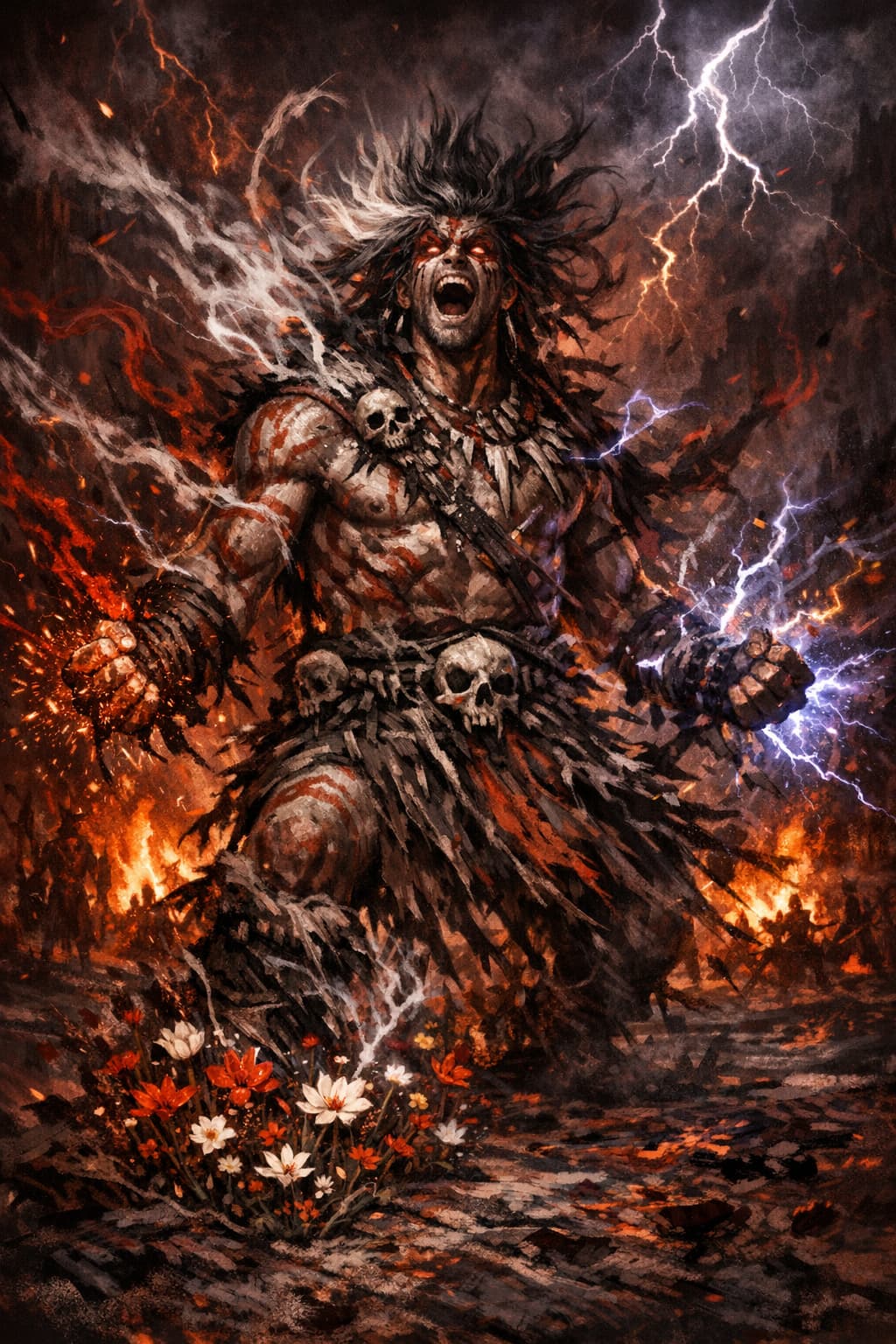
Added in Tasha's Cauldron of Everything and featured prominently in Baldur's Gate 3, the Wild Magic barbarian rolls on a random effect table each time they rage. You might burst with necrotic energy, teleport on each attack, or sprout spectral tendrils. The chaos suits players who want the barbarian's power without the barbarian's predictability.
Rage Beyond Combat
The rulebook treats rage as a combat mechanic, but the best tables treat it as a character state that bleeds into everything. What happens when a barbarian rages during a negotiation gone wrong? When grief hits hard enough that the damage resistance kicks in as an involuntary response? Some DMs rule that rage can only activate in initiative order. Others recognize that the fiction is richer when rage is something the barbarian struggles to control, not just a button they press when swords come out.
Out-of-combat rage opens narrative doors that no other class mechanic can. The barbarian who rages when an NPC threatens their found family, shattering the tavern table and sending drinks flying, is doing something the Intimidation skill was never designed to capture. Rage as emotional state rather than tactical choice transforms the barbarian from a damage-dealing machine into a character study about what happens when you carry violence inside you like a second heartbeat.
Consider rage as a worldbuilding element too. If rage is supernatural — and the damage resistance suggests it is — then what does that mean for the people who live with barbarians? Tribes that produce barbarians have members who can, under duress, become functionally superhuman. That changes power dynamics, succession politics, and how those cultures handle conflict resolution. A society where anyone might suddenly become resistant to sword blows handles bar fights very differently than one where steel always draws blood.
Some of the strongest barbarian moments in actual play happen between combats. The barbarian who sits quietly sharpening their axe while the party argues about the plan, then says one sentence that cuts through all the noise. The barbarian who carries a wounded child out of a burning building without flinching because they raged the moment the screaming started. These moments work because rage is more than a combat buff. It is the barbarian declaring that something matters enough to break their own limits.
“The best barbarian players understand that rage is not an on/off switch. It is a tide. Sometimes you ride it. Sometimes it rides you.”
— Experienced DM advice
Primal Paths
The barbarian's subclass identity has expanded significantly since 3rd edition's relatively simple Berserker path. Fifth edition launched with two Primal Paths — Berserker and Totem Warrior — but supplements have added considerable variety. Each subclass recontextualizes what rage means, turning a single mechanic into a spectrum of fantasies.
Baldur's Gate 3 streamlined the options while maintaining distinct identities. Berserker, Wildheart (replacing Totem Warrior with a broader animal spirit system), and Wild Magic give players three clear archetypes: the tireless aggressor, the spirit-touched guardian, and the chaos engine.
Barbarian Subclasses Across Editions and Supplements
| Subclass | Source | Core Fantasy |
|---|---|---|
| Berserker | PHB 2014 / BG3 | Tireless aggression; bonus attacks at the cost of exhaustion |
| Totem Warrior | PHB 2014 | Animal spirit channeling; versatile defensive and utility powers |
| Wildheart | BG3 | Expanded animal spirits with unique combat abilities per chosen beast |
| Wild Magic | Tasha's / BG3 | Random magical effects triggered by rage; chaos as power source |
| Ancestral Guardian | Xanathar's | Ghostly ancestors protect allies and punish enemies who ignore you |
| Storm Herald | Xanathar's | Elemental aura (desert/sea/tundra) radiates from you during rage |
| Zealot | Xanathar's | Divine rage; nearly impossible to kill permanently while raging |
| Beast | Tasha's | Body transforms during rage — claws, tail, fangs become natural weapons |
| Path of the Giant | Glory of the Giants | Grow in size, hurl enemies, channel giant ancestry |
Roleplaying & Personality
The biggest trap in playing a barbarian is reducing them to "angry person hits things." Rage is a mechanic, not a personality. A barbarian might be quiet and contemplative most of the time, with rage as a carefully contained force unleashed only when necessary. They might be cheerful and gregarious, the life of the party, whose rage emerges from protective instincts rather than chronic anger. The best barbarian characters have a relationship with their rage. It's not who they are. It's something they carry.
Consider what your barbarian does outside of combat. Do they carve? Hunt? Tell stories around the campfire? Tend to wounded companions with surprising gentleness? The contrast between combat ferocity and peacetime behavior creates character depth. A barbarian who rages like a thunderstorm and then quietly apologizes for the mess is far more interesting than one who is angry all the time.
Background and culture matter enormously. Not all barbarians are from frozen wastelands or untamed wilderness. A barbarian from an urban fighting pit has different values than one from a nomadic tribe. A barbarian who left a civilized life after trauma has a different relationship with rage than one raised in a warrior culture. The class provides mechanics; the player provides meaning.
Language is another underused tool for barbarian characterization. A barbarian who speaks Common as a second language, choosing words carefully and sometimes getting idioms wrong, tells you everything about their origin without a single backstory monologue. A barbarian who refuses to learn Common and forces the party to accommodate their native tongue is making a statement about cultural assimilation. And a barbarian who speaks five languages fluently, because nomadic life required trading with everyone, shatters the stereotype entirely. The character sheet gives you languages as a mechanical choice; the table is where you make it mean something.
In your setting, what does civilization think of barbarians? Are they feared invaders, respected mercenaries, romanticized noble savages, or pitied outcasts? The answer shapes every NPC interaction your barbarian player will have.
Tribes and War Bands
Barbarian cultures in fantasy settings tend toward the tribal, but there's enormous variety within that framework. Consider the difference between a nomadic horse culture (Mongol-inspired), a seafaring raider culture (Viking-inspired), a mountain clan society (Highland-inspired), and a jungle warrior culture. Each produces barbarians, but each defines rage, honor, and combat differently.
Organizations that attract barbarians include mercenary companies that value raw combat power, gladiatorial circuits where rage is entertainment, tribal warrior societies with spiritual initiation rites, and revolutionary movements where anger at injustice fuels supernatural strength. A barbarian doesn't need to come from the wilderness. They need to come from a context where controlled violence matters less than effective violence.
The relationship between barbarian cultures and magic varies wildly. Some tribes revere their spellcasters as shamans whose power complements the warriors' rage. Others view magic with deep suspicion, seeing it as a crutch that weakens the will. This tension mirrors the barbarian's own mechanical relationship with spellcasting — you cannot rage and cast simultaneously, and that restriction encodes a worldview. In cultures that produce barbarians, the body is the weapon, and anything that replaces that direct connection with reality is viewed as a compromise at best, a corruption at worst.
Tribal Warrior Societies
Coming-of-age rites involving spirit quests and rage awakening. Elders who teach young warriors to channel anger productively. Seasonal war parties where rage is both weapon and ritual. Honor measured by scars survived rather than enemies slain.
Urban Barbarian Circles
Fighting pits where rage draws paying crowds. Underground boxing rings with no rules and supernatural stakes. Mercenary guilds that recruit specifically for shock-troop operations. Veterans' groups where shared battle trauma manifests as power.
Weapons and Totems
The barbarian's relationship with gear is defined by directness. Where a fighter collects specialized weapons for specific situations and a rogue curates tools for every contingency, the barbarian finds something that works and sticks with it. The greataxe is the default barbarian weapon: maximum damage die, two-handed, visually dramatic. But greatswords, mauls, and even dual-wielded handaxes all serve the class well.
Armor choices define barbarian aesthetics. Unarmored Defense means many barbarians fight in hides, furs, or nothing at all. Medium armor (half plate, breastplate) is mechanically viable but changes the visual entirely. The choice between AC optimization and character expression is one of the barbarian's genuine decision points.
Iconic Barbarian Equipment
| Item | Type | Why It Works |
|---|---|---|
| Greataxe | Weapon | d12 damage die; maximum per-hit damage synergizes with Brutal Critical |
| Greatsword | Weapon | 2d6 for more consistent damage; pairs well with Great Weapon Master |
| Javelins | Ranged option | Strength-based thrown weapons for when you can't reach the enemy yet |
| Hide armor or none | Armor | Unarmored Defense rewards Constitution investment; hide covers the gap early |
| Trophy necklace | Flavor | Teeth, claws, or tokens from defeated foes — the barbarian resume |
Multiclass Synergies
Barbarian multiclassing rewards dips more than deep investment. Two or three levels of barbarian give rage, Unarmored Defense, Reckless Attack, and Danger Sense — an enormous package for any melee character. Going deeper into barbarian sacrifices access to spellcasting and other class features that might complement the core kit.
The restriction on spellcasting during rage creates a real tension. Barbarian/casters can use setup spells before combat and then rage, or alternate between casting and raging turns depending on need. It's not optimal, but it's flavorful: the scholar who becomes the beast, the priest whose faith comes out as fury rather than prayer.
Strong Combinations
Barbarian/Fighter: Action Surge during rage for devastating burst turns. Champion's improved critical synergizes with Brutal Critical. The most straightforward multiclass. Barbarian/Rogue: Reckless Attack generates advantage for Sneak Attack. A finesse weapon lets you use Strength for both. Surprising damage potential. Barbarian/Druid (Moon): Wild Shape with rage is the "Bear-barian" — animal hit points with damage resistance.
Interesting Dips
Barbarian 3/Paladin X: Smite doesn't require concentration, so you can rage and smite. Divine Fury (Zealot) adds religious flavor. Barbarian 1-3/Ranger X: Favored Foe and fighting style complement rage. The wilderness warrior fully realized. Any martial/Barbarian 2: Reckless Attack and Danger Sense are worth two levels in almost any melee build.
Building Your Character
The barbarian's ability score priorities are straightforward: Strength first, Constitution second, Dexterity third. Strength drives your attacks and damage. Constitution fuels your hit points, rage endurance, and Unarmored Defense. Dexterity covers initiative, AC (whether armored or not), and common saving throws.
For race selection, anything with Strength or Constitution bonuses works well. Half-orcs are the classic choice — Relentless Endurance and Savage Attacks synergize perfectly with barbarian features. Goliaths bring Stone's Endurance and natural athleticism. Dragonborn add a breath weapon for area damage that barbarians otherwise lack. But don't let optimization override character concept — an elf barbarian or halfling barbarian tells a story that a half-orc barbarian never could.
First-level decisions matter: your subclass at level 3 defines your barbarian's identity for the entire campaign. Berserker if you want pure damage output and don't mind the exhaustion cost. Totem Warrior (or Wildheart) if you want tactical flexibility and team support. Wild Magic if you enjoy unpredictability and want rage to surprise even you.
Strength 16, Constitution 14, Dexterity 14. Grab a greataxe and javelins. Take the Outlander or Soldier background. At level 3, choose Totem Warrior (Bear) if you want to tank, Berserker if you want to damage, or Wild Magic if you want to have fun. You're done — go hit something.
Famous Barbarians in Fiction
The barbarian archetype has carved its way through fiction for nearly a century, leaving broken weapons and unforgettable characters in its wake. What makes these characters endure isn't just their capacity for violence. It's the tension between their raw physicality and the worlds that try to contain them. The best fictional barbarians force audiences to question whether civilization's rules are worth following, and they do it while swinging something heavy.
Conan the Cimmerian remains the gold standard. Robert E. Howard's 1932 creation wasn't a mindless brute. He was a thief, a pirate, a mercenary, and ultimately a king who seized his throne by his own hand. Conan's genius was his refusal to be diminished by civilization; he moved through decadent empires and crumbling cities with the confidence of someone who knew that muscles and instinct would outlast marble and philosophy. Every barbarian character written since exists in Conan's shadow, whether they acknowledge it or not.
In gaming, barbarian characters have achieved a different kind of immortality. Minsc's battle cry ("Go for the eyes, Boo!") is recognized by players who've never touched Baldur's Gate. Karlach's infernal engine heart in Baldur's Gate 3 turned a combat archetype into one of the most emotionally affecting characters in modern RPGs. And Grog Strongjaw proved through Critical Role that a character with an Intelligence of 6 could still break your heart. These characters work because they use the barbarian framework to explore vulnerability, not just violence.
Iconic Barbarians Across Fiction
| Character | Source | Why They Matter |
|---|---|---|
| Conan the Cimmerian | Robert E. Howard (1932) | Defined the archetype wholesale — the capable savage who becomes king through sheer vitality and refusal to kneel |
| Wulfgar | R.A. Salvatore's Forgotten Realms novels (1988) | D&D's own iconic barbarian; Aegis-fang the warhammer became as famous as any named sword in fantasy |
| Minsc | Baldur's Gate 1 & 2 (1998–2000) | The ranger-barbarian hybrid who proved that beloved characters are made from heart, not optimization. And Boo. |
| Karlach | Baldur's Gate 3 (2023) | Tiefling barbarian with an infernal engine for a heart; turned rage into a metaphor for living on borrowed time |
| Grog Strongjaw | Critical Role (2015–2017) | Travis Willingham's goliath berserker showed that low Intelligence doesn't mean low emotional intelligence |
| Karsa Orlong | Malazan Book of the Fallen (2000–2011) | Steven Erikson's deconstruction of the noble savage trope — a barbarian who evolves from conqueror to liberator across ten books |
| Drax the Destroyer | MCU / Marvel Comics | The barbarian archetype translated to superhero media — literal-minded, physically overwhelming, and surprisingly tender |
Across RPGs & Video Games
The barbarian archetype appears in nearly every RPG system and action game that features melee combat, but each franchise reinterprets the core fantasy through its own mechanical lens. What D&D calls Rage, another system might frame as adrenaline, battle trance, or primal instinct. The underlying design question is always the same: how do you make "hits hard, takes hits" feel mechanically distinct from a generic warrior? The answer reveals what each game values most.
Pathfinder 2e's Instinct system is arguably the most thoughtful evolution of the D&D barbarian. Rather than treating rage as generic fury, each Instinct (Animal, Dragon, Fury, Giant, Spirit, Superstition) comes with an Anathema, a behavioral restriction that the barbarian must follow or risk losing their power. A Superstition barbarian who willingly accepts beneficial magic from allies violates their Anathema. This creates real roleplaying tension that D&D's version rarely enforces.
Video game barbarians face a different design challenge: they need to feel viscerally powerful in real time, not just on a character sheet. Diablo's Whirlwind barbarian, spinning through hordes of demons like a bladed tornado, is the definitive expression of this. The Arsenal system in Diablo 4, letting you equip four weapons simultaneously, turns the barbarian into a walking armory. World of Warcraft's Fury Warrior channels similar energy through dual-wielded two-handed weapons, prioritizing the fantasy of relentless aggression over the primal mysticism that tabletop systems favor.
The Barbarian Across Franchises
| Franchise | Class / Role | Key Mechanic | Key Distinction |
|---|---|---|---|
| D&D 5e | Barbarian | Rage (damage resistance + bonus damage), Reckless Attack | Primal Paths as subclass identity; d12 hit die is the biggest in the game |
| Pathfinder 2e | Barbarian | Instincts with Anathema system | Behavioral restrictions create genuine roleplaying tension; six distinct Instincts |
| Diablo 2/3/4 | Barbarian | Whirlwind, War Cries, Arsenal (D4) | Arsenal lets you equip four weapons simultaneously; the most weapon-obsessed version |
| World of Warcraft | Warrior (Fury spec) | Enrage, Rampage, dual-wield two-handers | More focused on weapon mastery than primal rage; berserker as disciplined aggression |
| Elder Scrolls | No formal class | Orc Berserker Rage racial + heavy two-handed builds | The archetype lives in Nord culture and Orc racials rather than a dedicated class |
| Dragon Age | Berserker / Reaver specialization | Rage and health-sacrifice mechanics | Warriors spec into berserk fury; Reaver trades health for devastating damage output |
Each system asks the same question differently: what does it cost to be this angry, and is the price worth paying?
The Barbarian at the Table
Running or playing a barbarian well means understanding what the class actually brings to a table beyond damage and hit points. The barbarian's real value is simplicity of action paired with complexity of consequence. When the party is paralyzed by decision-making, debating whether to negotiate, sneak, or retreat, the barbarian kicks down the door and forces the narrative forward. This isn't stupidity; it's a different theory of problem-solving, and experienced DMs design encounters that reward it.
For DMs, the barbarian is both the easiest and the hardest character to challenge. Easy because their weaknesses are obvious: ranged attacks, mental saves, social complexity, and anything requiring patience. Hard because in their element (close quarters, outnumbered, protecting someone they care about) a well-built barbarian is nearly unkillable. The best encounters force barbarians to operate outside their comfort zone without making their core abilities irrelevant. An anti-magic zone where the barbarian is the only party member still functioning at full power is more interesting than another fight against archers at range.
Players should remember that the barbarian's low-skill, high-impact playstyle creates natural storytelling opportunities. You don't need a high Persuasion modifier when you can lift the tavern table one-handed and ask your question again. Intimidation isn't just a skill check. It's the party watching you bisect an ogre and deciding to answer honestly. The barbarian communicates through presence and action, and the best players lean into that rather than trying to make the barbarian do what a rogue or bard does better.
Design encounters that respect the barbarian's strengths while testing their limits. Anti-magic zones where the barbarian shines while casters struggle. Narrow corridors where their body becomes the party's shield. Social situations where Intimidation replaces Persuasion. Environmental hazards — collapsing floors, rising water, crumbling bridges — where Strength checks and Constitution saves matter more than spell slots. And occasionally, give them a fight where everything aligns: outnumbered, outflanked, defending someone helpless. Let the barbarian be the barbarian. Then watch what happens.
The Barbarian in World-Building
Incorporating barbarians into your setting requires asking what "civilized" means and who gets to define it. If barbarians are outsiders, there must be an inside to be outside of. The existence of barbarians implies borders — physical, cultural, and philosophical — between controlled and uncontrolled space. What does your setting place beyond those borders, and why does it need people like this to survive there?
Consider how barbarian cultures interact with centers of power. Do barbarian tribes trade with cities, raid them, or ignore them? Are they allies called upon in times of war, threats to be managed, or simply people who live differently? The relationship between barbarian cultures and organized states drives enormous amounts of political storytelling.
Rage itself raises worldbuilding questions. Is rage natural, something any person under enough stress might access? Or is it supernatural, a gift from spirits, a bloodline trait, a curse? If anyone can rage, barbarians are just people who've been pushed hard enough. If rage requires something special, barbarians are fundamentally different from other warriors. The answer affects how your world understands violence, humanity, and the relationship between body and spirit.
The most interesting settings refuse simple answers. Barbarians aren't noble savages or mindless brutes. They're people who developed different solutions to the problem of survival, and those solutions happen to include channeling raw fury into superhuman combat ability. Treating barbarian cultures with the same complexity you'd give any civilization makes for richer worldbuilding and better stories.
“Civilizations tell themselves the barbarians at the gates are less than human. The fallen ones learn that the barbarians remembered something they forgot.”
— On the role of barbarians in world history
FAQ
Common Questions
Rage is a bonus action that lasts up to 1 minute. While raging, you gain bonus damage on Strength-based melee attacks (+2 to +4 depending on level), resistance to bludgeoning, piercing, and slashing damage, and advantage on Strength checks and saves. You cannot cast or concentrate on spells. Rage ends early if you don't attack or take damage on your turn, or if you choose to end it.
Fighters rely on martial training, weapon mastery, and tactical precision. Barbarians channel primal fury through the Rage mechanic, which grants bonus melee damage, resistance to physical damage, and advantage on Strength checks. Where fighters get more attacks and action versatility, barbarians get raw survivability and damage output. The fighter is the disciplined soldier; the barbarian is the force of nature.
The strongest subclass is generally Totem Warrior (Bear), which grants resistance to all damage types except psychic while raging. Zealot is excellent for sustained damage and near-immortality during rage. Wild Magic offers chaotic versatility. Berserker provides raw offensive power but the exhaustion cost is punishing. In Baldur's Gate 3, Wildheart (replacing Totem Warrior) and Wild Magic are standout picks.
Barbarians cannot cast spells or concentrate on them while raging, but they can multiclass with spellcasting classes. Common strategies include casting buff spells before entering rage, using non-concentration abilities like Paladin's Divine Smite during rage, or alternating between raging and casting turns. The Barbarian/Moon Druid combination lets you rage while in Wild Shape form.
Strength is the primary score for attack and damage rolls. Constitution is second — it fuels hit points, Unarmored Defense AC, and Constitution saving throws for maintaining rage effects. Dexterity is third for initiative and AC. Wisdom helps with Perception and common saves. Intelligence and Charisma are typically dump stats unless your character concept demands otherwise.
Barbarians excel as front-line tanks and damage dealers. Their damage resistance and massive hit point pool let them absorb punishment that would down other characters. Reckless Attack generates consistent advantage for high damage output. They struggle with ranged combat, social situations relying on mental stats, and encounters requiring magic. Pair them with a healer and a controller for a balanced team.
Great Weapon Master is the top pick for most barbarians — Reckless Attack provides the advantage needed to offset the -5 penalty, and the +10 damage stacks with rage bonus damage. Polearm Master adds a bonus action attack and opportunity attack on approach. Sentinel locks enemies in place, synergizing with the barbarian's tank role. Tough adds 2 HP per level on top of the d12 hit die. Resilient (Wisdom) shores up the barbarian's weakest common save. For Dexterity-based builds, Slasher or Crusher add rider effects to every hit.
Barbarian is one of the best beginner classes. The core gameplay loop is straightforward — rage, attack, soak damage — and doesn't require tracking spell slots, prepared spells, or complex resource management. Reckless Attack simplifies the attack action by providing reliable advantage. High hit points and damage resistance make barbarians forgiving of tactical mistakes that would kill squishier characters. The main thing to track is rages per day and whether you attacked or took damage each turn to maintain it.