The Only Thing That Matters
Nobody cares about your meticulously designed magic system when the characters are boring. No one remembers the political structure of your fantasy empire if the people inhabiting it feel like cardboard cutouts. Characters are the reason anyone invests in your world. Everything else is set dressing.
This seems obvious, yet character creation advice typically devolves into filling out personality questionnaires or listing flaws from a menu. That approach produces characters who exist on paper but never breathe at the table. You end up with a backstory document nobody references and a protagonist who acts the same way regardless of circumstances.
The problem isn't insufficient planning. It's the wrong kind of planning.
Good characters emerge from pressure, not profiles. They're defined by what they want and what stands in their way, not by whether they're "chaotic good" or have a fear of spiders. The spider fear matters only if spiders show up and force a choice. Otherwise it's flavor text that clutters your notes.
The Protagonist Problem
The "chosen one" backstory fails because it removes agency. If prophecy declares your character will defeat the Dark Lord, the story becomes about waiting for that moment rather than earning it. The character becomes a passenger in their own narrative.
More subtly, elaborate tragic backstories often backfire. The player who writes three pages about their murdered family has front-loaded all the drama into history rather than leaving room for it at the table. Their character arrives fully formed with nothing left to discover. The backstory becomes a weight the campaign has to carry rather than fuel that drives play forward.
Effective protagonists start with a gap between who they are and who they need to become. Not a gap filled by prophecy or heritage, but one they'll have to close through choices that cost something. A healer who freezes when violence erupts. A warrior whose code makes them predictable. A scholar whose knowledge blinds them to wisdom.
The backstory exists to explain why that gap exists and why closing it matters. Keep it short. One paragraph maximum. If you can't explain your character's core tension in a few sentences, you don't understand them yet.
Give your protagonist something specific they want in the immediate future. Not "restore my family's honor" but "find the merchant who cheated my father before winter closes the mountain passes." The first is a theme. The second is a goal that creates sessions.
Villains Who Aren't Cardboard
The villain who wants power because they're evil is boring because their motivation is circular. Evil because they want power, want power because they're evil. There's nothing to understand, which means there's nothing to dramatize except their eventual defeat.
Better villains want something understandable through methods that cross lines. The lord who burns villages to deny an invading army resources makes strategic sense even as it's monstrous. The cult leader who believes suffering purifies the soul has a twisted logic you can follow. These villains create dramatic tension because players might agree with the goal while opposing the means.
The best villains share something with the protagonists. The same mentor, the same homeland, the same loss. They represent what the heroes might become if they made different choices under similar pressure. When players look at the villain and think "I understand why they ended up here," you've succeeded.
Give villains specific constraints. They can't be everywhere, can't know everything, can't do anything they want without consequences. A villain who's all-powerful until the climactic confrontation is just a boss fight with extra steps. A villain who has to manage resources, subordinates, and competing priorities becomes someone the players can meaningfully oppose through strategy rather than raw power.
Make the villain's presence felt through consequences rather than monologues. The burned village. The corrupted official. The friend who disappeared. Players should understand the villain's methods and stakes before any direct confrontation.
NPCs That Feel Like People
Most NPCs fail because they exist only to serve the plot. The shopkeeper who sells things. The guard who delivers exposition. The innkeeper who provides rest. These functional roles produce functional interactions, which is to say forgettable ones.
The three-detail rule transforms generic NPCs into memorable ones. Give each named NPC three concrete details: what they want, what they're doing right now, and one physical or behavioral quirk that makes them immediately recognizable.
The merchant doesn't just sell provisions. She's buying time until her brother returns from a voyage she suspects went badly, she's currently reorganizing her stockroom to distract herself from worry, and she unconsciously rubs the copper ring her brother gave her while talking.
Three details take thirty seconds to invent and transform a transaction into a person. Players remember her because she felt real, not because anything dramatic happened.
For recurring NPCs, add a fourth detail: what they think of the player characters. Not generically positive or negative, but specific. The guard captain appreciates the party's help with the warehouse fire but resents that they made him look incompetent in front of his subordinates. This creates texture in interactions and potential complications down the road.
Avoid the trap of making every NPC secretly important. The tavern regular doesn't need to be a disguised prince or a retired assassin. Sometimes a regular is just a regular, and that normality provides contrast that makes the actual important characters stand out.
Party Dynamics That Generate Story
The dysfunctional party has become a cliche: characters who bicker constantly, have no reason to work together, and spend sessions arguing about basic decisions. This isn't drama. It's a failure of premise.
Players should establish during character creation why their characters choose to adventure together despite differences. Not "the DM made us" but actual reasons that survive scrutiny. Shared enemies, complementary goals, debts of loyalty, professional necessity. The reasons don't need to be noble, but they need to be stronger than the friction.
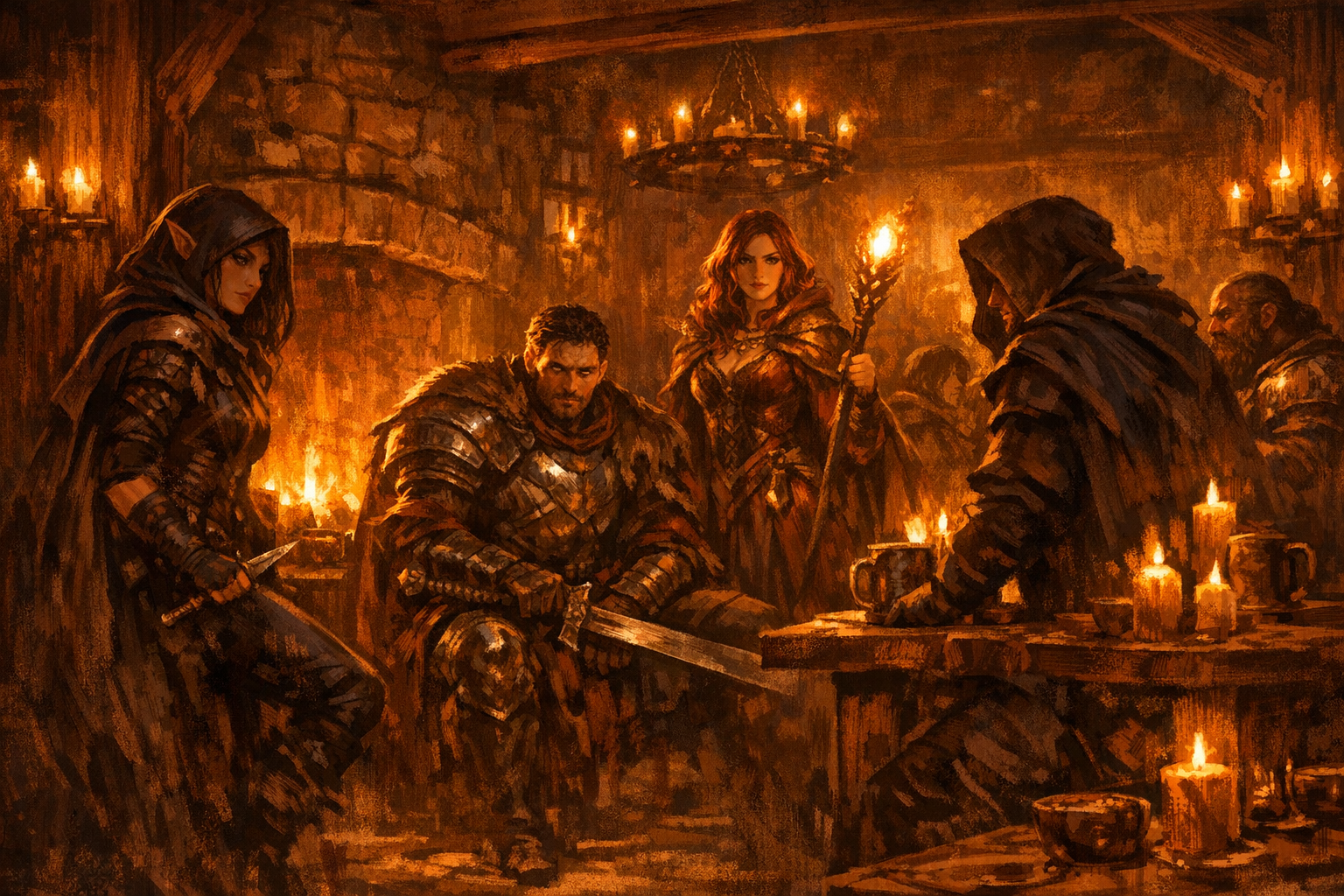
Once that foundation exists, conflict becomes generative rather than destructive. Characters can disagree intensely about methods while remaining committed to shared purpose. The paladin and the rogue argue about breaking into the noble's estate because they both want to expose his crimes, not because one wants to help and the other doesn't care.
Design characters with built-in points of connection to other party members. During session zero, draw lines between characters: shared history, competing claims on the same resource, or relationships to the same NPCs. These connections create organic roleplay opportunities without forcing interaction.
The most productive conflict happens between characters who respect each other. Two people who fundamentally dismiss one another produce tedious arguments. Two people who value each other's perspectives but disagree on specific issues produce debates worth playing.
Backstory as Tool, Not Novel
Backstory serves one purpose: creating momentum for play. Details that won't influence decisions at the table are wasted. Elaborate family trees matter only if family members will appear. Childhood traumas matter only if they shape current behavior in observable ways.
Write backstories backward from their mechanical effect. What does this character's history make them do differently than a generic member of their class? If the answer is nothing, the backstory isn't doing its job.
Keep backstories focused on one central tension that remains unresolved. The character joins the campaign not after their story concludes but while it's still happening. The exiled soldier hasn't accepted their disgrace or proven themselves worthy of return. The apprentice wizard hasn't surpassed their master or made peace with their limitations. The story the campaign tells is the resolution of that tension, not an epilogue to it.
Backstory also establishes what characters know. A character raised among elves understands elven customs without the player needing to ask. A character from a merchant family recognizes trade goods and pricing. This knowledge creates roleplay opportunities and makes the character feel competent in their domain.
Resist the urge to make backstories darker to make them more interesting. Tragedy works when it's specific and resonant, not when it's maximized. A character whose entire family was murdered by demons is less interesting than a character whose father made a deal with a demon and the character doesn't know if they'd have done the same.
Making Characters Playable
All of this theory matters only if it translates into actual sessions. Characters need to be playable, which means their core traits must be expressible through the mechanical and social reality of the game.
During character creation, identify three behaviors that demonstrate your character's personality in everyday situations. Not dramatic moments, but routine ones. How do they order food? How do they respond to authority? How do they act when bored? These low-stakes interactions establish character far more effectively than planned dramatic moments.
Create characters who want to engage with the campaign's premise. A character who distrusts everyone has nowhere to go. A character who refuses adventure needs constant motivation to participate. These designs force the GM to work around your character rather than with them, and they make you the person everyone waits for while you roleplay reluctance.
Accept that characters will change during play. The person who begins the campaign won't be the person who ends it. Design with room for growth, contradiction, and surprise. The character who discovers they enjoy violence more than they expected is more interesting than the one who was always a berserker.
Finally, make characters the GM wants to feature. A character connected to the world through locations, factions, and relationships gives the GM material to work with. A character isolated from everything except their personal trauma puts the burden entirely on the GM to create relevance.
Building NPCs at Speed
GMs need characters faster than players do. An evening's session might require a dozen NPCs, most invented on the spot. Elaborate preparation isn't practical.
Develop a mental library of character types you can deploy quickly. The weary professional. The ambitious newcomer. The true believer. The cynical survivor. These templates provide instant personality baselines you can customize with a few details.
Name lists save time and signal setting. Keep lists for different cultures and social classes in your notes. When an NPC needs a name, grab one that fits rather than stumbling over improvised syllables that sound wrong.
Give NPCs one strong opinion about something relevant to the current situation. The farmer hates the new tax collector. The priest thinks the drought is punishment for the town's moral failures. The soldier believes the war was necessary. Opinions create interaction opportunities and reveal the world through perspective.
Track NPCs the players engage with. Write down their names, key details, and what the players did or said during the interaction. Characters who start as improvised throwaways often become important because players decide they're interesting. Having notes ensures consistency when they reappear.
Species as Culture, Not Biology
Fantasy species work best when they represent cultural differences rather than biological determinism. "All dwarves are gruff" is boring and slightly troubling. "Dwarven culture values direct speech and considers elaborate courtesy a sign of dishonesty" is a cultural trait characters can embody, subvert, or struggle against.
Long-lived species like elves create opportunities for characters who remember events others know only as history. The elf who fought in the last war against the Empire isn't reading about it in books. This direct experience of history creates different relationships to tradition, progress, and mortality.
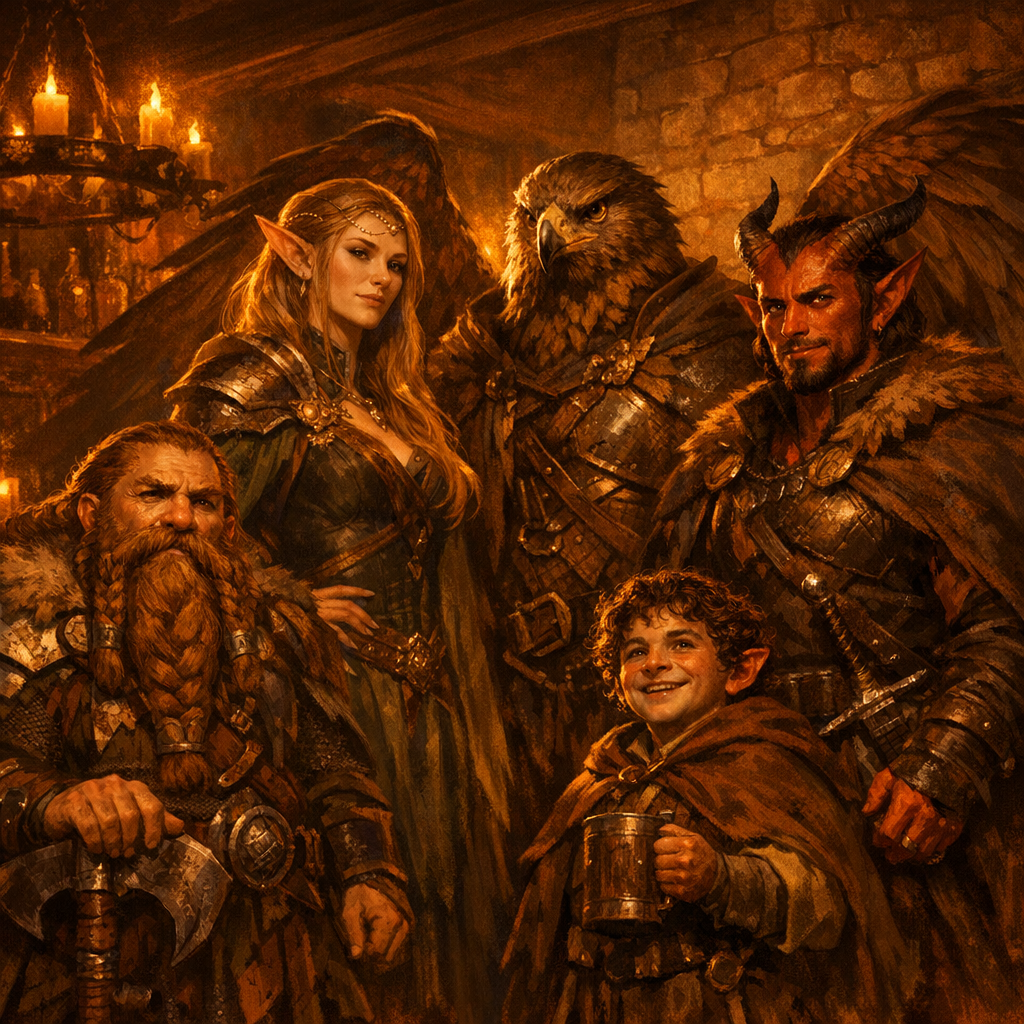
Species-based abilities should create interesting choices rather than optimal builds. The elf's longevity isn't just a stat bonus; it's a worldview that affects relationships with short-lived species. The dwarf's connection to stone isn't just darkvision; it's a cultural identity tied to craftsmanship and ancestral homeland. Even non-humanoid species like aarakocra gain depth when their flight shapes worldview rather than just combat tactics.
Avoid building characters whose species traits are their entire personality. The elf who's just "very elfy" has no individual identity. The interesting elf is the one whose personal history creates specific attitudes toward their heritage. Maybe they resent their elders' condescension toward younger species. Maybe they've adopted human customs after living among them for decades. The species provides context; the character provides the story.
The Real Test
A character is working when you know what they'd do in a situation before you consciously decide. They become predictable to you in a way that makes them unpredictable to others. You stop performing a character and start being one.
This happens not because you've memorized their personality profile but because you understand their desires and fears at a gut level. You know what makes them angry, what makes them afraid, what they'd sacrifice for and what they'd never compromise on.
When characters reach this point, the game stops feeling like collaborative storytelling and starts feeling like genuine experience. You're not deciding what the character would do. You're discovering it.
That's the goal. Everything else is preparation for that moment.