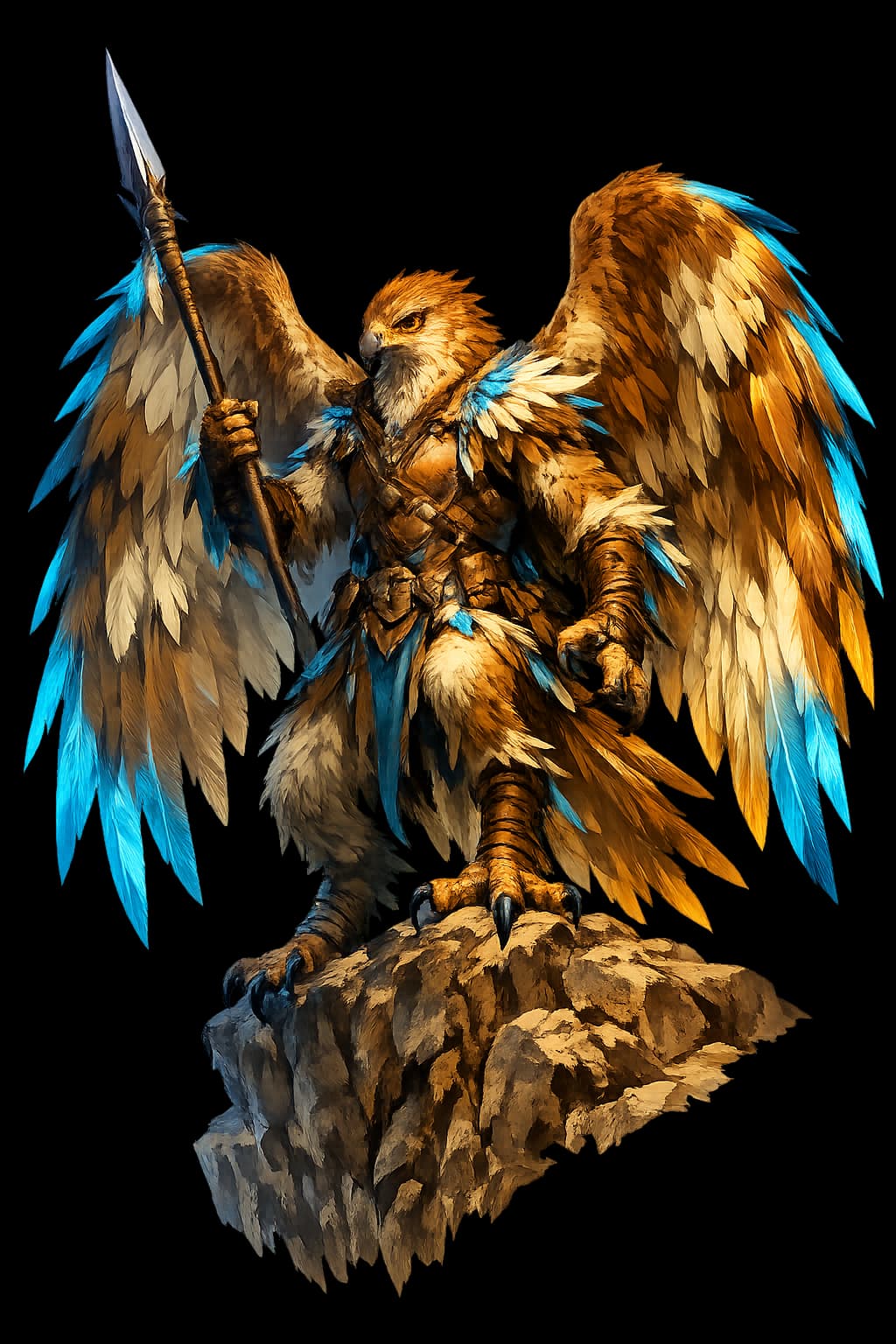

Aarakocra
Wind-born hunters and sky-singers who see the world from above and never forget that freedom is vertical
Born to the Wind
Flight isn't a special ability for aarakocra. It's baseline existence. Every thought, every social interaction, every architectural decision assumes the ability to move in three dimensions. This changes psychology in ways that ground-bound species find genuinely difficult to understand.
Aarakocra don't walk to think — they soar. Problem-solving happens on thermals, riding updrafts while turning an idea over in the mind. Personal space extends upward and downward as much as sideways. Standing in a room with a low ceiling feels to an aarakocra the way being trapped in a narrow crawlspace feels to a human.
This isn't metaphorical discomfort. It's a species that evolved for open sky being forced into boxes. The emotional register of an aarakocra shifts with altitude. High above the world, they're calm, focused, expansive. At ground level, they're tense, compressed, irritable. Understanding this gradient is key to playing them well.
The Vertical World
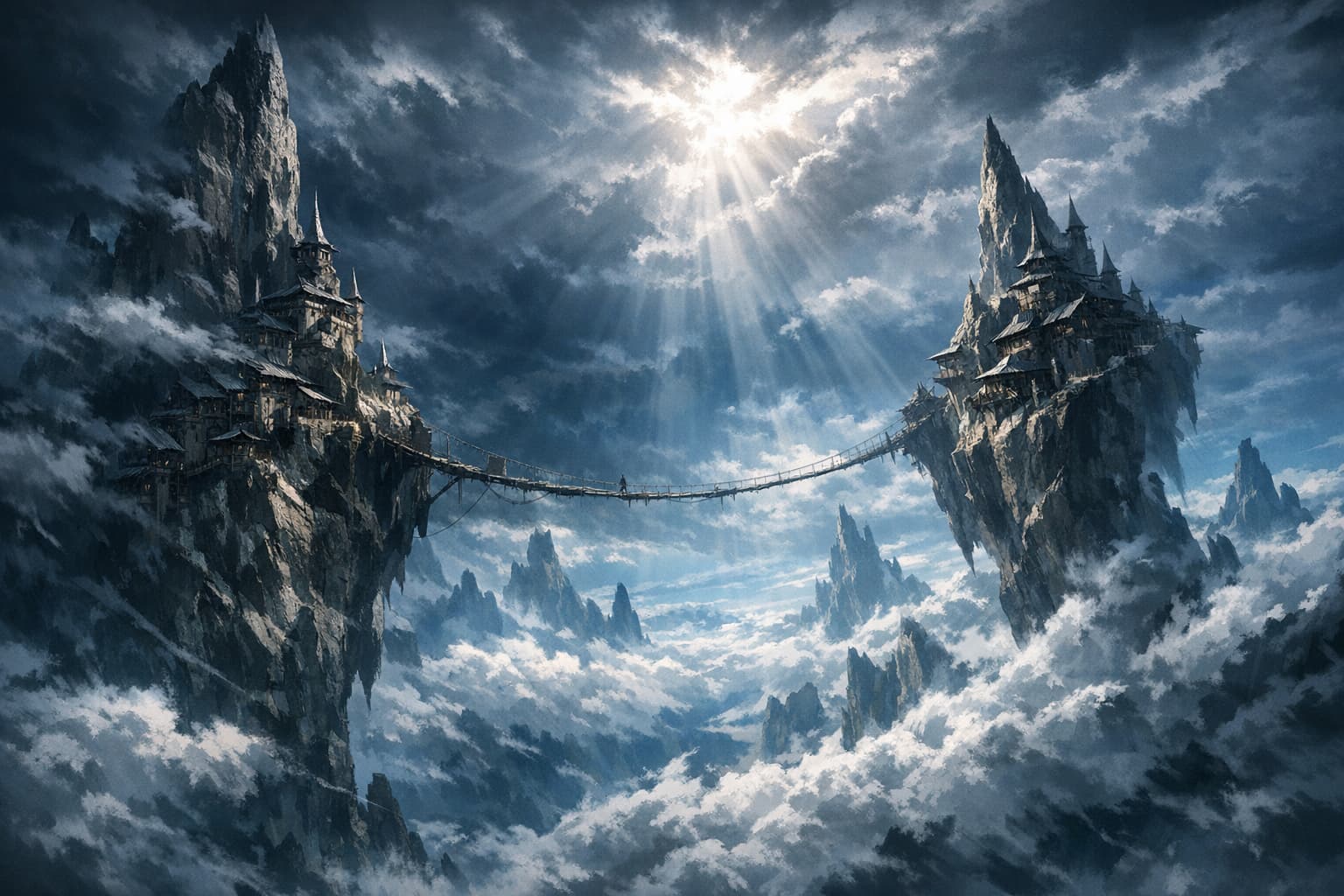
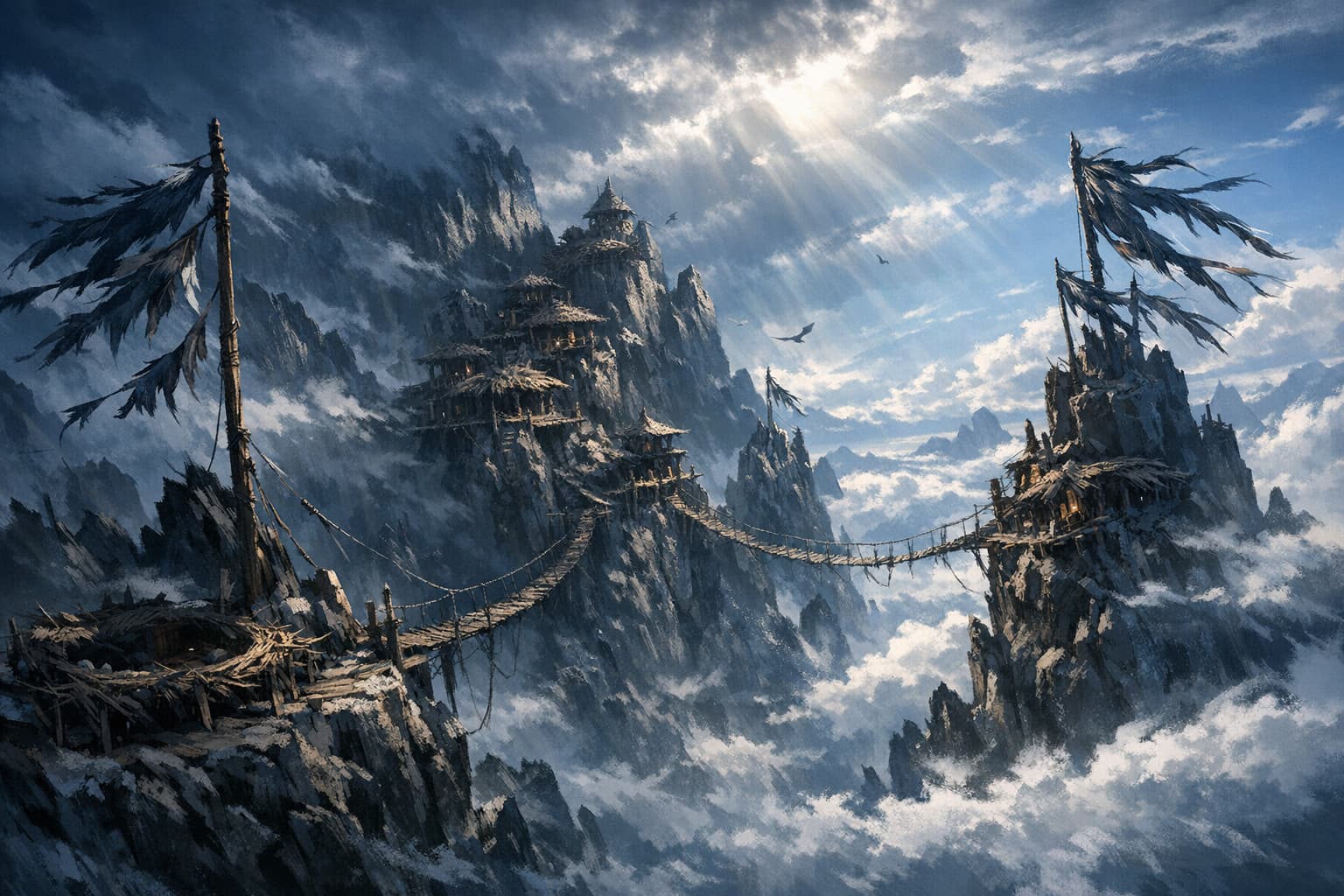
Aarakocra aeries aren't built — they're grown into cliff faces over generations, each family adding roosts and platforms at different heights. The highest perches belong to elders and lookouts. The lowest are for storage and the earthbound work that must occasionally be done. Social status is literally measured in elevation.
Space between aeries is measured in thermals and wind corridors, not roads. An aarakocra gives directions by referencing updrafts, prevailing winds, and landmarks visible from specific altitudes. Maps are three-dimensional objects, often woven from cord and feather, incomprehensible to anyone who hasn't learned to think vertically.
Building upward instead of outward creates communities where privacy is negotiated vertically. You can always see your neighbors below, and someone above can always see you. This produces cultures with different concepts of public and private space — solitude is found at extreme heights, not behind closed doors.
Three-dimensional thinking fundamentally changes architecture, warfare, and social organization. Aarakocra settlements have no walls because walls are irrelevant when your enemy can fly. Defense means controlling air corridors — wind patterns, updraft access, sight lines from above. Think less "castle" and more "aircraft carrier positioned in favorable winds."
Flock Before Self
Aarakocra names often reference the flock first. "Kree of the Storm-Riders" identifies the community before the individual. This isn't mere convention — it reflects a genuine psychological reality. Solo aarakocra are pitied, not admired. A bird alone in the sky is a bird in danger.
Flock decision-making operates through a system that looks like chaos to outsiders but follows complex aerial patterns. Disputes are literally aired out — disagreeing parties take to the sky and fly patterns that signal their position to the watching flock. Resolution comes through a form of aerial consensus that has no ground-level equivalent.
This creates tension between individual freedom and group survival. An aarakocra who flies too far from the flock risks more than disapproval — they lose the protection, information network, and thermal-sharing that makes survival possible. The adventuring aarakocra who joins a surface party is making a radical choice, trading flock security for something the flock cannot provide.
The Ground Problem
Ceilings are oppressive. Crowds are claustrophobic. The inability to simply fly away from danger feels like a disability. These aren't character quirks — they're the lived experience of a flying species forced to operate in spaces designed by and for creatures that walk.
Aarakocra in cities develop coping mechanisms. Some perch on rooftops between obligations, taking brief flights to reset their emotional baseline. Others develop a nervous energy at ground level — restless wing-twitching, constant scanning of exits, an inability to sit still. The most adapted learn to redirect their vertical instincts into human-readable behavior, though it costs them.
Adventuring parties navigate this friction in different ways. Some learn to plan around their aarakocra's aerial capabilities. Others discover that their bird-friend's discomfort in dungeons mirrors their own fear of heights. The best parties find complementary strengths: the aarakocra scouts from above while the rogue scouts ahead on the ground, creating a three-dimensional awareness that neither could achieve alone.
The tension between freedom and obligation drives the best aarakocra stories. The sky calls constantly, and every dungeon corridor is a prison. Party dynamics shift when one member can solve problems by going straight up but chooses to stay grounded with allies who can't follow. That choice — to clip your own wings for the sake of others — is where aarakocra character depth lives.
Aarakocra Diversity
Even among a species defined by flight, different environments and values produce distinct cultural paths:
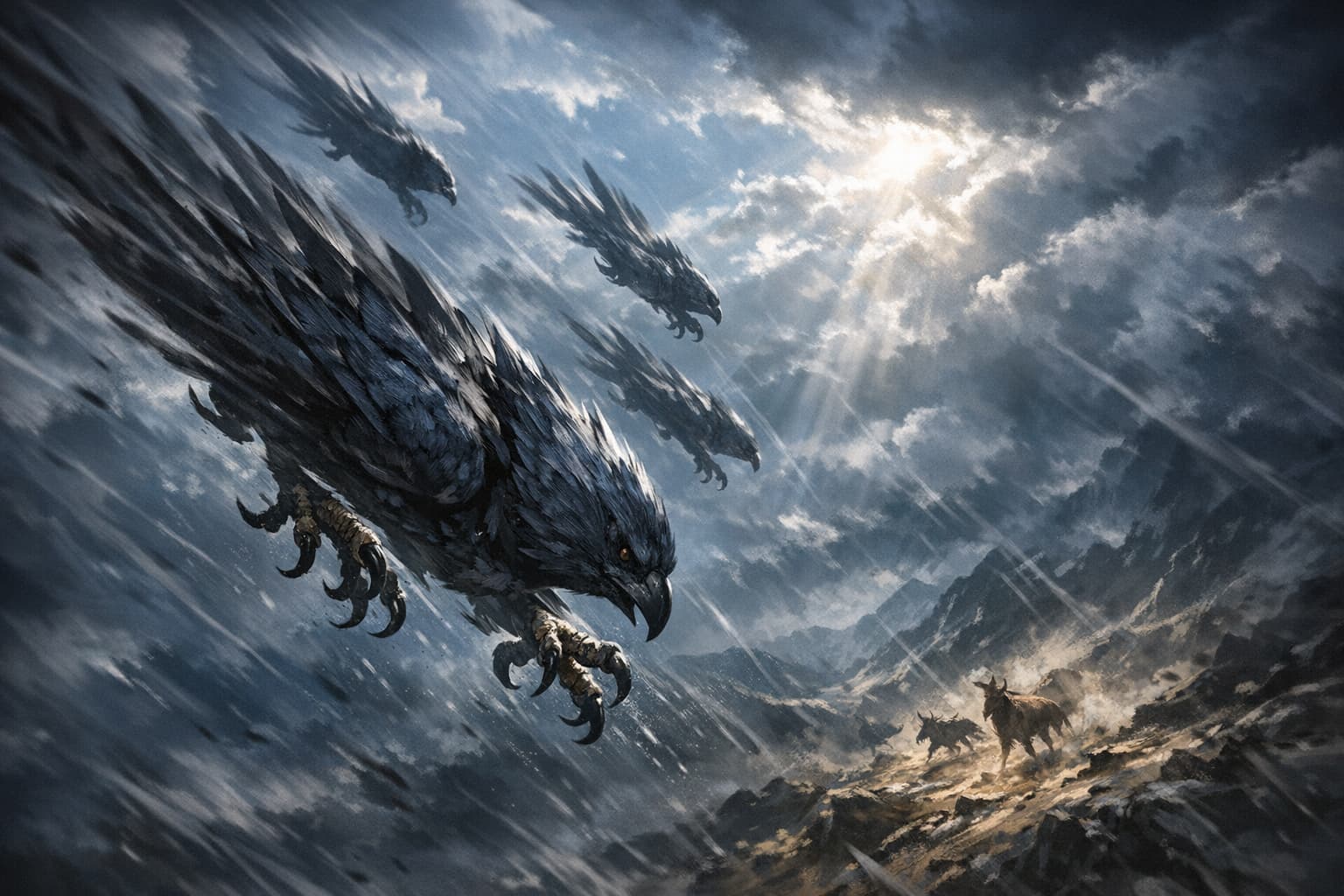
Sky Wardens are the martial defenders of aarakocra territory. Storm-riders and territorial sentinels, they patrol the air corridors around their aeries with military precision. Their training emphasizes formation flying, dive attacks, and the ability to fight in three dimensions simultaneously. Wardens tend toward discipline, hierarchy, and a fierce protectiveness that extends to anyone they've claimed as flock.
Wind Callers walk the shamanic path, speaking to wind currents and reading weather patterns the way a librarian reads books. Migratory by nature, they follow seasonal wind patterns across continents, carrying news and spiritual guidance between far-flung aeries. Their magic is subtle — nudging breezes, calming storms, sensing the emotional currents that ride the thermals.
At the Table
The vertical perspective is the single most important thing to maintain when playing aarakocra. Every room your character enters, they notice the ceiling first. Every outdoor scene, they note the wind direction and available thermals. Every social interaction carries the subtext of a creature that could leave at any moment but chooses to stay.
Handling flight in combat and exploration requires collaboration with your GM. Establish early what flying means mechanically and narratively in your campaign. Can you fly indoors? How do weather and wind affect your abilities? What happens when you're knocked prone at altitude? These aren't restrictions — they're the framework that makes your flight feel real rather than just convenient.
Make the alien relatable without losing what makes it alien. Your aarakocra might hum wind-songs when anxious, preen feathers as a fidgeting habit, or instinctively calculate escape routes through windows. These small behavioral details communicate "not human" without making your character incomprehensible to the other players at the table.
FAQ
Common Questions
Flight is most overpowered when the game pretends it doesn't exist until combat. Instead, make it a constant factor. Weather affects flying. Indoor spaces limit it. Enemies with ranged attacks punish exposed flyers. The balance comes from treating flight as a real physical ability with real physical constraints — wind, fatigue, weight limits — rather than a magical "I win" button.
Lean into the cultural gap. Your aarakocra might adopt the party as a surrogate flock, applying aerial social structures to ground-level relationships. They might struggle with doors, get fascinated by stairs, or find horses bewildering. The humor comes naturally from genuine perspective differences, not from playing your character as stupid — they're brilliant at three-dimensional thinking and lost at two.
Badly, and that's the point. An aarakocra in a dungeon is operating under constant low-level stress. Use this for character moments: the deep breath before descending underground, the visible relief when they find a large cavern, the almost physical need to fly after extended time below ground. Their discomfort makes them more interesting, not less — it's a constraint that generates character moments.
An aarakocra who's adopted the party as flock will be intensely loyal but might make assumptions about group decision-making that don't translate. They might expect consensus on major choices, feel betrayed by solo actions, or try to establish altitude-based hierarchy in the group. This creates productive friction — the party learns to accommodate aerial perspectives while the aarakocra learns that ground-bound societies have their own logic.