
Bard
The class that turns charm into a spell list and proves the right words at the right time can outperform any fireball
What Is a Bard?
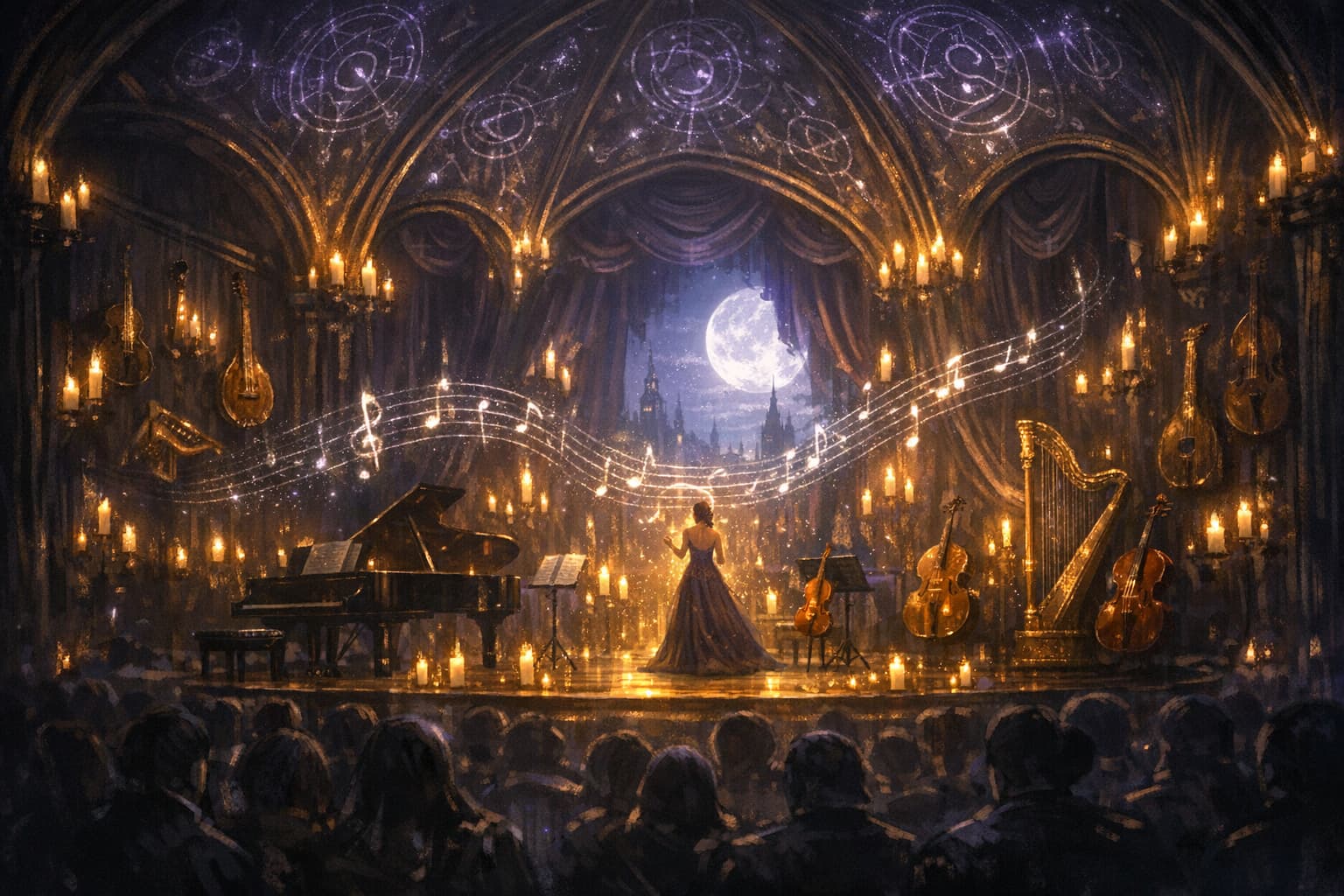
Nobody takes the bard seriously until the bard opens their mouth and the laws of physics bend. They strum a chord and wounds close. They whisper a cutting insult and an ogre's heart stutters. The bard is what happens when you take personality and give it spell slots. Not metaphorical power like a paladin's conviction or a warlock's will, but literal, mechanical, game-changing magic fueled by nothing more than audacity and a good singing voice.
What makes the bard unique among full casters isn't the spell list (though it's excellent). It's the class's relationship with knowledge. Wizards study. Clerics receive. Sorcerers inherit. Bards collect. They wander, they listen, they absorb stories and songs and secrets from every tavern, court, and battlefield they pass through. Their magic comes from understanding how the world works on a narrative level, from knowing which words unlock which doors, and from the belief that a well-timed joke can save a life as surely as a well-timed fireball.
The bard fantasy taps into something deeply human: the desire to be the most interesting person in the room. Every party has someone who does the most damage, someone who takes the most hits, someone who solves the most puzzles. The bard is the one everyone remembers. They're the face, the voice, the performance, and underneath all that showmanship, they're quietly one of the most versatile and dangerous characters at the table. The best bards make it look effortless. That's the hardest trick of all.
“A sword can kill a king. A song can kill a kingdom. The bard carries both and knows which one to reach for.”
— Gamemaster proverb
Literary & Mythological Origins
The bard archetype is ancient. Older than fantasy literature, older than the novel, older than written language itself. The Celtic bards were a professional class of poets in the British Isles, occupying a specific rank in Druidic society below the fili (seers) but above common entertainers. Their role was to compose praise poems for their patrons, preserve genealogies, and, crucially, to destroy reputations through satire. In Irish myth, a bard's satire could raise boils on a king's face. Words had physical power, and the people who wielded them commanded real fear and respect.
Norse skalds served a parallel function. These poet-warriors traveled with Viking expeditions, composing verses that immortalized the deeds of jarls and heroes. The skaldic tradition matters because it connects poetry directly to combat culture. The skald wasn't a civilian observer but a participant who fought alongside the warriors they celebrated. Bragi, the Norse god of poetry, was counted among the Aesir not as a lesser deity but as an essential one. Without the skald, the hero's deeds died with them. The poet made glory permanent.
Orpheus is the most direct mythological ancestor of the D&D bard. His music could charm animals, move trees, and even sway the rulers of the underworld. Orpheus's journey to rescue Eurydice from Hades is the original bard adventure: a quest driven not by martial prowess but by artistic skill, where the weapon is a lyre and the enemy is death itself. That Orpheus ultimately fails (looking back at the last moment) adds the tragic dimension that good bard stories often carry. Power through art is never quite enough, and the bard knows it.
Key Literary and Mythological Influences
| Source | Era | Contribution to the Archetype |
|---|---|---|
| Celtic bards | c. 600 BCE–1600 CE | Professional poets with social power; satire as weapon; words with physical effect |
| Norse skalds | c. 800–1100 CE | Poet-warriors who traveled with armies; poetry as preservation of glory |
| Orpheus (Greek myth) | c. 700 BCE | Music that charms nature and death; art as supernatural power; the tragic artist |
| Taliesin (Welsh myth) | c. 6th century | Shape-shifting poet-prophet; knowledge gained through magical transformation |
| Shakespeare's Puck | 1595 | Trickster-entertainer who manipulates through mischief, charm, and illusion |
| Fflewddur Fflam (Lloyd Alexander) | 1964 | The bard as lovable exaggerator; humor and heart over technical skill |
| Kvothe (Patrick Rothfuss) | 2007 | The bard as unreliable narrator; music as magic system; name-knowledge as power |
The bard draws from every culture that understood the power of a well-told story. The D&D version just added spell slots.
Evolution Across Editions
The bard has one of the strangest histories of any D&D class. It first appeared in The Strategic Review #6 (1976) as a variant class created by Doug Schwegman, then was formalized by Gygax in the AD&D 1st Edition Players Handbook (1978) in a form so bizarre that most players never actually played it. The original bard was a prestige path that required you to begin as a fighter, switch to thief, and then switch to druid before finally qualifying for bard. You needed specific ability scores in five different stats. It was, by any reasonable measure, almost unplayable as written.
Second edition (1989) rescued the bard by making it a standalone class in the rogue group. This version could fight reasonably well, use thief skills, cast wizard spells from a limited list, and inspire allies with music. It was the Swiss Army knife of AD&D — not the best at anything, but passable at everything. The problem was that "passable at everything" didn't feel heroic. Many players dismissed the 2e bard as a dilettante class, a jack-of-all-trades who was master of none in a game that rewarded mastery.
Third edition (2000) gave the bard its own spell list and formalized Bardic Music as a class feature with specific mechanical effects: Inspire Courage, Fascinate, Countersong. This was the version that established the bard as a support-and-face character. But 3.5e bards still struggled in a game that rewarded optimization, and the class was often considered a weaker choice compared to clerics or druids who could fill similar roles more effectively. It took fifth edition to finally get the bard right, or rather, to get it so right that it became one of the game's most powerful and popular classes.
The Strategic Review #6
First bard class by Doug Schwegman — a fighter/thief/druid multiclass variant with musical abilities
AD&D 1st Edition PHB
Gygax formalizes the bard as a prestige path requiring fighter, then thief, then druid progression. Famously impractical
AD&D 2nd Edition
Bard becomes standalone rogue-group class. Thief skills, limited wizard spells, and bardic music. The jack-of-all-trades era begins
Player's Option: Skills & Powers
Kits expand bard identity — Blade, Gallant, Jester, Loremaster. First attempts at bard subclass diversity
D&D 3rd Edition
Own spell list, Bardic Music formalized (Inspire Courage, Fascinate, Countersong). Bard establishes support-caster identity
D&D 5th Edition
Full caster with Bardic Inspiration dice, Magical Secrets, and Bard Colleges. Becomes one of the strongest classes in the game
BG3 / D&D 2024 (5.5e)
Bard refined with improved subclasses and spell access. College of Swords and Lore shine in digital adaptation. 2024 PHB elevates Bardic Inspiration further
Bardic Inspiration and Spellcasting
The bard is a full caster. That single fact matters more than anything else on the character sheet. Full caster means spell slots up to 9th level, which means access to the most powerful magic in the game. But where a wizard's power comes from encyclopedic knowledge and a cleric's from divine mandate, the bard's magic flows through performance, personality, and sheer creative audacity. Their spellcasting focus is a musical instrument. Their spell list blends enchantment, illusion, healing, and utility in a combination no other class replicates.
Bardic Inspiration is the class's signature feature and one of the best support abilities in D&D. As a bonus action, you give an ally an Inspiration die (d6, scaling to d12) that they can add to an attack roll, ability check, or saving throw within the next 10 minutes. This sounds modest on paper. In practice, it's transformative. That extra d8 on a saving throw against a dragon's breath weapon is the difference between a dead rogue and a living one. The bard's power is often invisible because it shows up through other characters' successes, which is both the class's greatest strength and its greatest PR problem.
Magical Secrets, gained at levels 10, 14, and 18, is arguably the most powerful class feature in the game. It lets the bard learn any spell from any class's spell list. Want Counterspell? Taken. Find Greater Steed? Yours. Aura of Vitality for absurd out-of-combat healing? Done. Magical Secrets means the bard can fill whatever role the party needs — and experienced bard players use it to access combinations that no single-class character can match. The bard's spell list is already excellent; Magical Secrets makes it limitless.
- Bardic Inspiration (bonus action, scales d6–d12)
- Jack of All Trades (half-proficiency to all non-proficient checks)
- Song of Rest (extra healing on short rests)
- Magical Secrets (steal spells from any class list)
- Expertise (double proficiency in 2 then 4 skills)
- Countercharm
Full caster progression (spell slots up to 9th level). Bard Colleges chosen at level 3.
- Bardic Inspiration (improved recovery)
- Jack of All Trades
- Expertise
- Magical Secrets (earlier access, expanded options)
- Superior Inspiration (regain use when rolling initiative with none remaining)
- Epic Boon at 19
The 2024 revision grants earlier Magical Secrets access, improves Bardic Inspiration recovery, and strengthens subclass features across all Colleges.
Bardic Inspiration refreshes on a short rest starting at level 5 (Font of Inspiration), and you get a number of uses equal to your Charisma modifier. A bard with 20 Charisma at level 5+ effectively hands out five d8 bonuses per short rest. In a game with two short rests per day, that's fifteen inspiration dice — a staggering amount of passive power that doesn't cost spell slots.
The Archetype in Practice
Playing a bard well means understanding that you are not the star. You are the director. Yes, you can hold your own in combat with a rapier and some well-placed spells. Yes, you'll dominate social encounters with expertise in Persuasion and Deception. But the bard's deepest power lies in making everyone else better. Bardic Inspiration, Faerie Fire, Healing Word at range, Cutting Words to protect allies from critical hits: the bard's turn-by-turn decisions ripple through the entire party's performance. The best bard players pay attention to what everyone else is doing and ask, how can I make that work better?
The three most popular Bard Colleges each create a fundamentally different play experience. College of Lore leans into the full-caster identity, granting additional Magical Secrets at level 6 and Cutting Words — a reaction that subtracts your Bardic Inspiration die from an enemy's attack, check, or damage roll. College of Valor turns the bard into a battle-caster with medium armor, shields, and Extra Attack. College of Swords makes the bard a finesse duelist who uses Bardic Inspiration dice to fuel combat maneuvers. Each one answers a different version of the question: how physical do you want your bard to be?
Outside of combat, the bard is the party's face and problem-solver. Jack of All Trades adds half your proficiency bonus to every ability check you're not already proficient in, including initiative rolls and Counterspell checks. Expertise doubles your proficiency in chosen skills. A high-level bard with expertise in Persuasion and Jack of All Trades can talk their way past nearly any social barrier in the game. But the trap is treating social dominance as your entire identity. The best bards also pay attention to exploration, information gathering, and the art of knowing which questions to ask.

College of Lore
The Lore bard is the definitive support caster and the subclass that fully realizes the bard's potential as a spellcasting powerhouse. Cutting Words lets you spend a Bardic Inspiration die as a reaction to subtract from an enemy's attack roll, ability check, or damage roll, turning Inspiration from a purely offensive tool into a flexible resource. Additional Magical Secrets at level 6, four levels earlier than other bards, means you can pick up Counterspell, Spirit Guardians, or Fireball right when the game shifts from early-game survival to mid-game power plays. Lore bards are the ones who always have the right spell for the situation, because they've stolen the best ones from every other class.

College of Valor
The Valor bard bridges the gap between caster and martial without feeling like a compromise. Medium armor and shield proficiency dramatically improve survivability: a Valor bard in half plate with a shield has AC 19, which is respectable for a front-line character and absurd for a full caster. Extra Attack at level 6 means you can hold your own in melee when you don't want to burn spell slots. Combat Inspiration lets allies add your Inspiration die to weapon damage or AC. The Valor bard is the skald standing in the shield wall, singing while the arrows fly, equally comfortable with a sword and a spell.

College of Swords
Swords bards are the swashbucklers of the bard world: flashy, mobile, and surprisingly dangerous in melee. The subclass replaces a musical instrument with a weapon as your spellcasting focus, which is both mechanically elegant and narratively perfect. Your sword IS your instrument. Blade Flourishes let you spend Bardic Inspiration dice on Defensive Flourish (add to damage and AC), Slashing Flourish (hit a second target), or Mobile Flourish (push the enemy and move without opportunity attacks). The result is a mobile duelist who dances through combat, casting spells between strikes. In Baldur's Gate 3, the Swords bard is widely considered one of the strongest builds in the game, capable of devastating multiattack sequences that rival dedicated martial classes.
The Magic of Performance
Bardic magic is fundamentally different from every other magical tradition in D&D, and most players never stop to think about why. Wizard magic is formulaic — memorized equations applied to reality. Cleric magic is petitionary — asking a god and channeling the response. Warlock magic is transactional — power rented from something powerful. Bard magic is performative in the philosophical sense: the magic happens because the bard performs it into existence. The song does not channel pre-existing power. The song IS the power.
This distinction matters at the table because it changes how you describe your spellcasting. When a bard casts Healing Word, they are not invoking a divine name or tracing a sigil. They are singing a melody that knits flesh back together because the melody itself carries that property. When they cast Dissonant Whispers, they speak a phrase so fundamentally wrong that it damages the listener's sense of reality. Bard magic is the claim that art is not metaphorically powerful but literally dangerous, and the spell list is proof.
Different bard colleges interpret this relationship between performance and magic in distinct ways. A College of Lore bard treats knowledge itself as a performance medium — knowing the right secret at the right moment is their version of a killer guitar solo. A College of Swords bard turns combat into art, their blade work so precise and beautiful that it generates magical effects as a byproduct. A College of Whispers bard weaponizes the intimate performance of conversation, making every word a potential spell component.
For players struggling to make bardic magic feel distinct from wizard magic in play, the key is sensory description. Wizard spells look like energy and geometric precision. Bard spells should look, sound, and feel like art. Your Fireball might manifest as a chord struck so hard the air ignites. Your Hold Person might be a melody so captivating the target literally cannot move until the song ends. The mechanics are identical; the fiction should be unmistakably different.
Bard Colleges
The bard's subclass history reflects the class's evolving identity. Fifth edition launched with two Bard Colleges — Lore and Valor — representing the scholar-bard and the warrior-bard respectively. Supplements steadily expanded the options, each one exploring a different facet of what it means to channel magic through art and performance. The College of Swords brought the swashbuckler fantasy. Glamour channeled fey enchantment into battlefield control. Whispers turned the bard into a shadowy manipulator. Creation literalized the idea that bards make things with their art.
Baldur's Gate 3 offered only Lore, Valor, and Swords — a tight selection that covers the three core bard fantasies: the knowledge collector, the battle-singer, and the blade-dancer. The 2024 Player's Handbook revises College of Lore and College of Valor while introducing the College of Dance as a new option, emphasizing movement and reaction-based support. The trend across editions has been toward making bard subclasses more mechanically distinct while preserving the class's core identity as a versatile, Charisma-driven full caster.
What's striking about the bard's subclass design is how each one redefines what "performance" means. For a Lore bard, performance is knowledge — the right fact at the right moment. For a Valor bard, it's martial prowess witnessed by allies. For a Glamour bard, it's supernatural beauty that commands attention. For a Whispers bard, it's the quiet word that destroys from within. The instrument might be a lute, a sword, a voice, or a lie, but the mechanism is always the same: the bard performs, and the world listens.
Bard Subclasses Across Editions and Supplements
| Subclass | Source | Core Fantasy |
|---|---|---|
| College of Lore | PHB 2014 / BG3 / 2024 PHB | Knowledge as power; Cutting Words; early Magical Secrets at level 6 |
| College of Valor | PHB 2014 / BG3 / 2024 PHB | Battle-singer; medium armor and shields; Extra Attack; Combat Inspiration |
| College of Swords | Xanathar's / BG3 | Blade-dancer; weapon as spellcasting focus; Blade Flourishes for mobile combat |
| College of Glamour | Xanathar's | Fey-touched enchanter; Mantle of Inspiration grants temp HP and repositioning |
| College of Whispers | Xanathar's | Shadow operative; Psychic Blades add damage; steal identities from the slain |
| College of Eloquence | Tasha's | Silver-tongued orator; guaranteed minimum on Persuasion/Deception; Unsettling Words |
| College of Creation | Tasha's | Animate objects with song; Performance of Creation conjures items from nothing |
| College of Spirits | Van Richten's | Channel ghost stories for random magical effects; Tales from Beyond |
| College of Dance | 2024 PHB | Movement as magic; Dazzling Footwork adds AC; reaction-based support abilities |
Roleplaying & Personality
The bard's biggest roleplaying trap is the horny minstrel. You know the one: the character whose entire personality is attempting to seduce everything with a pulse, treating Charisma as a consent-bypass stat and treating every social encounter as an opportunity for innuendo. It's the laziest possible interpretation of the class, and it's so pervasive that many tables groan when someone announces they're playing a bard. Do better. Charisma is confidence, presence, and force of personality. It's the general who rallies broken troops, the diplomat who prevents a war with a speech, the storyteller who makes a tavern full of strangers weep for a hero they never met. There's an entire universe of bard characterization beyond "I roll to seduce the dragon."
The most compelling bard characters have a relationship with truth. Bards deal in stories, and stories are never quite true and never quite false. Does your bard embellish their tales? Do they believe their own exaggerations? Is there a core of real experience beneath the performance, or is the performance all there is? A bard who can't tell where the truth ends and the story begins is a blast to play, especially when the stakes are high and the party needs reliable information from someone whose instinct is always to make the narrative better rather than more accurate.
Consider what drives your bard to adventure rather than to a comfortable career in a noble's court or a famous theater company. Most bards are talented enough to live well without risking their lives in dungeons. Are they running from something? Chasing a specific story or song? Gathering material for a masterwork? Trying to prove something to themselves or someone who dismissed them? The bard's motivation is often more personal than other classes. They're not answering a divine calling or sworn to an oath. They chose this, which means the reason they chose it matters.
In your setting, how much power do bards actually hold? If bardic magic is real and known, then bards are effectively propagandists with supernatural enforcement. A king might fear a bard's satire more than a rival army. Bardic colleges might be regulated, censored, or co-opted by the state. The relationship between artistic freedom and political power becomes a central tension.
Colleges and Troupes
Bardic colleges in D&D lore aren't just subclass names. They're institutions. In many settings, a Bard College is a physical place where young performers study music, magic, history, and espionage in roughly equal measure. The College of Lore in the Forgotten Realms is associated with the Harpers, a secret society that uses information, infiltration, and subtle magic to counter tyranny across Faerun. Bards are, in many settings, the intelligence community: charming, mobile, educated, and positioned to hear secrets that sedentary scholars never could.
The social position of bards varies enormously across fantasy cultures. In a medieval European analogue, bards might be traveling entertainers, respected at court, tolerated in taverns, and vulnerable on the road. In a Celtic-inspired setting, they might hold near-sacred status, protected by tradition and feared for their satirical power. In a Renaissance-inspired city-state, they might be court composers, political satirists, or theatrical impresarios competing for patronage. Each framing creates different adventure hooks and different social dynamics for the bard player.
Organizations that attract bards extend beyond formal colleges. Spy networks value bards for their cover identities and enchantment magic. Revolutionary movements need voices that can inspire the masses. Criminal organizations use bards as information brokers and con artists. Diplomatic corps seek bards as negotiators and cultural attaches. Religious organizations employ bards as traveling preachers and hymn-singers. The bard's versatility makes them welcome — or dangerous — in virtually any institutional context.
Academic Bardic Colleges
Formal institutions with libraries, practice halls, and arcane laboratories. Students study music theory alongside enchantment magic and rhetoric. Graduates receive credentials that grant access to noble courts. Faculty politics are vicious — tenure battles fought with Cutting Words and competitive composition. Some colleges specialize: war-chants at one, healing hymns at another, illusion-theater at a third.
Traveling Traditions
Oral traditions passed master-to-apprentice on the road. Knowledge preserved in songs rather than books — lose the singer, lose the history. Traveling bards serve as news carriers between isolated communities, their arrival a combination of entertainment and information exchange. Rivalries between wandering troupes create adventure hooks: stolen songs, contested territories, audiences won and lost through magical duels of verse.
Instruments and Foci
The bard's signature item is their instrument, and the choice of instrument says as much about the character as any backstory paragraph. A lute is classic, portable, and versatile: the default choice that works in taverns, camps, and courts alike. A violin suggests classical training and intensity. A drum implies rhythm and primal energy. A flute is haunting and atmospheric. A war horn is martial and commanding. In fifth edition, the bard can use any musical instrument as a spellcasting focus, so the choice is purely aesthetic, which means it's entirely character-defining.
Weaponry for bards tends toward the elegant. The rapier is the canonical bard weapon: finesse-based, one-handed, and visually dramatic. It lets the bard fight with Dexterity, freeing Charisma and Constitution for ability score investment. Hand crossbows provide ranged options without requiring Strength. Swords bards might favor scimitars for dual-wielding or a rapier-and-shield combination for Valor builds. The bard's weapon should feel like an extension of their performance: precise, stylish, and never brutish.
Magic items that amplify the bard's social and magical strengths are the most valuable. Instruments of the Bards (Doss Lute, Canaith Mandolin, Anstruth Harp, etc.) are a legendary item line designed specifically for the class, granting extra spells and the ability to charm creatures when played. Cloaks of many fashions, Hats of Disguise, and other appearance-altering items complement the bard's infiltration capabilities. But don't overlook defensive items. A Cloak of Protection or Ring of Spell Storing can transform a fragile bard into a surprisingly resilient battlefield controller.
Iconic Bard Equipment
| Item | Type | Why It Works |
|---|---|---|
| Rapier | Weapon | Finesse weapon; highest damage die (d8) that allows Dexterity-based attacks |
| Lute or similar instrument | Spellcasting Focus | Required for somatic/material components; defines character aesthetics and performance style |
| Studded leather armor | Armor | Best light armor at AC 12 + Dex; keeps the bard mobile without sacrificing protection |
| Instrument of the Bards | Magic Item | Class-specific legendary items granting bonus spells and charm effects when played |
| Hand crossbow | Ranged Weapon | Dexterity-based ranged option; one-handed for versatility with shields or instruments |
| Disguise Kit | Tool | Essential for infiltration-focused bards; combines with Disguise Self for layered deception |
Multiclass Synergies
The bard is one of the most popular multiclass bases in D&D 5e, and for good reason. Charisma as a primary stat means the bard shares its casting ability with paladins, sorcerers, and warlocks, creating a constellation of powerful combinations that all key off the same score. Full caster progression means every bard level grants meaningful spell slot advancement, but the class's front-loaded features (Bardic Inspiration, Jack of All Trades, Expertise) also make it an excellent dip for other Charisma classes.
The critical question with bard multiclassing is whether you're building a bard who dips into another class or another class that dips into bard. A Swords bard who takes two levels of paladin gets Divine Smite — letting you burn spell slots for burst damage on top of your Blade Flourishes. A paladin who takes three levels of Lore bard gets Cutting Words, Jack of All Trades (which applies to Counterspell checks), and two skill expertises. Same two classes, same level investment, wildly different characters.
One underappreciated aspect of bard multiclassing is that Bardic Inspiration refreshes on a short rest from level 5, making it an excellent complement to warlock's short-rest spell slot recovery. A bard 5/warlock 2 gets Eldritch Blast for reliable ranged damage, two short-rest spell slots for utility, and a full bard's Inspiration economy. Add Hexblade patron and you can use Charisma for weapon attacks, creating a single-stat character who excels at melee, ranged combat, support, and social encounters simultaneously.
Strong Combinations
Bard/Paladin: Divine Smite with bard spell slots creates devastating burst damage. Aura of Protection stacks with bard's Charisma focus. Swords or Valor bard provides Extra Attack for multiple smite opportunities. Bard/Warlock (Hexblade): Charisma for weapon attacks, Eldritch Blast for ranged damage, short-rest synergy with Bardic Inspiration. The ultimate single-stat character. Bard/Sorcerer: Metamagic on bard spells — Twinned Healing Word, Subtle Charm Person, Quickened Hold Person into attack. Shared Charisma casting.
Interesting Dips
Bard X/Rogue 1-2: Cunning Action for bonus action disengage or hide; extra Expertise stacks with bard's own. The ultimate skill monkey. Bard X/Fighter 1: Constitution save proficiency protects concentration spells; fighting style adds consistent damage. Heavy armor for Valor builds. Any Charisma caster/Bard 1-3: Jack of All Trades applies to Counterspell and Dispel Magic checks. Bardic Inspiration supplements the main class. Expertise in two skills rounds out any character.
Building Your Character
Charisma is everything. It drives your spellcasting, your Bardic Inspiration uses, and the social skills that define the bard's out-of-combat role. Start with 16 Charisma minimum (17 if you're using point buy and plan to take a half-feat at level 4). Dexterity is your second priority: it determines your AC in light armor, your initiative, your weapon attacks with a rapier, and your Dexterity saving throws (which you're proficient in). Constitution is third for hit points and concentration saves. Wisdom and Intelligence are less critical but shouldn't be dumped if you want a well-rounded character.
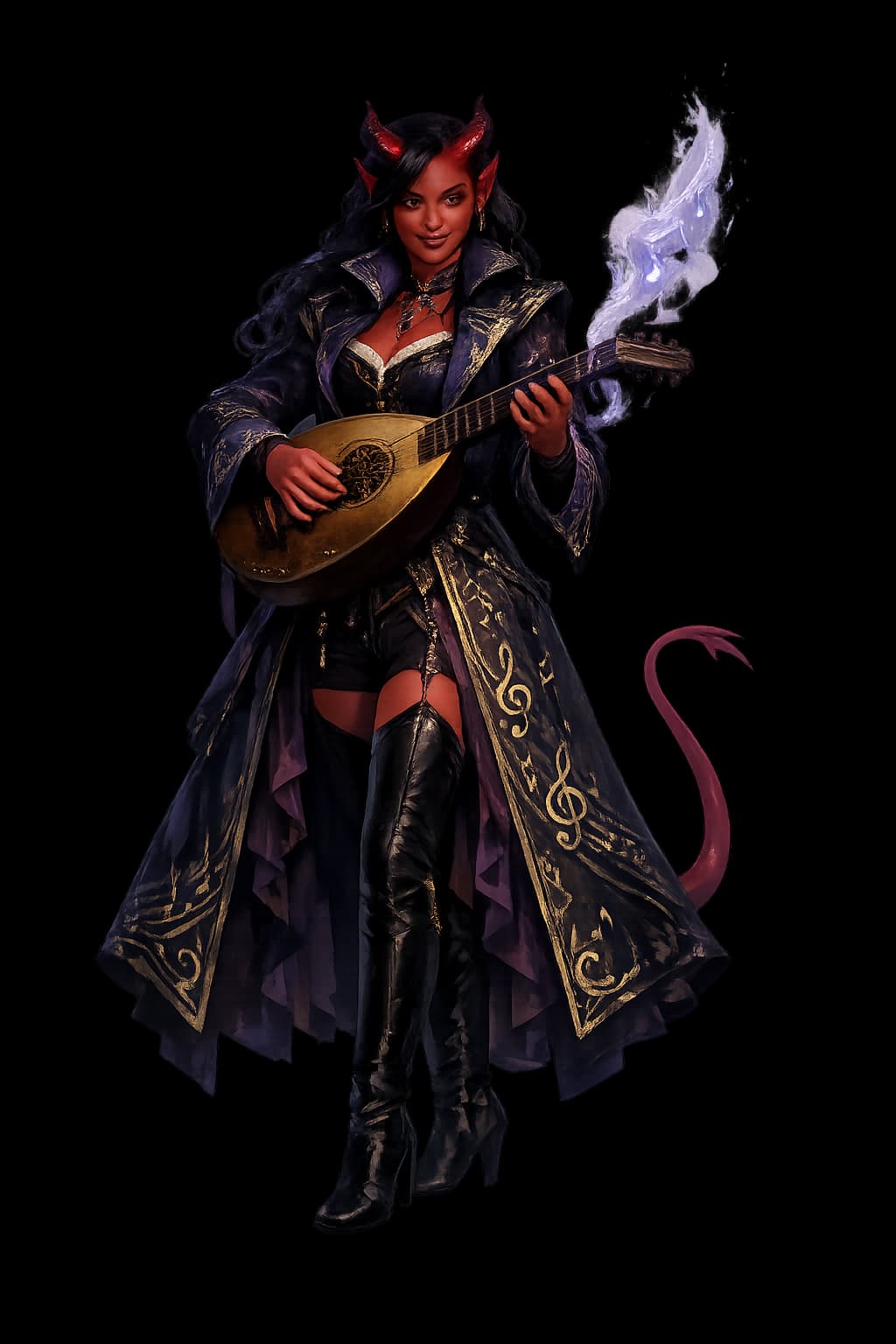
Race selection for bards has become more flexible with the 2024 rules removing fixed ability score bonuses, but some racial features still stand out. Half-elves (in 2014 rules) were the gold standard: +2 Charisma, +1 to two others, extra skills, and Fey Ancestry. Tieflings bring fire resistance and innate spellcasting that complements the bard list. Changelings are arguably the most thematically perfect bard race, with shapeshifting that turns every social encounter into a potential masterclass in deception. Satyrs bring magic resistance and a natural proficiency with musical instruments. Custom Lineage with the Fey Touched feat is a strong mechanical choice for any bard build.
Spell selection is where bard building gets strategic. Your known spells are limited; you don't prepare from a full list like a cleric or druid. Every spell choice is permanent until you swap one per level-up. Prioritize versatility: Healing Word for emergency ranged healing, Faerie Fire for advantage generation, Hypnotic Pattern for crowd control, Dimension Door for tactical repositioning. At higher levels, Magical Secrets choices define your bard more than almost anything else. Taking Counterspell and Find Greater Steed at level 10 turns you into a mounted counterspelling support monster that no other single-class build can replicate.
Charisma 16, Dexterity 14, Constitution 14. Rapier, studded leather, lute. Take the Entertainer or Charlatan background. Pick up Healing Word, Faerie Fire, and Dissonant Whispers at level 1. At level 3, choose College of Lore if you want to be the smartest person in every room, Swords if you want to stab things with style, or Valor if you want to fight from the front line. At level 10, steal Counterspell and whatever your party needs most.
Famous Bards in Fiction
The bard archetype in fiction rarely looks like the D&D version at first glance. Fictional bards are seldom standing in a dungeon corridor strumming a lute while fireballs fly overhead. Instead, they appear as spies, chroniclers, tricksters, and unreliable narrators, characters whose power comes from knowing the right thing to say at the right moment, and from the unsettling possibility that they're shaping events rather than merely recording them. The best fictional bards make you wonder where performance ends and reality begins.
Dandelion (or Jaskier, depending on your language) from The Witcher franchise defined the modern "bard as comic relief with hidden depth" trope. On the surface, he's a buffoon who follows a monster-hunter around writing songs about the adventures he barely survives. Underneath, he's a keen observer whose ballads literally reshape Geralt's public reputation, turning a feared mutant into a folk hero. That's bardic magic without a single spell slot: the power to control narrative. Kvothe from The Kingkiller Chronicle takes this further, making the bard the hero of his own story, except the story might be a lie, and the lie might be more true than the truth.
In gaming, bard characters have carved out their own legacy. Scanlan Shorthalt from Critical Role proved that a character built entirely around charm, deception, and dick jokes could deliver one of the most emotionally devastating arcs in actual-play history. Eddie Riggs from Brutal Legend turned heavy metal itself into bardic magic, because sometimes the instrument isn't a lute but a Flying V and a wall of amplifiers. And every Elder Scrolls player has opinions about Sven and the Bards College in Solitude, even though Skyrim never actually let you play a bard. The archetype is so magnetic that players feel its absence.
Iconic Bards Across Fiction
| Character | Source | Why They Matter |
|---|---|---|
| Dandelion / Jaskier | The Witcher (Andrzej Sapkowski, 1993; Netflix, 2019) | Proved that the bard's greatest power is controlling the narrative — his songs made Geralt a legend |
| Scanlan Shorthalt | Critical Role (2015–2017) | Sam Riegel's gnome bard demonstrated that comedy and genuine emotional devastation can coexist in the same character |
| Kvothe | The Kingkiller Chronicle (Patrick Rothfuss, 2007) | The bard as unreliable narrator — a musician-mage whose story might be his greatest spell |
| Orpheus | Greek mythology | The original bard who charmed death itself with music; established that art can challenge the fundamental forces of the universe |
| Fflewddur Fflam | The Chronicles of Prydain (Lloyd Alexander, 1964) | The lovable bard whose harp strings snap when he lies — honesty and music bound together |
| Thom Merrilin | The Wheel of Time (Robert Jordan, 1990) | The gleeman as spy and secret power player — the bard as intelligence operative hiding behind a performer's mask |
| Alan-a-Dale | Robin Hood legends | The minstrel in the outlaw band; the bard as the folk hero's chronicler, ensuring the story outlives the hero |
| Eddie Riggs | Brutal Legend (Double Fine, 2009) | Jack Black's roadie-turned-warrior proved that heavy metal is just bardic magic with better amplification |
Across RPGs & Video Games
The bard's translation across game systems reveals something interesting: the archetype is simultaneously universal and impossible to pin down. Every franchise has some version of the charismatic performer-mage, but no two systems agree on what that means mechanically. Is the bard a healer? A buffer? A controller? A face character? A skill monkey? The answer, in most systems, is "yes, and that's the problem." Designing a bard class means deciding how much versatility one character should be allowed to have before it breaks the game's assumptions about specialization.
D&D 5e solved the problem by making the bard a full caster with the best skill support in the game, then adding Magical Secrets to let them steal solutions from other classes. Pathfinder 2e took a different approach, tying the bard to the Occult spell tradition and making Compositions — focus spells fueled by performance — the mechanical heart of the class. The result feels more like a magical musician and less like a wizard wearing a silly hat, which is arguably the more honest design.
Video game bards have a rougher history. Final Fantasy's Edward from FF4 was so notoriously weak that "spoony bard" became a meme that outlasted the game itself. Lord of the Rings Online's Minstrel took the opposite approach, making music-based healing the backbone of group content and including actual instrument mini-games. The Elder Scrolls series has always flirted with the bard concept — the Bards College exists in Skyrim, bard NPCs populate every tavern — but never committed to making it a player class. The bard thrives in systems that value social mechanics; it withers in systems that only count damage per second.
The Bard Across Franchises
| Franchise | Class / Role | Key Mechanic | Key Distinction |
|---|---|---|---|
| D&D 5e | Bard | Bardic Inspiration, Magical Secrets, Jack of All Trades | Full caster with the widest skill support; Bard Colleges as subclass identity |
| Pathfinder 2e | Bard | Compositions (focus spells), Muses | Occult spell list rather than Arcane; four Muses shape playstyle and identity |
| Final Fantasy | Bard / Dancer | Singing and Dancing abilities that buff or debuff | Often considered weak in early entries; Edward (FF4) spawned the "spoony bard" meme |
| Lord of the Rings Online | Minstrel | Music-based healing and damage with instrument mini-games | The most literal interpretation — you actually play music to cast spells |
| Elder Scrolls | No bard class | Bards College in Solitude; bard NPCs throughout Skyrim | The archetype exists in the world but is conspicuously absent from player builds |
| Dragon Age | No formal bard class | Leliana's "Orlesian Bard" background = spy/assassin/performer | Reframes the bard as intelligence operative; performance as cover for espionage |
The bard's viability in any game system is a reliable indicator of how much that system values social mechanics over pure combat math.
The Bard at the Table
The bard is the party's connective tissue, and running one well (whether as a player or a DM supporting a bard player) means understanding that their power is often invisible on initiative trackers. A bard's best turn might not involve dealing any damage at all. It might be the Bardic Inspiration die that turned the paladin's miss into a hit, the Faerie Fire that granted advantage to three allies, or the Cutting Words that reduced a critical hit to a normal one. If you're playing a bard and measuring your success by your own damage output, you're reading the wrong scoreboard.
For DMs, the bard demands encounter design that goes beyond "roll initiative and fight." Bards thrive when there are problems that combat can't solve: hostage situations where Persuasion matters more than Power Attack, information-gathering scenarios where knowing the right question is more valuable than knowing the right spell, court intrigue where a well-timed song can shift political alliances. If every session is a dungeon crawl with nothing to talk to, the bard player is going to feel like they brought a lute to a sword fight. Mix in social encounters, investigation scenes, and moments where the party needs a face more than a fireball.
Players should lean into the bard's role as the party's memory and storyteller. Keep notes on NPCs, remember names that other players forget, reference past adventures in character. The bard is the character who turns a series of disconnected encounters into a narrative — and narratives have power at the table as much as they do in the fiction. When you recap last session's events in character, you're not just helping the DM; you're making the campaign feel like a story worth telling, which is the most bardic thing you can do without rolling a die.
Build sessions that reward the bard's versatility rather than punishing the party's lack of a second fighter. Include social encounters where Charisma skills can bypass combat entirely — a guard who can be charmed, a merchant who responds to flattery, a rival who'd rather have a battle of wits than swords. Design information-gathering scenarios where the bard's network of contacts and performance opportunities become investigative tools. Create moments in combat where Bardic Inspiration visibly saves a life — narrate that d8 turning a failed death save into a success. And occasionally, put the bard in a spotlight moment: a royal court, a bardic competition, a funeral where the right eulogy can heal old wounds. Let the bard be the bard.
The Bard in World-Building
Building a world that takes bards seriously means grappling with the implications of magical speech. If a bard can literally enchant people with their words, then every speech, every song, every public performance carries the potential for supernatural manipulation. Courts would need detect-magic protocols for anyone addressing the monarch. Trials would require silence spells to ensure testimony was unenhanced. Newspapers — if your setting has them — would be terrifyingly powerful if their editors had access to Suggestion and Mass Suggestion. The bard class, taken to its logical conclusion, breaks the assumption that public discourse is ever truly free.
History in a world with bards is unreliable by nature. If the people recording and transmitting history are also the people with the magical ability to make you believe things, then the past becomes a contested narrative rather than an objective record. Which version of the founding myth is true: the one sung by the court bard who serves the king, or the one whispered by the rebel bard hiding in the sewers? Both are literally enchanting. Both carry magical conviction. A world-builder who thinks through this implication ends up with a setting where information warfare is ancient, sophisticated, and indistinguishable from entertainment.
The economics of bardic magic deserve consideration. A bard who can cast Charm Person is a better salesperson than anyone without magic. A bard who can cast Suggestion can close any deal. If bardic colleges produce graduates with these abilities, then commerce, diplomacy, and law are all distorted by the existence of enchantment magic. Some settings handwave this. The interesting ones don't — they build legal frameworks around magical influence, create social taboos against enchantment in commercial contexts, or establish counter-bard institutions that protect the powerful from magical persuasion while leaving common people vulnerable.
At the campaign table, bards function as connective tissue. They know people. They've been places. They have a relevant story for every situation, and that story is usually at least half true. A bard NPC is a DM's best friend. They can deliver exposition naturally, connect disparate plot threads through "songs they've heard," and provide quest hooks disguised as entertainment. A bard villain is even better: someone whose weapon is narrative itself, who can turn a hero into a monster through slander, rewrite alliances through selective truth-telling, and control the political landscape without ever drawing a weapon.
“The wizard studies the fabric of reality. The bard hums along with it, and reality starts to harmonize.”
— On the metaphysics of bardic magic
FAQ
Common Questions
A bard is a full spellcasting class that channels magic through music, performance, and force of personality. Bards use Charisma as their primary ability and combine enchantment and illusion spells with support abilities like Bardic Inspiration, skill expertise, and healing. They fill the role of party face, support caster, and jack-of-all-trades — capable of contributing meaningfully to combat, social encounters, and exploration.
As a bonus action, you give one creature within 60 feet an Inspiration die (d6, scaling to d8 at level 5, d10 at level 10, and d12 at level 15). Within 10 minutes, the creature can roll the die and add it to one ability check, attack roll, or saving throw. You have a number of uses equal to your Charisma modifier, refreshing on a long rest (or short rest from level 5 with Font of Inspiration). Some subclasses add additional uses for the die, like Cutting Words (Lore) or Blade Flourishes (Swords).
College of Lore is widely considered the strongest due to Cutting Words and early Magical Secrets at level 6, making it the premier support-caster bard. College of Eloquence (from Tasha's) is arguably even more powerful for social campaigns, with a guaranteed minimum roll on Persuasion and Deception checks. College of Swords is the best melee bard, especially in Baldur's Gate 3, with Blade Flourishes creating a mobile duelist. College of Glamour excels at battlefield control through Mantle of Inspiration.
Magical Secrets is a bard class feature gained at levels 10, 14, and 18 (level 6 for Lore bards) that lets you learn any spell from any class's spell list. This means bards can take Counterspell from the wizard list, Find Greater Steed from the paladin list, or Healing Spirit from the ranger list. It effectively removes the limitations of the bard spell list and lets you customize your character to fill whatever role your party needs. No other class can cherry-pick the best spells from every list.
Bards can be very effective in combat depending on subclass choice and spell selection. College of Swords and Valor bards get Extra Attack and can hold their own in melee. All bards have access to powerful combat spells like Hypnotic Pattern, Hold Person, and Psychic Lance. At higher levels, Magical Secrets can add offensive powerhouses like Destructive Wave or Steel Wind Strike. That said, the bard's greatest combat contribution is often force multiplication — Faerie Fire granting advantage to the entire party or Bardic Inspiration turning a miss into a hit.
Charisma is the bard's most important ability score — it drives spellcasting, Bardic Inspiration uses, and all face skills. Dexterity is second for AC (light armor), initiative, weapon attacks with finesse weapons, and Dex saves. Constitution is third for hit points and concentration checks. For a Valor or Swords bard who plans to be in melee, Constitution may rival Dexterity in importance. Wisdom helps with Perception and Wisdom saves but is rarely a priority.
The strongest multiclass is Bard/Paladin: bard spell slots fuel Divine Smite, and both classes use Charisma. A Swords bard 6/Paladin X gets Extra Attack, Blade Flourishes, and smites. Bard/Warlock (Hexblade 1-2) lets you attack with Charisma and adds Eldritch Blast for ranged damage. Bard/Sorcerer gives Metamagic on bard spells — Twinned Healing Word is excellent. Even a one-level dip into bard for another Charisma class provides Jack of All Trades, which notably applies to Counterspell checks.
Bards are the most flexible class in terms of party role. They can serve as the primary healer (Healing Word, Mass Cure Wounds), the party face (Expertise in social skills), a controller (Hypnotic Pattern, Hold Person), a secondary damage dealer (Swords/Valor builds), or a buffer (Bardic Inspiration, Faerie Fire). Their greatest strength is filling gaps — whatever your party lacks, a bard can cover it. The one role bards struggle with is primary tank, though Valor bards with Shield spell (via Magical Secrets) can manage in a pinch.