

Cleric
The divine conduit who carries a god's will in one hand and a warhammer in the other
What Is a Cleric?
The cleric answers a question that most fantasy games take for granted: what does it look like when the gods actually show up? Not in a distant, metaphorical sense, but right now, in this dungeon, through this person standing in plate mail with blood on their shield. The cleric is faith made tactical. Prayer with hit points. The divine given a stat block and told to roll initiative.
At its heart, the cleric fantasy is about serving something larger than yourself and receiving tangible power in return. Where the wizard earns magic through study and the sorcerer inherits it through blood, the cleric is granted power through devotion. That transaction — faith for miracles — creates a class that is simultaneously the party's moral compass and its most versatile problem-solver. Need healing? Cleric. Need undead destroyed? Cleric. Need a buff that turns a mediocre fighter into a whirlwind of steel? Believe it or not, cleric.
What makes the cleric fantasy endure is the tension between servant and soldier. A cleric isn't free to do whatever they want — they serve a deity with doctrines, demands, and agendas that may not align with the party's goals. The paladin swears an oath to an ideal; the cleric kneels before a personality. That personality might be kind or cruel, orderly or chaotic, and the cleric's power depends on maintaining that relationship. It's the only class where your patron might have opinions about how you spend your Tuesday.
“The wizard asks 'how does magic work?' The cleric asks 'why does magic work?' The answer to the second question has a name, a temple, and strong feelings about what you do on the sabbath.”
— A comparative theology of spellcasting
Literary & Mythological Origins
The cleric's roots run deeper than fantasy literature — they reach into the historical reality of medieval warrior-priests. The Archbishop Turpin in the Song of Roland (c. 1100) fights alongside Charlemagne's paladins, wielding a sword and blessing troops between cavalry charges. The Knights Templar were simultaneously monks and soldiers. The historical record is full of religious figures who were perfectly comfortable with violence in service of faith, and D&D's cleric draws from that tradition directly.
Van Helsing from Bram Stoker's Dracula (1897) is arguably the most direct literary ancestor of the D&D cleric. He wields holy water, crucifixes, and consecrated wafers as weapons against the undead — the original Turn Undead. He isn't a priest by profession, but he operates with clerical authority: his power comes from sacred objects and divine faith, not arcane study. The early D&D cleric was essentially Van Helsing in chain mail, designed specifically to counter the undead that populated Arneson's Blackmoor campaign.
Mythology provides the template for divine domains. Thor is the storm cleric. Apollo is the light cleric. Hades runs the grave domain. Every pantheon has gods of war, healing, knowledge, trickery, and death, and each god suggests a different flavor of divine servant. The cleric class works because mythology already established that divine power manifests in specialized ways — a priest of the harvest goddess would wield different miracles than a priest of the war god, and both would be priests.
Key Literary and Mythological Influences
| Source | Era | Contribution to the Archetype |
|---|---|---|
| Archbishop Turpin (Song of Roland) | c. 1100 | The warrior-priest who fights and prays on the same battlefield |
| Knights Templar | 1119-1312 | Militant religious orders — armored faith as an institution |
| Van Helsing (Stoker) | 1897 | Holy symbols as weapons, faith as anti-undead technology |
| Gandalf (Tolkien) | 1954 | The divine emissary in mortal form, guiding and empowering others |
| Brother Cadfael (Peters) | 1977 | The scholarly monk who solves problems through wisdom and herbalism |
| Goldmoon (Dragonlance) | 1984 | D&D-native cleric archetype — restoring lost faith to a broken world |
The cleric is where religion meets pragmatism. Every source on this list understood that faith without the willingness to act on it is just philosophy.
Evolution Across Editions
The cleric is one of the original three classes in Dungeons & Dragons — it was there from the very beginning in 1974, alongside the fighting man and the magic-user. Dave Arneson added the class to counter a vampire that Sir Fang (a player character) had become in the Blackmoor campaign. The first cleric was literally designed as a vampire hunter, and the class's anti-undead identity has persisted for fifty years.
Early D&D clerics were bizarre by modern standards. They couldn't use edged weapons — a restriction based on a historical misconception that medieval clergy were forbidden from shedding blood (the actual canonical prohibition was against clergy participating in trial by combat). This meant clerics were restricted to maces, hammers, and staves, which became so iconic that many players still associate the class with blunt weapons even though 5th edition removed the restriction entirely.
The domain system was the cleric's great evolutionary leap. Second edition introduced specialty priests who drew power from specific gods, gaining different spell lists and abilities. Third edition formalized this as domains — clerical specializations like War, Healing, Sun, and Death that granted bonus spells and abilities. Fifth edition refined domains into full subclasses, each with unique Channel Divinity options, bonus proficiencies, and capstone features. The 2024 revision expanded this further, making domains the primary driver of cleric identity from level one.
OD&D — The Original Cleric
One of the three founding classes. Anti-undead focus, no edged weapons, spell list drawn from Christian miracle tradition
AD&D 1st Edition
Spell progression formalized. Turn Undead standardized as a table-based mechanic. Cleric becomes the essential healer
AD&D 2nd Edition
Specialty priests introduced via Complete Priest's Handbook. Deity choice starts to matter mechanically, not just narratively
D&D 3rd Edition
Domain system arrives — two domains per cleric grant bonus spells and a granted power. Spontaneous casting of cure spells. Heavy armor proficiency confirmed
D&D 4th Edition
Cleric becomes a leader role with healing word as a minor action. Laser cleric build (Sacred Flame spam) becomes iconic
D&D 5th Edition
Divine Domains as full subclasses. Channel Divinity replaces Turn Undead as a flexible resource. Seven domains at launch
BG3 / D&D 5.5e
Digital play showcases cleric versatility. Life, Light, and Trickery domains shine in BG3. 2024 PHB revises domain features and adds Holy Order choices
Channel Divinity and Prepared Casting
The cleric is a prepared caster with access to their entire spell list every morning. This single fact makes them arguably the most versatile class in the game. A wizard knows a fixed number of spells in their spellbook. A sorcerer knows even fewer. But a cleric wakes up, prays, and can choose any cleric spell of a level they can cast. Facing undead today? Prepare Spirit Guardians and Turn Undead. Expecting negotiations? Swap in Zone of Truth and Calm Emotions. This flexibility is the cleric's superpower, and experienced players exploit it ruthlessly.
Channel Divinity is the class's signature resource, gained at 2nd level and scaling in uses as you progress. Every cleric gets Turn Undead — forcing undead to flee if they fail a Wisdom save, or outright destroying weak ones at higher levels. Your domain grants a second Channel Divinity option that defines your combat identity. War clerics get bonus attacks. Knowledge clerics gain proficiency in any skill or tool. Trickery clerics create illusory duplicates. The Channel Divinity option you receive at 2nd level often shapes your entire playstyle more than any other single feature.
Armor proficiency separates the cleric from every other full caster. Most clerics get medium armor and shields, and several domains (Life, War, Tempest, Forge) grant heavy armor. This means a cleric in plate mail with a shield has 20 AC before magic — the same as a fighter in full plate. Combined with d8 hit dice (average for a full caster, but supplemented by healing magic), clerics can stand on the front line and survive. They're not pretending to be melee fighters; they actually are melee fighters who also have 9th-level spells.
- Spellcasting (prepared, full caster)
- Divine Domain at 1st level
- Channel Divinity: Turn Undead
- Domain Channel Divinity
- Destroy Undead (scaling CR)
- Divine Intervention (10% at lv10, auto at lv20)
Domain choice at level 1 determines armor proficiency, bonus spells, and Channel Divinity options. Life, Tempest, and War domains grant heavy armor.
- Spellcasting (prepared, full caster)
- Holy Order (Protector, Scholar, or Thaumaturge) at 1st level
- Channel Divinity: Turn Undead + Divine Spark
- Sear Undead (replaces Destroy Undead)
- Blessed Strikes consolidated
- Greater Divine Intervention at 19
The 2024 revision adds Holy Order as a baseline customization. Divine Spark provides flexible healing or damage through Channel Divinity. Domains still define subclass identity but Holy Order allows finer tuning.
Spirit Guardians is widely considered one of the strongest spells in D&D 5e. A 3rd-level concentration spell that deals 3d8 radiant (or necrotic) damage per turn to enemies within 15 feet, with no action required after casting. A cleric in heavy armor with Shield of Faith concentrating on Spirit Guardians is a walking area-denial weapon. The combination of durability, passive damage, and full spellcasting is what makes optimized clerics terrifyingly effective.
The Archetype in Practice
The cleric's versatility means that two clerics at the same table can play completely differently. A Life domain cleric in heavy armor standing shoulder-to-shoulder with the fighter, healing and buffing between mace swings, has almost nothing in common mechanically with a Trickery domain cleric hiding behind illusory duplicates and casting Polymorph. The domain system turns one class into a dozen different experiences, and understanding your domain is more important than understanding the base class.
One of the great misconceptions about the cleric is that they're primarily a healer. In 5th edition, healing in combat is generally inefficient — incoming damage outpaces healing output in most encounters. The best cleric play involves preventing damage (Shield of Faith, Sanctuary, Warding Bond), controlling enemies (Hold Person, Banishment, Spirit Guardians), and buffing allies (Bless, Holy Weapon) rather than playing whack-a-mole with Cure Wounds. The cleric who spends every turn healing is doing the job, but the cleric who prevents the need for healing is doing it better.
That said, the cleric remains the best emergency responder in the game. When someone goes down, the cleric has Healing Word — a bonus action ranged heal that gets an ally back on their feet from across the battlefield. No other class gets this combination of range, action economy, and reliability. Healing Word doesn't win fights, but it prevents total party kills, and that distinction matters enormously.
Life Domain — The Sacred Guardian
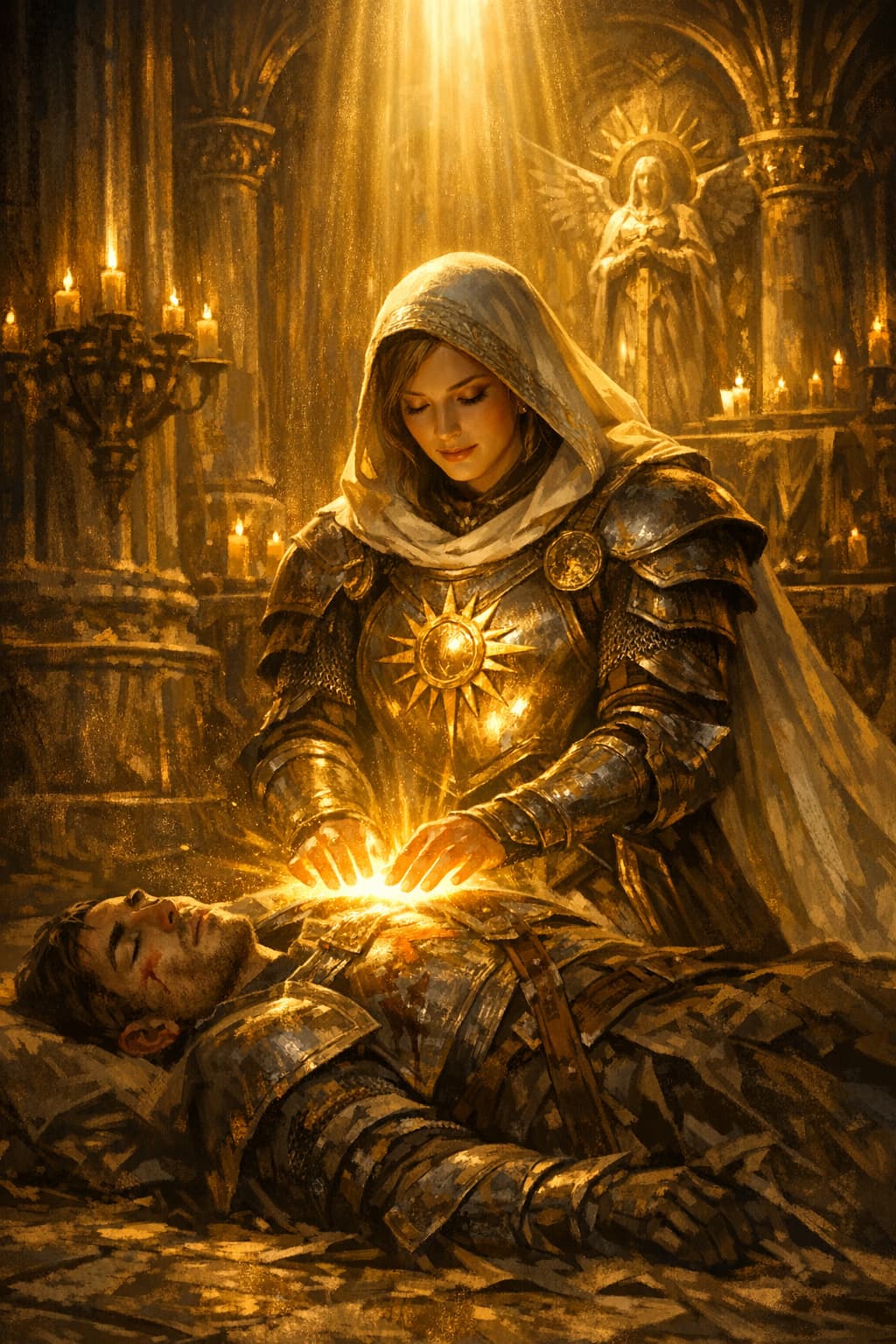
The Life domain is the quintessential healer fantasy, and it earns that reputation through sheer mathematical superiority. Disciple of Life adds 2 + spell level to every healing spell you cast, turning a 1st-level Cure Wounds from 1d8+3 into 1d8+6 — a massive boost at low levels. Blessed Healer means you heal yourself whenever you heal others. Heavy armor proficiency lets you stand in the thick of combat without fear. At 17th level, Supreme Healing removes dice rolls from healing spells entirely, always granting maximum hit points restored. If your party needs someone who can keep them alive through anything, Life is the answer.

Tempest Domain — The Storm's Voice
Tempest clerics are the answer to anyone who thinks clerics can't deal damage. Wrath of the Storm punishes attackers with lightning damage as a reaction. Destructive Wrath lets you maximize lightning or thunder damage once per rest — cast Shatter or Call Lightning and Channel Divinity to guarantee maximum damage, creating devastating burst turns. Heavy armor and martial weapon proficiency make you a credible melee threat, and the domain spell list includes Shatter, Call Lightning, and Sleet Storm. The Tempest cleric is a battle-priest who brings the weather.

Trickery Domain — The Divine Deceiver
Trickery clerics break the mold entirely. Blessing of the Trickster grants advantage on Stealth checks to an ally — turning the cleric into a support rogue. Invoke Duplicity creates an illusory copy of yourself that you can cast spells through, enabling creative positioning and battlefield deception. The domain spell list reads like a rogue's wish list: Disguise Self, Mirror Image, Dimension Door, and Polymorph. Trickery clerics appeal to players who want the cleric's full spellcasting power wrapped in subterfuge rather than sanctimony.
Divine Domains
The cleric has more subclasses than almost any other class in 5th edition, and for good reason — every god needs a different kind of priest. The core Player's Handbook launched with seven domains, and supplements have expanded the list to fourteen official options. Each domain reshapes the cleric's spell list, Channel Divinity, and combat role so thoroughly that switching domains feels like playing a different class.
Baldur's Gate 3 offers seven domains at launch — Life, Light, Trickery, Knowledge, Nature, Tempest, and War — and each plays distinctly in the digital format. Light clerics became surprise powerhouses thanks to Fireball and Radiance of the Dawn, while Trickery clerics found creative uses for Invoke Duplicity in the game's verticality-heavy encounters. The 2024 Player's Handbook consolidates and refines the domain list, ensuring each option has a clear mechanical identity.
Choosing a domain is really choosing a theology. The Life cleric believes divinity manifests through preservation. The War cleric believes divinity manifests through conflict. The Grave cleric believes divinity manifests at the threshold between life and death. Your domain isn't just what you can do — it's what your god thinks matters most about existence.
Cleric Domains Across Editions and Supplements
| Domain | Source | Core Fantasy |
|---|---|---|
| Life | PHB 2014 / BG3 | Supreme healer; heavy armor, enhanced healing spells, self-sustaining |
| Light | PHB 2014 / BG3 | Radiant damage dealer; Fireball access, Warding Flare, Radiance of the Dawn |
| Tempest | PHB 2014 / BG3 | Storm warrior; maximized lightning/thunder damage, heavy armor, martial weapons |
| War | PHB 2014 / BG3 | Battle commander; bonus attacks, guided strikes, heavy armor and martial weapons |
| Knowledge | PHB 2014 / BG3 | Sage-priest; skill proficiencies, mind-reading, divination specialist |
| Trickery | PHB 2014 / BG3 | Divine rogue; stealth support, illusory duplicates, enchantment spells |
| Nature | PHB 2014 / BG3 | Green priest; druid cantrip, heavy armor, plant and animal control |
| Forge | Xanathar's | Divine smith; create magic items, fire immunity, +1 AC from Soul of the Forge |
| Grave | Xanathar's | Death's gatekeeper; maximized healing on unconscious allies, vulnerability curse |
| Twilight | Tasha's | Guardian of rest; massive temp HP aura, darkvision sharing, flight at 17th level |
| Peace | Tasha's | Bond weaver; Emboldening Bond adds d4 to saves/attacks/checks for linked allies |
| Order | Tasha's / Ravnica | Lawkeeper; allies react to your spells with attacks, enchantment synergy |
| Death | DMG | Necromantic priest; twin necrotic cantrips, bypass resistance to necrotic damage |
| Arcana | SCAG | Magic scholar; wizard cantrips, Arcane Mastery adds wizard spells to your list |
Domains and Divine Identity
No other subclass system in D&D reshapes a character's identity as completely as the cleric's domain. A Life Domain cleric and a War Domain cleric share a base class, but they play like different characters, fill different party roles, and tell fundamentally different stories. The domain is not just a mechanical choice. It is the answer to the most important question a cleric player faces: what aspect of divinity does your character embody?
Domain selection ripples outward into every aspect of the character. A Tempest Domain cleric worshipping a storm god speaks differently, dresses differently, and solves problems differently than a Knowledge Domain cleric serving a god of secrets. The Tempest cleric answers threats with thunder and lightning. The Knowledge cleric answers them with information and leverage. Both are divine agents, but the domain defines what divine agency looks like at their table.
For DMs, the cleric's domain is a worldbuilding gift. Every domain implies a priesthood, a theology, a set of sacred sites, and a network of believers. A Life Domain cleric suggests hospitals, hospices, and healers' guilds in your setting. A Forge Domain cleric implies sacred smithies, artisan-priests, and a theology that treats creation as worship. The player's domain choice hands the DM setting infrastructure for free — take it and build on it.
The most overlooked domains are often the most interesting for roleplay. Trickery Domain clerics serve gods of deception, chaos, and change — imagine playing a holy liar, someone whose divine calling is to keep the world honest by being dishonest. Death Domain (for non-evil settings) turns the cleric into a psychopomp, shepherding souls and confronting the party's relationship with mortality. Twilight Domain creates a protector of the boundary between day and night, safety and danger. The further you get from the default heal-bot image, the more interesting the cleric becomes.
Roleplaying & Personality
The cleric's roleplaying challenge is unique among D&D classes: you're playing someone who has a personal relationship with a god, and that god is real. This isn't faith as we understand it in the modern world, where belief requires an absence of proof. In D&D, the cleric casts a spell and a god answers. The proof is in the healing. So what does faith mean when the gods are demonstrably real? It means something closer to loyalty, devotion, and alignment of values — and that's a rich vein for character exploration.
The most interesting clerics are the ones with complicated relationships to their faith. A cleric who questions their god's decisions, who struggles with doctrines they find unjust, who serves out of duty rather than joy — these characters create dramatic tension that a perfectly pious priest never could. Consider what drew your character to their god's service. Was it a miraculous event? A family tradition? A desperate bargain in a moment of crisis? The origin of faith shapes how a character practices it.
Don't let the class description trap you into playing a stereotype. Not every cleric preaches. Not every cleric is kind. A cleric of a death god might be somber and philosophical, obsessed with the meaning of mortality. A cleric of a trickster god might be a con artist who genuinely believes that deception reveals truth. A war cleric might be a traumatized veteran who turned to faith after seeing too much. The domain and deity you choose should flavor your personality, not replace it.
What happens in your setting when a cleric loses faith? Does their power vanish instantly, or fade gradually? Can a cleric switch gods? If divine power is transactional, what happens during a theological crisis — does the cleric keep casting while doubting, or does doubt itself sever the connection? The answer defines how religion works in your world.
Temples and Holy Orders
Clerics don't exist in isolation — they exist within religious institutions. Temples, churches, monasteries, cults, and holy orders all produce clerics, and each type of institution creates a different kind of divine servant. A cleric from a wealthy urban temple has resources, contacts, and obligations. A cleric from a wandering mendicant order owns nothing and answers only to the road. A cleric from a secret cult operates in shadows, serving a god that polite society pretends doesn't exist.
The relationship between clerical orders and secular power is a goldmine for campaign drama. Does the church crown kings, or do kings appoint bishops? Are temples taxed? Can a cleric refuse to heal a criminal? When the high priest and the ruling council disagree, who blinks first? These questions mirror real historical tensions between religious and secular authority, and they create natural adventure hooks that don't require a single monster.
Consider the hierarchy your cleric operates within. Are they a low-ranking acolyte sent on a mission by their superiors? A respected priest with their own congregation? A heretic expelled from the mainstream church for radical interpretations of doctrine? A wandering missionary bringing their god's word to places that haven't heard it? Each position comes with different resources, different obligations, and different stories.
Established Temple Hierarchies
Cathedral-based orders with ranks from acolyte to high priest. Tithe-funded operations with political influence and extensive libraries. Formal training programs for new clerics involving years of study, prayer, and service. Factional politics between reformers and traditionalists within the same church.
Fringe & Frontier Faith
Wandering healers who bring divine magic to remote villages. Underground cults serving outlawed gods in secret shrines beneath cities. Missionary orders pushing into uncharted territory where no temple has stood before. Heretical splinter sects who believe the mainstream church has corrupted the god's true message.
Holy Symbols and Sacred Armor
The holy symbol is the cleric's defining piece of equipment — it's their spellcasting focus, their badge of office, and often the most important item they own. A holy symbol can be an amulet, a shield emblem, or a reliquary containing a sacred relic. The choice of form matters narratively: a cleric who wears their symbol as a necklace can hide their allegiance; one who emblazons it on a shield announces it with every blow.
Weapon choice tells a story about your cleric's theology. The classic mace recalls the historical restriction on edged weapons, and many clerics still favor it out of tradition or aesthetics. But 5th edition opens up simple weapons to all clerics, and domain-specific proficiencies expand the arsenal further. A War cleric with a longsword fights like a crusader. A Tempest cleric with a warhammer channels Thor. A Trickery cleric with a dagger channels something altogether more sinister.
Armor is where clerics diverge from other full casters most visibly. A cleric in scale mail with a shield looks nothing like a wizard in robes, and that visual distinction matters at the table. The domains that grant heavy armor — Life, War, Tempest, Forge, Nature, Twilight — create characters who look like warriors and fight like warriors, but who can also raise the dead and call down pillars of divine fire. That combination of martial presence and miraculous power is the cleric's aesthetic in a nutshell.
Iconic Cleric Equipment
| Item | Type | Why It Works |
|---|---|---|
| Holy symbol (amulet) | Focus | Spellcasting focus that can be concealed or displayed; defines religious identity |
| Shield with emblem | Armor/Focus | Combines +2 AC with spellcasting focus in one hand; frees the other for a weapon |
| Mace | Weapon | The traditional cleric weapon; d6 bludgeoning, one-handed, pairs with shield |
| Warhammer | Weapon | Versatile d8/d10; the choice for clerics who want more damage without losing the shield option |
| Scale mail / Chain mail | Armor | AC 14-16 baseline; bridges the gap until heavy armor domains reach plate |
| Healer's kit | Utility | Stabilize allies without spending spell slots; 10 uses for the cost of one 1st-level spell |
| Prayer beads or incense | Flavor | Ritual components for morning prayers; defines the character's daily routine |
Multiclass Synergies
Cleric multiclassing is among the most rewarding in the game because one or two levels of cleric give an enormous package of features. A single level grants medium armor, shields, simple weapons, a full caster level, and a domain's 1st-level feature. Life domain's Disciple of Life makes Goodberry heal 4 HP per berry instead of 1. Forge domain gives a +1 weapon or armor every day. Even one level of cleric can transform another class entirely.
The Wisdom requirement for cleric multiclassing (13 Wisdom) is relatively easy to meet since Wisdom is a useful ability score for almost every character. This low barrier means clerics mix well with druids (shared Wisdom casting, complementary spell lists), monks (Wisdom-based AC and features), and rangers (Wisdom casting, nature-themed synergy). The most common reason to dip cleric is armor proficiency — a single level of Life, Tempest, or War cleric turns a squishy caster into a frontline threat.
Going deep into cleric while dipping another class is equally viable. Cleric 17/Fighter 3 gets Action Surge for double-casting turns, a fighting style, and heavy armor proficiency without needing a specific domain. Cleric/Paladin combinations share the divine caster flavor while combining lay on hands with cleric spell preparation. Even Cleric/Warlock works — Eldritch Blast gives reliable ranged damage while cleric spells provide healing and support that warlocks lack.
Strong Combinations
Cleric 1/Wizard X: Heavy armor and Shield spell on the same character. Life domain makes healing spells astronomically efficient. Arcana domain adds wizard cantrips naturally. Cleric 1/Druid X: Full spellcaster progression, armor proficiency upgrade, and Goodberry with Disciple of Life for 40 HP of out-of-combat healing from a single 1st-level slot. Cleric/Fighter: Action Surge for two concentration spells in one turn (the first one set before the second). Fighting style and Second Wind add martial durability.
Interesting Dips
Sorcerer X/Cleric 1: Metamagic with cleric spells — Twinned Healing Word, Quickened Spirit Guardians. Medium armor and shields fix the sorcerer's fragility problem. Bard X/Cleric 1: Armor proficiency solves the bard's AC problem while adding healing spells the bard list lacks. Life domain makes every Healing Word hit harder. Warlock X/Cleric 1-2: Short rest Pact slots fuel Channel Divinity synergies, and armor proficiency makes Hexblade less mandatory.
Building Your Character
Wisdom is your spellcasting ability and your most important score, full stop. It sets your spell save DC, your spell attack bonus, and determines how many spells you can prepare each day. Start with 16 Wisdom at minimum and push it to 20 as fast as possible. Every point of Wisdom directly translates to more effective spellcasting, and cleric spells like Spirit Guardians, Hold Person, and Banishment all rely on enemies failing Wisdom saves.
Your second priority depends on your domain. Melee-focused domains (War, Tempest, Forge) benefit from Strength for weapon attacks, though Shillelagh from the Nature domain can replace Strength with Wisdom for a single weapon. Domains that stay behind the front line (Light, Knowledge, Arcana) prioritize Constitution for concentration checks and hit points. Dexterity is valuable for initiative and the common Dexterity save, but it competes with other priorities, especially if you have heavy armor proficiency.
Race selection should complement your domain choice. Hill dwarves get +1 HP per level and proficiency with warhammers — perfect for any cleric build. Variant humans can take War Caster or Resilient (Constitution) at level 1, shoring up concentration saves immediately. Wood elves bring Wisdom bonuses and extra movement for positioning. But don't overlook unusual combinations: a half-orc Tempest cleric who maximizes lightning damage and refuses to drop below 1 HP is a terrifying image that also works mechanically.
Your 1st-level domain choice is the most consequential decision you'll make. Life if the party needs a dedicated healer. Tempest or Light if you want damage potential. War if you want to hit things in melee while also casting spells. Trickery if you want to play a support character with rogue flavor. Twilight or Peace if your DM allows them and your table is comfortable with their considerable power. Choose the domain that excites you narratively, then learn to play its strengths.
Wisdom 16, Constitution 14, Strength 14 (or swap Str/Dex if avoiding melee). Pick Hill Dwarf for durability or Variant Human for a 1st-level feat. Take the Acolyte background for Insight and Religion. Choose Life domain for healing, Light for blasting, or War for melee. Prepare Bless, Healing Word, and your domain spells. Grab a shield and your best available armor. You're a full caster in heavy plate — go be the backbone of your party.
Famous Clerics in Fiction
The cleric archetype has been shaped as much by memorable characters as by rulebooks. From the earliest days of Dragonlance to the streaming-era explosion of actual play, certain clerics have defined what the class means in the popular imagination. These characters demonstrate the range of the archetype — from selfless healer to tormented believer to outright villain — and each one has left fingerprints on how players build and roleplay clerics at the table.
What unites the most iconic fictional clerics is the centrality of faith to their identity. Goldmoon doesn't just cast healing spells; she restores an entire world's belief in the divine. Shadowheart doesn't just serve Shar; she wrestles with what that service costs her. Even comedic takes like Durkon Thundershield work because they take the cleric's devotion seriously underneath the jokes. The class fantasy is strongest when the character's relationship with their god is complicated, costly, and personal — and the best fictional clerics all understand this.
Villainous clerics deserve special attention because they reveal the dark side of the archetype. Thulsa Doom and Vicar Amelia show what happens when faith becomes fanaticism, when the conduit to divine power serves something terrible. These characters remind us that clerical power is morally neutral — it's the god behind it and the person wielding it that determine whether a cleric is a savior or a monster. The best villains in fantasy are often priests, precisely because betrayed faith cuts deeper than any sword.
Iconic Clerics Across Fiction
| Character | Source | Why They Matter |
|---|---|---|
| Goldmoon | Dragonlance (1984) | The first true cleric in Krynn who restored faith in the gods after the Cataclysm. She defined the healing-cleric archetype for an entire generation of D&D players and proved that the cleric's story could carry a novel. |
| Shadowheart | Baldur's Gate 3 (2023) | A Shar worshipper whose faith journey — from obedient servant to questioning heretic to potential Selûnite — became BG3's most popular companion arc. She showed millions of new players that clerics are defined by their relationship with doubt as much as devotion. |
| Durkon Thundershield | The Order of the Stick (2003–) | A dwarven cleric of Thor played straight for both comedy and heart. Durkon's unwavering faith and his tragic vampiric corruption explored what it means to serve a god faithfully in a world that doesn't always reward virtue. |
| Pike Trickfoot | Critical Role (2015–) | Ashley Johnson's gnome cleric of Sarenrae proved that a healer could also be a destroyer. Pike's crisis of faith arc — losing and regaining her divine connection — became a template for how players handle the cleric's spiritual dimension at the table. |
| Brother Cadfael | The Cadfael Chronicles (1977–1994) | Ellis Peters's medieval Benedictine monk-detective is the cleric as scholar and healer. Cadfael solves murders through herbalism, observation, and moral reasoning rather than combat, demonstrating the class archetype beyond the dungeon. |
| Thulsa Doom | Conan the Barbarian (1982) | James Earl Jones's mesmerizing cult leader is the evil high priest archetype at its most seductive. Thulsa Doom demonstrated that clerical power in the hands of a charismatic villain is more dangerous than any dragon. |
| Vicar Amelia | Bloodborne (2015) | The cleric beast who prays even as she transforms into a monster. Amelia embodies faith corrupted into horror — the idea that devotion pushed past its breaking point becomes something monstrous and pitiable in equal measure. |
Across RPGs & Video Games
The divine healer-warrior is one of the most durable archetypes in gaming, appearing in virtually every RPG system ever published. But each franchise interprets the cleric differently, and those differences reveal what each system values. D&D gives the cleric heavy armor and a god with opinions. Final Fantasy gives the White Mage a pointed hat and the most powerful healing magic in the game. World of Warcraft splits the archetype into three specializations and removes the armor entirely. The core fantasy — faith grants power, and that power heals — survives every translation, but the details change everything.
The most interesting divergence across systems is how they handle the cleric's relationship with martial combat. D&D has always treated the cleric as a capable fighter — armored, armed, and dangerous in melee. Pathfinder 2e's Doctrine system makes this an explicit choice: Cloistered Clerics are pure casters, while Warpriests split the difference. World of Warcraft strips all martial capability from the Priest, making them cloth-wearing healers or shadow-damage dealers with no middle ground. Final Fantasy's White Mage can barely hold a hammer. Each approach works within its own system, but they produce fundamentally different play experiences.
Video game adaptations have done more to popularize the cleric archetype than tabletop ever could, simply through volume of exposure. Millions of players who have never rolled a d20 understand the concept of a holy healer because they've played a White Mage, a Holy Priest, or a Restoration-specced Templar. These digital versions often simplify the cleric's theological complexity — there's rarely a god with an agenda behind the healing spells — but they preserve the emotional core: when the party is dying, one person steps forward with light in their hands and makes it stop.
The Cleric Archetype Across Game Systems
| Franchise | Class / Role | Key Mechanic | Key Distinction |
|---|---|---|---|
| D&D 5e | Cleric | Channel Divinity, Divine Domains (13+), full caster, heavy armor + shields | The most mechanically versatile version — 13 domains turn one class into a dozen different experiences, from armored battle-priest to trickster illusionist |
| Pathfinder 2e | Cleric | Doctrines (Cloistered Scholar vs. Warpriest), Font (Heal or Harm), Divine spell list | The Doctrine system explicitly splits caster-clerics from martial-clerics, and the Harm Font creates a mechanically distinct evil-priest playstyle |
| World of Warcraft | Priest | Holy (healing), Discipline (absorb shields + damage), Shadow (DPS) | No armor, no martial weapons — WoW's Priest is the cleric stripped of martial identity. Discipline's damage-to-heal loop is a unique mechanical innovation |
| Final Fantasy series | White Mage | Cure line, Raise/Life, Holy; the quintessential healer archetype | The purest expression of healer-as-class — Rosa, Yuna, and Aerith are cultural touchstones. White Mage defines the healer role for an entire medium |
| Elder Scrolls | Restoration magic school | No formal class; Temple priests, Vigilants of Stendarr; healing + anti-undead spells | The classless system means anyone can be a cleric — Restoration magic is a skill, not an identity. The Vigilants of Stendarr are the closest to an organized priesthood |
| Dragon Age | Spirit Healer specialization | Mages who channel benevolent spirits for healing; Knight-Enchanter has cleric-paladin overlap | Dragon Age complicates the archetype by making all magic come from spirits, not gods — the "cleric" is a mage who trusts a spirit, which the setting treats as dangerous |
Every system reinvents the cleric to fit its own theology. The constant is the healing; the variable is whether the healer wears plate mail or paper robes.
The Cleric at the Table
The cleric is the party's anchor. Not because they heal — though they do — but because they're the character most likely to have a reason to care about everyone else's survival. The fighter fights because it's what they do. The rogue is in it for the gold. But the cleric has a god telling them that these people matter, that keeping them alive is a sacred duty. This makes the cleric the emotional center of most parties, the character who holds the group together when the dungeon gets dark and the hit points get low. Players who embrace this role — not as a burden but as a privilege — discover that the cleric is the most narratively rewarding class in the game.
The biggest trap for cleric players is accepting the role of heal-bot — the character who exists only to cast Cure Wounds and Healing Word when someone drops. This reduces a full caster with 9th-level spells, domain abilities, and Channel Divinity to a vending machine with a holy symbol. The solution is communication. Tell your party at session zero that you'll keep them alive, but you're not spending every action on healing. Prepare Bless and Spirit Guardians before Cure Wounds. Use Healing Word as a bonus action to pick up downed allies, then spend your action doing something proactive. The best clerics prevent damage; mediocre clerics repair it.
For DMs, the cleric is a gift and a challenge. The gift is built-in narrative hooks — every cleric comes with a god, a church, a theology, and a web of obligations that generate adventure seeds without any additional work. The challenge is making that theology matter at the table. If the cleric's god never makes demands, never conflicts with the party's goals, and never creates dramatic tension, then the deity is wallpaper. Give the cleric moral dilemmas that their god cares about. Put NPCs in danger where healing one means abandoning another. Let the cleric's faith be tested, not just their spell slots.
Build encounters where the cleric's unique kit shines. A crypt full of undead lets Turn Undead and Destroy Undead define the fight. A disease-ravaged village gives Lesser Restoration and Healing Word a narrative weight that combat never can. Pair enemies with necrotic damage against the Life domain's resistance features. Include social encounters where Zone of Truth or Calm Emotions changes the outcome. And don't forget domain spells — a Tempest cleric in a storm, a Forge cleric in a foundry, or a Trickery cleric in a masquerade are all opportunities to let the player feel like their character choice matters beyond the numbers.
The Cleric in World-Building
The cleric forces a worldbuilder to answer the hardest question in fantasy theology: how do the gods work? If clerics exist, then divine power is real, observable, and reproducible. Anyone watching a cleric cast Cure Wounds can see that something is granting miracles in exchange for prayer. This means atheism in a D&D world isn't about disbelieving in gods — it's about refusing to worship beings whose existence is obvious. That's a fundamentally different theological landscape than our world, and it has profound implications for how societies organize themselves.
Consider what the existence of clerics means for institutions. If a priest can cast Zone of Truth, the legal system works differently. If a cleric can cast Raise Dead, the relationship between the living and the dead changes. If temples can cure diseases, public health infrastructure revolves around religious institutions. The cleric class implies that temples are not just places of worship — they're hospitals, courts, schools, and social safety nets. A world with clerics is a world where religion provides tangible, measurable services that secular institutions cannot replicate.
The tension between different religions becomes explosive when both sides have demonstrable divine power. If the war god's clerics can cast spells and the peace god's clerics can also cast spells, who's right? The answer in most D&D settings is 'both' — the gods are real, plural, and often in conflict. This creates a polytheistic dynamic where religious tolerance isn't a modern virtue but a survival strategy. Persecuting a rival temple is dangerous when their priests can call down divine retribution.
For homebrewed settings, clerics are your most powerful worldbuilding tool. Every cleric in your world represents a deity, and every deity represents a set of values that someone considers worth serving. The domains you allow in your setting define its theological landscape. A world without Trickery clerics has no gods of deception — that means deception is universally condemned by the divine. A world without Death clerics treats death as beyond divine jurisdiction. What domains exist, and who serves them, tells players everything they need to know about your setting's spiritual reality.
“The wizard proves that reality can be hacked. The cleric proves that reality has an author, and that author is taking requests.”
— On the metaphysical implications of divine magic
FAQ
Common Questions
A cleric is a divine spellcaster who draws power from a deity or higher power. They are full casters with access to healing, support, and combat magic, and they can wear armor and use shields — making them far more durable than most spellcasters. Clerics choose a Divine Domain at 1st level (such as Life, War, Light, or Trickery) that defines their subclass features, bonus spells, and playstyle. They prepare spells each day from the entire cleric spell list, giving them exceptional versatility.
Absolutely not. While clerics are the best healers in the game thanks to spells like Healing Word and domain features like Disciple of Life, they can fill almost any party role depending on domain choice. Light and Tempest clerics deal damage comparable to dedicated blasters. War clerics function as effective melee combatants. Knowledge and Trickery clerics handle utility and support. The "cleric equals healer" misconception comes from older editions; in 5e, healing is just one tool in an enormous toolkit.
It depends on what you want to do. Life is the strongest healer. Twilight and Peace are widely considered the most powerful overall (sometimes controversially so, due to their strong auras). Tempest deals the best burst damage via Destructive Wrath. Light offers excellent area damage with Fireball access. War is the best melee option. For Baldur's Gate 3, Life and Light are standout choices. There is no single "best" — the right domain is the one that matches your desired playstyle and party needs.
Clerics are prepared casters who use Wisdom as their spellcasting ability. Each morning after a long rest, you choose spells from the entire cleric spell list equal to your Wisdom modifier + cleric level. You can change your prepared spells daily, which gives clerics enormous flexibility. Your domain also grants bonus spells that are always prepared and don't count against your limit. Clerics use a holy symbol as their spellcasting focus and can cast ritual spells without preparing them (if they have the ritual tag).
Not all clerics — only those whose domain grants heavy armor proficiency. The Life, War, Tempest, Forge, Nature, and Twilight domains all include heavy armor proficiency as a 1st-level bonus. Other domains are limited to medium armor and shields, which still provides respectable AC (up to 19 with half plate and a shield). The 2024 rules also offer the Protector Holy Order, which grants heavy armor proficiency regardless of domain choice.
At low levels: Bless (+1d4 to attacks and saves for three allies), Healing Word (bonus action ranged heal), and Guiding Bolt (4d6 radiant + advantage on next attack). At mid levels: Spirit Guardians (passive area damage, the cleric's signature spell), Spiritual Weapon (bonus action attacks without concentration), and Revivify (bring back the dead within one minute). At high levels: Holy Weapon, Heal (70 HP in one action), and Divine Intervention. Domain spells add powerful options specific to your chosen path.
Focus on how your character lives their faith rather than how they talk about it. A Life cleric might simply be the first person to tend wounds after combat without lecturing about divine mercy. A Tempest cleric might revel in storms and wild weather without proselytizing. Show faith through actions, rituals, and personal habits — morning prayers, small offerings, quiet moments of gratitude — rather than sermons directed at other party members. The best-played clerics make their faith feel natural, not performative.
Channel Divinity is a cleric class resource that recharges on a short or long rest. All clerics get Turn Undead, which forces undead within 30 feet to flee if they fail a Wisdom save. Your domain grants a second Channel Divinity option — for example, War domain gets Guided Strike (+10 to an attack roll) and Knowledge domain gets Knowledge of the Ages (proficiency in any skill or tool for 10 minutes). You start with one use per rest at 2nd level and gain additional uses as you level. In the 2024 rules, all clerics also get Divine Spark, a flexible heal-or-damage Channel Divinity option.