


Fighter
Steel discipline forged in ten thousand practice swings — the warrior who masters every weapon because mastery itself is the weapon
What Is a Fighter?
The fighter answers the most fundamental question in fantasy: what if a person with no magic, no divine patron, and no supernatural bloodline simply refused to die? Every other class borrows power from somewhere — gods, nature, arcane forces, shadowy patrons. The fighter earns everything through practice, discipline, and the willingness to get hit one more time than the other person. That stubbornness is the class fantasy, and it resonates because it mirrors the most human path to excellence: relentless, unglamorous work.
Where the barbarian channels primal fury and the paladin invokes divine authority, the fighter stands on pure competence. They know which end of every weapon is the business end. They understand leverage, footwork, timing, and the geometry of a battlefield. The fighter doesn't transcend mortal limits — they push those limits so far that the distinction barely matters. A twentieth-level fighter with Action Surge can unleash eight attacks in six seconds, and every one of them is technique, not magic.
This fantasy appeals to a specific kind of player: someone who wants mastery to mean something. In a world where a wizard can reshape reality with a word, the fighter insists that a well-placed sword thrust still matters. And mechanically, it does. The fighter's sustained damage output, tactical flexibility, and sheer durability make them the backbone of any adventuring party. They don't have a once-per-rest trick that saves the day — they are the trick, every round, every fight, from dawn to midnight.
The fighter is also the most democratic class in the game. A barbarian needs rage. A monk needs ki. A paladin needs faith. The fighter needs a weapon and the determination to use it. In any setting, in any era, someone picks up a sword and learns to fight. That universality is the class's greatest narrative strength — every culture produces fighters, and every fighter reflects the martial values of the culture that trained them.
“Amateurs practice until they get it right. Fighters practice until they can't get it wrong — and then they practice some more, because the enemy is practicing too.”
— Sword-master proverb
The Fighter's Reputation Problem
Let us address the elephant in the armory: fighters have a reputation for being boring. Every D&D community has had the conversation. The warlock has their patron drama. The druid shapeshifts into a bear. The bard seduces a dragon (allegedly). And the fighter just... attacks. Twice. Maybe three times eventually. The perception is not entirely unfair — at tables where combat is a dice-rolling exercise and roleplay means waiting for your spell to matter, the fighter can feel like the class you play when you could not think of anything more interesting.
But the reputation is wrong, and it is wrong in an instructive way. The fighter's simplicity is not a weakness. It is a canvas. Every other class tells you who your character is before you sit down. The paladin swore an oath. The warlock struck a bargain. The cleric serves a god. The fighter? The fighter is whoever you decide they are. A retired gladiator, a farmhand who picked up a sword when bandits came, a noble's bodyguard, a deserter from a forgotten war. The mechanical simplicity creates space for the player to fill with character, and the players who do that consistently produce the most grounded, believable characters at the table.
The fighter also solves a problem that no other class addresses: what does competence without magic look like in a world saturated with it? At high levels, wizards reshape reality and clerics raise the dead. The fighter's answer is that skill, discipline, and sheer bloody-mindedness remain relevant even when surrounded by the supernatural. That is a more interesting character statement than most classes manage with their entire subclass tree.
The 2024 revision addressed the reputation directly. Weapon Mastery gives fighters unique mechanical interactions with different weapon types. The redesigned Battle Master makes tactical decisions a core part of every turn. These changes do not fix a broken class — they surface the tactical depth that was always there but required system mastery to access. The fighter was never boring. It was just quiet about its strengths.
Action Surge, Fighting Styles, and Extra Attacks
Action Surge is the fighter's signature ability and one of the most powerful features in D&D. Once per short rest (twice at level 17), you gain an additional action on your turn. Not a bonus action — a full action. This means a fighter with Extra Attack can attack four times in a single turn at level 5, or eight times at level 20. Combined with the right subclass abilities and magic items, an Action Surge turn can delete an enemy from existence with no saving throw, no spell slot expenditure, and no chance of counterspell. The fighter simply acts more than other people.
Extra Attack defines the fighter's sustained damage philosophy. While most martial classes cap at two attacks per action, the fighter scales to three at level 11 and four at level 20. This stacking means the fighter's damage doesn't spike and fade like a paladin's smite or a rogue's sneak attack — it grinds relentlessly, every turn, without resource expenditure. Against enemies with high AC, more attacks means more chances to hit. Against enemies with low HP, more attacks means better action economy for clearing groups.
Second Wind provides a bonus-action self-heal (1d10 + fighter level, once per short rest) that keeps fighters in the fight without consuming healer resources. Indomitable lets fighters reroll failed saving throws — a blunt but effective defense against the save-or-suck spells that can end a martial character's contribution to an encounter. These features aren't flashy, but they embody the fighter's design ethos: always functional, always relevant, never completely out of options.
The Fighting Style feature, chosen at level 1, subtly but permanently shapes how a fighter plays. Defense (+1 AC while wearing armor) is universally strong. Dueling (+2 damage with one-handed weapons) makes sword-and-board competitive with two-handed weapons. Great Weapon Fighting (reroll 1s and 2s on damage dice) smooths out big-weapon variance. Archery (+2 to ranged attack rolls) is arguably the most powerful, addressing the lower accuracy of ranged builds. Each style makes a mathematical argument for a different kind of warrior.
- Fighting Style (choice of 6)
- Second Wind (1d10 + level self-heal)
- Action Surge (extra action, 1/rest)
- Extra Attack (2 at 5, 3 at 11, 4 at 20)
- Indomitable (reroll failed save)
- Martial Archetype at level 3
Fighters gain ASI/feats at levels 4, 6, 8, 12, 14, 16, and 19 — more than any other class (7 total vs. the standard 5).
- Fighting Style (expanded options)
- Second Wind (improved: uses = proficiency bonus)
- Action Surge (1/rest, 2/rest at 17)
- Tactical Mind (add superiority die to ability checks)
- Weapon Mastery (swap mastery properties mid-fight)
- Extra Attack (2/3/4 scaling unchanged)
- Studied Attacks (miss grants advantage on next attack vs. same target)
The 2024 revision adds Weapon Mastery, giving every fighter access to special weapon properties. Tactical Master at level 9 lets fighters swap weapon mastery properties — a major tactical upgrade.
Action Surge's power scales with everything else on your character sheet. At level 5 with Extra Attack, it's four attacks. Add the Great Weapon Master feat and each hit deals an extra 10 damage. Multiclass into warlock for Eldritch Smite and each hit adds force damage plus a prone knockdown. The fighter's simplicity is a feature, not a bug — the fewer resources you spend on your action, the more devastating it becomes when you get a second one.
Literary & Mythological Origins
The fighter's roots run deeper than any other class because the warrior archetype is the oldest story humanity tells. Gilgamesh — the first literary hero — was a fighter. Achilles, Hector, Beowulf, Roland, Lancelot, Musashi: every culture's mythology centers on someone who was extraordinarily good at combat. The fighter class doesn't draw from one source; it draws from every martial tradition humans have ever celebrated.
In the sword-and-sorcery genre that directly inspired D&D, the fighter descends from characters like Fafhrd and the Gray Mouser (Fritz Leiber), Dorian Hawkmoon (Michael Moorcock), and the soldiers of Glen Cook's Black Company. These characters weren't defined by magical abilities but by their skill, experience, and tactical thinking. They survived in worlds full of sorcery through sheer competence and a healthy distrust of anything that glowed.
The historical knight provides the fighter's visual template: plate armor, longsword, shield bearing a personal heraldic device. But the class has always been broader than that. The samurai, the Roman legionnaire, the Viking huscarl, the medieval mercenary, the Renaissance duelist — all are fighters. The class is defined not by a specific martial tradition but by the principle that disciplined combat training, taken far enough, produces something extraordinary.
Key Literary and Mythological Influences
| Source | Era | Contribution to the Archetype |
|---|---|---|
| Achilles & Hector (Homer) | c. 750 BCE | The peerless warrior defined by skill rather than magic; single combat as narrative climax |
| Beowulf | c. 700–1000 CE | The monster-slaying hero who trusts arms and armor over sorcery |
| Arthurian knights | c. 1100–1500 CE | Martial prowess tied to personal honor, quests, and the knightly code |
| Miyamoto Musashi | 1584–1645 | The duelist-philosopher; mastery of multiple weapons and fighting styles |
| Fafhrd (Fritz Leiber) | 1939 | The skilled swordsman navigating a world of magic through wit and steel |
| Aragorn (Tolkien) | 1954 | The ranger-fighter hybrid; the lost king who leads from the front |
| Black Company (Glen Cook) | 1984 | Professional soldiers surviving sorcerous wars through discipline and grit |
The fighter draws from every culture's martial heroes. Remove any single source and the class still stands — because the archetype is universal.
Evolution Across Editions
The fighter is the original D&D class — or rather, one-third of the original three. In the 1974 white box, there was no "fighter." There was the Fighting Man, and he was the default. If you weren't casting spells or picking locks, you were a Fighting Man. The class had no special abilities beyond better attack progression and more hit points. Its identity was defined entirely by what it wasn't: not a magic-user, not a cleric, not a thief.
This simplicity became the fighter's recurring design problem. Every edition gave spellcasters increasingly powerful and interesting options while the fighter continued to mostly just... attack. The "linear fighters, quadratic wizards" complaint — that fighters gain power in a straight line while casters gain it exponentially — dogged the class for decades. Second edition tried to address this with weapon specialization and combat maneuvers, but the fighter remained the class you played when you didn't want to manage resources.
Fourth edition (2008) made the most radical attempt to fix the problem by giving fighters at-will, encounter, and daily powers on par with other classes. Fighters could perform named combat maneuvers with specific effects — a far cry from "I attack." The system was controversial because many players felt it made fighters too similar to casters, but it proved that people wanted interesting tactical choices for martial characters. Fifth edition found the middle ground: the fighter's baseline is simple (Attack action, Extra Attack), but the Battle Master subclass offers a maneuver system that satisfies tactical players without forcing complexity on everyone.
OD&D — The Fighting Man
One of the original three classes. No special abilities beyond superior hit dice and attack progression. The default adventurer.
AD&D 1st Edition
Renamed to Fighter. Gains weapon specialization (Unearthed Arcana, 1985) for bonus damage and attacks with a chosen weapon.
AD&D 2nd Edition
Fighter kits allow specialization: Cavalier, Gladiator, Samurai. The class gains identity through flavor rather than base mechanics.
D&D 3rd Edition
Bonus feats every other level become the core identity. Fighters are the most customizable class through feat selection, though critics call them "feat tax collectors."
D&D 4th Edition
Fighters gain at-will, encounter, and daily powers. The "martial defender" role gives fighters distinct tactical identity with marks and punishments.
D&D 5th Edition
Action Surge, Extra Attack (scaling to 4 at level 20), and Martial Archetypes. Battle Master introduces superiority dice for tactical maneuvers. The modern fighter arrives.
Baldur's Gate 3
Fighter becomes the most-played class in BG3. Action Surge's power in a video game context makes the class feel genuinely explosive.
D&D 2024 Revised Rules
Weapon Mastery system gives fighters unique weapon properties. Second Wind and Action Surge improved. Tactical Master allows mastery swapping mid-combat.
The Archetype in Practice
The fighter's three core subclasses each answer a different design question. The Champion asks: what if simple is powerful? The Battle Master asks: what if martial characters had the tactical depth of spellcasters? The Eldritch Knight asks: what if a fighter could also cast spells? Every subsequent subclass has been a variation on one of these three philosophies — simplicity, tactical mastery, or hybrid power.
Subclass choice matters more for fighters than almost any other class because the base fighter chassis is deliberately lean. A Champion fighter and a Battle Master fighter share Action Surge and Extra Attack, but the Champion crits on 19-20 (and later 18-20) while the Battle Master executes precisely targeted maneuvers that impose conditions, redirect damage, and control positioning. They feel like entirely different classes in play, which is by design — the fighter is a framework that the subclass fills in.
In actual play, the fighter shines during sustained combat encounters. Where a paladin burns through smite slots and a warlock exhausts their two spell slots, the fighter is equally dangerous in the first fight of the day and the fifth. Action Surge and Second Wind recharge on a short rest, meaning the fighter's power budget is distributed evenly across the adventuring day. This makes them invaluable in campaigns that enforce resource management and punishes the "one big fight per long rest" playstyle that favors casters.

The Champion
The Champion is the fighter distilled to its purest form. Improved Critical expands your critical hit range to 19-20 at level 3 and 18-20 at level 15 — meaning roughly one in every ten attacks is a critical hit by mid-levels. Remarkable Athlete adds half your proficiency bonus to physical checks you aren't proficient in, and Additional Fighting Style at level 10 lets you stack two styles simultaneously. The Champion doesn't offer flashy abilities because it doesn't need to. Every single attack you make is slightly more likely to devastate, and over the dozens of attacks a fighter makes per session, those small edges compound dramatically. The Champion is the class for players who want to roll dice and let statistics do the talking.

The Battle Master
The Battle Master is widely considered one of the best-designed subclasses in fifth edition. You gain a pool of superiority dice (d8s, scaling to d12s) that fuel combat maneuvers chosen from a list. Trip Attack knocks enemies prone. Riposte lets you strike back when an enemy misses you. Precision Attack adds the die to your attack roll, turning misses into hits. Menacing Attack frightens targets. Commander's Strike lets an ally attack using your bonus action. The system gives fighters the tactical vocabulary that the base class intentionally omits, and each maneuver creates a story moment: you didn't just hit the orc, you disarmed it and kicked it into the pit. Many players and designers argue that superiority dice should be a base fighter feature rather than a subclass — that's how good this design is.
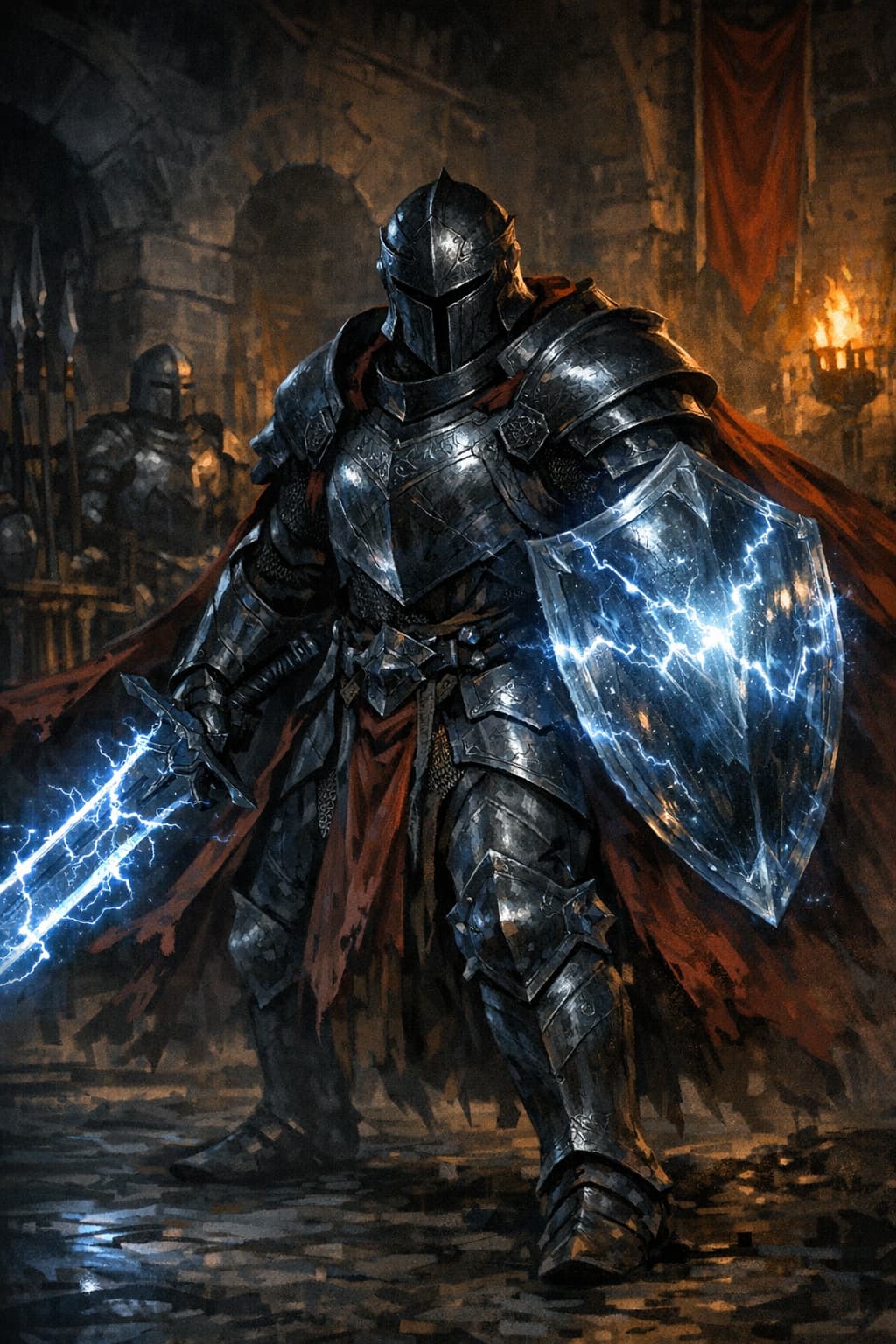
The Eldritch Knight
The Eldritch Knight answers the question every fighter player eventually asks: can I also have some magic? Using the wizard spell list (restricted primarily to abjuration and evocation), the Eldritch Knight gains limited spellcasting that complements rather than replaces martial ability. Shield and Absorb Elements shore up the fighter's main vulnerability to magical damage. Find Familiar provides scouting and advantage via the Help action. At higher levels, Shadow Blade creates a powerful weapon that scales with spell slots. War Magic at level 7 lets you cast a cantrip and still make a weapon attack as a bonus action, and at level 18, Improved War Magic extends this to leveled spells. The Eldritch Knight isn't a wizard who fights — it's a fighter who cheats with just enough magic to stay dangerous against enemies that pure steel can't reach.
Martial Archetypes
The fighter's subclass roster is one of the largest in 5th edition, reflecting the class's versatility and the designers' ongoing efforts to give martial characters interesting options. Each Martial Archetype redefines what a fighter does with their attacks, turning the reliable base chassis into something specialized and distinct. The variety is deliberate — a fighter can be a tactical genius, a mystical swordsman, a psychic warrior, or a mounted knight depending on the archetype chosen at level 3.
Baldur's Gate 3 offered Champion, Battle Master, and Eldritch Knight — the three PHB options — and demonstrated how differently they play even in a digital format. The Battle Master's maneuvers became devastating control tools in the video game's turn-based tactical combat, while the Champion's passive crit range expansion proved its worth across hundreds of attacks. The Eldritch Knight's Shield spell, granting +5 AC as a reaction, became one of the most reliable defensive tools in the entire game.
The 2024 revised rules expand the base fighter's toolkit with Weapon Mastery and Tactical Master, giving every fighter access to special weapon properties that were previously the exclusive domain of subclass features. This narrows the gap between Champion (the simplest archetype) and Battle Master (the most complex), ensuring that even the most straightforward fighter build has meaningful choices each round.
Fighter Subclasses Across Editions and Supplements
| Subclass | Source | Core Fantasy |
|---|---|---|
| Champion | PHB 2014 / BG3 | Pure martial excellence; expanded critical range and athletic superiority |
| Battle Master | PHB 2014 / BG3 | Tactical genius; superiority dice fuel combat maneuvers for control and damage |
| Eldritch Knight | PHB 2014 / BG3 | Arcane warrior; wizard spells (abjuration/evocation) complement martial prowess |
| Purple Dragon Knight / Banneret | SCAG | Inspiring commander; rallying cry heals allies, leadership in combat |
| Arcane Archer | Xanathar's | Magical marksman; enchanted arrows with unique effects, limited uses per rest |
| Cavalier | Xanathar's | Mounted defender; excels at protecting allies and punishing enemies who ignore you |
| Samurai | Xanathar's | Disciplined warrior; Fighting Spirit grants advantage on all attacks for a turn |
| Psi Warrior | Tasha's | Psychic combatant; telekinetic shield, psionic strike, and force-powered leaps |
| Rune Knight | Tasha's | Giant-rune inscriber; grow in size, bind runes to gear for passive and active effects |
| Echo Knight | Explorer's Guide to Wildemount | Shadow-self summoner; attack from your echo's position, swap places tactically |
The Echo Knight, from Matt Mercer's Wildemount setting, is widely regarded as one of the most creative fighter subclasses ever published — a teleporting, flanking, position-controlling nightmare.
Roleplaying & Personality
The fighter's greatest roleplaying challenge is also its greatest opportunity: the class gives you almost nothing to work with narratively, which means everything about your character is a choice you made rather than a feature you were given. A warlock's patron provides built-in story hooks. A cleric's god defines moral parameters. The fighter has a sword. What the fighter does with that sword — and more importantly, why — is entirely up to the player.
Consider the difference between a fighter who learned to fight in a military academy and one who learned in back-alley brawls. Between a retired soldier trying to leave violence behind and a young recruit eager to prove themselves. Between a bodyguard who fights to protect a single person and a mercenary who fights for whoever pays best. The class is the same, but these are six entirely different characters with six different relationships to combat, authority, and morality.
The best fighter characters have a philosophy about violence, even if they've never articulated it. Do they see fighting as a profession, an art form, a necessary evil, or a source of meaning? Do they fight cleanly or dirty? Do they respect their enemies or despise them? A fighter who salutes their opponent before every duel tells a different story than one who throws sand in their enemy's eyes. The class's mechanical simplicity creates space for this kind of character work — you're not spending your mental energy managing spell slots, so you can spend it thinking about who your character is in each moment of combat.
In your setting, who trains fighters? Are there formal academies with competing schools of swordsmanship, each with distinct philosophies? Apprenticeship traditions where a master takes a single student? Military organizations that produce identical soldiers? The training system defines what fighters value — and what they rebel against when they become adventurers.
Military Orders and Mercenary Companies
Fighters occupy every level of society in ways other classes cannot. A wizard requires access to education and arcane knowledge. A cleric needs a religious institution. A fighter needs only a weapon and someone willing to teach. This means fighters appear as kings and conscripts, noble knights and desperate bandits, palace guards and pit fighters. The class mirrors the full economic and social spectrum of any setting, making it the most versatile for worldbuilding purposes.
Military organizations are the fighter's natural habitat, but they're far from the only context. Merchant guilds hire fighters as caravan guards. Noble houses retain fighters as household knights. Cities maintain fighter-heavy watch and guard forces. Gladiatorial arenas turn fighters into celebrities. Adventuring guilds organize fighters into expeditionary companies. Each organization shapes the fighters it produces — a city watch fighter trained in de-escalation and crowd control is mechanically identical but narratively distinct from a gladiator trained to entertain crowds with flashy kills.
The relationship between fighters and political power is direct in most fantasy settings. The person with the best army controls the territory. This makes high-level fighters inherently political — a 15th-level fighter with four attacks per round is a strategic weapon, and kingdoms will court, hire, or attempt to neutralize them accordingly. The "Fighter" entry in the 5e PHB even suggests that high-level fighters attract followers and may establish strongholds, a vestige of the original game's assumption that name-level characters became lords.
Military & Knightly Orders
Standing armies where rank determines everything. Knightly orders with codes of conduct, heraldic traditions, and tournament culture. Military academies that teach strategy alongside swordsmanship. Veterans' organizations that maintain bonds forged in campaigns. These institutions produce fighters who value hierarchy, discipline, and loyalty — and who struggle when those values conflict with adventuring's moral ambiguity.
Independent & Underground
Mercenary companies that sell their swords to the highest bidder, bound by contracts rather than oaths. Gladiatorial stables where fighters are property, entertainers, and athletes simultaneously. Underground fighting circuits with no rules and high stakes. Bodyguard agencies, bounty hunter guilds, and pirate crews. These organizations produce fighters who value personal skill, practical results, and survival — and who trust institutions only as far as the next payday.
Weapons, Armor, and the Fighter's Arsenal
The fighter's relationship with equipment is the most nuanced of any class. Where a wizard cares about their spellbook and a rogue cares about their lockpicks, the fighter cares about everything in the armory. Proficiency in all weapons and all armor means the fighter evaluates every piece of gear as a potential tool, and the best fighter players choose equipment to match situations rather than committing to a single loadout.
Weapon choice defines the fighter's combat identity more than any other decision. A longsword-and-shield fighter plays defensively, using the shield's AC bonus and the Dueling style's damage bonus to create a durable front-liner. A greatsword fighter with Great Weapon Master accepts lower accuracy for devastating per-hit damage. A longbow fighter with the Archery style and Sharpshooter operates from range with terrifying accuracy. Each loadout creates a different experience at the table, and the fighter's proficiency breadth means you can switch between them as the situation demands.
The 2024 Weapon Mastery system deepens this relationship further. Each weapon now has a mastery property — Longswords have Sap (reduce target's attack rolls), Greatswords have Graze (deal damage even on a miss), Longbows have Slow (reduce target's speed). Fighters can swap these properties mid-combat with Tactical Master, meaning a single fighter can control, damage, and debuff with different weapons in the same fight. Equipment is no longer just numbers — it's a tactical vocabulary.
Iconic Fighter Equipment
| Item | Type | Why It Works |
|---|---|---|
| Longsword + Shield | Weapon/Armor | The classic fighter loadout. Dueling style adds +2 damage, shield adds +2 AC. Reliable and versatile. |
| Greatsword | Weapon | 2d6 damage with Great Weapon Fighting smooths the curve. Great Weapon Master adds +10 damage per hit at -5 to hit. |
| Longbow | Weapon | Archery style's +2 to hit makes ranged fighters deadly accurate. Sharpshooter ignores cover and adds +10 damage. |
| Plate Armor | Armor | 18 AC baseline. Combined with a shield (20 AC) and Defense style (21 AC), the fighter becomes extraordinarily hard to hit. |
| Handaxes (pair) | Weapon | Dual wielding with the Two-Weapon Fighting style. More attacks means more chances to trigger Battle Master maneuvers. |
| Halberd / Glaive | Weapon | 10-foot reach with Polearm Master feat grants opportunity attacks when enemies enter range, plus bonus action butt-end strikes. |
A well-equipped fighter carries at least three weapon options: a primary melee weapon, a ranged fallback, and a situational sidearm. Versatility is the point.
Multiclass Synergies
The fighter is the most popular multiclass dip in D&D 5e, and for good reason. Two levels of fighter give you a Fighting Style, Action Surge, and Second Wind — three features that improve any martial or hybrid build. Action Surge in particular is a game-changer for spellcasters: an extra action means casting two leveled spells in a single turn (the bonus action restriction only applies to spells cast as a bonus action, not to multiple actions). A Wizard 18/Fighter 2 can cast two Disintegrates in one turn. That's not a martial ability — it's a nuclear launch code.
Going deeper into fighter offers diminishing returns for most multiclass builds, but there are exceptions. Three levels give you a subclass — Battle Master's maneuvers or Eldritch Knight's shield spell are worth the investment for melee characters. Five levels give you Extra Attack, which doesn't stack with other classes' Extra Attack features but matters if your other class doesn't grant it. The seven extra ASI/feat slots fighters receive over a full twenty levels are also significant, making fighter one of the few classes where a deep single-class investment rewards you with raw customization power.
The fighter's multiclass appeal also works in reverse. A base fighter benefits from dipping into other classes for specific tools. Three levels of rogue grant Sneak Attack (2d6), which triggers on any attack with advantage — and Battle Master's maneuvers or Action Surge can set that up reliably. Two levels of warlock grant Agonizing Blast for ranged chip damage and short-rest spell slots for Shield or utility casting. One level of cleric grants healing spells, a domain feature, and access to heavy armor (which the fighter already has, but the cleric's domain features add significant power).
Fighter as Base Class
Fighter/Rogue: Battle Master maneuvers generate advantage for Sneak Attack. Action Surge lets you attack and use Cunning Action in the same turn. The tactical assassin fantasy realized. Fighter/Warlock (Hexblade): Hex Warrior lets you attack with Charisma, Hexblade's Curse adds proficiency bonus to damage, and Eldritch Smite on Action Surge crits is devastating. Fighter/Paladin: Smite on every hit of an Action Surge turn can deal 60+ damage in a single round at mid levels. The burst damage king.
Fighter as Dip Class
Wizard/Fighter 2: Action Surge lets a wizard cast two fireballs — or two Hold Persons, or Fireball plus Counterspell. The most efficient multiclass dip in the game for full casters. Paladin/Fighter 2: Action Surge for double-smite turns. Extra Fighting Style stacks with Paladin's own. Ranger/Fighter 3 (Battle Master): Maneuvers complement ranger's single-attack-per-round style, adding control and damage riders. Rogue/Fighter 2: Action Surge guarantees a Sneak Attack every round, even if you miss your first attack.
Building Your Character
The fighter's ability score priorities depend on your intended build more than most classes. A Strength-based melee fighter wants Strength 16 first, then Constitution 14 for survivability. A Dexterity-based archer or finesse fighter wants Dexterity 16 first, with Constitution as the secondary. The Eldritch Knight adds Intelligence to the priority list, ideally at 14 or higher for spell save DCs. Unlike most classes, the fighter can be built around either Strength or Dexterity without feeling suboptimal — both paths are well-supported by features and fighting styles.
Feat selection is where the fighter truly differentiates itself from other martial classes. With seven ASI/feat opportunities (compared to five for most classes), the fighter can take both essential combat feats and character-defining options that other classes can't afford. Great Weapon Master, Sharpshooter, Polearm Master, Sentinel, and Crossbow Expert are the premier combat feats. But fighters also have room for feats like Resilient (Wisdom) to shore up a weak save, Lucky for universal reliability, or Skill Expert for out-of-combat utility.
Race selection should complement your build rather than define it. For 2014 rules, Half-orcs (Savage Attacks on crits), variant humans (bonus feat at level 1), and mountain dwarves (Strength + Constitution bonuses plus medium armor) are mechanically strong. Custom lineage from Tasha's lets you start with any feat. For 2024 rules with flexible ability scores, choose based on racial features: Goliaths gain damage reduction, Bugbears get surprise attack bonuses, and Halflings reroll natural 1s on attacks — all valuable for a class that makes more attacks than anyone else.
At level 3, your Martial Archetype defines the rest of your career. The Champion is the lowest-maintenance option — if you want to focus on roleplaying and narrative rather than tracking resources, Champion lets you contribute strongly in combat with zero bookkeeping. The Battle Master is the choice for tactical players who want to make meaningful decisions every round. The Eldritch Knight suits players who want a hybrid experience without the complexity of full spellcasting. If your DM allows expanded options, the Echo Knight offers unprecedented tactical mobility, the Rune Knight provides a mix of control and damage, and the Psi Warrior brings a science-fantasy flavor to the class.
Strength 16, Constitution 14, Dexterity 13 (for multiclass requirements). Take chain mail and a longsword with a shield to start. Choose the Defense fighting style for 19 AC at level 1. At level 3, pick Battle Master and select Trip Attack, Riposte, and Precision Attack. At level 4, take Great Weapon Master and swap to a greatsword — or take Shield Master and commit to the defensive build. You are now the most reliable combatant in any party, every fight, all day long.
Famous Fighters in Fiction
The fighter archetype is so foundational to fantasy that its greatest examples span every medium — novels, video games, television, and film. What unites these characters is not a shared aesthetic but a shared ethos: they earn their place through skill, determination, and an almost unreasonable refusal to stay down. Some wear plate armor and carry longswords; others fight with witcher potions and silver blades. The through-line is competence as identity — these are characters defined not by what power was given to them, but by what they forged through discipline and sacrifice.
Video games have produced some of the most iconic fighters in recent memory. Lae'zel from Baldur's Gate 3 is perhaps the most visible fighter in modern gaming — a githyanki warrior whose uncompromising ferocity and martial pride made her an instant fan favorite and introduced thousands of new players to the class. Percy de Rolo from Critical Role demonstrated that the fighter chassis could support wildly creative concepts, as Matt Mercer's homebrew Gunslinger subclass became one of the show's most beloved characters and eventually an official publication.
In literature and film, the fighter's presence is so pervasive it can be easy to overlook. Aragorn is arguably the most famous fantasy warrior ever created, a ranger-fighter whose kingship was earned on battlefields before it was claimed in throne rooms. Brienne of Tarth reimagined the knight archetype for a modern audience — a fighter who earned her title through sheer skill and integrity in a world that refused to grant it willingly. These characters remind us that the fighter fantasy endures because it is, at its core, about human excellence in the face of impossible odds.
Iconic Fighters Across Fiction
| Character | Source | Why They Matter |
|---|---|---|
| Lae'zel | Baldur's Gate 3 | Githyanki fighter whose fierce martial pride and uncompromising personality made the class iconic for a new generation of RPG players |
| Aragorn | The Lord of the Rings | The ranger-fighter king who proved that the greatest warrior in fantasy could also be its most reluctant leader — mastery in service of duty, not glory |
| Brienne of Tarth | A Song of Ice and Fire / Game of Thrones | Redefined the knight fantasy by earning it through sheer skill and integrity in a world that denied her the title she deserved |
| Sturm Brightblade | Dragonlance | Knight of Solamnia whose devotion to the knightly code — even when the order itself had fallen — defined the honorable fighter archetype for a generation of readers |
| Percy de Rolo | Critical Role | The gunslinger fighter whose tragic backstory and inventive combat style proved the class could anchor a narrative as compelling as any spellcaster's |
| Sarevok Anchev | Baldur's Gate | The villain fighter who proved the class could drive an entire story as antagonist — raw martial ambition corrupted into something terrifying |
| Geralt of Rivia | The Witcher | Technically a mutant sword-master, but functionally a Battle Master fighter — tactical precision, multiple fighting styles, and a pragmatic approach to every encounter |
Across RPGs & Video Games
The fighter is the one class archetype that exists in virtually every role-playing system ever designed, because the concept of "person who is very good at fighting" is the most universal power fantasy in gaming. What varies is how each system expresses that competence. D&D 5e gives the fighter Action Surge and the most attacks per round of any class. Pathfinder 2e grants legendary weapon proficiency — a tier of accuracy no other class can reach. World of Warcraft splits the warrior into three distinct specializations that each explore a different facet of the archetype. The fighter is the constant; the mechanics are the variable.
The distinction between systems reveals what each one values in martial combat. D&D 5e's fighter is built around volume of attacks and burst actions — the fantasy of doing more in a single moment than anyone else. Pathfinder 2e's fighter is built around accuracy and opportunity — you hit more often and punish mistakes harder than any other class, which makes the fighter feel like the most skilled combatant rather than the most active one. World of Warcraft's warrior splits the archetype into Arms (methodical, devastating single strikes), Fury (berserker dual-wielding frenzy), and Protection (immovable shield-wall tank), each a valid reading of what "fighter" means.
Single-player RPGs tend to treat the fighter as the default starting point — the class you pick when you want the most straightforward path through the game. Final Fantasy's Knight and Warrior classes, from Cecil's Dark Knight to the Warrior of Light, established the heavy-armor-and-sword template that RPGs have followed for decades. The Elder Scrolls abandoned formal classes entirely by Skyrim, but the heavy-armor-and-weapon build remains the most intuitive way to play. Dragon Age's Warrior class offers the most clearly delineated fighter subtypes in any BioWare game, with Champion, Templar, and Reaver each feeling like a distinct philosophy of violence.
The Fighter Archetype Across Game Systems
| Franchise | Class / Role | Key Mechanic | Key Distinction |
|---|---|---|---|
| D&D 5e | Fighter | Action Surge, Extra Attack (up to 4), Fighting Styles | Most ASIs of any class; volume-of-attacks philosophy with burst-action capability |
| Pathfinder 2e | Fighter | Legendary weapon proficiency, Attack of Opportunity from level 1 | Highest accuracy in the system; considered the strongest martial class by a significant margin |
| World of Warcraft | Warrior | Arms (Mortal Strike), Fury (Rampage), Protection (Shield Block) | Three specs split the archetype into methodical striker, berserker, and immovable tank |
| Final Fantasy | Knight / Warrior | Heavy armor, Cover/Protect abilities, high HP pool | The default RPG archetype — Cecil, Steiner, and Warrior of Light defined the template |
| Elder Scrolls | Heavy Armor + Weapon builds | Skill trees for One-Handed, Two-Handed, Block, Heavy Armor | No formal class system in Skyrim, but the fighter build remains the most intuitive playstyle |
| Dragon Age | Warrior | Champion (tank), Templar (anti-mage), Reaver (berserker) | More clearly delineated subtypes than D&D; each specialization is a distinct combat philosophy |
Every system reinvents the fighter, but the core promise never changes: you will be the best at hitting things, and hitting things will always matter.
The Fighter at the Table
The fighter's reputation as the "simple" class masks a truth that experienced players understand: the fighter's depth comes from the game itself, not from the character sheet. A wizard's complexity lives in their spell list. A fighter's complexity lives in the tactical situation — terrain, enemy positioning, action economy, and the decision of when to commit Action Surge versus when to hold it. The best fighter players think like generals, not button-pressers, and they thrive when the DM gives them a battlefield worth thinking about.
Battle Master maneuvers are the gold standard for what martial tactical options should feel like. Trip Attack to knock a flying enemy out of the sky. Riposte to punish an enemy who swings and misses. Precision Attack to turn a near-miss into a confirmed hit on the round that matters most. Menacing Attack to frighten a key target before your allies' turns. Each maneuver creates a story moment — you didn't just deal damage, you changed the shape of the fight. Players who dismiss the fighter as boring have usually never played a Battle Master in a combat encounter with meaningful terrain and varied enemy types.
For Dungeon Masters, the single most important thing you can do for a fighter player is design encounters that reward tactical thinking. A flat, featureless room with a single group of enemies is a fighter's worst nightmare — not because they'll lose, but because they'll be bored. Give them elevation to hold, chokepoints to defend, destructible cover to exploit, and enemy compositions that require different approaches. When the fighter player starts asking "Can I kick the table to create cover?" or "If I grapple this one off the bridge, do we both fall?" — that's when the class comes alive.
Design combat encounters with the fighter in mind: use elevation changes that reward holding high ground, chokepoints where a single defender can control enemy flow, destructible objects that creative players can weaponize, and mixed enemy groups (melee brutes, ranged archers, a spellcaster) that force the fighter to prioritize targets. Action Surge shines brightest when the fighter has to choose the perfect moment to use it — not when every round feels the same. Give your fighters a reason to move, a reason to stay, and a reason to think.
The Fighter in World-Building
The fighter is the class that most directly reflects how a setting handles violence, power, and social structure. In a world where magic is rare, fighters are the undisputed rulers of the battlefield and likely dominate political hierarchies. In a world where magic is common, fighters represent the stubborn persistence of mundane excellence — the people who looked at wizards reshaping reality and said, "I'll manage with a sword, thanks." Either way, the fighter's place in society reveals what the setting values.
Consider how martial training is organized in your world. A feudal society might produce fighters through the squire-to-knight pipeline, creating a warrior aristocracy where martial skill is tied to noble blood and land ownership. A mercantile society might treat fighting as a trade, with guilds that regulate who can carry weapons and fighter academies that compete for students like universities. A tribal society might develop fighters through hunting traditions and rites of passage. Each system produces fighters with different values, loyalties, and relationships to authority.
The existence of fighter subclasses raises worldbuilding questions. If Battle Masters exist, there must be a tradition of codified combat maneuvers — who developed them, and are they written down or passed master-to-student? If Eldritch Knights exist, some institution must teach fighters basic arcane theory — is this an academy, a secret order, or a tradition that every military unit includes a few spell-capable soldiers? If Psi Warriors exist, psychic ability intersects with martial training — is this a recent discovery or an ancient tradition?
At the highest levels, fighters become setting-defining figures. A 20th-level fighter is a one-person army capable of four attacks per action, eight on an Action Surge turn, with the hit points to survive a dragon's breath and the saves to resist a lich's magic. These individuals don't just participate in wars — they decide them. Your setting needs to account for what happens when a single mortal, with no magic of their own, becomes powerful enough to topple kingdoms. That's the fighter's final statement: power doesn't require permission from gods, patrons, or the fabric of reality. It just requires the will to keep swinging.
“The wizard studies for decades to bend reality. The fighter trains for decades to make reality irrelevant. At the highest level, the difference is academic.”
— On martial excellence versus arcane power
FAQ
Common Questions
The fighter is a martial class defined by weapon mastery, tactical versatility, and sustained combat excellence. Fighters are proficient with all weapons and armor, gain more attacks per turn than any other class (up to four with Extra Attack at level 20), and can take an additional full action with Action Surge. They represent trained warriors — soldiers, knights, gladiators, archers, duelists — who rely on skill and discipline rather than magic or divine power.
Action Surge grants one additional action on your turn, once per short or long rest (twice per rest at level 17). This is a full action, not a bonus action — meaning a fighter with Extra Attack can make all their attacks again. At level 5 that's four total attacks in one turn; at level 20, it's eight. Action Surge is also powerful for multiclass builds: a Fighter/Wizard can cast two leveled spells in one turn since the bonus-action spellcasting restriction doesn't apply to actions gained from Action Surge.
Battle Master is widely considered the strongest and best-designed, offering superiority dice that fuel tactical maneuvers like Trip Attack, Riposte, and Precision Attack. Champion is the best low-complexity option, expanding critical hit range to 19-20 (and 18-20 at level 15) for reliable damage. Eldritch Knight adds wizard spellcasting for defensive and utility magic. Among expanded options, Echo Knight (Wildemount) is exceptionally strong for its teleportation and flanking, and Rune Knight (Tasha's) offers a potent mix of size-growth, control runes, and damage.
Fighters are unique in gaining Extra Attack improvements beyond the standard two attacks at level 5. At level 11, fighters attack three times per action, and at level 20, they attack four times. No other class matches this scaling — paladins, rangers, and barbarians all cap at two attacks. Combined with Action Surge, a level 20 fighter can make eight weapon attacks in a single turn, making them the undisputed kings of sustained melee and ranged damage output.
The fighter is arguably the best class for beginners, depending on subclass choice. The Champion archetype requires minimal resource tracking — your abilities are mostly passive improvements to attacks and athletics. You don't manage spell slots, rage charges, or ki points. However, the Battle Master offers more engaging tactical decisions if a beginner wants depth. The fighter also teaches core combat fundamentals (positioning, action economy, weapon choice) that apply to every other class, making it an excellent foundation for learning the game.
The top combat feats depend on your build. For two-handed weapons: Great Weapon Master (+10 damage at -5 to hit) is essential, often paired with Polearm Master for bonus action attacks and opportunity attack control. For ranged builds: Sharpshooter (+10 damage, ignore cover) combined with Crossbow Expert (bonus action hand crossbow attack, no disadvantage at close range). For sword-and-shield: Sentinel (stop enemy movement on opportunity attacks) and Shield Master (shove as bonus action). Fighters' extra ASI slots mean you can take two or three of these over a career.
Fighters offer the most sustained, reliable damage and the broadest tactical versatility. Barbarians deal comparable damage while raging but are limited by rage charges and lack ranged options; they excel as tanks through damage resistance but fall behind in long adventuring days. Paladins deliver massive burst damage through Divine Smite but burn through spell slots quickly; they add healing and auras that fighters lack. The fighter's advantage is consistency — Action Surge recharges on a short rest, Extra Attack has no resource cost, and seven ASI/feat slots allow unmatched customization. In a five-encounter day, the fighter outperforms both.
Two levels of fighter give you three powerful features for a minimal class investment: a Fighting Style (permanent passive bonus), Second Wind (bonus-action self-heal), and Action Surge (a full extra action once per short rest). Action Surge is the key draw — for spellcasters, it means casting two leveled spells in one turn, which is otherwise impossible. A Wizard 18/Fighter 2 can Fireball twice, or Disintegrate plus Counterspell, in the same turn. For martial characters, it doubles your attacks for one explosive round. No other two-level dip in the game offers this much value.