


Paladin
Holy warrior, oath-sworn champion — divinity forged in conviction and wielded like a blade
What Is a Paladin?
The paladin answers a question most classes never ask: what if you believed in something so completely that reality bent around your conviction? Not faith in the cleric sense — clerics channel the power of a god who exists whether they believe or not. The paladin's power comes from the oath itself. The promise is the engine. Break the promise, and the engine dies. That fragility is what makes paladins compelling.
At its core, the paladin class represents the marriage of martial prowess and moral commitment. Fighters are skilled. Barbarians are strong. Paladins are righteous, and righteousness — whatever form it takes — gives them access to magic that no amount of training can replicate. Divine Smite doesn't come from practice. Lay on Hands doesn't come from medical knowledge. These abilities come from meaning it, whatever "it" is.
This fantasy resonates because most people want to believe that commitment matters. That standing for something — really standing, not just posting about it — should grant you power. The paladin says: yes, actually, it does. Your oath isn't metaphorical. It's a binding contract with the universe, and the universe pays well. The catch is that the universe also audits, and the penalties for breach of contract are devastating.
The modern paladin has evolved far past the lawful-good-only holy knight of early editions. An Oath of Vengeance paladin channels righteous fury. An Oath of the Ancients paladin protects beauty and joy against darkness. An Oathbreaker serves no cause but their own ambition. The class isn't about being good — it's about being absolute. Whatever you swear, you swear it with your whole soul, and that totality is where the power lives.
“The cleric prays and hopes their god is listening. The paladin swears an oath and dares the universe not to answer.”
— On the difference between faith and conviction
Literary & Mythological Origins
The word "paladin" traces directly to the Paladins of Charlemagne — the twelve legendary peers of the Frankish emperor's court, most famously Roland, who died holding the pass at Roncevaux rather than blow his horn for help. The Song of Roland (c. 1040–1115) established the archetype: a warrior whose martial skill was inseparable from their devotion, whose death in battle was martyrdom rather than defeat. Roland didn't fail. He chose his oath over survival.
The Arthurian knights of the Round Table added another layer. Galahad, the perfect knight, could achieve the Holy Grail because his purity was absolute. Lancelot, the greatest warrior, could not — because his love for Guinevere violated his oath to Arthur. The tension between human desire and sacred duty is baked into the paladin's DNA. Every paladin story is, at some level, the question of whether you're a Galahad or a Lancelot — and what happens when you find out.
Crusader mythology contributes the more problematic side of the archetype. The historical Crusades produced the Templars and Hospitallers — military orders that combined monastic discipline with extreme violence. The "holy warrior" concept carries this baggage: the idea that divine sanction justifies any action, that an oath to a righteous cause excuses the blood spilled in its name. Good paladin storytelling engages with this tension rather than ignoring it.
In modern fantasy literature, paladins appear throughout, from the Silver Hand in Warcraft to Sturm Brightblade in Dragonlance. What unites them is the moment of testing — the scene where the oath becomes expensive, where keeping your word costs something real, and the paladin pays anyway. That's the moment the class was built to deliver.
Key Literary and Mythological Influences
| Source | Era | Contribution to the Archetype |
|---|---|---|
| Paladins of Charlemagne | c. 800 CE | The name itself; warriors whose devotion matched their martial skill |
| Song of Roland | c. 1100 CE | Martyrdom over retreat; oath-keeping as the highest virtue |
| Arthurian Grail knights | c. 1200 CE | Purity as power; the cost of broken vows; Galahad vs. Lancelot |
| Templar / Hospitaller orders | c. 1100–1300 CE | Military-monastic discipline; holy violence; institutional zealotry |
| Sturm Brightblade (Dragonlance) | 1984 | The paladin torn between honor and pragmatism; death before dishonor made personal |
| Uther / Arthas (Warcraft) | 1994–2003 | The fallen paladin; the Oathbreaker as tragedy; conviction corrupted by desperation |
Strip any one of these sources away and you lose something essential. The paladin is a composite myth, and every layer carries weight.
Evolution Across Editions
The paladin has been part of D&D since almost the beginning, and its evolution tells the story of how the game's relationship with morality changed over decades. In Original D&D's Greyhawk supplement (1975), the paladin was a subclass of fighter — lawful good only, with lay on hands, disease immunity, a holy sword at high level, and a warhorse. The restrictions were fierce: own no more than ten magic items, tithe 10% of income, never associate with evil characters. Playing a paladin meant accepting a straitjacket in exchange for power.
Second edition (1989) kept the lawful good restriction and the punishing code of conduct but added the concept of the paladin "falling" — losing all powers if they committed an evil act. This created one of D&D's most notorious dynamics: the DM-vs-paladin arms race, where game masters would construct elaborate moral dilemmas to force paladins into impossible choices, and paladin players would argue about alignment like lawyers. It was frequently terrible for the whole table, but it produced some legendary roleplaying moments.
Third edition (2000) began to loosen the grip. Paladins were still lawful good, but the smite mechanic replaced some of the passive abilities with active combat choices. The paladin began to feel less like a restricted fighter and more like a half-caster with a martial chassis. But the real revolution came with 5th edition in 2014, which replaced the alignment restriction with Sacred Oaths — customizable codes of conduct that defined the paladin's power source without mandating a specific moral alignment. Suddenly, paladins could be complicated.
The 2024 revision refines this further, streamlining the class and adding weapon mastery while preserving the oath-based identity. Divine Smite becomes a spell rather than a class feature, which changes the action economy significantly. The paladin's evolution mirrors the broader game's movement from rigid archetypes to flexible storytelling tools — from "you must be this good to ride" to "what do you believe strongly enough to fight for?"
Greyhawk Supplement (OD&D)
Paladin as fighter subclass — lawful good only, lay on hands, disease immunity, holy sword. Severe restrictions on wealth and magic items
Player's Handbook (AD&D 1e)
Formalized paladin with strict ability score requirements (Cha 17+). Warhorse summoning, detect evil at will, protection from evil aura
AD&D 2nd Edition
Added the "fallen paladin" concept — violation of the code strips all powers. Created the infamous DM-vs-paladin dynamic
D&D 3rd Edition
Smite Evil as active ability. Still LG-only, but the spellcasting and combat framework became more flexible
D&D 5th Edition
Sacred Oaths replace alignment restriction. Divine Smite as a slot-burning nova. The modern paladin identity crystallizes
D&D 2024 Revision
Divine Smite becomes a spell. Weapon mastery added. Find Steed improved. Oath-based identity preserved with streamlined mechanics
Divine Smite and Aura of Protection
Divine Smite is the paladin's signature and the reason the class is feared in combat. When you hit with a melee weapon attack, you can expend a spell slot to deal extra radiant damage — 2d8 for a 1st-level slot, plus 1d8 per slot level above 1st, up to 5d8. Against undead and fiends, add another 1d8 on top. Because you choose to smite after you know you've hit, there's zero waste. When a paladin crits, the smite dice double too, and a 5th-level-slot critical smite can deal 12d8 radiant damage in a single hit. That's the kind of number that ends encounters.
Lay on Hands is the paladin's second pillar — a pool of healing equal to 5 times your paladin level. You can spend from this pool to restore hit points with a touch, cure diseases, or neutralize poisons (5 points per condition). Unlike cleric healing, Lay on Hands requires no spell slot, no action economy beyond a single action, and you decide exactly how many points to spend. Dropping exactly 1 hit point to bring an unconscious ally back into the fight is the paladin's most efficient trick, and it never stops being clutch.
The paladin's Aura of Protection, gained at 6th level, is arguably the class's most powerful feature. You and every ally within 10 feet (30 feet at 18th level) add your Charisma modifier to all saving throws. In a game where failed saving throws end characters, a +4 or +5 bonus to every save for the entire party is transformative. This aura alone justifies keeping the paladin in the center of the group, and it makes the class one of the best support characters in the game despite being a full martial combatant.
Spellcasting rounds out the chassis. Paladins are half-casters, learning spells from a curated list that includes buffs (Bless, Shield of Faith), smite variants (Thunderous Smite, Wrathful Smite), healing (Cure Wounds, Revivify), and utility (Find Steed, Zone of Truth). The spell list is smaller than a cleric's but tightly focused on the paladin's dual role as warrior and protector. Most paladin spell slots end up fueling Divine Smite anyway, but the flexibility to cast when the situation demands it is what separates a paladin from a fighter with better damage dice.
- Divine Smite (expend slot on hit for radiant damage)
- Lay on Hands (5 × level healing pool)
- Divine Sense (detect celestials, fiends, undead)
- Fighting Style (Defense, Dueling, Great Weapon, Protection)
- Extra Attack
- Aura of Protection (Cha mod to saves, 10/30 ft)
Half-caster with slots up to 5th level. Sacred Oath chosen at level 3 defines subclass identity.
- Divine Smite (now a bonus-action spell, 1/turn)
- Lay on Hands (improved action efficiency)
- Weapon Mastery
- Faithful Steed (replaces Find Steed as class feature)
- Aura of Protection (unchanged core, broader subclass auras)
- Epic Boon at 19
The 2024 revision makes Divine Smite a spell with a bonus action cost and once-per-turn limit, reducing nova potential but creating more consistent damage output.
The paladin's nova damage is the highest single-target burst in the game when combined with critical hits. A level 5 paladin who crits with a greatsword and burns a 2nd-level slot deals 4d6 (weapon) + 6d8 (smite) + Strength modifier — an average of around 45 damage in one swing. This burst potential is balanced by limited spell slots and no way to recover them on a short rest. Paladins hit like a truck, but the truck runs out of fuel.
The Archetype in Practice
Playing a paladin well means understanding that your oath isn't a constraint — it's your character's thesis statement. Every decision your paladin makes should be readable through the lens of their oath. An Oath of Devotion paladin lies and it's a crisis. An Oath of Vengeance paladin shows mercy and it's a choice that costs something. The oath provides dramatic friction automatically; you just have to let it.
In combat, the paladin occupies a unique tactical position. You're tanky enough to hold the front line (heavy armor, d10 hit die, self-healing), dangerous enough to threaten priority targets (Divine Smite burst), and supportive enough to keep the party alive (Aura of Protection, Lay on Hands, buff spells). The tension is resource management: every smite you throw is a spell you can't cast later, and every spell you cast is a smite you've surrendered. The best paladin players read the battlefield and choose their moments.
The three subclass highlights below represent the breadth of the paladin experience — from unwavering virtue to cold-blooded justice to the corruption of sacred power.
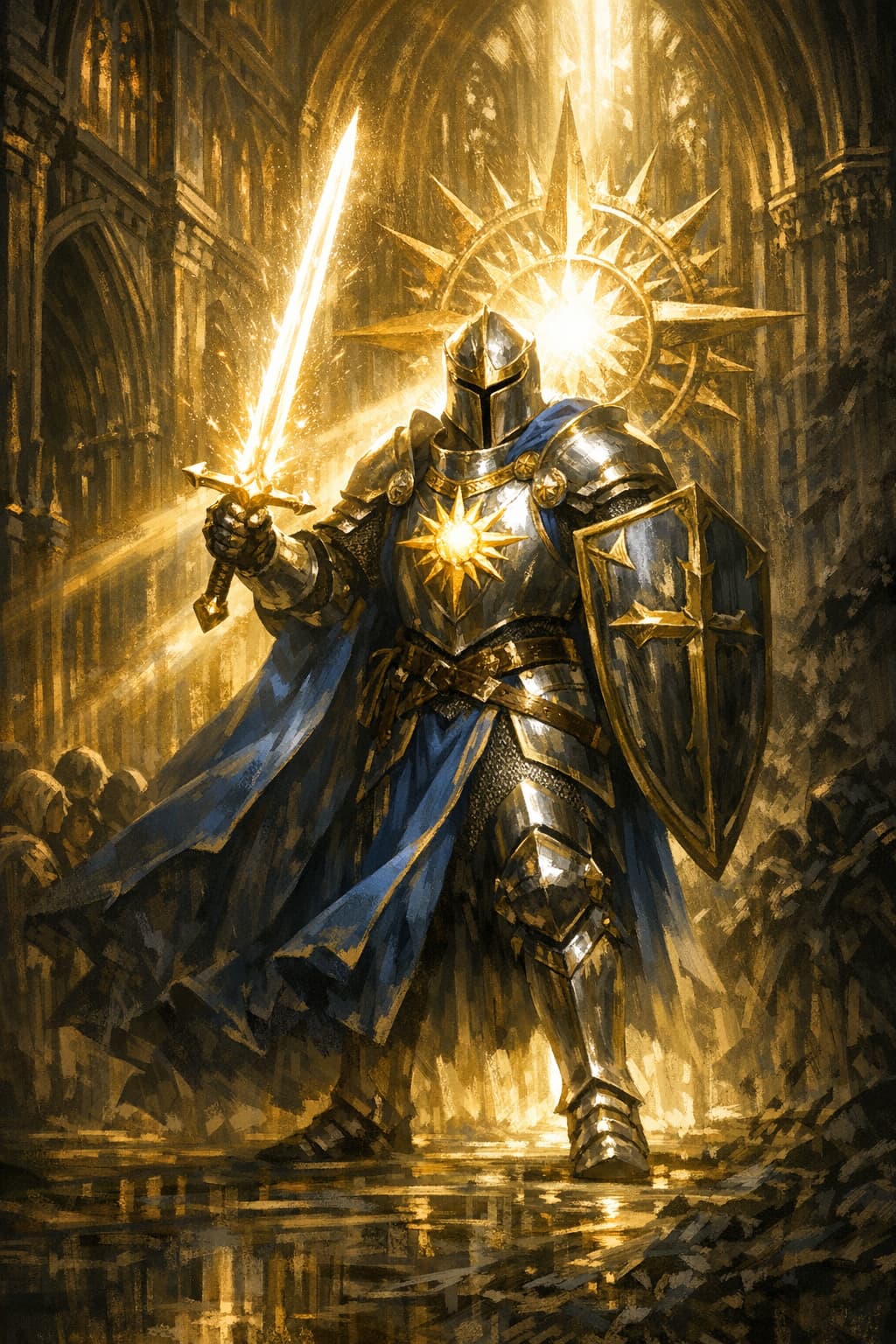
Oath of Devotion
The classic. The one people picture when they hear "paladin." Devotion paladins swear to uphold honesty, courage, compassion, honor, and duty — the full chivalric package. Their Channel Divinity options include Sacred Weapon, which adds your Charisma modifier to attack rolls for a minute and makes your weapon glow, and Turn the Unholy, which forces fiends and undead to flee. At 20th level, Holy Nimbus wraps you in sunlight that deals radiant damage to enemies within range. If you want to play the shining knight who inspires allies and terrifies evil, Devotion delivers that fantasy without compromise.
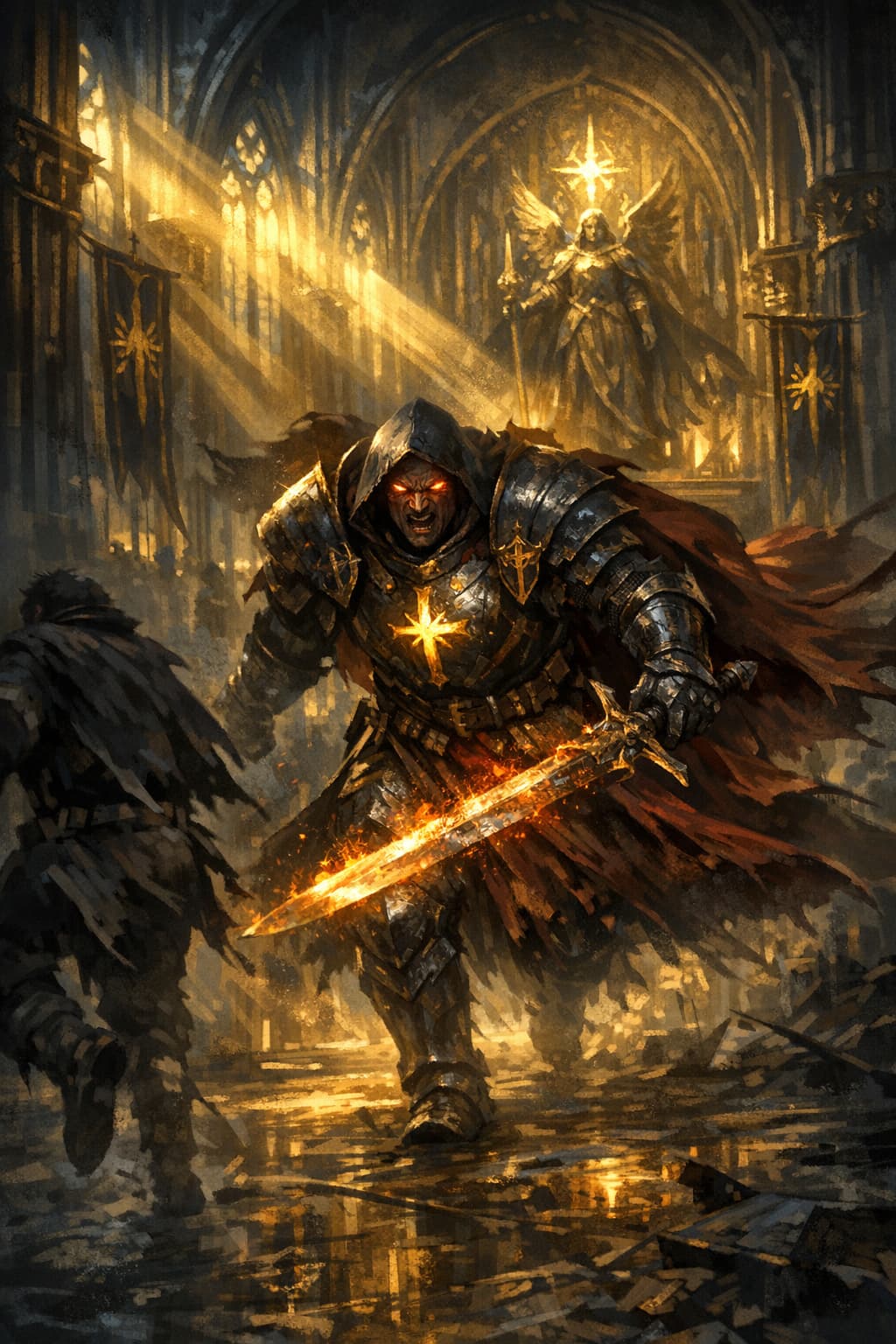
Oath of Vengeance
Vengeance paladins are the dark mirror of Devotion — still righteous, but with the mercy stripped away. Their oath demands that they punish the wicked, pursue the guilty relentlessly, and prioritize justice over kindness. Mechanically, their Channel Divinity includes Vow of Enmity, which grants advantage on all attack rolls against a single target for one minute. Combined with Divine Smite, this turns the Vengeance paladin into an assassin in plate mail — a single-target destroyer who picks the most dangerous enemy and erases them. Relentless Avenger lets you chase fleeing targets, and their spell list includes Hunter's Mark and Haste.
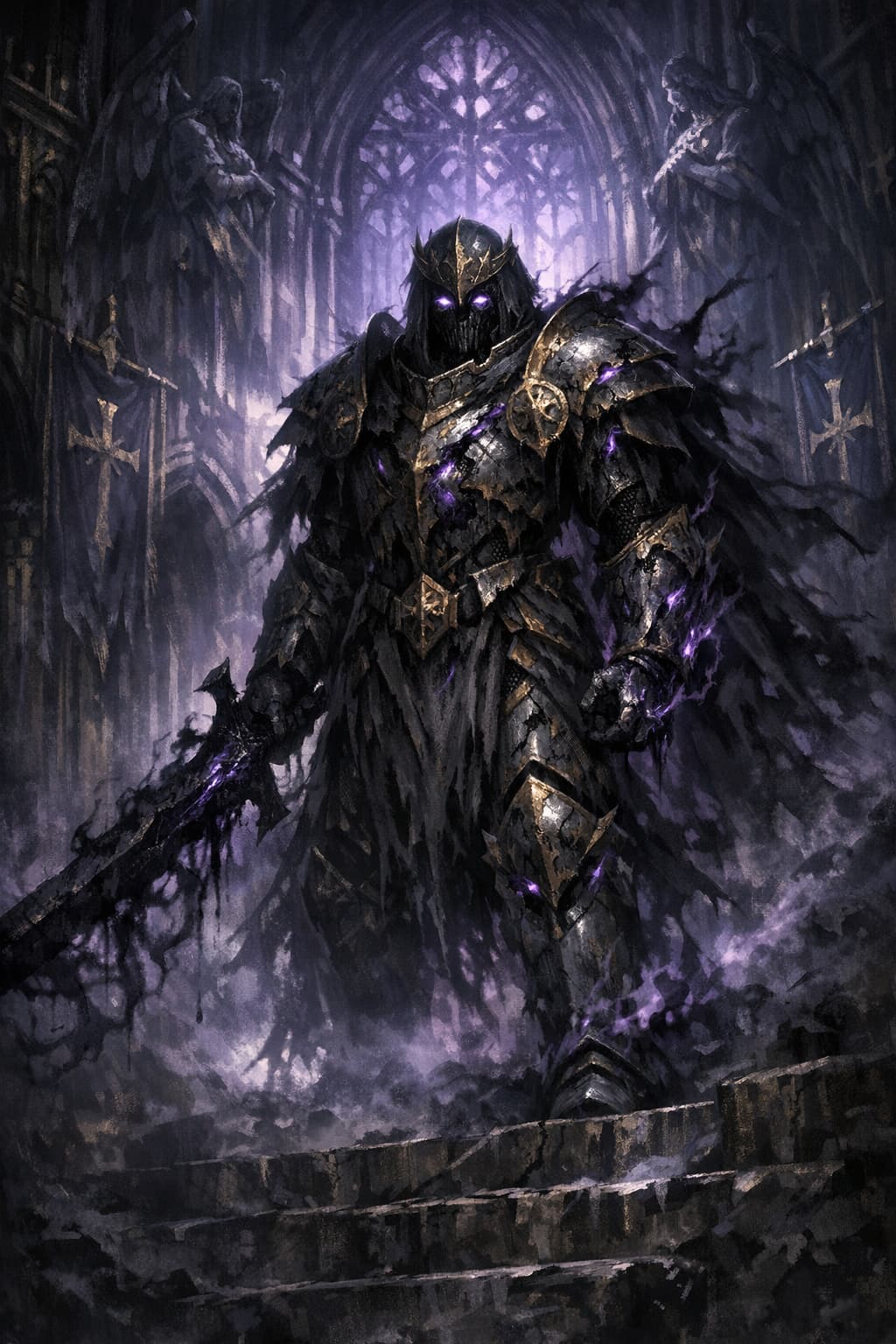
Oathbreaker
The Oathbreaker is the paladin who fell — who broke their sacred vow and found power in the breaking. Published in the Dungeon Master's Guide as a villain option (but widely permitted by DMs for player characters), the Oathbreaker channels darkness instead of light. Their Aura of Hate adds Charisma modifier to melee damage for the paladin and nearby fiends and undead — which means the Oathbreaker's minions hit harder just by standing near them. Dread Lord, their 20th-level capstone, creates an aura of creeping shadow that frightens enemies and deals psychic damage. It's the paladin's conviction turned inward and corrupted, proof that the power was never about goodness — it was about certainty.
Sacred Oaths
The paladin's subclass design is one of the most coherent in the game. Each Sacred Oath comes with a set of tenets — narrative promises your character has made — plus a curated spell list that expands at specific levels and Channel Divinity options that define your tactical identity. The tenets aren't just flavor; they're meant to create friction, to give you and your DM material for dramatic tension. A paladin who never struggles with their oath is a paladin who isn't playing the class to its potential.
Fifth edition launched with three oaths — Devotion, Ancients, and Vengeance — but the supplement ecosystem has expanded the options considerably. Xanathar's Guide added Conquest and Redemption, two oaths that sit at opposite ends of the moral spectrum. Tasha's Cauldron added the Oath of Glory and the Oath of the Watchers. Baldur's Gate 3 lets you break your oath to become an Oathbreaker, turning the villain option into a full player path with one of the game's most satisfying narrative arcs.
What makes the Sacred Oath system work is that every option redefines what the paladin is for. Devotion is the protector. Vengeance is the hunter. Ancients is the guardian of joy. Conquest is the tyrant who imposes order through terror. Redemption is the pacifist who believes everyone deserves a second chance. The class chassis remains the same — smite, heal, aura — but the oath gives it meaning.
Paladin Sacred Oaths Across Sources
| Oath | Source | Core Fantasy |
|---|---|---|
| Devotion | PHB 2014 / 2024 | The classic holy knight — honesty, courage, compassion, and radiant power against evil |
| Ancients | PHB 2014 / 2024 | Guardian of light and life; fey-touched protector who shields beauty against darkness |
| Vengeance | PHB 2014 / 2024 | The relentless avenger who hunts the wicked; justice without mercy |
| Conquest | Xanathar's | Rule through strength and fear; break the will of enemies before breaking their bodies |
| Redemption | Xanathar's | Peace through patience; every creature deserves a chance at salvation |
| Glory | Tasha's / Mythic Odysseys | Heroic excellence; inspire allies and pursue legendary deeds worthy of song |
| Watchers | Tasha's | Sentinel against extraplanar threats; vigilance against aberrations and fiends |
| Crown | SCAG | Service to civilization and law; the loyal knight who serves realm above self |
| Oathbreaker | DMG / BG3 | Fallen paladin; power through broken vows; darkness fueled by former conviction |
Each oath redefines what "smite" means. Devotion smites to protect. Vengeance smites to punish. Conquest smites to dominate. The damage dice are identical; the story is entirely different.
Oaths, Morality, and the Fallen Paladin
Every D&D forum has a thread about it. Every long-running campaign confronts it eventually. The paladin did something questionable, and now the table is arguing about whether the oath is broken. The fallen paladin question is the most frequently debated topic in paladin discourse because it sits at the intersection of mechanics, narrative, and real-world moral philosophy. And most tables handle it badly.
The 5e rules are deliberately vague about oath-breaking consequences. The Oathbreaker subclass in the Dungeon Master's Guide is presented as an NPC villain option, not a player path, though many tables adopt it for fallen PCs. The Dungeon Master's Guide suggests that a paladin who violates their oath might need to seek atonement, take a different oath, or become an Oathbreaker. But it provides no mechanical trigger, no specific threshold. That ambiguity is a feature, not a bug — it forces the table to have a conversation about what the oath means rather than pointing at a rule.
Good tables establish oath boundaries during session zero. What counts as breaking the Oath of Devotion? Is lying always a violation, or only when it harms the innocent? Does killing an unarmed enemy violate the Oath of the Ancients, or does it depend on whether that enemy threatened the natural world? These questions do not have universal answers, and treating them as if they do leads to adversarial DM-player dynamics where the paladin feels trapped by gotcha rulings rather than empowered by meaningful choices.
The most interesting fallen paladin stories treat the fall as a character arc, not a punishment. A paladin who slowly compromises their oath under the weight of impossible choices — saving one village by sacrificing another, working with an evil faction to prevent a greater evil — is telling a story about the cost of conviction in an imperfect world. That story is worth more than any Aura of Protection bonus. And the redemption arc that follows, if the player chooses to pursue it, is some of the best collaborative storytelling tabletop gaming can produce.
“The oath is not a cage. It is a compass. And sometimes the compass points into the storm.”
— On the paladin dilemma
Roleplaying & Personality
The paladin's reputation for being annoying to play with comes from a specific failure mode: the player who uses the oath as a weapon against the party. "My paladin wouldn't allow that" is the seven most dreaded words at any table. But this failure mode exists because the class is designed to create moral friction, and friction mishandled becomes grinding. The key insight is that the oath should create internal conflict for the paladin, not external conflict for the group.
A well-played paladin struggles with their oath. They see the gray area. They feel the pull of pragmatism. They want to let the villain go, or they want to kill the prisoner, and their oath says otherwise. The interesting story isn't the paladin who always does the right thing without hesitation — it's the paladin who hesitates, who agonizes, and then chooses the oath anyway because that's who they are. The power comes from the choosing, not the certainty.
Consider what your paladin was before the oath. Nobody is born a paladin. Something happened — a trauma, a revelation, a moment of transcendent purpose — that made your character swear a binding vow to the universe. What was that moment? What did they give up? What do they miss? A paladin who used to be a thief has different tensions than one raised in a temple. A paladin who swore vengeance after watching their family die has different energy than one who chose devotion because they genuinely believe in kindness. The oath is the destination; the origin story is where character depth lives.
Don't forget humor. The best paladins in fiction — and at gaming tables — have a sense of perspective about their own intensity. A paladin who can laugh at themselves, who recognizes the absurdity of their position, who can make a wry joke about the difficulty of being righteous in an unrighteous world, is infinitely more fun to play alongside than one who treats every moment like a sermon.
What happens to paladins who break their oaths in your setting? Is it a private spiritual crisis, or does the power loss manifest visibly — armor tarnishing, holy symbols cracking, auras flickering out? If the fall is public, broken paladins might be social pariahs. If it's private, the paladin might fake their powers for months while desperately seeking redemption. Both options generate incredible story hooks.
Holy Orders and Knightly Chapters
Paladins naturally gravitate toward — or create — organizations. The oath demands structure, community, and accountability. A lone paladin is a tragedy in progress; a paladin order is a force of history. The knightly orders that populate fantasy settings exist because the paladin archetype demands institutional expression. Someone has to train the next generation of oath-takers, maintain the holy sites, and ensure the order's mission survives any individual member.
In most settings, paladin orders sit at the intersection of religious and military power. They answer to temples but fight wars. They serve gods but command soldiers. This dual allegiance creates political tension automatically — does the order obey the king or the high priest? What happens when the crown's interests conflict with the deity's commands? The order becomes a faction with its own agenda, its own internal politics, and its own potential for corruption.
Not all paladin organizations are formal orders, though. Loose brotherhoods of oath-sworn wanderers, secret societies dedicated to a hidden cause, revolutionary cells whose members share an oath of liberation — the organizational form follows the oath's content. An Oath of Vengeance might produce a network of bounty hunters connected by a shared code. An Oath of Redemption might create a monastery where broken souls come to heal and eventually take up the oath themselves.
Formal Knightly Orders
Hierarchical structures with ranks from squire to grandmaster. Fortress-monasteries combining barracks, chapels, and training grounds. Strict codes of conduct enforced by internal tribunals. Political influence that rivals — and sometimes threatens — secular rulers. Schisms when members disagree about the oath's interpretation, producing splinter orders with competing visions of the same sacred duty.
Oath-Bound Fellowships
Decentralized networks of individual paladins who share a cause but not a hierarchy. Recognition signs — a specific prayer, a symbol traced on a doorpost, a greeting phrase — instead of formal ranks. Sworn to aid any fellow member without question. The fellowship's power comes from reputation: when people see the sign, they know help has arrived. These groups suit settings where institutional religion has failed or doesn't exist.
Holy Symbols and Consecrated Arms
The paladin in full plate with a longsword and shield is one of fantasy's most iconic images, and the mechanics back it up. Heavy armor proficiency plus a shield gives a starting AC of 18 — the highest base AC in the game without magic. Add the Defense fighting style and you're at 19. This isn't vanity; it's necessity. The paladin needs to be in melee range to smite, to heal, to project their aura. Being hard to hit keeps you where the party needs you.
Weapon choice matters more for paladins than many players realize. A greatsword (2d6) deals more average damage and works with the Great Weapon Fighting style, which lets you reroll 1s and 2s on damage dice — and those rerolls apply to smite dice too. A longsword and shield (1d8 + 2 AC) trades damage for survivability. Polearms with the Polearm Master feat generate bonus action attacks and opportunity attacks at reach, giving more chances to trigger smites. Each weapon tells a different story about what kind of paladin you are.
Holy symbols are the paladin's most personal equipment. Unlike clerics, who use manufactured symbols as spellcasting foci, a paladin's symbol often reflects their specific oath. A Devotion paladin might bear a sunburst medallion. A Vengeance paladin might carry a vial of their enemy's blood. An Ancients paladin might weave living vines around their weapon. The symbol is the physical manifestation of the oath — the thing you grip when conviction wavers.
Iconic Paladin Equipment
| Item | Type | Why It Works |
|---|---|---|
| Longsword + Shield | Weapon / Armor | The classic combo: versatile 1d8/1d10 damage with +2 AC from shield; balanced offense and defense |
| Greatsword | Weapon | 2d6 damage with Great Weapon Fighting style; rerolling low dice applies to smite dice too |
| Plate Armor | Armor | AC 18 baseline; paladins have the proficiency and the frontline role to justify the cost and weight |
| Holy Symbol / Emblem | Focus | Can be worn on shield or armor; enables spellcasting without a free hand for material components |
| Halberd / Glaive | Weapon | Reach + Polearm Master feat generates extra smite opportunities; controls space on the battlefield |
| Warhorse (Find Steed) | Mount / Spell | Intelligent celestial mount; shares paladin buff spells; doubles mobility and adds mounted combat options |
Multiclass Synergies
The paladin is one of the most popular multiclass bases in D&D 5e, and for good reason. Divine Smite doesn't care where your spell slots come from — a paladin/sorcerer's sorcery points convert into spell slots that fuel smites just as well as native paladin slots. This interaction has spawned the infamous "Sorcadin" build, widely considered one of the strongest multiclass combinations in the game. Two levels of paladin gives you heavy armor, smite, and a fighting style; the rest goes into sorcerer for spell slots, Quickened Spell, and Booming Blade.
Paladin/Warlock is another powerhouse combination. Warlock spell slots recharge on a short rest, which means short-rest smites — something pure paladins can only dream of. The Hexblade patron specifically lets you use Charisma for weapon attacks, allowing the paladin to be a single-ability-score monster. Eldritch Blast gives you a ranged option the paladin normally lacks. The flavor works too: a paladin whose oath is bound to a patron blurs the line between divine and eldritch power.
Even a small paladin dip transforms other martial classes. Two levels of paladin gives any Strength-based character access to Divine Smite and a fighting style. Fighter/paladins get Action Surge smites. Barbarian/paladins can smite while raging (smite isn't a spell, it's a class feature in 2014 5e). Ranger/paladins double up on half-caster slots. The aura at 6 is also a common breakpoint — six levels of paladin for Aura of Protection is one of the best investments in the game.
Power Combinations
Paladin 2 / Sorcerer X ("Sorcadin"): Quickened Booming Blade plus smite for absurd nova rounds. Convert sorcery points to fuel extra smites. Paladin 2 / Hexblade Warlock X: Short-rest smite slots, Charisma-based attacks, Eldritch Blast for range. The single-stat paladin. Paladin 6 / Swords Bard X: Aura of Protection plus full-caster progression, Bardic Inspiration, and blade flourishes for a charismatic martial powerhouse.
Narrative Dips
Fighter X / Paladin 2: Action Surge smite turns that delete boss monsters. Champion crits at 19–20 double smite dice. Barbarian X / Paladin 2: Rage damage resistance plus smite burst (2014 rules). The oath-sworn berserker who channels divine fury through primal rage. Rogue X / Paladin 2–3: Sneak Attack plus smite on the same hit. The shadow knight who strikes once, devastatingly, from the darkness.
Building Your Character
The paladin is a MAD (Multiple Ability Dependent) class, which means ability score allocation matters more here than for most classes. Strength drives your attacks and damage. Charisma powers your spellcasting, Aura of Protection, and several Channel Divinity options. Constitution keeps you alive on the front line. You need all three to be effective, which means you're making real trade-offs — something that adds to the class's appeal if you like meaningful build decisions.
Standard array allocation for most paladins puts 16 in Strength, 14 in Charisma, 14 in Constitution, and dumps Intelligence and Dexterity. If you're using point buy, a 16/10/14/8/10/16 split works for builds that want to rush Charisma to boost the aura. Half-elves are mechanically ideal — +2 Charisma and +1 to two other scores covers the paladin's spread perfectly. But Dragonborn (Charisma and Strength), Aasimar (Charisma and healing synergy), and even Tiefling (Charisma and fire resistance) all work well.
Your Sacred Oath at level 3 defines your paladin's identity for the rest of the campaign, so know what you want before you get there. Devotion for the classic holy warrior who wants to protect and inspire. Vengeance if you want single-target damage and a darker edge. Ancients if you like the nature-paladin hybrid with anti-magic aura. Conquest if you want to play a terrifying battlefield controller. Redemption if you want the hardest roleplaying challenge in the game — a paladin who would rather take damage than deal it.
For feats, Great Weapon Master remains king for greatsword paladins — the -5/+10 trade is less risky when you can use your oath spells or Channel Divinity to gain advantage. Sentinel locks enemies in place for your aura to protect allies. Polearm Master with a halberd or glaive gives you bonus action attacks and reaction smites. Shield Master gives you a bonus action shove to knock enemies prone for advantage on your remaining attacks — and advantage means more confident smites.
Strength 16, Charisma 14, Constitution 14. Grab a longsword, shield, and chain mail to start. Take the Soldier or Noble background. At level 2, choose the Defense or Dueling fighting style. At level 3, pick Oath of Devotion if you want the classic experience, Oath of Vengeance if you want to hit hard, or Oath of Ancients if you want to resist magic. Save your highest spell slot for that perfect smite — you'll know the moment when it arrives.
Famous Paladins in Fiction
The paladin archetype has produced some of fiction's most memorable characters — not because holy warriors are inherently interesting, but because the oath creates a fault line that writers can't resist cracking. The best fictional paladins are defined by the moment their conviction is tested, and the audience's investment comes from not knowing whether the character will hold or break. That uncertainty is the engine of every great paladin story, from Arthurian legend to modern video games.
What's striking about paladins across media is how often the most iconic ones are defined by failure. Arthas Menethil is remembered not for his years of faithful service but for Stratholme — the moment he chose pragmatism over mercy and started the slow slide into becoming the Lich King. Uther the Lightbringer is remembered for being right about Arthas and powerless to stop him. Even Galahad, the "perfect" knight, is interesting mainly because his perfection highlights everyone else's inability to achieve it. The paladin's narrative power comes from the gap between the ideal and the person trying to embody it.
In tabletop-adjacent fiction, paladins serve as moral anchors and moral provocateurs in equal measure. Sturm Brightblade dies on the walls of the High Clerist's Tower because his oath demands it, and his death galvanizes the entire Dragonlance narrative. Minthara in Baldur's Gate 3 demonstrates that a paladin's conviction doesn't require goodness — just totality. Brienne of Tarth never holds the title of knight or paladin, yet she lives the oath more faithfully than anyone in Westeros who does. The class transcends its own mechanical boundaries whenever a writer understands that the oath is the story.
Iconic Paladins Across Fiction
| Character | Source | Why They Matter |
|---|---|---|
| Cecil Harvey | Final Fantasy IV (1991) | The original class-change redemption arc — Dark Knight turned Paladin, proving the oath can be chosen mid-story, not just inherited |
| Uther the Lightbringer | Warcraft II / III (1995–2003) | Founder of the Silver Hand, the paladin as institutional ideal; his legacy is defined by the student he couldn't save |
| Sturm Brightblade | Dragonlance Chronicles (1984) | Knight of Solamnia who died upholding an oath to an order that had abandoned him; honor as personal choice, not institutional mandate |
| Mazzy Fentan | Baldur's Gate II (2000) | A halfling fighter who embodies every paladin virtue without the class — proof that the spirit of the oath matters more than the mechanics |
| Arthas Menethil | Warcraft III (2002) | The paladin who fell and became the Lich King; the definitive cautionary tale about conviction corrupted by desperation |
| Minthara | Baldur's Gate 3 (2023) | Oath of Vengeance drow who can become an Oathbreaker; the paladin as complex villain-ally whose conviction is absolute regardless of alignment |
| Brienne of Tarth | A Song of Ice and Fire / Game of Thrones | Never formally a knight, yet lives the paladin oath more faithfully than anyone who holds the title — the oath without the institution |
| Galahad | Arthurian Legend (c. 1200) | The purest knight who achieved the Holy Grail through absolute virtue; the aspirational ceiling that makes every other paladin story a story about falling short |
Across RPGs & Video Games
The paladin archetype appears in nearly every RPG franchise, but each system reinterprets the core fantasy through its own mechanical lens. What D&D builds around the Sacred Oath and Divine Smite, other games build around auras, reactions, alignment axes, or holy-magic hybridity. Comparing these implementations reveals what each system thinks the paladin is actually about — and the answers diverge more than you'd expect from a class whose identity seems so straightforward.
The most interesting design split is between systems that tie the paladin to a specific moral alignment and those that tie it to a mechanical role. D&D's 5e revision freed the paladin from lawful good, making conviction rather than morality the power source. Pathfinder 2e went further, renaming the class "Champion" and offering Causes that range from Paladin (lawful good) to Desecrator (neutral evil), each with a unique reactive ability. World of Warcraft ignores alignment entirely and treats the paladin as a plate-wearing hybrid — healer, tank, or DPS depending on spec. Each approach answers the question "what makes a paladin a paladin?" differently.
Video game paladins tend to emphasize the defensive and supportive side of the archetype more than tabletop versions do. The Cover mechanic in Final Fantasy (taking hits meant for allies), the aura system in Diablo II (passive buffs radiating from the paladin's presence), and the Holy Power resource in WoW all position the paladin as a force multiplier — someone who makes the party better by being there. Tabletop D&D's paladin, by contrast, is increasingly defined by burst damage via smite. The class's identity is genuinely different depending on which game you learned it in.
The Paladin Across Major Franchises
| Franchise | Class / Role | Key Mechanic | Key Distinction |
|---|---|---|---|
| D&D 5e | Paladin | Sacred Oaths, Divine Smite (spell slots for burst radiant damage), Lay on Hands, Aura of Protection | Half-caster with the highest single-target burst damage in the game; oath is the power source, not a deity |
| Pathfinder 2e | Champion | Causes (Paladin, Redeemer, Liberator, Desecrator, etc.), Champion's Reaction (protect allies or punish attackers) | Renamed from Paladin to broaden alignment; reaction-based defense makes it the premier "bodyguard" class |
| World of Warcraft | Paladin | Holy Power resource; Holy (healer), Protection (tank), Retribution (DPS) specs; plate armor | True hybrid flexibility — the only class that can tank, heal, and DPS in plate; no oath or alignment system |
| Final Fantasy | Paladin / Holy Knight | Cecil's class change (FFIV), Cover mechanic (take hits for allies), white magic access; Agrias as Holy Knight in FFT | Defensive warrior with white magic; the Cover mechanic makes the paladin literally a human shield |
| Diablo II / III | Paladin / Crusader | Auras that passively buff the entire party; Blessed Hammer, Holy Shield, Fanaticism | The paladin as walking fortress and force multiplier; aura stacking makes party composition matter |
| Dragon Age | Templar (specialization) | Anti-mage abilities, lyrium-powered smites, mental resistance, mage-suppression fields | The paladin as instrument of religious authority rather than personal virtue; explores the dark side of institutional holy warriors |
Every franchise agrees the paladin wears heavy armor and channels something holy. They disagree on nearly everything else — which is why the archetype stays interesting across decades of adaptation.
The Paladin at the Table
The paladin is one of the most rewarding classes to play and one of the most demanding to DM for, because the oath creates a narrative contract between the player, the DM, and the rest of the table. A paladin who never faces a moral dilemma is a fighter with extra steps. A paladin whose oath is tested every session is exhausting. The sweet spot is deliberate, spaced-out moments where the oath becomes expensive — where keeping your word costs something the party can feel — interspersed with sessions where the paladin just gets to be the radiant-damage wrecking ball the mechanics promise.
For DMs, the single most important principle is that oath conflicts should come from the world, not from the DM's desire to punish the player. The bandit leader who surrenders and begs for mercy in front of the Oath of Vengeance paladin isn't a "gotcha" — it's an opportunity for the player to define who their character is. Present the dilemma, let the player choose, and then let the choice have consequences. Don't pre-decide the right answer. The table will remember the paladin's choices for months, and those choices become the campaign's moral backbone.
For players, remember that your oath is a gift to the storytelling, not a straitjacket. Talk to your DM about what kind of oath-testing you find interesting and what feels like punishment. Discuss with other players how your paladin's convictions interact with their characters' goals. The paladin who says "I won't let you torture the prisoner" is creating a scene — make sure it's a scene the whole table wants to play, not one that derails the session. The best paladins generate drama that everyone at the table leans into, not drama that makes everyone groan.
Design encounters that test the oath without a clean answer. The village sheltering the paladin's quarry — do you storm it and risk innocents, or let your sworn enemy escape? The cursed artifact that could save a companion's life but violates your oath to use. The allied NPC whose methods disgust the paladin but whose information is critical. Pair these moral encounters with a combat that lets the paladin smite something unambiguously evil afterward — catharsis after tension keeps the class fun rather than burdensome.
The Class in World-Building
The paladin raises the most interesting worldbuilding question of any class: does conviction have measurable power? In a setting with paladins, the answer is yes — and that answer has enormous implications. If swearing an oath hard enough gives you supernatural abilities, then belief isn't private. It's a resource. It's strategic. Nations would cultivate paladins the way they cultivate armies, and the content of oaths would be debated with the intensity of constitutional law.
Consider how your setting handles fallen paladins. If the fall is visible — the armor dulls, the healing stops, the aura vanishes — then paladins live under constant public scrutiny. Every failure of conviction is witnessed. This creates a culture of performative righteousness, where appearing to uphold the oath matters as much as actually upholding it. Some paladins might fake their powers, using magic items to simulate abilities they've lost. Others might interpret their oaths so loosely that the words become meaningless. The institution of paladinhood would develop the same corruptions as any real-world religious hierarchy.
If paladins draw power from oaths rather than gods, the theological implications are staggering. It means the universe has a mechanism for rewarding conviction independent of divine will. Clerics serve gods; paladins serve ideals. What happens when a paladin's oath conflicts with a god's commands? What if a paladin swears an oath to destroy a deity? Can the oath's power compete with divine power? These questions generate setting-defining conflicts.
The most compelling settings use paladins to explore the cost of certainty. In a world full of moral ambiguity, the paladin is the person who has chosen to be certain — and that certainty is both their greatest strength and their most dangerous weakness. They can cut through moral complexity with a clean stroke, but they might be cutting away nuance that matters. The paladin order that purges a village "for the greater good" is using the same mechanic as the paladin who shields the orphan from the dragon. The oath doesn't distinguish between justified and unjustified conviction. It just rewards intensity.
“The paladin doesn't ask whether the oath is wise. The paladin asks whether you meant it. The universe, it turns out, cares more about sincerity than correctness — and that should terrify everyone.”
— On the metaphysics of sworn power
FAQ
Common Questions
A paladin is a holy warrior class that draws supernatural power from a Sacred Oath — a binding commitment to a set of principles. Paladins combine martial combat (heavy armor, martial weapons, Extra Attack) with divine magic (half-caster spellcasting) and unique features like Divine Smite (bonus radiant damage on melee hits), Lay on Hands (a flexible healing pool), and Aura of Protection (adding Charisma to allies' saving throws). They're one of the most versatile classes in the game, capable of tanking, burst damage, healing, and party support.
In the 2014 Player's Handbook, Divine Smite lets you expend a spell slot when you hit with a melee weapon attack to deal extra radiant damage — 2d8 for a 1st-level slot, plus 1d8 per slot level above 1st (max 5d8), with an additional 1d8 against undead and fiends. You choose to smite after you know the attack hits, so there's no wasted resource. On a critical hit, all the smite dice double. In the 2024 revision, Divine Smite becomes a bonus-action spell limited to once per turn, which reduces burst potential but prevents double-smiting on the same hit.
It depends on your goals. Oath of Vengeance is widely considered the strongest for single-target damage — Vow of Enmity grants advantage on all attacks against one creature for a full minute. Oath of the Ancients has the best defensive aura (resistance to spell damage at level 7). Oath of Conquest is the top battlefield controller, using fear effects and its aura to lock enemies in place. Oath of Devotion is the most balanced and best for new players. Oathbreaker (DMG/BG3) is the highest damage option if your DM allows it.
Not in 5th edition. The paladin's power comes from the strength of their oath, not from a deity. A paladin can worship a god — and many do — but the oath itself is the power source. This means atheist paladins, paladins sworn to abstract ideals, or paladins who serve a cause rather than a deity are all mechanically valid. Earlier editions required divine allegiance, but 5e explicitly states that the oath is sufficient.
The Player's Handbook suggests the DM may have a paladin who violates their oath atone through penance, switch to a different oath that better fits their actions, or become an Oathbreaker (DMG option) who draws power from their fall rather than their commitment. Mechanically, a broken oath is a story event, not an automatic power loss — the DM and player work together to determine consequences. Baldur's Gate 3 makes the Oathbreaker a full subclass option triggered by oath-violating choices.
The top multiclass is Paladin 2/Sorcerer X ("Sorcadin"), which uses sorcerer spell slots and Quickened Spell to fuel devastating smite turns. Paladin 2/Hexblade Warlock X is another powerhouse — short-rest warlock slots mean more smites, and Hexblade lets you attack with Charisma. Paladin 6/Bard X (Swords or Valor) gets Aura of Protection plus full-caster slot progression. Even a 2-level paladin dip transforms any Strength-based martial class with heavy armor, a fighting style, and Divine Smite.
Starting at 6th level, you and every friendly creature within 10 feet (30 feet at 18th level) add your Charisma modifier to all saving throws. With a +4 or +5 Charisma, this means the entire party gets +4 or +5 to every save while standing near you. In a game where failed saves can mean paralysis, banishment, or instant death, this aura is arguably the single most impactful party buff in D&D 5e. It's always active, requires no action or concentration, and stacks with other save bonuses.
Strength first for attack rolls and melee damage. Charisma second — it powers your spellcasting, Aura of Protection, and most Channel Divinity options. Constitution third for hit points and concentration saves. You can dump Dexterity if wearing heavy armor (no Dex bonus to AC). Intelligence and Wisdom are typically lower priorities unless your character concept demands otherwise. Half-elf is the optimal race for covering the paladin's three-stat spread, though any Charisma-focused race works well.