


Wizard
The class that proves knowledge is power, literally, if you survive long enough to cast your first Fireball
What Is a Wizard?
The wizard studied. That's it. That's the whole pitch. No inherited power like the sorcerer, no patron like the warlock, no divine gift like the cleric. Just late nights copying spell formulae by candlelight while everyone else slept. An apprenticeship under someone terrifying, an academy that treated students as expendable, or stolen books in a language they had to learn first. Every spell in the wizard's repertoire represents hours of work, and that work is the point.
At the table, the wizard fantasy is about preparation meeting opportunity. A fighter is always dangerous. A wizard is dangerous when they've had time to think. The right spell at the right moment can end an encounter before it begins: a well-placed Wall of Force splits an enemy army, a timely Counterspell unravels a villain's plan, a Detect Magic reveals the trap that would have killed everyone. The wizard doesn't just solve problems. They solve problems that nobody else at the table could even identify.
This is also why the wizard fantasy appeals to a certain kind of player. Wizards reward system mastery. The class has the largest spell list in the game, and choosing which spells to prepare each day is itself a minigame of prediction and planning. The wizard player who anticipated today's challenges and prepared accordingly feels like a genius. The one who guessed wrong feels the weight of that mistake, and that consequential decision-making is the engine of the class fantasy.
There's a deeper appeal, too. The wizard is the humanist ideal: that anyone, regardless of bloodline or divine favor, can reshape reality through disciplined study. In a world of dragons and demigods, the wizard insists that a mortal with a book can stand among them. That audacity, that sheer, magnificent arrogance, is what makes the wizard the most iconic class in the game.
“Any sufficiently studied mortal is indistinguishable from a god. The wizard is the proof — and the warning.”
— Archmage proverb
Literary & Mythological Origins
The wizard archetype is arguably the oldest character type in fantasy, rooted in figures who blur the line between scholar and sorcerer. Merlin — the wizard of Arthurian legend — is the foundational example, an advisor-figure whose power comes not from martial prowess but from secret knowledge of the world's workings. Merlin doesn't fight; he arranges. He doesn't conquer; he advises those who do. This counselor-wizard template persisted for centuries and directly shaped D&D's original Magic-User.
Gandalf, the most famous wizard in all of fiction, complicated the archetype by being both sage and warrior. Tolkien's Gandalf is technically a divine being (a Maia), but he presents as an old man with a staff and a library's worth of obscure knowledge. His most wizardly moment isn't the Balrog fight. It's recognizing the inscription on the One Ring because he'd done the research. Gandalf made knowledge heroic, and that heroism is the core of D&D's wizard class.
Jack Vance's Dying Earth series (1950) provided the mechanical foundation. Vance's magicians memorized spells from books, could hold only a limited number in their minds at once, and forgot each spell upon casting it. This "Vancian" magic system was adopted almost wholesale by Gary Gygax for D&D, and while modern editions have softened its edges, the DNA remains: wizards prepare spells, wizards use spellbooks, wizards are limited by what they chose to ready that morning. The entire spellcasting economy of D&D descends from Vance.
Other influences include Ursula K. Le Guin's Ged from A Wizard of Earthsea, who introduced the idea that magic has consequences and that a wizard's greatest enemy might be their own hubris. Fritz Leiber's Sheelba and Ningauble contributed the eccentric, morally ambiguous wizard archetype. And historical figures like John Dee, the Elizabethan mathematician-occultist, remind us that the wizard was once a real aspiration: scholars who believed they could command reality through knowledge of its hidden rules.
Key Literary and Mythological Influences on the Wizard
| Source | Era | Contribution to the Archetype |
|---|---|---|
| Merlin (Arthurian legend) | c. 1100 CE | The advisor-wizard archetype; power through secret knowledge and prophecy |
| Prospero (Shakespeare) | 1611 | The scholar-wizard who commands spirits through study; magic as a book-learned art |
| Gandalf (Tolkien) | 1937–1955 | Wizard as hero, not just advisor; knowledge as a form of courage |
| Dying Earth wizards (Vance) | 1950 | Vancian magic: memorize-and-forget spellcasting, spellbooks, limited daily slots |
| Ged (Le Guin) | 1968 | Magic has consequences; the wizard's greatest threat is their own arrogance |
| Raistlin Majere (Weis & Hickman) | 1984 | The D&D-native wizard icon; ambition, fragility, power at a terrible personal cost |
| Elminster (Greenwood) | 1967–present | The archmage as setting fixture; wizards as shapers of entire worlds and timelines |
Remove Vance and the class loses its mechanics. Remove Gandalf and it loses its heart. Remove Raistlin and it loses its edge.
Evolution Across Editions
The wizard began as the "Magic-User" in the original 1974 D&D rules, a class so fragile that first-level characters had a single spell per day and 1d4 hit points. Death was one unlucky encounter away, and new players were routinely warned that the Magic-User was an "advanced" choice. But survival to high levels rewarded patience spectacularly: a 20th-level Magic-User could reshape reality with spells like Wish, Time Stop, and Gate. This power curve (abysmal early, godlike late) defined the class for decades and created the enduring D&D truism: "linear fighters, quadratic wizards."
Advanced D&D (1st and 2nd Edition) renamed the class to "Mage" and introduced specialist wizards (Evokers, Illusionists, Necromancers, Abjurers, and more), each trading access to one or two spell schools for bonuses in their chosen specialty. This was the first subclass-like system for the wizard and established the idea that magical study could be specialized. Second Edition's Forgotten Realms setting elevated wizard NPCs like Elminster and Khelben to world-shaping importance, cementing the wizard as the class that runs the setting's power structure.
Third Edition (2000) formalized the class as "Wizard" and expanded the spell list dramatically. The d20 system's open architecture spawned hundreds of new spells, prestige classes, and metamagic feats that made wizard optimization a hobby unto itself. The "CoDzilla" problem (Clerics and Druids rivaling wizard power) emerged, but the wizard's unmatched spell list versatility kept it at or near the top of every tier list. This was also the era that codified the "God Wizard" concept: a wizard who doesn't deal damage but controls the entire battlefield through buffs, debuffs, and save-or-suck spells.
Fifth Edition (2014) streamlined the wizard while preserving its identity. Spell preparation became more flexible (prepare a number of spells equal to level + Intelligence modifier, cast any prepared spell using any slot), Arcane Recovery let wizards reclaim some spell slots on a short rest, and the Arcane Tradition subclass replaced specialist schools with a broader identity system. The 2024 revision refined these features further, adding the ability to modify spells during preparation and improving several underperforming traditions. Through every edition, the wizard's core promise has never changed: study hard, prepare well, and you can do literally anything.
Original D&D — Magic-User
One spell per day at level 1, d4 hit points. Strict Vancian casting with memorize-and-forget slots. Brutal early game, godlike at high levels.
AD&D 1st Edition
Specialist wizards introduced (Illusionist as a separate class). Expanded spell lists up to 9th level. Cantrips appear as minor utilities.
AD&D 2nd Edition
Renamed to "Mage." Eight specialist schools formalized: Abjuration, Conjuration, Divination, Enchantment, Evocation, Illusion, Necromancy, Transmutation.
D&D 3rd Edition
Renamed to "Wizard." Metamagic feats, familiar improvements, and the largest spell list in the game. The "God Wizard" playstyle emerges in optimization communities.
D&D 5th Edition
Flexible preparation, Arcane Recovery, and Arcane Traditions (Evocation, Divination, Abjuration, etc.). Cantrips become at-will. Ritual casting without preparation.
D&D 2024 Revision
Spell preparation refined. Subclass features strengthened. Academic Wizard concept reinforced with enhanced spell-learning mechanics and improved Arcane Recovery.
Spellbook and Arcane Recovery
The spellbook is the wizard's soul made physical. Unlike every other spellcasting class, wizards don't inherently know their spells. They record them in a book and prepare a subset each day. This means two things: first, a wizard's power grows every time they find or copy a new spell, creating a treasure-hunting incentive unique to the class. Second, losing your spellbook is catastrophic, a vulnerability that drives both mechanical tension and narrative drama. The spellbook isn't just a class feature; it's the most important item your character owns.
Arcane Recovery is the mechanic that keeps wizards competitive in the adventuring day. Once per day during a short rest, a wizard can recover spell slots with a combined level equal to half their wizard level (rounded up). This doesn't sound dramatic until you realize it can mean recovering a 3rd-level slot at level 6: an extra Fireball, an extra Counterspell, an extra whatever-saved-the-party. Arcane Recovery is the wizard's answer to the warlock's short-rest recharging Pact Magic, and it smooths out the class's resource curve significantly.
Spell preparation is where the wizard's skill ceiling lives. Each morning, a wizard chooses a number of spells equal to their Intelligence modifier plus their wizard level from their spellbook. A 10th-level wizard with 20 Intelligence prepares 15 spells from a book that might contain 50 or more. Choosing which 15 is a genuine strategic exercise: you need damage for combat, utility for exploration, social spells for negotiation, and contingencies for the unexpected. A wizard who prepares well feels omnipotent; one who prepares poorly feels the gap painfully.
Ritual casting adds another layer of flexibility. Wizards can cast any spell with the ritual tag directly from their spellbook without preparing it and without expending a spell slot. It just takes 10 extra minutes. This means spells like Detect Magic, Identify, Comprehend Languages, and Tiny Hut are effectively always available. Ritual casting transforms the wizard from a daily-resource class into something closer to a Swiss Army knife: the right tool is always in the book somewhere, if you have the time to use it.
- Spellcasting (Intelligence, full caster, spellbook)
- Arcane Recovery (regain slots on short rest)
- Arcane Tradition at level 2
- Spell Mastery (at-will 1st/2nd-level spells at 18)
- Signature Spells (always-prepared 3rd-level spells at 20)
Wizards learn 2 spells per level-up and can copy additional spells from scrolls or other spellbooks (50gp and 2 hours per spell level).
- Spellcasting (Intelligence, full caster, spellbook)
- Arcane Recovery (improved scaling)
- Scholar (enhanced academic utility)
- Arcane Tradition at level 3
- Spell Mastery (at-will casting at 18)
- Epic Boon at 19
The 2024 revision broadens weapon proficiency to all simple weapons, shifts the subclass to level 3 to match other classes, and improves several Arcane Traditions.
The wizard's spell list is the largest in D&D — over 300 spells in 5e with supplements included. This isn't an accident. The wizard's identity is versatility through preparation, and a large spell list is the engine that drives that identity. Every new spell published is effectively a wizard buff, because wizards can potentially learn all of them. This is why the wizard has remained the game's strongest class across every edition: the spell list grows, and the wizard grows with it.
The Archetype in Practice
Playing a wizard well means understanding that your best spell is often not a damage spell. The "God Wizard" philosophy, popularized in optimization circles during the 3.5e era, argues that the wizard's true power lies in controlling the battlefield rather than nuking it. A Fireball deals 8d6 damage once. A Hypnotic Pattern incapacitates half the enemy force for the entire fight. A Wall of Force creates an impenetrable barrier that splits a dragon from its minions. The God Wizard doesn't kill enemies; they make enemies irrelevant.
That said, the blaster wizard is also valid and satisfying. Evocation wizards can sculpt their Fireballs around allies. Spells like Meteor Swarm and Disintegrate offer damage numbers that make martial characters weep. The key is understanding when to blast and when to control, and a well-prepared wizard can do both in the same day, switching roles as the situation demands.
Resource management is the wizard's constant companion. You have more spell options than any other class but the same number of spell slots as a sorcerer or cleric. Every slot spent on a Fireball is a Counterspell you don't have. Every Shield cast in round one is a Misty Step you can't use in round three. The wizard's moment-to-moment gameplay is a series of economic decisions, and the players who thrive are the ones who enjoy that calculus.

School of Evocation
The Evoker is the wizard who chose violence. Refined, precision violence. Sculpt Spells lets you carve safe pockets in your area-of-effect damage, meaning you can drop a Fireball on a melee scrum and leave your allies untouched. Potent Cantrip ensures your damage cantrips always deal at least half damage on a successful save. Empowered Evocation adds your Intelligence modifier to every damage roll of your evocation spells. At high levels, the Evoker's damage output rivals dedicated martial classes while retaining full wizard versatility. This is the subclass for players who want to feel like an artillery battery with a PhD.
School of Divination
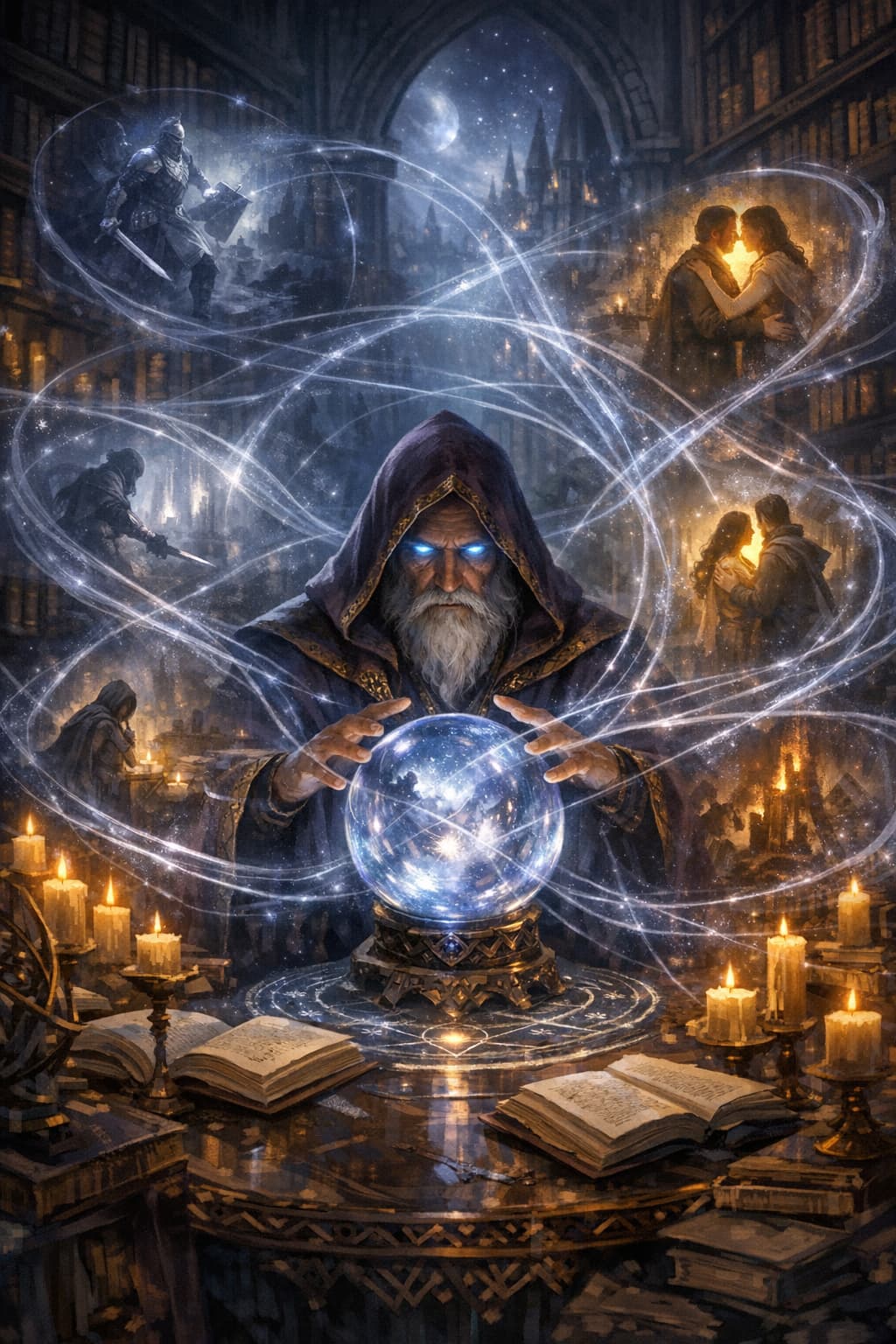
The Diviner might be the most powerful subclass in the game, and it achieves that power without dealing a single extra point of damage. Portent is the signature feature: each morning, the Diviner rolls two d20s and records the results. At any point during the day, they can replace any attack roll, saving throw, or ability check (made by any creature they can see) with one of those recorded rolls. Rolled a 3 and a 19? The dragon's breath weapon save is now a 3. The rogue's crucial ability check is now a 19. Portent doesn't bend probability; it breaks it. A Diviner with good rolls in the morning can single-handedly dictate the outcome of the day's most critical moments.
Bladesinging
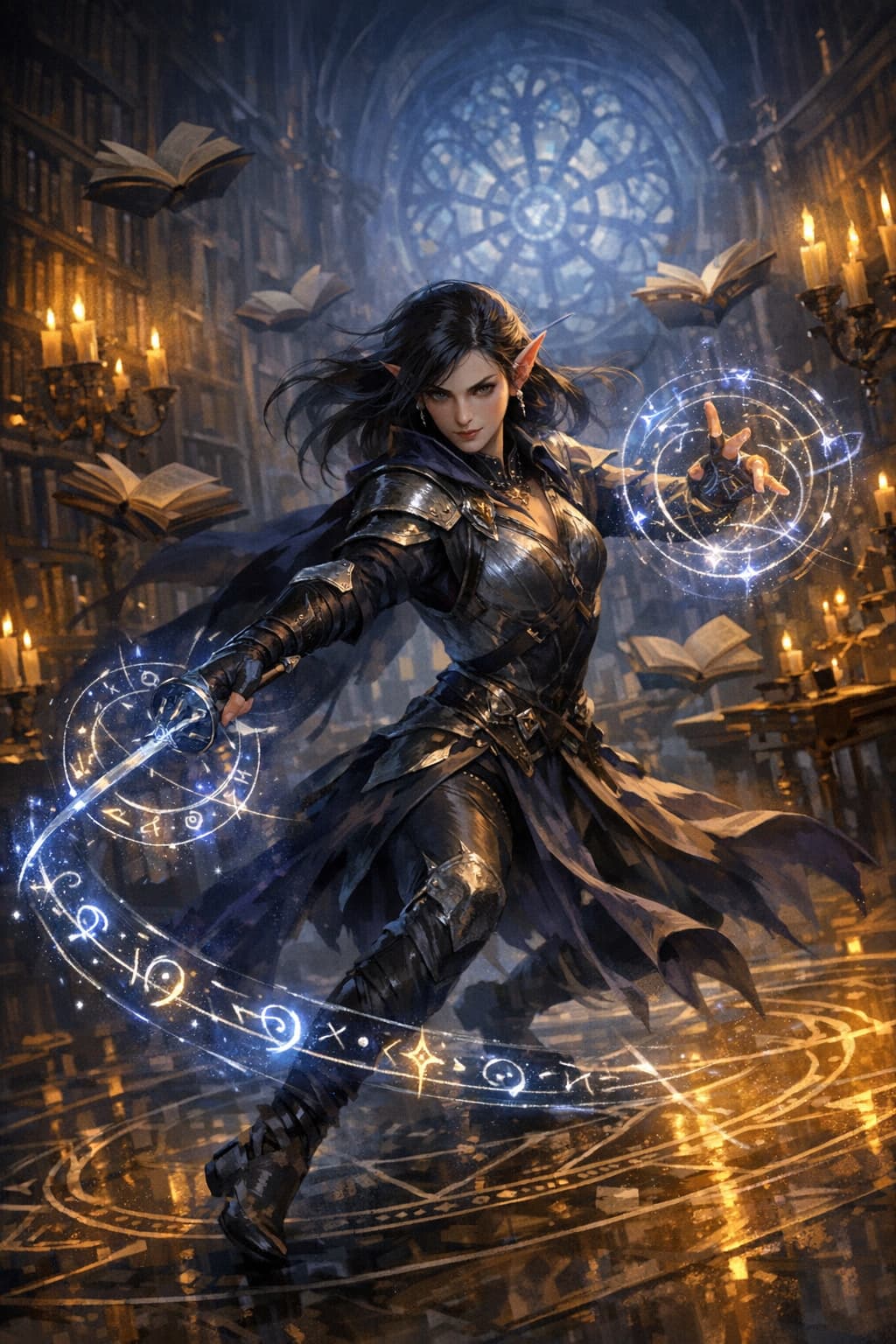
The Bladesinger shatters the wizard stereotype entirely. Originally an elven tradition, this subclass combines swordplay with spellcasting in a way that turns the d6-hit-die weakling into a surprisingly durable melee combatant. Bladesong adds your Intelligence modifier to AC and concentration saves, gives you extra movement speed, and grants advantage on Acrobatics checks. At level 6, Extra Attack lets you replace one attack with a cantrip, meaning you can swing a rapier and fire a Booming Blade in the same action. The result is a wizard who can hold the front line while still having access to the full wizard spell list. That combination terrifies DMs and delights players who want to feel like a magical duelist.
Arcane Traditions
The wizard's subclass system (Arcane Traditions) is among the deepest in D&D 5e, with more official options than almost any other class. This makes sense thematically: if the wizard is defined by academic study, then different schools of thought should produce different kinds of wizard. Each tradition modifies how the wizard interacts with a particular school of magic, layering specialization onto the class's baseline versatility.
The traditions range from combat-focused (Evocation, War Magic, Bladesinging) to utility-oriented (Divination, Chronurgy) to thematically rich but mechanically niche (Necromancy, Illusion, Conjuration). Some, like the School of Scribes introduced in Tasha's Cauldron of Everything, reimagine the wizard's relationship with their spellbook entirely. Others, like the Graviturgy and Chronurgy traditions from Explorer's Guide to Wildemount, expand the wizard's identity into exotic territory: time manipulation and gravity control.
Power level varies considerably. Divination's Portent and Chronurgy's Chronal Shift are widely considered the strongest subclass features in the game. Bladesinger offers unparalleled multi-ability-score dependency payoff. War Magic provides the most consistent defensive toolkit. On the other end, Transmutation and Conjuration are generally seen as underwhelming in practice despite strong concepts. The 2024 revision aims to address some of these gaps, boosting weaker traditions while preserving the identity of the strong ones.
Wizard Arcane Traditions Across Sources
| Tradition | Source | Core Fantasy |
|---|---|---|
| School of Abjuration | PHB 2014 | Arcane bodyguard; ward of protective energy absorbs damage. Excels at counterspelling and shielding. |
| School of Conjuration | PHB 2014 | Summoner and teleporter; conjured objects and minor teleportation. Strong concept, modest execution. |
| School of Divination | PHB 2014 | Fate manipulator; Portent replaces d20 rolls. Widely considered the strongest tradition. |
| School of Enchantment | PHB 2014 | Mind controller; charm and redirect attacks. Strong social pillar presence. |
| School of Evocation | PHB 2014 | Precision blaster; sculpt AoE spells around allies. The iconic "damage wizard." |
| School of Illusion | PHB 2014 | Reality faker; illusions become semi-real at higher levels. Ceiling depends on DM rulings. |
| School of Necromancy | PHB 2014 | Death scholar; raise undead armies and drain life force. Logistically demanding but thematic. |
| School of Transmutation | PHB 2014 | Shape-changer; Philosopher's Stone and material alteration. Flavorful but mechanically underwhelming. |
| War Magic | Xanathar's Guide | Combat specialist; Power Surge and Arcane Deflection for battlefield resilience. Best defensive wizard. |
| Bladesinging | Tasha's (originally SCAG) | Sword-mage; Intelligence to AC and melee cantrip Extra Attack. Surprisingly durable front-liner. |
| Chronurgy Magic | Wildemount | Time manipulator; Chronal Shift rerolls and temporal abilities. Extremely powerful in practice. |
| Graviturgy Magic | Wildemount | Gravity controller; manipulate weight and movement. Unique battlefield control niche. |
| Order of Scribes | Tasha's Cauldron | Living spellbook; swap damage types and manifest the book as a sentient entity. |
Thirteen official traditions and counting — more than any other class. The wizard's design space is essentially limitless because every school of magic can support a subclass.
Roleplaying & Personality
The trap with wizard characters is playing them as either Gandalf clones or socially inept bookworms. Both are valid starting points, but the best wizard characters complicate the archetype. Why did this person devote their life to studying magic? What did they sacrifice to learn what they know? What drives them out of the library and into a dungeon? The answers reveal character: a wizard motivated by curiosity plays differently from one motivated by revenge, duty, fear, or grief.
Intelligence as a primary stat creates roleplaying opportunities that other classes don't have. Your wizard is canonically one of the smartest people in most rooms. How do they handle that? Some wizards are patient teachers, delighted to explain. Others are dismissive of people who can't keep up. Some are deeply insecure despite their knowledge, using expertise as a shield against emotional vulnerability. The gap between knowing everything and understanding nothing is rich territory for character work.
Consider your wizard's relationship with other casters. Sorcerers have innate power the wizard had to earn. Is that envy, contempt, or fascination? Warlocks traded with entities the wizard might consider beneath them. Is that moral outrage or professional jealousy? Clerics receive power from gods the wizard might not believe in. Does that challenge the wizard's worldview? The wizard's position in the magical ecosystem is unique, and how they feel about that position reveals who they are.
Don't forget the physical reality of being a wizard. You have d6 hit points. You wear no armor. A stiff breeze from an ogre's club can end your career. How does your wizard handle being the most fragile person in the party? Some hide behind the fighter and accept the protection. Others refuse to show fear, standing at the front because their pride won't let them cower. Some are terrified every time combat starts and cast spells with shaking hands. All of these are interesting choices.
In your setting, how is arcane magic learned? Is there a university system with entrance exams and tuition? Apprenticeships under individual masters? Self-taught hedge wizards working from incomplete texts? The answer determines what kind of person becomes a wizard — wealthy elites, gifted scholarship students, desperate autodidacts — and that shapes every wizard character in your world.
Academies and Arcane Orders
Wizards don't just exist in a world. They organize it. Because arcane magic requires study and resources, wizard society tends to create institutions: academies, guilds, towers, libraries, and research circles. These institutions accumulate power the way universities and tech companies do in the real world, through knowledge monopoly, credential gatekeeping, and the network effects of putting smart people in rooms together. A wizard's academy isn't just a school; it's a political entity with its own interests, rivalries, and territorial claims.
The relationships between wizard organizations drive some of the best political storytelling in fantasy TTRPGs. Rival academies compete for rare spell components and talented apprentices. A mages' guild might regulate who can practice magic in a kingdom, creating a black market of unlicensed spellcasters. A secret cabal of necromancers operating beneath a respectable university provides both mystery and moral complexity. Wizard institutions are engines of plot precisely because they control something everyone wants: power.
Independent wizards — the hermit in the tower, the wandering sage, the village wise woman — exist in tension with these institutions. Are they rebels, dropouts, or people the system never reached? The solitary wizard archetype is compelling precisely because it implies a choice not to belong, and in a world where belonging to a magical institution grants resources and protection, that choice has consequences.
Arcane Academies & Guilds
Structured magical education with entrance examinations, tuition systems, and graduated curricula. Faculty politics mirror real academia — tenure disputes fought with Polymorph instead of passive aggression. Research grants funded by noble patrons who expect results. Alumni networks that function as old-boy clubs spanning continents. Graduation ceremonies where the final exam might actually kill you.
Towers, Cabals & Hedge Wizards
Solitary wizards claiming territory through reputation and power. Informal networks of correspondents sharing research through enchanted letters. Secret societies preserving forbidden knowledge — necromancy, chronomancy, true names. Hedge wizards serving rural communities as healer, advisor, and monster deterrent, operating without credentials but with generations of practical knowledge. The magical underground that official institutions pretend doesn't exist.
Spellbooks, Staves, and Arcane Foci
The spellbook is the wizard's most important possession, and it's worth thinking about as more than a mechanical component. What does it look like? A leather-bound tome with iron clasps? A collection of loose pages in a waterproof case? Tablets of thin stone with spells etched in arcane script? The Order of Scribes tradition even lets it become a sentient artifact. Your spellbook is your wizard's life's work, their diary, their legacy. Treat it accordingly.
Arcane foci — staffs, wands, orbs, and crystals — replace material components and define the wizard's visual identity. A staff suggests authority and wisdom (the Gandalf silhouette). A wand suggests precision and elegance. An orb suggests divination and mystery. A crystal rod suggests something stranger, more alien. The choice is aesthetic, but aesthetics matter: your arcane focus is what people see when they watch you cast, and it shapes how the world perceives your magic.
Beyond the essentials, wizards accumulate gear that reflects their intellectual nature. Component pouches for rare materials. Scroll cases for spell scrolls in progress. Ink and quills for copying spells. A backup spellbook (every experienced wizard has one). Jeweler's tools for crafting spell components. The wizard's pack isn't glamorous — it's a portable office for someone whose job is bending reality.
Iconic Wizard Equipment
| Item | Type | Why It Works |
|---|---|---|
| Spellbook | Class feature | The wizard's identity. Contains all learned spells. Losing it is a catastrophe. Protecting it is a campaign-long concern. |
| Quarterstaff / Arcane focus | Weapon / Focus | Walking stick doubles as a weapon (1d6/1d8 versatile) and spellcasting focus. The classic wizard silhouette. |
| Component pouch | Focus alternative | Covers all non-costly material components. Less iconic than a staff but more practical for certain builds. |
| Spell scrolls | Consumable | Cast spells you haven't prepared or exceed your slot limits. Also the primary way to add new spells to your book. |
| Pearl (100gp) | Material component | Required for Identify, one of the wizard's most commonly ritual-cast spells. Worth carrying at all times. |
| Robes | Armor (none) | Wizards have no armor proficiency. Robes aren't mechanically useful but define the class aesthetic. Enchanted robes are a prized find. |
Multiclass Synergies
Wizard multiclassing is a careful proposition because every level outside the class delays spell progression, and for the wizard, spell progression is everything. A 9th-level wizard gets 5th-level spells (Wall of Force, Animate Objects, Telekinesis). A wizard 8 / fighter 1 gets there one level later. That one-level delay compounds across a campaign. Most wizard multiclasses are worth it only if the dip provides something the wizard desperately needs or if the character concept demands it.
That said, the wizard has one glaring weakness that multiclassing can address: survivability. A single level of fighter or artificer provides armor proficiency (medium armor and shields for fighter, which stacks with Shield spell for absurd AC), Constitution save proficiency (critical for concentration), and enough weapon proficiency to handle situations when spell slots run dry. This "wizard with one level of fighter" build is so effective it has become a standard recommendation.
Deeper multiclasses are rarer but flavorful. Wizard/rogue creates the arcane trickster from the other direction: full spell list with Sneak Attack and Cunning Action for escape. Wizard/cleric produces the theurgist, blending arcane and divine magic traditions. Wizard/warlock gives short-rest Pact Magic slots that can be used for wizard spells (since multiclass casters share a combined slot table), plus Eldritch Blast for reliable at-will damage that doesn't burn wizard resources.
Common Dips (1-2 Levels)
Fighter 1: Medium armor, shields, Constitution save proficiency. The single most impactful survivability dip in the game. Fighter 2 adds Action Surge — cast two leveled spells in one turn, once per rest. Artificer 1: Medium armor, shields, Constitution saves, and the flavor of a magical inventor. Mechanically similar to the fighter dip but with INT-based overlap. Cleric 1: Armor proficiency (varies by domain), healing spells, and domain features. Knowledge, Order, and Peace domains offer particularly strong synergy.
Deeper Multiclasses
Bladesinger / Fighter (Battlemaster): A melee wizard with maneuvers for tactical options beyond spells. Wizard / Warlock 2-3: Short-rest Pact Magic slots, Eldritch Blast with Agonizing Blast for reliable damage, and an invocation or two. Hexblade 1 lets you use Charisma for weapon attacks, but the stat split hurts. Wizard / Rogue (Arcane Trickster): Cunning Action for Disengage/Hide, Sneak Attack for when you need damage without slots, and excellent skill coverage.
Building and Managing Your Spellbook
The spellbook is the wizard's most important possession, and managing it well separates adequate wizards from terrifying ones. Every wizard starts with six first-level spells and adds two per level for free. But the real growth comes from copying spells found during adventures — scrolls, enemy spellbooks, ancient libraries. Each spell costs 50 gold and 2 hours per spell level to copy, which means a third-level Fireball scroll costs 150 gold and 6 hours of downtime. Budget accordingly.
Spell selection strategy matters more for wizards than any other class because you are building a permanent library, not just picking a daily loadout. Prioritize spells that solve problems no other party member can handle. If your party has a cleric, you need fewer healing-adjacent utility spells. If your party lacks a rogue, Knock and Invisibility become higher priority. The wizard's strength is adaptability, and your spellbook is the source of that adaptability — the wider your spell library, the more situations you can prepare for after a long rest.
Protect your spellbook. If it is destroyed, you lose access to every spell not currently prepared. Many experienced players keep a backup spellbook in a safe location, copying their most critical spells into it during downtime. The cost is real — copying from your own book still costs 10 gold and 1 hour per spell level — but losing a spellbook with 40+ spells in it is a campaign-altering disaster. Some DMs will let you use Leomund's Secret Chest for this; others require more creative solutions.
For new players, here is a practical prioritization for your first spellbook: always take at least one concentration spell per spell level (these are your encounter-long buffs and controls), one ritual spell when available (ritual casting does not consume slots), and one emergency tool (Counterspell, Dispel Magic, Remove Curse). Fill remaining slots with damage options and utility. By level 5, your spellbook should handle combat, exploration, and social encounters with roughly equal competence. By level 10, you should have an answer for nearly everything.
By level 10, a wizard who copies zero extra spells has 24 spells in their book. A wizard who copies just one extra spell per level has 33. A wizard who aggressively copies every scroll they find might have 50 or more. That difference in library size translates directly to preparation flexibility. Lobby your DM for spell scrolls as treasure. It is the wizard equivalent of finding magic weapons.
Building Your Character
Intelligence is king, queen, and entire court. Your spell save DC, spell attack bonus, number of prepared spells, and many subclass features all key off Intelligence. Start with at least 16, ideally 17 (to take a half-feat to 18 at level 4). After Intelligence, prioritize Constitution for hit points and concentration saves, then Dexterity for AC and initiative. Wisdom is useful for Perception and Wisdom saves (which you're proficient in). Strength and Charisma are dump stats for most wizard builds.
Spell selection at each level is the wizard's most important character-building decision. At levels 1-4, prioritize spells with broad utility: Shield and Mage Armor for survival, Magic Missile for guaranteed damage, Detect Magic as a ritual, and one or two signature damage/control spells (Sleep at level 1, Web or Misty Step at level 2). At level 5, Fireball and Counterspell are near-mandatory. At every subsequent level, balance your selections between damage, control, utility, and defensive options. Don't neglect rituals. They're essentially free spells that only cost the gold to transcribe.
Race selection should complement Intelligence. High Elves get a bonus wizard cantrip. Gnomes (especially Rock Gnomes) have Intelligence bonuses and Gnome Cunning for advantage on mental saves against magic. Custom Lineage or post-Tasha's flexible ASIs let any race work. The 2024 rules divorce ability score increases from species entirely, making it a pure flavor choice. Consider what story your wizard's heritage tells: a Tiefling wizard struggling against infernal stereotypes, a Half-Orc wizard defying expectations, or a Halfling wizard whose small stature belies enormous arcane power.
Feat selection depends on your role. War Caster is near-mandatory for concentration and opportunity-attack spellcasting. Resilient (Constitution) is the alternative for concentration saves, mathematically better at higher levels. Lucky is generically powerful. Alert (going first means controlling the battlefield before enemies act) is exceptional. Metamagic Adept gives a wizard access to Subtle Spell (uncounterable magic) or Quickened Spell (spell + cantrip in one turn). Spell Sniper doubles your range for ranged attack spells and ignores cover.
Intelligence 16, Constitution 14, Dexterity 14. Take Mage Armor, Shield, Magic Missile, and Find Familiar at level 1. Choose School of Divination at level 2 if you want to win, School of Evocation if you want to explode things, or Bladesinger if you want to hit things and explode them. At level 4, take War Caster or bump Intelligence to 18. At level 5, learn Fireball and Counterspell. Congratulations — you're the most versatile character at the table.
Famous Wizards in Fiction
The wizard is arguably the oldest and most recognizable archetype in all of fantasy fiction. Before D&D codified the class, before video games assigned spell slots and mana bars, there was the figure in robes with a staff and a book full of secrets. Someone who had learned to bend reality through study, will, and the willingness to spend decades mastering knowledge that could kill the careless. The wizard archetype carries an implicit promise: intelligence, applied with sufficient dedication, can reshape the world.
What makes the wizard endure across every medium is the tension between knowledge and wisdom. Gandalf knows when not to use his power. Raistlin uses his power until it consumes everything he loves. Rincewind can barely use power at all and survives through sheer cowardice and luck. Each famous wizard answers the same question differently: what does a person become when they know more than everyone around them? The answer ranges from humble servant to tyrannical god, and every point on that spectrum produces a compelling character.
In games, the wizard has become synonymous with the glass cannon: enormous destructive and utility potential wrapped in a body that a stiff breeze could topple. Gale in Baldur's Gate 3 literalizes this by putting a bomb inside the wizard. Vivi in Final Fantasy IX gives the archetype an existential crisis. Mordenkainen populates D&D's actual spell lists with his name. The wizard is so foundational to the fantasy genre that every deviation from the archetype (the incompetent wizard, the evil wizard, the wizard who punches things) only works because the baseline is so firmly established.
Iconic Wizard Characters Across Fiction
| Character | Source | Why They Matter |
|---|---|---|
| Gandalf | The Lord of the Rings (J.R.R. Tolkien) | The archetypal wizard, though technically a divine being (Maiar) in mortal form. Gandalf established the visual template — robes, staff, fireworks — and the narrative role of the wizard as guide and catalyst rather than protagonist. Every wizard character since exists in conversation with Gandalf. |
| Gale | Baldur's Gate 3 | A wizard with an orb of destructive magic embedded in his chest — the scholar as ticking bomb. Gale embodies the wizard's dangerous relationship with knowledge: brilliant, charming, and one bad decision away from detonating himself and everyone nearby. |
| Raistlin Majere | Dragonlance (Margaret Weis & Tracy Hickman) | The ambitious mage who challenged the gods themselves. Raistlin is the wizard as tragic overreacher — physically frail, intellectually peerless, and so consumed by the pursuit of ultimate power that he destroys every relationship that might have saved him. |
| Elminster Aumar | Forgotten Realms (Ed Greenwood) | The archmage as setting-defining power. Elminster is what happens when a wizard survives long enough to become an institution — centuries of accumulated knowledge, political influence, and the quiet certainty that he has already solved most of the problems younger adventurers think are novel. |
| Vivi Ornitier | Final Fantasy IX | The black mage questioning his own existence. Vivi takes the wizard archetype and gives it an existential crisis: a manufactured being with a limited lifespan who uses magic not as a path to power but as a way to find meaning before his time runs out. |
| Rincewind | Discworld (Terry Pratchett) | The comedic subversion of every wizard trope. Rincewind is a wizard who can barely cast a spell, survives through cowardice and absurd luck, and proves that the wizard archetype is so deeply embedded in culture that even its deliberate negation produces a beloved character. |
| Harry Potter | Harry Potter series (J.K. Rowling) | The wizard as everyman. Harry defined modern pop-culture wizardry by making magic a school subject, complete with homework, exams, and teenage drama. For better or worse, a generation's mental model of "wizard" starts here. |
| Mordenkainen | D&D (Gary Gygax) | Gygax's own wizard character, whose name populates actual D&D spell lists — Mordenkainen's Faithful Hound, Mordenkainen's Magnificent Mansion, Mordenkainen's Sword. The wizard as metatextual presence, blurring the line between character and game design. |
Across RPGs & Video Games
The wizard is the one class archetype that appears in virtually every RPG and video game ever made, because the fantasy of "person who studied until they could reshape reality" is so universally appealing that no game designer has ever been tempted to leave it out. What varies across franchises is not whether the wizard exists but how the game handles the tension between the wizard's enormous theoretical power and the need for balanced gameplay. Every system's wizard is a negotiation between "this character knows everything" and "this character needs to be fun to play alongside."
In tabletop RPGs, D&D's wizard remains the gold standard for prepared casters — the largest spell list, the spellbook mechanic, and the tradition of school-based specialization that dates back to 1974. Pathfinder 2e's wizard refines this with tighter math and the Thesis system, which lets players customize how their preparation works. Both systems treat the wizard as the class with the highest ceiling and the steepest learning curve, rewarding system mastery in a way that mirrors the character's own relationship with study and knowledge.
Video game wizards tend to simplify preparation into specialization. World of Warcraft's Mage channels arcane, fire, or frost energy with no spellbook management. Final Fantasy's Black Mage is a glass cannon defined by elemental damage spells and the iconic pointy hat. Elder Scrolls lets any character learn magic, but the dedicated mage — studying at the College of Winterhold, joining the Telvanni, enchanting gear in a tower — captures the wizard fantasy of knowledge-as-power. Diablo's Sorcerer strips the archetype to its combat essence: elemental destruction, glass cannon fragility, and teleportation as signature mobility.
The Wizard Archetype Across Franchises
| Franchise | Class / Role | Key Mechanic | Key Distinction |
|---|---|---|---|
| D&D 5e | Wizard | Arcane Traditions, spellbook preparation, Arcane Recovery, ritual casting | Largest spell list in the game; the spellbook grows continuously, making the wizard more versatile with every adventure |
| Pathfinder 2e | Wizard | Arcane Schools, Thesis (Improved Familiar, Spell Substitution, etc.), Drain Bonded Item | Prepared Arcane caster with tighter balance; Thesis system lets players customize how preparation works mechanically |
| World of Warcraft | Mage | Arcane, Fire, Frost specs; Mana resource; Polymorph, portals, conjured food | The utility caster — portals, food, and crowd control make the Mage as valuable outside combat as inside it |
| Final Fantasy | Black Mage | Elemental damage spells (Fire/Blizzard/Thunder); glass cannon archetype | Vivi from FF9 is the iconic pointy-hat black mage; the archetype prioritizes raw elemental destruction over versatility |
| Elder Scrolls | Mage archetype | Six magic schools (Destruction, Conjuration, Restoration, Alteration, Illusion, Enchanting) | College of Winterhold, Telvanni wizards; any character can learn magic, but dedicated mages reshape the world through study |
| Dragon Age | Mage | Circle education, Arcane Warrior / Knight Enchanter specializations | The wizard as institutionally controlled caster; the Circle system makes magic political, and apostates are rogue wizards by definition |
| Diablo (2/4) | Sorcerer / Sorceress | Elemental specialization, glass cannon fragility; Teleport as signature mobility | The wizard reduced to pure combat power — no preparation, no utility, just elemental devastation and the constant risk of instant death |
The wizard's translation across media reveals what each franchise considers essential to the archetype. Tabletop games preserve preparation and versatility. Video games preserve glass-cannon damage and elemental theming. The spellbook rarely survives the transition.
The Wizard at the Table
The wizard's prepared casting system gives them unmatched flexibility, if they anticipate correctly. A wizard who prepared Fireball, Counterspell, and Fly for a dungeon crawl that turns into a naval chase is going to have a bad afternoon. A wizard who prepared Water Breathing, Control Water, and Fog Cloud for that same naval chase is going to be the party's hero. The preparation mechanic rewards players who pay attention to world clues, ask questions, and think ahead. It also rewards DMs who give their wizards enough information to prepare intelligently.
The spellbook is simultaneously the wizard's greatest asset and their most critical vulnerability. A wizard without their spellbook can only cast spells they currently have prepared. They can't change their prepared list, can't add new spells, and can't ritual cast. DMs should treat the spellbook as a story element rather than a gotcha: threatening it creates tension, but actually destroying it feels punitive. Instead, use the spellbook as a hook. The wizard finds a dead adventurer's spellbook with three new spells and a journal entry about the dungeon ahead. Now the wizard has new tools and new information, and the spellbook has driven the story forward.
Communication matters when playing a wizard. The class has so many options that analysis paralysis is a real risk. A wizard's turn can take twice as long as a fighter's if the player is deliberating between twenty possible spell choices. Good wizard players pre-plan their turns during other players' turns, have their spell descriptions ready, and communicate their intended actions clearly. Good DMs give wizards moments to shine that reward preparation: puzzles with magical solutions, enemies with known vulnerabilities, and situations where the right ritual spell turns an impossible problem into a trivial one.
Design encounters that challenge the wizard's reliance on concentration spells and reward creative spell use. A wizard maintaining Fly while enemies fire arrows creates tension around concentration saves. Multiple weaker enemies spread across the battlefield force choices about where to place area spells. Environmental hazards — collapsing ceilings, rising water, spreading fire — reward utility spells over damage spells. The best wizard encounters aren't about whether the wizard has enough spell slots but about whether they chose the right spells to prepare, and whether they're brave enough to hold concentration when the hits start landing.
The Wizard in World-Building
Wizards are the class that most directly shapes your setting's relationship with magic. If wizards are common, magic becomes a technology: enchanted streetlights, magical universities, spell-based economies, and arcane regulations. If wizards are rare, magic becomes a mystery, feared, misunderstood, potentially persecuted. The density and visibility of wizards in your world determines whether magic feels like electricity or alchemy, and that single variable cascades into every aspect of your setting design.
Consider the political implications. Wizards who can Scry on political rivals, Charm Person during negotiations, and Teleport past castle walls represent a fundamental challenge to traditional power structures. How does the ruling class handle this? Do they employ court wizards as controlled assets? Ban arcane magic entirely and hunt practitioners? Require licensing and registration? Create anti-magic police forces? Each answer generates a different setting: the magocracy, the witch-hunt kingdom, the regulated-magic state, the wild-magic frontier. Your choice about wizard governance is really a choice about what kind of world you want to run.
The existence of wizard academies implies a literate, relatively prosperous society that values abstract knowledge — which means your world needs an intellectual infrastructure to support them. Who funds the academies? What do they expect in return? Where do spell components come from, and who controls that supply chain? Is spell research publicly shared like academic papers, or jealously guarded like trade secrets? These questions turn the wizard from a character class into a world-building engine, generating economic, political, and social systems just by existing.
The wizard's spellbook raises questions about intellectual property and cultural transmission. Spells are, functionally, proprietary technologies. A wizard who invents a new spell has created something of immense value. Are there magical patents? Spell copyright? Academic journals of arcane research? Or is magical knowledge shared freely, with the understanding that a rising tide lifts all spellcasters? The answer determines whether your wizard culture looks like Renaissance Florence, modern Silicon Valley, Cold War espionage, or a monastic tradition of shared enlightenment.
“Every wizard in your world is a walking library, a one-person research lab, and a potential weapon of mass destruction. How your civilization handles that fact is the most important question your setting can answer.”
— On arcane power and state governance
FAQ
Common Questions
Wizards record spells in a physical spellbook and prepare a subset each day (equal to wizard level + Intelligence modifier). You start with 6 first-level spells and add 2 free spells per level. You can also copy spells from scrolls or other spellbooks for 50 gold and 2 hours per spell level. Prepared spells can be cast using spell slots. Arcane Recovery lets you regain some slots on a short rest once per day. The spellbook is the wizard's most valuable possession — if destroyed, you lose access to all unprepared spells.
Divination is widely considered the strongest wizard subclass thanks to Portent — the ability to replace any creature's d20 roll with a pre-rolled result, twice per day. Chronurgy Magic (from Explorer's Guide to Wildemount) is similarly powerful with Chronal Shift. For damage-focused play, Evocation's Sculpt Spells lets you safely blast with allies in melee. Bladesinger is the best option for melee wizards. War Magic provides the most consistent defenses. The best choice depends on your playstyle and party composition.
A wizard is an arcane spellcaster who gains magical power through disciplined study rather than innate talent, divine patronage, or pact bargains. Wizards use spellbooks to record and prepare spells, drawing from the largest spell list in the game. They are D&D's most iconic spellcasting class, descended from the original 1974 "Magic-User," and are defined by their versatility — the right wizard with the right preparation can solve virtually any problem.
The "God Wizard" is a playstyle that prioritizes battlefield control and save-or-suck spells over damage. Instead of casting Fireball, a God Wizard casts Web, Hypnotic Pattern, Wall of Force, Banishment, or Forcecage — spells that remove enemies from the fight entirely. The philosophy is that dealing 30 damage to five enemies is less impactful than completely incapacitating three of them. God Wizards prepare a mix of control spells, buffs, debuffs, and utility, using damage only when control isn't needed. Divination and Chronurgy are the preferred subclasses because their features manipulate the saving throws that control spells depend on.
Three reasons. First, the wizard has the largest spell list in the game — over 300 spells with supplements — and every new spell published is a potential addition to their repertoire. Second, the spellbook mechanic means a wizard's power grows continuously as they find and copy new spells, unlike other casters who are limited to spells known or a fixed list. Third, ritual casting lets wizards use spells like Detect Magic, Identify, and Tiny Hut without spending slots. This combination of list breadth, expandable knowledge, and free utility casting means a well-played wizard has an answer for virtually every situation.
Several strategies layer together. Shield (+5 AC as a reaction) and Mage Armor (13 + Dex AC for 8 hours without concentration) are essential 1st-level spells. Absorb Elements halves incoming elemental damage. Misty Step provides emergency teleportation. Position yourself behind melee allies and use ranged spells. The War Caster feat helps maintain concentration when you do take hits. A one-level dip into fighter or artificer grants medium armor and shield proficiency for a massive AC boost. At higher levels, spells like Greater Invisibility, Mirror Image, and Contingency provide additional layers of protection.
Levels 1-4: Shield, Mage Armor, Find Familiar, Magic Missile, Detect Magic (ritual), Misty Step, Web. Levels 5-8: Fireball, Counterspell, Fly, Hypnotic Pattern, Dimension Door, Polymorph. Levels 9-12: Wall of Force, Animate Objects, Teleportation Circle, Contingency. Levels 13-16: Forcecage, Simulacrum, Teleport, Plane Shift. Levels 17-20: Wish, True Polymorph, Meteor Swarm, Foresight. Ritual spells (Detect Magic, Identify, Comprehend Languages, Leomund's Tiny Hut) are effectively free and should always be in your spellbook.
The three arcane casters differ in source, flexibility, and resource management. Wizards learn magic through study, use spellbooks, and have the largest spell list but must prepare a subset each day. Sorcerers have innate magical talent (bloodline or wild magic), know fewer spells but can modify them with Metamagic (Quicken, Subtle, Twin), and never need to prepare. Warlocks gain power from a patron entity, have very few spell slots that recharge on short rests, and rely heavily on Eldritch Blast and invocations for at-will power. A wizard plans and prepares; a sorcerer improvises and adapts; a warlock conserves and blasts.