

Aasimar
Mortals carrying celestial fire in their blood, born with a purpose they never chose and a light they cannot always bear
Celestial Origins & Mythology
The idea of mortals with divine ancestry is one of the oldest in human storytelling. Demigods, nephilim, saints who glowed with inner light — every major religious and mythological tradition has a version of the person who is part mortal and part something from above. The aasimar is D&D's answer to that archetype: a humanoid whose bloodline carries celestial essence, passed down through generations from a union with a being of the Upper Planes.
What separates aasimar from generic demigod figures is the subtlety of the inheritance. An aasimar isn't a god walking the earth. They're a person — born to mortal parents, raised in mortal communities — who happens to carry a spark of celestial energy that may not manifest until adolescence or later. The divine isn't obvious. It's latent. A warmth behind the eyes, a dream that feels like a command, a moment of crisis where light erupts from skin that was ordinary a second ago.
This latency is what makes aasimar interesting. A tiefling knows what they are from birth — the horns make it impossible to forget. An aasimar might live for years as an apparently normal human before anything happens. The discovery of celestial heritage is often the inciting incident of an aasimar's story, not the background context. You weren't always this. Something changed, and now you carry a weight you didn't ask for.
Divine Mortal Heritage in Mythology
| Tradition | Figure | Nature | Aasimar Parallel |
|---|---|---|---|
| Greek | Heracles / Perseus | Demigod children of Zeus and mortal women | Mortal body with divine power; burdened by destiny from birth |
| Hebrew/Christian | Nephilim | Offspring of angels and human women | Direct conceptual ancestor — celestial blood in mortal form |
| Hindu | Avatars (partial incarnations) | Divine essence inhabiting mortal shells | Celestial purpose expressed through a human life |
| Norse | Volsung bloodline | Heroes descended from Odin | Hidden divine heritage that surfaces in moments of crisis |
| Christian hagiography | Saints with stigmata / radiance | Mortals marked by divine favor | The physical manifestation of inner celestial light |
The nephilim parallel is strongest — beings of mixed mortal-celestial origin whose existence raises questions about where the divine ends and the human begins.
Etymology & Naming Traditions
"Aasimar" derives from "aasim," itself a variation of "aasimon" — the term used for angels in early D&D publications before the game adopted more recognizable celestial terminology. The suffix "-ar" suggests kinship or descent, making "aasimar" literally "of the aasimon" or "angel-kin." It's a constructed word that does exactly what D&D naming conventions do best: signal origin without requiring a mythology degree.
Individual aasimar naming varies enormously because aasimar don't have a shared culture to generate naming conventions. An aasimar born in Waterdeep has a Waterdhavian name. One born in Calimshan has a Calishite name. The celestial heritage doesn't come with a baby book. Some aasimar adopt celestial-sounding names later in life as a declaration of identity, but this is a personal choice, not a cultural norm.
What aasimar names sometimes share is a quality of aspiration. Parents who know their child carries celestial blood — and some do, through prophetic dreams or divine visitation — sometimes choose names that reflect hope or light. Dawn, Seraph, Auriel, Lumen. These aren't universal, but they occur often enough to be a recognizable pattern. The name becomes a prayer: may you live up to what you carry.
“The name becomes a prayer: may you live up to what you carry. Parents who know their child is aasimar aren't just naming a person. They're naming a hope.”
The Upper Planes & Divine Patrons
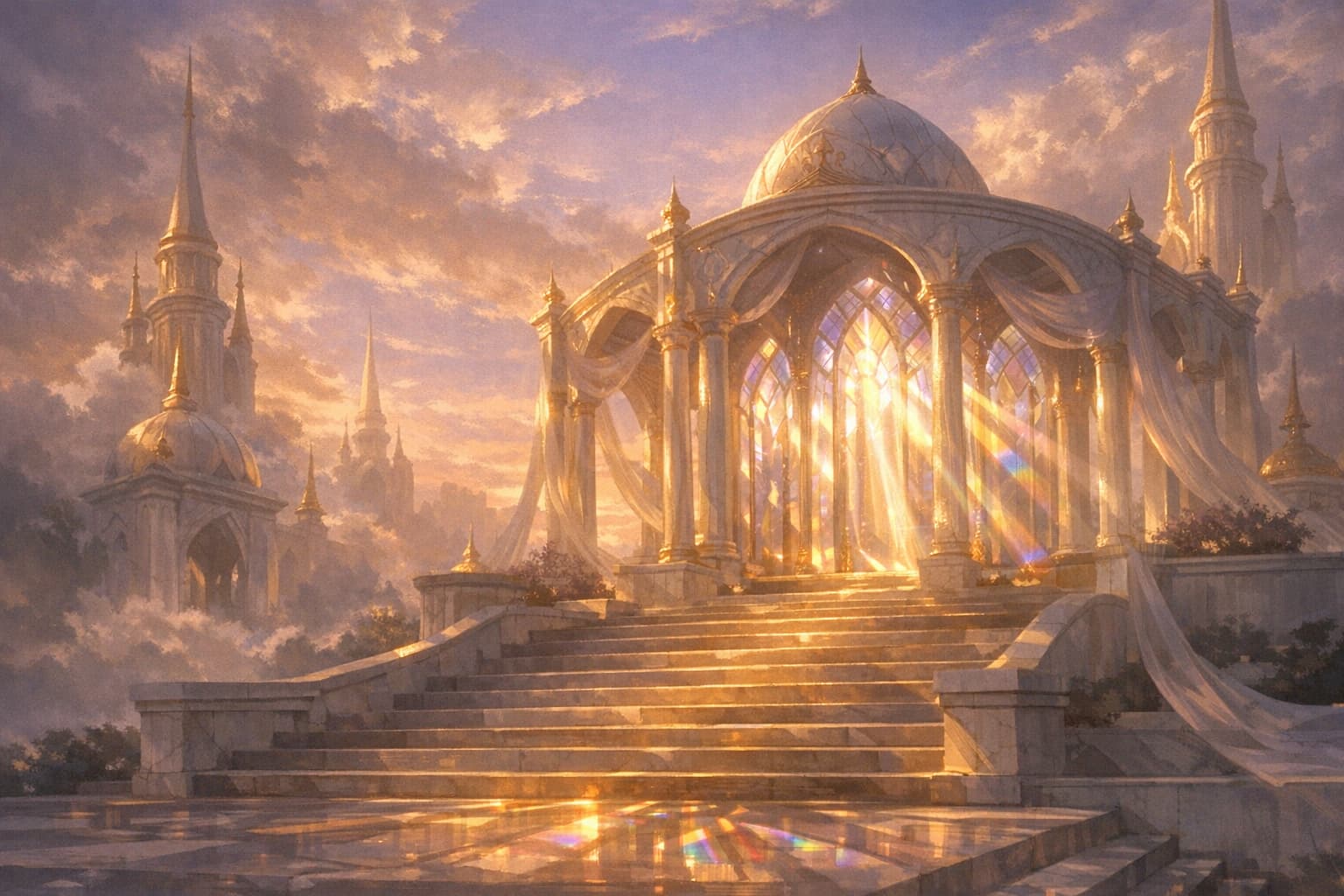
Aasimar heritage connects to the Upper Planes — Mount Celestia, Elysium, the Beastlands, Arborea — realms of idealized good that exist in D&D's cosmology as the counterweights to the Nine Hells and the Abyss. The specific plane of origin shapes the aasimar's nature in ways that matter for play. An aasimar with Mount Celestia heritage might feel an overwhelming pull toward order and justice. One connected to Arborea might express their celestial nature through wild, fierce joy rather than solemn duty.
The divine patrons themselves vary enormously. Some aasimar descend from devas — angelic servants of specific gods — making their celestial heritage tied to a particular deity. Others carry a more diffuse connection, their bloodline tracing back to a couatl, a ki-rin, or another celestial being with no specific divine allegiance. This distinction matters because it determines whether the aasimar's purpose feels specific ("serve Lathander's will") or general ("be good, somehow").
Most aasimar never meet their celestial ancestor. The bloodline might skip generations, surfacing unpredictably. A deva that fell in love with a mortal three hundred years ago might produce an apparently normal family line for centuries before the celestial spark reignites in a descendant who never expected it. The distance between origin and manifestation is part of what makes aasimar stories compelling — the source of your power might be utterly unknowable.
The strength of an aasimar's connection to a specific patron shapes the entire campaign dynamic. An aasimar with a named deva guide has a built-in quest-giver, mentor, and potential source of conflict. One with only vague celestial dreams has more freedom but less direction. Decide early how involved the patron is — it changes everything about the character's relationship to their heritage.
History in D&D Settings
Aasimar arrived in D&D later than most core species, debuting in the Planescape Campaign Setting in 1994 alongside their mirror-image counterparts, the tieflings. Both were "planetouched" — mortals with planar heritage — designed to populate the cosmopolitan streets of Sigil, where having an angel somewhere in your family tree was unusual but not extraordinary. In Planescape's context, aasimar were interesting but not remarkable.
The species spent the next two decades in the margins. While tieflings became a core Player's Handbook race in 4th Edition, aasimar remained in supplemental material — the Dungeon Master's Guide in 5e (2014) included them as a DMG race, not a PHB one. This distinction mattered: aasimar were presented as rarer and more setting-dependent than tieflings, genasi, or other planetouched options.
Volo's Guide to Monsters (2016) changed everything. The book gave aasimar three subraces — Protector, Scourge, and Fallen — along with the guide spirit mechanic and the transformation ability that became the species' defining feature. Suddenly aasimar weren't just "celestial humans." They were characters with a built-in NPC relationship (the guide), a dramatic power-up (the transformation), and a moral spectrum (protector to fallen). The 2024 Player's Handbook elevated aasimar to full core species status, completing a thirty-year journey from Planescape oddity to PHB headliner.
Planescape Campaign Setting
Aasimar debut alongside tieflings as planetouched species in Sigil. They are celestial counterparts to the fiend-blooded, designed for planar adventures.
D&D 3.5e (Races of Destiny / DMG)
Aasimar receive a formal stat block with +2 Wisdom, +2 Charisma, daylight 1/day, and the outsider type. Level Adjustment +1 makes them costly to play.
5e Dungeon Master's Guide
Aasimar appear as a DMG race — playable but not core. They receive basic stats without the depth that later supplements would add.
Volo's Guide to Monsters
The definitive aasimar redesign. Three subraces (Protector, Scourge, Fallen), guide spirit mechanic, and transformation abilities make aasimar mechanically and narratively distinctive.
2024 Player's Handbook
Aasimar become a core PHB species for the first time. Three celestial revelations replace subraces, and the guide spirit remains central to the concept.
Biology & the Celestial Body
Aasimar biology is the inverse of tiefling biology in one critical respect: where tieflings wear their heritage openly, aasimar can often pass as human. No horns, no tail, no unusual skin color — at least not obviously. The celestial heritage manifests in subtler ways. Eyes that catch light at angles human eyes don't. Hair with a faint metallic sheen in direct sunlight. Skin that seems to glow in darkness, though someone watching might convince themselves they imagined it.
This human-passing quality creates a fundamentally different social experience than tieflings face. An aasimar walks into a room and nobody flinches. The prejudice and suspicion that define tiefling daily life simply don't exist for most aasimar, because nobody knows what they are. The revelation — when it comes — works in reverse. Instead of "I always knew you were trouble," it's "I had no idea you were special." Whether that revelation is welcome depends entirely on the circumstances.

Radiant Tells
The subtle physical signs of celestial heritage that aasimar carry. Eyes that are luminous in certain light — gold, silver, pale violet. Hair that ranges from platinum blonde to metallic copper. Skin that is unusually clear, sometimes almost luminescent in total darkness. None of these are dramatic enough to identify an aasimar on sight. All of them are noticeable enough to make people vaguely uneasy, as though something about this person is slightly too perfect.
Under stress or strong emotion, the tells intensify. An angry aasimar's eyes might flare with golden light. A grieving one might radiate warmth that has nothing to do with temperature. These moments are when the mask slips, and the celestial heritage beneath the human exterior becomes impossible to ignore.
The Transformation
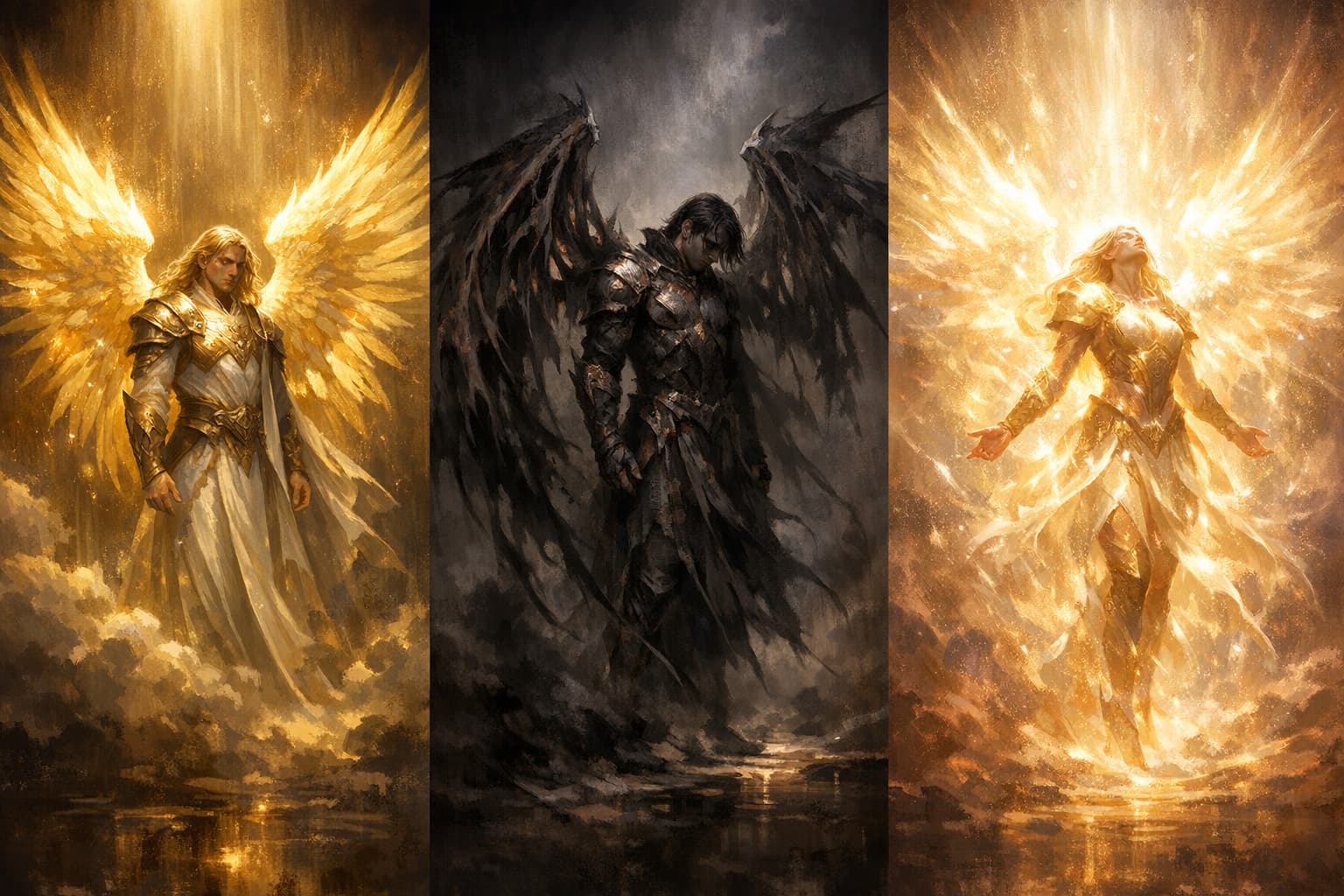
The defining mechanical and narrative feature of aasimar biology: the ability to manifest celestial power in a dramatic physical transformation. Spectral wings of light, burning radiance that damages nearby creatures, or an aura of necrotic shadow for fallen aasimar. This isn't a permanent state. It's a surge — one minute of celestial power that reshapes the aasimar's body into something unmistakably divine.
The transformation is the moment when an aasimar stops being a person who happens to have celestial blood and becomes something else entirely. It's also the moment when every witness learns exactly what the aasimar is. There's no going back to anonymity after someone has seen you sprout wings of golden fire. The transformation is a revelation in both senses of the word.
The Guide Spirit
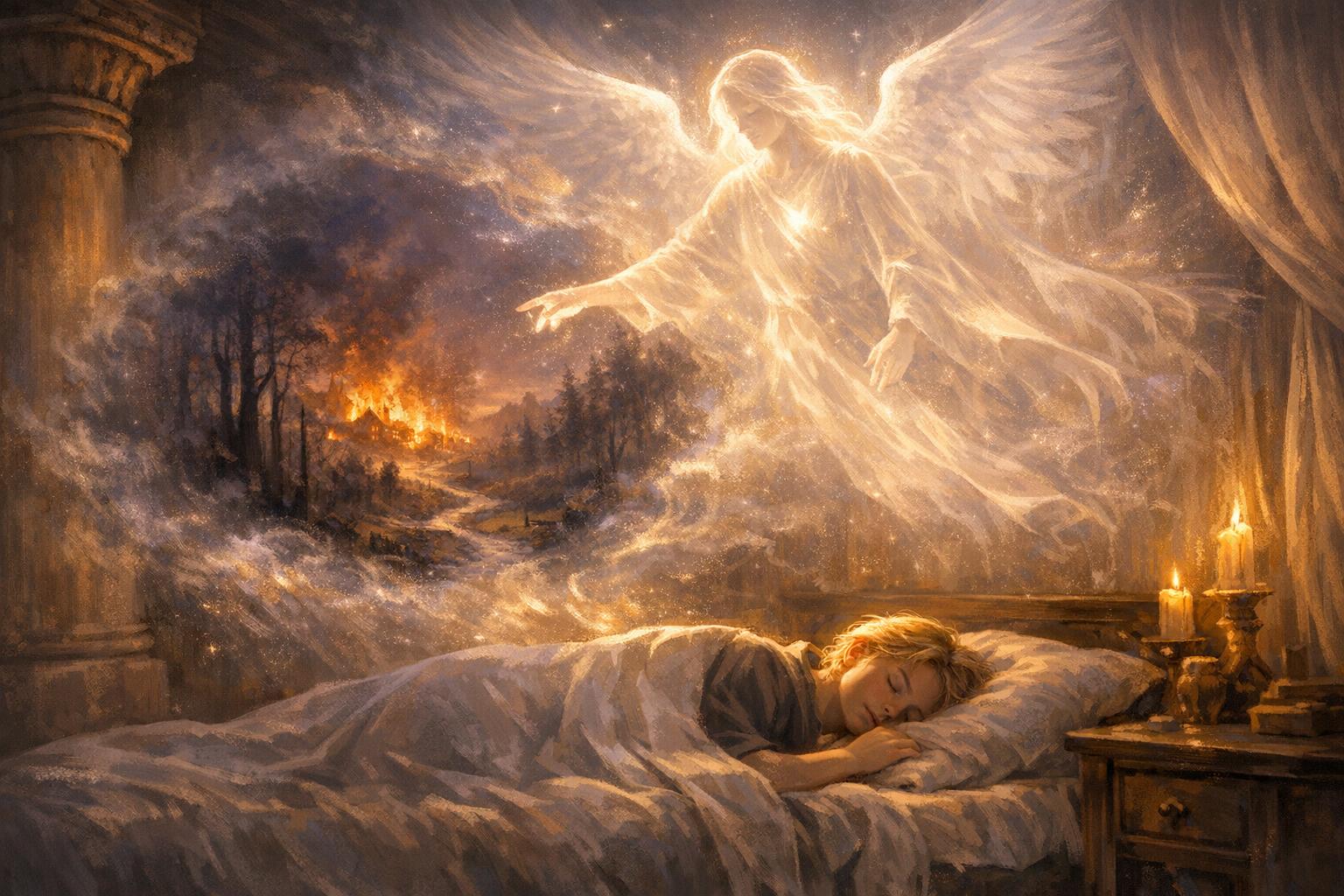
Most aasimar receive visions from a celestial entity — a deva, an angel, or some other being of the Upper Planes — that serves as guide, mentor, and conscience. This spirit communicates through dreams, feelings, and occasional direct visionary contact. It cannot be summoned at will. It appears on its own schedule, delivering cryptic guidance that the aasimar must interpret and act upon.
The guide spirit is one of the best-designed narrative mechanics in D&D because it gives the DM a direct line to the aasimar character without requiring a physical NPC. The guide can deliver plot hooks, moral challenges, warnings, and approval or disapproval — all through dreams that the player must decide how to interpret. A guide that goes silent is one of the most unsettling things that can happen to an aasimar character.
Psychology & the Burden of Light
Growing up aasimar means growing up with the knowledge — or at least the suspicion — that you were meant for something. Not something specific, necessarily. Just something. The dreams start in childhood. The guide spirit whispers. Adults look at you strangely, sensing something they can't name. Long before an aasimar understands what they are, they understand that they're different, and that the difference comes with expectations.
This produces a psychology organized around purpose, whether embraced or rejected. The aasimar who accepts their divine mission becomes a champion, a healer, a protector — and also someone who can never fully relax, because the guide is always watching, the mission is never complete, and the standard they're held to is literally superhuman. The aasimar who rejects the mission carries guilt like a second skeleton, because you can refuse the call but you can't unhear it.
The healthiest aasimar learn to negotiate with their heritage rather than submit to or fight it. Yes, there is a purpose. No, the purpose doesn't have to consume every waking moment. Yes, the guide has opinions. No, the guide isn't always right. This negotiation is where the most interesting aasimar characters live — in the space between divine expectation and mortal autonomy, trying to be good enough without losing themselves in the trying.
Depression and burnout are underexplored aasimar themes that deserve attention. A person who is supposed to be a beacon of hope cannot afford to have a bad day. An aasimar who is struggling, who is exhausted, who has failed — they don't just feel personal disappointment. They feel cosmic disappointment. The light inside them is supposed to be enough, and when it isn't, the question becomes whether the flaw is in the world or in themselves.
“You can refuse the call, but you can't unhear it. The guide spirit whispers whether you want it to or not, and the light inside you doesn't care about your personal feelings on the matter.”
Daily Life Among Mortals
The daily reality of being an aasimar depends almost entirely on whether anyone knows what you are. An aasimar who has kept their heritage secret lives a life of constant, low-grade concealment. Suppressing the glow when emotions run high. Explaining away the metallic hair as an unusual family trait. Pretending the recurring dreams are just dreams. It's not as dramatic as a tiefling's daily negotiations with prejudice, but the secrecy carries its own psychological cost.
Aasimar who are openly known face a different set of challenges. People want things from you when they know you carry divine blood. Healing, protection, wisdom, miracles. The shopkeeper gives you a discount and then asks you to bless their sick child. The village elder invites you to dinner and then asks you to solve a land dispute, because surely someone touched by the divine can see the truth. Every interaction becomes transactional, and the currency is your heritage.
Some aasimar split the difference, living quietly in one community while operating openly as celestial champions elsewhere. The cleric who is just "Marcus" in his home village but becomes "the Dawnbringer" when the party enters a dungeon. This compartmentalization works until it doesn't — until someone from the dungeon follows Marcus home, or the village discovers what Marcus has been doing on his frequent trips away.
An aasimar who has been hiding their heritage for years suddenly transforms in public during a crisis — spectral wings, radiant glow, the works. The secret is out. Now everyone in their community knows, and the character must navigate the aftermath: the awe, the fear, the requests, the people who feel betrayed that they weren't told. This single event can fuel an entire character arc.
Culture & the Problem of Isolation
Aasimar have no unified culture. This is one of their most important characteristics and one of their greatest challenges. Unlike elves with their ancient forests, dwarves with their mountain halls, or even tieflings with their shared experience of prejudice, aasimar are scattered individuals born into whatever community their parents belong to. There is no aasimar homeland, no aasimar language, no aasimar tradition of craftsmanship or warfare or song.
The Isolated Aasimar
Most aasimar grow up as the only one they know. They might go their entire lives without meeting another aasimar. This isolation shapes identity profoundly — without models or mentors of your own kind, you define yourself against what you're not. You're the human who isn't quite human. The community member with a secret. The child whose parents look at them with a mixture of love and awe that never quite resolves into simple affection.
Isolated aasimar often develop intensely personal interpretations of their heritage, because there's no community to standardize the experience. One aasimar might understand their celestial nature through the lens of their local religion. Another might interpret the guide spirit as a form of madness. A third might see the transformation as a curse rather than a gift. Without shared context, every aasimar invents their own theology.
Finding Each Other
When aasimar do find each other, the result is often profound. Meeting someone who shares your experience — the dreams, the guide, the transformation, the impossible weight of divine expectation — can be the most significant event in an aasimar's life. Some form lasting bonds. Others discover that sharing a heritage doesn't mean sharing values, and that an aasimar who has embraced a different interpretation of the celestial mandate can feel more alien than any outsider.
Organized aasimar communities are rare but not unheard of. Temples of Lathander or Selune sometimes gather aasimar under their protection, creating small enclaves where celestial-blooded individuals can share experiences and train together. These communities provide support but can also become insular, defining aasimar identity so narrowly that members who don't fit the mold feel even more isolated than before.
Religion & the Divine Connection
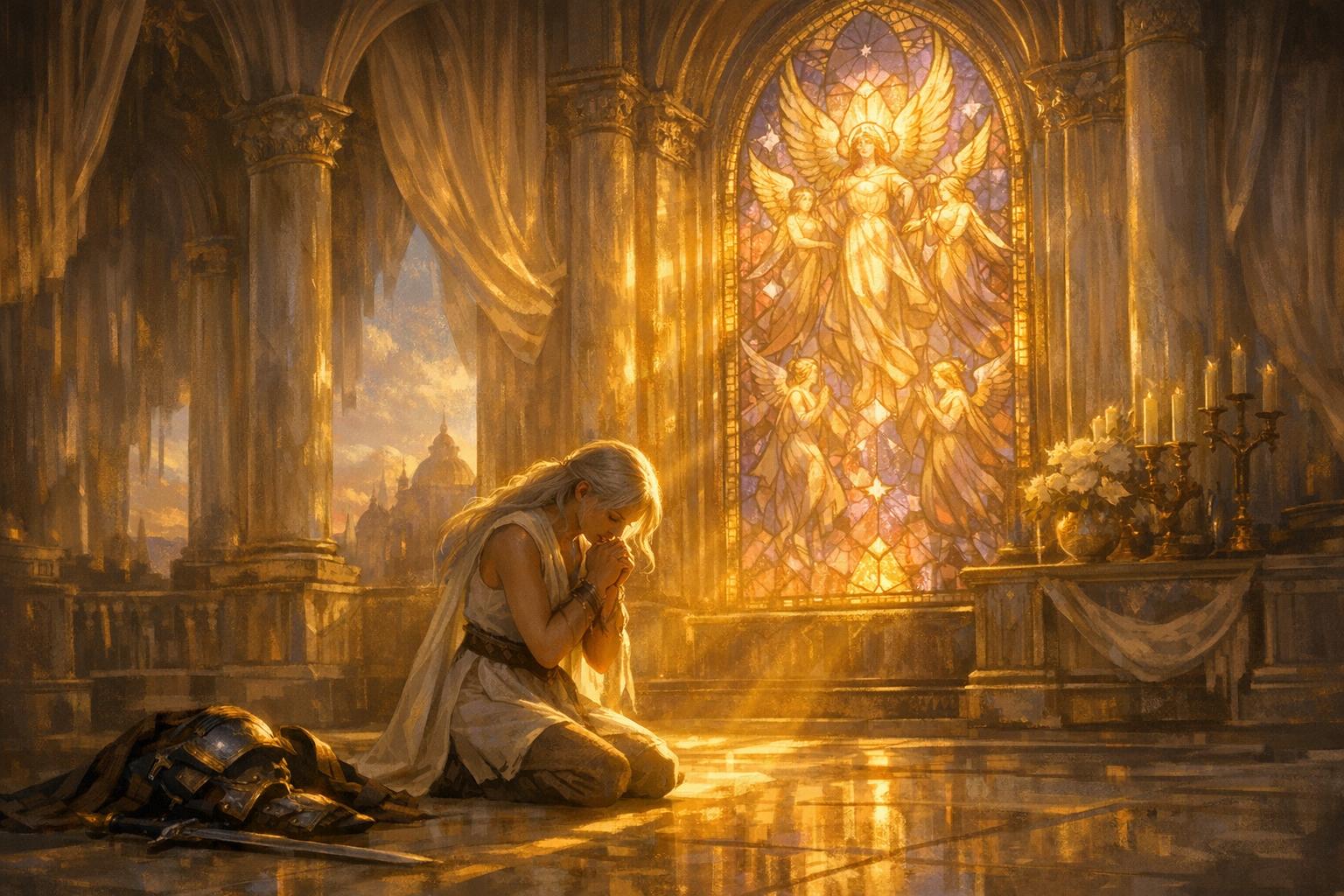
Aasimar have the most complicated relationship with religion of any D&D species, because they don't just worship the divine — they are partly made of it. A human cleric has faith. An aasimar cleric has faith plus firsthand experience of celestial communication, plus a guide spirit that may or may not be a direct representative of the god they worship. The layers of connection and complication are unique.
Some aasimar find their heritage simplifies faith. The celestial voice in your dreams isn't a metaphor. The divine light you channel during healing isn't symbolic. You have empirical evidence that the Upper Planes exist and that celestial beings take an interest in mortal affairs. For these aasimar, faith is confirmed daily, which makes them powerful champions and sometimes insufferable evangelists.
Others find the opposite: that proximity to the divine makes faith harder, not easier. When your guide spirit delivers contradictory instructions, you can't blame a priest's interpretation. When your celestial patron demands sacrifice, you can't dismiss it as institutional corruption. The aasimar who questions their guide, who pushes back against divine mandate, who says "I believe in the light but I don't believe it's always right" — that's a character wrestling with theology at a level most clerics never reach.
The fallen aasimar represents the ultimate complication. An aasimar who has turned away from their celestial heritage, whose guide spirit has gone silent or hostile, who channels necrotic shadow instead of radiant light. Fallen aasimar aren't evil by default — they're estranged. The relationship with the divine isn't gone; it's broken. And broken relationships are more painful than absent ones.
In a low-divine setting where gods are distant or silent, an aasimar's guide spirit might be the most direct divine communication anyone in the world has experienced. This makes the aasimar not just a champion but a theological phenomenon — living proof of active divine interest in a world that had stopped believing in it. The weight of that role can crush a character who just wanted to live a normal life.
Celestial Magic & the Three Revelations
Aasimar magic comes from blood, not study, which makes it feel fundamentally different from wizard spellcasting or even cleric channel divinity. The light cantrip isn't learned. Healing hands aren't trained. They emerge, usually during adolescence, sometimes during moments of extreme stress, in ways that can be terrifying for an aasimar who doesn't understand what's happening. The first time an aasimar accidentally heals someone by touching them — or accidentally blinds a room with radiant light — is a formative experience.
In combat, the transformation is the defining event. The 2024 PHB codifies three forms: Celestial Revelation as Heavenly Wings (flight and radiant damage), Inner Radiance (area radiant damage to enemies), or Necrotic Shroud (frightening presence and necrotic damage). Each form lasts one minute and can be used once per long rest. Mechanically, this is a powerful burst ability. Narratively, it's the moment when the aasimar stops being a person with celestial heritage and becomes, briefly, a celestial being in mortal form.
Heavenly Wings
Spectral wings of pure light that grant flight and add radiant damage to attacks. This is the protector's revelation — the aasimar as guardian angel, lifted above the battlefield to strike where they're needed most. The visual impact is enormous. An aasimar with radiant wings is the kind of image that becomes a legend, and legends attract both followers and enemies.
The flight is temporary, which creates tactical tension. You have sixty seconds of aerial dominance. Use them wisely. The wings also reveal what you are to everyone watching. After the transformation ends, you're standing on the ground again, looking human, but every eye in the area knows what just happened.
Inner Radiance
Searing light that radiates outward, damaging nearby enemies with radiant energy at the end of each turn. This is the scourge's revelation — not a shield or a sword but a furnace. The aasimar becomes a living sun, and proximity is painful. It's a selfless ability in the literal sense: the aasimar cannot control who gets burned, and the light doesn't discriminate between enemies and objects.
Inner Radiance is the most thematically complex revelation because it carries a cost. The light that heals and protects can also destroy and overwhelm. An aasimar who activates Inner Radiance in a crowded space is making a statement about acceptable collateral. The divine fire burns regardless of the wielder's good intentions.
Necrotic Shroud
Skeletal, ghostly wings and an aura of dread that frightens nearby creatures. This is the fallen aasimar's revelation — celestial power inverted, divine light collapsed into shadow. The Necrotic Shroud deals necrotic rather than radiant damage and its visual manifestation is deliberately horrifying. This isn't an angel descending. It's an angel breaking.
The Necrotic Shroud is mechanically excellent — fear effects are powerful crowd control — but its narrative implications are what make it interesting. A fallen aasimar who activates the Shroud is displaying their estrangement from the divine for everyone to see. The wings that should glow with golden light instead flicker with shadow. It's a wound made visible.
The Weight of Divine Purpose
No other D&D species is born with a destiny built into their biology. Dragonborn carry draconic heritage but no divine mandate. Tieflings bear infernal marks but no infernal instructions. Aasimar alone come into the world already assigned a purpose by beings they've never met, communicated through dreams they didn't ask for, enforced by a guide spirit they can't dismiss. The weight of this arrangement deserves examination, because it is heavier than most players initially realize.
The guide spirit is not a friend. It is an agent of a celestial power with its own agenda, and that agenda may not prioritize the aasimar's happiness, autonomy, or survival. A deva guide that instructs its aasimar charge to "confront the darkness in the eastern mountains" isn't asking. It's assigning. And if the aasimar dies on that mountain, the deva will grieve — probably — but it will also find another way to accomplish the mission. The aasimar is an instrument. A valued instrument, perhaps even a beloved one, but an instrument nonetheless.
This dynamic creates a specific psychological burden that mirrors real-world experiences of people raised with heavy expectations — children of religious leaders, legacy students, anyone whose identity was partially written before they were born. The aasimar who struggles to reconcile personal desire with celestial mandate isn't just having a fantasy problem. They're having a human problem dressed in divine light.
The fallen aasimar is what happens when the weight becomes unbearable. Not necessarily evil — simply broken by the expectation. The guide spirit goes silent, either because the aasimar rejected it or because the celestial patron withdrew its support. The radiant light turns to necrotic shadow. The purpose that defined the aasimar's existence is gone, and what remains is a person who has to figure out who they are without the mission that was supposed to give their life meaning.
The most tragic aasimar stories aren't about the ones who fall to evil. They're about the ones who do everything right — who answer every call, follow every vision, sacrifice every personal desire on the altar of divine purpose — and discover that it was never enough. The celestial mandate has no endpoint. There is always more darkness to confront, always another crisis, always another whisper in the night saying "you are needed." The question the aasimar must eventually face is whether being needed and being alive are the same thing.
“The celestial mandate has no endpoint. There is always more darkness to confront, always another whisper in the night saying 'you are needed.' The question is whether being needed and being alive are the same thing.”
— On the burden of celestial purpose
Inter-Species Relationships
Aasimar interact with other species from a position of invisible privilege that becomes complicated the moment it's visible. A human-passing aasimar navigates the world without the friction tieflings face, without the assumptions dwarves encounter, without the alienness that marks elves. They get the benefit of the doubt. They look trustworthy. And then the transformation happens, and everything changes — not toward suspicion, but toward expectation.
The aasimar-tiefling dynamic is the most narratively rich pairing in D&D. Celestial and infernal, light and shadow, the one everyone trusts and the one nobody does. The shallow version of this relationship is rivalry. The interesting version is kinship — two people who both carry planar heritage they didn't choose, who both feel the weight of what their blood means, who both struggle with being defined by ancestors they've never met. An aasimar and a tiefling who recognize each other as mirror images have the foundation for one of D&D's most compelling relationships.
With humans, aasimar relationships are shaped by the revelation dynamic. Before the celestial heritage is known, the aasimar is just another person. After, they're either a savior or an object of awe, neither of which allows for genuine connection. The humans who matter most to an aasimar are usually the ones who knew them before — who still see the person inside the divine light and refuse to treat them differently.
Elves and aasimar share a quality of otherworldliness, but the similarity is superficial. Elven alienness comes from time; aasimar alienness comes from divinity. An elf who has lived for five hundred years has earned their long perspective. An aasimar who radiates celestial authority is channeling something they were given, not something they built. This distinction can create friction: elves who find aasimar presumptuous, aasimar who find elven age-based wisdom less impressive when you've literally spoken with angels.
Aasimar Relationships with Other Species
| Species | Dynamic | Tension Point |
|---|---|---|
| Tieflings | Mirror image — celestial meets infernal | Shallow rivalry vs. deep kinship; both carry unwanted heritage |
| Humans | Passing as one until revelation changes everything | The awe gap — humans see a savior, aasimar sees a person they used to be |
| Elves | Shared otherworldliness from different sources | Earned wisdom vs. inherited authority; age vs. divinity |
| Dwarves | Practical respect; dwarves judge by deeds not blood | Dwarves distrust anything they can't forge or mine; celestial heritage is intangible |
| Half-orcs | Bond over being judged by ancestry | Opposite directions — one judged negatively, one positively — same dehumanization |
The most meaningful aasimar relationships form with people who see past the divine heritage to the person carrying it.
D&D Mechanics Across Editions
Aasimar mechanics tell the story of a species finding its identity. In 3.5e, they were outsiders with modest stat bonuses and a level adjustment that made them suboptimal choices. By the 2024 PHB, they're one of the most mechanically distinctive species in the game, with a transformation mechanic that no other species replicates. The mechanical evolution tracks the narrative one: as designers figured out what made aasimar interesting (the tension between mortal and celestial, the burst transformation, the guide spirit), the stats reflected that understanding.
Aasimar Mechanical Evolution
| Feature | 3.5e | 5e (Volo's) | 2024 |
|---|---|---|---|
| Key Ability | WIS/CHA (+2) | CHA (+2) + subrace | Flexible |
| Creature Type | Outsider (native) | Humanoid | Humanoid |
| Damage Resistance | Acid 5, Cold 5, Electricity 5 | Radiant and Necrotic | Radiant and Necrotic |
| Signature Feature | Daylight 1/day | Transformation (3 types) | Celestial Revelation (3 types) |
| Healing | None | Healing Hands (level/day) | Healing Hands (PB/day uses) |
| Playability Cost | +1 Level Adjustment | None | None |
The shift from triple elemental resistance to radiant/necrotic resistance sharpened aasimar identity. They stopped being generically durable and started being specifically celestial.
- Darkvision 60 ft.
- Daylight 1/day as spell-like ability
- +2 bonus to Spot and Listen checks
- Resistance to acid 5, cold 5, electricity 5
- Native outsider type
- Level Adjustment +1
The 3.5e aasimar was a mirror of the 3.5e tiefling — outsider type, triple elemental resistance, level adjustment, modest stat bonuses. Competent but unremarkable. The Wisdom/Charisma bonus pushed them toward cleric and paladin, establishing a template that persists today.
- Darkvision 60 ft.
- Celestial Resistance (radiant and necrotic)
- Healing Hands (heal HP equal to level, 1/long rest)
- Light cantrip
- Transformation (Protector / Scourge / Fallen), 1/long rest, 1 minute
The Volo's redesign is when aasimar became aasimar. The transformation mechanic gave them a dramatic power spike that no other race had, and the three subraces created a moral spectrum from devoted protector to fallen shadow. This is the version that made aasimar popular.
- Darkvision 60 ft.
- Celestial Resistance (radiant and necrotic)
- Healing Hands (scales with proficiency bonus)
- Light cantrip
- Celestial Revelation choice: Heavenly Wings, Inner Radiance, or Necrotic Shroud
- Size: Small or Medium
The 2024 version refines rather than reinvents. Flexible ability scores open aasimar to any class. Healing Hands scales more smoothly. The three revelations are rebranded but mechanically similar. The big change is core PHB status — aasimar are no longer optional.
Across Franchises & Media
The aasimar concept — mortals with celestial heritage — is less common across fantasy franchises than its infernal mirror. Tieflings have analogues everywhere because the "half-demon" concept is ancient and widespread. The "half-angel" concept is rarer in gaming, partly because angels in most settings are either fully divine or fully absent, with less room for the messy middle ground that makes aasimar compelling.
What makes D&D's aasimar distinctive in the broader landscape is the combination of latent heritage and active guidance. Most celestial-blooded characters in other franchises are either obviously divine from birth (Warcraft draenei) or discover their heritage as a one-time plot twist. D&D's aasimar experience their heritage as an ongoing conversation with a guide spirit, which creates a sustained narrative tension that other versions of the archetype lack.
Baldur's Gate 3 brought aasimar mechanics to a massive audience through the Dark Urge origin, which — while not explicitly aasimar — shares the same structural DNA: a character with a powerful inherited nature that they must accept, reject, or negotiate with. The success of that narrative framework suggests that the aasimar concept resonates well beyond its D&D origins, even when the celestial serial numbers are filed off.
Celestial Heritage Across Franchises
| Franchise | Equivalent | Key Trait | Distinction from Aasimar |
|---|---|---|---|
| D&D | Aasimar | Latent celestial heritage with guide spirit | The original; ongoing divine relationship, not just ancestry |
| Pathfinder | Aasimar (heritage) | Modular celestial bloodline system | More granular ancestry options; less emphasis on the guide mechanic |
| World of Warcraft | Draenei / Lightforged | Alien species infused with Holy Light | Collective species identity rather than individual celestial lineage |
| Diablo | Nephalem | Hybrid of angel and demon | Both celestial AND infernal; the synthesis rather than one side |
| Elder Scrolls | Dragonborn (TES V) | Mortal with divine dragon soul | Specific divine mission, not general celestial heritage |
| Bayonetta | Lumen Sages | Human order channeling angelic power | Trained rather than born; power is institutional, not hereditary |
D&D's aasimar are unique in making celestial heritage a quiet, ongoing burden rather than an obvious power fantasy. The guide spirit mechanic ensures the divine relationship is a conversation, not a monologue.
FAQ
Common Questions
Discovery usually happens gradually. Strange dreams that feel too vivid to be normal. A moment of crisis where light erupts from the aasimar's hands. Healing someone by instinct without knowing how. The guide spirit's whispers becoming too clear to dismiss as imagination. Some aasimar are told by parents who experienced prophetic visions during the pregnancy. Others figure it out alone, which can be terrifying — you're having visions and glowing in the dark, and nobody can explain why. The discovery process itself is one of the best hooks for an aasimar character's backstory.
Yes, and the process is more nuanced than simple corruption. A fallen aasimar isn't necessarily evil — they're estranged from their celestial source. This can happen through deliberate rejection of the guide spirit's mandate, through moral compromise that severs the divine connection, or through trauma that makes the aasimar unable to carry the weight of celestial expectation. Mechanically, the Necrotic Shroud transformation represents this state. Narratively, falling is less about choosing darkness and more about the light becoming too heavy to hold. Recovery is possible but difficult — rebuilding a broken divine relationship requires more than just deciding to be good again.
The guide spirit works best as a source of information and moral tension, not direct orders. Deliver visions that are evocative but ambiguous — a burning tower, a face in shadow, a feeling of urgency pointing west. Let the player interpret what the vision means and decide how to respond. The guide should have opinions, but those opinions should be debatable. If the guide demands the aasimar sacrifice something important, that's a character moment, not a DM fiat. And occasionally, let the guide be wrong. A celestial being that makes mistakes is more interesting than one that's always right, and it gives the aasimar player room to exercise judgment rather than just obedience.
Paladin remains the gold standard — Charisma synergy, thematic alignment with the celestial champion concept, and divine smite pairs beautifully with the transformation's extra damage. Cleric is the obvious runner-up, especially Light or Life domain. But don't overlook unconventional picks: an aasimar warlock whose celestial patron IS their guide spirit creates fascinating mechanical-narrative overlap. An aasimar barbarian who rages with radiant fury subverts expectations in compelling ways. An aasimar rogue who uses their human-passing nature to operate in the shadows while carrying divine light creates excellent dramatic irony. The 2024 flexible ability scores make every class viable.