

Bugbears
Lazy ambush predators who are far smarter than they look — seven-foot-tall nightmares who invented the concept of conservation of effort
Folklore & the Bogey-Bear
The bugbear predates Dungeons & Dragons by centuries, though the creature that parents used to frighten children into obedience bears almost no resemblance to the seven-foot goblinoid that haunts modern tabletop games. The word itself is a compound of "bug" — from the Welsh "bwg" meaning ghost, hobgoblin, or scarecrow — and "bear," which needs no translation. A bugbear was a bogey-bear: a shapeless terror that lived in the dark and ate children who misbehaved. Shakespeare used the term in Henry IV and The Winter's Tale as a synonym for any irrational fear, a thing conjured to frighten rather than a thing that existed to be fought.
English folklore deployed the bugbear as a disciplinary tool long before it became a monster in a stat block. "Behave or the bugbear will get you" served the same function as "the boogeyman is under your bed" — a formless threat calibrated to a child's imagination. The brilliance of the original bugbear concept is that it was never described in detail. Every child filled in the specifics from their own fears. The bugbear was whatever you were most afraid of, wearing a bear's shape in the dark. That psychological flexibility is what kept the word alive for four hundred years.
The transition from folklore bogeyman to D&D monster required giving the bugbear a body, and the body D&D chose tells you everything about the design philosophy. They took the largest, most physically intimidating member of the goblinoid family and gave it the stealth traits of the original myth. A bugbear is not just big — it is impossibly quiet for its size, emerging from shadows that shouldn't be able to contain something seven feet tall. The folklore DNA survived the translation: a bugbear is still the thing in the dark that you don't hear coming until it's too late.
What's lost in the D&D version is the bugbear's association with irrational fear specifically. The folklore bugbear was frightening because it might not exist — the terror was in the uncertainty. The D&D bugbear is frightening because it definitely exists and it definitely wants to cave in your skull with a morningstar. That's a different kind of fear, but D&D kept one crucial element: the moment of surprise. The bugbear's entire combat identity revolves around the instant you realize something enormous is standing right behind you.
The Bugbear in Folklore and Fiction
| Source | Era | Concept | Legacy in D&D |
|---|---|---|---|
| Welsh "bwg" (ghost/hobgoblin) | Medieval | Shapeless spirit used to frighten | The name itself; association with fear and shadow |
| English nursery folklore | 16th–18th c. | Bogey-bear that punishes misbehavior | Bugbears as enforcers within goblinoid hierarchies |
| Shakespeare (Henry IV, Winter's Tale) | 1590s–1610s | "Bugbear" as synonym for baseless terror | Surprise Attack feature; fear as a weapon |
| John Bunyan, Pilgrim's Progress | 1678 | Spiritual dangers taking monstrous form | The lurking predator archetype |
| Gygax & Arneson, OD&D | 1974 | Large goblinoid brute, 3+1 HD | Established the goblin-hobgoblin-bugbear triad |
The bugbear traveled from nursery rhyme to Monster Manual with its core concept intact: something large and terrible that hides in the dark and catches you unaware.
Naming the Lurker
Bugbear names in D&D carry a guttural weight that most goblinoid naming conventions lack. Where goblin names are short and sharp — Klarg, Nott, Splug — and hobgoblin names echo their militaristic culture — Kragoth, Haruuc, Lhesh — bugbear names tend toward heavy consonant clusters and low vowels. Names like Hruggek, Grankhul, and Skiggaret sound like things falling on stone floors. This isn't accidental. The naming convention mirrors the species: blunt, heavy, and deceptively simple.
The theonym Hruggek — the bugbear deity of ambush and violence — sets the template. It's two syllables, both stressed, with a guttural stop in the middle that forces the speaker to pause and then hit the second syllable harder. Most bugbear names follow this pattern. They're designed to be shouted across a battlefield or growled as a warning, not whispered in prayer or chanted in ritual. Bugbear language, to the extent D&D has developed one, is a dialect of Goblin that sounds like Goblin being spoken by something that could break the speaker in half.
Player-created bugbear names tend to fall into two camps: the ones that lean into the brutishness (Grakk, Thudge, Maulgar) and the ones that subvert it (a bugbear rogue named "Whisper," a bugbear bard named "Gentle"). Both approaches acknowledge the same underlying expectation — that a bugbear name should sound like the creature looks. The subversive names only work because the convention is so well established. You can't surprise someone with a polite bugbear name unless everyone already knows what a bugbear name is supposed to sound like.
“A bugbear does not introduce itself. It lets you see it, and then you know its name the way a rabbit knows the name of the hawk — too late and all at once.”
— Hobgoblin field manual, on bugbear scouts
Bugbears in D&D Lore
Bugbears entered D&D in the original 1974 rules as 3+1 Hit Dice monsters — significantly tougher than goblins (1-1 HD) or hobgoblins (1+1 HD) but still firmly in the "early dungeon level" category. The original design intention was straightforward: a bigger, meaner goblinoid that could surprise parties in dark corridors. There was no culture, no mythology, and no explanation for why a creature this large could sneak up on anyone. The surprise mechanic was a pure game abstraction — bugbears surprise on 1-3 on a d6 because the rules said so.
First Edition's Monster Manual (1977) gave bugbears their first real characterization, and it set the template that persists today: lazy, fond of ambush, and willing to bully smaller goblinoids into doing their work. Gary Gygax described them as living in caves and underground lairs, operating in loose bands rather than the structured legions of hobgoblins. The illustration showed a bearlike humanoid — more ursine than the later editions would depict — establishing the visual connection to the "bogey-bear" etymology. The key design decision was making bugbears the anti-hobgoblin: where hobgoblins were disciplined and organized, bugbears were chaotic, individual, and allergic to effort.
Second Edition expanded the cultural picture through sourcebooks like The Complete Book of Humanoids (1993), which made bugbears playable and added details about their society. Bugbears were characterized as nocturnal predators who despised labor, hoarded food, and maintained a simple social structure based on who could hit the hardest. The "lazy" characterization became more nuanced — not lazy in the sense of unable to act, but lazy in the sense of unwilling to expend effort on anything that didn't directly benefit them. A bugbear would spend hours motionless in ambush but refuse to dig a latrine. The distinction matters.
Fifth Edition refined the bugbear into its current form through Volo's Guide to Monsters (2016), which gave the species genuine psychological depth for the first time. The Volo's bugbear is a creature of contradictions: physically powerful but preferring stealth, intelligent enough for complex ambush planning but culturally resistant to sustained intellectual effort, capable of loyalty within small groups but fundamentally selfish in larger social contexts. The Surprise Attack feature — dealing an extra 2d6 damage on the first round of combat — formalized the ambush identity into a mechanical reward. A bugbear that gets the drop on you hits like a creature twice its CR.
Original D&D
Bugbears debut as 3+1 HD monsters with a surprise mechanic (1-3 on d6). No culture, no backstory — just a big goblinoid that ambushes parties in dungeons. The surprise mechanic is the seed of everything that follows.
AD&D 1e Monster Manual
First full write-up: lazy ambush predators, cave-dwelling, loose tribal bands. The anti-hobgoblin characterization established. Illustration leans into the "bear" etymology with ursine features.
AD&D 2e — The Complete Book of Humanoids
Bugbears become playable. Society detailed: nocturnal, might-makes-right hierarchy, hatred of sustained labor. The "lazy but patient" paradox becomes a defining trait.
D&D 3.5e
Bugbear PC stats: +4 STR, +2 DEX, +2 CON, +2 Natural Armor. Level Adjustment +1 made them expensive but brutally effective ambush characters. Move Silently racial bonus formalized the stealth identity.
5e — Volo's Guide to Monsters
Surprise Attack (2d6 extra damage), Long-Limbed (5 ft. extra reach), Sneaky, and Powerful Build define the modern bugbear. First edition to give genuine psychological depth to the species.
Eberron: Rising from the Last War
Darguun gives bugbears a national context. The Marguul bugbear clans operate as independent warlords within a goblinoid nation, providing a rare example of bugbears with political agency.
2024 D&D Revision
Bugbear PC options updated with flexible ability scores. Surprise Attack and Long-Limbed retained as signature features. The species keeps its ambush identity while shedding fixed stat penalties.
Caves & Claimed Territories
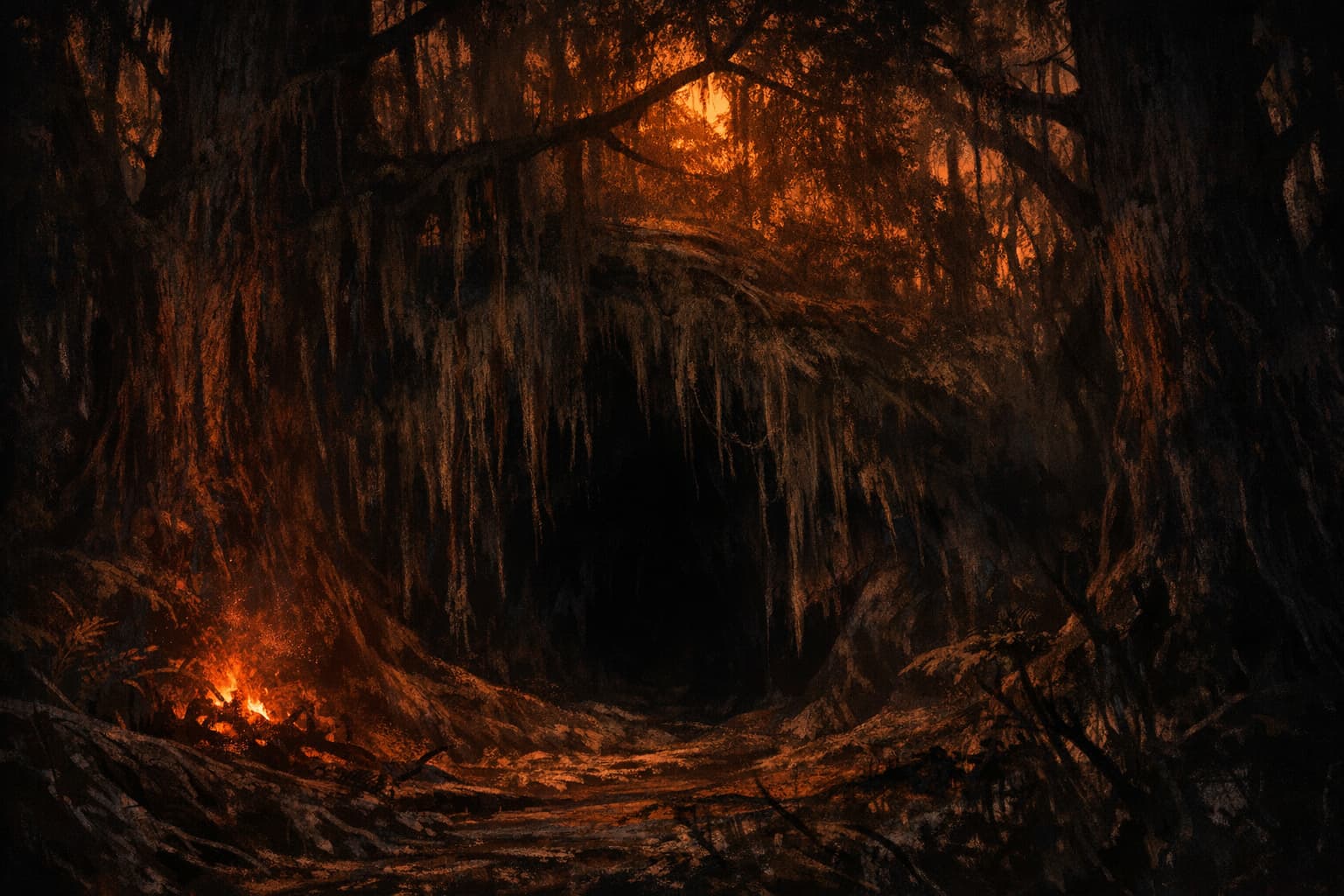
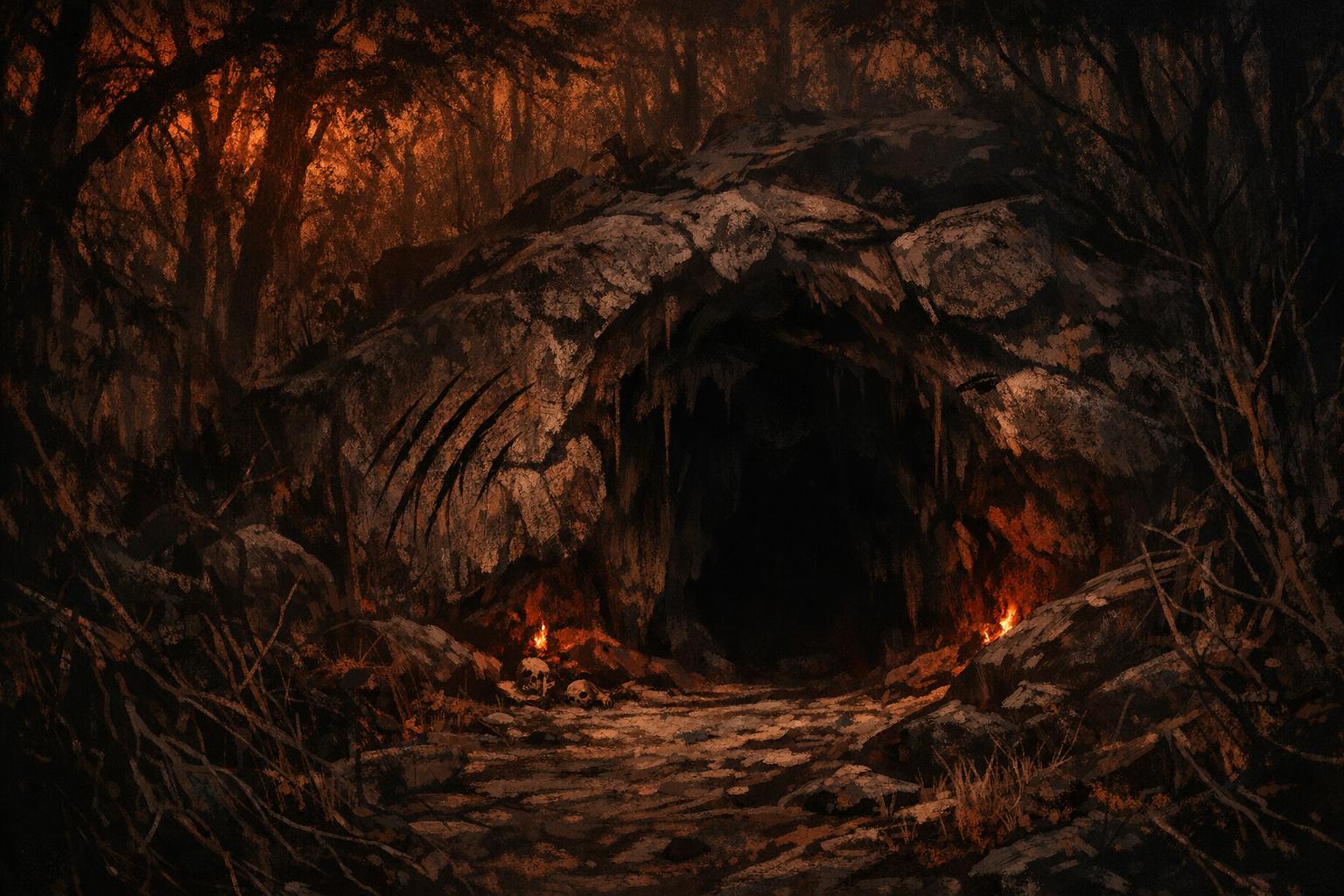
Bugbear territory is defined not by borders but by fear. A bugbear band claims a stretch of forest, a cave system, or a section of dungeon by making it dangerous for anything else to enter. There are no flags, no walls, no boundary markers. There is only the accumulating evidence that something large and hostile operates in the area: stripped carcasses hung from trees, claw marks at shoulder height on cave walls, and the conspicuous silence of an ecosystem that has learned to be very, very quiet.
The ideal bugbear lair has three features: a concealed entrance, enough room to sleep in a pile, and proximity to a travel route or settlement that provides targets. Bugbears don't build elaborate warrens like goblins or fortified camps like hobgoblins. They find natural shelters — caves, ruins, dense thickets, abandoned buildings — and modify them minimally. A bugbear "fortification" might be nothing more than a few deadfall traps on the approach paths and a large rock positioned to block the entrance from inside. This minimal investment is deliberate. Bugbears abandon lairs frequently, either because they've exhausted the local hunting or because something bigger has moved into the area. A lair you spent three months building is hard to leave. A cave you moved into last week is not.
Territorial behavior among bugbear bands follows a predator's logic rather than a nation-builder's. A band claims only what it can actively patrol and hunt. Overlapping territories between bands lead to violence, but the violence is typically brief — a single confrontation between the two bands' strongest members, after which the loser relocates. Bugbears do not wage prolonged territorial wars because prolonged wars require sustained effort, and sustained effort is exactly what bugbears have structured their entire culture to avoid.
When placing a bugbear lair on your map, think about what drew them there. Bugbears are ambush predators, so they settle near prey routes: trade roads, game trails, river crossings, or the approaches to settlements. The lair itself should be unremarkable — a cave, a ruin, a hollow under a fallen tree. The surrounding area is where the encounter design lives. Place ambush positions along the most likely approach routes, give the bugbears elevated ground or dense cover, and remember that a bugbear's first instinct is to wait until the perfect moment. They will not charge out to meet the party. The party will walk into them.
Built for Ambush
A bugbear stands between six and a half and seven and a half feet tall and weighs between 250 and 350 pounds. Those numbers put them in the same size class as an ogre, which makes the bugbear's defining trait almost impossible to believe until you experience it: they are nearly silent. A creature that large should not be able to sneak up on a seasoned adventurer in a quiet forest, and yet bugbears do it routinely. The explanation is biomechanical — bugbears carry their weight on the balls of their feet with a rolling, heel-avoiding gait that distributes pressure across a wide plantar surface. Their joints are built for slow, controlled movement. They can hold a crouch for hours without muscle fatigue that would have a human shaking within minutes.
The fur is the other half of the stealth equation. Bugbear fur ranges from brown to black, with darker individuals predominating in cave-dwelling populations. The fur is not decorative — it's a sensory organ in its own right. Long guard hairs detect air currents, temperature shifts, and vibration. A bugbear navigating a dark cave reads the environment through its fur the way a cat reads it through whiskers. The fur also muffles sound. Equipment that would clank and rattle on a human fighter sits silent against a bugbear's body, cushioned and dampened by the dense undercoat.
The arms deserve special mention. Bugbear arms are disproportionately long relative to their torso — a trait D&D mechanizes as the Long-Limbed feature, granting five extra feet of reach on melee attacks. In anatomical terms, bugbear upper limbs are roughly 15% longer than a human's proportional average, with enlarged hands and thick, hooked claws that serve as both weapons and climbing tools. The reach advantage is not subtle. A bugbear standing in a doorway can strike targets that think they're safely out of range, which is exactly the kind of unpleasant surprise that defines the species' combat style.
Darkvision extends to 60 feet and is optimized for low-light conditions rather than total darkness — bugbears see best at dusk and dawn, the hunting hours. Their hearing is acute, particularly in the low-frequency range. They can detect the footsteps of a creature in heavy armor from several hundred feet away in quiet conditions. Smell is adequate but not exceptional. The sensory package, taken together, is that of a nocturnal apex predator: vision tuned for ambush lighting, hearing that detects prey at range, and a body built to close the distance in silence.
The Stealth Paradox
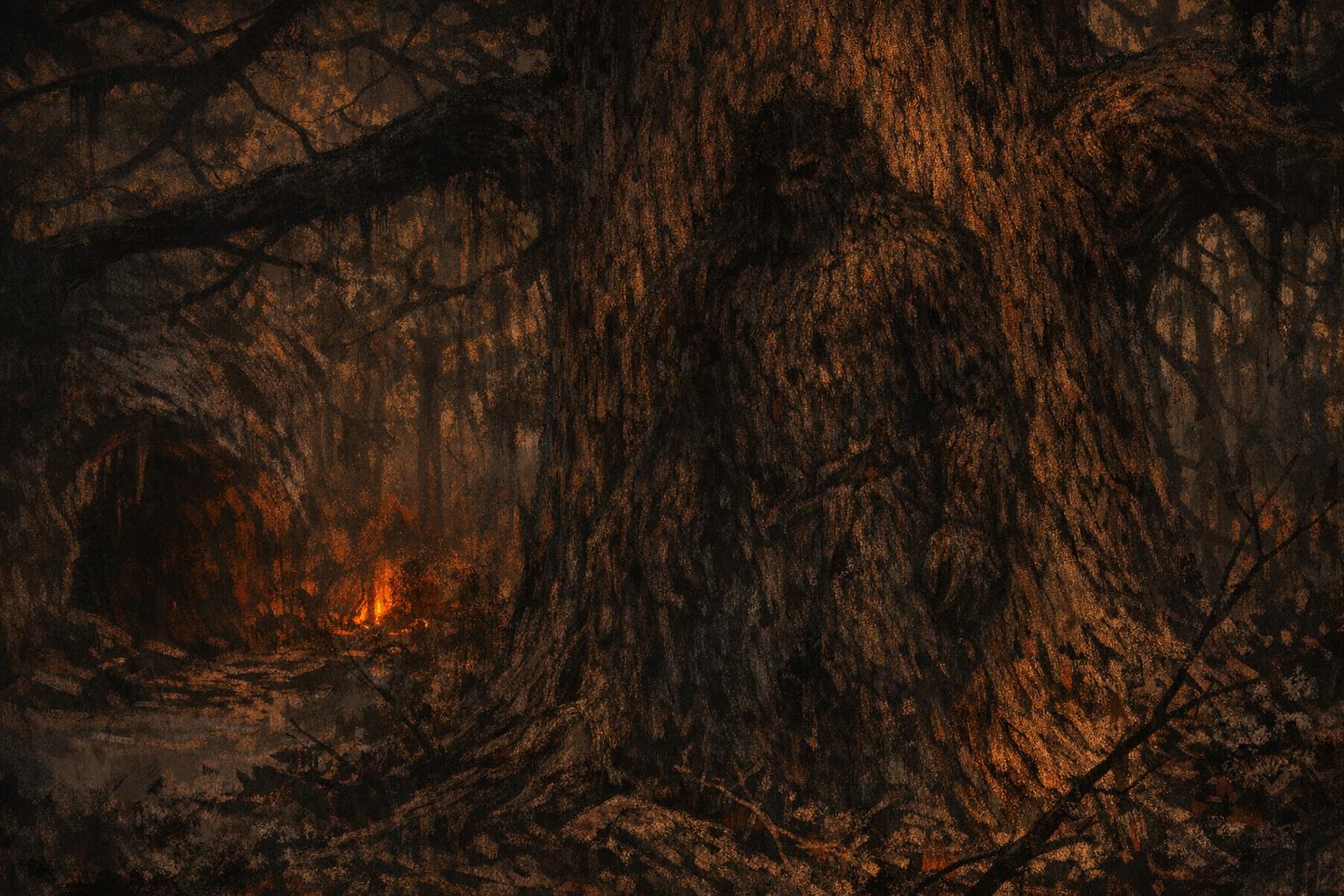
Nothing about a bugbear's appearance suggests stealth. They're enormous, fur-covered, and equipped with heavy weapons. But stealth isn't about being small — it's about controlling when you're perceived. A bugbear controls this through patience, terrain selection, and a preternatural ability to remain motionless. They don't hide behind trees. They stand against trees, matching the shadow and the stillness of the environment so precisely that the human eye slides past them. Ambush predators in nature — crocodiles, trapdoor spiders, anglerfish — share this trait. The camouflage isn't visual mimicry. It's behavioral stillness so complete that the target's brain edits the predator out of the scene.
Long-Limbed & Lethal
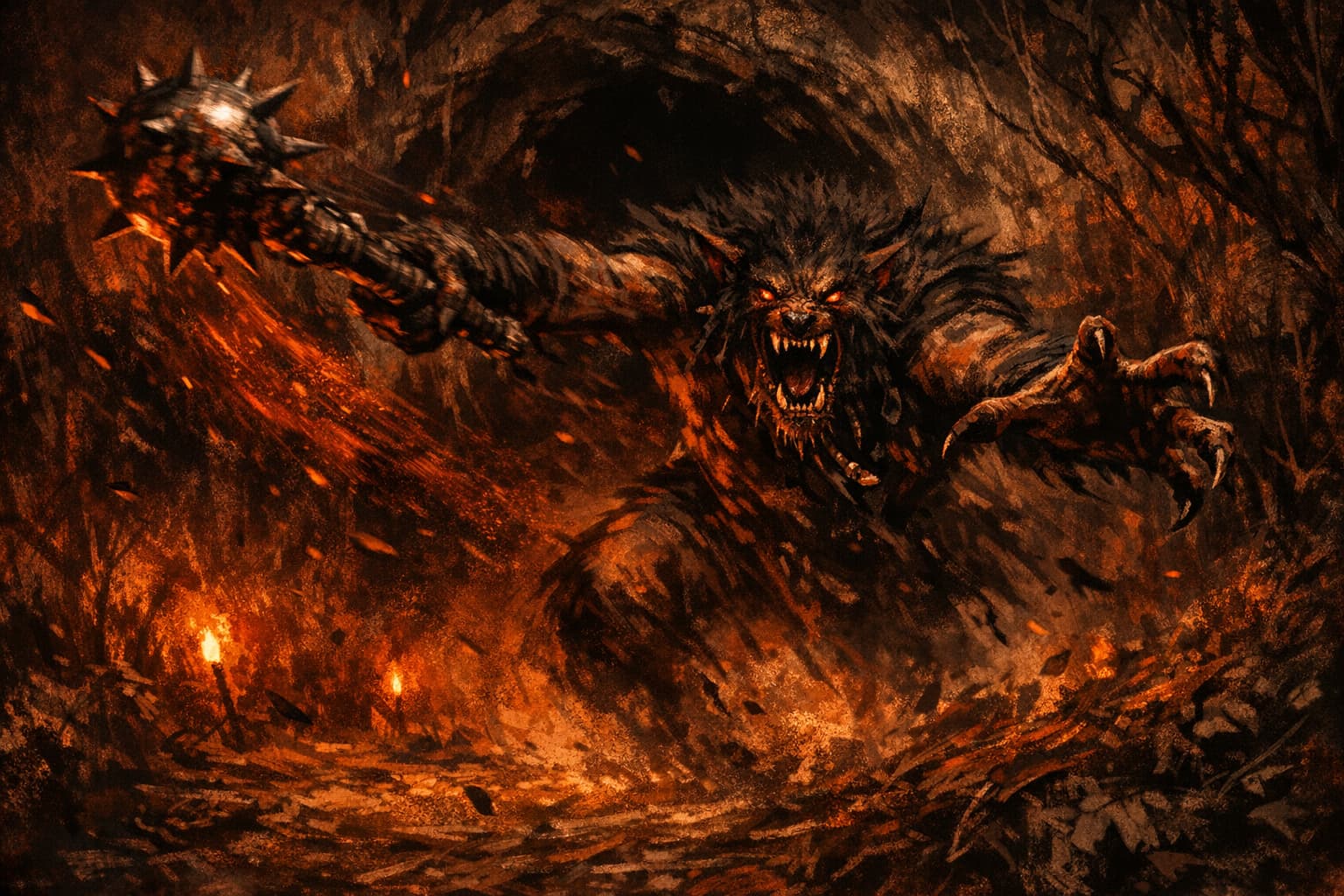
The Long-Limbed feature isn't just a mechanical convenience — it represents a genuine biomechanical advantage that changes how combat unfolds. A bugbear with a morningstar has an effective threat radius of fifteen feet, the same as a human with a polearm but with none of the awkwardness of a long weapon in close quarters. In narrow dungeon corridors, this is devastating. The bugbear stands at the edge of torchlight, strikes from outside the party's expected engagement range, and retreats before retaliation. Combined with Surprise Attack damage, the first round of a bugbear encounter often ends with a party member on the ground before anyone has rolled initiative.
The Bugbear Mindset
Every sourcebook describes bugbears as lazy. This is the most misunderstood word in D&D monster design. Bugbears are not lazy the way a teenager avoiding chores is lazy. They are lazy the way a lion is lazy — conserving energy with ruthless discipline because their survival strategy demands explosive bursts of maximum effort followed by long periods of recovery. A lion sleeps twenty hours a day not because it lacks ambition but because hunting at peak performance requires it. Bugbears operate on the same principle. The napping isn't sloth. It's preparation.
The bugbear mindset is better described as radical efficiency. Why dig a latrine when you can move your camp? Why build a shelter when a cave exists? Why forage for berries when you can ambush the creature that already foraged for berries? Every decision is filtered through a single question: does the effort required exceed the benefit gained? If yes, don't do it. If a goblin will do it for you under threat of violence, definitely don't do it. This isn't stupidity or lack of foresight. It's an optimization function that prioritizes energy conservation above all other values.
This mindset extends to social interactions. Bugbears don't engage in small talk, elaborate greetings, or political maneuvering. They communicate what needs to be communicated and stop. A bugbear chief gives orders in as few words as possible. A bugbear negotiator states a demand and waits. The silence that follows isn't a tactic — it's genuine indifference to the social expectation that conversation should fill time. Hobgoblins find this maddening. Goblins find it terrifying. Other bugbears find it completely normal.
The one context where bugbears abandon conservation of effort is the ambush itself. When a bugbear commits to an attack, the transformation is shocking. The sleepy, lumbering creature that spent the last six hours apparently doing nothing erupts into violent motion with a speed and ferocity that belies its size. The ambush is where all the conserved energy goes. A bugbear's first strike hits harder, moves faster, and commits more fully than the same creature's behavior at any other time would suggest is possible. The Surprise Attack feature isn't just a bonus — it's the mechanical representation of a creature that has been saving up for exactly this moment.
A village reports that something has been stealing livestock, but only every ten to fourteen days. No tracks, no witnesses, no pattern in which animals are taken except that it's always the fattest one. The intervals match a bugbear's feeding cycle — gorge, digest, sleep, repeat. The bugbear has been watching the village long enough to know which animal to take and when the watch is weakest. It has done this seven times without being detected. It is not in a hurry.
Daily Rhythms & Pack Hierarchy
Bugbear social structure is a pack, not a tribe, and the distinction matters. A tribe implies shared culture, accumulated tradition, and institutions that outlast individual members. A bugbear pack is a temporary association of convenience built around a dominant individual. When the dominant bugbear dies or is defeated, the pack may dissolve entirely, its members drifting to other packs or operating solo until a new leader emerges. There is no bugbear government, no bugbear nation, no bugbear civilization in any meaningful sense. There are packs, and the packs last exactly as long as they remain useful to their members.
Pack hierarchy is determined by a simple formula: strength plus willingness to use it. The biggest, most aggressive bugbear leads. Challenges are direct and physical — a subordinate who thinks they should be in charge picks a fight with the current leader. If the challenger wins, they lead. If they lose, they either submit or leave. There are no councils, no votes, no hereditary succession. The system is brutal but transparent. Every bugbear in the pack knows exactly where they stand at all times, and the hierarchy updates in real time through observable violence.
A typical bugbear day, if the pack isn't actively hunting, involves an almost comical amount of sleeping. Bugbears sleep twelve to sixteen hours in a twenty-four-hour cycle, typically in a communal pile for warmth and security. The waking hours divide between eating (if food is available), minimal lair maintenance, grooming, and what can only be described as competitive lounging — establishing who gets the best sleeping spot, the largest portion of food, and the warmest position in the pile. These low-stakes dominance displays are constant and mostly non-violent, a background hum of shoving, growling, and posturing that maintains the hierarchy without requiring actual combat.
When the pack hunts, the daily rhythm inverts completely. Bugbears become nocturnal, alert, and intensely focused. The pack moves to a predetermined ambush site — often scouted days or weeks in advance — and settles into position. They can hold an ambush for hours, motionless and silent, waiting for prey to enter the kill zone. The transition from sleeping pile to ambush formation is jarring for anyone who has only seen bugbears in their "off" mode. It's like watching a house cat spot a bird: the same animal, but the entire operating system has changed.
Bugbear Pack Roles
| Role | Selection Method | Duties | Status |
|---|---|---|---|
| Boss (pack leader) | Defeated previous boss in single combat | Decides when and where to hunt; resolves disputes by hitting people | Highest — eats first, sleeps warmest |
| Hunters (2-5) | Strongest fighters after the boss | Execute ambushes; carry heavy prey back to lair | High — eat second; enforce boss's decisions |
| Scouts (1-2) | Best at stealth and observation | Locate prey, identify ambush sites, warn of threats | Moderate — valued but not dominant |
| Whelps (juveniles) | Born into it | Learn by observing; carry gear; take worst sleeping spots | Lowest — eat last, hazed constantly |
| Attached goblins (variable) | Bullied or coerced into service | Forage, cook, maintain traps, serve as lookouts and bait | Below whelps — not truly pack members |
The pack structure is flat and fluid. A bugbear can move from whelp to hunter to boss in a matter of months if they grow fast and fight well. The system rewards physical capability above everything else.
Ambush Hunting & Sleep Cycles
Bugbears sleep the way cats do — not in one long block but in scattered naps distributed across the day and night, each lasting between twenty minutes and two hours. This polyphasic pattern isn't laziness despite how it looks to species that follow a single sleep-wake cycle. It's an ambush predator's schedule. A bugbear who sleeps in short bursts is never more than an hour from full alertness, never deeply unconscious enough to miss an approaching threat, and always ready to explode into action from apparent rest.
The hunting style this enables is distinctive and deeply unsettling to prey species. A bugbear can remain motionless for hours — genuinely sleeping, not just waiting — in a position overlooking a game trail or settlement approach. When a target appears, the transition from sleep to full-speed attack takes less than three seconds. Observers describe it as watching a boulder suddenly develop intentions. The ambush succeeds not because the bugbear is hidden, though they usually are, but because the attack comes from a state of such complete stillness that the target's threat-detection instincts never trigger.
Among adventuring parties, bugbear sleep patterns create practical advantages and social friction in equal measure. A bugbear takes watch naturally — they cycle through alertness anyway, so staying awake during designated hours costs them nothing. But they also fall asleep during conversations, meals, and planning sessions with a speed and completeness that other species find either impressive or insulting. A bugbear who closes their eyes during your battle strategy isn't bored. They're banking rest against the next burst of violence. The strategy session will still be there when they wake up in forty minutes.
Bugbear sleep patterns are one of those species traits that transforms table dynamics when played consistently. A bugbear character who genuinely naps during downtime, wakes instantly at the first sign of trouble, and treats pre-dawn ambushes as their preferred working hours gives the party a night-shift operator that no other species provides as naturally.
Goblinoid Brotherhood
The goblinoid triad — goblins, hobgoblins, and bugbears — shares a divine creator, a biological kinship, and a relationship dynamic that functions like a deeply dysfunctional family. Goblins are the runts: numerous, clever, and perpetually bullied by their larger relatives. Hobgoblins are the middle children: disciplined, ambitious, and convinced that they should be running everything. Bugbears are the eldest who never moved out: physically dominant, fundamentally uninterested in responsibility, and content to let everyone else do the work as long as they get the biggest portion at dinner.
Within a hobgoblin legion, bugbears serve as shock troops, assassins, and terror weapons. The hobgoblin commander points the bugbears at a target and trusts that raw violence and surprise will produce results. This arrangement works because it aligns with both species' preferences — hobgoblins want obedient soldiers, and bugbears want someone else to handle logistics. The relationship sours when hobgoblins try to impose discipline on bugbears beyond the bare minimum. A bugbear will execute an ambush on command. A bugbear will not march in formation, maintain a watch schedule, or polish its equipment. Hobgoblin officers who push too hard on these points tend to be found dead in circumstances that are ambiguously accidental.
The bugbear-goblin relationship is simpler and uglier: bugbears bully goblins because they can. In mixed goblinoid groups, goblins serve bugbears as combination servants, lookouts, and chew toys. A bugbear assigned to a goblin warband acts as an enforcer — the goblins are more afraid of the bugbear behind them than the enemy ahead of them, which is the whole point. But the relationship isn't purely parasitic. Goblins attached to a bugbear pack gain protection from other predators, and a bugbear with goblin minions eats more regularly because the goblins do the foraging, cooking, and trap-setting that the bugbear refuses to do. It's an exploitative symbiosis, but it's a symbiosis nonetheless.
Maglubiyet, the goblinoid deity, theoretically unifies all three species under divine authority. In practice, bugbears are the least devout of the triad. They acknowledge Hruggek — their own patron deity of ambush and violence — more readily than Maglubiyet's overarching authority. This theological independence reflects the species' broader attitude toward hierarchy: bugbears accept leadership only when it directly benefits them and ignore it the moment it becomes inconvenient. A goblin prays to Maglubiyet out of fear. A hobgoblin prays out of duty. A bugbear prays when it wants something, if it remembers to pray at all.
Within the Legion
Bugbears integrated into hobgoblin military structures occupy a specific and uncomfortable niche: too valuable to dismiss, too unreliable to trust. A hobgoblin commander uses bugbears the way a human general uses cavalry — as a concentrated striking force deployed at decisive moments rather than a standing element of the line. The bugbears are kept separate from regular hobgoblin troops, housed in their own quarters (which they immediately trash), and unleashed only when the battle plan calls for maximum violence in a specific location.
The friction is constant. Hobgoblins value discipline, hierarchy, and uniformity. Bugbears value none of these things. A hobgoblin officer assigned to manage a bugbear contingent is either the most diplomatic officer in the legion or the one the commander wants to get rid of. The turnover rate in this position is high.
Independent Packs
Free bugbear packs operate on the fringes of goblinoid territory, answering to no hobgoblin commander and following no orders beyond those of their own boss. These packs range from three to twenty individuals, often with an attached group of bullied goblins handling the menial work. Independent packs are more mobile, more opportunistic, and more dangerous to travelers than integrated bugbears because they have no leash and no strategic objective beyond feeding themselves.
The independent pack is the bugbear's natural social unit. It's where the species' ambush instincts, minimal-effort philosophy, and flat hierarchy operate without external constraints. A free pack hunts when it's hungry, moves when the hunting declines, and fights only when the odds are overwhelmingly in its favor. This is the bugbear at its most authentically bugbear.
Hruggek & the Bugbear Pantheon
Hruggek is the bugbear deity, and he is exactly what you'd expect the god of bugbears to be: enormous, violent, and utterly uninterested in anything that doesn't involve hitting something with a giant morningstar. He resides on the plane of Acheron — the same bleak, warlike afterlife that houses Maglubiyet — but maintains a domain called Hruggekolohk that is essentially a vast hunting ground in eternal twilight. Bugbear souls that please Hruggek spend eternity ambushing spiritual prey across misty, forested hills. Bugbear souls that displease him spend eternity being the prey. The theological incentive structure is refreshingly straightforward.
Hruggek's relationship with Maglubiyet, the overdeity of all goblinoids, mirrors the bugbear species' relationship with hobgoblin authority: technically subordinate, practically independent, and violent when pushed. Maglubiyet conquered Hruggek in the divine war that subjugated all goblinoid deities, but Hruggek's submission has always been grudging and incomplete. He maintains his own domain, his own priests, and his own agenda. Maglubiyet tolerates this because Hruggek's followers are useful shock troops in the divine wars of Acheron, and because fully subduing a god whose entire portfolio is "ambush and violence" would cost more than it's worth. The divine relationship mirrors the mortal one: the big stupid brute is too useful to discipline and too dangerous to confront directly.
Grankhul, the lesser bugbear deity of hunting, stealth, and surprise, occupies the "sneaky" half of the bugbear divine portfolio. Where Hruggek represents the moment of impact — the morningstar connecting with a skull — Grankhul represents everything before it: the tracking, the waiting, the silent approach, the selection of the perfect ambush site. Bugbear hunters and scouts revere Grankhul more than Hruggek, though the distinction is often blurred. The two deities together form a complete picture of the bugbear hunting cycle: Grankhul gets you into position and Hruggek gets you through the kill.
Bugbear religious practice, such as it is, consists primarily of pre-hunt rituals and post-kill offerings. A bugbear pack preparing for an ambush might smear war paint across their faces, growl invocations to Hruggek, and hold a moment of stillness dedicated to Grankhul. After a successful hunt, the choicest portions of meat are left at a crude shrine — usually just a collection of skulls arranged around a large rock. There are no temples, no scriptures, no formal priesthood in the sense that other species would recognize. Bugbear shamans exist, but they're less religious leaders and more spiritual consultants who provide blessings before hunts and interpret omens. A bugbear who prays every day is viewed by other bugbears as either touched by the gods or profoundly weird.
The rivalry between Hruggek and Maglubiyet is one of the most underused divine conflicts in D&D lore. A campaign built around Hruggek attempting to break free of Maglubiyet's authority — using mortal bugbear champions to weaken Maglubiyet's influence on the material plane — writes itself. The bugbear PCs aren't just adventuring; they're the advance scouts of a divine insurgency. Hobgoblin clerics of Maglubiyet become antagonists not because they're evil but because their god's authority is being challenged.
Stealth Magic & Shadow Hunting
Bugbear magic is sparse, pragmatic, and almost entirely focused on making the bugbear better at the one thing bugbears care about: killing things from ambush. There is no bugbear tradition of arcane scholarship, no bugbear school of enchantment, no bugbear equivalent of the elven bladesinger or the dwarven runesmith. What exists is a narrow but effective collection of shamanistic practices centered on stealth enhancement, darkness manipulation, and the ability to strike harder from surprise. It's the magical equivalent of the bugbear philosophy: maximum result, minimum effort, no wasted energy on anything that doesn't contribute to the kill.
Bugbear shamans — called "shadow callers" in some sources — practice a form of primal magic that draws on the Shadowfell's ambient energy. Their signature abilities involve deepening existing shadows, muffling sound in a localized area, and imbuing weapons with a cold, necrotic edge that hits harder against surprised targets. None of these effects are flashy. A wizard watching a bugbear shaman work might not even recognize it as magic — it looks more like the shadows just happen to be darker, the forest just happens to be quieter, the morningstar just happens to hit a little harder than physics should allow. The subtlety is the point. Flashy magic draws attention. Bugbear magic is designed to prevent attention.
The most feared bugbear magical tradition is the "shadow walk" — a technique that allows a bugbear to step into an area of dim light or darkness and emerge from another shadow within a limited range. Whether this is true teleportation, an extremely short-range plane shift through the Shadowfell, or simply moving so fast and so quietly that the observer's brain can't track the movement is a matter of scholarly debate. The bugbears themselves have no interest in the theoretical explanation. It works. They appear behind you. That's sufficient.
Non-magical bugbears — which is to say, the vast majority — still benefit from the species' affinity for shadow and silence. Bugbear-crafted equipment tends toward dark materials, muffled fastenings, and matte finishes that don't catch light. Their weapon preferences favor heavy, blunt instruments that don't need to be drawn from a sheath (no metallic scrape to announce an attack) and that deliver maximum damage in a single blow. The morningstar is the iconic bugbear weapon not because it's sophisticated but because it's the optimal tool for a creature that gets one devastating first strike and wants that strike to end the fight.
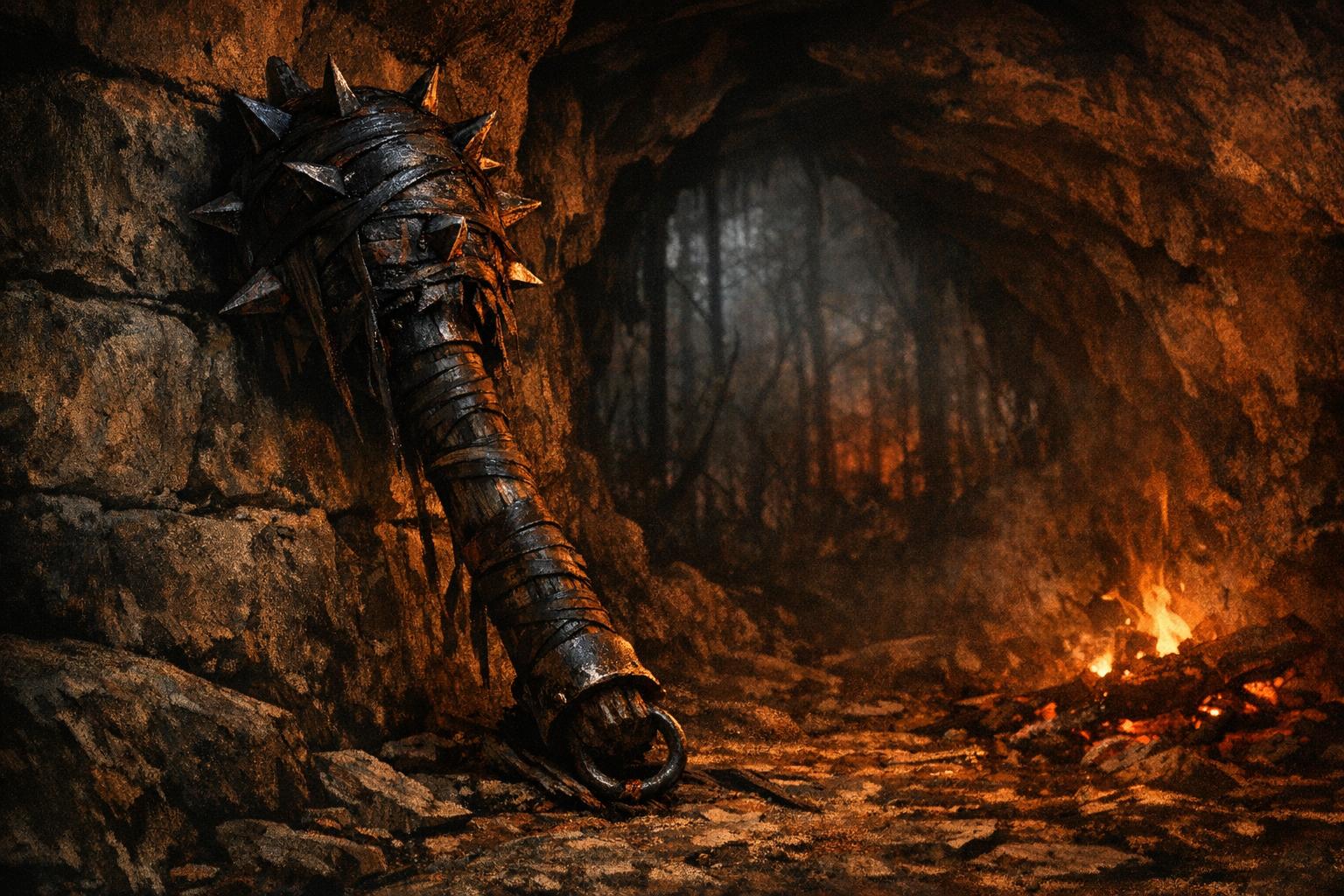
The Morningstar Tradition
Hruggek wields a morningstar, and so does almost every bugbear who can get their hands on one. The weapon is practically a religious symbol. But the preference isn't purely devotional — the morningstar is mechanically ideal for the bugbear's combat style. It delivers d8 damage in one hand (leaving the other free to grapple or shove), it doesn't require drawing (can be carried ready at all times), and its damage type (piercing/bludgeoning) is among the least resisted in D&D. For a creature that builds its entire combat identity around a single devastating opening strike, the morningstar is the perfect tool: simple, reliable, and brutally effective.
Goblinoid Relations & Tribal Dynamics
The goblinoid ecosystem is a case study in how three related species with radically different temperaments coexist without destroying each other — though "coexist" might be too generous a word for a relationship built on exploitation, resentment, and occasionally murder. Each species fills a distinct ecological role, and the triad functions as a unit even when its members can barely stand each other. Goblins scout, forage, and absorb casualties. Hobgoblins organize, strategize, and administer. Bugbears hit things very hard and then take a nap. The system works because each species does what the others won't or can't.
The central tension in bugbear-hobgoblin relations is the gap between utility and obedience. Hobgoblins need bugbears — a hobgoblin legion without bugbear shock troops loses its most devastating tactical asset. But hobgoblins run on discipline, and bugbears are constitutionally incapable of being disciplined for more than about twenty minutes at a stretch. The compromise, worked out over millennia of uneasy coexistence, is that hobgoblins give bugbears simple, violence-oriented tasks with clear rewards and minimal oversight. "Go to this location. Kill whatever you find. Bring back the good loot." That's an order a bugbear will follow. "Report to the quartermaster at dawn for equipment inspection" is an order that will get the quartermaster killed.
In settings with established goblinoid nations — Darguun in Eberron being the most developed example — the inter-species dynamic takes on political dimensions. Bugbear clans in Darguun function as semi-independent warlords, owing nominal allegiance to the Lhesh Haruuc's throne but operating with considerable autonomy. The hobgoblin government tolerates this because the alternative — actually trying to impose bureaucratic control on bugbears — would require more military resources than the bugbear territories are worth. This is the bugbear's paradoxical contribution to goblinoid politics: they create stability through the threat of chaos. Nobody wants to be the one who provokes the bugbear clans into open revolt.
The relationship between bugbears and other non-goblinoid species is simpler: bugbears are predators, and everyone else is either prey, too dangerous to be prey, or irrelevant. They don't trade, they don't negotiate, and they don't form alliances with non-goblinoids except under extraordinary circumstances. A bugbear band might work alongside an evil cleric, a bandit lord, or a dragon if the arrangement provides food and targets with minimal effort, but the moment the arrangement becomes inconvenient, the bugbear walks. Loyalty is a concept they apply within the pack and nowhere else.
The goblinoid triad is one of D&D's most elegant pieces of monster design precisely because the three species create natural conflict without any external antagonist. A hobgoblin legion with goblin infantry and bugbear shock troops is a self-contained story engine: the hobgoblin commander struggling to maintain order, the goblin soldiers plotting escape, and the bugbear contingent doing whatever it wants until someone gives them something to kill. You don't need a villain. The internal dynamics are the adventure.
Notable Bugbears in Fiction
Named bugbears in D&D are vanishingly rare, which is ironic for a species that has appeared in published adventures since the game's first year. The bugbear's role as a mid-boss — tougher than the goblin fodder, less important than the actual villain — means they're typically encountered, fought, and forgotten without ever being named. Klarg, the bugbear in the Cragmaw Hideout from Lost Mine of Phandelver, is probably the single most-killed named bugbear in D&D history, and his characterization amounts to "he has a pet wolf and he's bossy." The species deserves better representation, and the few standout examples show what bugbears can be when writers give them room to breathe.
Critical Role's campaign one features bugbears in several encounters, but the broader cultural impact of bugbears in actual play comes from their mechanical appeal to players who enjoy the ambush-and-hit-hard playstyle. The bugbear rogue has become a build archetype — combining Surprise Attack with Sneak Attack for devastating opening damage — that has done more to popularize the species as a player choice than any amount of published lore. The bugbear's presence in the player consciousness is mechanical rather than narrative: people don't play bugbears because of a compelling fictional character. They play bugbears because 2d6 extra damage on a surprise round stacks with everything.
Outside tabletop gaming, the bugbear-as-character barely exists. The word retains its folklore meaning in common English — "my biggest bugbear" means "my biggest annoyance" — but the D&D creature hasn't penetrated popular culture the way goblins, orcs, or even kobolds have. No major film, novel, or video game has centered a bugbear character. This invisibility is almost poetically appropriate for a species whose entire identity revolves around not being seen until it's too late. The bugbear is the overlooked member of an already-overlooked family, and that marginality is precisely what makes them interesting to the players and DMs who do discover them.
Notable Bugbears in D&D Published Material
| Name / Group | Source | Significance |
|---|---|---|
| Klarg | Lost Mine of Phandelver (2014) | First boss encounter for most 5e players. Commands goblins in the Cragmaw Hideout. Defined the bugbear-as-miniboss template for a generation. |
| The Cragmaw Bugbears | Lost Mine of Phandelver | Multiple bugbears throughout the Cragmaw Castle dungeon. Established the pattern of bugbears as elite goblinoid troops. |
| Marguul Clans | Eberron: Rising from the Last War | Independent bugbear warlord clans in Darguun. The most developed political bugbear faction in any D&D setting. |
| Bugbear Chief (generic) | Monster Manual, all editions | The stat block that launched a thousand ambushes. CR 3 in 5e — perfectly positioned to terrify mid-low-level parties. |
| Grankhul cultists | Various Forgotten Realms sources | Bugbear assassin-priests who worship the deity of stealth. Among the few bugbear NPCs with class levels in published material. |
The relative scarcity of named bugbear characters is itself a design opportunity. Any DM who creates a memorable bugbear NPC is working in nearly virgin territory.
Mechanics Across Editions
The mechanical evolution of bugbears tracks a single design thread: how to make "big creature that ambushes you" interesting across thirty years of increasingly sophisticated game design. The original 3+1 HD bugbear was interesting because in 1974, anything with more hit dice than you was interesting. The modern bugbear is interesting because Surprise Attack, Long-Limbed, and Powerful Build create a mechanical identity that no other species replicates — the ambush brute who hits above their weight class in round one and spends the rest of the fight being a competent but unremarkable melee combatant.
For player characters, the bugbear's mechanical arc has been about reducing the cost of entry while preserving the species' distinctive features. The 3.5e bugbear had a Level Adjustment of +1, meaning you were always one level behind the rest of the party — a steep price that limited bugbear PCs to optimization-focused players willing to do the math on whether the +4 STR offset the lost hit die and class features. Fifth Edition eliminated level adjustments entirely, making the bugbear a mechanically competitive PC choice for the first time. The 2024 revision goes further with flexible ability scores, removing the last vestige of the "dumb brute" mechanical assumption.
The Surprise Attack feature deserves close examination because it's doing more mechanical work than it appears. The extra 2d6 damage applies when the bugbear hits a creature that hasn't taken a turn yet in combat — not when the bugbear is hidden, not when the bugbear has advantage, but specifically in the first round before the target has acted. This is subtly different from features like Sneak Attack or Assassinate, and the interaction with initiative order creates genuine tactical depth. A bugbear who rolls high on initiative gets Surprise Attack against almost everyone. A bugbear who rolls low might not get it at all. This makes initiative a meaningful stat for bugbear characters in a way it isn't for most species, and it rewards players who invest in Dexterity and initiative-boosting features.
- Medium size (despite lore suggesting Large)
- Darkvision 60 ft.
- +2 Natural Armor
- +4 Move Silently racial bonus
- Level Adjustment +1
- Favored Class: Rogue
The +4 STR combined with Move Silently made the bugbear rogue a terrifying optimization choice for players who could stomach the level adjustment. The Favored Class: Rogue designation was one of the few times the game explicitly acknowledged a species' designed play pattern.
- Medium size
- Darkvision 60 ft.
- Long-Limbed (+5 ft. melee reach on your turn)
- Powerful Build (count as Large for carrying capacity and push/drag/lift)
- Surprise Attack (+2d6 damage against creatures that haven't acted)
- Sneaky (proficiency in Stealth)
The 5e bugbear is one of the best-designed PC species in the game. Every feature reinforces the ambush identity: Stealth to get into position, Long-Limbed to strike from unexpected range, Surprise Attack to make the first hit devastating, and Powerful Build to remind everyone that this is a seven-foot predator wearing leather armor.
Bugbears Beyond D&D
The bugbear's footprint outside Dungeons & Dragons is remarkably small for a creature with a four-hundred-year etymological pedigree. The word "bugbear" persists in common English as a synonym for "recurring annoyance" or "irrational fear" — your taxes are a bugbear, your mother-in-law's visits are a bugbear — but the creature itself never achieved the cultural penetration of its goblinoid siblings. Goblins star in films, novels, and video games across every medium. Hobgoblins appear in folklore, Calvin and Hobbes, and Pathfinder as a recognizable archetype. Bugbears remain a D&D-specific phenomenon, known primarily to tabletop gamers and fans of English etymological curiosities.
Video games have used bugbears sporadically, primarily in D&D-licensed titles. Baldur's Gate features bugbear encounters in the Cloakwood and other wilderness areas, treating them as mid-tier combat challenges. Neverwinter Nights and its successors include bugbear stat blocks. But none of these appearances give bugbears characterization beyond "large thing to fight." The creature's ambush identity — which is what makes it interesting at a tabletop — doesn't translate well to video game AI, where enemies typically charge at the player the moment they're detected. A bugbear that fights like a goblin with more hit points is a bugbear that has lost everything distinctive about the species.
Pathfinder's treatment of bugbears is worth examining because Paizo, as usual, went further with the lore. Pathfinder bugbears are explicitly characterized as sadists who derive pleasure from the fear of their victims — a darker interpretation than D&D's "lazy ambush predator" template. The Pathfinder bugbear doesn't just want to kill efficiently; it wants the target to know it's being hunted, to feel the terror of realizing that something enormous is close and closing. This interpretation adds a psychological dimension that D&D's version lacks, and it's influenced how many DMs run bugbear encounters even in D&D games.
The future of the bugbear as a fantasy species likely depends on whether any major media property gives one a personality. Goblins had their breakout moment with Labyrinth, Pathfinder, and eventually the tabletop mainstream. Kobolds had theirs through the accumulated affection of decades of D&D players who found the little dragon-worshippers endearing. Bugbears are still waiting. The ingredients are there — a species built around patience, silence, and sudden overwhelming violence has clear narrative potential for horror, thriller, and dark fantasy contexts. What's missing is the character: a named bugbear in a story that matters, who demonstrates what the species can be beyond "big goblinoid that hits you from the dark." Until that character exists, bugbears will remain the overlooked sibling of the goblinoid family, which — given their talent for going unnoticed — might be exactly how they'd want it.
“The bugbear is the only D&D species whose cultural invisibility is thematically appropriate. A creature designed to be overlooked has been overlooked. The irony writes itself.”
— On the bugbear's place in fantasy canon
FAQ
Common Questions
The key is reframing laziness as efficiency. Your bugbear doesn't avoid effort because they're stupid or unmotivated — they avoid unnecessary effort because they're an apex predator who understands energy conservation at an instinctive level. When it matters, they commit fully and devastatingly. Play the contrast: your bugbear sits in the back of the tavern looking half-asleep, then crosses thirty feet in two seconds to pin a pickpocket to the wall by the throat when nobody else noticed the theft happening. In social situations, your bugbear speaks rarely but observes everything. In combat, they position carefully and strike once where it counts. The "lazy" bugbear is a character who has decided that most of what civilized people spend energy on — small talk, fashion, politics, protocol — is simply not worth the effort, and reserves their intensity for the moments that actually matter.
Bugbears are physically the most powerful goblinoids but socially the least ambitious, and this combination puts them in a strange position. They could lead through brute force — and within their own packs, they do — but they have zero interest in the administrative work that running a larger organization requires. Hobgoblins lead goblinoid nations because hobgoblins actually want to manage supply chains, troop rotations, and diplomatic relations. Bugbears would rather eat something and take a nap. The hierarchy isn't goblins at the bottom, hobgoblins in the middle, and bugbears at the top. It's hobgoblins running things, bugbears doing the violence, and goblins doing everything else. Bugbears trade authority for autonomy — they don't give orders to the legion, but the legion doesn't get to tell them when to wake up.
Surprise Attack adds 2d6 extra damage when a bugbear hits a creature that hasn't taken a turn in the current combat. This is not the same as the Surprised condition — it triggers based on initiative order, not stealth. If your bugbear rolls a 19 on initiative, almost every enemy hasn't acted yet, and every hit that round deals Surprise Attack damage. This stacks with Sneak Attack (for rogues), Divine Smite (for paladins), and critical hit damage, which is why the bugbear rogue and bugbear paladin are such popular multiclass choices. The feature is strong because it rewards the species' intended playstyle: ambush, hit hard in round one, then fight normally afterward. It's effectively a once-per-combat damage spike that can be massive with the right build.
Rogue is the classic choice. Surprise Attack stacks with Sneak Attack for enormous first-round damage, and the Stealth proficiency from Sneaky synergizes perfectly with the rogue's skill set. Assassin rogue is the apex predator build — auto-crit on surprised targets means Surprise Attack dice double too. Gloom Stalker ranger is another excellent pairing: the Dread Ambusher feature grants an extra attack on the first round, and each of those attacks can trigger Surprise Attack if the target hasn't acted. Fighter (Champion or Battle Master) leverages the Long-Limbed reach for battlefield control and benefits from Action Surge in the critical first round. Paladin combines Surprise Attack with Divine Smite for single-target nova damage that can drop bosses before they act. Even barbarian works — Reckless Attack with Surprise Attack produces consistent high damage, and the flavor of a raging seven-foot bugbear emerging from the shadows is genuinely horrifying.