
Centaurs
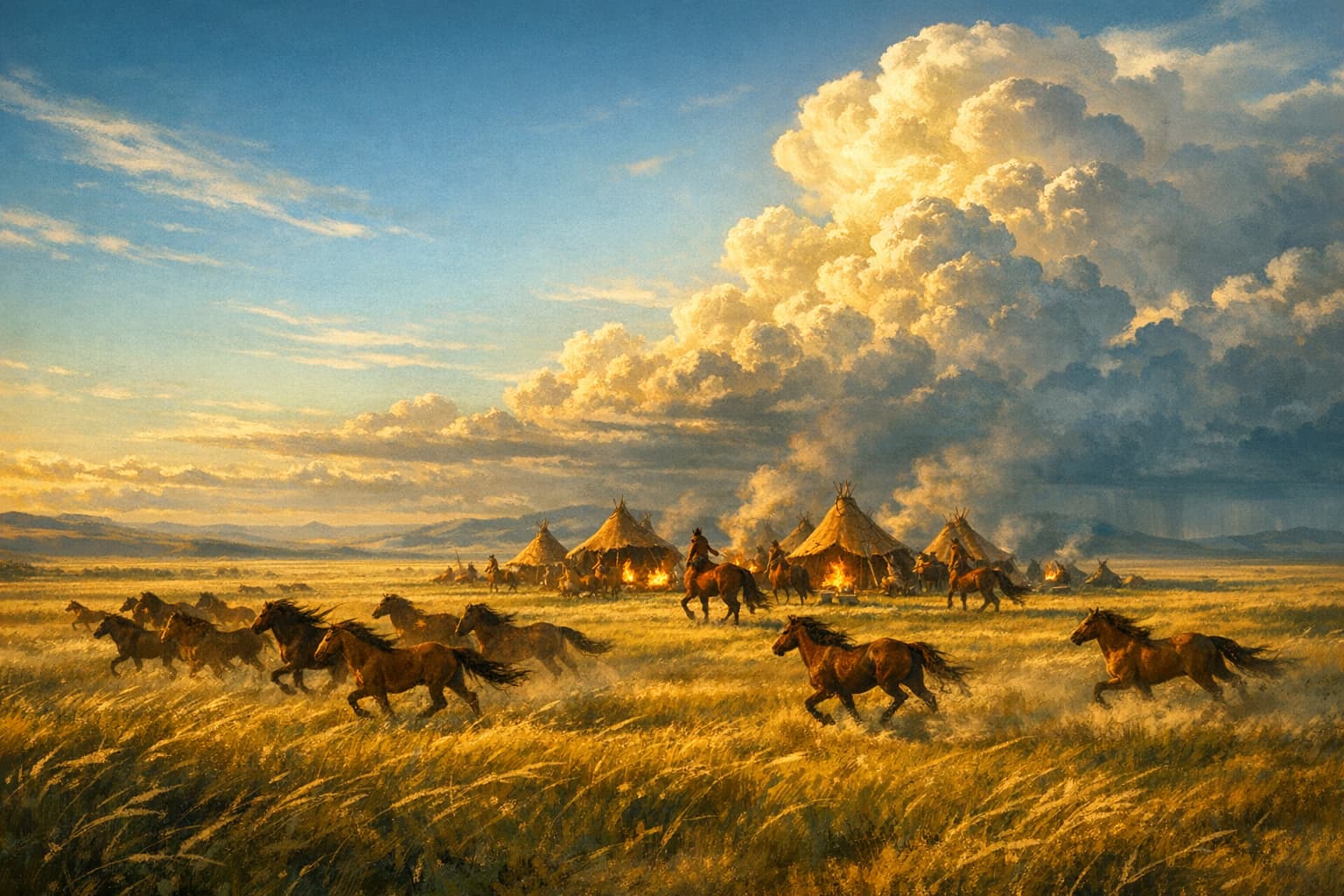
Thundering across open plains where civilization means the herd, and freedom is measured in horizons rather than walls
Roots in Greek Myth
Centaurs are one of the oldest composite creatures in Western mythology, and their reputation was never clean. Greek tradition split them into two irreconcilable camps. On one side: Chiron, the wise tutor of Achilles, Asclepius, and Jason, who mastered medicine, archery, and prophecy — the embodiment of intellect ruling over animal strength. On the other: the wild centaurs of Mount Pelion, who crashed a wedding, attacked the bride, and kicked off the Centauromachy, one of the bloodiest set-pieces in Greek art. The same species produced a healer and a mob of drunken kidnappers.
This duality is the engine that makes centaurs interesting. They're not monsters. They're not sages. They're both, simultaneously, and the tension between the two is the entire point. Greek sculptors carved the Centauromachy onto the Parthenon because it represented the battle between civilization and savagery — and they put that battle inside a single species rather than between two separate ones. The struggle isn't centaurs versus humans. It's Chiron versus his own kin.
Every fantasy franchise that uses centaurs is drawing from this well. The question is always the same: are they the wise stargazer or the charging warhorse? D&D's answer, across editions, has been "yes" — and the difficulty of playing a character who embodies both impulses is what makes centaurs one of the more challenging and rewarding species at the table.
The word "centaur" — Greek "kentauros" — has an etymology that scholars still argue about. The most common theory connects it to "kentein" (to goad) and "tauros" (bull), making centaurs "bull-goaders" or "bull-killers," which links them to Thessalian cattle-herding traditions. Another reading connects "kentauros" to "piercing air" — a reference to speed, wind, or the whistle of arrows. A third, less popular, derivation suggests "hundred strong," reflecting their association with raiding bands. None of these etymologies is settled, and all of them are useful for worldbuilding. Bull-goader gives you centaurs as herders and ranchers. Air-piercer gives you centaurs as archers and riders of the wind. Hundred-strong gives you centaurs as military forces defined by collective action. Pick the etymology that serves your setting, or let different centaur cultures trace their name to different roots.
Centaur personal names in D&D settings tend toward the classical — Greek-inflected or nature-derived, emphasizing speed, terrain, or weather. Ravnica centaurs carry names rooted in the Gruul and Selesnya traditions of that setting. Theros centaurs lean harder into the Hellenic source material. At your own table, naming conventions should reflect what your centaurs value: a plains-running culture might name children after wind patterns, while a stargazing tradition might name them after constellations.
Centaurs in Greek Mythology
| Figure / Group | Role | Legacy in Fantasy |
|---|---|---|
| Chiron | Immortal tutor of heroes, master of medicine and prophecy | The "wise centaur" archetype — mentor, healer, stargazer |
| Nessus | Treacherous ferryman who poisoned Heracles | Centaurs as deceivers; strength used for cruelty |
| The Centauromachy | Battle at the wedding of Pirithous — centaurs vs. Lapiths | Centaurs as embodiments of untamed wildness |
| Pholus | Hospitable centaur who accidentally triggered a battle over wine | Good intentions undone by collective recklessness |
| Sagittarius | Constellation often linked to Chiron | Centaurs as celestial navigators and archers |
Greek myth never resolved the contradiction between Chiron and the wild centaurs. That unresolved tension is a gift to every worldbuilder who inherits it.
“The Thessalians who first told centaur stories were themselves horsemen — so skilled that neighboring peoples literally could not tell where the rider ended and the horse began. The centaur is a myth about what it looks like when mastery becomes identity.”
— On the Thessalian origin theory
From Monster Manual to Player Option
Centaurs have been in D&D since the earliest days, but for most of the game's history they were filed under "M" for monster. The original Monster Manual (1977) presented centaurs as woodland creatures — Neutral Good, fond of archery, distrustful of humans, and fundamentally NPCs. You could befriend one, maybe. You couldn't be one.
The path from monster to player species took decades and required two specific settings to open the door. Guildmasters' Guide to Ravnica (2018) introduced centaurs as a playable species for the first time in an official 5e supplement, framing them as members of either the Gruul Clans or the Selesnya Conclave. Mythic Odysseys of Theros (2020) refined the option, placing centaurs in a Greek-inspired setting that let them lean into their mythological roots.
Neither version made centaurs mainstream in the way elves or tieflings are mainstream. The physical complications alone — a character that's fundamentally a horse from the waist down — create challenges for dungeon-heavy campaigns. But the players who choose centaurs tend to be deeply invested in what makes them different, which produces memorable characters and forces tables to think about space, movement, and embodiment in ways they otherwise wouldn't.
AD&D 1e Monster Manual
Centaurs appear as Neutral Good woodland creatures. They fight with weapons and hooves, live in tribal bands, and distrust humans. Strictly NPCs.
AD&D 2e Monster Compendium
Expanded lore adds details about centaur culture, including their role as forest guardians and their uneasy relationships with elves. Still not playable.
3.5e Monster Manual
Centaurs gain a Level Adjustment that technically makes them playable, but +2 LA and 4 monstrous hit dice make them impractical for most campaigns.
Guildmasters' Guide to Ravnica
First official 5e playable centaur. Fey creature type, Charge feature, Equine Build, and 40 ft. speed. Designed for Ravnica but quickly adopted into other settings.
Mythic Odysseys of Theros
Centaurs refined for a Greek-inspired setting. Same core mechanics as Ravnica but with lore emphasizing prophecy, archery, and the tension between civilization and wildness.
2024 Rules Revision
Centaurs remain available but are not included in the core PHB species. Their status as a supplemental option reflects ongoing design challenges with Large-ish player characters.
Open Plains & Ancestral Ranges
Centaurs don't build cities. They don't build much of anything permanent, and that's a philosophical choice, not a limitation. A species that can cover fifty miles a day at a comfortable trot has a fundamentally different relationship with territory than a species that measures travel in walking hours. Centaur "settlements" are seasonal camps, sacred meeting grounds, and traditional waypoints along migration routes that may span hundreds of miles.
The open grassland is the centaur's natural habitat in most D&D settings, and the terrain shapes everything about their culture. Vision is paramount on the plains — you can see threats and opportunities from miles away. Speed is survival — if you can't outrun it or outmaneuver it, you fight it. Enclosure is death — a centaur trapped in a narrow space loses every advantage evolution gave them. These environmental pressures produce a people who prize open sight lines, freedom of movement, and the ability to leave.
In Ravnica, centaurs associated with the Selesnya Conclave occupy parkland and garden-temple complexes — urbanized green spaces that approximate open terrain within a city. Those aligned with the Gruul Clans haunt the ruined edges of the urban sprawl where wilderness is reclaiming civilization. In both cases, centaurs gravitate toward the least enclosed spaces available. In Theros, they range across the Lagonna and Pheres highlands, two distinct cultural groups with very different values occupying overlapping territory.
Centaur territory disputes work differently than other species' because centaurs claim ranges rather than borders. A centaur herd doesn't own a piece of land — they own a route, a seasonal circuit, a pattern of movement through a landscape. When farmers fence off a migration corridor or a city expands into a traditional grazing ground, the conflict isn't about property lines. It's about whether the land belongs to those who stay on it or those who move through it. Neither side is wrong, which is what makes it useful at the table.
Equine Frame & Physical Design
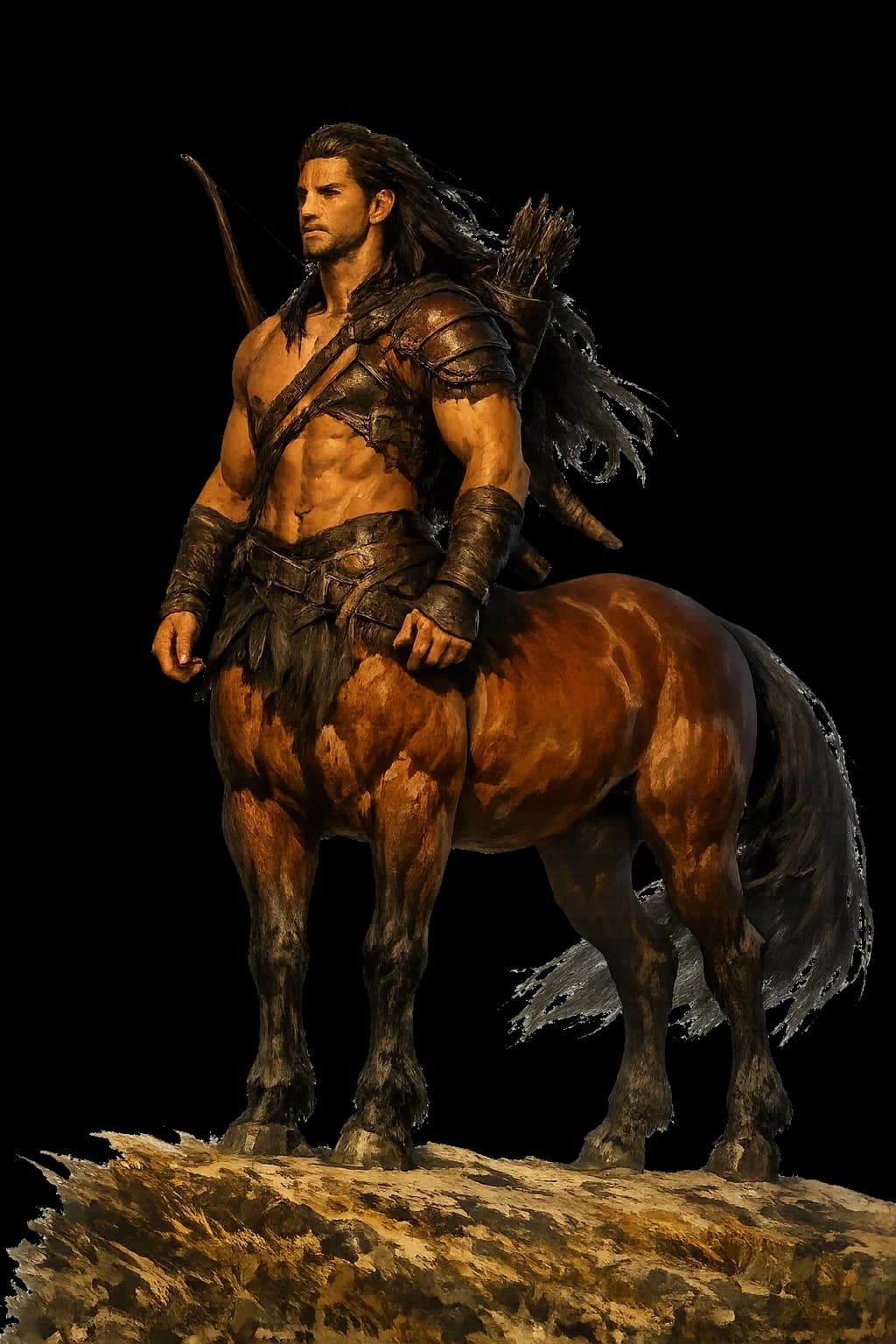
A centaur is not a human riding a horse. A centaur is a single creature with two distinct body plans fused at the torso, and the biomechanics of this arrangement are more interesting than most sourcebooks acknowledge. The human upper body sits where a horse's neck and head would be, which means the centaur's center of gravity is higher and further forward than a regular horse. They compensate with a broader equine chest and stronger forelegs, but the engineering is imperfect — centaurs are more top-heavy than true horses and less stable at sudden stops.
The equine lower body provides the speed, power, and endurance that define centaur combat capability. Four hooves deliver devastating kicks. A charging centaur hits with the momentum of a warhorse and the targeting precision of a trained warrior. Their 40-foot base speed in 5e reflects a ground-covering trot, not a full gallop — at a sprint, a centaur can run down most mounted cavalry. And they never need to dismount, which is the point.
But the body comes with constraints that matter for adventuring. Centaurs can't climb ladders. They struggle with narrow corridors, tight stairwells, and any space designed for bipeds. They need more food than human-sized party members — maintaining a horse-sized body takes horse-sized calories. They sleep standing or lying down in ways that require more space than a bedroll. Every dungeon that wasn't built for Large creatures becomes a negotiation between the centaur player and the DM.

The Charge
A centaur's charge combines the impact force of a heavy cavalry mount with the weapon skill of a trained warrior. In 5e, the Charge feature lets a centaur who moves at least 30 feet in a straight line deal an additional 1d6 piercing damage with a pike or similar weapon, then potentially knock the target prone with a bonus-action hooves attack. This is a mounted lancer's entire combat loop compressed into a single creature, and it makes centaurs devastating in open-field engagements.

Hooves & Natural Weapons
Centaur hooves are not incidental. They're weapons comparable to war hammers, driven by the full mass of an equine body. The bonus-action hooves attack (1d4 + Strength bludgeoning damage) is available after a Charge, but even outside the Charge combo, a centaur's kick is a credible threat. Smiths in centaur-friendly settlements craft reinforced horseshoes that function as improvised weapon enhancements — steel-shod hooves hit harder and last longer on rocky terrain.
Equine Build
The Equine Build trait means centaurs count as one size larger for carrying capacity and the weight they can push, drag, or lift. They can also serve as mounts for willing Medium creatures, which creates one of the most interesting party dynamics in the game: a halfling or gnome riding a centaur ally into battle. This isn't degrading — in centaur culture, carrying a trusted companion is a mark of deep friendship, not servitude.
A Mind Shaped by Open Sky
Centaur psychology begins with a single, non-negotiable premise: confinement is intolerable. This isn't preference. It's something closer to a biological imperative. A centaur in a small room doesn't just feel uncomfortable — they feel endangered, the way a human might feel with a hand around their throat. Walls, ceilings, locked doors, narrow corridors — all of these trigger a deep unease that centaurs manage rather than overcome.
This claustrophobic response shapes everything about centaur personality. They tend toward directness because indirect communication feels like a kind of confinement. They value honesty because deception creates invisible walls between people. They distrust institutions because institutions are, by nature, structures that limit movement. A centaur doesn't necessarily oppose civilization. They oppose the parts of civilization that require you to stand still.
Freedom-loving is the standard descriptor, and it's accurate as far as it goes, but it undersells the nuance. Centaurs aren't anarchists. They have laws, hierarchies, and obligations. But all of these are structured around the principle that a centaur should always be able to leave. A herd leader who forbids departure isn't leading anymore — they're imprisoning. An alliance that requires permanent settlement isn't an alliance — it's a cage. The freedom centaurs value isn't freedom from responsibility. It's freedom of movement, which they treat as the foundation that makes every other kind of freedom possible.
“Ask a centaur what they fear and they will not say death, or defeat, or dishonor. They will say a door that only opens from the outside.”
— Lagonna elder proverb
The Herd Above All
If freedom of movement is the centaur's deepest value, the herd is their deepest identity. This is not a contradiction, though it looks like one from the outside. A centaur doesn't experience the herd as a restriction on individual freedom. The herd is the structure that makes individual freedom possible. Alone on the plains, a single centaur is vulnerable — to predators, to weather, to the simple mathematics of injury far from help. Inside the herd, every member's freedom is protected by every other member's vigilance.
The herd is the fundamental unit of centaur society, not the individual. Centaurs introduce themselves by herd name before personal name. They make major decisions by collective discussion, not unilateral authority. They measure wealth not in personal possessions but in what the herd holds in common — the quality of the grazing route, the health of the foals, the depth of the shared oral history. A rich centaur with a poor herd is a failure. A poor centaur in a thriving herd is successful.
Separation from the herd is the most severe punishment in centaur culture, worse than physical pain, worse in some traditions than death. A centaur cast out doesn't just lose community. They lose identity — the name, the stories, the migration route that defined who they were. Exiled centaurs sometimes wander for years, seeking a new herd willing to accept them, or they attach themselves to adventuring parties that function as surrogate herds. These centaurs are often the ones players encounter: brilliant, capable individuals carrying an ache that no amount of adventure can fully fill.
This collective identity has practical consequences for adventuring centaurs. A centaur party member who forms deep bonds with their companions isn't just making friends — they're building a new herd. They'll fight harder for those companions than for any cause, treasure, or ideal. Threaten the party and you've threatened a centaur's herd, which activates something older and more ferocious than personal courage. Conversely, a centaur who feels excluded from the party's decision-making or ignored during planning may become restless, irritable, and eventually gone — because a herd that doesn't listen to you isn't really your herd.
The herd-identity concept gives centaur players a built-in motivation engine. They don't need a quest hook or a personal grudge to stay engaged. The party is the herd, and the herd's business is their business. Use this. A centaur character who insists on group discussions before major decisions, who gets agitated when the party splits up, or who reacts to a companion's injury with disproportionate ferocity isn't being difficult. They're being a centaur. Reward it rather than punishing it.

Oral Tradition, Starcraft & the Bow
Centaur culture rests on three pillars: the story, the star, and the arrow. Oral tradition preserves history, law, and identity across generations without permanent settlements or written records. Stargazing provides navigation, prophecy, and a cosmological framework that connects the herd to the universe. Archery is martial art, hunting technique, spiritual practice, and the skill that every centaur learns before they learn almost anything else.
The oral tradition is not a substitute for literacy — it's a parallel system with its own strengths. A centaur storyteller doesn't recite memorized text. They perform living history, adapting emphasis and detail to the audience while preserving the essential truth. Legal disputes are settled by consulting which elder's memory of the agreement is most consistent with other witnesses. This system rewards communal engagement with shared history in ways that written records don't — when the law lives in people rather than documents, everyone has a reason to pay attention.
Stargazing & Prophecy
Centaurs read the sky the way other species read books. Constellations are chapters in a cosmic story. Planetary movements indicate coming changes — not with the mechanical precision of astrology, but with the pattern-recognition instincts of a people who've watched the sky for thousands of years. Centaur stargazers are sought out by other species for their predictions, which tend to be accurate enough to be useful and vague enough to be frustrating.
In Theros, centaur starcraft is explicitly prophetic — the god Kruphix's influence makes the night sky a genuinely readable text. In other settings, whether centaur stargazing constitutes real divination or sophisticated pattern-matching is left ambiguous, which is more interesting than either answer alone.
The Way of the Bow
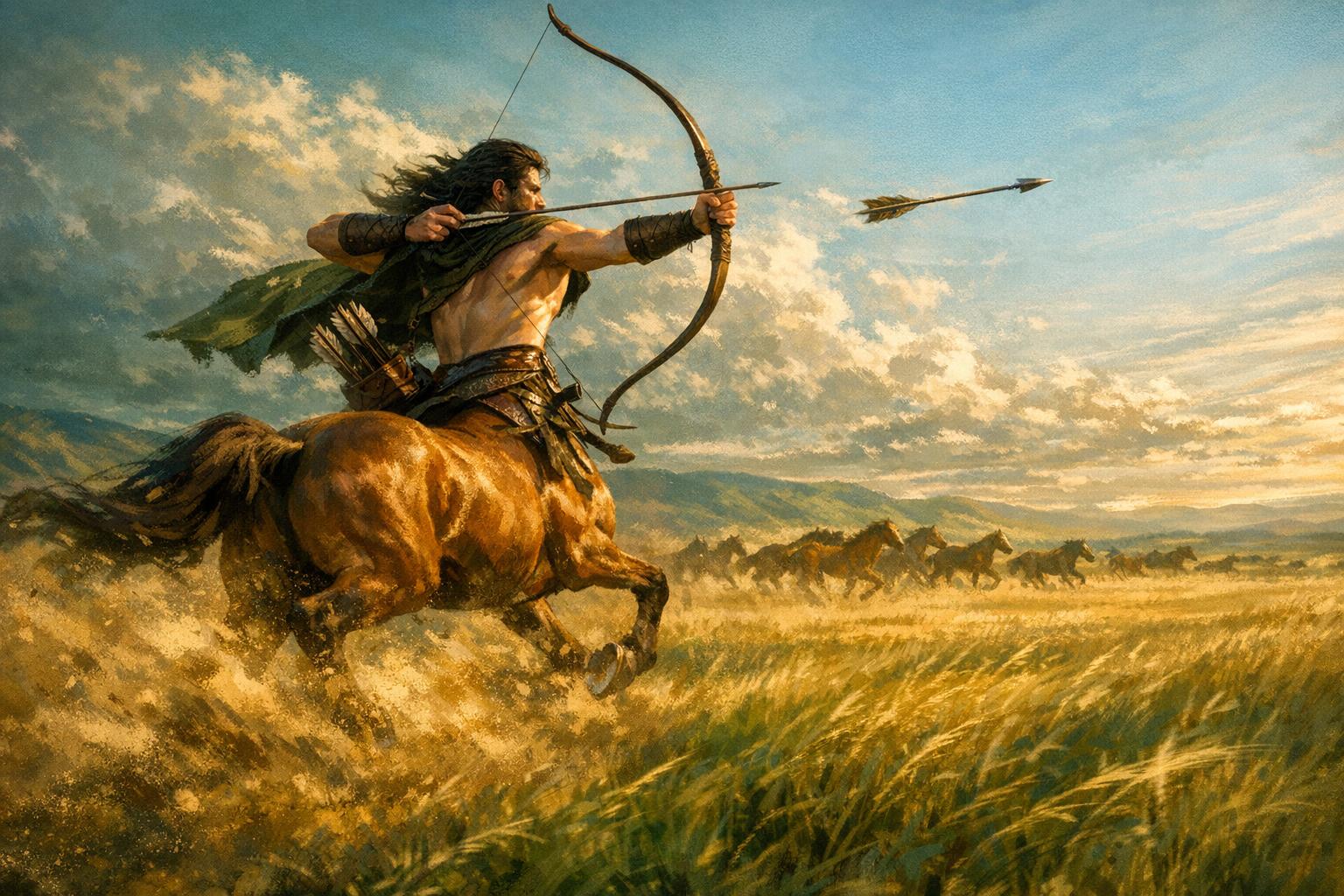
Centaur archery is not a combat skill. It's a cultural identity expressed through a weapon. A centaur learns the bow before they learn to speak in complete sentences. The progression from child's shortbow to adult longbow marks developmental milestones more significant than birthdays. Archery contests are social events, diplomatic tools, and religious ceremonies. A herd that produces a great archer gains prestige; a centaur who can't shoot is like a human who can't read — functional, but missing something essential.
The mechanical advantage is obvious: a mobile archer platform with 40-foot speed, no need for a mount, and hands free for a longbow is a devastating battlefield asset. But the cultural significance matters more for play. A centaur's bow is personal, named, and maintained with ritual care. Losing it is a crisis. Breaking it is a tragedy. Gifting it is a declaration of absolute trust.
Skerrit, Nature Spirits & the Living Sky
Centaur religion in D&D is anchored by Skerrit, the Forester — a centaur deity of nature, community, and the hunt who appears in the Forgotten Realms and Greyhawk pantheons. Skerrit isn't a war god or a trickster. He's a protector-provider, a deity whose portfolio matches the centaur value system perfectly: take care of the land, take care of the herd, read the stars for guidance, and run when you need to.
Beyond Skerrit, centaur spirituality tends toward animism. The wind has intention. The grass remembers who walked on it. Rivers carry the moods of the mountains they flow from. This isn't metaphor to centaurs — it's lived experience. A species that spends its entire life in direct, full-body contact with the earth (four hooves, constantly) develops a relationship with terrain that sedentary species can't replicate. The land talks to centaurs through their feet.
The night sky occupies a position in centaur religion somewhere between scripture and deity. Stars are not gods, exactly, but they're not decorative either. They're the visible structure of a cosmic order that centaurs believe they can partially read. A centaur shaman who studies the stars is doing theology, astronomy, and navigation simultaneously. The distinctions that other cultures draw between these disciplines don't exist in centaur thought — they're all the same act of reading the world.
In Theros, centaur religion operates within the broader pantheon of that setting, with Nylea (god of the hunt) and Kruphix (god of horizons and mystery) drawing the most centaur devotion. The Lagonna band emphasizes community and Nylea's nurturing aspects, while the Pheres band channels Iroas (god of victory) and a more martial spiritual tradition. Same species, same gods, dramatically different theology.
Centaur religion works best when it's woven into daily life rather than separated into temple-and-sermon structures. A centaur doesn't go to church. They read the morning sky, touch the grass before setting out, and tell a story about the stars while the herd settles for the night. Faith isn't an activity for centaurs. It's a way of paying attention to the world, and the world is always there.
Mounted Combat Without a Mount
The single most interesting mechanical fact about centaurs is that they are, effectively, their own mount. This collapses D&D's mounted combat system in ways that are simultaneously elegant and problematic. A centaur doesn't need to buy a warhorse, doesn't need to worry about their mount panicking in combat, and doesn't need to use an action to mount or dismount. They're always mounted. The tactical implications are significant.
Centaur fighters and paladins gain access to the lance — a weapon that's mediocre on foot but devastating on horseback. A centaur with the Mounted Combatant feat doesn't need a separate mount to activate its benefits. A centaur cavalier (Battle Master or otherwise) can execute mounted maneuvers without the vulnerability of having a mount that can be targeted separately. The entire mounted combat system, which is usually an expensive and fragile investment, becomes a permanent, free feature of the character.
The complications are real too. The centaur's Equine Build means they count as one size larger for certain purposes, but they're still mechanically Medium in 5e, which creates edge cases. Can a centaur use a lance one-handed? (Yes, as a mounted creature.) Can they squeeze through a 5-foot passage? (Yes, but their speed is halved.) Can they go upstairs? (Depends on the stairs.) Every dungeon becomes a conversation about architecture, and DMs should establish these rulings early to avoid mid-session arguments.
Lance & Polearm Synergy
The lance deals 1d12 damage when used mounted (which a centaur always is) and has reach. Combined with the Charge feature's bonus damage and the Polearm Master feat's bonus-action attack, a centaur lancer can deliver three attacks in a single turn while staying 10 feet from the target. This hit-and-run capability makes centaurs exceptional skirmishers — charge in, strike, withdraw before the enemy can respond.
The Ally-Carrier Advantage
A willing Medium or smaller creature can ride a centaur ally thanks to Equine Build. This creates a two-character combat platform: the centaur provides mobility and melee threat while the rider provides ranged attacks, spellcasting, or healing. A halfling wizard riding a centaur fighter combines the mobility of cavalry with the versatility of a caster. It looks absurd. It works beautifully.
Centaurs Among Other Peoples
Centaurs occupy an uncomfortable position in the social hierarchies of most D&D settings: respected for their martial prowess and wisdom, but fundamentally incompatible with the infrastructure of settled civilization. A centaur diplomat visiting a human city can't use the stairs in the keep, can't sit at a standard table for dinner, and can't sleep in the inn. The physical accommodations required to include centaurs in urban spaces are a metaphor for the cultural accommodations required to include them in society.
Relations with elves tend to be the warmest. Both species share a reverence for natural spaces, long lifespans (or at least long cultural memories), and a mutual suspicion of human expansionism. Forest-dwelling centaurs and wood elves have coexisted for millennia in some settings, developing trade relationships and mutual defense agreements that benefit both. The centaurs provide mobility and open-field strength; the elves provide forest intelligence and magical support.
Dwarves and centaurs are, architecturally speaking, natural antagonists. Everything a dwarf builds — underground halls, narrow tunnels, fortified gatehouse corridors — is a centaur's nightmare. The two species rarely conflict directly, but they rarely cooperate either. Their habitats don't overlap, their values don't align, and their physical needs are mutually exclusive. A dwarf-centaur friendship in an adventuring party is an exercise in constant, low-grade spatial negotiation.
Humans are the most variable relationship. Farming communities that expanded into centaur grazing lands have centuries of grievances on both sides. Port cities and trade towns that benefit from centaur courier networks view them as valuable partners. Militaristic states covet centaur cavalry and alternate between alliance and subjugation depending on which approach is cheaper. The relationship changes with every border and every generation.
The most resonant centaur-versus-civilization conflicts come from infrastructure, not ideology. The new road that cuts a migration route in half. The dam that floods a traditional meeting ground. The fence around a field that used to be open rangeland. These aren't evil acts by evil people — they're development choices that treat centaur needs as invisible. The centaur response (tearing down fences, flooding road construction sites, redirecting rivers) looks like aggression from the human side and self-defense from the centaur side.
Notable Centaurs in Fiction & Lore
Named centaur characters in D&D are rare compared to elves, dwarves, or even tieflings. The species' relatively recent addition to the playable roster means they lack the deep bench of novel protagonists and iconic NPCs that older species enjoy. But centaurs appear across a broader range of fantasy franchises than almost any other composite creature, and each appearance reveals something different about what the species can be.
The common thread across all these depictions is the tension between the individual and the group, between wisdom and wildness, between the desire to run free and the need to stand and fight. No franchise has fully resolved this tension, which is why centaurs remain compelling after three thousand years of storytelling.
Notable Centaurs Across Fiction
| Figure | Source | Significance |
|---|---|---|
| Chiron | Greek mythology / Percy Jackson | The original wise centaur. Every mentor-centaur in fantasy descends from this archetype. Rick Riordan brought him to a modern audience. |
| Firenze | Harry Potter series | Centaur stargazer who chose to teach at Hogwarts, was exiled by his herd for it. Embodies the cost of breaking from the collective. |
| Oreius | The Chronicles of Narnia (film) | Centaur general in Aslan's army. Defined the "centaur as noble warrior-commander" visual template for a generation. |
| Cenarius | World of Warcraft | Demigod of nature, son of Elune and Malorne. Patron of druids. Elevates centaur-adjacent beings to cosmic significance. |
| Lagonna & Pheres bands | D&D: Mythic Odysseys of Theros | Two centaur cultures in the same setting with opposite values — community versus conquest. The best D&D centaur worldbuilding to date. |
Centaurs have been mythological fixtures for millennia, but they've only been D&D protagonists since 2018. The literary tradition is ancient; the gaming tradition is just beginning.
D&D Mechanics Across Editions
Centaur mechanics in D&D tell a story of a species the system wasn't designed to accommodate. Every edition has had to decide how to handle a player character with four legs, a fundamentally different body plan, and the combat profile of a cavalry unit. The solutions have ranged from "don't let players do this" to "let them do it but make it expensive" to the current approach of "let them do it and paper over the edge cases."
The Ravnica/Theros centaur stat block is elegant within its constraints. Fey creature type (not humanoid) avoids certain spell interactions. 40-foot speed provides meaningful mobility without breaking encounter design. Charge gives a distinctive combat identity. Equine Build handles carrying capacity and the mount question. But the things the stat block doesn't address — stair navigation, indoor combat, sleeping arrangements, equipment fitting — are where the real play challenges live.
- 4 monstrous humanoid hit dice
- Large size
- Speed 50 ft.
- Natural weapon: 2 hoof attacks (1d6)
- Darkvision 60 ft.
- Level Adjustment +2
With 4 racial hit dice and +2 LA, a 1st-level centaur character was effectively 7th level. This made them impractical for standard campaigns. The stats reflected a monster template, not a player species.
- Fey creature type
- Speed 40 ft.
- Charge (bonus 1d6 on pike/lance + prone via hooves)
- Hooves (1d4 + STR, bonus action after Charge)
- Equine Build (count as one size larger for capacity; can be mounted)
- Survivor (proficiency in Animal Handling or one of Medicine, Nature, Survival)
The 5e design compresses a large, complex creature into a Medium stat block that mostly works. Fey type avoids some humanoid-targeting spells. The Charge + Hooves combo gives a unique combat rhythm.
- Fey creature type (retained)
- Speed 40 ft.
- Charge (updated wording)
- Hooves natural weapon
- Equine Build
Flexible ability scores open centaurs to Charisma and Intelligence builds that were previously suboptimal. The core identity — speed, charge, equine frame — remains intact.
Centaurs Beyond the Table
Centaurs appear across more fantasy franchises than almost any other non-human species, and the consistency of the archetype is remarkable. Whether you're looking at Greek vase paintings, Disney animation, World of Warcraft raid bosses, or Harry Potter's Forbidden Forest, centaurs are always some combination of wise, wild, proud, and difficult to negotiate with. The details change. The core tensions don't.
What distinguishes D&D's centaurs from their counterparts in other franchises is the emphasis on playability. Most franchises treat centaurs as NPCs, allies, or obstacles — impressive beings you interact with but don't become. D&D's decision to make centaurs playable forced the designers to answer questions that other franchises can ignore: how does a centaur go shopping? Where does a centaur sleep in an inn? How does a centaur descend into a dungeon? The answers aren't always elegant, but the questions themselves produce gameplay that no other species generates.
Centaurs Across Major Fantasy Franchises
| Franchise | Centaur Identity | Core Theme | Key Distinction |
|---|---|---|---|
| D&D | Playable fey with equine build | Freedom, herd loyalty, mounted combat | Only franchise where centaurs are player characters with detailed mechanics |
| Greek Mythology | Composite beings — wise and wild | Civilization vs. animal nature | The original source; Chiron vs. the wild centaurs defines the archetype |
| Harry Potter | Proud, insular forest-dwellers | Autonomy, prophecy, refusal to serve | Centaurs who reject human society entirely and resent being classified as "beasts" |
| Narnia | Noble warrior-scholars | Martial honor, astrological wisdom | Elevated and idealized; centaurs as the backbone of Aslan's army |
| World of Warcraft | Barbaric Kalimdor tribes (distinct from Cenarius) | Territorial aggression, shamanic tradition | WoW's centaurs are antagonists, not allies — a rare negative-only portrayal |
| Percy Jackson | Party animals and wise mentors | Comedy and mentorship | Riordan plays both sides of the Greek tradition, often for laughs |
Every franchise inherits the Chiron-vs-wild-centaurs split from Greek myth. The ratio varies — Narnia goes full Chiron, WoW goes full wild — but the tension is always there.
FAQ
Common Questions
Carefully, and with advance planning. A centaur's equine lower body makes ladders impossible, narrow corridors difficult (halved speed when squeezing), and standard doors a tight fit. Work with your DM before the campaign starts to establish house rules for these situations. Some tables allow centaurs to rear up on hind legs for short distances. Others use ramps instead of ladders. The important thing is to decide early so the centaur player isn't constantly sidelined by architecture.
Yes, if the centaur is willing. The Equine Build trait explicitly allows willing Medium or smaller creatures to ride a centaur. In centaur culture, carrying an ally is a mark of trust, not servitude — but discuss this with the centaur player first. Mechanically, the rider benefits from the centaur's speed and can take their own actions independently, creating a mobile two-character platform that's stronger than either character alone.
In 5e (Ravnica/Theros), centaurs are Fey, not Humanoid. This matters because spells like charm person, hold person, and dominate person only target humanoids — they don't work on centaurs. Conversely, protection from evil and good covers fey creatures, meaning a centaur ally can be shielded by that spell in ways a human can't. The Fey typing also connects centaurs to the Feywild thematically, suggesting their origins lie in that plane rather than the Material Plane.