
Dragonborn
Draconic warriors forged in the shadow of dragons, carrying ancient fire and a code of honor that burns hotter than their breath
Mythological Foundations
Dragonborn draw from the deepest well in mythology: the dragon itself. Every major civilization produced dragon myths, and nearly all of them asked the same question dragonborn force you to confront at the table — what happens when the monster is also a person?
The concept of draconic humanoids predates D&D by millennia. Chinese lung-ren, Mesoamerican Quetzalcoatl worshippers who claimed serpent-blood descent, Norse tales of Sigurd gaining dragon-knowledge by tasting Fafnir's blood — the idea that proximity to dragons changes you, elevates you, marks you permanently, is essentially universal. Dragonborn are the logical endpoint: not humans touched by dragons, but a species that embodies the dragon in humanoid form.
What makes the mythological source material interesting for worldbuilding is the ambivalence. Dragons in world mythology are rarely just monsters or just gods. They're both. They hoard and they give. They destroy and they create. Dragonborn inherit that tension. A species descended from — or created by — beings of terrifying power carries that power's moral complexity in their blood.
Dragons in World Mythology as Source Material
| Tradition | Dragon Figure | Key Trait | Dragonborn Echo |
|---|---|---|---|
| Chinese | Lóng (Dragon Kings) | Benevolent rulers of water and weather | Clan governance, breath as elemental gift |
| Norse | Fáfnir / Níðhöggr | Cursed hoarder / world-gnawer | The tension between treasure and duty |
| Mesoamerican | Quetzalcoatl | Feathered serpent god of wind and learning | Draconic divinity, knowledge-seeking clans |
| Greek | Drakon / Ladon | Guardians of sacred places | Territorial honor, defending what matters |
| Babylonian | Tiamat | Primordial chaos-dragon, mother of monsters | Direct D&D connection — Tiamat as antagonist deity |
The Babylonian Tiamat became the five-headed chromatic dragon goddess in D&D, making dragonborn one of the few species with a direct mythological-to-mechanical pipeline.
Etymology & the Dragon Legacy
The name "dragonborn" is doing a lot of heavy lifting. It simultaneously claims descent ("born of dragons"), identity ("born to be draconic"), and aspiration ("born for dragon-scale greatness"). That triple meaning is not accidental — it reflects the species' fundamental identity crisis. Are dragonborn the children of dragons, the servants of dragons, or something that has moved beyond dragons entirely?
In the Forgotten Realms, the answer is "it depends on which dragonborn you ask." Tymantheran dragonborn reject draconic servitude entirely. They were slaves of dragons on Abeir and fought a bloody war of independence. For them, "dragonborn" is almost ironic — they bear the dragon's form but define themselves against the dragon's authority. Other dragonborn, particularly those devoted to Bahamut, embrace the draconic heritage as sacred. The name is a covenant, not a coincidence.
This etymological tension produces the best dragonborn characters. The name itself is an argument waiting to happen. Every dragonborn has to decide what "born of the dragon" means to them personally, and that decision tells you everything about who they are.
“The name is an argument waiting to happen. Every dragonborn has to decide what "born of the dragon" means to them personally — sacred inheritance, bitter irony, or a legacy they intend to rewrite.”
— On dragonborn identity
History in D&D Settings
Dragonborn are the new kids on the block by D&D standards. Elves, dwarves, and halflings have been core species since the 1970s. Dragonborn didn't become a Player's Handbook species until 2008. That's not a weakness — it's a design opportunity. Dragonborn carry less baggage than species that have been accumulating tropes for fifty years.
Their publication history tells a story about what D&D thinks players want. The 3.5e "Races of the Dragon" (2006) introduced dragonborn as a prestige concept — humans or other species who underwent a ritual transformation to become draconic. You earned your scales. Fourth Edition made them a core species in the PHB, giving them their own civilization, history, and identity independent of true dragons. Fifth Edition kept them in the PHB but simplified their lore, and Fizban's Treasury of Dragons (2021) finally gave them the mechanical depth they'd been missing.
The 2024 PHB revision represents the most significant mechanical overhaul since 4e. Dragonborn finally received subraces tied to their draconic ancestry — chromatic, metallic, and gem — each with distinct breath weapon mechanics and resistance types. After sixteen years as a core species, they're starting to feel like one.
Races of the Dragon (3.5e)
Dragonborn introduced as a transformative template — existing characters undergo a ritual to gain draconic traits. Not yet a standalone species.
4th Edition PHB
Dragonborn become a core PHB species with their own civilization (Arkhosia), history, and identity. The dragon-empire backstory establishes their martial honor culture.
5th Edition PHB
Dragonborn retained as core species but with simplified mechanics — a single breath weapon and resistance. Widely considered underpowered compared to other PHB options.
Fizban's Treasury of Dragons
Gem dragonborn added. Chromatic and metallic dragonborn receive revised breath weapons with meaningful tactical choices. First time dragonborn felt mechanically complete.
2024 PHB Revision
Full mechanical overhaul with three ancestry options (chromatic, metallic, gem), scaling breath weapons, and flight at higher levels for gem dragonborn.
Key Settlements & Homelands
Dragonborn geography is unusual because their most important homeland exists on a different world. The twin planets of Abeir and Toril — separated during the Sundering — gave dragonborn a split origin that most other species don't share. This means dragonborn settlements carry the weight of displacement, exile, and the question of whether "home" is a place you came from or a place you build.
Major Dragonborn Territories
| Territory | World | Status | Significance |
|---|---|---|---|
| Tymanther | Toril (Forgotten Realms) | Active, independent | Primary dragonborn nation on Faerûn; fiercely anti-dragon, founded by former slaves of Abeir |
| Abeir | Twin world of Toril | Inaccessible (post-Sundering) | Original dragonborn homeland where they served as dragon thralls; source of the liberation mythology |
| Io'vanthor | Abeir (historical) | Destroyed | Ancient dragonborn city-state; its fall catalyzed the slave revolts that defined Tymantheran identity |
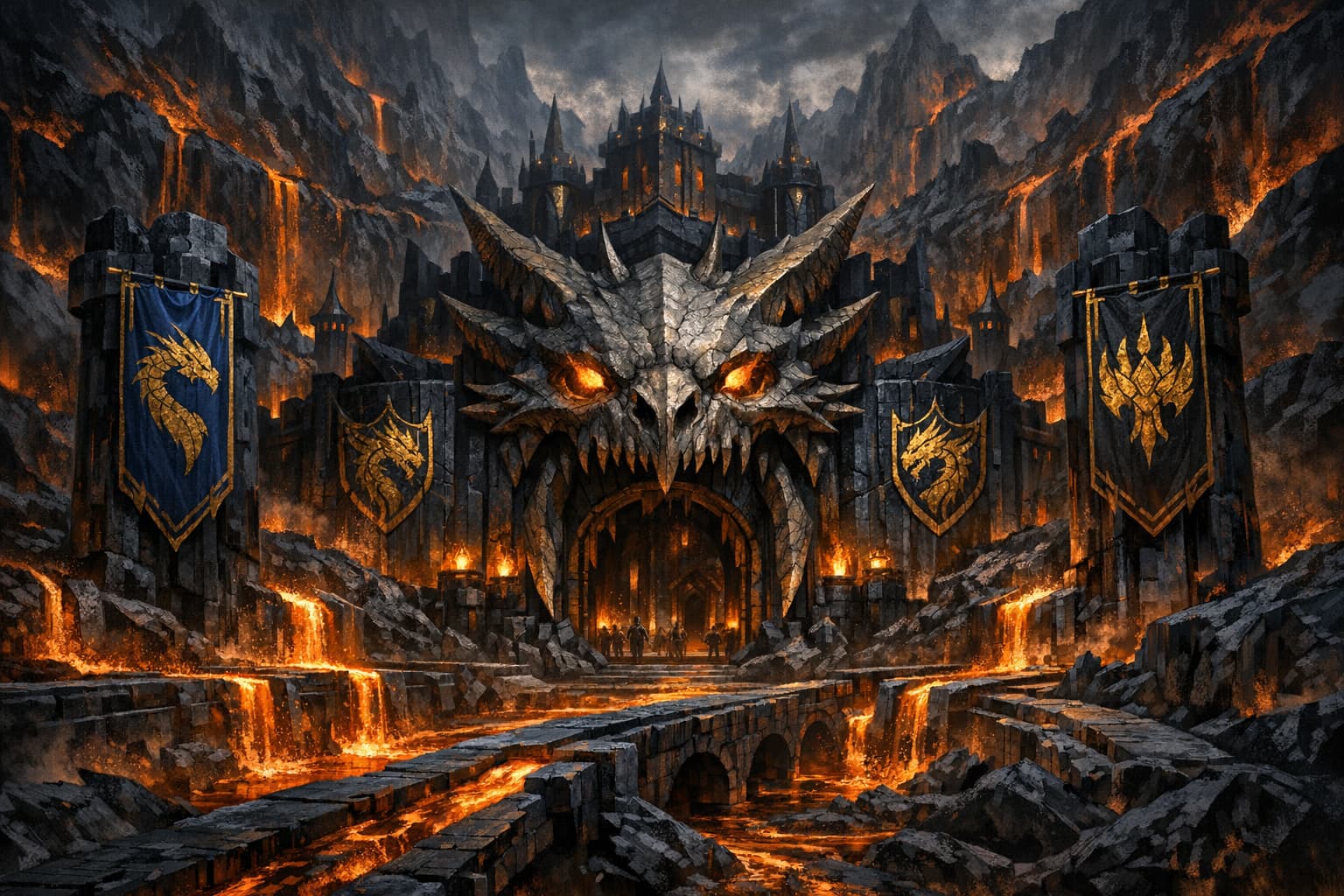
| Djerad Thymar | Tymanther | Capital city | Fortress-city built to withstand dragon siege; architecture designed for species with tails and breath weapons |
| Clan Territories | Various | Scattered | Diaspora communities across Faerûn; dragonborn who left Tymanther carry clan traditions into new contexts |
Tymanther was deposited on Toril during the Spellplague (1385 DR), making dragonborn literal immigrants to the Forgotten Realms — a displacement that shapes their politics.
Biology & Physicality
Dragonborn bodies are built for things that humanoid bodies typically are not. The combination of draconic physiology with bipedal humanoid structure produces creatures that look imposing and are — but whose biology creates practical challenges that rarely get discussed at the table.
Scales & Coloring
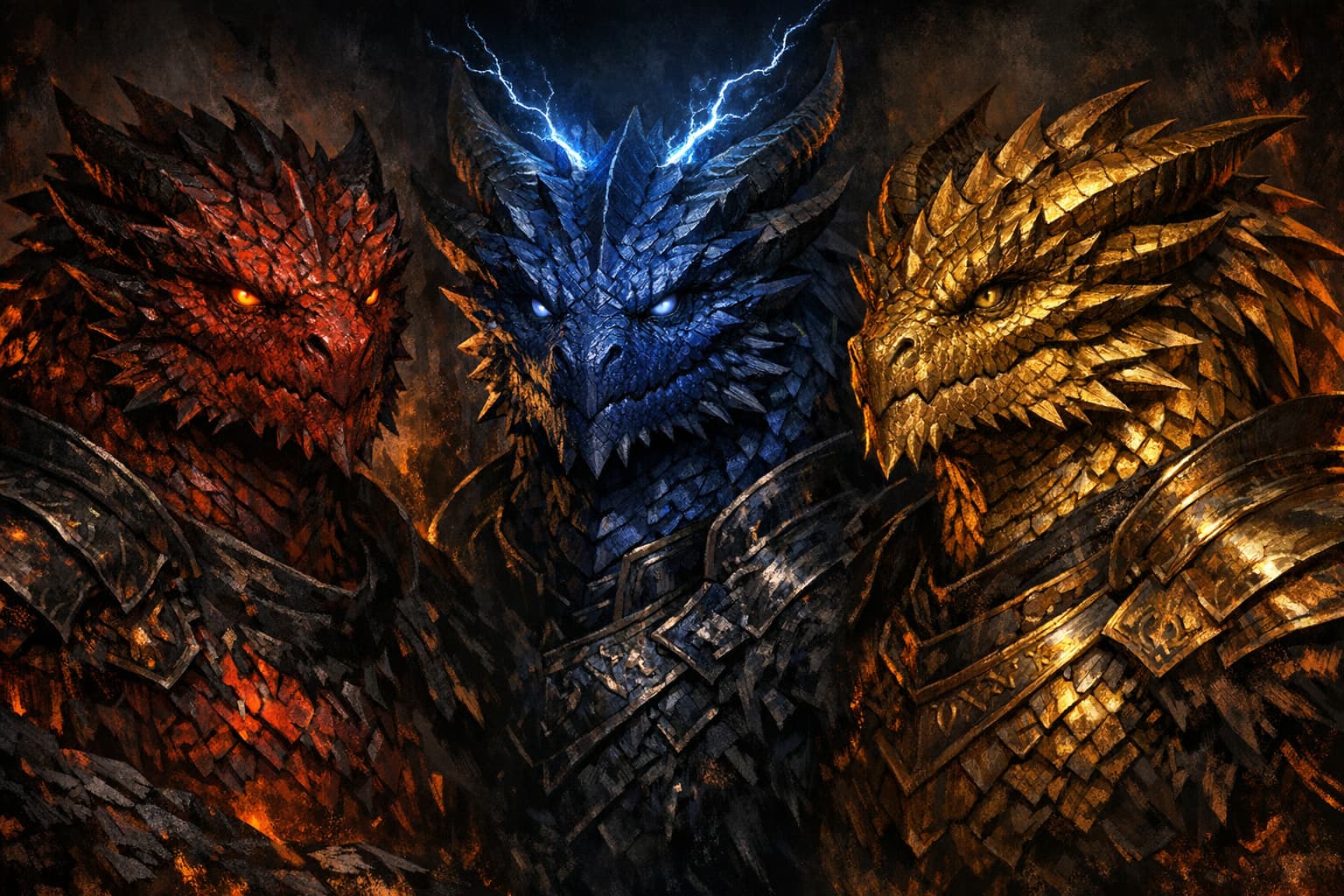
Dragonborn scales correspond to their draconic ancestry and are not decorative. Chromatic dragonborn display reds, blacks, blues, greens, and whites that signal their elemental alignment. Metallic dragonborn show brass, bronze, copper, gold, and silver. Gem dragonborn — the rarest — display amethyst, crystal, emerald, sapphire, and topaz hues.
The scales themselves are tougher than human skin but not armor. They provide marginal protection against scrapes and environmental hazards while offering meaningful resistance to the element matching their ancestry. A red dragonborn's scales don't just look like fire — they insulate against heat in ways measurable by touch.
Breath Weapon
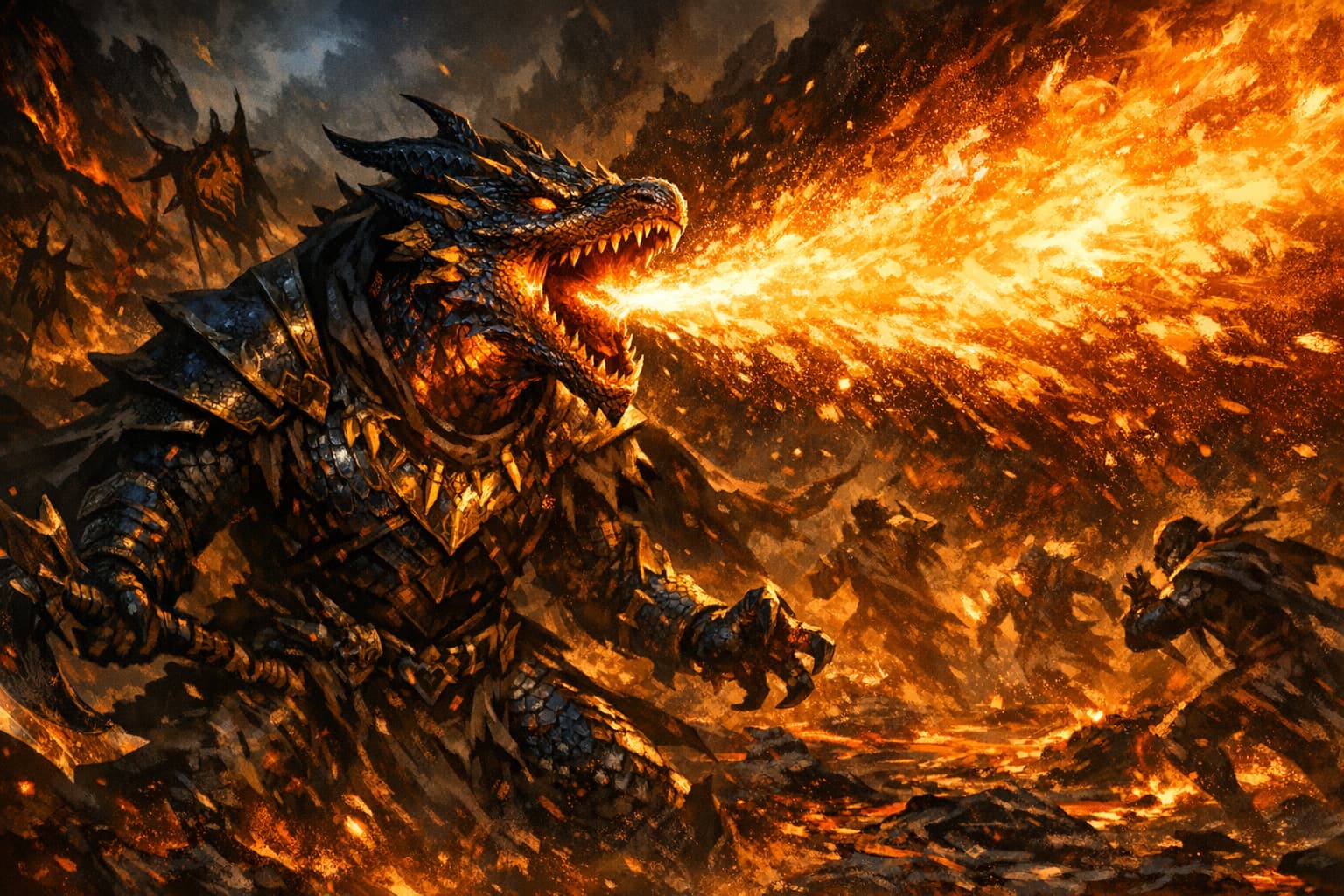
The breath weapon is the defining dragonborn trait, and it's more interesting than most players realize. It's not just "I breathe fire." It's a biological process — a gland near the throat produces volatile compounds that ignite (or freeze, or electrify, or dissolve) upon contact with air. Young dragonborn learn breath control the way human children learn to speak: awkwardly, with occasional accidents, under parental supervision.
Mechanically, the breath weapon has been chronically underpowered in 5e, which is a shame because narratively it should be terrifying. Fizban's Treasury and the 2024 revision finally scaled it properly. A 15th-level dragonborn exhaling a cone of lightning should feel like a dragon doing it, not like a slightly disappointing spell.
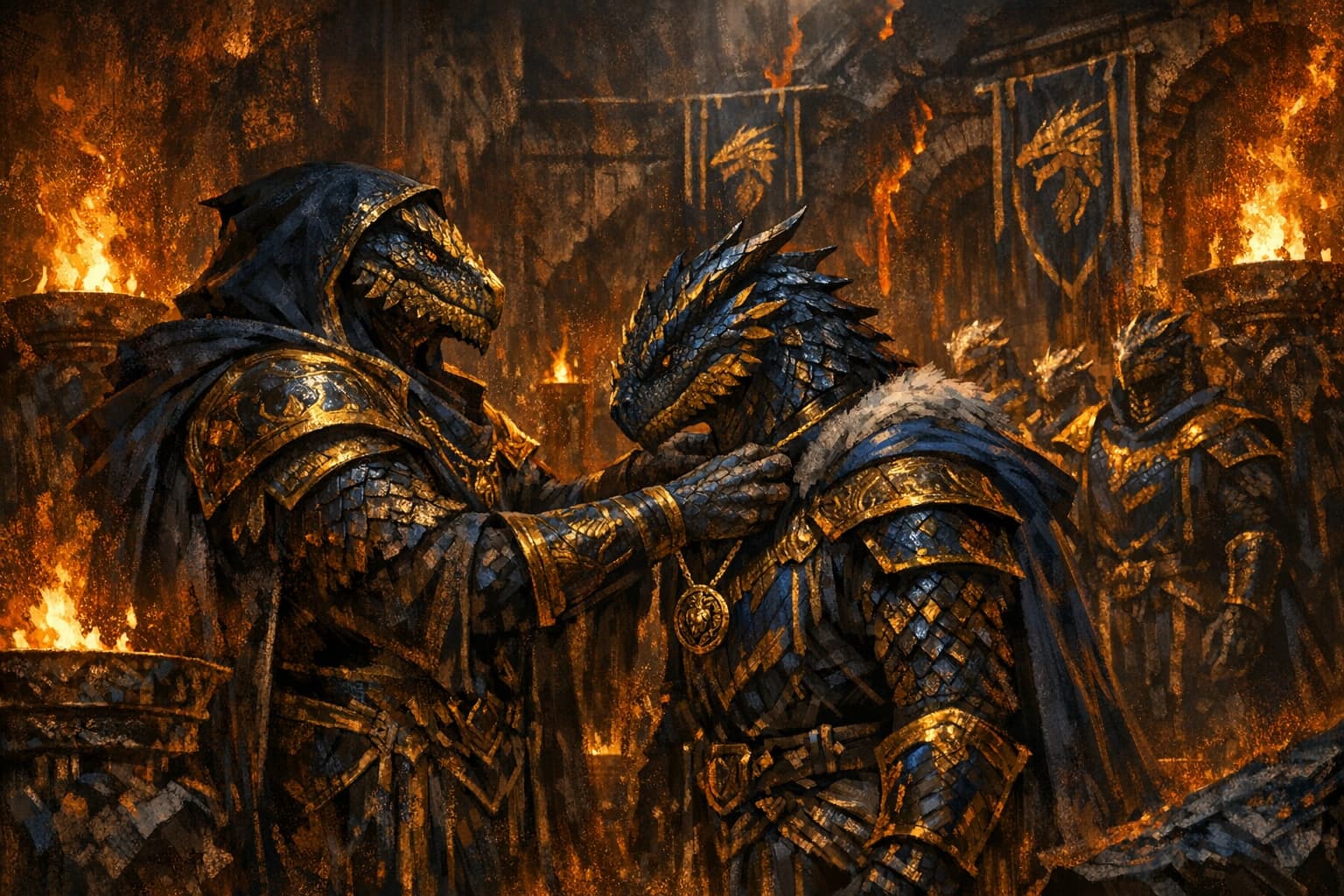
Draconic Senses
Dragonborn senses are sharper than human baseline but subtler than true dragons. They have excellent low-light perception, a sense of smell sophisticated enough to detect emotional states in other species (fear smells different from anger, both distinct from deception), and a spatial awareness that comes from a body designed to track threats in three dimensions.
The sensory package creates social dynamics. A dragonborn who can smell that you're lying has a fundamentally different relationship with trust than a human who has to read facial expressions. Dragonborn negotiators are famously difficult to deceive — not because of superior intellect, but because their biology provides a lie detector humans don't have.
Psychology & Worldview
Dragonborn psychology sits at the intersection of two forces that don't naturally cooperate: draconic pride and humanoid sociality. True dragons are fundamentally solitary. They hoard, they dominate, they claim territory. Dragonborn inherited the pride without the solitude, which means they channel draconic intensity into communal structures — clans, oaths, codes of honor — that a true dragon would find incomprehensible.
The result is a species that cares about reputation the way dragons care about treasure. A dragonborn's name, their clan's standing, their personal honor — these are hoarded, protected, and displayed with the same fierce possessiveness a red dragon shows toward gold. An insult to a dragonborn's honor isn't a social faux pas. It's an attempt to steal something precious.
This produces characters who are intense in ways that other species find either admirable or exhausting. A dragonborn doesn't have casual opinions. They have positions, defended with conviction. They don't make promises lightly because a broken oath is a permanent stain. They don't forgive easily because forgiveness feels like surrendering something that belongs to them.
“A dragonborn's honor isn't a code they follow. It's a hoard they guard. Touch it at your peril.”
— Tymantheran proverb
Daily Life & Clan Structure
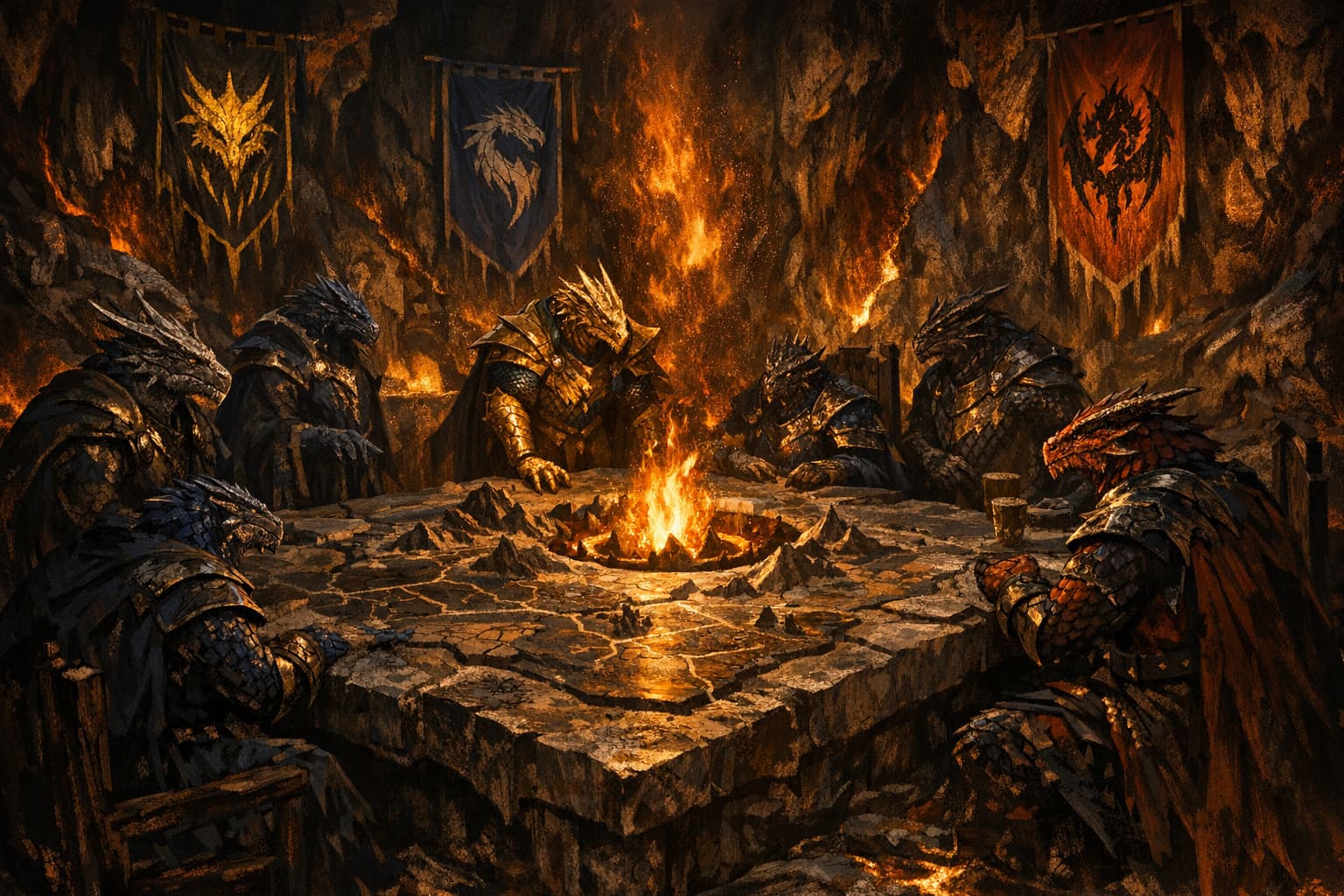
Dragonborn clans are the fundamental unit of social organization, more important than nations, cities, or even families in the narrow sense. Your clan is your identity, your safety net, your reputation, and your obligation, all compressed into a single institution.
Clan names come before personal names in formal address. A dragonborn introduces themselves as "Balasar of Clan Kepeshkmolik" — clan first, individual second. This isn't mere convention. It reflects a genuine belief that the clan's achievements and failures belong to every member. When one dragonborn brings glory to the clan, everyone shares it. When one dragonborn shames the clan, everyone bears it.
Daily life within a clan revolves around training, craft, and mutual obligation. Young dragonborn train in martial skills from the moment they can hold a weapon. Artisans pass techniques through apprenticeship chains. Elders adjudicate disputes, manage resources, and maintain the clan's oral history. There's a military efficiency to dragonborn domesticity that visitors from other species find either impressive or unsettling.
Clan structure creates immediate story hooks for dragonborn characters. A dragonborn adventurer carries clan obligations into the campaign. They might need to send treasure home, fulfill a clan quest, or deal with the consequences of a clanmate's actions. The clan is never just backstory — it's an active force in the character's present.
Culture & Governance
The deepest cultural divide in dragonborn society maps onto their draconic ancestry. Chromatic and metallic dragonborn don't just look different — they carry different philosophical inheritances that shape how their clans organize, govern, and relate to the wider world.
Chromatic Heritage Clans
Chromatic dragonborn descend from — or claim kinship with — the dragons of Tiamat's lineage: red, black, blue, green, and white. Their clan structures tend toward strict hierarchies with power concentrated at the top. Leadership is earned through demonstrated strength, and challenges to authority are handled through formal combat or tests of will.
This doesn't make chromatic clans evil. It makes them competitive. Internal rivalry is constant but channeled through established customs. A red dragonborn clan's annual tournament of champions serves the same social function as a corporate performance review, just with more fire.
Chromatic clans tend to value individual achievement within the clan framework. The greatest warrior, the most cunning strategist, the most productive artisan — these individuals rise. The system rewards ambition while the clan structure contains it.
Metallic Heritage Clans
Metallic dragonborn align with Bahamut's lineage: brass, bronze, copper, gold, and silver. Their governance leans toward consensus and council, with leadership distributed among elders who represent different clan functions — war, craft, diplomacy, faith, and commerce.
Metallic clans emphasize duty over ambition. The ideal metallic dragonborn doesn't seek power — they accept responsibility. Leadership is a burden willingly carried, not a prize seized. This produces stable, conservative societies that change slowly and value tradition deeply.
The metallic emphasis on justice and protection creates clans that often serve as mediators and peacekeepers in multi-species communities. Gold and silver dragonborn in particular have reputations as arbitrators whose judgments, while sometimes frustratingly deliberate, are respected for fairness.
Religion & Bahamut vs Tiamat
Dragonborn religion centers on a cosmic sibling rivalry that makes the Olympian gods look well-adjusted. Bahamut, the Platinum Dragon, represents justice, honor, and protection. Tiamat, the five-headed chromatic dragon, represents greed, domination, and destruction. Between them, they define the moral universe dragonborn inhabit.
The theology is more nuanced than "Bahamut good, Tiamat bad," though plenty of dragonborn simplify it to exactly that. Bahamut demands self-sacrifice and duty — noble virtues that can become oppressive when enforced rigidly. Tiamat offers power and self-determination — tempting gifts that corrupt when pursued without restraint. The interesting dragonborn characters are the ones navigating between these poles rather than camping at one end.
Io, the Ninefold Dragon, complicates things further. In some cosmologies, Io was the original dragon god who split into Bahamut and Tiamat — making the divine conflict a family tragedy rather than a cosmic war. Dragonborn who worship Io see the Bahamut-Tiamat divide as a wound that needs healing, not a battle that needs winning. They're often regarded as heretics by both sides.
The Bahamut-Tiamat conflict is the dragonborn version of the problem of evil: if dragonkind was created whole, why is it now divided? Tiamat's followers argue that conflict is natural and strength emerges from competition. Bahamut's followers argue that unity was the original state and the split was a corruption. Neither side can prove their case, which is why the argument has lasted since the dawn of creation.
Breath Weapons & Draconic Magic
Dragonborn magic is visceral in ways that other species' traditions are not. Elven magic is refined. Dwarven runes are precise. Dragonborn magic comes from the gut — literally. The breath weapon is the purest expression of draconic power, and dragonborn magical traditions build outward from that primal exhale.
Breath as Foundation
Every dragonborn learns breath control before they learn anything else. The breath weapon isn't just a combat ability — it's the foundation of dragonborn meditation, religious practice, and magical training. Dragonborn monks channel ki through breath cycles. Dragonborn sorcerers shape wild magic through exhalation patterns. Even dragonborn fighters use breathing techniques to manage adrenaline and pain.
The elemental nature of the breath weapon influences a dragonborn's entire relationship with magic. A fire-breather experiences magic as heat and intensity. A cold-breather experiences it as stillness and control. These aren't metaphors — they're descriptions of how draconic biology filters arcane energy.
Draconic Sorcery
The Draconic Bloodline sorcerer subclass exists because dragonborn don't learn magic the way wizards do. Their power is inherited, encoded in scales and blood and the gland that produces their breath weapon. A dragonborn sorcerer isn't studying — they're remembering. The magic was always there; training just teaches them to access it deliberately rather than accidentally.
This creates a different relationship with power than academic magic traditions. Dragonborn sorcerers often describe spellcasting in physical terms: the fire that builds in the chest before a Fireball, the crackling tension along the spine before a Lightning Bolt. The magic is embodied. It lives in their body the way hunger or fatigue does.
Inter-species Relationships
Dragonborn occupy a weird social position in most D&D settings. They look like the thing everyone is afraid of. Walking into a tavern when you're six and a half feet of scaled muscle with a face that reads "dragon" to every survival instinct in the room creates a specific kind of social experience.
Dwarves tend to respect dragonborn work ethic and clan loyalty while being wary of the draconic association. Elves often find dragonborn culture fascinatingly young — here's a species building traditions that elves finished developing millennia ago. Humans have the most varied reactions, ranging from fascination to outright fear depending on their prior dragon encounters.
The most interesting dynamic is with actual dragons. Dragonborn are not dragons, and most dragons make that distinction aggressively clear. A true dragon encountering a dragonborn might react with amusement, contempt, or territorial hostility — but rarely with kinship. Dragonborn who expect draconic solidarity from true dragons are usually disappointed.
A dragonborn paladin of Bahamut walks into a village that was recently attacked by a blue dragon. The villagers see scales, a draconic face, and reach for their weapons. How the dragonborn handles this moment — with patience, with anger, with resignation — reveals everything about their character. This scenario plays out constantly for dragonborn in the wider world.
Literature & Notable Figures
Dragonborn representation in D&D fiction reflects their relatively recent addition to the species roster. They don't have a Drizzt or a Gimli — no single iconic character has come to define the species in popular imagination. This is both a limitation and a freedom. Dragonborn characters at the table aren't fighting against a dominant archetype.
The most prominent dragonborn in published fiction are Balasar and Mehen from Erin M. Evans' "Brimstone Angels" series, which did more to establish dragonborn culture, family dynamics, and the Tymantheran identity than any sourcebook. Evans wrote dragonborn as people first and dragon-adjacent second, grounding their alien biology in relatable emotional landscapes.
Notable Dragonborn Figures
| Character | Source | Role | Contribution to the Archetype |
|---|---|---|---|
| Mehen | Brimstone Angels (2012) | Exile, adoptive father, clanless warrior | Defined dragonborn family values and the weight of clanlessness |
| Balasar | Brimstone Angels series | Soldier, clan loyalist | Showed dragonborn military culture and honor codes in practice |
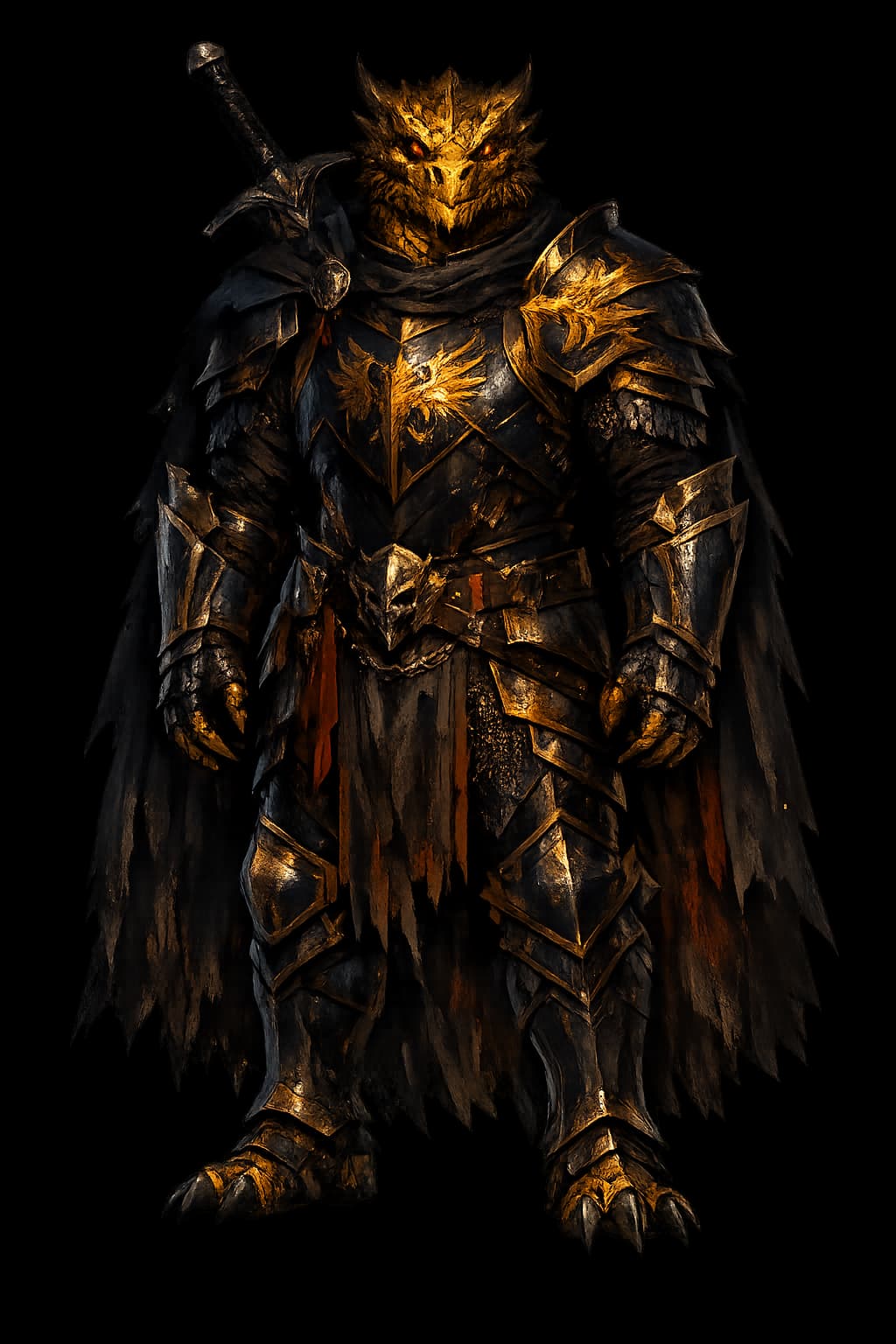
| Kriv | 4e Iconic Characters | Paladin of Bahamut | Visual icon for the species during 4e; established the armored warrior look |
| Arkhan the Cruel | D&D / Critical Role tie-in | Paladin of Tiamat, Hand of Vecna wielder | Demonstrated that dragonborn devoted to Tiamat can be protagonists, not just villains |
Erin M. Evans' novels remain the gold standard for dragonborn characterization in published D&D fiction.
D&D Mechanics Across Editions
Dragonborn have had a rockier mechanical journey than most core species. They went from prestige template to core PHB species to "everyone agrees they're underpowered" to finally getting a satisfying revision. The mechanical evolution mirrors a design team learning what dragonborn are supposed to be good at.
Dragonborn Mechanical Evolution
| Feature | 3.5e | 5e (2014) | Fizban's (2021) | 2024 |
|---|---|---|---|---|
| Species Status | Template | Core PHB species | Core + expanded | Core PHB species |
| Breath Weapon | Optional aspect | 2d6, poor scaling | Proficiency uses, better damage | Attack replacement, strong scaling |
| Ancestry Options | Bahamut-only | 10 types (cosmetic) | Chromatic/Metallic/Gem | Chromatic/Metallic/Gem |
| Darkvision | No | No | No | Yes |
| Unique Mechanic | Ritual transformation | Damage resistance | Metallic breath options | Draconic flight (gem) |
The sixteen-year journey from "optional ritual" to "three mechanically distinct ancestry paths" represents one of the longest design iterations for any D&D species.
- Draconic Aspect (choose one: wings, breath weapon, or senses)
- Gained through ritual transformation, not birth
- Lost previous racial traits upon transformation
- Template applied to existing character
The 3.5e dragonborn was not a species — it was a prestige transformation. You became a dragonborn by undergoing a ritual to Bahamut. This is conceptually fascinating but mechanically clunky.
- Breath Weapon (2d6 scaling to 5d6, CON save, 1/rest)
- Damage Resistance (matching ancestry element)
- No darkvision
- No skill proficiencies
Widely considered underpowered. The breath weapon scaled poorly, no darkvision was a significant disadvantage, and the lack of skill proficiencies left dragonborn with less utility than comparable species.
- Breath Weapon (scales with proficiency bonus, can replace one attack)
- Damage Resistance (matching ancestry)
- Darkvision 60 ft.
- Draconic Flight (gem dragonborn, limited)
- Three ancestry paths: chromatic, metallic, gem
The 2024 revision finally gave dragonborn competitive mechanics. Breath weapon as a replacement attack made it tactically relevant at all levels.
Across Franchises
The "draconic humanoid" concept isn't unique to D&D, but dragonborn are arguably the most fully realized version. Other franchises approach the concept differently, revealing which elements of "person who is also dragon-adjacent" each considers essential.
What's consistent across franchises: the tension between draconic power and humanoid vulnerability, the question of whether draconic heritage is a blessing or a curse, and the social complexity of being visibly monstrous in a world that fears monsters. What varies: whether the draconic traits are inherited, acquired, or imposed, and how much the character's identity is defined by their dragon connection versus their individual choices.
Draconic Humanoids Across Franchises
| Franchise | Species | Defining Trait | Key Distinction |
|---|---|---|---|
| D&D | Dragonborn | Breath weapon, clan honor, dragon ancestry | Most developed culture; species, not template |
| Elder Scrolls | Argonians (partial) / Dovahkiin | Thu'um (Dragonborn shout), dragon soul absorption | Dovahkiin is a chosen one, not a species — individual exceptionalism vs. communal identity |
| Pathfinder 2e | Kobolds (Dragonscaled heritage) | Dragon-aligned small humanoids with draconic traits | Kobolds as draconic species instead of creating a new large-scale one |
| Shadowrun | Drakes | Shapeshifters between human and dragon form | Espionage angle — drakes as dragon agents in humanoid society |
| World of Warcraft | Dracthyr | Dragon-humanoid hybrids created by Neltharion | Manufactured species; designed as weapons, seeking identity beyond their purpose |
| Divinity: Original Sin 2 | Lizards (Red Prince) | Draconic aristocracy, fire-breathing nobles | Class-based dragon heritage; nobility literally in the blood |
WoW's Dracthyr and D&D's dragonborn face similar narrative challenges: how does a species created by dragons develop an identity that isn't defined entirely by dragons?
FAQ
Common Questions
Ground your dragonborn in their clan identity and personal honor code. Decide what your character considers worth hoarding — reputation, knowledge, relationships, grudges — and protect it with draconic intensity. The breath weapon is a tool; who your dragonborn is when they're not in combat matters more. Give them opinions about craftsmanship, strong feelings about broken promises, and a specific relationship to their draconic ancestry.
Chromatic dragonborn often deal with assumptions that they're aggressive or evil, which creates social friction even when the character is perfectly decent. Metallic dragonborn may face expectations of nobility and virtue they didn't ask for. The best approach is treating ancestry as a starting point for character development, not a personality preset. A copper dragonborn raised by a chromatic clan, or a red dragonborn paladin of Bahamut, generates more interesting stories than one who matches every stereotype.
True dragons generally don't consider dragonborn to be kin, and this is a rich source of character conflict. Your dragonborn might revere dragons and receive nothing but contempt in return, or they might resent dragons and still feel an instinctive awe in their presence. The Tymantheran tradition of anti-dragon independence provides strong material if your character defines themselves against draconic authority rather than in service to it.
Draconic Bloodline sorcerer is the most thematically resonant caster option — your magic literally comes from your blood. Barbarian works beautifully for the primal fury angle, especially Path of the Storm Herald. Bard is an underrated choice that plays into dragonborn oral history and clan storytelling traditions. Even warlock functions if your patron is a specific dragon, creating tension between personal ambition and clan loyalty.