
Genasi
Elemental blood given mortal form — living conduits of fire, water, earth, and air who carry the raw chaos of the Inner Planes in every breath
Elemental Roots & Naming
Genasi trace their conceptual lineage to the oldest stories humanity tells: the idea that the world is built from living elements, and that those elements sometimes produce children. Greek philosophy formalized it with Empedocles' four classical elements — fire, water, earth, air — but the intuition is older. Mesopotamian creation myths describe gods sculpting the first people from elemental clay. Hindu cosmology associates the five great elements (pancha mahabhuta) with human physiology. The Norse Ymir was a frost giant whose body became the world itself.
What all these traditions share is a premise genasi literalize: elements aren't dead matter. They have personality, will, agency. Fire wants to consume. Water wants to flow. Earth wants to endure. Air wants to move. When those elemental wills intersect with mortal biology, the result is a person who carries a piece of the world's fundamental architecture inside them. Genasi don't just use fire — they are fire, shaped into someone who can hold a conversation.
The jinn tradition from pre-Islamic and Islamic mythology provides the most direct ancestor. Jinn (from which 'genie' derives) are beings of smokeless fire who exist parallel to humanity, capable of interacting with and sometimes interbreeding with mortals. D&D's genies — efreet, djinn, marid, dao — follow this template closely, and genasi are the offspring that result when elemental and mortal lines cross.
The word 'genasi' itself is a D&D coinage built from 'genie' with a pseudo-Latin suffix, suggesting 'of or belonging to genies.' It's a species name that declares parentage in its syllables — you can't say 'genasi' without invoking the genie connection. Unlike tieflings, who carry a name imposed by outsiders, genasi carry a name that's essentially a genealogical label. You are what your ancestor was.
Individual genasi naming conventions vary wildly because genasi don't share a unified culture. A fire genasi raised in Calimshan might bear an Arabic-influenced name reflecting local genie traditions. A water genasi raised in a coastal fishing village might carry a name indistinguishable from their human neighbors. An earth genasi raised among dwarves might adopt dwarven naming conventions entirely. The name tells you where a genasi grew up, not what they are. Some genasi adopt elemental epithets — Ember, Tide, Quake, Gale — either as chosen names or as nicknames others give them. These function similarly to tiefling virtue names but with a crucial difference: they describe nature rather than aspiration. A fire genasi called Ember isn't declaring intent. They're acknowledging what they literally are. Whether that acknowledgment feels like pride or resignation depends entirely on the individual.
Elemental Beings in World Mythology
| Tradition | Element | Figure | Genasi Echo |
|---|---|---|---|
| Islamic/Arabic | Fire (smokeless) | Jinn / Ifrit | Direct inspiration for D&D genies; fire genasi inherit the ifrit connection |
| Greek | All four | Empedoclean elements | Four-element framework that structures genasi subtypes |
| Hindu | Five elements | Pancha Mahabhuta spirits | Elemental embodiment as divine physiology, not mutation |
| Norse | Ice / Fire | Ymir, Surtr | Primordial elemental giants whose bodies create worlds |
| Chinese | Five phases | Wu Xing elemental spirits | Elements as dynamic processes, not static substances — closer to how genasi actually work |
The jinn tradition is the clearest throughline. D&D genasi are mechanically and etymologically genie-descended, making them one of the few species with a direct mythological-to-mechanical pipeline.
“A genasi's name tells you where they grew up. Their skin tells you what they are. The distance between those two facts is where personality lives.”
History Across D&D Editions
Genasi entered D&D through 2nd Edition's Planescape and Al-Qadim settings in the early 1990s, where they were categorized as 'planetouched' — mortals with planar ancestry. In Planescape, they were one of several such species alongside tieflings and aasimar. In Al-Qadim, they fit naturally into a setting steeped in Arabian Nights mythology where genie-blooded nobility was an established social category.
Third Edition's 'Forgotten Realms Campaign Setting' (2001) brought genasi into Faerûn's mainstream, and the 'Races of Faerûn' supplement expanded them with detailed subrace mechanics. But the real turning point was 4th Edition's 'Forgotten Realms Player's Guide' (2008), which made genasi a fully playable species with five manifestations — adding the stormsoul variant alongside the classic four. Genasi became popular enough to appear on the cover.
Fifth Edition initially sidelined genasi to the 'Elemental Evil Player's Companion' (2015), a free PDF supplement tied to the Princes of the Apocalypse adventure. This was both a boon and a limitation: free distribution meant wide access, but supplement status meant genasi were never treated as core. The Mordenkainen's Monsters of the Multiverse (2022) revision consolidated them, and the 2024 PHB finally elevated genasi to full core status alongside tieflings and aasimar.
Al-Qadim: Land of Fate
Genie-blooded characters appear in the Arabian Nights-inspired setting. Not yet called genasi, but the concept of elemental-mortal offspring is established.
Planescape Campaign Setting
Genasi formalized as planetouched alongside tieflings and aasimar. Four elemental variants established: fire, water, earth, air.
Forgotten Realms Campaign Setting (3e)
Genasi integrated into Faerûn with regional variants. Earth genasi common near the Great Rift, fire genasi in Calimshan, water genasi along the Sword Coast.
4e Forgotten Realms Player's Guide
Genasi become a fully playable species with five manifestations including stormsoul. Featured prominently on the book cover.
Elemental Evil Player's Companion
Free PDF brings genasi to 5e with four subraces. Tied to Princes of the Apocalypse adventure, which featured elemental cults as antagonists.
2024 Player's Handbook
Genasi elevated to core PHB species for the first time in the game's history. Elemental manifestations receive mechanical parity with other species options.
Scattered Settlements & Planar Crossroads
Genasi don't have homelands. They have places where the barriers between the Material Plane and the Inner Planes run thin — places where elemental energy bleeds through and genasi births become statistically more common. These planar crossroads aren't genasi cities. They're ordinary settlements with higher-than-average genasi populations, and the genasi who live there are neighbors, not a nation.
Calimshan in the Forgotten Realms comes closest to a genasi homeland. Centuries of genie rule (the Calim and Memnon empires) left a deep elemental imprint on the population, and fire genasi in particular are common enough there to face less social friction than in most other regions. But even in Calimshan, genasi are a minority within a human-majority society. They're visible, sometimes prominent, but never the majority.
The Elemental Planes themselves are theoretically home, but most genasi find them inhospitable. A fire genasi might feel a pull toward the Plane of Fire, but actually living there — among efreeti who consider mortals inferior — is another matter entirely. The planes are an ancestral homeland in the way a burning building is technically warm. Technically true. Practically uncomfortable.
In Eberron, genasi don't exist by default — but the Mournland's wild magic and manifest zones near Fernia or Lamannia could easily produce elemental-touched populations. In Ravnica, genasi could emerge from prolonged exposure to Izzet League experiments. The genasi concept is portable because elemental energy exists in every setting; only the origin story changes.
Elemental Manifestation Types
Every genasi manifests one of four elemental types, determined by their genie ancestor's nature. These aren't cosmetic variations — they're fundamental differences in biology, temperament, and innate magic that make each subtype a distinct experience to play. A fire genasi and a water genasi share a species name and little else. Understanding the four manifestations is the starting point for understanding genasi as a whole.
The manifestation appears at birth and intensifies through adolescence. A fire genasi infant might run warmer than normal; by their teens, their hair has become flickering flame and their skin radiates visible heat. The transformation is gradual but irreversible, and it shapes every aspect of the genasi's relationship with the physical world and the people in it.
Fire & Air Genasi
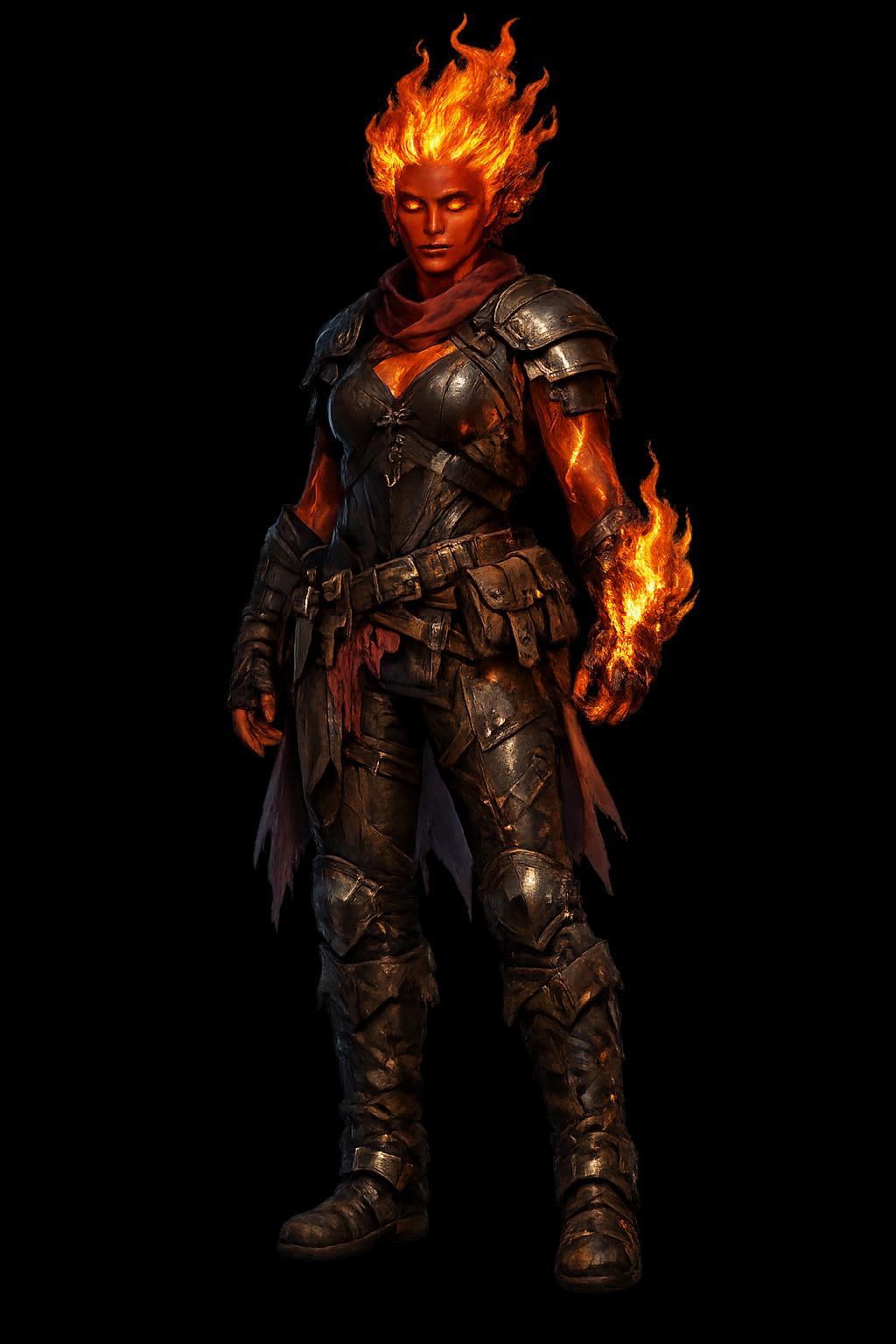
Fire genasi run hot in every sense. Their skin ranges from deep charcoal to bronze with ember-like cracks that glow faintly in darkness. Hair is typically flame — literally, a corona of smokeless fire that dances without burning what it touches. Eyes smolder red or gold. They radiate heat perceptible within arm's reach, and their tempers match their biology: quick to ignite, intense while burning, surprisingly quick to cool. Fire genasi are the most immediately visible subtype; there's no passing for human when your hair is on fire.
Air genasi are the most ethereal manifestation. Their skin carries a faint blue tinge, their hair moves in a breeze that isn't there, and their voices carry an undertone of wind — whispered conversations sound like they're happening inside a draft. Some air genasi are translucent at the edges, their outlines slightly blurred as though they're not entirely committed to being solid. They tend toward restlessness, curiosity, and an allergy to confinement that borders on claustrophobia. Sitting still physically uncomfortable for most air genasi.
Water & Earth Genasi
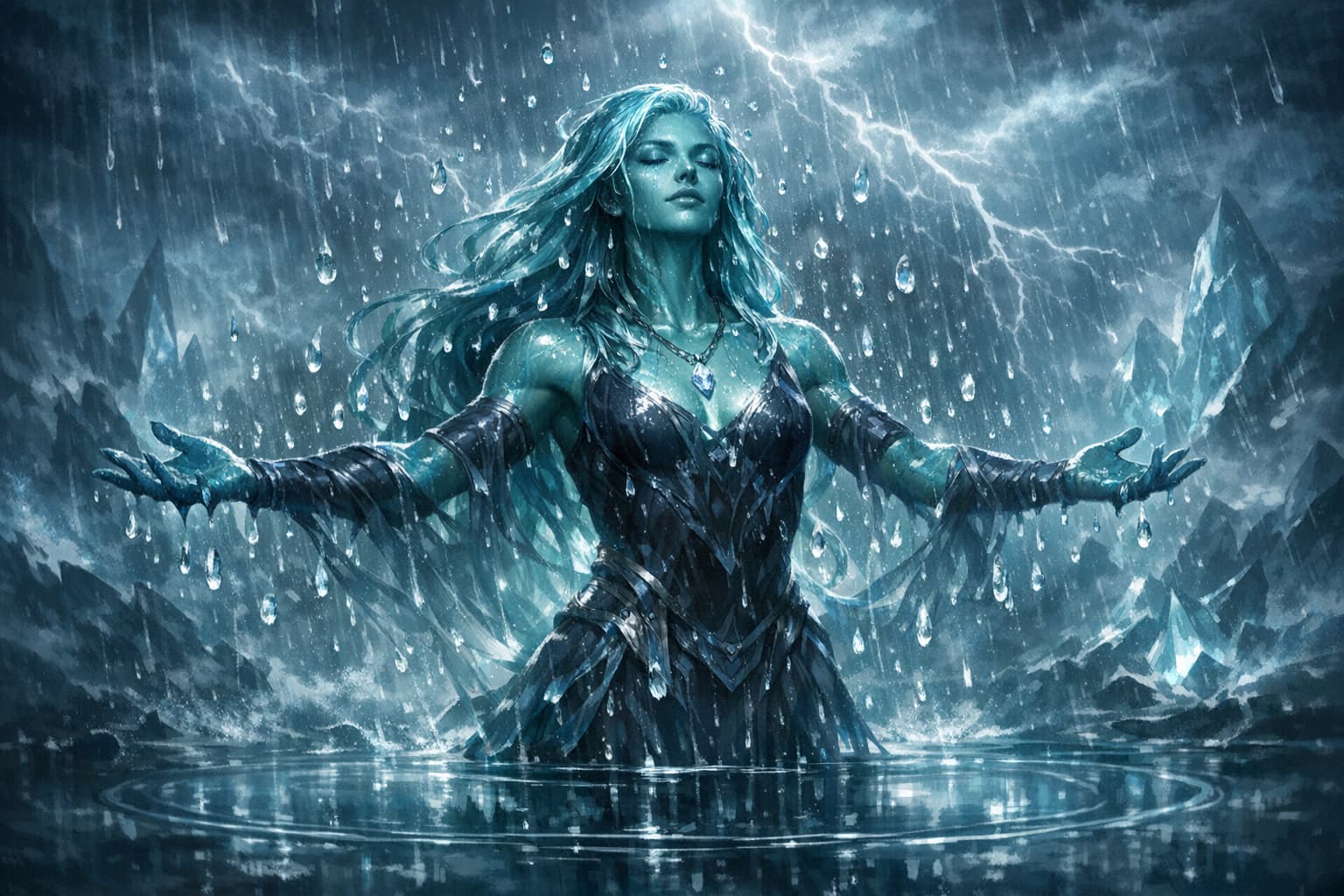
Water genasi wear their element like a second skin. Their coloring runs from sea-green to deep ocean blue, often with patterns that resemble currents or wave-foam. Hair flows like water regardless of gravity — some water genasi have hair that's literally liquid, reforming when disturbed. Their skin is cool and slightly damp to the touch. Temperament tracks with their element: patient, adaptive, hard to provoke but devastating when their patience breaks. They're drawn to water instinctively and many report being able to sense weather changes days in advance.
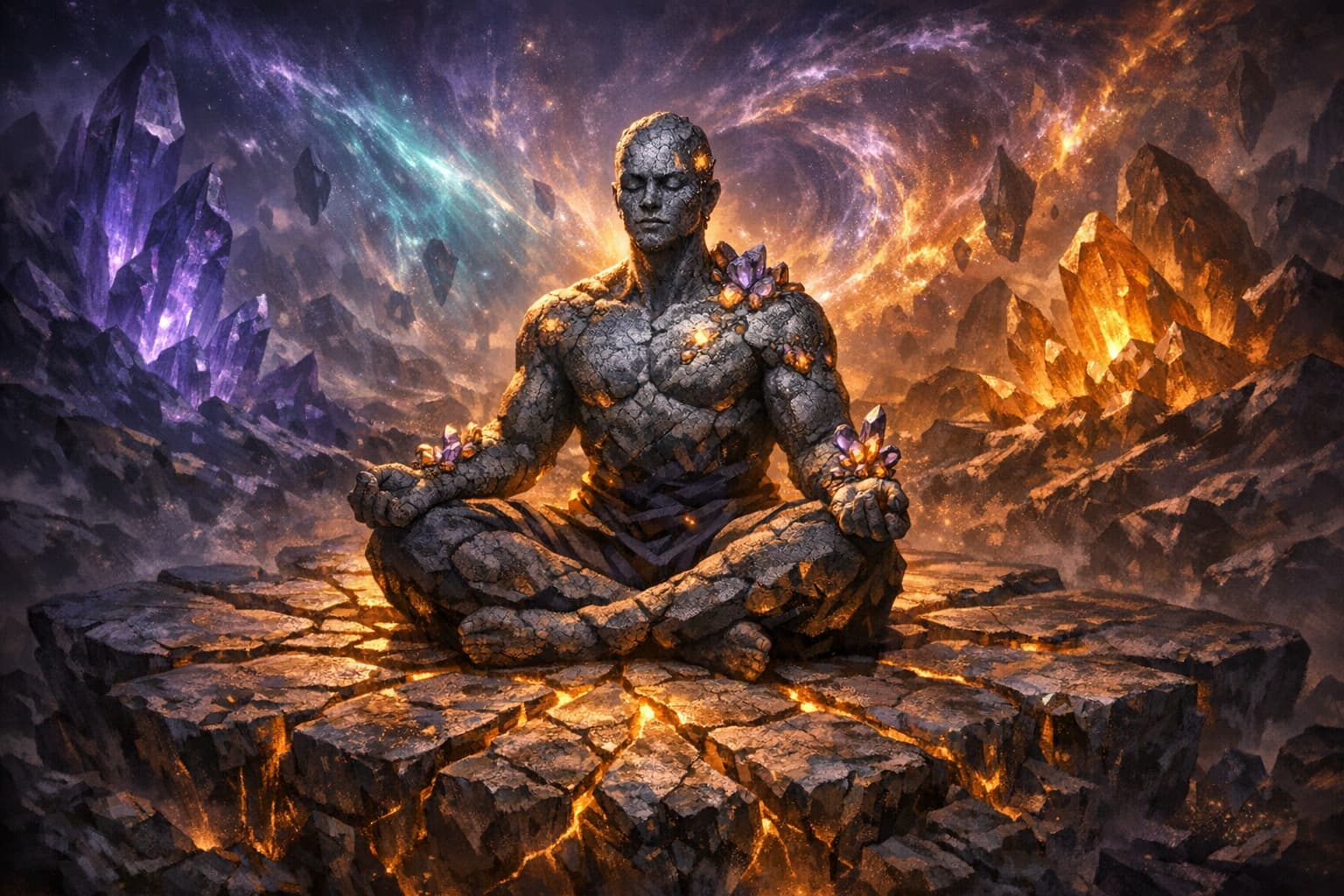
Earth genasi are the most physically imposing subtype. Their skin resembles stone, sometimes cracked to reveal crystalline or mineral deposits beneath. Hair may be gemstone-like — obsidian, quartz, or rough granite. They're heavier than their size suggests, with bones denser than any other humanoid species. Earth genasi are patient to the point of stubbornness, deliberate in speech and action, and possess a groundedness — literal and figurative — that other genasi subtypes sometimes envy. They don't hurry. The mountain doesn't hurry.
Biology & Elemental Physiology
Genasi biology defies conventional anatomy. They eat, breathe, sleep, and age like humans — mostly — but the elemental energy suffusing their bodies creates exceptions that healers and anatomists find maddening. A fire genasi's blood runs hotter than boiling water but doesn't scald their own veins. An earth genasi's bones contain mineral deposits that would indicate disease in any other species. Water genasi can extract oxygen from water through their skin. Air genasi weigh less than their frame suggests, as though gravity has a looser grip on them.
Reproduction follows the human template with one critical addition: the elemental manifestation. A genasi with a human partner has roughly a fifty-fifty chance of producing a genasi child or a human child, and the element matches the genasi parent's. Two genasi of different elements can produce a child of either parent's type but never a hybrid — there are no 'steam genasi' or 'magma genasi' in standard lore, though homebrew has explored these concepts extensively.
Lifespan matches the human range, typically 70–120 years. Some scholars theorize that genasi could live longer if they fully embraced their elemental nature, but doing so risks losing the mortal half entirely — a process called 'elemental dissolution' in planar texts, where the genasi's body slowly reverts to pure elemental matter. It's rare, poorly documented, and terrifying to those who've witnessed it.
Elemental Resistance
Each genasi subtype resists the damage type matching their element — fire for fire genasi, cold for water, bludgeoning from stone and earthen sources for earth, and lightning for air. This resistance isn't learned or activated; it's constitutional. A fire genasi doesn't shrug off flame through effort. Their body simply processes thermal energy differently, the way a duck's feathers shed water.
In play, this means genasi have a permanent, passive advantage against one of the game's most common damage categories. Fire genasi in particular benefit enormously, since fire damage is the most frequently encountered elemental type in D&D. The resistance also creates small character moments: a fire genasi idly resting their hand in a campfire, a water genasi walking through freezing rain without flinching.
Innate Elemental Magic
Genasi spellcasting is instinctive rather than studied. Fire genasi produce flame the way humans produce sweat — automatically, under the right conditions. The spells they cast (produce flame, burning hands) aren't learned from books. They're expressions of elemental biology, surfacing during emotional intensity or deliberate focus. A fire genasi doesn't cast burning hands. They exhale frustration, and the air catches fire.
This innate magic creates a training problem. Genasi children have to learn to suppress their elemental expressions before they learn to control them. A water genasi toddler who floods a room when upset or an air genasi adolescent who knocks things off shelves when startled aren't casting spells — they're having biological responses that happen to be magical. Parenting a genasi requires structural reinforcement.
Environmental Attunement
Genasi sense their element the way a compass senses north. A water genasi can feel approaching rain hours before clouds form. An earth genasi knows when they're standing above a cave system or mineral deposit. Fire genasi can estimate the temperature of a forge by walking past the building. Air genasi sense pressure changes that predict storms with uncanny accuracy.
This attunement isn't magical detection — it doesn't trigger detect magic or register as a spell effect. It's a biological sense, as natural to genasi as smell is to humans. The practical applications range from mundane (earth genasi make excellent miners and surveyors) to lifesaving (air genasi can sense when a building's air is depleted before anyone else notices).
Psychology & Elemental Temperament
The question every genasi faces is whether their element shapes their personality or their personality was always going to match their element. Fire genasi tend toward passion and impulsiveness. Water genasi lean toward patience and adaptability. Earth genasi favor deliberation and stubbornness. Air genasi gravitate toward curiosity and restlessness. These tendencies are real and measurable, but whether they're nature, nurture, or self-fulfilling prophecy is a debate genasi scholars have never settled.
What's certain is that genasi experience emotions with an elemental intensity that other species find startling. A fire genasi's anger doesn't simmer — it blazes, visibly, with the room temperature rising and their skin brightening. A water genasi's grief flows through them in waves that others can almost feel. This emotional transparency is both a social asset (genasi are terrible liars) and a vulnerability (their feelings are literally on display).
The psychological burden of being visibly elemental should not be underestimated. Every genasi lives with the knowledge that their body is a billboard advertising what they are to everyone they meet. Some embrace it — the fire genasi who lets their hair burn freely, the water genasi who wears flowing garments that echo their liquid nature. Others try to minimize it — the earth genasi who covers their mineral deposits with clothing, the air genasi who trains themselves to stand perfectly still. Neither approach eliminates the fundamental reality: genasi can't hide.
This visibility produces a psychology of preemption. Many genasi learn to address their elemental nature before others bring it up, controlling the narrative rather than letting strangers set the terms. 'Yes, my hair is fire. No, it won't burn your furniture. Yes, I've heard that joke before.' The social script becomes automatic, a rehearsed defense against a curiosity that never stops being intrusive.
“Fire genasi don't have moods. They have weather systems. You can see a tantrum building the same way you can see thunderheads forming — and the smart move in both cases is to find shelter.”
— Waterdhavian tavern keeper
Daily Life Among Other Peoples
Genasi don't have a society. They have a diaspora. Scattered among human populations, raised in human (or dwarven, or elven, or halfling) communities, genasi grow up as minorities of one. There are no genasi neighborhoods, no genasi holidays, no genasi cuisine. There's just a person with elemental blood living in a world built for people without it.
This means daily life for a genasi is defined by accommodation — theirs and their community's. A fire genasi sleeps on stone or metal bedframes because wooden ones are a fire risk. A water genasi's home needs better drainage than their neighbors'. An earth genasi's furniture needs to support more weight. An air genasi lives with windows open year-round, even in winter, because stale air feels like suffocation.
The social dimension varies by location and local attitudes. In Calimshan, where genie-blooded individuals have been part of society for centuries, a fire genasi is unremarkable. In a remote Sword Coast village that's never seen one, that same genasi is a spectacle, a threat, or a miracle depending on local folklore. Genasi learn quickly to read a room — sometimes literally, checking for flammable materials or poor ventilation before settling in.
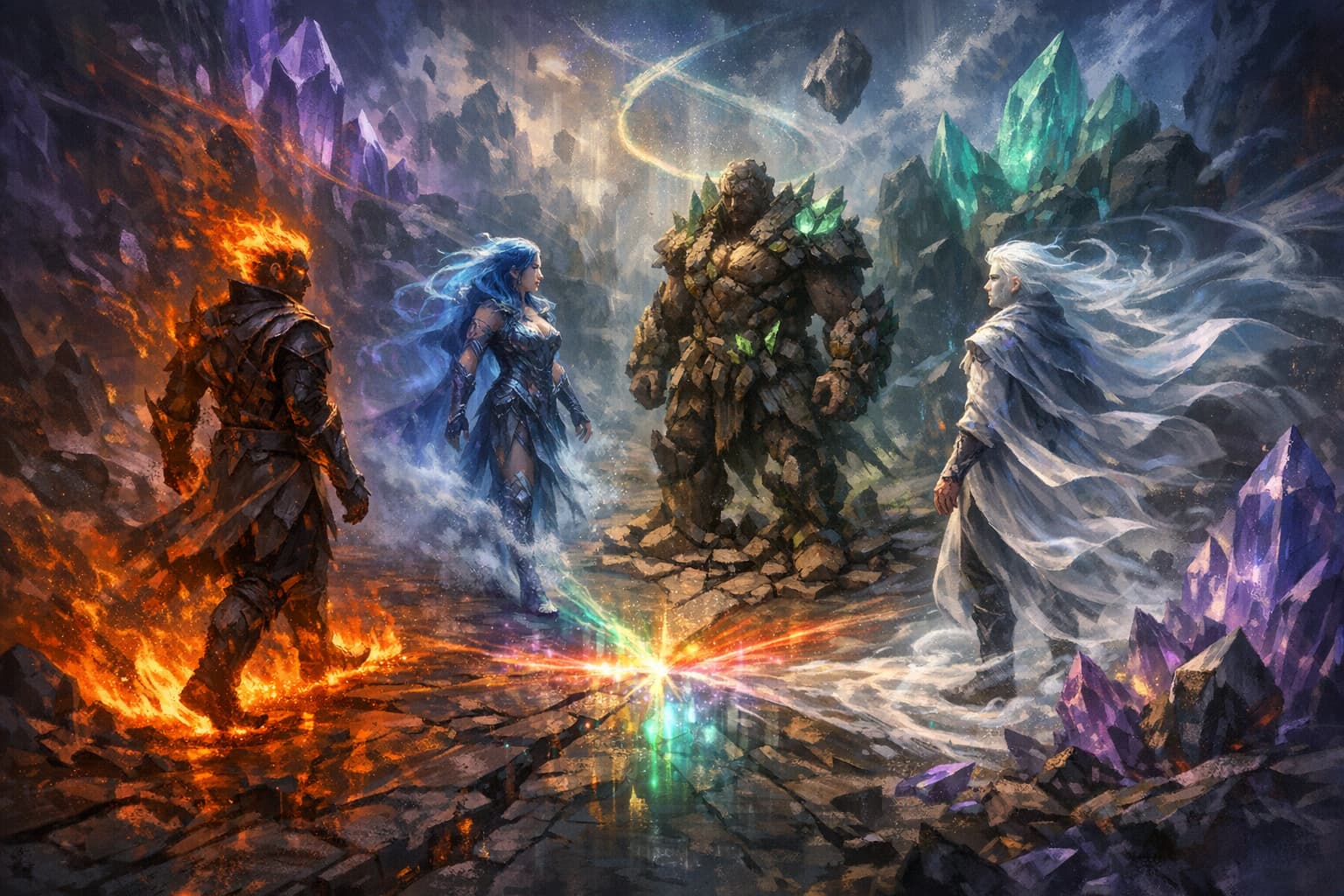
A community built at a planar crossroads where all four genasi subtypes are common enough to constitute a significant minority. How does architecture change when ten percent of residents are made of fire, water, stone, or wind? Fireproof districts next to canal neighborhoods next to quarry-stone housing next to open-air platforms. The infrastructure tells you the story.
Religion & Elemental Lords
Genasi spirituality is pulled in two directions: toward the gods of whatever culture raised them, and toward the elemental lords and primordials that represent their blood heritage. A fire genasi raised in a Lathanderite household might worship the Morninglord devoutly while feeling an inarticulate pull toward Kossuth, the Lord of Flames. That pull isn't religious conviction — it's something closer to homesickness for a place you've never been.
The elemental lords — Kossuth (fire), Istishia (water), Grumbar (earth), Akadi (air) — are the most natural objects of genasi devotion, but 'natural' doesn't mean 'comfortable.' These aren't personal deities who answer prayers and grant miracles in exchange for faith. They're vast, impersonal forces that barely notice individual worshippers. Praying to Kossuth is like praying to a wildfire. The fire doesn't care about your problems. It has its own agenda.
The primordials represent an even more extreme option. These are the beings who shaped the world before the gods claimed it — entities of pure elemental chaos whose imprisoned forms still generate the planar energy that makes genasi possible. Some genasi view the primordials as ancestral creators deserving reverence. Others see them as cautionary tales about what elemental power becomes without mortal restraint. The Cult of the Eternal Flame, the Cult of the Crushing Wave, and similar organizations from Princes of the Apocalypse represent the darkest interpretation: primordial worship as apocalyptic nihilism.
The healthiest genasi spiritual practices tend to be syncretic — personal blends of mainstream theology and elemental tradition that acknowledge both halves of their nature without surrendering to either. A water genasi cleric of Selune who incorporates Istishia's ebb-and-flow philosophy into her lunar devotions isn't confused. She's complete.
In Dark Sun, where the elemental planes are the only source of divine-like power, genasi (or their equivalents) occupy a fundamentally different religious position — they're not choosing between gods and elements. Elements are all there is. This makes paraelemental and quasielemental genasi (sun, rain, magma, etc.) not only possible but theologically central.
Elemental Magic in Practice
Genasi magic is elemental by nature, but the way each subtype experiences and develops that magic differs enough to constitute separate traditions. Fire genasi magic is explosive and immediate — short bursts of intense energy that mirror the fire genasi temperament. Water genasi magic flows and adapts, reshaping itself around obstacles. Earth genasi magic is slow, deliberate, and devastating when it finally arrives. Air genasi magic is quick, unpredictable, and difficult to contain.
The mechanical expressions in 5e capture this reasonably well. Fire genasi get produce flame and burning hands — offense-first, damage-focused. Earth genasi get blade ward and pass without trace — defense and stealth, the mountain that lets threats pass around it. Water genasi get shape water and create or destroy water, plus resistance to acid — utility and environmental control. Air genasi get levitate and the ability to hold their breath indefinitely — freedom of movement above all else.
Where genasi magic gets interesting is in multiclassing and specialization. A fire genasi who becomes an Evocation wizard doesn't just add fire spells to a spellbook. They're channeling academic discipline through a body that was already fire before the first lesson. The innate magic and the learned magic reinforce each other, creating a spellcasting experience that's qualitatively different from a human wizard learning the same spells from the same books.
Elemental Adept Synergy
The Elemental Adept feat was practically designed for genasi characters. A fire genasi sorcerer with Elemental Adept (fire) treats fire resistance as no resistance and never rolls below 2 on fire damage dice. Combined with innate fire magic and the Draconic or Storm sorcery subclass, this creates a character whose entire mechanical identity is organized around a single element.
This kind of focused elemental identity is something no other species achieves as naturally. A human can take Elemental Adept, but it's a choice. For a genasi, it's a destiny made mechanical — the character's biology, background, and build all pointing in the same direction.
Inter-species Relationships
Genasi occupy a strange social position: they're visibly unusual but not inherently threatening in the way tieflings or drow are. A fire genasi's flaming hair draws stares, but fire doesn't carry the same moral baggage as infernal heritage. The reaction genasi get from other species tends to be fascination rather than fear — which comes with its own problems. Being treated as a curiosity is better than being treated as a threat, but it's still dehumanizing.
Humans are the most common genasi neighbors and the most common genasi parents. The relationship is complicated by the fact that genasi children are visible reminders of a liaison with a genie or genie-blooded individual, which carries different social weight depending on context. In Calimshan, genie heritage is prestigious. In the Dalelands, it's bewildering. In Thay, it's potentially useful.
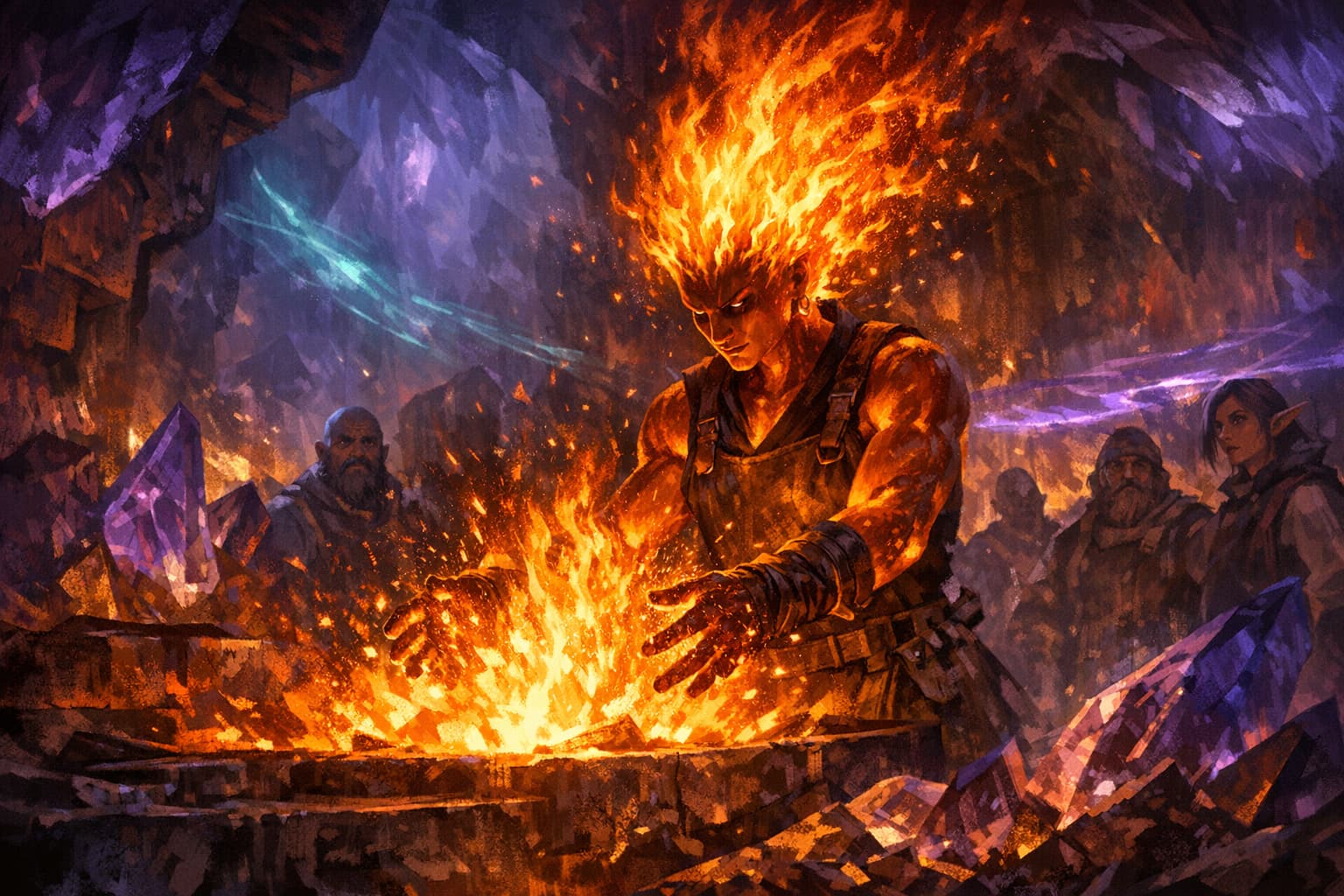
Dwarves and earth genasi share enough common ground — literally — to build genuine rapport. The dwarven appreciation for stone, mineral, and deliberate craftsmanship aligns with earth genasi temperament. Fire genasi find common cause with forge-focused dwarven communities where heat resistance is a professional advantage. Air and water genasi have less natural affinity with dwarven culture but are generally welcomed as novelties worth studying.
The most fraught relationship is with their genie ancestors. Genies overwhelmingly view genasi as inferior — diluted echoes of true elemental power. An efreeti meeting a fire genasi might react with amusement, contempt, or possessiveness, but rarely with kinship. Genasi who seek out their genie heritage hoping for acceptance usually find a power dynamic instead.
Genasi Relationships with Other Species
| Species | Dynamic | Friction Points |
|---|---|---|
| Humans | Most common co-parents and neighbors | Genasi children are visible proof of planar contact; social implications vary by region |
| Dwarves | Strong rapport with earth and fire genasi | Dwarven conservatism can clash with air genasi restlessness |
| Elves | Mutual curiosity, distant respect | Elven longevity vs. genasi human-scale lifespan creates different time horizons |
| Tieflings | Solidarity of the visibly different | Genasi face curiosity; tieflings face hostility. Different experiences of otherness. |
| Genies | Ancestral connection, unequal power | Genies rarely treat genasi as equals; the reunion fantasy almost never matches reality |
Genasi social experience is defined more by their specific community than by species-wide patterns. Where you grew up matters more than what element you carry.
Notable Figures & Campaign Lore
Genasi have fewer iconic named characters than elves or tieflings, partly because they've spent most of their D&D existence as supplement rather than core species. The characters who do exist tend to be villains or quest-givers rather than player-character archetypes, which leaves more creative space for players to define what a genasi protagonist looks like.
The Princes of the Apocalypse adventure (2015) did the most to establish genasi in the 5e imagination, though it framed elemental power primarily through the lens of its villains — the Prophets of Elemental Evil and their cults. This was an odd choice: the adventure that brought genasi back to 5e also associated elemental heritage with apocalyptic fanaticism. Players who wanted to play genasi heroes had to work against the adventure's own framing.
Baldur's Gate 3 (2023) doesn't feature genasi as playable characters, which represents a missed opportunity. The game's emphasis on tieflings, githyanki, and dragonborn demonstrated how cinematic rendering could elevate species identity. Genasi — with their flaming hair, crystalline skin, and flowing aquatic features — would have been visually spectacular. The modding community noticed.
Notable Genasi in D&D Lore
| Character | Element | Source | Significance |
|---|---|---|---|
| Vanifer | Fire | Princes of the Apocalypse (2015) | Prophet of Imix; tiefling-fire genasi who led the Cult of the Eternal Flame |
| Gar Shatterkeel | Water | Princes of the Apocalypse (2015) | Prophet of Olhydra; water genasi pirate turned apocalyptic cultist |
| Marlos Urnrayle | Earth | Princes of the Apocalypse (2015) | Prophet of Ogrémoch; medusa with earth genasi connections |
| Aerisi Kalinoth | Air | Princes of the Apocalypse (2015) | Prophet of Yan-C-Bin; moon elf air cult leader (not genasi herself, but defined the air cult) |
| Calim | Air | Forgotten Realms lore | Noble djinni whose empire shaped Calimshan; ancestor figure for many air genasi bloodlines |
The dominance of Princes of the Apocalypse characters in this list highlights how much genasi identity is still tied to a single adventure. The species needs more heroic representatives.
D&D Mechanics Across Editions
Genasi mechanics tell the story of a species finding its footing. Early editions treated them as exotic oddities with level adjustments that made them impractical for most campaigns. Fifth Edition stripped them down to a clean, playable package. The 2024 revision brings them to full parity with other core species for the first time.
Genasi Mechanical Evolution
| Feature | 3.5e | 5e (2015) | 2024 |
|---|---|---|---|
| Species Status | Supplement (Races of Faerûn) | Supplement (EEPC) | Core PHB |
| Key Ability | Varies by subtype | CON +2, subtype +1 | Flexible |
| Creature Type | Outsider (native) | Humanoid | Humanoid |
| Innate Spells | 1 spell-like ability | 1 cantrip + 1 spell | 3 spells by 5th level |
| Playability Cost | +1 Level Adjustment | None | None |
| Subtypes | 4 (fire, water, earth, air) | 4 (same) | 4 (same, expanded mechanics) |
The journey from supplement oddity with a level adjustment to core PHB species took thirty years. Genasi are finally playing on equal footing.
- Outsider (native) type
- Darkvision 60 ft.
- Elemental resistance (varies by subtype)
- One spell-like ability per subtype
- Level Adjustment +1
The +1 Level Adjustment made genasi impractical at most tables. Earth genasi were considered strongest due to the STR/WIS bonus, while the universal CHA penalty discouraged face-role play.
- Darkvision 60 ft. (fire only)
- Elemental resistance (fire: fire, water: acid)
- Innate spellcasting: 1 cantrip + 1 spell per subtype
- Unique breathing: air (hold indefinitely), water (breathe underwater)
- Unending Breath or Amphibious (subtype dependent)
The CON +2 base made genasi durable regardless of subtype. Fire genasi with produce flame and burning hands were the most popular; earth genasi with pass without trace were the most surprising.
- Elemental Heritage choice: Fire, Water, Earth, or Air
- Scaling elemental resistance
- Expanded innate spellcasting (3 spells by 5th level)
- Environmental adaptation (breathing, movement)
- Size: Small or Medium
Flexible ability scores free genasi from the CON-locked builds of earlier editions. The expanded spell list gives each subtype a clearer mechanical identity while maintaining the elemental flavor.
Elemental Heritage Across Franchises
The 'mortal with elemental blood' concept appears across fantasy media, but few franchises develop it as thoroughly as D&D does with genasi. Most settings treat elemental heritage as a power source rather than an identity — the character who shoots fire is functionally human in every way that matters. Genasi are distinctive because the element changes what the person is, not just what they can do.
Avatar: The Last Airbender comes closest to the genasi experience in popular culture. Benders don't just use elements; their bending shapes their culture, philosophy, fighting style, and psychology. The four nations are organized around elemental identity in a way that genasi would recognize immediately. The key difference is scale: in Avatar, entire civilizations are built around elemental affinity. In D&D, genasi are individuals navigating a world that wasn't built for them.
Elemental Mortals Across Franchises
| Franchise | Equivalent | Defining Trait | Key Distinction |
|---|---|---|---|
| D&D | Genasi | Genie-descended, four elemental subtypes | Most developed identity; element shapes biology, not just power |
| Pathfinder 2e | Ifrit, Oread, Sylph, Undine | Separate ancestries rather than subtypes of one | Splits the genasi concept into four fully independent species |
| Avatar: TLA | Benders | Element-wielders organized into nations | Cultural identity around elements; entire civilizations, not individuals |
| Final Fantasy | Various elemental beings | Summons (Ifrit, Shiva) as godlike entities | Elements as external forces to summon, not internal identity |
| Genshin Impact | Vision holders | Element-granted power from divine beings | Power is gifted and revocable; genasi power is innate and permanent |
| World of Warcraft | Shaman / Elemental lords | Mortal-elemental pacts and alliances | Elements are partners, not heritage; negotiation rather than inheritance |
D&D genasi are unique in treating elemental heritage as a species identity rather than a class feature or power source. You don't become a genasi. You're born one.
FAQ
Common Questions
In standard D&D lore, a child of two genasi inherits one parent's element — there's no blending. A fire genasi and a water genasi produce either a fire or water genasi child, never a 'steam genasi.' The child might also be born fully human if the elemental bloodline thins sufficiently. Para-elemental genasi (magma, ice, ooze, smoke) exist in some settings and older editions but are not part of standard 5e or 2024 rules. If your table wants them, they make excellent homebrew.
Focus on the involuntary aspects of being genasi. Your character doesn't choose to radiate heat or have liquid hair — it just happens, all the time, whether convenient or not. Build daily life details around your element: a fire genasi who has to be careful hugging people, a water genasi whose belongings are always slightly damp, an earth genasi who sinks into soft ground. The element should be an identity, not just a power set. When the magic is biological rather than academic, it changes how the character relates to everything.
Fire genasi are the most consistently powerful thanks to fire resistance (the most common elemental damage type), darkvision (the only genasi subtype that gets it in the 2015 version), and produce flame as a reliable damage cantrip. Earth genasi with pass without trace are the sleeper pick — a +10 to Stealth for an entire party is encounter-warping at any level. Water genasi and air genasi are more situational but shine in campaigns featuring aquatic or aerial environments. The 2024 revision narrows these gaps significantly.
Some do, and they're usually disappointed. Genies are powerful, proud, and ancient beings who generally view mortal descendants as curiosities at best and nuisances at worst. An efreeti doesn't see a fire genasi grandchild and feel paternal pride — they see a diluted echo of real elemental power. Genasi who seek their genie ancestors hoping for a family reunion tend to find a power dynamic instead. The most successful genasi-genie relationships involve mutual respect and clear boundaries, which requires the genasi to approach as an equal rather than a supplicant. That's hard to do when your ancestor can reshape reality.