
Githyanki
Astral conquerors who broke the chains of the mind flayers and built an entire civilization on the principle of never being enslaved again
Enslavement & the Illithid Empire
Before the githyanki were the githyanki, they were livestock. That is not hyperbole. The mind flayer empire — a galaxy-spanning psychic tyranny that predates most mortal civilizations by epochs — bred the ancestors of the gith species the way humans breed cattle. Selectively. For desirable traits. Over thousands of generations. The tall, angular frames. The latent psionic potential. The yellowish skin and elongated features that mark every githyanki face. None of it is natural evolution. All of it is the residue of illithid husbandry.
Understanding this history is essential to understanding anything else about the githyanki. Every cultural trait, every military doctrine, every social hierarchy traces back to a single fact: these people were property. Their entire species was engineered to serve, to obey, to have their brains eaten when they stopped being useful. The rebellion that freed them wasn't a political revolution. It was a species-wide psychological rupture — the moment a designed slave-race decided that the purpose they were built for was the one purpose they would never serve again.
The illithid empire at its height controlled vast networks of thrall-worlds, connected by nautiloid spelljammer vessels and maintained through psionic domination. The gith (as they were collectively known before the schism) served as soldiers, laborers, and food. Mind flayers consumed sentient brains for sustenance, and gith brains — carefully cultivated over millennia to produce rich psionic resonance — were considered delicacies. Every githyanki alive carries the knowledge that their ancestors were bred to taste good.
The rebellion, when it came, was total. Led by the warrior-prophet Gith, the enslaved species turned their psionically enhanced bodies against their creators with a fury that bordered on the existential. They didn't just fight for freedom. They fought to annihilate the empire that had manufactured them, to ensure that no mind flayer would ever again look at a gith and see a meal. The war was genocidal in both directions, and neither side has forgotten.
The illithid empire's timeline is deliberately vague in D&D lore because mind flayers exist partially outside normal time — their elder brains perceive past and future simultaneously. What matters for githyanki identity isn't the precise chronology. It's the psychic scar. Thousands of years after liberation, githyanki children are still taught to hate illithids before they're taught to tie their boots. The trauma is cultural bedrock.
Gith Naming & the Severed Tongue
The word "githyanki" is itself an act of defiance. It translates, roughly, as "children of Gith" — a name chosen to honor the rebel leader who shattered illithid control and to permanently identify the species with its moment of liberation rather than its millennia of servitude. The language they speak, Gith, was developed during the rebellion as a communication system the mind flayers couldn't easily intercept or decode. It replaced whatever slave-tongue the illithids had imposed.
Githyanki names tend toward hard consonants and sharp syllables: Lae'zel, Kith'rak, Vlaakith, Zar'yun. The phonetic harshness is intentional. The language was designed for battlefield communication — clarity at distance, distinctness under stress, resistance to psionic interference. A githyanki name is a weapon identifier before it is a personal label. You hear it across a battlefield and you know who's being addressed.
The naming conventions also encode rank and lineage. A kith'rak (war leader) carries their title as part of their identity. The apostrophe in many githyanki names isn't decorative — it represents a glottal stop that separates the personal name from a suffix indicating function, allegiance, or achievement. Mispronouncing a githyanki's name isn't just rude. It's a statement about their place in the hierarchy, and githyanki hierarchies are not things you want to challenge accidentally.
“We named ourselves after the woman who taught us to kill our gods. Every syllable is a reminder that we were made to kneel and chose instead to burn.”
— Githyanki naming tradition, paraphrased
Githyanki Through D&D History
The githyanki have one of the more unusual publication histories in D&D. They weren't created by TSR or Wizards of the Coast. They were invented by Charles Stross (yes, the science fiction novelist) in a 1977 article for White Dwarf magazine, inspired by George R.R. Martin's 1977 novel Dying of the Light and its concept of cultures defined entirely by a single historical trauma. The name itself comes from a species mentioned in George R.R. Martin's novel. TSR adopted the githyanki into the Fiend Folio, and the rest is astral history.
That literary DNA matters. The githyanki were conceived as a thought experiment — what happens to a people whose entire identity is built on resistance to domination? — and that conceptual clarity has kept them compelling through decades of edition changes. They're not a grab-bag of fantasy tropes. They're a single idea explored thoroughly: the psychology of the permanently liberated.
White Dwarf #12
Charles Stross publishes "The Githyanki in the Astral Plane," introducing the species as astral raiders with silver swords and psionic powers. The core concept — escaped slaves turned militant conquerors — is present from the start.
Fiend Folio (AD&D 1e)
Githyanki and githzerai officially enter D&D canon. The Fiend Folio presents them as high-level threats with psionic abilities and silver swords that sever astral cords. DMs learn to fear them.
A Guide to the Astral Plane (Planescape)
Planescape expands githyanki lore dramatically. Tu'narath gets a full description. Vlaakith becomes a named NPC lich-queen. The culture receives depth — military hierarchy, dragon alliances, the war with githzerai. This is where the githyanki become three-dimensional.
Expanded Psionics Handbook & Planar Handbook (3.5e)
Githyanki become a playable species for the first time. Psionic rules give mechanical weight to their mental powers. The racial class progression lets players experience the full githyanki power curve.
Player's Handbook 3 (4e)
Githzerai become a PHB species in 4e (githyanki remain in the Monster Manual). The edition's emphasis on the Astral Sea as an adventuring locale puts githyanki front and center as both enemies and potential allies.
Mordenkainen's Tome of Foes (5e)
The most comprehensive 5e githyanki treatment. Full cultural write-up, Vlaakith's paranoia explored, the creche system detailed, and githyanki stat blocks across multiple ranks (warrior, knight, gish, kith'rak, supreme commander).
Baldur's Gate 3 Launches
Lae'zel becomes the face of the githyanki species for millions of players who never opened a Monster Manual. BG3 does more for githyanki visibility in one year than forty years of sourcebooks combined. The species goes from niche lore to mainstream recognition overnight.
2024 PHB — Githyanki as Core Option
Githyanki become an official playable species in the revised 2024 Player's Handbook, with psionic spellcasting, martial proficiencies, and the Astral Knowledge feature. Forty-seven years from White Dwarf to Player's Handbook.
Tu'narath & the Astral Plane
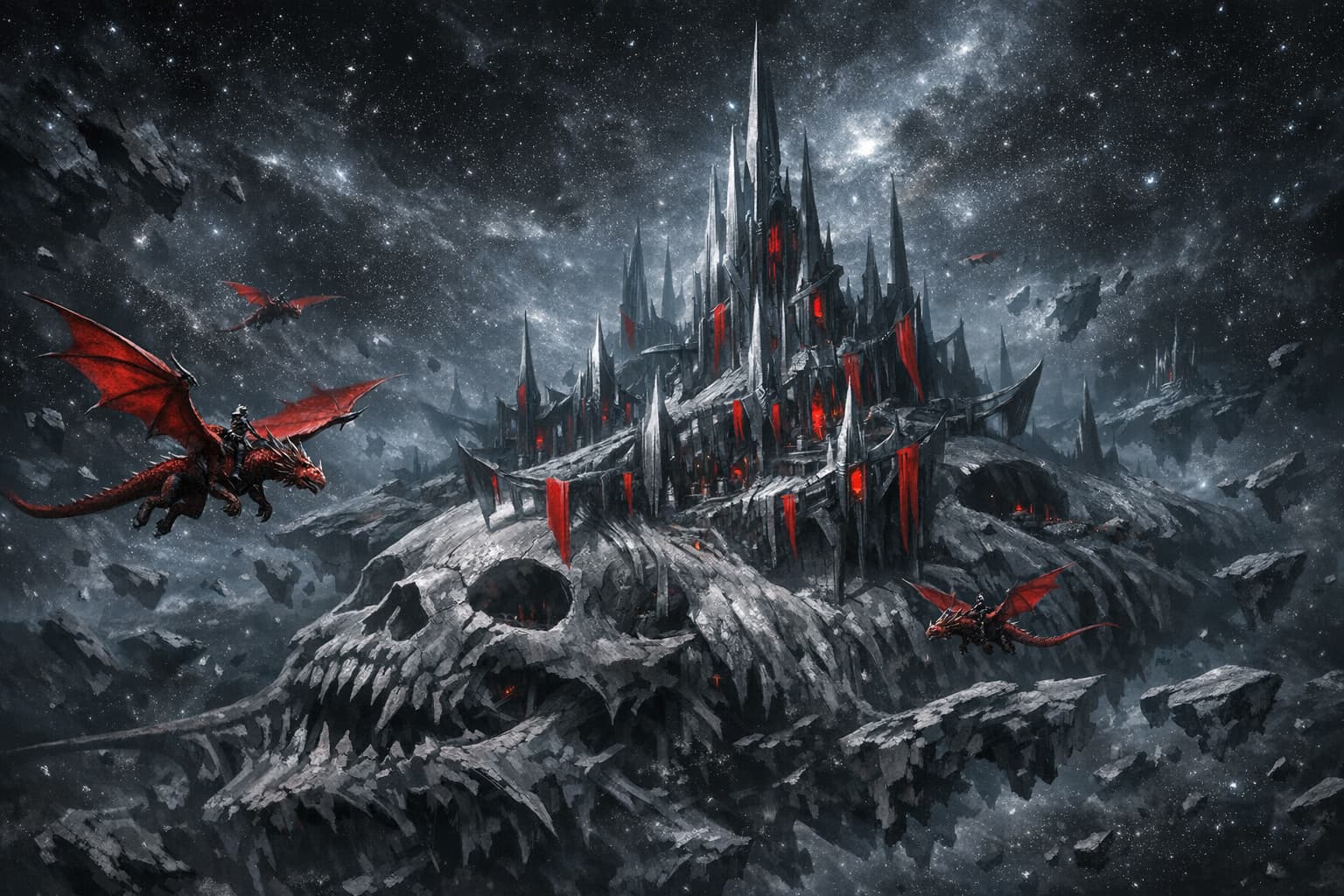
Tu'narath is built on the corpse of a dead god. That sentence alone should tell you everything about githyanki ambition. Their capital city — the largest permanent settlement in the Astral Plane — is constructed on and within the petrified remains of a deity whose name has been deliberately erased from history. The god died (or was killed; the githyanki are vague on this point) eons ago, and its body drifted through the Astral Sea until the githyanki claimed it as real estate.
The Astral Plane itself shapes githyanki civilization in fundamental ways. Time doesn't pass normally there — creatures don't age, don't need to eat or drink, and don't suffer the biological urgencies that drive mortal cultures. A githyanki born in Tu'narath can live indefinitely, frozen at whatever age they were when they entered the Astral. This has profound implications for their culture. There's no generational turnover to drive change. The same leaders, the same grudges, the same orthodoxies persist for centuries without the natural reset that mortal death provides.
Tu'narath itself is a military installation masquerading as a city. Every district serves the war effort. Crèches (nurseries where young githyanki are raised on the Material Plane until they're old enough to survive the Astral) feed recruits to the military academies. Forges produce silver swords and astral ships. Temples to Vlaakith reinforce ideological control. There are markets, gathering places, and areas that might be called neighborhoods, but everything is subordinate to the war footing that has defined githyanki existence since the rebellion.
The city floats in silver void, connected to the Material Plane through portals that the githyanki guard with lethal seriousness. Outsiders who reach Tu'narath without invitation tend not to leave. The githyanki didn't survive illithid enslavement by being hospitable, and they haven't developed the habit since.
Key Districts of Tu'narath
| District | Function | Notable Feature |
|---|---|---|
| The Glathk (War Quarter) | Military training, equipment forges, dragon stables | Red dragon mounts are bred and trained here under Tiamat's ancient pact |
| Vlaakith's Throne | The lich-queen's palace and seat of governance | Built directly over the dead god's "heart" — if gods have hearts |
| The Crèche Nexus | Portal hub connecting to Material Plane crèches | Most heavily guarded location in the city; destruction would end githyanki reproduction |
| The Silver Bazaar | Trade district for goods plundered from the Material Plane | The closest thing to a civilian space in Tu'narath; still patrolled by knights |
| The Remembrance | Temple-archive of the rebellion against the illithids | Contains psychic recordings of the original uprising; visiting is mandatory for all citizens |
The dead god's body extends far beyond the city's claimed territory. Expeditions into the deeper reaches occasionally return with artifacts — or don't return at all.
Psionic Physiology
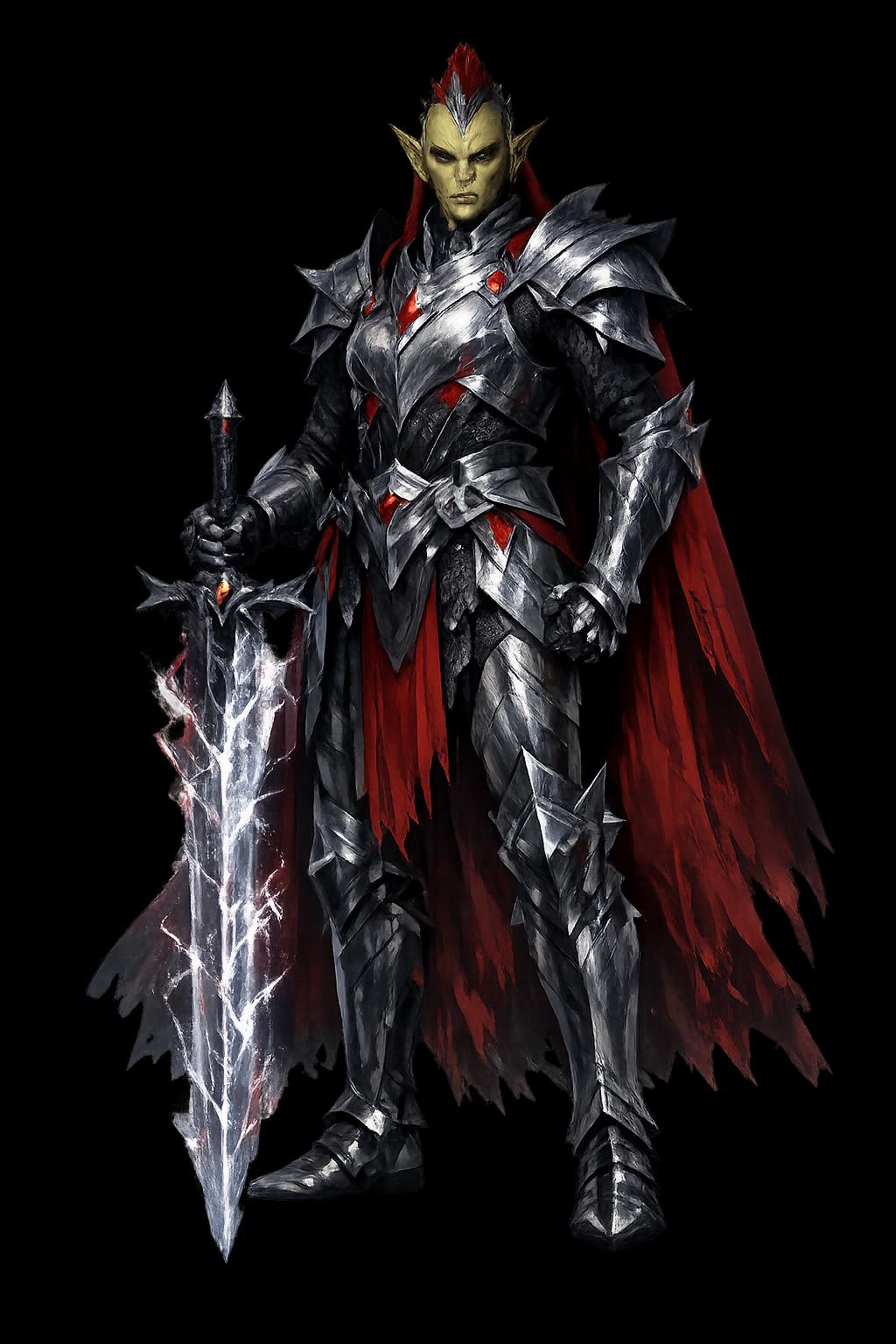
Githyanki bodies are living monuments to illithid genetic engineering. The tall, angular frames — typically between six and seven feet — were bred for reach in melee combat and efficient movement through the tight corridors of nautiloid vessels. The yellowish skin tones and pointed ears distinguish them from their githzerai cousins, but both subspecies share the elongated skull structure that houses an unusually large psionic cortex. The mind flayers bred that brain capacity into their slaves to make them better at receiving telepathic commands. The gith repurposed it to kill their masters.
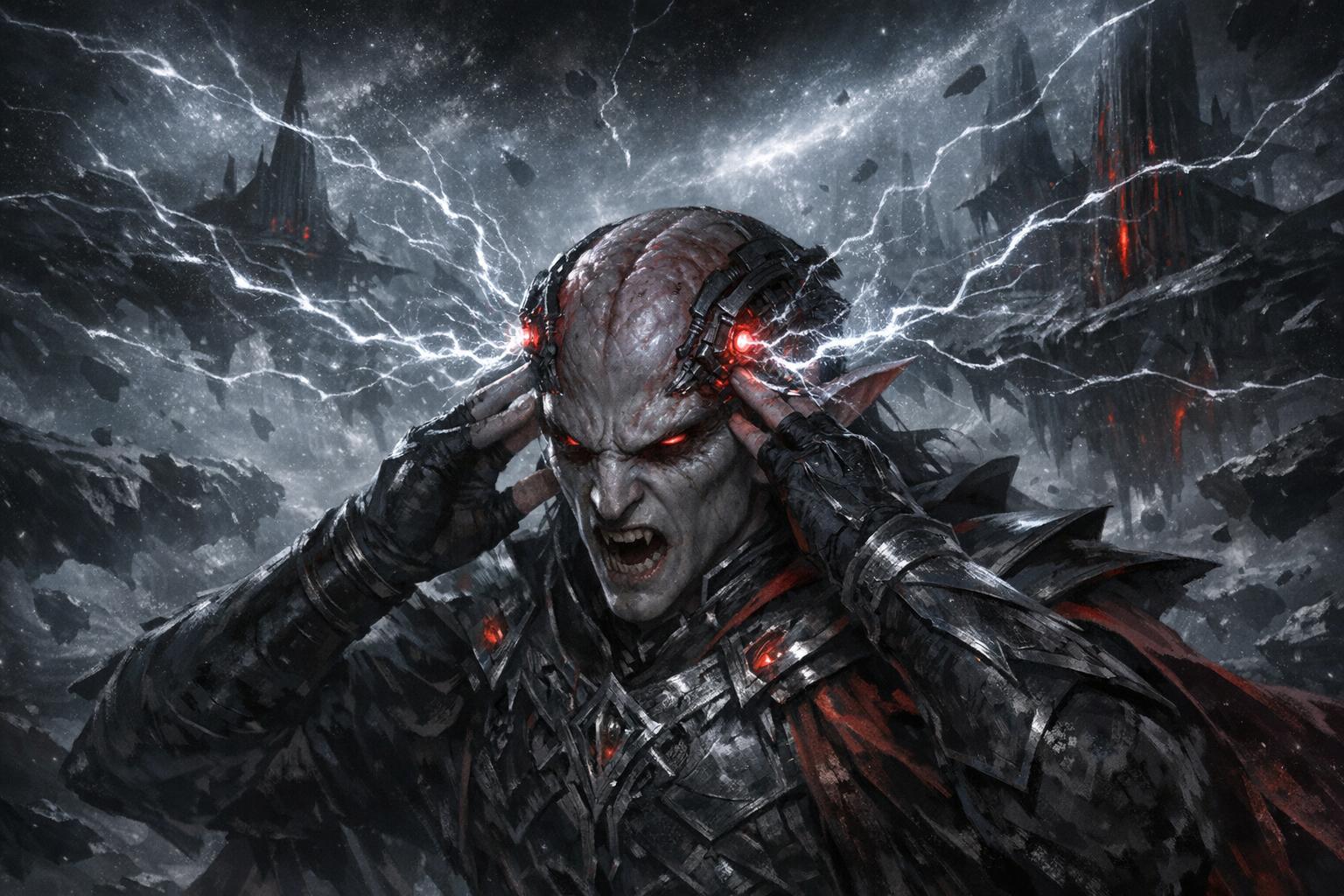
Psionic ability in githyanki is not optional. Every githyanki manifests some degree of telekinetic and telepathic power by adolescence, the way every human develops language. The baseline is minor telekinesis — moving small objects, enhancing physical blows with psychic force, sensing the emotional states of nearby creatures. But the ceiling is much higher. Githyanki gish (warrior-mages) blend psionic energy with arcane magic to devastating effect, while kith'raks project command authority through psychic fields that physically compel obedience.
The biological cost is real. Githyanki psionic activity requires caloric intake significantly above what their frame would suggest. A githyanki who uses their powers extensively eats like a creature twice their size. On the Astral Plane, where biological needs are suspended, this doesn't matter. On the Material Plane, it makes extended campaigns logistically demanding. A githyanki raiding party plans its supply lines with the same seriousness as its battle formations.
The Psionic Cortex
The enlarged frontal and temporal lobes that give githyanki their psionic abilities are visible to anyone who knows where to look — a slight bulging at the temples, a faint pulse of psychic energy detectable by sensitives. This structure was bred into the gith over millennia of illithid selection. It's the cruelest irony of their existence: the power they used to win their freedom was a cage their captors built. Every psionic blast a githyanki fires is powered by hardware the mind flayers installed.
Martial Physiology
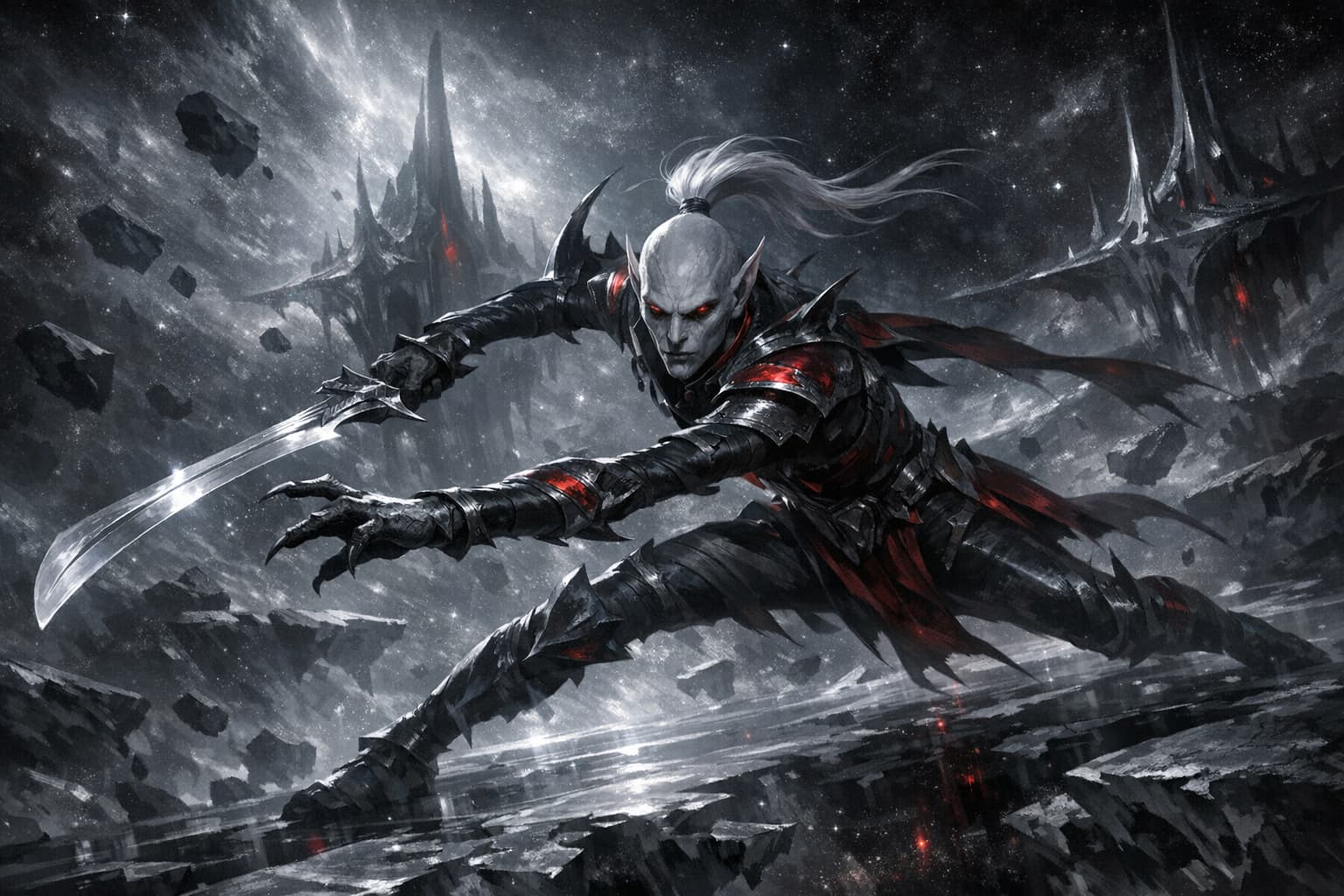
The githyanki frame is optimized for combat in ways that go beyond simple musculature. Their reaction time is psionic — threat detection happens at the speed of thought, literally. Joints hyperextend slightly, allowing blade angles that human wrists can't achieve. The tendons in their forearms are denser than human equivalents, designed for the sustained grip strength needed to wield a silver sword through hours of combat. These aren't natural adaptations. They're engineering specifications, and the githyanki have spent centuries refining what the illithids started.
The Warrior Ethos
Githyanki society doesn't have soldiers the way human kingdoms have soldiers. In githyanki culture, there is no civilian class. Every githyanki is a warrior, a weapon-in-waiting, a node in the military apparatus that has defined their civilization since the rebellion. Children begin combat training at the age of equivalent-human-five. By the time they're adults, they've spent more hours with a blade in their hand than most human soldiers accumulate in a career.
This isn't militarism for its own sake. It's the rational response to a species-wide trauma. The githyanki were enslaved because they were weak. They were bred, penned, consumed because they couldn't stop it. The universal warrior culture exists to guarantee that this never happens again. Every githyanki who can hold a sword is a vote against enslavement. Every generation trained to fight is a generation that won't be cattle. The paranoia is justified — the mind flayers are still out there, still hungry, still capable of psionically dominating entire populations.
The warrior ethos produces individuals of extraordinary martial competence but also extraordinary rigidity. A githyanki who questions whether the permanent war footing is still necessary — whether centuries of freedom haven't earned them the right to relax — commits a cultural heresy that other githyanki find genuinely frightening. Relaxation is what prey does. Complacency is what led to enslavement. The githyanki didn't escape the illithid empire by being comfortable, and comfort is treated as a gateway drug to submission.
The result is a species that is magnificent in battle and profoundly uncomfortable everywhere else. A githyanki at a diplomatic dinner is a loaded weapon placed on a banquet table. They know the correct response isn't violence. They also know that violence would be simpler, faster, and more aligned with everything they've been trained to value since birth.
“Rest is preparation for the next fight. Anything else is indulgence, and indulgence is the soil where chains take root.”
— Githyanki military maxim
The Lich-Queen's Hierarchy
Githyanki governance is a paradox that would be funny if it weren't so grim. A species that defines itself entirely by its rejection of tyranny is ruled by one of the most absolute tyrants in the multiverse. Vlaakith CLVII — the 157th in a dynastic line that extends back to the original Vlaakith, consort of the rebel leader Gith — has ruled from Tu'narath for over a thousand years. She is a lich. She is unchallengeable. She consumes the souls of githyanki who grow too powerful, preventing any potential rival from approaching her level of authority.
The hierarchy beneath Vlaakith is rigid, militaristic, and surprisingly functional. Supreme Commanders oversee entire theatres of operation. Kith'raks command fortress-ships and major installations. Knights lead strike teams and crèche garrisons. Warriors fill the ranks. Gish (psionic warrior-mages) occupy an elite parallel track, respected for their rare combination of martial and arcane capability. Advancement is through demonstrated competence — the githyanki meritocracy is real, right up until you get successful enough for Vlaakith to notice.
That ceiling is the system's defining feature. Any githyanki who achieves too much power, too much influence, or too much popular support is summoned to Vlaakith's presence and consumed. Their soul feeds the lich-queen's undying existence. Their achievements are erased from official history. Their name becomes a cautionary tale whispered in barracks. The message is clear: excellence is expected, but transcendence belongs to the queen alone.
The rank-and-file know this. It is not a secret. And they accept it — mostly — because the alternative is unthinkable. Without Vlaakith, without the absolute authority that holds githyanki society together, the species might fracture, weaken, become vulnerable to the mind flayers again. Vlaakith is a tyrant, but she is their tyrant, and a tyrant you chose is different from one who chose you. Or at least that's what the propaganda says.
Military Ranks
The githyanki rank structure is clean and brutal. Warriors form the base — every adult githyanki holds this rank at minimum. Sarths lead squads of ten. Knights command companies and carry silver swords, the most visible symbol of status. Kith'raks lead fortress-ships or major operations. Supreme Commanders answer only to Vlaakith herself.
Parallel to the martial track, Gish occupy a respected but distinct hierarchy. These psionic warrior-mages combine blade work with arcane casting in a tradition that predates the rebellion. A Gish outranks a standard warrior but doesn't command them directly — they operate as force multipliers, attached to units rather than leading them.
Vlaakith's Inner Circle
The supreme commanders and high gish who constitute Vlaakith's court are simultaneously the most powerful and most endangered githyanki alive. Proximity to the queen means influence, resources, and the opportunity to shape githyanki strategy. It also means living under constant surveillance by Vlaakith's inquisitors, who watch for any sign of ambition that exceeds the permitted threshold.
The inner circle's members are replaced with unsettling regularity. Officially, they 'ascend to the queen's glory.' Unofficially, everyone understands that being consumed by a lich-queen is not an honor, regardless of what the propaganda insists. The most successful courtiers are those who achieve just enough to be useful but not enough to be threatening — a balance that requires political skill the warrior culture doesn't officially value.
Life in the Silver Void
Daily existence on the Astral Plane defies mortal assumptions about what "daily" means. Without the passage of time as Material Plane creatures understand it, githyanki don't experience days, seasons, or years. They measure duration by events — the interval between raids, the completion of training cycles, the rotation of guard postings. A githyanki might describe their age not in years but in campaigns: "I have seen forty-three sorties against the illithid." Time is counted in violence because violence is the only clock that matters.
Food is unnecessary on the Astral Plane but is consumed anyway — partly for cultural reasons, partly because returning raiders bring Material Plane provisions as trophies. Githyanki cuisine, such as it is, leans heavily toward preserved meats and strong spices. Cooking is not considered a prestigious skill, but a githyanki who can transform plundered ingredients into something memorable earns quiet respect. The Silver Bazaar's food stalls are among the few genuinely multicultural spaces in Tu'narath, selling dishes stolen from a hundred worlds.
Art exists in githyanki culture, though it would horrify most other species. Sculpture carved from the bones of slain illithids. Tapestries woven with thread spun from astral essence, depicting the great rebellion in visceral detail. Poetry in the Gith language, all of it about war, freedom, or the particular satisfaction of killing something that once enslaved you. Githyanki art is not decorative. It is documentary. Every piece exists to remind the viewer what they were and what they refuse to be again.
The social hierarchy is military through and through. Warriors form the baseline. Knights command small units. Kith'raks lead battalions. Gish (warrior-mages) occupy a parallel track of prestige. Supreme commanders answer directly to Vlaakith. There is no merchant class, no artisan guild, no bureaucratic layer. Functions that other civilizations assign to dedicated institutions — education, infrastructure, resource distribution — are handled within the military structure. The githyanki army isn't part of their society. It is their society.
Githyanki who spend extended time on the Material Plane often experience a disorientation that their language lacks a word for — probably because the culture considers naming it an admission of weakness. After centuries of agelessness on the Astral Plane, experiencing actual hunger, fatigue, and the passage of time is physiologically and psychologically jarring. A githyanki PC on the Material Plane is dealing with the equivalent of a permanent low-grade illness: a body suddenly subject to rules it was never designed to follow.
Astral Ship-Building
Githyanki astral ships are grown as much as built, cultivated from the psychic residue of dead gods and the crystallized willpower of their psionic engineers. Each vessel is unique — a living expression of the crew that shaped it, responsive to psionic command in ways that mechanical ships cannot match. The construction of an astral ship is a military achievement, a spiritual exercise, and an art form simultaneously.
The shipyards of Tu'narath orbit the corpse of a dead god, drawing raw material from the divine remains in a process that other species find equal parts ingenious and horrifying. Githyanki see no contradiction: the god is dead, its substance is useful, and waste is a concept their culture cannot afford. Every ship launched from Tu'narath carries a fragment of divinity in its hull, which may explain why githyanki vessels feel aware in ways their crews rarely discuss with outsiders.
A githyanki captain's bond with their ship is psionic and intimate. The ship responds to the captain's emotional state — flying faster when the captain is eager, becoming sluggish when they doubt. Losing a ship in battle is not just a material loss but a psychic wound, a severing of connection that veteran captains compare to losing a limb. Captains who survive the destruction of their vessel are given time to grieve before being assigned a new command, a rare concession to emotion in a culture that prizes discipline above sentiment.
Astral ships are one of the most underused adventure vehicles in D&D. A campaign centered on a githyanki astral vessel gives the party a mobile base that crosses planes, a living companion that reacts to their decisions, and a reason to engage with the Astral Plane's strangest features — dead god corpses, color pools to other planes, and the timeless void where thought becomes geography.
Silver Sword Traditions
The silver sword is the githyanki's most sacred artifact and most practical weapon, a combination that defines the species' relationship with martial culture. Forged from astral silver in ceremonies that combine psionic discipline with metallurgical precision, each silver sword is attuned to its wielder's psychic frequency. A silver sword in a githyanki knight's hands can sever the silver cord connecting an astral traveler to their body — an instant kill with no saving throw, the most feared capability in planar warfare.
Silver swords are never sold, never traded, and never willingly surrendered. A githyanki who loses their silver sword in battle is expected to recover it or die trying. The swords are considered extensions of the wielder's will rather than possessions, and allowing one to fall into non-githyanki hands is a dishonor that extends to the wielder's entire war-band. Recovery missions for lost silver swords are among the most common githyanki military operations, conducted with a ferocity that seems disproportionate until you understand what the swords represent.
The forging process itself is a closely guarded secret. What is known is that it requires astral silver, a psionic smith of exceptional talent, and a period of meditation during which the future wielder imprints their psychic signature on the cooling metal. The result is a weapon that feels weightless in the wielder's hand and impossibly heavy in anyone else's — not through enchantment but through psionic resonance. A stolen silver sword is still a powerful magic weapon, but it fights its new owner in subtle ways that make it inferior to a properly attuned blade.
“A silver sword is not a weapon you carry. It is a weapon that carries your intent. When you draw it, the sword already knows what you mean to cut.”
— Githyanki knight-proverb
Vlaakith & the Stolen Divinity
Vlaakith CLVII is not a goddess, but she demands worship as one. This distinction matters because it reveals the central corruption at the heart of githyanki society. The species that rebelled against mind flayer tyranny now serves a lich-queen who consumes their souls. The species that rejected enslavement built a cult of personality so absolute that questioning Vlaakith is treated as equivalent to questioning the rebellion itself — the worst heresy imaginable.
The theological gymnastics required to maintain this arrangement are considerable. Vlaakith claims to be pursuing apotheosis — actual godhood — through the accumulated power of consumed githyanki souls. She tells her people that their sacrifice fuels a process that will eventually elevate her (and by extension, all githyanki) to divine status. The rebellion will be complete, the argument goes, only when the gith have their own true god, one who understands their suffering because she was born from it.
Whether Vlaakith is actually approaching divinity or simply feeding an undead addiction to soul energy is one of D&D lore's genuinely unresolved questions. The dead god whose corpse houses Tu'narath clearly achieved divinity once — proof that the concept isn't impossible. But Vlaakith has been consuming souls for over a thousand years with no visible progress toward the divine threshold. At some point, the promise of eventual godhood starts looking like the illithid promise that good slaves would be rewarded: a lie told by the powerful to keep the obedient compliant.
Githyanki clerics (rare but existent) channel divine power through Vlaakith as an intermediary. Whether this power comes from Vlaakith herself, from the dead god beneath Tu'narath, or from some other source is theologically contested within githyanki society — though not openly, because open theological debate tends to attract inquisitorial attention.
Vlaakith is one of D&D's best villains because she's right about some things. The githyanki do need unity. The mind flayers are a genuine existential threat. The rebellion's gains are not secure. Her solution — absolute power concentrated in an immortal ruler who eats dissent — is monstrous, but the problem she claims to be solving is real. That ambiguity makes her more interesting than a simple tyrant and makes githyanki who serve her something other than simple dupes.
Silver Swords & Psionic Combat
The silver sword is the githyanki's signature weapon, and it's one of the most feared artifacts in D&D's multiverse for a reason that has nothing to do with its damage dice. A true githyanki silver sword — not a mundane silver-coated blade, but the real article, forged from astral steel and infused with psionic energy by master gish smiths — can sever the silver cord that connects an astral traveler's soul to their body. Cut the cord, and the traveler dies instantly. No saving throw in most interpretations. Just dead.
This capability makes githyanki knights (the silver sword's standard bearers) existential threats to any creature traveling the Astral Plane. Astral projection, one of the highest-level spells in D&D, becomes a calculated risk when githyanki patrol the Silver Void. A 20th-level wizard in astral form is just as vulnerable to cord-severance as a 1st-level commoner. The silver sword is the great equalizer — proof that the githyanki don't need to match your power level to end you.
Silver swords are also cultural objects of enormous significance. They are never bought or sold. They cannot be given to non-githyanki under any circumstances. A silver sword that falls into outsider hands triggers a recovery operation of whatever scale is necessary — up to and including full military assault on whoever has it. The swords represent the githyanki's capacity for lethal independence, and allowing one to be possessed by another species is symbolically equivalent to allowing enslavement.
Psionic combat beyond the silver sword encompasses a range of abilities that blur the line between magic and physics. Githyanki telekinesis can stop a charging horse. Their telepathy can project fear, confusion, or paralysis into enemy minds. Higher-ranked githyanki manifest abilities that resemble spells — misty step, nondetection, plane shift — but are generated internally rather than drawn from external magical sources. A githyanki gish who combines these innate psionics with learned arcane magic becomes a combat platform of almost unreasonable versatility.
Githyanki Psionic Combat Capabilities by Rank
| Rank | Psionic Abilities | Combat Role |
|---|---|---|
| Warrior | Mage Hand (telekinetic), Jump, Misty Step (at higher levels) | Frontline infantry; psionic mobility gives them battlefield repositioning most soldiers lack |
| Knight | All warrior abilities + Tongues, Plane Shift, Telekinesis | Silver sword bearer; astral cord-cutter; squad commander with interplanar mobility |
| Gish | Full psionic suite + arcane spellcasting (typically war magic) | Force multiplier; battlefield control and burst damage combined with martial skill |
| Kith'rak | Enhanced psionic command aura; mass telepathic coordination | Tactical command; coordinates entire units through psionic link |
| Supreme Commander | Near-magical psionic dominance; plane-scale strategic awareness | Theatre command; can psionically survey an entire battlefield simultaneously |
Note the absence of dedicated support or healing roles. Githyanki psionic traditions emphasize offense and mobility. Healing is handled through material means — potions, rest, and the expectation that wounded warriors either recover quickly or are replaced.
The Gith Schism — Githyanki vs Githzerai
The schism that split the gith species into githyanki and githzerai is one of D&D's most consequential civil wars, and it happened almost immediately after their liberation from the mind flayers. The rebellion's leader, Gith, wanted to continue the war — to hunt down every surviving illithid, to conquer territory across the planes, to build an empire that would guarantee gith supremacy forever. Her chief advisor, Zerthimon, argued that this path would transform the gith into the very thing they'd fought to escape: conquerors, dominators, tyrants.
Zerthimon was right. Gith was also right. That's what makes the schism tragic rather than simple. The githyanki path — permanent militarism, aggressive expansion, the warrior-state — has successfully prevented re-enslavement for over a millennium. The githzerai path — monastic discipline, mental perfection, rejection of the conqueror mentality — has produced a culture of extraordinary psionic achievement and inner peace. Both responses to trauma are valid. Both have costs.
The war between the factions was immediate and vicious. Zerthimon was killed (the githyanki say in righteous combat; the githzerai say by assassination). His followers fled to Limbo, the plane of pure chaos, where they built monasteries of mental order imposed on physical entropy. The githyanki claimed the Astral Plane and began their eternal war footing. Neither side has forgiven the other. Githyanki view githzerai as cowards who abandoned the fight. Githzerai view githyanki as warriors who became the monster they killed.
Githyanki
Home: Astral Plane (Tu'narath). Philosophy: Freedom through strength. Never be weak enough to enslave again. Culture: Military theocracy under Vlaakith. Society: Every citizen is a soldier. Art, trade, and governance are subordinate to the war effort. Psionics: Weaponized. Telekinesis, telepathy, and plane-shifting used as combat tools. Relationship to trauma: Externalized. The response to having been enslaved is to ensure you can dominate anything that threatens you.
Weakness: The culture produces magnificent warriors and stunted everything else. Githyanki who question the permanent war footing are treated as traitors. The species is locked in a posture of aggression that may no longer serve its original purpose but cannot be abandoned without existential cultural crisis.
Githzerai
Home: Limbo (various monasteries). Philosophy: Freedom through mastery of self. The chains you must break are internal. Culture: Monastic orders led by zerths (monk-philosophers). Society: Contemplative communities focused on mental discipline and psionic perfection. Psionics: Refined. Used for self-mastery, environmental shaping (imposing order on Limbo's chaos), and defense. Relationship to trauma: Internalized. The response to having been enslaved is to ensure nothing — internal or external — can control your mind again.
Weakness: The commitment to non-aggression can shade into passivity. Githzerai monasteries are formidable defensive positions but rarely project power. The mind flayers still exist. The githzerai response of "perfect yourself and wait" may not be sufficient if the illithids mount a serious resurgence.
Notable Githyanki in Lore
The githyanki have produced fewer famous individuals than species like elves or dwarves, partly because their culture actively suppresses individual fame. Becoming too notable is a death sentence under Vlaakith's regime — the most accomplished githyanki are consumed before they can become legends. The figures who do survive in the historical record tend to be either foundational (Gith herself), safely mythologized (long-dead war heroes), or operating outside Vlaakith's reach.
This scarcity of named characters changed overnight with Baldur's Gate 3. Lae'zel became arguably the most recognizable githyanki in D&D history, and she did it by being exactly what the species is: arrogant, supremely competent, culturally rigid, and gradually discovering that the worldview she was raised in might be built on lies. Her character arc is the githyanki identity crisis made personal.
Notable Githyanki Across D&D History
| Figure | Source | Significance |
|---|---|---|
| Gith | Foundational lore (Fiend Folio onward) | The rebel leader who broke the illithid empire. Her name became her people's name. Whether she died, was imprisoned by Tiamat, or achieved some other fate varies by telling. |
| Vlaakith CLVII | Planescape / Mordenkainen's Tome of Foes | The lich-queen. Over a thousand years of unbroken rule. The most powerful single githyanki entity and the species' greatest internal contradiction. |
| Lae'zel | Baldur's Gate 3 (2023) | Fighter-class companion and the player's introduction to githyanki culture. Her arc from zealot to doubter is the most detailed portrayal of a githyanki individual in any medium. |
| Zetch'r'r | Various sourcebooks | A githyanki supreme commander who features in several published adventures as an antagonist. Represents the highest military rank beneath Vlaakith. |
| Zaerith Menyar-Ag-Gith | Mordenkainen's Tome of Foes | The great githzerai leader — included here because the gith cannot be understood without both halves. His opposition to Vlaakith defines the ongoing civil war. |
Notice how few githyanki are famous for anything other than war or leadership. The culture doesn't produce renowned artists, scholars, or diplomats — or if it does, they're consumed before anyone remembers their names.
Baldur's Gate 3 & Mechanical Identity
Baldur's Gate 3 didn't just introduce the githyanki to a new audience. It fundamentally altered how the species is perceived. Before BG3, githyanki were a DM's tool — high-level antagonists encountered in astral adventures, stat blocks in the back of monster manuals. After BG3, githyanki are Lae'zel: proud, abrasive, secretly vulnerable, and wrestling with the discovery that her entire civilization might be a more sophisticated form of the slavery it claims to reject.
The mechanical implementation in BG3 captures the githyanki identity precisely. Proficiency with medium armor and martial weapons from level one makes them immediately dangerous regardless of class choice. A githyanki wizard in full armor is not a contradiction — it's a cultural statement. These are people who train with weapons before they learn to read. The psionic spellcasting (Mage Hand at will, enhanced Jump, Misty Step) gives them battlefield mobility that feels fundamentally different from other species. A githyanki doesn't walk to a fight. They teleport into it.
The 2024 Player's Handbook codifies the BG3-popularized version with refinements. Astral Knowledge — the ability to temporarily gain proficiency in any skill by drawing on the psychic reservoir of the Astral Plane — is a brilliant mechanical expression of a species that exists outside normal time and has collective access to millennia of accumulated experience. It's also practically excellent, making githyanki one of the most versatile species choices regardless of class.
What BG3 got most right was the emotional complexity. Lae'zel starts the game as a zealot — Vlaakith is divine, the githyanki are superior, all other species are lesser. Over the course of the narrative, she confronts evidence that Vlaakith consumes rather than elevates her people, that the githyanki war machine perpetuates the very dynamics of domination it claims to oppose, and that the "lesser" species she dismisses are capable of things her culture cannot imagine. Her crisis of faith is the githyanki crisis of faith, and BG3 made millions of players care about it.
Lae'zel's romance arc in BG3 is notable for how alien it feels initially. Githyanki don't have a framework for romantic love — they have temporary physical arrangements and military bonds. Watching Lae'zel develop genuine emotional attachment to the player character while having no cultural vocabulary for what she's experiencing is one of the best-written character arcs in RPG history. It's also a perfect microcosm of what happens when githyanki culture collides with literally anything softer than itself.
Githyanki in Other Media
The githyanki's reach beyond D&D proper is surprisingly limited given how compelling the concept is. A species of psionic astral warriors with dragon mounts, silver swords, and a civilization built on the corpse of a dead god should be everywhere in science-fantasy media. Instead, the githyanki have remained largely D&D-endemic, their influence more conceptual than direct.
The closest analogues in other media tend to echo specific aspects of the githyanki without reproducing the full package. The Protoss from StarCraft share the psionic warrior-culture aesthetic. The Mandalorians from Star Wars carry similar "warrior society shaped by historical trauma" energy. The Eldar from Warhammer 40,000 are another dying-but-proud species with psychic powers and a superiority complex. But none of these combine the specific githyanki elements: the slave rebellion origin, the astral dimension home, the lich-queen paradox, and the species-defining hatred of a specific enemy.
Tabletop RPGs outside D&D have occasionally referenced gith-like species. Pathfinder has dimensional-hopping psionic cultures. Various indie RPGs explore post-liberation species dealing with trauma. But the githyanki themselves, with their specific lore and their specific contradictions, remain a D&D exclusive — protected by intellectual property, but also by the sheer density of their worldbuilding. You can't file the serial numbers off the githyanki and keep what makes them work, because what makes them work is the specificity.
The real cultural impact of the githyanki has been in the vocabulary they've given to fantasy worldbuilding. The concept of a slave species that rebels and becomes something worse than its masters. The idea of a city built on a dead god. The notion of a weapon (the silver sword) whose significance is more cultural than mechanical. These ideas have seeped into fantasy writing and game design broadly, even when the githyanki name doesn't appear. They've influenced how creators think about post-revolution cultures, militant diaspora communities, and the long psychological tail of species-wide trauma.
Githyanki Echoes in Other Media
| Franchise | Analogue | Shared Element | Key Difference |
|---|---|---|---|
| StarCraft | Protoss | Psionic warrior culture with rigid hierarchy and lost homeworld | Protoss are ancient and noble; githyanki are recent and angry. Different emotional registers. |
| Star Wars | Mandalorians | Warrior society where combat training is universal and cultural identity is martial | Mandalorians choose their culture; githyanki were forged by enslavement. The commitment to violence has different roots. |
| Warhammer 40K | Eldar / Aeldari | Dying psychic species with arrogance issues and a cosmic enemy (Slaanesh / mind flayers) | Eldar are in decline; githyanki are ascendant. The emotional tone is elegiac vs. furious. |
| Dune | Fremen | Desert/hostile-environment culture built on resistance to imperial domination | Fremen fight for a promised paradise. Githyanki fight because stopping means risking enslavement. There's no promised land. |
| Mass Effect | Krogan | Warrior species with cultural trauma (genophage / illithid enslavement) and resulting aggression | Krogan trauma was inflicted by allies; githyanki trauma was inflicted by masters. Different betrayals, similar rage. |
BG3 may change this landscape. A species that millions of players have now encountered firsthand is harder to keep contained within a single franchise's lore.
FAQ
Common Questions
Before BG3, githyanki were something DMs deployed against high-level parties — astral raiders with silver swords, more stat block than character. Lae'zel changed that by making the githyanki experience personal. Players spent dozens of hours inside a githyanki worldview: the arrogance that masks insecurity, the cultural supremacism that crumbles when confronted with genuine connection, the horror of discovering that the "divine" leader you'd die for is consuming the souls of your best people. BG3 transformed the githyanki from a species you fight against into a species you can be, and that shift in perspective made their contradictions — freedom-through-tyranny, rebellion-into-empire — impossible to ignore. The fanbase went from "cool monster" to "complex people" practically overnight.
The key is specificity over generality. A githyanki who says "all non-gith are inferior" is boring and potentially off-putting. A githyanki who refuses to eat food they didn't hunt because accepting provisions from lesser species implies dependency — that's characterization. Ground the supremacism in concrete behaviors rather than broad declarations. Your githyanki might insist on taking point in every fight (because trusting non-gith with security is unthinkable), refuse magical healing from a cleric (because accepting divine energy from someone else's god feels like submission), or express genuine confusion when a human demonstrates competence (not contempt — confusion, because the worldview didn't account for this). The arc should always move toward growth. A githyanki who starts rigid and stays rigid is a stereotype. A githyanki who starts rigid and gradually discovers that their certainties don't survive contact with reality is a character.
In the 2024 PHB, githyanki get three psionic abilities that scale with level. At 1st level: Mage Hand (the hand is invisible, reinforcing the "unseen psychic force" identity). At 3rd level: Jump (once per long rest or via spell slot), representing their enhanced physical capability. At 5th level: Misty Step (once per long rest or via spell slot), the teleportation that defines githyanki battlefield presence. These use Intelligence, Wisdom, or Charisma as the casting stat — player's choice, which is unusually flexible and reflects the githyanki's varied approach to psionics. You also get proficiency with light and medium armor plus shortswords, longswords, and greatswords, because githyanki train with weapons the way other species train with alphabets. The Astral Knowledge feature lets you gain proficiency in one skill of your choice after finishing a long rest, representing the Astral Plane's psychic reservoir. Mechanically, it's one of the most versatile species packages in the game.
The schism is one of D&D's richest campaign engines because both sides are sympathetic and both sides are wrong. The githyanki responded to enslavement by becoming conquerors — effective but morally corrosive. The githzerai responded by turning inward — admirable but potentially insufficient if the mind flayers return in force. A campaign that involves both gith factions forces the party into a conflict with no clean resolution. Do you support the militaristic githyanki who can actually project force against the illithids but serve a soul-eating lich-queen? Do you support the contemplative githzerai who have the moral high ground but may not have the firepower to protect anyone? The schism also creates opportunities for nuanced NPCs on both sides — githyanki who secretly admire githzerai discipline, githzerai who privately worry their pacifism is cowardice. Any campaign touching the gith should treat the split as a living argument, not a settled question.
It is the central paradox of githyanki civilization. Vlaakith ascended to lichdom centuries ago, making her an undead tyrant ruling a species that defines itself by rejecting tyranny — but her grip on power is sustained by a combination of genuine military results, relentless propaganda, and the systematic elimination of anyone powerful enough to question her. Most githyanki rationalize the contradiction by treating Vlaakith as the living embodiment of the rebellion itself: she was there when the chains broke, she carries Gith's legacy, and to question her is to question the liberation that made them a people. The few who see through the indoctrination face an impossible choice — defect and lose everything that defines you, or stay and serve the very kind of master you swore to destroy.
Githyanki silver swords are not merely weapons — they are psionically forged artifacts that can sever the silver cord connecting an astral traveler's soul to their body, killing them instantly with no saving throw in most editions. That ability alone makes them among the most feared weapons in the multiverse, but their cultural significance runs even deeper: each silver sword is entrusted to a githyanki knight by Vlaakith herself, and losing one to a non-githyanki is considered a species-level catastrophe. Entire war bands have been dispatched across planes to recover a single stolen silver sword, because allowing lesser species to wield gith weapons is an existential insult that the culture cannot absorb without unraveling.
The Astral Plane suspends all biological processes — githyanki who remain there do not age, do not need to eat or drink, and exist in a state of physical stasis while remaining mentally and psionically active. This has profound consequences for their civilization: githyanki knights can train for centuries without physical deterioration, strategic campaigns can span generations of Material Plane time without the commanders aging a day, and the species as a whole has a fundamentally different relationship with mortality than any prime-world culture. The tradeoff is that githyanki born and raised in the Astral have bodies that have never truly been tested by biological time, making their first sustained exposure to a plane where aging applies a psychologically harrowing experience — the sudden awareness of entropy is something no amount of military training prepares them for.