
Halflings
Small folk with large appetites for comfort, mischief, and the quiet courage that topples empires
Mythological Foundations
Halflings exist because Tolkien needed someone ordinary to walk into the extraordinary. That sounds reductive, but it is the single most important design decision in the species’ history. Every other fantasy species was built from power fantasies — elves from beauty and immortality, dwarves from craft and endurance, orcs from violence and threat. Hobbits were built from the radical premise that an unremarkable person from a comfortable home could matter more than any of them.
The mythological roots are thinner than you might expect. Tolkien drew on English rural idealism — the Shire is an idealized West Midlands circa 1890, before industrialization ruined everything — but hobbits have no direct mythological ancestor the way elves descend from the ljosalfar or dwarves from the svartalfar. The closest analogues are brownies and hobgoblins from English folklore: small domestic spirits who helped around the house and caused trouble when offended.
D&D inherited the concept and then had to file the serial numbers off after the Tolkien Estate sent a cease-and-desist. "Hobbits" became "halflings," a name that defined them by what they weren’t (full-sized) rather than what they were. This linguistic accident shaped decades of design: halflings spent years being treated as half-humans rather than a species with their own identity.
Mythological & Literary Sources for the Halfling Archetype
| Source | Tradition | Key Trait | Halfling Echo |
|---|---|---|---|
| Brownies | English / Scottish folklore | Small, domestic, helpful but easily offended | Hearth-centered culture, community loyalty |
| Hobgoblins (original) | English folklore | Mischievous household spirits | Halfling luck, trickster tendencies |
| Hobbits | Tolkien (1937) | Comfort-loving, brave under pressure | Core archetype for all D&D halflings |
| Kender | Dragonlance (1984) | Fearless, "borrowing," childlike curiosity | Lightfoot halfling boldness, taken to an extreme |
| Hin (self-name) | Forgotten Realms | Cultural identity independent of human comparison | Reclaiming species identity beyond "half" anything |
The Tolkien Estate lawsuit (1977) forced TSR to rename hobbits, inadvertently creating space for halflings to develop an identity distinct from their literary origin.
Etymology & Name Origins
The word "halfling" is the species’ original sin. It defines an entire people as a fraction of someone else. In Tolkien’s work, "hobbit" likely derives from "hol-bytla" (hole-builder) — a name describing what they do rather than how they measure against humans. When TSR needed a legally safe alternative, they chose a word that accidentally centered the human experience as the default.
The Forgotten Realms tried to fix this. In-setting, halflings call themselves the Hin, a word meaning simply "the people" — the same linguistic move used by countless real-world indigenous cultures. It is a quiet assertion of selfhood: we are not half of anything. We are complete.
The naming matters because it shapes how players approach the species. A "halfling" invites comparison to humans. A "Hin" invites curiosity about a culture on its own terms. The best halfling characters are the ones who have stopped measuring themselves against taller folk and started measuring the world against their own standards — which, it turns out, are perfectly adequate.
“Call them halflings if you must. They call themselves the Hin — "the people." No modifier. No comparison. Just people, complete as they are, thank you very much.”
— Forgotten Realms naming convention
History in D&D Settings
Halfling history in D&D is defined by what didn’t happen to them. They never built empires. They never waged continental wars. They never invented weapons of mass destruction or opened portals to the Abyss. In a world where every other species’ history reads like a catastrophe log, halfling history reads like a survival manual written by people who had the good sense to stay home.
In the Forgotten Realms, the Hin originated in Luiren, a subtropical land on the southern coast of the Shining Sea. Unlike the grand migrations of elves or the kingdom-building of dwarves, halfling expansion was gradual and organic — families moving to where the living was good, settling in the margins of larger civilizations, making themselves useful enough to be welcomed and quiet enough to be overlooked.
This strategy of integration rather than conquest proved remarkably durable. When empires fell around them, halfling communities often survived by being too small to threaten and too entangled with local economies to uproot. The Hin didn’t dodge history so much as flow around its sharper edges.
Hin Emergence in Luiren
The earliest halfling civilizations coalesce along the coast of the Shining Sea, developing agrarian communities and the first known halfling religious traditions.
The Hin Diaspora
Halfling communities begin spreading across Faerûn in earnest, establishing neighborhoods in human and dwarven cities rather than building independent nations.
Fall of Luiren
The Spellplague destabilizes Luiren. Halfling refugees scatter across the continent, reinforcing diaspora communities and founding new ones.
The Strongheart Migration
Strongheart halflings from Luiren settle in large numbers across the Sword Coast, bringing organized militias and structured governance that contrasts with lightfoot informality.
Second Sundering Resettlement
The world reshapes. Halfling communities, accustomed to adapting, rebuild faster than most. Luiren partially recovers; diaspora communities are by now self-sustaining.
Key Settlements & Homelands
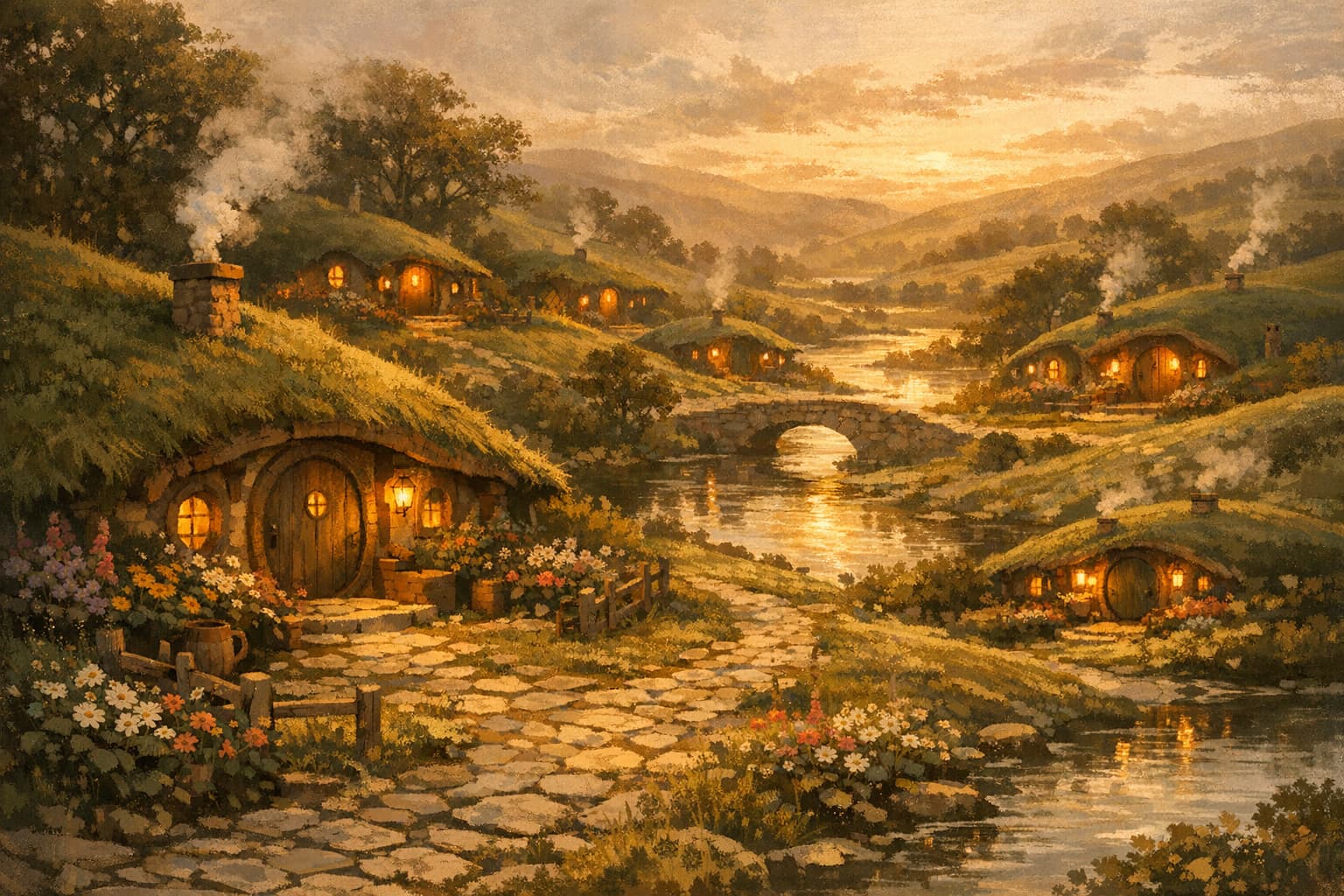
Halflings build homes, not fortresses. This is a design philosophy, not a limitation. Where dwarves carve kingdoms into mountains and elves raise cities in ancient forests, halflings burrow into hillsides, claim comfortable neighborhoods in existing towns, and cultivate the land immediately around them with an intensity that puts human farmers to shame.
The result is that halfling "settlements" are often invisible to the kind of people who equate civilization with towers and walls. A halfling community might occupy three streets in a human city, a cluster of hill-burrows along a river, or a network of farmsteads so well-integrated into the landscape that travelers pass through without realizing they’re in someone’s homeland.
Major Halfling Settlements & Regions
| Settlement | Region | Status | Significance |
|---|---|---|---|
| Luiren | Shining Sea coast | Partially restored | Ancestral halfling homeland, subtropical climate |
| Secomber | Sword Coast | Active, mixed-race | Major halfling population center along the Delimbiyr |
| The Purple Hills | Tethyr | Active | Lightfoot heartland, renowned pipeweed and vineyards |
| Greenfields (Greyhawk) | Flanaess | Active | Halfling agricultural communities, integrated with human settlements |
| The Shire analogue (many settings) | Various | Varies | Every setting has one: the pastoral homeland that represents what halflings protect |
Halfling settlements are often defined by what grows there rather than what was built there.
Biology & Physicality
Three feet tall and built like someone optimized a human for comfort rather than combat. Halfling biology is a study in efficient design — everything scaled down except the things that matter for survival in a world built for people twice your size.
Size & Proportions
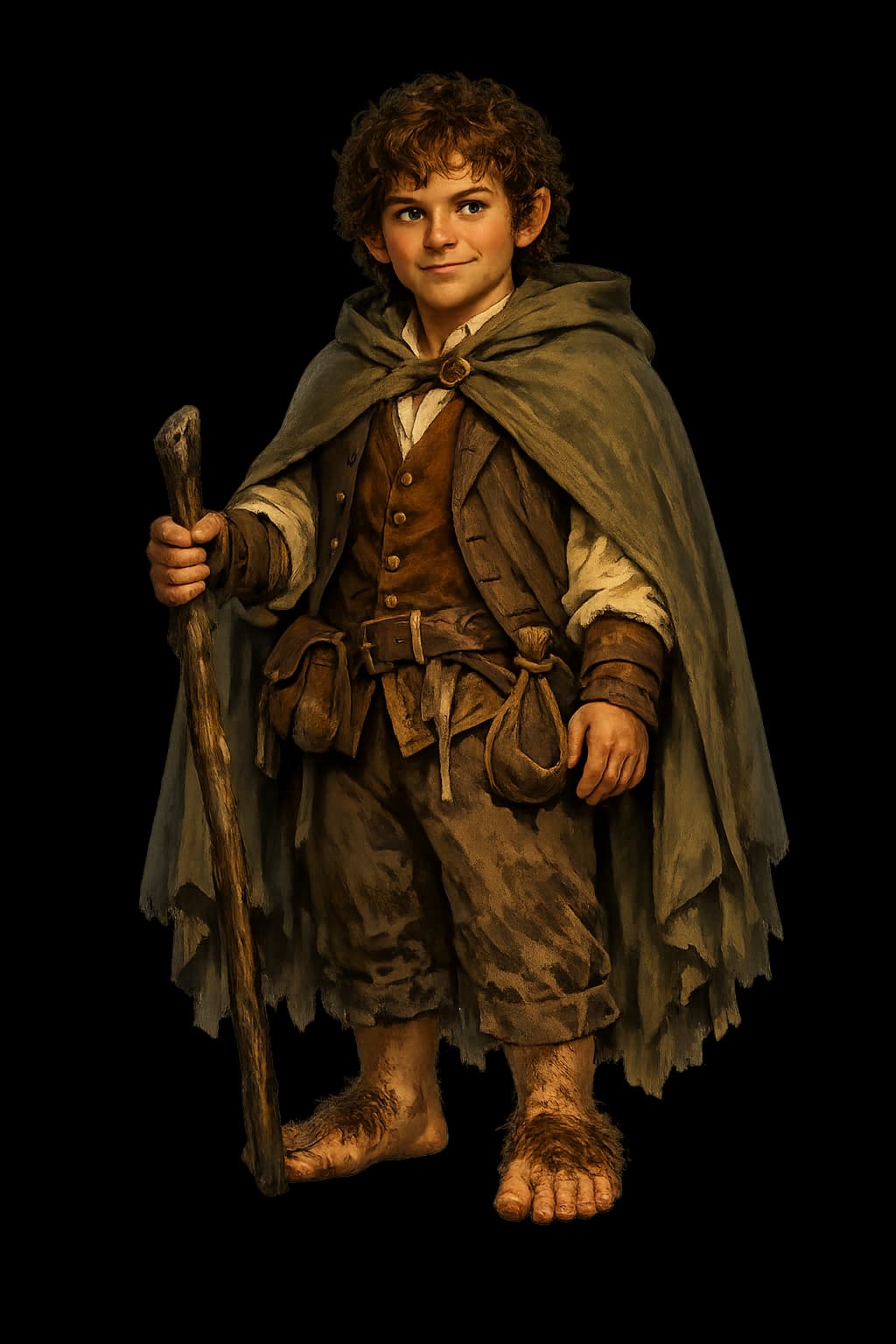
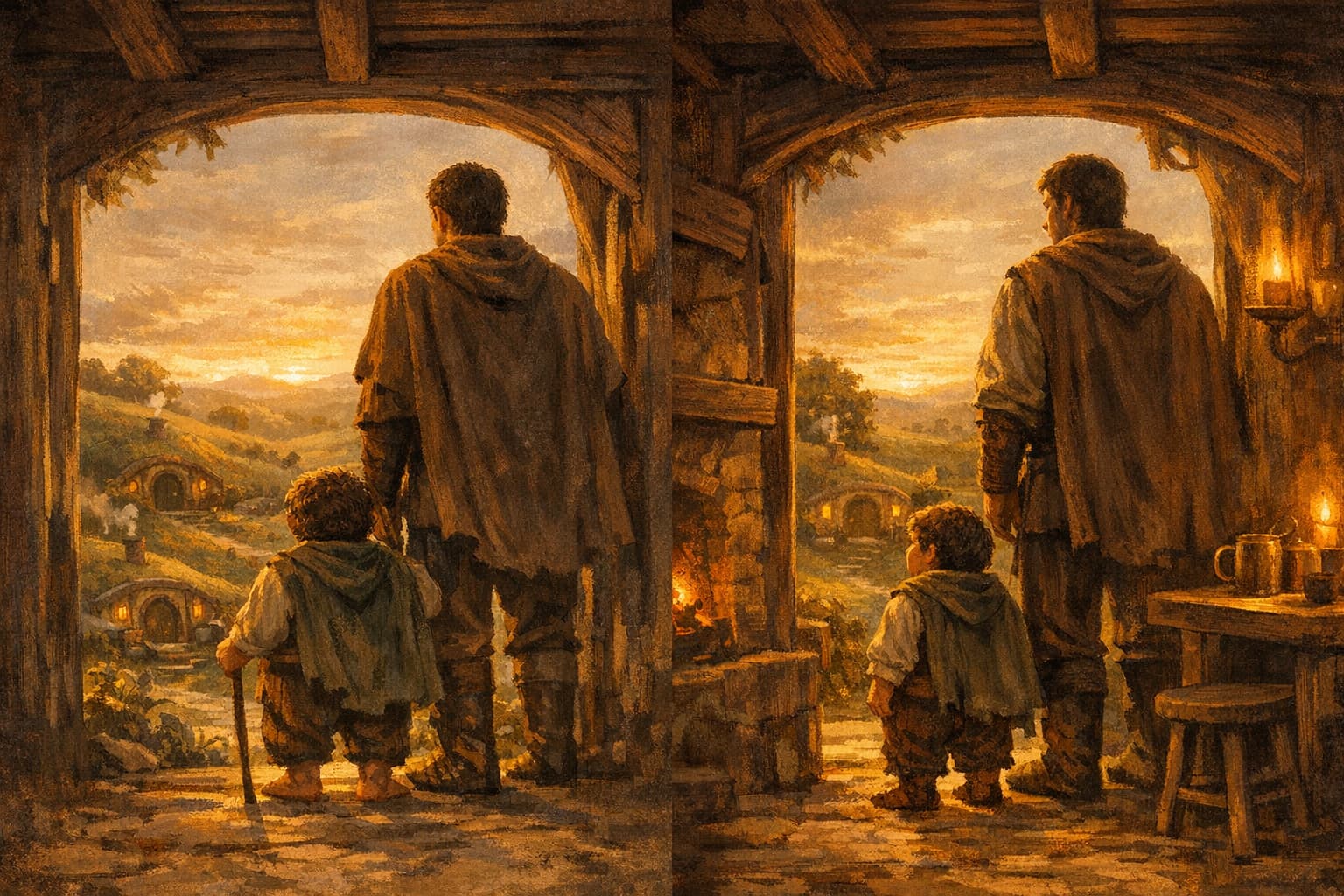
Halflings average 3 feet tall and 40 pounds. Their proportions are not simply scaled-down human — they have slightly larger heads relative to body size, broader feet with tough leathery soles (many go barefoot year-round), and a lower center of gravity that makes them extraordinarily difficult to knock down.
The bare feet are not an affectation. Halfling foot-soles develop a thick, calloused pad that provides better grip and ground-feel than most boots. A halfling walking barefoot on rough terrain is quieter and more sure-footed than a human in expensive leather. This biological advantage feeds directly into their reputation for stealth.
Resilience & Constitution
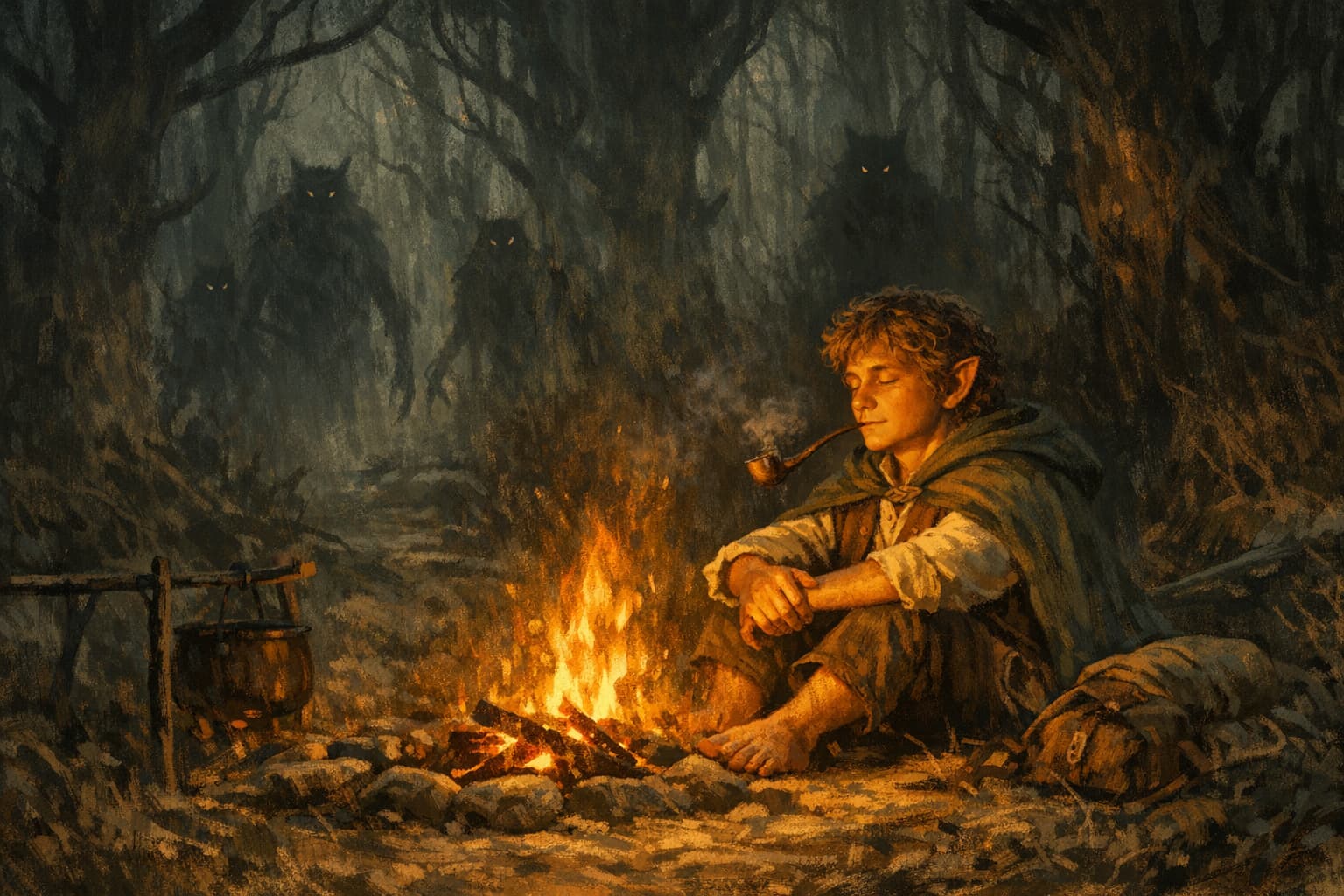
Halflings are disproportionately tough for their size. Their resistance to poison and disease exceeds what their body mass would predict, suggesting either a magical resilience or an evolutionary history involving sustained exposure to environmental toxins. The Forgotten Realms attributes this to Yondalla’s blessing; biologically, it reads like a species that survived by eating things larger creatures couldn’t stomach.
Their metabolism runs hot and fast. Halflings eat frequently — the "second breakfast" stereotype exists because they genuinely need more meals per day than humans, distributed across shorter intervals. A halfling who misses a meal becomes irritable within hours and genuinely impaired within a day. This is not gluttony; it is a metabolic requirement that their culture wisely built hospitality traditions around.
Psychology & Worldview
Halflings are not simple. They are comfortable, which is a very different thing. The confusion between the two has produced generations of one-dimensional halfling characters — cheerful bumpkins who exist to lighten the mood and steal things.
The actual halfling psychological profile is more interesting. They are a species that looked at the world — a world full of dragons and demons and civilizations that rise and fall in flames — and concluded that the correct response was to build a nice house, grow good food, maintain strong relationships with your neighbors, and enjoy the time you have. This is not naivety. It is a philosophical position arrived at by a people who have watched every ambitious civilization eventually destroy itself.
Halfling courage follows from this worldview. They are not brave despite being comfort-loving; they are brave because they are comfort-loving. When something threatens the home, the garden, the community — all the things that make life actually worth living — halflings fight with a ferocity that shocks people who mistook contentment for weakness.
The Ring-bearer didn’t volunteer because he was brave. He volunteered because he understood, better than anyone in that room full of kings and wizards, what would be lost if he didn’t.
“Hobbits really are amazing creatures. You can learn all that there is to know about their ways in a month, and yet after a hundred years they can still surprise you at a pinch.”
— Gandalf, The Fellowship of the Ring
Daily Life & Community
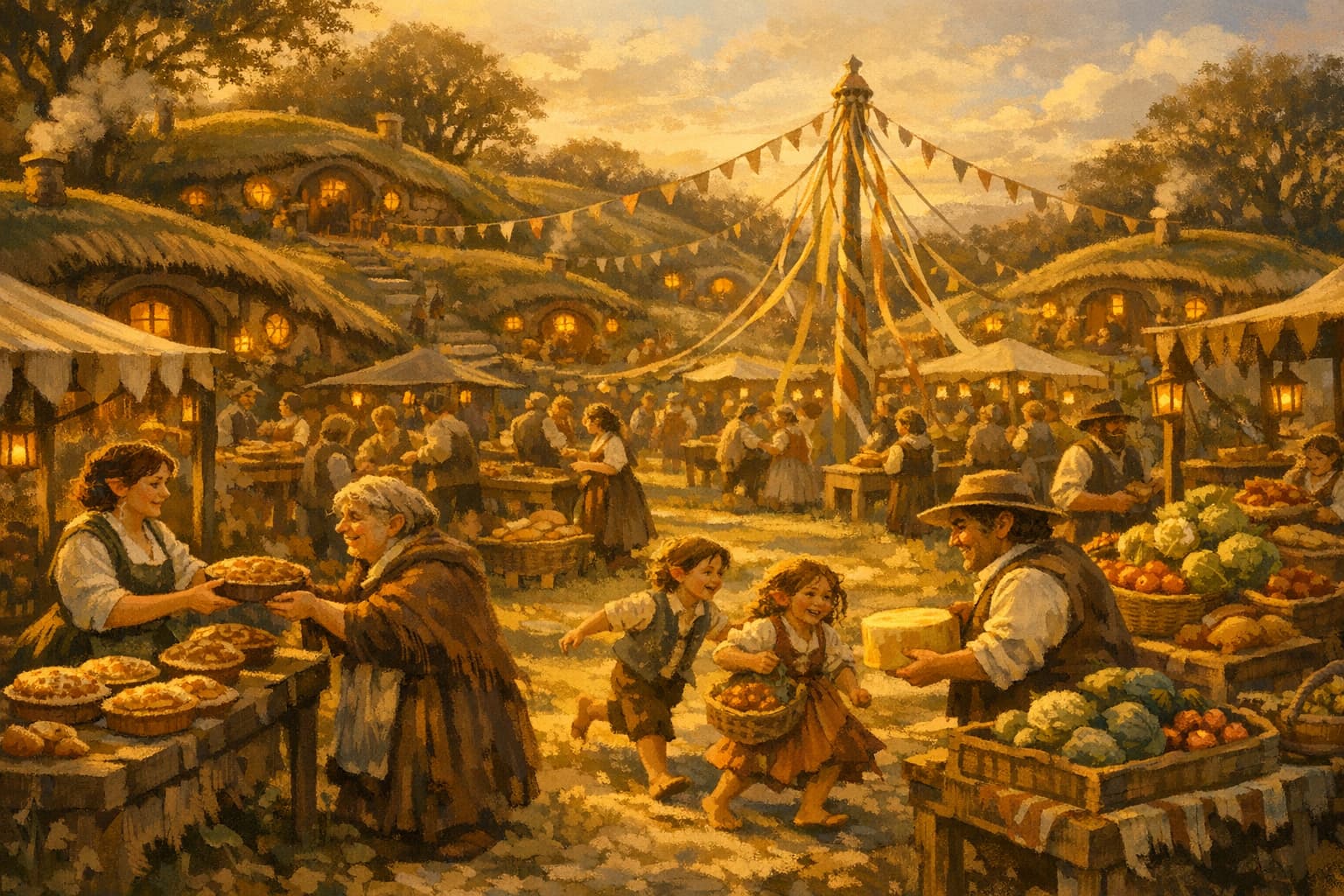
A halfling day starts with food and ends with food, and the intervals between are organized around producing, preparing, sharing, or discussing food. This is not a joke. Food is the organizing principle of halfling social life the way craft is for dwarves or magic is for elves. Meals are when deals are struck, disputes are settled, courtships are advanced, and community bonds are reinforced.
Hospitality is the cardinal halfling virtue. Refusing to feed a guest is a serious social transgression — not because halflings are pushovers, but because sharing food is how they establish trust. A halfling who offers you a meal is offering a relationship. A halfling who refuses you a meal has decided you are not worth knowing. Pay attention to which one you get.
Work is organized communally but not collectively. Each household manages its own affairs, but labor-intensive tasks — harvest, building, road repair — are handled through reciprocal obligations that everyone tracks with terrifying precision. Halflings remember who helped them move that woodpile in 1347 DR and will bring it up if you try to skip out on barn-raising duty.
Halfling communities function as resilience networks. No single household is self-sufficient, but the web of mutual obligations means no household fails alone either. This is why halfling settlements survive disasters that destroy more "advanced" civilizations — the infrastructure is social, not physical, and social infrastructure is portable.
Culture & Governance
The Sheriff & the Council of Elders
Halfling governance is aggressively informal. Most communities are led by a council of elders — not appointed or elected but recognized through a consensus process that has no formal mechanism and works anyway. An elder is someone the community treats as an elder. If you have to ask how you become one, you aren’t one yet.
The Sheriff is the closest thing to an executive office, responsible for keeping the peace and coordinating community defense. In practice, the Sheriff spends most of their time mediating property disputes, arbitrating arguments about whose turnips are encroaching on whose garden plot, and organizing the occasional militia muster when something threatening wanders too close to town.
This system works because halfling communities are small enough for reputation to function as law enforcement. Everyone knows everyone. Social consequences — gossip, shunning, being excluded from potluck dinners — are more effective deterrents than any formal legal code.
Oral Tradition & Festival Culture
Halflings preserve history through stories, songs, and an elaborate festival calendar that marks seasonal transitions, historical events, and any occasion that justifies a feast (which is most of them). Written records exist but are secondary to the oral tradition maintained by family elders and community storytellers.
The major festivals — Highharvestide, Midsummer’s Eve, the Feast of the Moon — serve as cultural anchors that synchronize dispersed halfling communities. A halfling in Waterdeep and a halfling in Luiren celebrate the same festivals on the same days, maintaining cultural continuity across thousands of miles.
Music is central. Halflings favor fiddles, flutes, hand drums, and voice. Their musical tradition emphasizes participation over performance — a halfling gathering where only one person is singing has gone badly wrong. The communal singing reinforces social bonds and, according to halfling theology, pleases Yondalla enough to extend her protective blessing over the community.
Religion & the Halfling Pantheon
Yondalla is the halfling deity in the same way your grandmother is the head of the family — not through force or formal authority, but through the quiet certainty that she knows best and the uncomfortable awareness that she’s usually right. As the goddess of hearth, home, fertility, and protection, Yondalla’s portfolio reads less like a divine mandate and more like a to-do list for keeping civilization functional.
The rest of the halfling pantheon fills specific niches. Sheela Peryroyl governs nature, agriculture, and weather — the forces that determine whether the harvest feeds everyone or nobody. Brandobaris is the trickster god of stealth, thievery, and adventure, representing the halfling impulse that occasionally drives someone to leave home and do something spectacularly unwise. Cyrrollalee oversees friendship, trust, and the home itself.
What makes halfling religion distinctive is its domesticity. Elven gods concern themselves with cosmic forces. Dwarven gods preside over creation and warfare. Halfling gods worry about whether the crops are coming in, whether the neighbors are getting along, and whether that one family member who left for adventure last spring is eating properly. The theology is intimate, practical, and deeply concerned with everyday wellbeing.
Halfling worship happens in kitchens, not temples. Prayers to Yondalla are spoken over bread dough. Offerings to Sheela Peryroyl are the first fruits of the garden. Brandobaris gets a cup of ale left on the windowsill. The sacred and the domestic are the same thing, which is either profoundly wise or profoundly mundane depending on your theological commitments.
Halfling Luck & Combat Styles
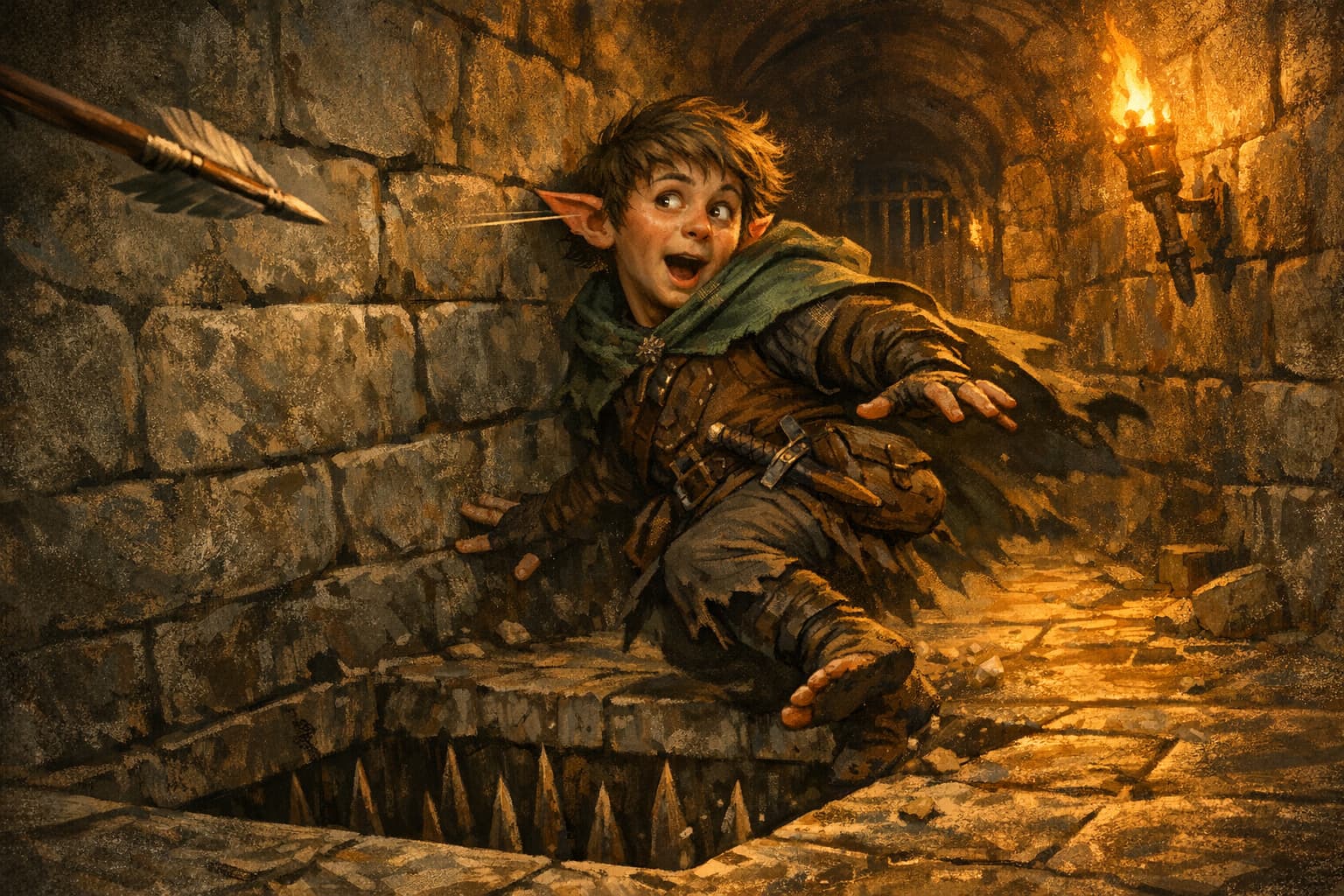
Halfling Luck is mechanically one of the strongest racial features in D&D and narratively one of the most interesting. When a halfling rolls a natural 1 on an attack roll, ability check, or saving throw, they can reroll the die. This is not a minor bonus. It fundamentally changes the probability curve, eliminating the worst possible outcome from every significant roll.
Whether this "luck" is divine favor from Yondalla, an innate magical trait, or just a narrative convention depends on the setting. The Forgotten Realms leans toward divine blessing. Eberron treats it as an inherent racial ability. Mechanically, the distinction doesn’t matter. Narratively, it matters enormously — a halfling who believes their luck is a gift from a goddess behaves very differently from one who thinks the universe just likes them.
In combat, halflings compensate for limited reach and strength through agility, terrain use, and the deeply practical willingness to fight dirty when necessary. The Brave trait (advantage on saving throws against being frightened) combines with their small size and natural stealth to produce guerrilla fighters who are difficult to pin down, hard to intimidate, and surprisingly lethal when you stop paying attention to them.
Fortune’s Favored
The probability impact of Halfling Luck is significant. Rerolling natural 1s on a d20 changes the effective failure rate on any given roll. For saving throws, this means halflings are statistically more likely to survive effects that would kill other characters — a mathematical edge that stacks across an entire adventuring career.
At the table, Halfling Luck creates memorable moments. The trap that should have killed the rogue. The spell save that no one expected to succeed. Over time, these accumulated near-misses build the narrative of a character who is genuinely lucky, reinforcing the archetype through play rather than backstory.
Inter-species Relationships
Halflings get along with almost everyone, which sounds like a bland character trait until you realize how rare and strategically valuable that is in a world where elves and dwarves have been nursing grudges for millennia. Halflings don’t have ancestral enemies. They don’t have millennia-old blood feuds. They have neighbors, and they’ve learned to get along with all of them because the alternative is being a three-foot-tall species with no allies in a world full of things that want to eat you.
The relationship with humans is the most significant. Halflings and humans share the same environments, the same timescales (similar lifespans), and enough cultural overlap to coexist comfortably. Halfling communities within human cities function as distinct neighborhoods rather than foreign enclaves — integrated enough to participate in the local economy, separate enough to maintain their own traditions.
With dwarves, the relationship is warm. Both species value craftsmanship, tradition, and a good meal after hard work. With elves, the relationship is cordial but distant — halflings find elven timescales baffling and elven formality exhausting. With gnomes, there’s a kinship of small folk navigating a world built for the tall, though halflings find gnomish obsessiveness bewildering and gnomes find halfling contentment suspicious.
A halfling community’s relationships with its neighbors are a barometer for the health of the region. When halflings start leaving an area, something is wrong. When halflings start fortifying, something is very wrong. When halflings stop offering food to travelers, run.
Literature & Notable Figures
The halfling literary tradition is, unsurprisingly, dominated by one author and one character. Bilbo Baggins’ journey from Bag End to Erebor established every trope the species has carried since: the reluctant hero, the surprising courage, the longing for home that coexists with an appetite for adventure. Every halfling character written since 1937 is either following Bilbo’s template or consciously reacting against it.
In D&D’s own fiction, halflings have been served less well. Tasslehoff Burrfoot from Dragonlance is either beloved or despised depending on your tolerance for a character whose defining traits are fearlessness, kleptomania, and an inability to read social cues. Tass established the kender archetype — halflings as comic relief — and the hobby has been recovering ever since.
Regis from R.A. Salvatore’s Drizzt novels offered a corrective: a halfling defined by pragmatism, social intelligence, and the willingness to let others underestimate him. His ruby pendant and diplomatic skills presented a halfling who was dangerous not because of combat ability but because he was always three steps ahead of everyone who dismissed him.
Notable Halfling Characters in Fantasy Literature
| Character | Source | Archetype | Legacy |
|---|---|---|---|
| Bilbo Baggins | The Hobbit (1937) | Reluctant hero | Defined the entire species archetype |
| Frodo Baggins | The Lord of the Rings (1954) | Tragic burden-bearer | Proved halflings could carry epic-scale narrative |
| Samwise Gamgee | The Lord of the Rings (1954) | Loyal companion | The real hero; reframed service as strength |
| Tasslehoff Burrfoot | Dragonlance (1984) | Fearless trickster | Established kender; polarized halfling roleplay forever |
| Regis / Spider | Drizzt novels (1988–) | Pragmatic diplomat | Showed halflings as socially dangerous, not just comic |
D&D Mechanics Across Editions
Halfling mechanics have shifted from "small human with penalties" to "distinct species with genuine advantages," reflecting a broader design recognition that being small should be interesting rather than punishing.
Mechanical Evolution Comparison
| Feature | 3.5e | 5e (2014) | 2024 |
|---|---|---|---|
| Ability Scores | +2 DEX, −2 STR | +2 DEX, subrace +1 | Flexible (choose) |
| Luck Mechanic | Save bonuses | Reroll natural 1s | Reroll natural 1s (expanded) |
| Fear Resistance | +2 morale bonus | Advantage on saves | Advantage on saves |
| Stealth | +4 Hide (size), +2 Move Silently | Naturally Stealthy (Lightfoot) | Naturally Stealthy (all) |
| Design Philosophy | Small = penalties + small bonuses | Small = unique advantages | Small = narrative + universal stealth |
The removal of ability score penalties in 5e was the single biggest mechanical improvement for halflings, allowing viable builds in every class.
- Small size (+1 AC, +1 attack, +4 Hide)
- +2 racial bonus on Climb, Jump, Move Silently
- +1 racial bonus on all saving throws
- +2 morale bonus vs. fear (stacks with save bonus)
- +1 racial bonus on attack rolls with thrown weapons and slings
The STR penalty made melee halflings suboptimal. The saving throw bonus and fear resistance were already strong.
- Lucky (reroll natural 1s on d20 rolls)
- Brave (advantage on saves vs. frightened)
- Halfling Nimbleness (move through larger creatures’ spaces)
- Small size
- Subrace: Lightfoot (+1 CHA, Naturally Stealthy) or Stout (+1 CON, poison resistance)
Removing the STR penalty and adding Lucky made halflings mechanically excellent. Lucky alone is arguably worth more than most racial features.
- Lucky (reroll natural 1s, expanded to include d20 Tests)
- Brave (advantage on saves vs. frightened)
- Halfling Nimbleness (move through larger creatures’ spaces)
- Naturally Stealthy (hide behind Medium+ creatures)
- Flexible ability scores (no fixed bonuses)
Subraces removed. Naturally Stealthy (formerly Lightfoot-only) now available to all halflings. Lucky remains one of the best racial features in the game.
Across Franchises
The halfling archetype appears in nearly every fantasy franchise, though the execution varies wildly. Some lean into the Tolkien pastoral template. Others push toward comic relief. A few have found genuinely original angles on what "small folk in a big world" can mean.
The consistent thread is the tension between comfort and courage. Every version of the halfling asks the same question: what happens when someone who just wants to live a quiet life gets pulled into something extraordinary? The answer, across sixty years of fantasy fiction, is almost always: they rise to it, and the extraordinary world is better for their presence.
Halfling Equivalents Across Franchises
| Franchise | Species Name | Defining Trait | Key Divergence from D&D |
|---|---|---|---|
| Tolkien | Hobbits | Pastoral, comfort-loving, unexpectedly brave | The original; D&D diverges from this, not the reverse |
| Dragonlance | Kender | Fearless, curious, "handlers" of others’ property | No fear at all; controversial removal of core halfling vulnerability |
| Warhammer | Halflings | Gourmands and farmers in a grimdark world | Comedic contrast to setting; rarely taken seriously in-universe |
| Elder Scrolls | Bosmer (Wood Elves) | Small, agile forest-dwellers | Elven rather than human-adjacent; carnivorous culture inverts pastoral trope |
| Baldur’s Gate 3 | Halflings | Lucky, brave, integrated into cities | Fully modernized; no comic relief default, viable as any class |
BG3 may have done more for halfling perception than any source since Tolkien, presenting them as competent adventurers rather than comic sidekicks.
FAQ
Common Questions
Give them something they care about protecting and let that drive their decisions. A halfling who left home to earn money for their family’s failing farm has immediate, grounded stakes. Lean into the bravery — halflings are mechanically resistant to fear for a reason. Play the contrast: someone small and unassuming who refuses to back down when it matters. The humor can be there, but it should come from the character’s perspective on the absurdity of adventuring, not from the character being absurd.
Rogue is the obvious choice and genuinely excellent — Halfling Luck plus Reliable Talent creates a character who almost never fails skill checks. But don’t sleep on Bard (natural storytellers), Ranger (protectors of the borderlands), or even Fighter (Samwise Gamgee was a fighter and the greatest hero in fantasy literature). The 2024 rules with flexible ability scores make every class viable. Pick the class that fits the character, not the optimization guide.
Start with what they value: community, food, comfort, and home. Then ask what threatens those things in your setting. Halfling culture is defined by what it protects against as much as what it celebrates. A halfling community in a war-torn region looks very different from one in a peaceful valley, but both organize around the same core values. Give them specific foods, specific festivals, specific neighborhood traditions — the details make the culture feel real.
They started that way, but sixty years of separate development have created meaningful distinctions. D&D halflings are more urban, more integrated with other species, and more varied (lightfoot vs. stout vs. ghostwise) than Tolkien’s hobbits. The Hin of the Forgotten Realms have their own pantheon, their own homeland, and their own cultural identity that owes more to decades of D&D worldbuilding than to the Shire. That said, the core archetype — small, brave, home-loving — remains Tolkien’s gift to fantasy.