
Hobgoblins
Military discipline, strategic brilliance, and a civilization that earns every victory through doctrine, hierarchy, and the cold arithmetic of war
The Martial Goblinoid Tradition
The word "hobgoblin" is older than D&D by about five centuries, and it originally meant almost the opposite of what the game turned it into. In English folklore, a hobgoblin was a helpful household spirit — "hob" being a familiar form of Robin or Robert, the way you'd nickname a friendly neighbor. Hobgoblins cleaned your hearth, mended your shoes, and only turned nasty if you forgot to leave out a bowl of cream. They were brownies with better PR. The shift from helpful brownie to iron-clad military officer is one of the stranger etymological journeys in fantasy gaming, and it happened because D&D needed something to fill a gap in the monster manual that Tolkien hadn't quite covered.
Tolkien's orcs were the obvious martial humanoid antagonists, but they had a problem: they were chaotic. They fought in mobs, they broke rank, they killed their own officers when things went badly. Gary Gygax and the early D&D designers needed a humanoid enemy that fought like a professional army — shield walls, tactical retreats, coordinated assaults, the whole Roman legion package — and the orc template didn't support it. The hobgoblin became the answer. Take the goblinoid family, scale up one member to Medium size, replace cunning with discipline, and you have a species that can challenge adventuring parties not with raw power but with organized, intelligent warfare.
This design decision has shaped every subsequent depiction of hobgoblins. They're not the strongest species in D&D. They're not the most magical, the most numerous, or the most individually dangerous. What they are is the most organized. A hobgoblin army doesn't rely on a powerful leader's charisma or a god's divine mandate to hold together. It holds together because every hobgoblin in the formation has been drilled since birth to hold together. The institution is the weapon. The individual hobgoblin is a component.
That's also why hobgoblins are the most underrated species in D&D. Every other antagonist species gets a dramatic hook — orcs have primal fury, drow have scheming intrigue, mind flayers have cosmic horror. Hobgoblins have logistics. They have supply chains. They have training regimens and promotion criteria and standardized equipment. This is incredibly effective in practice and incredibly boring to describe on the back of a sourcebook, which is why hobgoblins consistently get less narrative attention than species half as dangerous.
The irony of the hobgoblin's folklore origin is that D&D kept exactly one trait from the helpful brownie tradition: reliability. A folkloric hobgoblin was dependable — it showed up every night, it did its work, it followed a predictable pattern. D&D's hobgoblin is also dependable. It will show up with reinforcements, it will follow its battle plan, and it will exploit every predictable thing you do. The dependability just stopped being comforting.
Hobgoblin Naming Conventions
Hobgoblin names are functional. That's the first thing to understand, and it tells you everything about the culture they come from. A hobgoblin's name isn't an expression of parental hope or a family legacy or an artistic statement. It's a designation — a sound that identifies a specific unit within a hierarchy. Hobgoblin parents don't agonize over baby names the way humans do. They assign a name the way a quartermaster assigns a billet: efficiently, with an eye toward practical distinction from the names already in use.
The phonetic palette is heavy on hard consonants and short vowels: Krath, Gorzul, Thokk, Mazkur, Brezzik. The sounds are designed to carry across a battlefield without ambiguity. You can't mishear "Krath" as "Gorzul" when someone's screaming it over the clash of weapons. This isn't coincidence — hobgoblin culture has been shaped by military necessity for so many generations that even their language has been optimized for combat communication. Longer names exist for high-ranking officers and are typically compound constructions: Krath-Volur (Krath of the Volur legion), Mazkur-Ironwall (Mazkur who held the Ironwall pass).
Titles matter more than birth names in hobgoblin society. A hobgoblin's rank title — Fist, Blade, Iron Shadow, War Marshal — is the name used in formal address, and earning a higher title is the closest thing hobgoblin culture has to a rite of passage. A hobgoblin stripped of title is socially invisible, which is why demotion is considered a punishment worse than physical pain. The title is the self. Losing it means losing your place in the only structure that gives hobgoblin life meaning.
Female and male hobgoblin names follow the same phonetic rules — the culture doesn't differentiate naming conventions by gender because the military hierarchy doesn't differentiate roles by gender. A hobgoblin named Brezzik could be any gender, and asking would be considered irrelevant. What matters is Brezzik's rank, Brezzik's unit, and Brezzik's combat record. Everything else is personal business that the legion doesn't need to know about.
Hobgoblin Naming Structure
| Name Element | Function | Examples |
|---|---|---|
| Given name | Battlefield identification; assigned at birth | Krath, Gorzul, Thokk, Mazkur, Brezzik, Volsk |
| Legion suffix | Unit affiliation; appended on enlistment | -Volur, -Kraash, -Duurz, -Ghaaldar |
| Deed name | Earned through notable action; replaces legion suffix for veterans | -Ironwall, -Firebrand, -Skullcrusher, -Nighthammer |
| Rank title | Formal address; the name that matters most | Fist, Blade, Iron Shadow, War Marshal, Devastator |
| Shame-name | Stripped designation for the demoted; a single harsh syllable | Gurk, Pik, Snot (deliberately humiliating) |
A hobgoblin who introduces themselves by given name alone is either very low-ranking or deliberately withholding information. The full name — given name plus legion or deed suffix plus rank — is a compressed autobiography.
Rise Through D&D History
Hobgoblins have appeared in every edition of D&D, and their trajectory is a study in gradual promotion. They started as slightly tougher goblins — a speed bump between the goblin cave and the orc stronghold — and have slowly been elevated into one of the game's most sophisticated antagonist species. The promotion happened not because designers suddenly decided hobgoblins were interesting, but because the game's audience matured enough to appreciate an enemy that wins through planning rather than power.
The mechanical evolution tells a clear story: from generic medium humanoid to a species with unique tactical identity. The introduction of Martial Advantage in 5th edition was the turning point. Suddenly, hobgoblins weren't just orcs with better armor — they were creatures that fought demonstrably better when they worked together. The mechanic said what the lore had been claiming for decades: hobgoblin strength is collective, not individual.
Original D&D
Hobgoblins debut as "large goblins" with 1+1 Hit Dice. No culture, no tactics, no mechanical identity beyond being slightly harder to kill than regular goblins. A filler monster in the truest sense.
AD&D 1st Edition Monster Manual
First real hobgoblin write-up. Military society, king and tribal hierarchy, hatred of elves, use of mercenaries. The "disciplined warrior" identity begins to crystallize. Still mechanically bland.
AD&D 2nd Edition
The Complete Book of Humanoids makes hobgoblins playable and expands their culture significantly. War-driven society, complex military ranks, and the first hints of Maglubiyet worship as species-defining theology. The hobgoblin starts to feel like a civilization, not just a stat block.
D&D 3.5 Edition
Hobgoblin PCs get +2 DEX, +2 CON — the "soldier" stat line. The hobgoblin becomes the go-to choice for players building disciplined martial characters. Eberron introduces Darguun, the first hobgoblin nation in a core D&D setting.
D&D 5th Edition
Martial Advantage (extra 2d6 damage when an ally is adjacent) makes hobgoblins mechanically distinct for the first time. Saving Face in Volo's Guide gives PCs a bonus based on nearby allies. Both mechanics reward teamwork — the first time hobgoblin game design matched hobgoblin lore.
Mordenkainen Presents: Monsters of the Multiverse
Hobgoblin PCs revised with Fey Gift (Help action as bonus action with temporary HP, speed, or invisibility) and Fortune from the Many (bonus to failed rolls per nearby ally). The martial identity softens into a broader "cooperative leader" archetype.
2024 Monster Manual
Hobgoblin stat blocks refined with updated Martial Advantage and clearer tactical guidance. The hobgoblin captain and warlord variants provide a complete military command structure in the stat block hierarchy.
Fortresses & Military Strongholds
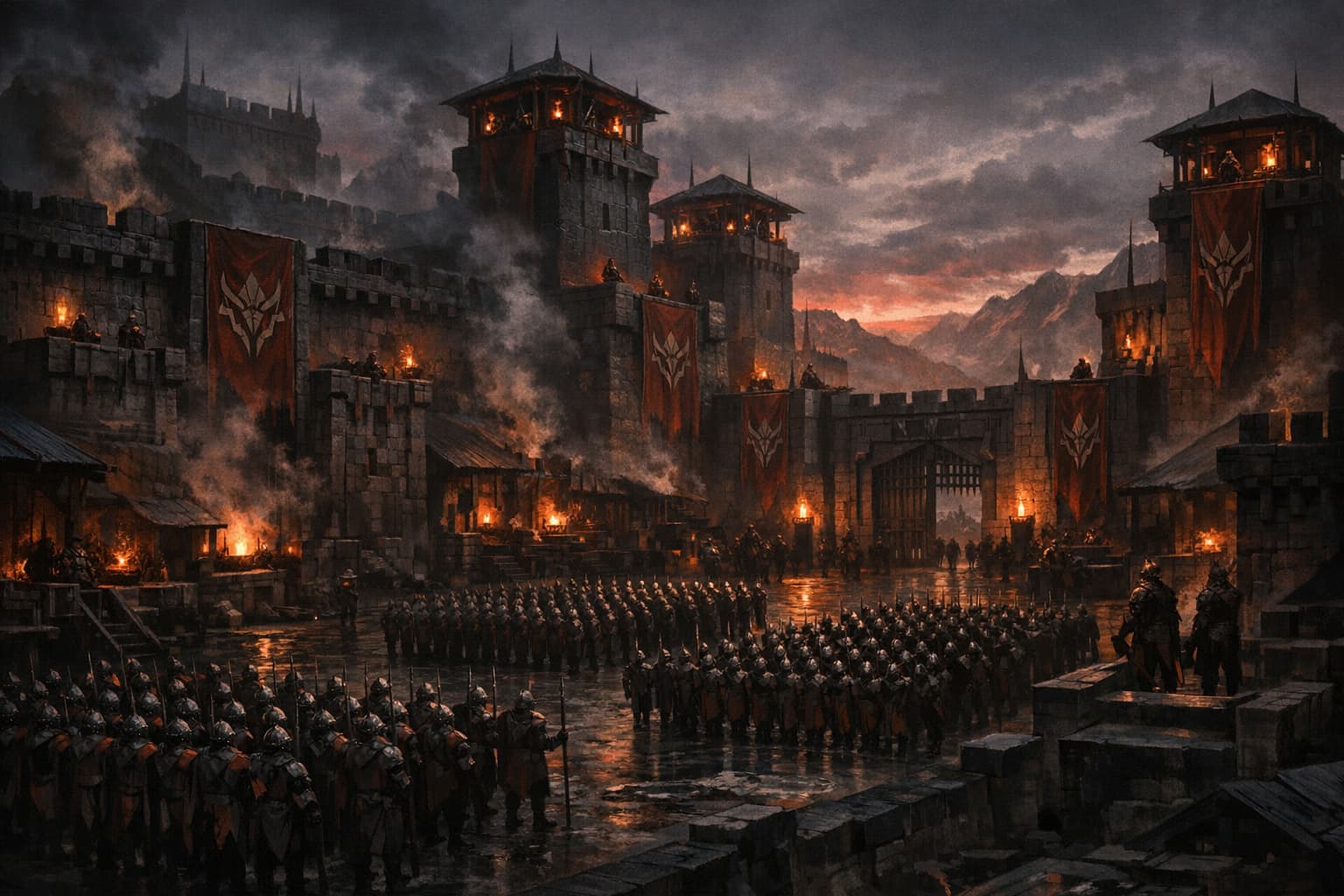
A hobgoblin fortress is the architectural expression of a species that has been thinking about war for its entire existence. Where dwarven strongholds are built to endure and elven settlements are built to harmonize, hobgoblin fortifications are built to win. Every wall angle, every tower placement, every gate design reflects centuries of military engineering doctrine refined through constant warfare. The result is not beautiful. It is extremely effective.
The standard hobgoblin fortress follows a template called the Iron Form — a concentric design with overlapping fields of fire, multiple fallback positions, and a central keep that can sustain a garrison for months without resupply. The outer walls are thick and sloped to deflect siege projectiles. The inner walls are higher, allowing defenders to fire over retreating troops from the outer ring. Between the walls lies the killing ground — an open space designed to be a death trap for any attacker who breaches the first barrier. This isn't innovative engineering. It's the result of a species applying every lesson from every siege it has ever fought.
What distinguishes hobgoblin military architecture from human castle design is the degree of standardization. Human fortresses reflect the preferences, resources, and ego of their builders — every castle is different. Hobgoblin fortresses built a thousand miles apart by different legions are functionally identical because they follow the same engineering manuals. A hobgoblin commander stationed at a new fortress can orient themselves in minutes because they already know where everything is. Standardization eliminates confusion, confusion causes casualties, and casualties are waste. Hobgoblins despise waste.
The civilian areas of a hobgoblin stronghold — barracks, mess halls, training grounds, smithies, and the administrative quarters where the endless paperwork of military governance takes place — are organized with the same precision as the defenses. There is no residential district in a hobgoblin fortress because there are no civilians. Every inhabitant has a military function. The smith is a military smith. The cook is a military cook. The children in the training yard are pre-enlisted soldiers receiving their first instruction. The fortress is not a city that happens to have defenses. It is a military installation that happens to have residents.
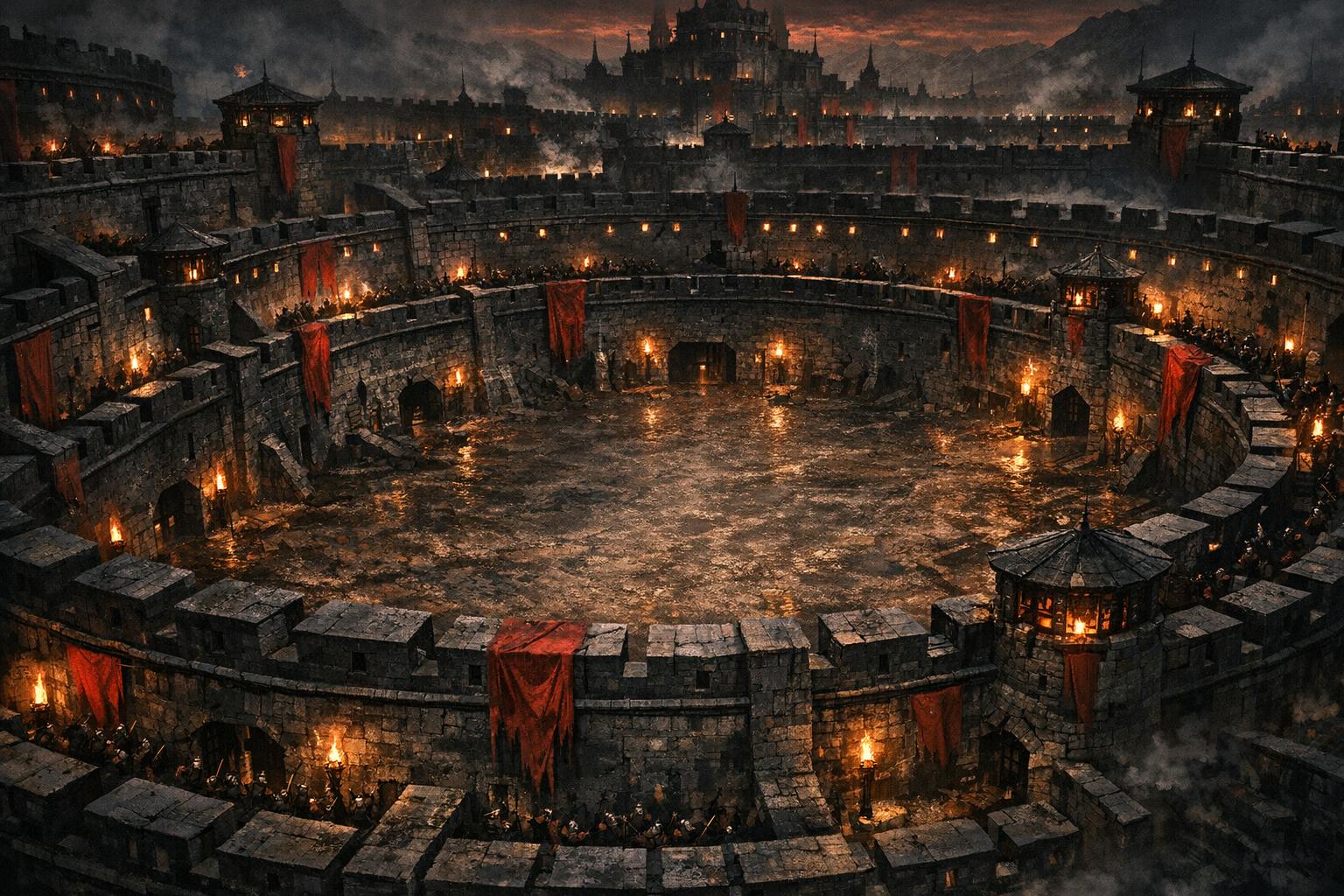
The Killing Ground
The space between a hobgoblin fortress's outer and inner walls is arguably the single most dangerous piece of ground in D&D's conventional military landscape. It's designed to channel attackers into overlapping zones of archer fire, alchemical bombardment, and controlled charges from armored reserves stationed in concealed sally ports. The ground is kept clear of any cover — no rubble, no vegetation, no abandoned equipment. Hobgoblin doctrine requires the killing ground to be swept and inspected daily. An attacker who breaches the outer wall hasn't won entry to the fortress. They've won entry to the most efficient killing machine the fortress contains.
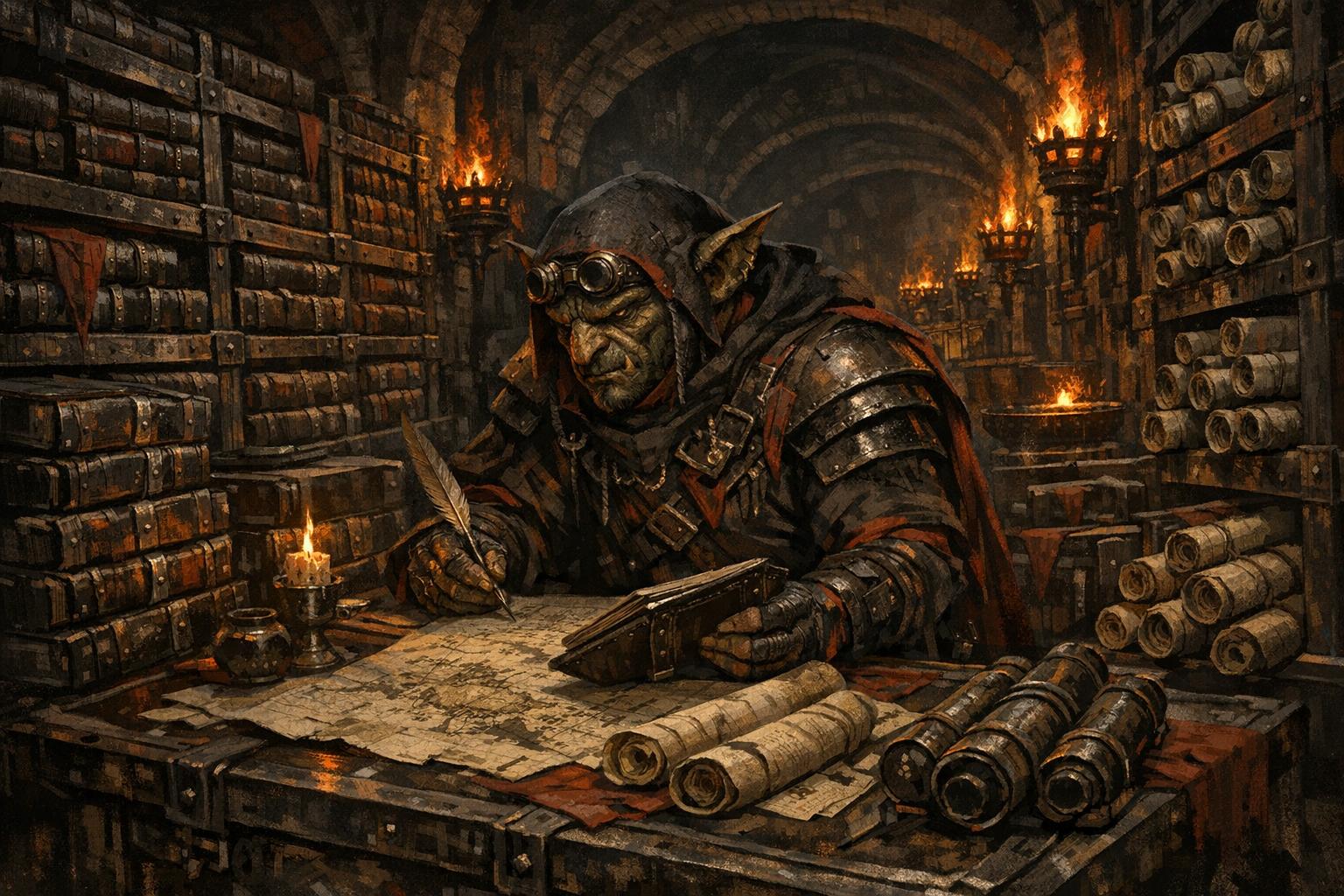
The Iron Archive
Every hobgoblin fortress of significance maintains an Iron Archive — a fire-proofed vault containing the legion's complete records. Battle plans, casualty reports, supply manifests, disciplinary records, engineering diagrams, and the accumulated tactical doctrine of every commander who has served there. The archive isn't a library in the scholarly sense. It's an institutional memory, and hobgoblins treat its preservation as a sacred duty. A legion that loses its archive loses its identity. More practically, it loses the accumulated knowledge that prevents it from repeating old mistakes. Hobgoblin officers are required to read and annotate relevant sections of their legion's archive before taking command.
An abandoned hobgoblin fortress is one of the best dungeon settings in D&D because it was designed by someone who understood dungeon defense professionally. The traps aren't random — they're integrated into a defensive plan. The layout isn't arbitrary — it's engineered to funnel, separate, and destroy intruders. And there's always the question of why it was abandoned. A hobgoblin legion doesn't leave a fortress willingly. Whatever drove them out might still be there.
Disciplined Physiology
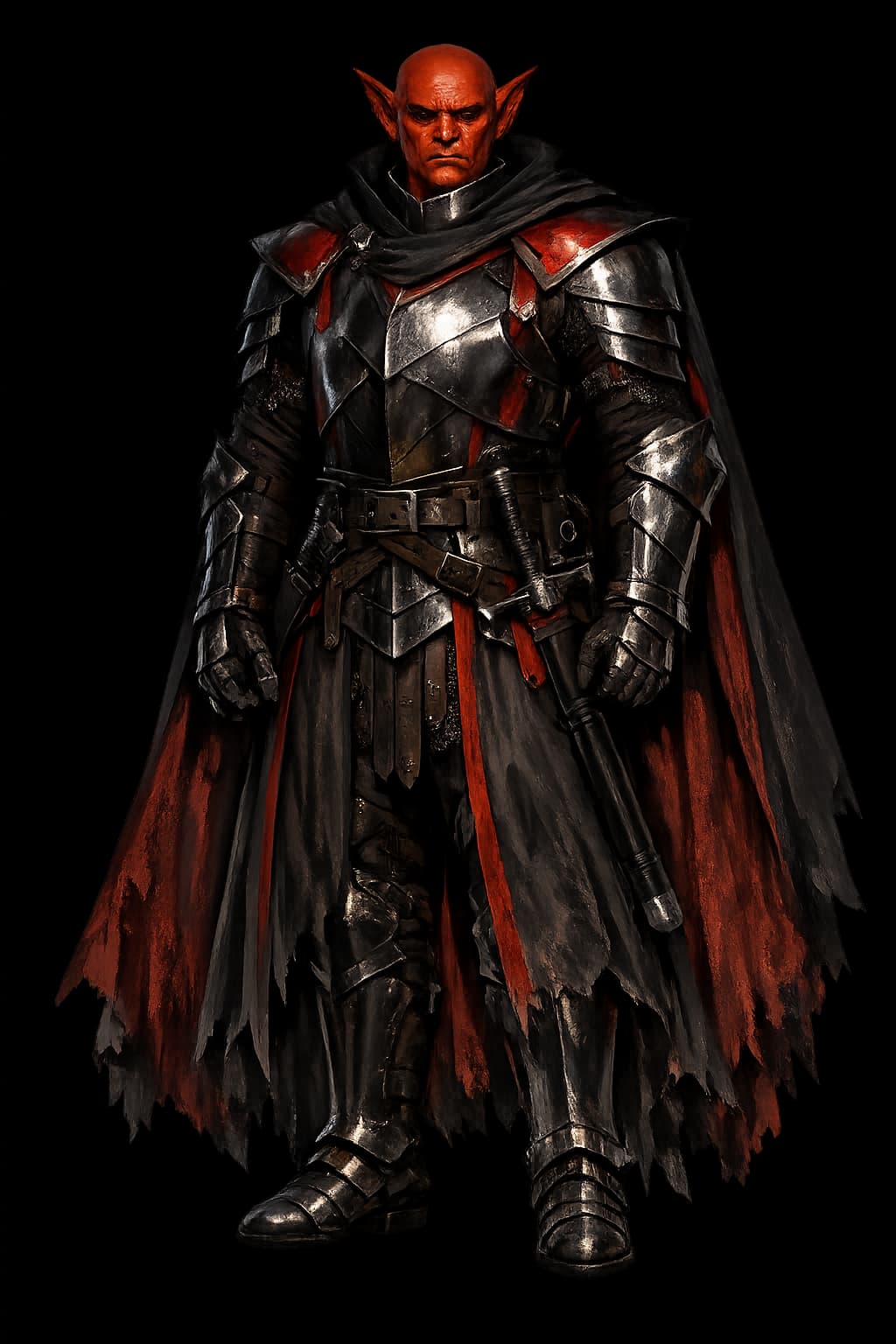
Hobgoblins are Medium humanoids standing between five and six-and-a-half feet tall, with dense musculature, broad frames, and a bearing that communicates barely restrained violence even when they're standing perfectly still. Their skin ranges from dark orange to deep reddish-brown, their eyes are typically dark orange or amber, and their dark hair is usually cropped short or shaved for helmet fitment. Everything about hobgoblin physiology suggests a species engineered — through divine creation, magical breeding, or simple relentless natural selection — for sustained physical performance under harsh conditions.
The hobgoblin build is not about explosive power. Orcs are stronger in a sprint, bugbears hit harder in an ambush, and goliaths can outlift them in a dead pull. What hobgoblins have is endurance. Hobgoblin muscle fiber is dense with slow-twitch fibers optimized for sustained effort over long periods — the biological profile of a marathon runner rather than a sprinter. A hobgoblin soldier can march thirty miles in a day in full armor, fight a battle at the end of it, and march again the next morning. This capacity for sustained exertion under load is the physiological foundation of hobgoblin military doctrine. They don't need to be the fastest or the strongest. They need to still be standing when the enemy isn't.
Hobgoblin senses are sharp but not exceptional by goblinoid standards. They retain darkvision to 60 feet — a legacy of the goblinoid family's underground origins — but their hearing and smell are roughly comparable to a human's. What they have instead of goblin-grade sensory equipment is an unusual capacity for focus. Hobgoblin cognitive architecture favors sustained attention over the broad environmental awareness that goblins use. A goblin hears everything and gets distracted by most of it. A hobgoblin hears the thing they're listening for and tunes out everything else. This isn't a trained skill — it's a neurological trait that makes hobgoblins natural sentries, tacticians, and, unfortunately, natural obsessives.
Goblinoid Comparative Physiology
| Trait | Goblin | Hobgoblin | Bugbear |
|---|---|---|---|
| Height | 3-3.5 ft. | 5-6.5 ft. | 6-8 ft. |
| Build | Wiry, flexible | Dense, endurance-optimized | Massive, ambush-adapted |
| Skin tone | Yellow-green to orange | Orange to reddish-brown | Yellow-brown to dark brown |
| Darkvision | 60 ft. (motion-optimized) | 60 ft. (standard) | 60 ft. (low-light specialized) |
| Key physical trait | Flexibility and speed | Stamina and sustained performance | Explosive strength and stealth |
| Cognitive style | Broad awareness, easily distracted | Focused attention, pattern recognition | Patience, predatory stillness |
| Metabolic rate | Fast (eats frequently) | Moderate (sustains effort) | Slow (conserves energy between bursts) |
The three goblinoid species represent three distinct survival strategies sharing a common ancestor. Goblins adapted through evasion, hobgoblins through organization, and bugbears through ambush predation.
The Iron Mind
If hobgoblin physiology is built for endurance, hobgoblin psychology is built for discipline — and that's not a metaphor. The hobgoblin mind is structured differently from a human mind in ways that make military service not just culturally expected but cognitively comfortable. Hobgoblins derive genuine satisfaction from functioning within a hierarchy. The feeling a human gets from creative expression or social bonding, a hobgoblin gets from executing a well-coordinated maneuver. This isn't brainwashing. It's biology.
The concept of the Iron Mind — "Ghaal'shaarat" in Goblin — is the closest thing hobgoblins have to a philosophical tradition. It describes the ideal mental state: focused, controlled, subordinating personal desire to collective purpose, maintaining emotional equilibrium under extreme stress. An elf might call it a martial version of Reverie. A human monk might recognize it as a form of moving meditation. The hobgoblin just calls it being professional. The Iron Mind isn't achieved through years of spiritual practice — it's the default state that hobgoblin training reinforces rather than creates.
This cognitive orientation has a shadow side that hobgoblin culture doesn't discuss often. The same neurological architecture that makes hobgoblins excellent soldiers also makes them prone to rigid thinking, difficulty adapting to unexpected situations, and a kind of existential crisis when separated from hierarchy. A hobgoblin exile doesn't just lose their social position — they lose the cognitive framework that organizes their entire experience of reality. Many exiled hobgoblins seek out other hierarchies immediately: mercenary companies, criminal organizations, adventuring parties with a clear leader. The structure matters more than the purpose.
Hobgoblin emotions are real and deeply felt but expressed through a cultural vocabulary that outsiders frequently misread as coldness. Grief is channeled into memorial discipline — a specific training routine performed in honor of fallen comrades. Joy is expressed through precision, through the satisfaction of a complex operation executed without error. Anger is preserved and directed, never wasted. A hobgoblin who seems emotionless to a human observer is actually experiencing intense emotion through a framework that doesn't map to human expressive norms. The mistake of assuming hobgoblins don't feel things has gotten a lot of diplomats killed.
“The blade does not choose its target. The hand that holds it chooses. The Iron Mind is the hand. Without it, we are just metal.”
— Hobgoblin officer's oath, traditional
Regimented Daily Life
A hobgoblin's day starts before dawn and follows a schedule that varies by rank but never by whim. The morning begins with formation — every hobgoblin in the settlement stands in their assigned position for inspection, announcements, and the day's operational briefing. This isn't ceremonial. It's how the command structure confirms that everyone is alive, functional, and aware of their duties. A hobgoblin who misses formation without authorization is punished. A hobgoblin who misses formation twice is demoted. There is no third time because there is no rank below what a third offense earns: the shame detail, which handles waste disposal and corpse processing.
Training occupies four to six hours of every soldier's day, regardless of peacetime or wartime status. Hobgoblin military doctrine holds that an army that stops training starts dying — skills decay, coordination degrades, and the collective muscle memory that makes a formation function as a single organism fades. Training rotates between weapons drill, formation practice, physical conditioning, and tactical exercises. Officers train longer because they also study doctrine, logistics, and the intelligence reports that the legion's scouts provide.
Meals are communal, timed, and portioned according to rank and duty. Active combat troops eat first and eat the most. Support personnel eat second. Prisoners and shame-detail workers eat last and eat the least. The food itself is functional rather than enjoyable — dried meat, grain porridge, root vegetables, and whatever local provisions the legion has secured. Hobgoblin cuisine is not a tradition that wins cultural exchanges, but it keeps soldiers fed and marching, which is the only criterion that matters.
What passes for leisure in hobgoblin society is competitive. Strategy games — played on boards with pieces representing military units — are universal and taken seriously enough that tournament results affect promotion decisions. Physical competitions test individual combat skill, endurance, and the creative application of tactical principles. Storytelling exists but centers on military history: the battles of famous legions, the tactical innovations of legendary commanders, the cautionary tales of leaders who failed. Entertainment in hobgoblin culture is always, in some form, preparation for war.
A hobgoblin settlement runs on schedules, which means it has predictable vulnerabilities. Formation time is the best and worst time to attack — best because every soldier is in the open and accounted for, worst because they're already organized and armed. The meal rotation creates a window when combat troops are eating and support personnel are not yet assembled. Smart adversaries study hobgoblin schedules before attacking. Smarter hobgoblins vary the schedule specifically to prevent this.
The Iron Code of Conduct
Every hobgoblin legion operates under a code so detailed it could fill a library — and in some legions, it literally does. The Iron Code governs not just military conduct but every aspect of hobgoblin social life: how disputes are resolved, how resources are distributed, how ranks are earned and lost, how failure is punished, and how death is honored. The code isn't written in abstract principles. It's written in specific scenarios with specific required responses, because hobgoblins don't trust individuals to interpret principles correctly under pressure.
Failure under the Iron Code is handled with a precision that other species find simultaneously admirable and horrifying. A soldier who retreats without orders faces a specific penalty determined by the circumstances: unauthorized retreat under direct fire carries different consequences than retreat during a flanking maneuver, which differs again from retreat when supplies are exhausted. The code accounts for context because hobgoblin commanders learned centuries ago that blanket punishment for retreat produces soldiers who die uselessly rather than soldiers who fight effectively.
What makes the Iron Code fascinating rather than merely oppressive is its internal logic of fairness. A hobgoblin private and a hobgoblin general face identical penalties for identical infractions. Rank provides authority, not immunity. A commander who orders a suicidal assault for personal glory faces the same tribunal as a private who deserts. This equality before the code is the single thing that keeps hobgoblin society from collapsing into tyranny — the rules constrain everyone equally, and everyone knows it.
A party that captures an Iron Code document has a skeleton key to hobgoblin psychology. The code reveals what hobgoblins fear (disorder, waste, individual glory over collective success), what they respect (competence, discipline, sacrifice for the unit), and what they cannot tolerate under any circumstances (betrayal of a sworn oath). Understanding the code lets smart adventurers predict hobgoblin behavior with unsettling accuracy.
Chain of Command
The hobgoblin military hierarchy isn't just an organizational tool — it's the operating system of hobgoblin civilization. There is no separate civil government, no merchant class with independent authority, no religious institution that operates outside the chain of command. The military is the civilization, and rank is the only social currency that matters. This makes hobgoblin society either admirably meritocratic or claustrophobically authoritarian, depending on whether you're looking at it from the inside or the outside.
The basic unit is the Fist — a squad of ten soldiers under a Fist Sergeant. Four Fists form a Banner (forty soldiers under a Banner Captain). Four Banners form a Legion (one hundred sixty soldiers plus officers, specialists, and support under a Warlord). These numbers are sacred in the same way that religious texts are sacred to other cultures: deviation is heresy. A Fist that has taken casualties receives replacements before its next deployment. A Fist that has grown beyond ten is split. The number is the doctrine, and the doctrine is the identity.
Promotion is merit-based in theory and mostly merit-based in practice. A hobgoblin advances by demonstrating competence in their current role — combat performance, tactical judgment, the ability to keep subordinates alive and effective. Political maneuvering exists but is constrained by the culture's obsession with measurable results. A Fist Sergeant who wins battles gets promoted regardless of their connections. A Fist Sergeant who loses soldiers because of incompetence gets demoted regardless of their connections. The system isn't perfect, but the feedback loop is tighter than in most human militaries.
The Warlord at the top of a legion commands with near-absolute authority within their domain but answers to a regional command structure that aggregates multiple legions under a High Warlord. Above the High Warlord sits the theoretical supreme commander — usually a figure more mythological than practical, since hobgoblin legions rarely coordinate at that scale except during major campaigns. The chain of command is strong at the squad and company level, functional at the legion level, and increasingly theoretical above that. This is the hobgoblin military's persistent weakness: brilliant tactical coordination, mediocre strategic vision.
Rank & Responsibility
The Fist Sergeant is the most important rank in the hobgoblin military. Not the most powerful, not the most prestigious, but the most important — because the Fist Sergeant is where doctrine meets reality. They translate the Warlord's strategic intentions into specific actions performed by specific soldiers in specific terrain. A good Fist Sergeant keeps ten hobgoblins alive, coordinated, and effective. A bad one gets them killed.
The Banner Captain is where tactics become operational art. They coordinate four Fists into combined-arms operations — flanking maneuvers, screening actions, enveloping attacks. The Banner is the smallest unit that can conduct independent operations, and the Captain who commands it needs to think two steps ahead of the enemy while keeping four separate squads synchronized.
Discipline & Punishment
Hobgoblin military justice is swift, codified, and deliberately proportional. Minor infractions — tardiness, sloppiness, failure to maintain equipment — earn extra duty shifts. Moderate failures — tactical errors that cause unnecessary casualties, insubordination short of mutiny — earn demotion and reassignment. Serious offenses — desertion, cowardice under fire, treason — earn execution, carried out by the offender's own Fist. The unit that trusted you is the unit that kills you. This is not cruelty for its own sake. It's a system designed to make the consequences of failure personal and immediate.
The most feared punishment isn't death — it's the shame-name. A hobgoblin stripped of rank and given a shame-name becomes a non-person within the hierarchy. They eat last, sleep worst, do the tasks no one else will do, and bear a name designed to humiliate. Some hobgoblins have climbed back from shame status through extraordinary service. Most don't. The shame-name is effective because it attacks the thing hobgoblins value most: their place in the structure.
Maglubiyet the Mighty One
Maglubiyet is not a god who inspires devotion. He is a god who demands obedience, and the distinction is the theological core of hobgoblin religion. Where human gods offer salvation, elven gods offer enlightenment, and dwarven gods offer ancestral pride, Maglubiyet offers a deal: serve him in life and in death, or be destroyed by something worse. It's the divine equivalent of a protection racket, and hobgoblins — being fundamentally pragmatic — accept the terms without requiring the transaction to feel meaningful.
Hobgoblin worship of Maglubiyet is indistinguishable from military service because it is military service. The prayers are formation chants. The rituals are pre-battle ceremonies. The temples are war shrines built into fortress walls, staffed by cleric-officers who hold rank in the military hierarchy and answer to the chain of command before they answer to any abstract theological authority. A hobgoblin cleric's job is to keep the legion fighting — healing wounds, bolstering morale, and reminding every soldier that Maglubiyet's afterlife army awaits the cowardly and the incompetent. The theological and military incentives are perfectly aligned, which is either efficient or terrifying.
The hobgoblin relationship with Maglubiyet is more committed than the goblin one. Goblins worship Maglubiyet because they must and maintain older traditions where they can. Hobgoblins worship Maglubiyet because his values and their values are genuinely compatible: strength through organization, victory through discipline, the subordination of individual desire to collective purpose. A hobgoblin doesn't need to be coerced into worshiping a war god because a hobgoblin already lives as if warfare is the highest calling. Maglubiyet just provides the theological scaffolding for a worldview the species had already built.
This compatibility doesn't mean the relationship is healthy. Maglubiyet's afterlife — eternal warfare on the iron fields of Acheron — is presented as a reward, but it's functionally indistinguishable from eternal punishment. The dead fight forever, following the same chain of command they followed in life, with no rest, no victory, and no discharge. Hobgoblin theologians who think too carefully about this tend to reach conclusions the hierarchy finds uncomfortable, which is why hobgoblin theology discourages careful thinking on the subject. The official position is that eternal war is glorious. The unofficial position is that questions about glory are above your pay grade.
Maglubiyet works as a deity because he's the logical endpoint of hobgoblin values. If discipline is virtue, obedience is sacred, and military success is the measure of all worth, then the god of goblinoid warfare isn't just an appropriate patron — he's an inevitable one. The horror of Maglubiyet isn't that he's evil. It's that he's exactly what a hobgoblin civilization would invent if it needed a god, which raises the question of whether he created them or they created him.
War Wizardry & Tactical Magic
Hobgoblins approach magic the way they approach everything else: as a military resource to be organized, standardized, and deployed according to doctrine. Where human wizards pursue magical knowledge for its own sake and elven mages treat magic as an art form, hobgoblin war wizards are specialists whose entire purpose is to multiply the combat effectiveness of the units they're attached to. A hobgoblin war wizard who wastes a spell slot on something that doesn't directly support the current tactical objective has failed in their duty.
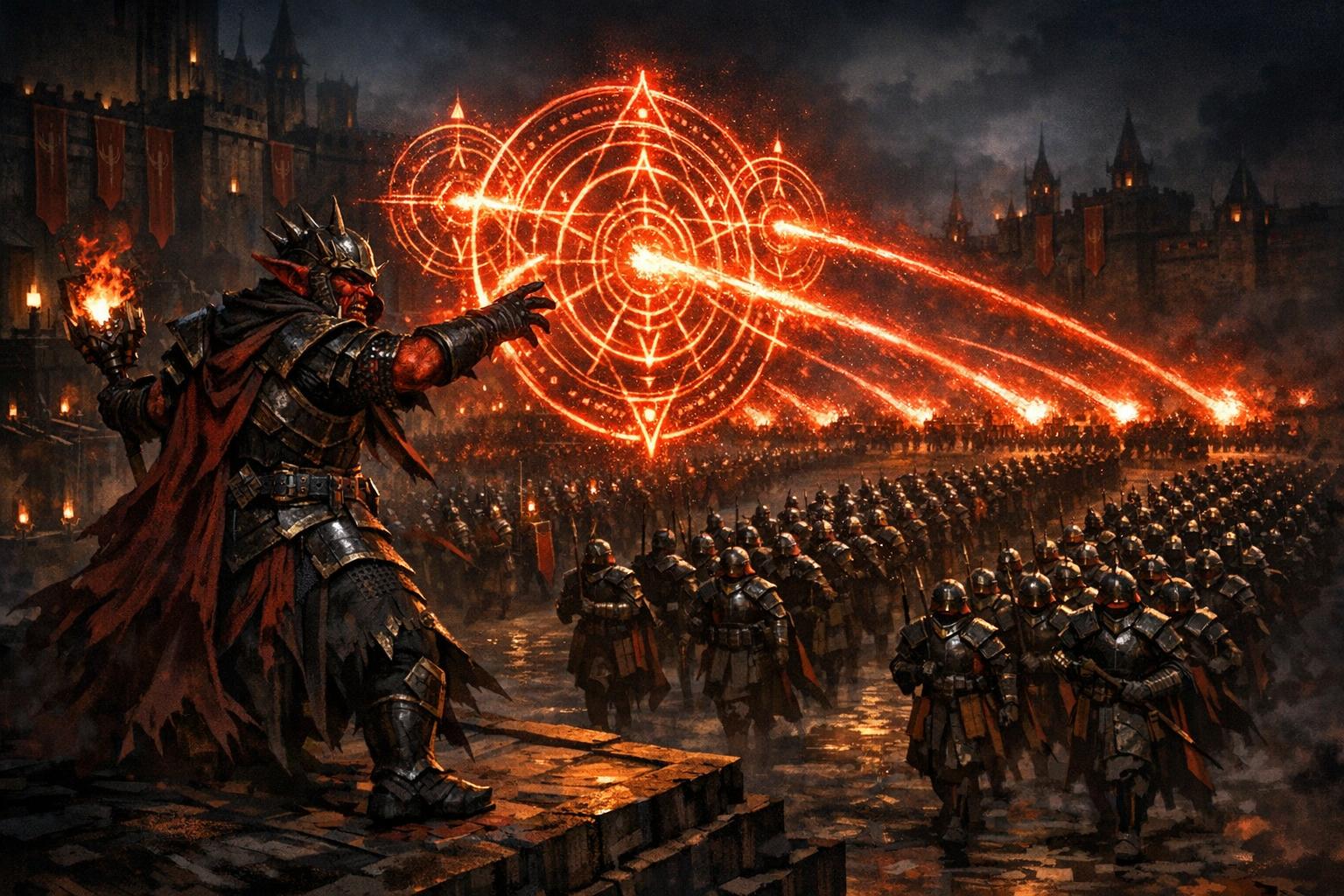
The Devastator is the hobgoblin arcane tradition — a war wizard trained not in the broad magical education of a wizard academy but in the specific application of evocation and abjuration to battlefield problems. Devastators learn fewer spells than a generalist wizard but cast their combat spells with mechanical precision. Their fire bolts hit where the formation needs them to hit. Their shield spells protect the officers who need to survive. Their scorching rays break up enemy formations at the exact moment the infantry needs the opposition disrupted. This specialization makes hobgoblin war wizards narrower but more reliable than their counterparts in other armies.
The integration of magic into hobgoblin military structure is formalized to an unusual degree. Devastators are assigned to Banners, not Fists — one wizard per forty soldiers, positioned behind the front line but ahead of the command element. Their orders come from the Banner Captain, not from a separate magical authority. They train with the soldiers they support, eat with them, march with them, and understand the tactical capabilities and limitations of the units they're augmenting. This integration is what makes hobgoblin magic effective: the wizard doesn't operate in isolation. They're a component of a combined-arms team.
Non-arcane magic in hobgoblin society is almost exclusively clerical and almost exclusively oriented toward healing and war blessing. The legion's clerics maintain battlefield readiness, treat wounds that would otherwise remove soldiers from duty, and perform the rites that Maglubiyet requires. Druids are distrusted. Sorcerers are viewed with suspicion because their power isn't earned through study and discipline. Warlocks are actively persecuted — a hobgoblin who makes a personal pact with an extraplanar entity has placed an outside authority above the chain of command, which is indistinguishable from treason.
The Devastator Doctrine
Devastators train using a system called the Iron Cadence — a set of spell sequences designed to synchronize magical bombardment with infantry movement. The first volley targets enemy formations at range. The second targets terrain to create obstacles or remove cover. The third supports the hobgoblin advance with suppressing fire. Each volley is timed to the infantry's pace. When it works — and hobgoblin drill makes it work more often than not — the combined effect is a seamless integration of magic and martial force that human armies spend decades trying to achieve and hobgoblin legions treat as routine.
The Goblinoid Empire
The Dhakaani Empire is the proof that hobgoblins are not merely an interesting monster — they're a viable civilization. At its height in the Eberron campaign setting, Dhakaan ruled a continent-spanning empire that lasted for thousands of years, with architecture, law, art, and military science that rivaled anything the "civilized" species had produced. The empire's fall wasn't caused by internal weakness but by an invasion from the extraplanar daelkyr — aberrations so alien that no conventional military could hold against them. The Dhakaani fought longer and harder than any other force on Khorvaire before retreating underground to preserve what they could. That's not a failure of civilization. That's a civilization doing everything right against an impossible enemy.
Outside Eberron, hobgoblin empires appear in setting after setting, always following the same pattern: a hobgoblin warlord unifies the goblinoid tribes, builds a military machine, conquers territory, and establishes a state that functions with frightening efficiency until it's broken by an external threat or internal succession crisis. The Red Hand of Doom adventure (2006) depicted one such empire in its expansion phase and became one of the most acclaimed D&D adventures ever published. The reason is simple: a hobgoblin army is a better adversary than a dragon because it thinks, plans, and adapts. You can't solve it with one fight.
The goblinoid hierarchy within these empires is consistent. Hobgoblins command. Goblins serve as skirmishers, scouts, laborers, and expendable screens. Bugbears serve as shock troops, enforcers, and special operations units. This isn't egalitarian, and the game has never pretended it is — the hobgoblin empire runs on the exploitation of its smaller and larger cousins. But the relationship is also functional in a way that pure exploitation typically isn't. Goblins within a hobgoblin empire eat regularly, live in defended settlements, and have a social role that provides identity if not respect. The empire offers security in exchange for autonomy, and enough goblins accept the bargain to keep the system working.
The question that hobgoblin empires pose to D&D worldbuilding is uncomfortable: if hobgoblin civilization works — if it feeds its people, defends its territory, maintains order, and produces lasting institutions — then why is it "evil"? The answer, to the extent that there is one, is that hobgoblin civilization works by subordinating individual freedom to collective function. It works by treating goblin lives as less valuable than hobgoblin lives. It works by maintaining a permanent war footing that requires external enemies to justify internal control. It works the way every authoritarian state works: efficiently, at a cost that the people paying it don't get to negotiate.
“Dhakaan did not fall because we were weak. Dhakaan fell because the enemy came from a place where strength had no meaning. We will not make that mistake again. Next time, we will be ready for things that strength cannot answer.”
— Attributed to the last Dhakaani lorekeeper
Notable Hobgoblin Commanders
Named hobgoblin characters are more common in D&D lore than named goblins but still rarer than they should be, given the species' military sophistication. The hobgoblins who do appear by name tend to be warlords and commanders — which makes sense for a species that defines itself through military achievement, but also limits the narrative range. Somewhere in D&D's multiverse there's a hobgoblin poet, a hobgoblin philosopher, a hobgoblin who just wants to run a really good bakery. We never meet them because the game only remembers hobgoblins when it needs an army.
The Red Hand of Doom adventure (2006) gave hobgoblins their finest narrative hour. Warlord Azarr Kul, a hobgoblin cleric-commander serving Tiamat, leads a goblinoid horde against the Elsir Vale in a campaign that plays out like a military thriller. The adventure works because Azarr Kul is not a mindless aggressor — he's a competent strategist with a clear objective, a flexible battle plan, and the logistical infrastructure to sustain a prolonged campaign. Fighting him feels like fighting a general, not a monster. The adventure's enduring popularity is the best argument for hobgoblins as primary antagonists.
In Eberron, the hobgoblin nation of Darguun provides the setting's most interesting political entity: a goblinoid state trying to gain recognition from the nations that fought the Last War. Lhesh Haruuc Shaarat'kor, the hobgoblin warlord who founded Darguun by seizing territory during the war's chaos, represents a rare D&D hobgoblin who succeeds through politics as well as warfare. His nation exists because he was smart enough to claim land when the human nations were too exhausted to stop him, and diplomatic enough to negotiate recognition afterward.
Notable Hobgoblin Figures in D&D
| Figure | Source | Significance |
|---|---|---|
| Azarr Kul | Red Hand of Doom (2006) | Hobgoblin warlord and Tiamat cleric. Led the Red Hand horde against the Elsir Vale. The gold standard for hobgoblin antagonists — competent, dangerous, and narratively compelling. |
| Lhesh Haruuc Shaarat'kor | Eberron Campaign Setting | Founded the nation of Darguun during the Last War. The rare hobgoblin who wins through politics as well as warfare. Proof that the species can build states, not just armies. |
| The Dhakaani Warlords | Eberron: Rising from the Last War | Ancient hobgoblin empire-builders whose civilization predates human settlement on Khorvaire. The remnant Heirs of Dhakaan still seek to restore their empire from hidden vaults. |
| Hobgoblin Warlord (stat block) | Monster Manual (various) | The recurring high-CR stat block that represents hobgoblin military leadership. CR 6 in 5e — dangerous not for raw stats but for the army it implies. |
| Iron Shadows monks | Volo's Guide to Monsters | Hobgoblin shadow monks serving as spies and assassins. The exception that proves the rule: even hobgoblin monks serve the military hierarchy. |
The list skews heavily toward military leaders because the game rarely presents hobgoblins in other roles. This is a writing limitation, not a species limitation.
Statistical Identity Across Editions
Hobgoblin mechanical design has evolved from "goblin but tougher" to "the species that rewards tactical play" — a trajectory that mirrors the game's own growing sophistication about encounter design. Early hobgoblins were defined by what they weren't: not as sneaky as goblins, not as strong as orcs, not as scary as gnolls. Modern hobgoblins are defined by what they do that no other species does: fight as a unit with mechanical support for coordination. It took forty years to get there, but the destination was worth the trip.
For players, the hobgoblin PC has undergone the most significant identity shift of any goblinoid option. The Volo's Guide version (2016) introduced Saving Face — a bonus to a failed attack, check, or save based on the number of allies who can see you. This brilliant mechanic said everything: a hobgoblin performs better when watched by peers because shame is the species' primary motivator. The 2022 revision replaced this with Fey Gift and Fortune from the Many, trading the shame-motivation flavor for broader tactical support. Both versions work mechanically. Only one captures the species' psychology.
- Medium size
- Darkvision 60 ft.
- +4 Move Silently racial bonus
- Favored Class: Fighter
The +2 DEX/+2 CON line made hobgoblins natural fighters and rangers. No penalty stats meant no mechanical downside — the first goblinoid PC option without a tax for being monstrous. The Move Silently bonus was incongruous with the military archetype but referenced the hobgoblin's stealth-capable scouts.
- Medium size
- Darkvision 60 ft.
- Martial Training (light armor, two martial weapons)
- Saving Face (bonus to failed roll = number of visible allies)
Saving Face is one of the most flavorful racial features in 5e. A hobgoblin who fails in front of allies gets a bonus to succeed because the shame of public failure drives them harder. The CON/INT spread and martial training cemented the "disciplined soldier-scholar" identity. This is the version that made hobgoblin PCs genuinely interesting.
- Medium size
- Darkvision 60 ft.
- Fey Gift (Help as bonus action; temp HP, speed boost, or invisibility at higher levels)
- Fortune from the Many (bonus to failed roll = number of nearby creatures)
The 2022 revision softened the martial identity by tying hobgoblins to the Feywild and replacing Saving Face's shame-driven bonus with the broader Fortune from the Many. Mechanically versatile but the cultural specificity was lost. Many hobgoblin players house-rule back to Saving Face.
Hobgoblins in Other Settings
The hobgoblin is one of those D&D species that improves dramatically when transplanted from generic fantasy into a setting with real worldbuilding stakes. In the default D&D cosmology, hobgoblins are "the lawful evil army that shows up sometimes." In Eberron, they're a post-imperial nation navigating the politics of a continent that doesn't want them at the table. In the Forgotten Realms, they're a persistent threat in specific regions — the Goblin Marches, the Moonsea, Thar — but rarely the central antagonists of a major storyline. The quality of the hobgoblin in your game depends almost entirely on how much work your setting does to make them matter.
Eberron remains the gold standard for hobgoblin worldbuilding. The Dhakaani Empire — a civilization that predates human presence on Khorvaire — gives hobgoblins a history that rivals the elves' in depth and exceeds it in military sophistication. The modern nation of Darguun, founded during the chaos of the Last War, creates a politically complex entity: a goblinoid state seeking international recognition while suppressing internal tensions between Ghaal'dar (modern hobgoblins), Marguul (bugbear) tribes, and the ancient Heirs of Dhakaan who want to restore the old empire. This is hobgoblins at their best — not monsters, but a civilization with competing factions, historical trauma, and genuine political agency.
Pathfinder's treatment of hobgoblins is less developed but mechanically interesting. PF2e hobgoblins are "remorseless" rather than "evil" — a subtle distinction that opens more narrative space. Their culture emphasizes victory and competence but doesn't prescribe cruelty. This is arguably the most realistic hobgoblin portrayal: a militaristic society that values results can be brutal without being sadistic. The cruelty in hobgoblin culture comes from indifference to suffering, not from enjoyment of it. That distinction matters for players who want to explore hobgoblin characters without playing comic-book villains.
The hobgoblin's future in D&D probably looks more like Eberron than the Forgotten Realms. As the game moves away from inherent alignment and toward cultural complexity, the species that benefit most are the ones with interesting institutions to explore. Hobgoblins have legions, archives, codified doctrine, and a civilizational identity that supports infinite storytelling. They don't need a moral rehabilitation the way orcs did — they just need screentime. The best hobgoblin stories are already in the game's history. They're just waiting for more DMs to find them.
Run Darguun as the campaign's political center. The party is hired — or conscripted — by Lhesh Haruuc's government to handle problems the nation can't solve through military force: a diplomatic mission to a hostile nation, an investigation into Dhakaani ruins that the Heirs want kept secret, or a border dispute with Breland that threatens the peace treaty. The party works within and against hobgoblin bureaucracy, navigating a culture that respects competence above all else. If they're good enough, even the hobgoblins will respect them. If they're not, the legion has procedures for handling that too.
FAQ
Common Questions
Yes, and the game has been moving away from that framing for good reason. "Lawful evil" describes a specific alignment, not a civilization. Hobgoblin society values discipline, hierarchy, meritocratic promotion, and collective effort — traits that are morally neutral. The "evil" part comes from how those values are applied: conquest, exploitation of goblins and bugbears, and a willingness to use overwhelming force. But a hobgoblin who applies those same values to defending a settlement, training militia, or organizing disaster relief isn't evil — they're incredibly useful. The alignment describes the default political orientation of hobgoblin states, not a biological imperative. Individual hobgoblins can be anything their experiences and choices make them, and the best hobgoblin characters are the ones who engage with the tension between their cultural programming and their personal ethics.
The friction is the fun. A hobgoblin raised in legion culture joins an adventuring party and encounters a group of people who don't follow orders, don't maintain their equipment to standard, don't establish a watch rotation without being reminded, and somehow still survive. This is baffling, frustrating, and ultimately educational. The hobgoblin PC's arc is about discovering that there are forms of effectiveness that don't require hierarchy — and that their party members' individual strengths, deployed chaotically, can achieve results that no formation drill anticipated. Mechanically, lean into the support role: hobgoblin features reward helping allies, so play the character who makes everyone else better. The hobgoblin doesn't need to lead the party. They need to make the party function, and that's a different skill entirely.
The three goblinoid species share a divine creator (Maglubiyet), a biological kinship, and a social hierarchy that hobgoblins designed and hobgoblins enforce. Hobgoblins command — they're the officers, strategists, and administrators. Goblins serve — as scouts, skirmishers, laborers, and, when the legion demands it, expendable screening forces. Bugbears occupy a stranger niche: they're larger and stronger than hobgoblins but serve as shock troops and enforcers rather than leaders, partly because they lack the organizational instinct that hobgoblin culture prizes and partly because hobgoblin power structures are specifically designed to prevent bugbear uprising. The relationship is exploitative but functional. Goblins within hobgoblin legions eat regularly and live in defended settlements, which many independent goblin tribes can't guarantee. Bugbears get to do what they're best at — hit things very hard — without the administrative burden of running a civilization. Whether this exchange is fair depends on who you ask, and hobgoblin culture strongly discourages asking.
Fighter is the obvious choice and it's obvious for good reason — the hobgoblin martial tradition maps perfectly onto the Battle Master subclass, and the species' cooperative features amplify a frontline fighter's effectiveness. But the less obvious choices are often more interesting. Wizard (War Magic or Evocation) reflects the Devastator tradition and gives you a character with deep lore hooks. Cleric (War or Order domain) makes you a military chaplain navigating the tension between Maglubiyet's demands and your party's needs. Artificer is excellent for a hobgoblin who approaches magic as engineering. Rogue might seem counterintuitive, but the Iron Shadow tradition (hobgoblin shadow monks and spies) provides precedent for hobgoblin stealth specialists. The weakest thematic fit is probably Barbarian — hobgoblin culture actively trains against the loss of emotional control that rage represents — but that tension could drive a fascinating character if you're willing to explore it.