
Tabaxi
Feline wanderers driven by a curiosity so fierce it rewrites the map — every secret learned is a step closer to the next one
Cat-Lord Mythology & Feline Origins
Tabaxi trace their divine lineage to the Cat Lord, a mysterious entity of the Upper Planes who straddles the boundary between beast and god. The Cat Lord is not a typical deity — it has no organized clergy, no temples, no holy texts. It operates through curiosity itself, planting the itch to know, to see, to wander in every tabaxi soul. Worship doesn't happen in pews. It happens on roads, in markets, at the edge of unmapped territory.
The feline humanoid archetype draws from mythological traditions across cultures. Egyptian Bastet and Sekhmet, the lion-bodied sphinxes of Greek mythology, the jaguar warriors of Aztec society, the bakeneko of Japanese folklore — every civilization that lived alongside cats eventually imagined what it would mean for cats to live alongside them as equals. Tabaxi sit at the convergence of these traditions: graceful, independent, curious beyond reason, and fundamentally undomesticable.
What separates the Cat Lord mythology from other D&D deity relationships is its informality. Tabaxi don't pray for divine intervention. They satisfy their curiosity, and in doing so, they fulfill the Cat Lord's purpose. It's the most organic deity-worshipper relationship in D&D — no doctrine, no obligation, just an instinct that happens to align with a god's design. Whether the Cat Lord created tabaxi to serve this purpose or simply recognized kindred spirits is a question tabaxi theologians find interesting for about ten minutes before something else catches their attention.
Feline Figures in World Mythology
| Tradition | Figure | Nature | Tabaxi Echo |
|---|---|---|---|
| Egyptian | Bastet / Sekhmet | Cat-goddess of home and war | Duality of grace and ferocity; feline divinity as protector |
| Aztec | Jaguar Warriors (Ocelopilli) | Elite soldiers channeling jaguar spirit | Predatory grace in service of community; jungle origins |
| Japanese | Bakeneko / Nekomata | Supernatural cats with human traits | Shapeshifting trickster energy; cats that walk between worlds |
| Greek | Sphinx | Lion-bodied riddler guarding knowledge | Curiosity as currency; knowledge-hoarding instinct |
| D&D Cosmology | The Cat Lord | Beast-lord of felines, Upper Planes entity | Direct divine patron; curiosity as worship |
The Cat Lord never demands obedience. It demands attention — to the world, to its secrets, to the next horizon. Tabaxi comply instinctively.
Etymology & Tabaxi Names
The word "tabaxi" likely derives from real-world history — the Tabascan people of the Mexican Gulf Coast, filtered through early colonial-era accounts of indigenous peoples that blurred human and animal characteristics. In D&D, the name carries no such baggage; it's simply what these cat-folk call themselves, though the Maztican connection persists in their setting origins.
Tabaxi naming conventions are among the most distinctive in D&D. Each tabaxi receives a descriptive name from their clan — not a single word but a phrase that captures a quality, a moment, or an image. "Cloud on the Mountaintop," "Jade Shoe," "Five Timber," "Mirror of the Summer Sky." These names are poetic observations, not labels. They describe what the tabaxi evokes, not what the tabaxi does.
In practice, tabaxi use shortened versions of their full names when dealing with other species. Cloud on the Mountaintop becomes "Cloud." Jade Shoe becomes "Jade." This isn't laziness on the tabaxi's part — it's an accommodation. They've learned that most other species can't hold a full tabaxi name in conversation without stumbling. The full name is reserved for clan contexts, formal introductions, and moments that deserve the full weight of identity.
Clan names function differently. They're based on geographical or natural features near where the clan dwells — Distant Rain, Snoring Mountain, Emerald Claw. The clan name tells you where a tabaxi comes from; the personal name tells you who they are. Together, they locate a tabaxi in both space and character.
“A tabaxi name is not a label. It is a portrait in three words — what you evoke, what you resemble, what the clan saw in you when you were too young to see it in yourself.”
From the Fiend Folio to Volo's Guide
Tabaxi have one of the stranger publication histories in D&D. They first appeared in the 1981 Fiend Folio — not as a playable species but as a monster entry, described as "humanoid leopard-folk" from a distant jungle homeland. They were essentially an encounter, not a people. The Fiend Folio tabaxi had stat blocks, not cultures.
They resurfaced sporadically through the decades — a mention in the Maztica boxed set for 2nd Edition (1991), which established their connection to the D&D equivalent of Mesoamerica, and scattered appearances in 3rd Edition supplements. But for most of D&D's history, tabaxi were deep cuts. If you knew what a tabaxi was before 2016, you were a lore completist.
Volo's Guide to Monsters (2016) changed everything. Tabaxi became a fully playable species with rich cultural detail, mechanical identity, and that signature curiosity mechanic that made them unlike anything else in the Player's Handbook. The 2016 version caught fire. Within two years, tabaxi were a top-ten species on D&D Beyond, a remarkable achievement for a species that had spent thirty-five years in the margins.
The 2024 Player's Handbook did not include tabaxi in the core lineup, which sparked debate about which species "deserve" PHB inclusion. Tabaxi remain playable through supplementary materials, but their absence from the core book means new players may not encounter them without veteran guidance — a strange fate for a species that achieved mainstream popularity so recently.
Fiend Folio (1st Edition)
Tabaxi debut as a monster entry — jungle-dwelling humanoid leopards. No culture, no playability, just a stat block and a description.
Maztica Campaign Setting (2nd Edition)
Tabaxi placed in Maztica, D&D's Mesoamerican analog. First cultural context established, connecting them to jungle civilizations and the Cat Lord.
Volo's Guide to Monsters (5th Edition)
Tabaxi become a fully playable species with detailed lore, the curiosity mechanic, Feline Agility, and clan-based naming conventions. Popularity explodes.
Explorer's Guide to Wildemount / Tasha's Cauldron
Tabaxi appear in Critical Role's official setting. Tasha's flexible ASI rules remove the Dexterity/Charisma lock, broadening build options.
2024 Player's Handbook
Tabaxi omitted from the revised core PHB. Remain playable via legacy content and supplementary sources, but lose "core species" visibility.
Maztica, Chult & Jungle Homelands
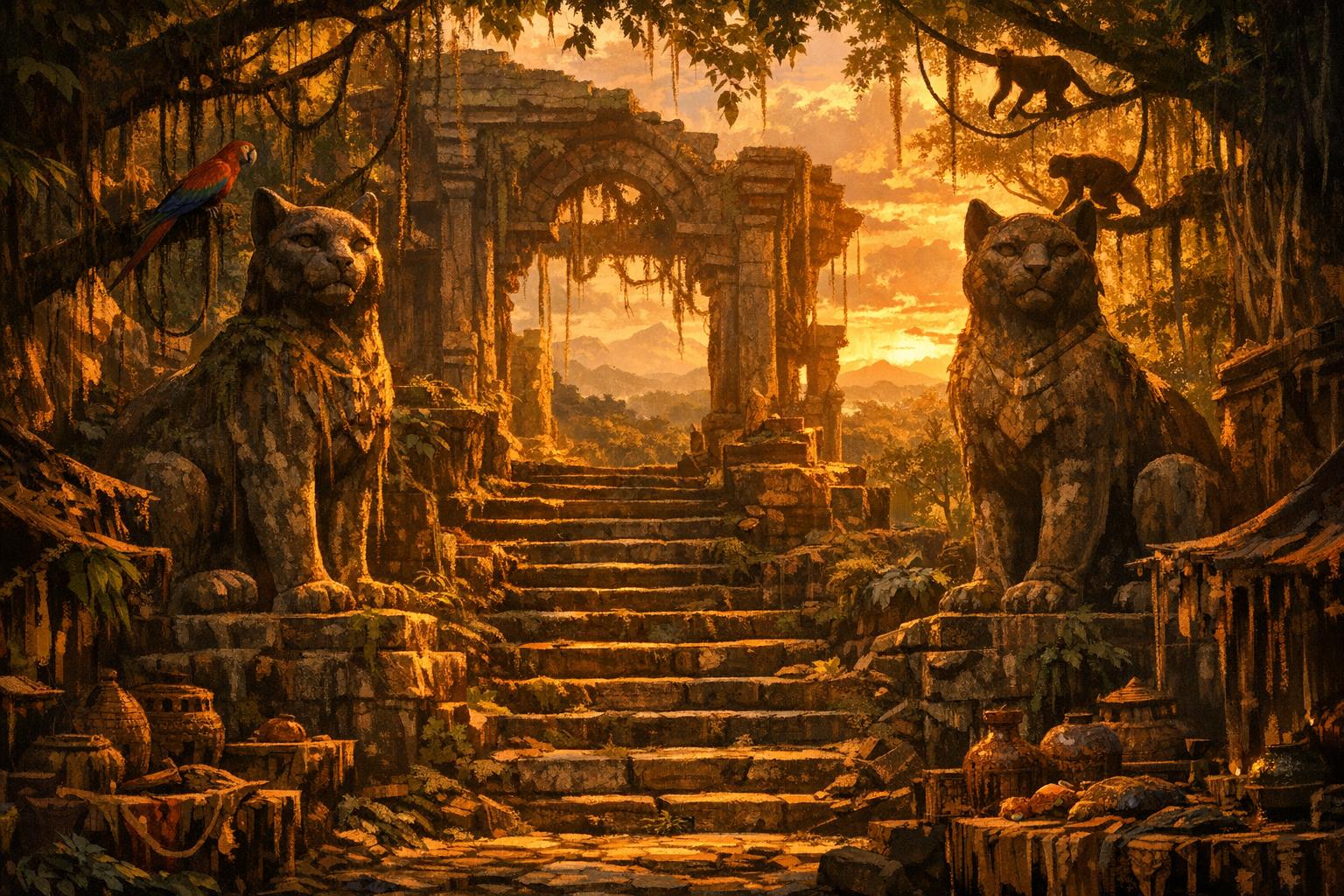
Tabaxi homelands exist at the edges of most campaign maps — the jungles of Maztica, the dense interior of Chult, the uncharted tropical coastlines that "civilized" nations haven't bothered to colonize because the jungle fights back harder than any army. This geographic marginality is deliberate. Tabaxi don't build empires. They build networks.
Maztica, D&D's analog to pre-Columbian Mesoamerica, is the traditional tabaxi homeland. The jungles there are ancient, layered, and full of things that haven't been catalogued because no one who went looking came back with notes. Tabaxi thrive in this environment not because they're primitive — they're not — but because the jungle rewards exactly the skills tabaxi excel at: agility, awareness, patience, and the ability to move through vertical space as comfortably as horizontal.
Chult provides a Forgotten Realms anchor for tabaxi who've migrated from Maztica. The Port Nyanzaru waterfront hosts tabaxi traders, storytellers, and collectors who serve as intermediaries between the jungle interior and the wider world. These urban tabaxi haven't abandoned their wanderlust — they've focused it. Instead of crossing jungles, they cross oceans. Instead of collecting rare flowers, they collect rare stories.
The important thing to understand about tabaxi "territory" is that it's temporary by design. Clans migrate. Individuals wander. A tabaxi settlement that was thriving last year might be empty this year because the entire clan decided the next valley over was more interesting. This isn't instability. It's the architectural expression of curiosity.
Maztica's development in D&D has been criticized for flattening Mesoamerican cultures into a fantasy adventure setting. When using tabaxi homelands, consider building jungle civilizations with the same depth and sophistication you'd give to the Sword Coast. Tabaxi aren't jungle primitives — they're members of complex, mobile societies that value different things than sedentary cultures do.
Feline Biology & Physical Traits
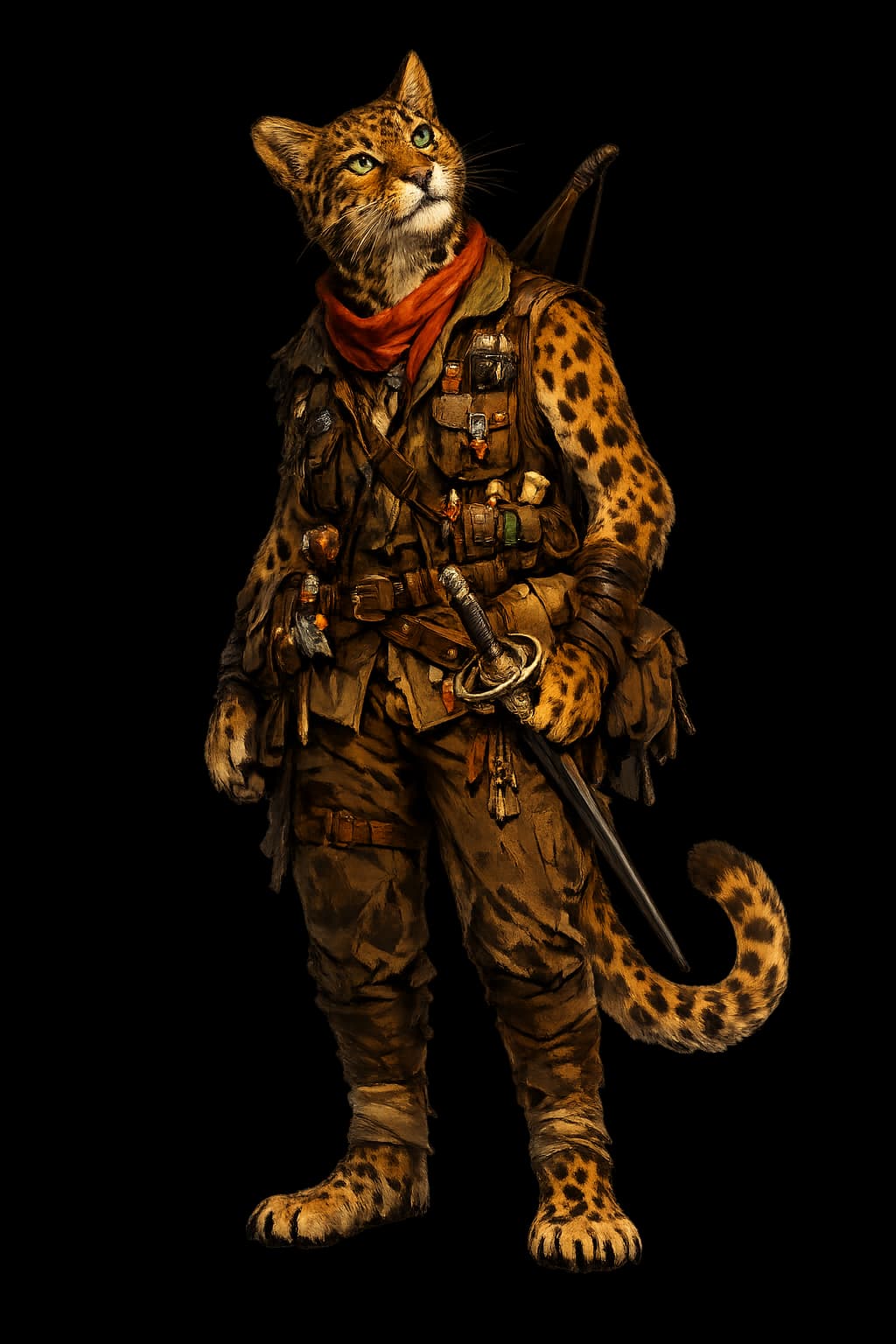
Tabaxi bodies are engineering marvels built for the arboreal environment. They stand between five and seven feet tall, covered in short fur that ranges from spotted jaguar patterns to solid colors, striped like tigers, or tawny like cougars. The fur isn't cosmetic — it provides camouflage in their native jungles, insulation against temperature swings, and a sensory surface that detects air currents and vibrations.
Their musculature is lean rather than bulky, optimized for explosive bursts of speed and vertical climbing rather than sustained heavy exertion. A tabaxi can sprint faster than almost any other medium-sized species for short distances, then seemingly forget they were moving at all. This burst-and-rest pattern mirrors feline hunting behavior and translates directly into the Feline Agility mechanic.
Feline Agility
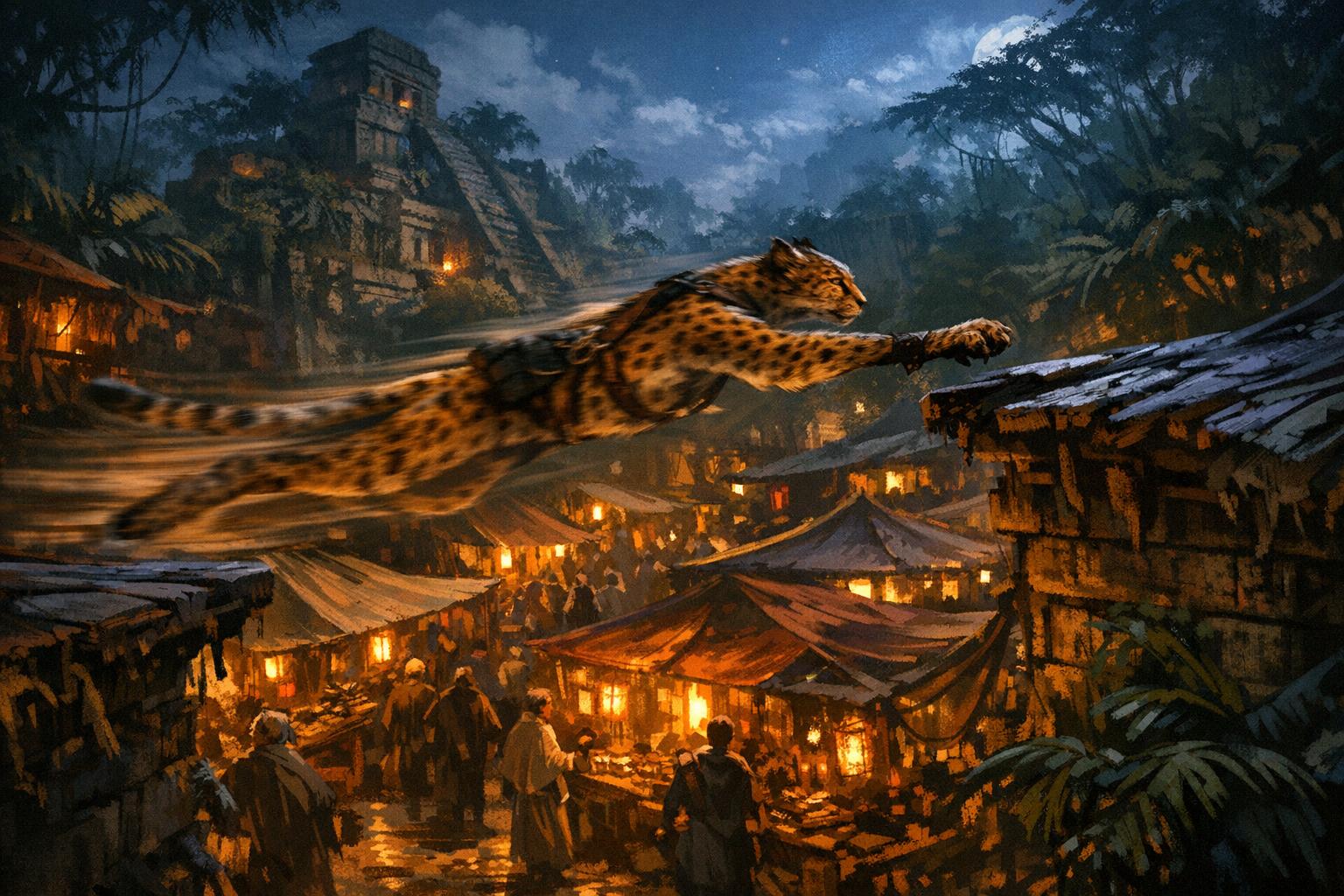
The signature tabaxi ability. When a tabaxi moves on their turn, they can double their speed until the end of that turn. The catch: they must spend a turn moving zero feet before they can use it again. This mechanic perfectly captures feline locomotion — the explosive pounce followed by the languid stillness. It's not just good design; it's zoologically accurate.
In play, Feline Agility turns tabaxi into some of the most mobile characters in the game. A tabaxi monk with Step of the Wind can cross a battlefield in a single turn. A tabaxi rogue can reach impossible positions for sneak attacks. The tactical applications are enormous, but the real value is how it makes tabaxi feel to play — fast, unpredictable, and always exactly where you didn't expect them.
Retractable Claws
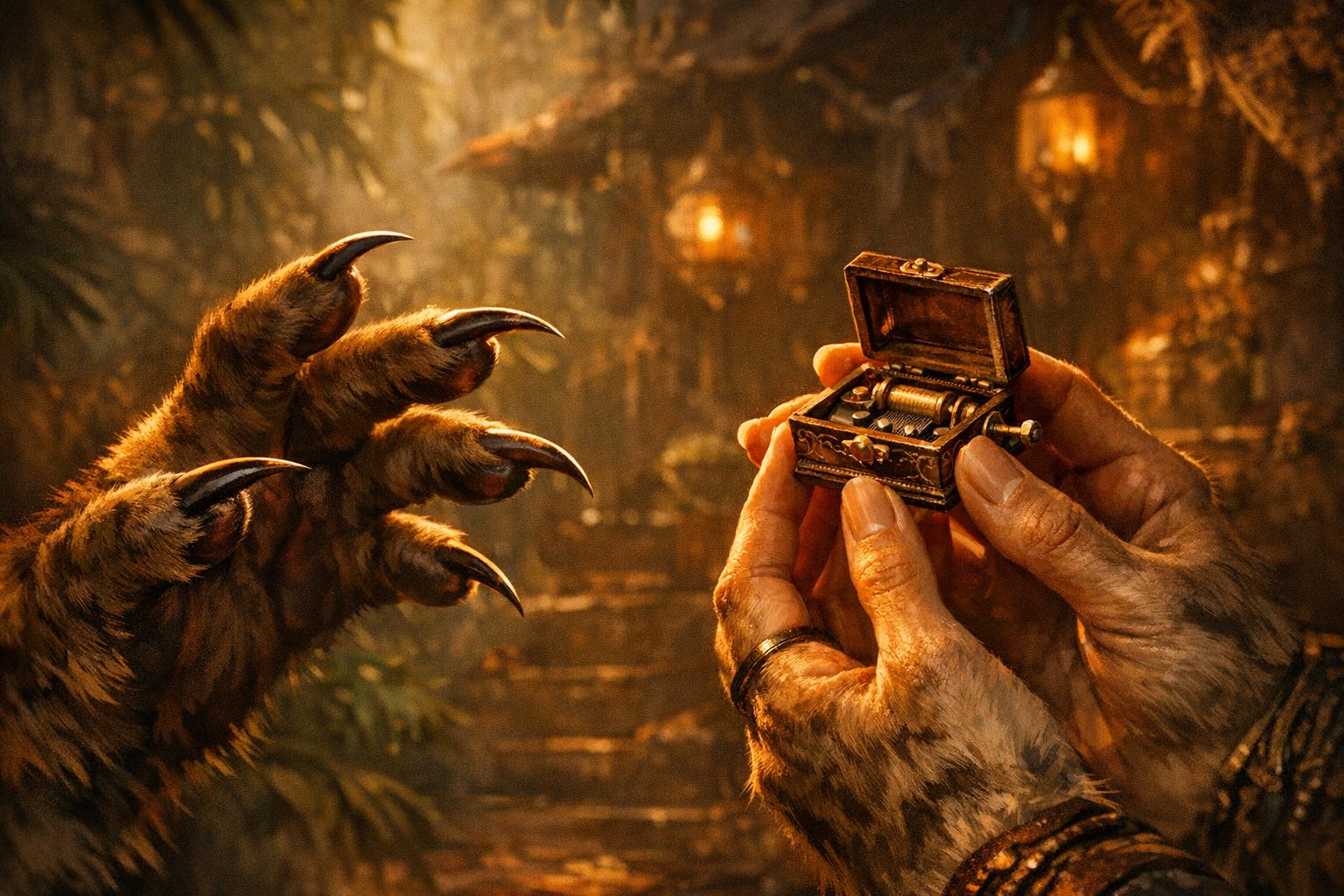
Tabaxi claws are natural weapons that deal 1d4 slashing damage plus Strength modifier. They're retractable, which matters more socially than mechanically. A tabaxi can shake your hand without drawing blood, handle delicate objects without shredding them, and pass through a crowd without accidentally scratching anyone. The claws come out when needed and disappear when they don't.
The claws also function as climbing aids. Tabaxi have a climbing speed equal to their walking speed, which means they treat vertical surfaces the way most species treat stairs — as a slightly different direction of travel, not an obstacle. In urban environments, this turns rooftops into highways and walls into shortcuts.
Sensory Package
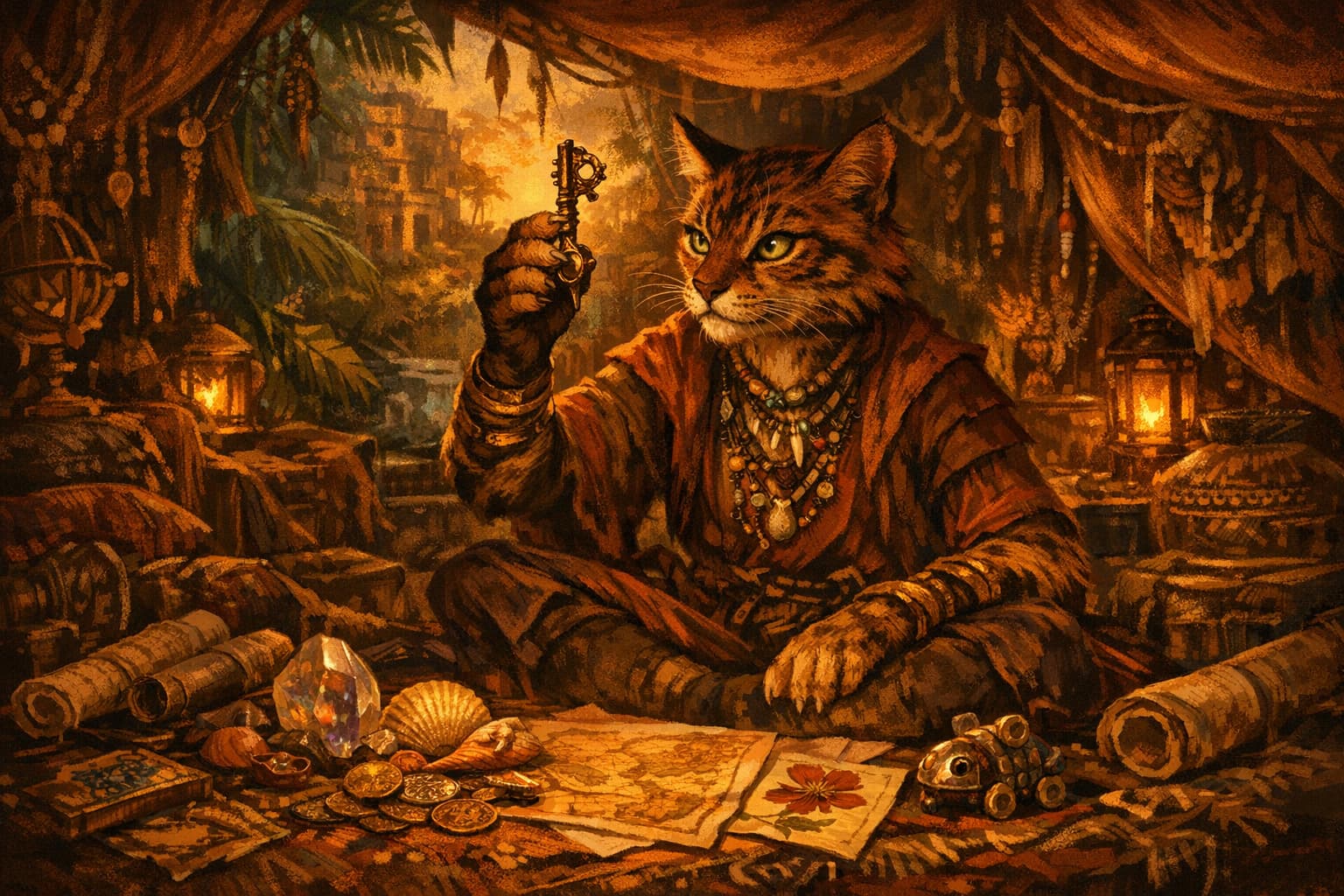
Darkvision, proficiency in Perception and Stealth — tabaxi senses are built for a predator's lifestyle. Their eyes dilate to capture available light in near-total darkness. Their ears rotate independently to triangulate sound. Their whiskers detect air displacement. A tabaxi in a dark forest is not at a disadvantage. Everything else in that forest is.
The sensory acuity feeds directly into tabaxi psychology. They notice things other species miss, which feeds their curiosity, which drives them to investigate, which leads them to notice more things. It's a feedback loop of awareness that makes tabaxi both excellent scouts and terrible at minding their own business.
The Psychology of Insatiable Curiosity
Tabaxi curiosity is not a personality trait. It's a biological drive. The desire to know, to see, to experience operates at a level below conscious choice — closer to hunger than to hobby. A tabaxi doesn't decide to be curious any more than a human decides to be hungry. The question is always what they do about it.
This creates a psychology organized around the pursuit of novelty. Tabaxi are drawn to secrets, puzzles, locked doors, unexplored corridors, unread books, unheard stories, and unfamiliar foods with the same intensity that other species reserve for survival threats. The phrase "I wonder what's in there" is the tabaxi equivalent of a battle cry.
The flip side is equally important. Once a tabaxi has satisfied their curiosity about something, their interest evaporates completely. The locked box that consumed their attention for three days becomes invisible furniture once they know what's inside. The mystery that drove them across a continent becomes a mildly interesting anecdote once it's solved. This isn't fickleness — it's the curiosity drive cycling to its next target.
For adventuring parties, this psychology makes tabaxi simultaneously indispensable and infuriating. They'll find every trap, notice every hidden door, and pursue every lead with tireless enthusiasm. They'll also wander off during watch to investigate a strange sound, touch the obviously enchanted object without waiting for the wizard to identify it, and open negotiations with hostile creatures because they've never met one before and want to know what it thinks about things.
“A tabaxi does not decide to be curious. They decide what to be curious about — and even that decision is less a choice than a negotiation with an instinct that has already made up its mind.”
Clan Life & the Wanderer Tradition
Tabaxi clans are loose, affectionate, and surprisingly well-organized for groups of beings who can't sit still. Each clan occupies a territory that shifts with the seasons, built around semi-permanent camps connected by well-traveled hunting trails. The camp is home base, not home — most tabaxi spend as much time away from it as in it.
Clan roles exist but aren't rigid. Hunters, scouts, storytellers, traders, healers — tabaxi fill whatever role interests them at the moment and rotate when the interest fades. The one constant is the clan storyteller, who holds the position by acclaim rather than appointment. The storyteller is the tabaxi who remembers best, tells best, and cares most about preserving the clan's accumulated knowledge. In a species that values experience above all else, the storyteller is the treasure vault.
Those Who Stay
Not every tabaxi wanders. Some find that their curiosity is best served by going deep rather than far. These "root cats" — the term is affectionate, not dismissive — become the clan's artisans, herbalists, and historians. They study the local ecosystem with a granularity that wanderers can't match, learning which beetle larva cures fever and which root system predicts rain.
Root cats provide the continuity that holds clans together. When the wanderers return with stories of distant lands, the root cats are the ones who remember where the good campsites were last season, which neighboring clan owes a debt, and how to navigate the political landscape that doesn't change just because you left it for a year.
Those Who Wander
Most tabaxi feel the call to wander at least once — a restlessness that builds until the camp feels like a cage and the horizon looks like a door. The wanderer tradition is formalized in most clans: a tabaxi declares their intention, receives the clan's blessing and a collection of trade goods, and sets out with no defined return date.
Wanderers serve as the clan's eyes, ears, and immune system. They bring back knowledge of distant threats, trade opportunities, new medicines, and stories that become part of the clan's oral tradition. A tabaxi adventurer is, from the clan's perspective, performing a sacred function. Every dungeon crawled and dragon encountered becomes a story that enriches the clan's collective understanding of the world.
The Collector's Obsession
Tabaxi don't hoard gold. They hoard experiences. The collector's obsession is the most misunderstood aspect of tabaxi psychology — it looks like materialism from the outside, but it's actually a manifestation of the curiosity drive applied to objects. A tabaxi fixates on a particular item not because they want to own it but because they need to understand it. Where was it made? Who carried it? What does it do? How does it feel? Once those questions are answered, the object loses its gravitational pull entirely.
This cycle of obsession and abandonment plays out constantly. A tabaxi might spend weeks pursuing a rare coin, trading favors, calling in debts, and traveling hundreds of miles to acquire it. Then, three days after holding it in their hands, they'll leave it on a tavern table without a second thought. The coin was never the point. The pursuit was the point. The knowledge was the point. The coin was just the container.
The same pattern applies to stories, secrets, experiences, and even relationships, though tabaxi are more careful with people than with objects. A tabaxi who becomes fascinated by a person's story will pursue that story with flattering intensity — asking questions, drawing out details, remembering everything. But once they feel they understand the person completely, the intensity fades. Smart companions learn to keep a few mysteries in reserve.
At the table, the collector's obsession is a gift for DMs. Dangle something unusual in front of a tabaxi character and you have an instant quest hook. A strange symbol, an unfamiliar language, a weapon that hums at odd intervals — any of these becomes a tabaxi's personal side quest, driving the party into adventures they wouldn't otherwise pursue. The mechanic writes the adventure for you.
Build your tabaxi's current obsession into their character sheet. What are they collecting right now? Old maps? Dragon scales? The opening lines of songs they've never heard before? The obsession should be specific, slightly irrational, and actively pursued. When the DM introduces something related to the obsession, your tabaxi has a reason to engage that no other party member shares. When the obsession fades and a new one takes hold, that transition itself becomes a character moment.
The Cat Lord & Feline Deities
The Cat Lord is tabaxi religion, though calling it "religion" overstates the formality. The Cat Lord doesn't demand worship, doesn't issue commandments, and doesn't punish apostasy. What it does is embody curiosity at a cosmic scale — an entity that wants to know everything about everything and created (or inspired, or adopted) tabaxi to extend its sensory reach across the Material Plane.
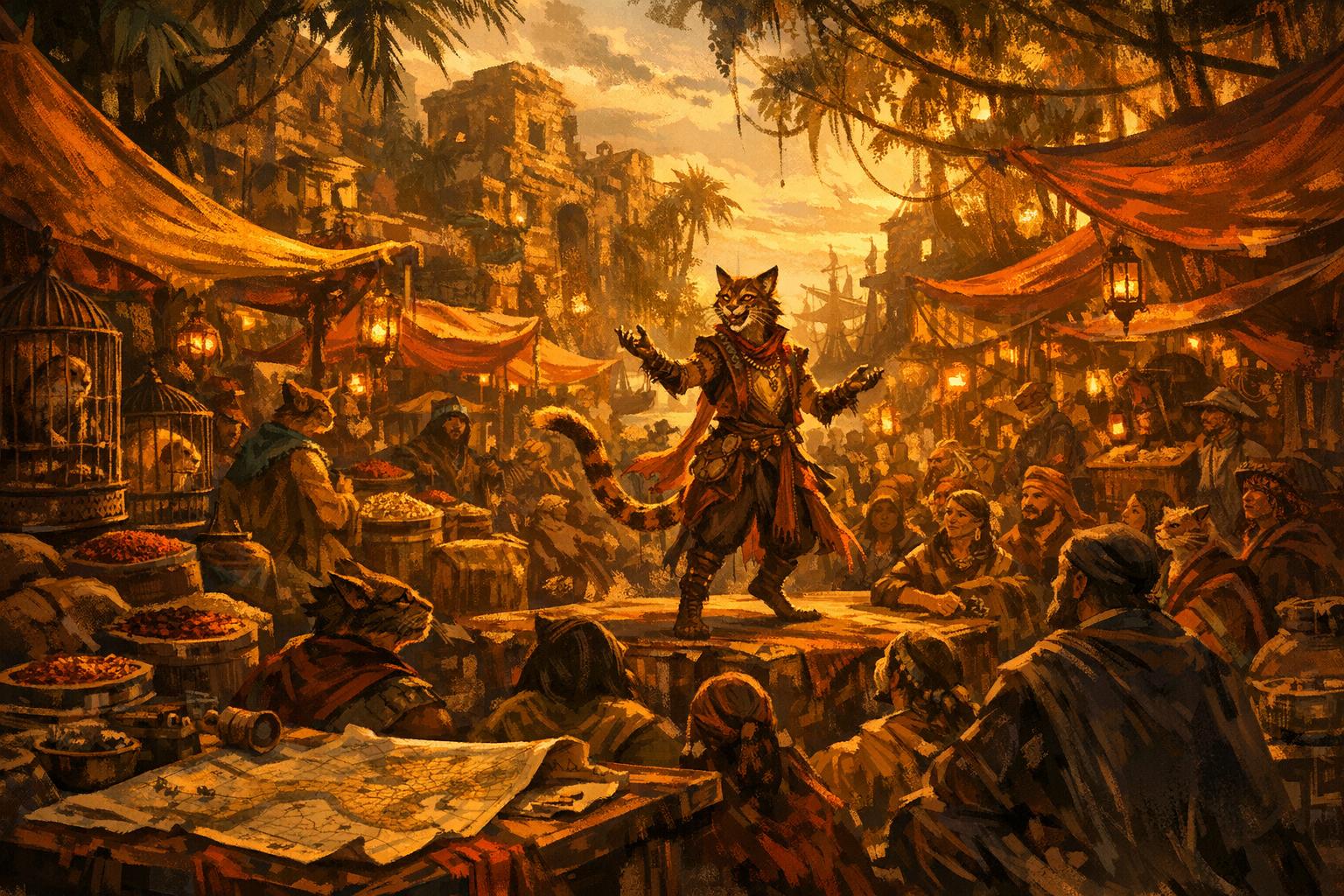
Tabaxi religious practice, such as it is, consists of storytelling. When tabaxi gather and share what they've seen, learned, and experienced, they're performing an act of devotion. The Cat Lord listens through the telling. Every new story is an offering. Every secret uncovered is a prayer answered. This makes tabaxi among the most devout species in D&D — they just don't look like it because their worship looks identical to their social life.
Some tabaxi supplement the Cat Lord with worship of other deities, particularly those associated with travel, knowledge, or trickery. Shaundakul, god of travelers and exploration, attracts tabaxi who emphasize the wandering aspect. Oghma, god of knowledge, draws those who focus on the learning aspect. Tymora finds tabaxi followers among gamblers and risk-takers who treat luck as another form of curiosity — what happens if I try this?
The few tabaxi who turn to darker faiths tend toward Shar, goddess of secrets and loss. For a curiosity-driven species, the idea that some knowledge should remain hidden is either heresy or the ultimate temptation. Shar-following tabaxi are rare and deeply unsettling to their kin — a tabaxi who hoards secrets instead of sharing them has inverted the species' core value, and that inversion feels like a sickness.
The Cat Lord exists in the Beastlands, one of the Outer Planes, and is classified as a beast lord rather than a true deity. This distinction matters mechanically — the Cat Lord doesn't grant cleric domains or paladin oaths through conventional divine channels. Tabaxi clerics typically worship a more structured deity while maintaining a personal devotion to the Cat Lord. It's polytheism by necessity: the Cat Lord provides purpose, but other gods provide spell slots.
Natural Abilities & Magical Traditions
Tabaxi magic tends toward the subtle and the swift. Their natural abilities — Feline Agility, climbing speed, darkvision, enhanced perception — aren't flashy, but they create a foundation for magical traditions that emphasize movement, awareness, and precision over raw power.
Tabaxi sorcerers and warlocks are more common than tabaxi wizards, which makes sense for a species that trusts instinct over study. The magic that surfaces in tabaxi bloodlines tends toward illusion, divination, and enchantment — schools that extend the senses, reveal hidden things, and manipulate perception. A tabaxi diviner isn't just predicting the future; they're satisfying their curiosity about what happens next.
Among tabaxi clans, the closest thing to a magical tradition is pattern-reading — interpreting the markings on tabaxi fur, the arrangement of bones in a kill, the way firelight moves across water. It's part augury, part meditation, and part storytelling. Whether it constitutes actual magic or sophisticated intuition depends on the practitioner and the DM. The tabaxi themselves don't distinguish between the two, which tells you something about how they understand the boundary between natural and supernatural.
Shadow & Stealth Magic
Tabaxi rogues and rangers develop magical techniques that extend their natural stealth into supernatural territory. Pass without trace, silence, invisibility — these spells feel less like casting and more like a predator perfecting what it already does. A tabaxi ranger casting pass without trace isn't performing magic. They're hunting.
The affinity for shadow magic occasionally produces tabaxi shadow sorcerers or Gloom Stalker rangers who operate at the boundary between the Material Plane and the Shadowfell. These individuals are viewed with mild unease by their clans — not because shadow magic is evil, but because the Shadowfell is the one place where curiosity consistently leads somewhere you shouldn't go.
Bardic Storytelling
Tabaxi bards are natural consequences of a species that values stories above gold. The College of Lore is the most popular bardic tradition among tabaxi, but any college that rewards collecting knowledge, traveling widely, and performing for diverse audiences attracts feline practitioners.
What distinguishes tabaxi bards from others is their repertoire. A human bard learns songs from a tradition. A tabaxi bard collects songs from everywhere — Elvish laments, Dwarven work chants, Orcish battle hymns, Halfling drinking songs — treating each new musical form as another curiosity to investigate and master. The result is performers with eclectic, unpredictable setlists and an audience that never knows what's coming next.
Inter-species Relationships
Tabaxi get along with almost everyone, which sounds like a compliment but is actually a consequence of their curiosity — they find every species interesting, at least initially. The halfling merchant, the dwarven smith, the elven sage, the orcish warrior — each represents a new perspective, a new set of stories, a new way of being in the world. Tabaxi don't prejudge because prejudice requires a settled opinion, and settled opinions are boring.
This openness makes tabaxi excellent diplomats, terrible enemies, and confusing allies. They'll negotiate with anyone, explore anyone's territory, and ask anyone's secrets with the same cheerful persistence. Species that value privacy — dwarves in particular — find tabaxi exhausting. Species that value sociability — halflings, gnomes — find them delightful. Species that value decorum — high elves, dragonborn — find them mildly disrespectful.
The deepest tabaxi bonds tend to form with other wandering peoples. Halfling caravan families, nomadic human tribes, and traveling kenku flocks share the tabaxi understanding that home is a direction rather than a location. These alliances of movement produce trade networks, shared campsites, and cross-species friendships that last decades — held together not by treaties but by the simple pleasure of walking the same road.
Tabaxi conflicts are rare but sharp. When a tabaxi decides you are an enemy, the same focused intensity they bring to curiosity applies to opposition. They don't hold grudges in the way dwarves do — the emotion passes once the situation is resolved. But while the conflict is active, a tabaxi adversary is relentless, creative, and very difficult to surprise, because they've already investigated everything about you.
A tabaxi in a mixed-species party gravitates toward whoever has the best stories. They'll interrogate the cleric about divine visions, pester the wizard about arcane theory, and ask the fighter to describe every battle they've ever fought. This is how tabaxi express affection — through sustained, genuine interest. If your tabaxi stops asking questions, it means they've either learned everything or they've lost interest in the person entirely.
Notable Figures & Cultural Impact
Tabaxi representation in D&D media is thinner than their popularity deserves. Unlike tieflings, who got Karlach, or drow, who got Drizzt, tabaxi lack a breakout character who defined the species in popular imagination. This is partly because they're a newer addition to the playable roster and partly because their personality — curious, mobile, hard to pin down — resists the kind of sustained spotlight that creates icons.
What tabaxi do have is a strong presence in actual play. They're consistently among the most popular species in homebrew campaigns, and tabaxi NPCs appear frequently in published adventures set in Chult and tropical regions. The species' cultural impact is grassroots rather than top-down — built by thousands of player characters rather than a single canonical hero.
Tabaxi in D&D Media & Adjacent Fiction
| Character / Reference | Source | Role | Significance |
|---|---|---|---|
| Various tabaxi NPCs | Tomb of Annihilation (2017) | Guides, merchants, hunters in Chult | First major published adventure featuring tabaxi in significant roles; established jungle-explorer archetype |
| Tabaxi minstrels | Volo's Guide to Monsters (2016) | Wandering storytellers and collectors | Defined the species' cultural identity as curious wanderers and knowledge-gatherers |
| Player-created tabaxi | D&D Beyond / homebrew | Rogues, monks, bards, rangers | Community-driven archetype development; tabaxi rogues and monks became iconic builds |
| Khajiit (Elder Scrolls) | Skyrim, ESO, etc. | Cat-folk merchants, warriors, monks | Most visible cat-folk in gaming; frequent point of comparison for tabaxi players |
| Cait Sith / Ronso | Final Fantasy series | Cat-folk warriors and tricksters | Japanese RPG cat-folk tradition that parallels tabaxi roles: agile, mysterious, independent |
The Khajiit comparison is the one tabaxi players hear most often. It's imprecise — Khajiit culture revolves around trade and moon-sugar, while tabaxi culture revolves around curiosity and stories — but the visual overlap ensures the comparison will persist.
D&D Mechanics Across Editions
Tabaxi mechanics tell a simple story: they didn't exist as a playable species until 5e, and their 5e implementation was good enough that players never stopped wanting more. The Volo's Guide version remains one of the most mechanically elegant species designs in fifth edition — every ability connects to the fantasy of playing a cat-person, and nothing feels like filler.
Tabaxi Mechanical Evolution
| Feature | 1e (Monster) | 5e Volo's (2016) | 5e MotM (2022) |
|---|---|---|---|
| Status | Monster entry | Playable species | Playable species (revised) |
| Key Ability | N/A | DEX +2, CHA +1 | Flexible |
| Signature Mechanic | Claw/bite attacks | Feline Agility | Feline Agility (unchanged) |
| Climb Speed | Not specified | 20 ft. | 30 ft. |
| Skill Proficiencies | N/A | Perception, Stealth | Perception, Stealth |
| Design Role | Jungle encounter | Mobile striker / scout | Mobile striker / scout (flexible stats) |
Feline Agility has survived every revision unchanged — a sign that the original design was right. When something works, you leave it alone.
- Monster entry only — not playable
- Described as "humanoid leopard-folk"
- Jungle ambush predators
- No cultural detail beyond tribal organization
The 1e tabaxi was a monster, not a species. It had more in common with gnolls than with the curious wanderers they would become. No one in 1981 imagined players would want to be these.
- Darkvision 60 ft.
- Feline Agility (double speed for one turn; reset by not moving)
- Cat's Claws (1d4 slashing, climbing speed 20 ft.)
- Cat's Talent (Perception + Stealth proficiency)
- Speed: 30 ft., Climb: 20 ft.
One of the best-designed species in Volo's Guide. Every feature tells you what tabaxi are about: fast, perceptive, stealthy, and built to go places others can't reach. Feline Agility alone made them a top-tier choice for rogues and monks.
- Darkvision 60 ft.
- Feline Agility (unchanged)
- Cat's Claws (1d4 slashing, climbing speed equal to walking speed)
- Cat's Talent (Perception + Stealth proficiency)
- Speed: 30 ft., Climb: 30 ft. (improved)
The Monsters of the Multiverse revision kept everything that worked and improved the climbing speed from 20 to 30 feet. Flexible ability scores opened tabaxi to strength-based and intelligence-based builds without sacrificing species identity.
Cat-Folk Across Franchises
Cat-folk are one of the most popular fantasy archetypes, appearing in nearly every major franchise. The comparison points reveal what each franchise considers essential about the concept — and where D&D's tabaxi fit in the broader landscape of fictional felines.
What makes tabaxi distinct is the curiosity mechanic. Most cat-folk in other franchises are defined by agility, independence, or mysticism. Tabaxi are defined by the need to know. That single design choice separates them from the Khajiit (defined by trade and moon-sugar culture), the Mithra/Miqo'te (defined by tribal structure and combat prowess), and the Thundercats (defined by heroic destiny). Tabaxi are the only major cat-folk species where wanderlust and intellectual hunger are the primary species traits.
Cat-Folk Across Fantasy Franchises
| Franchise | Species | Defining Trait | Key Distinction from Tabaxi |
|---|---|---|---|
| D&D | Tabaxi | Curiosity-driven wanderers with feline agility | The original tabletop cat-folk; curiosity as core identity |
| Elder Scrolls | Khajiit | Merchant-warriors tied to lunar cycles | Moon-sugar culture and caravan trade define identity more than curiosity |
| Final Fantasy XIV | Miqo'te | Tribal hunters with sun/moon clan split | Structured clan hierarchy; less wandering, more territorial |
| Pathfinder | Catfolk (Amurrun) | Lucky, agile humanoids with feline instincts | Luck mechanic replaces curiosity; more combat-oriented design |
| Thundercats | Thunderians | Heroic cat-warriors with tech and magic | Civilization-builders with a chosen-one narrative; no wanderlust |
| World of Warcraft | Saberon | Feral cat-folk of Draenor | More bestial than civilized; represent the "wild" end of the cat-folk spectrum |
The Khajiit comparison will follow tabaxi forever. The difference is philosophical: Khajiit ask "what can I sell?" Tabaxi ask "what can I learn?" Both are valid expressions of feline-humanoid culture.
FAQ
Common Questions
Give your curiosity direction. Pick a specific category of obsession — rare inks, forgotten languages, unusual locks — and pursue that intensely rather than chasing every shiny object. Coordinate with your DM so your curiosity creates adventure hooks rather than distractions. The best tabaxi players treat curiosity as a motivation that aligns with the party's goals: "I want to explore that dungeon" is more useful than "I wander off alone." Channel the cat energy into investigation, not disruption.
Rogue and monk are the classic choices — Feline Agility combined with Cunning Action or Step of the Wind creates absurd mobility. Ranger (Gloom Stalker especially) leverages darkvision and stealth proficiency into a devastating ambush package. Bard fits the storyteller archetype and uses the Charisma bonus effectively. With flexible ability scores from MotM, tabaxi work well as any class, but their kit rewards hit-and-run tactics, scouting, and positioning — builds that care about movement get the most from Feline Agility.
Visually similar, culturally distinct. Khajiit society revolves around the moons, moon-sugar, and a sophisticated trade network with deep religious significance. Tabaxi society revolves around curiosity, storytelling, and the Cat Lord. Khajiit have a complex caste system determined by lunar phases at birth — some Khajiit are house-cat-sized, others are tiger-like. Tabaxi are more uniform physically but more varied in their wanderings. The biggest difference is motivation: Khajiit are merchants and opportunists; tabaxi are explorers and collectors of knowledge.
Absolutely. The wanderer tradition means tabaxi show up everywhere. A tabaxi in Waterdeep is a collector of urban secrets. A tabaxi in Icewind Dale is driven by curiosity about a land that couldn't be more different from their jungle homeland. A tabaxi in Ravenloft is trapped in a place where every mystery leads to horror — which, for a curiosity-driven species, is either the worst prison imaginable or the most fascinating one. The jungle origin explains where they came from; it doesn't limit where they go.
The rules don't grant tabaxi any special falling mechanics, but their cat-like agility invites the question at every table. A generous DM might allow an Acrobatics check to reduce fall damage by a small amount, and the monk's Slow Fall feature feels particularly thematic on a tabaxi character. Narratively, tabaxi are described as having excellent balance and reflexes, so describing a graceful tumble during a fall is perfectly in character even if the damage stays the same.
Feline Agility doubles your speed for the turn, and it stacks with everything. A tabaxi monk with 50 feet of movement activates Feline Agility for 100 feet, then uses Step of the Wind to Dash for 200 feet in a single turn. Add Haste and you're looking at absurd distances. The only catch is the reset condition: you have to spend an entire turn moving zero feet before you can use it again. Smart tabaxi players time the activation for when maximum burst matters most — closing a gap, escaping a grapple, or reaching a downed ally across a battlefield.