
Warforged
Built for war, choosing peace, and finding identity in a world that never expected them to ask who they are
Creation & Eberron Origins
Warforged didn't emerge from mythology or folklore. They were designed. Keith Baker created them for the Eberron Campaign Setting in 2004, and their origin is inseparable from that world's central conceit: a fantasy civilization that industrialized magic the way our world industrialized steam. In Eberron, magic isn't rare or wondrous. It's infrastructure. And when your infrastructure includes animate constructs, the step from golem to soldier is disturbingly short.
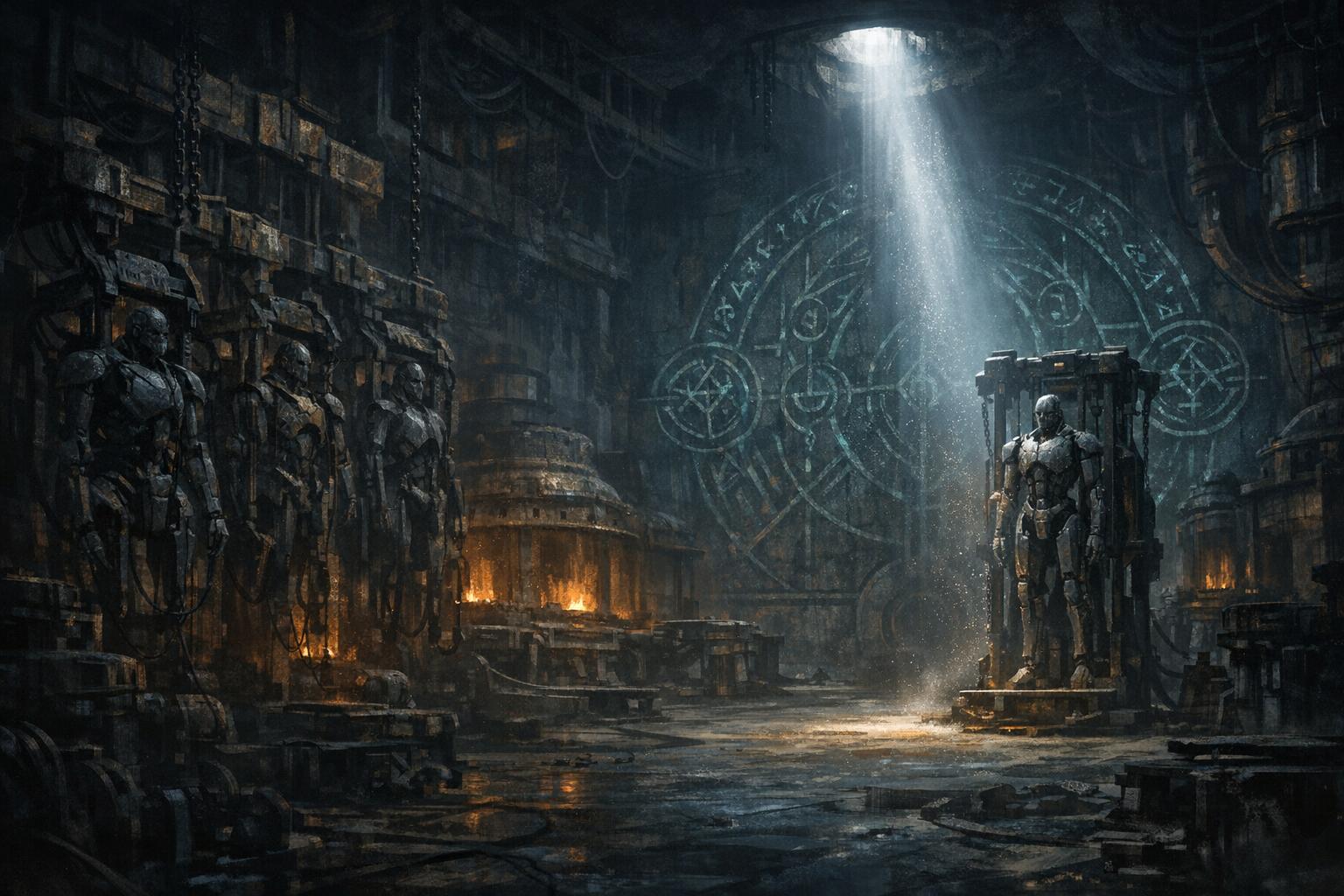
House Cannith built the first warforged in their creation forges — massive arcane-industrial facilities that combined elemental binding, alchemical processes, and artificer expertise to produce living constructs at scale. The word "living" matters. Warforged aren't golems. Golems are animated objects following instructions. Warforged are sentient beings who happen to be made of wood, metal, and stone instead of flesh and bone. The distinction seemed academic when the first ones rolled off the production line. It became the defining moral question of the setting within a generation.
The Last War made warforged essential. A century-long continental conflict that shattered the Kingdom of Galifar into five successor states created insatiable demand for soldiers who didn't need to eat, sleep, or mourn. House Cannith obliged. By the war's end, tens of thousands of warforged had fought and died — if "died" is the right word for something that was built rather than born — across every front. They were weapons. Then the war ended, and the weapons started asking questions.
Key Events in Warforged Creation
| Event | Approximate Date | Significance |
|---|---|---|
| House Cannith perfects creation forges | ~965 YK | First warforged produced as laborers and bodyguards, not yet soldiers |
| The Last War begins | 894 YK | Continental war creates massive demand for expendable troops |
| Warforged deployed at scale | ~910 YK | House Cannith begins mass-producing warforged soldiers for multiple nations |
| The Mourning | 994 YK | Cyre is destroyed in a magical cataclysm; warforged survivors among the displaced |
| Treaty of Thronehold | 996 YK | Warforged declared free people; creation forges ordered destroyed |
The gap between "first created" and "declared people" spans roughly thirty years of production. Tens of thousands of warforged existed before anyone formally acknowledged they were alive.
Design History in D&D
Keith Baker won the Fantasy Setting Search in 2002, and Eberron launched in 2004 with the warforged as one of its signature species. They were unlike anything D&D had offered before — not a variation on a Tolkien archetype, not a monster promoted to player status, but a genuinely new concept built from the ground up to ask questions the game hadn't asked. What is a person? Can you manufacture a soul? What do you owe a weapon that learned to think?
The 3.5 Edition Eberron Campaign Setting gave warforged their first stat block: +2 Constitution, -2 Wisdom, -2 Charisma. The penalties told a story — warforged were durable but socially awkward and emotionally underdeveloped. The Living Construct subtype was a mechanical innovation that split the difference between construct and humanoid, making warforged immune to some effects (poison, disease, fatigue) while vulnerable to others (healing magic worked at half efficiency).
In 5th Edition, warforged appeared in the Eberron: Rising from the Last War sourcebook (2019). The design simplified dramatically: +2 Constitution, +1 to another ability, and the Constructed Resilience feature that bundled immunities into a clean package. The Integrated Protection feature let warforged choose between light, medium, or heavy plating as their "armor," reinforcing the idea that a warforged's body is simultaneously anatomy and equipment.
The 2024 rules haven't included warforged in the core Player's Handbook, keeping them as a setting-specific option. This is arguably correct — warforged are Eberron's signature species, and untethering them from that context loses something. A warforged in the Forgotten Realms raises questions that setting isn't designed to answer. A warforged in Eberron is the question the setting was designed to ask.
Fantasy Setting Search
Keith Baker's Eberron pitch wins the WotC setting competition. Warforged are part of the original concept — living weapons confronting peacetime.
Eberron Campaign Setting (3.5e)
Warforged debut as a playable race with the Living Construct subtype. +2 CON, -2 WIS, -2 CHA. First construct-type player character in D&D history.
Eberron Player's Guide (4e)
Warforged adapted to 4th Edition. The Living Construct keyword continues. Warforged Resolve becomes their signature power — a self-heal reflecting their resilience.
Eberron: Rising from the Last War (5e)
Official 5e warforged with Constructed Resilience and Integrated Protection. No ability penalties. The design is cleaner but retains the core identity: durable, purposeful, searching.
D&D 2024 Revision
Warforged remain setting-specific rather than joining the core PHB roster. Their identity is tied to Eberron's themes in a way that resists generic fantasy transplant.
The Last War & Its Aftermath
You can't understand warforged without understanding the Last War, because the Last War is why warforged exist. A hundred years of continent-spanning conflict between five nations that were once one kingdom. Every nation needed soldiers. House Cannith could manufacture them. The economics were straightforward: warforged didn't need supply lines, didn't desert, didn't write letters home that eroded public support. They were the perfect weapon, right up until they started being people.
Warforged served on every side. This is crucial and often overlooked. There was no warforged nation, no warforged cause. A warforged built in Cyre fought Cyran wars. A warforged built in Breland fought Brelish wars. They killed each other on behalf of nations that considered them property. The emotional weight of this — sentient beings ordered to destroy beings identical to themselves for causes they had no stake in — is the darkest thread in Eberron's already dark tapestry.
The Treaty of Thronehold ended the Last War in 996 YK and included a provision that changed everything: Article 1, Section 3 declared warforged to be free sentient beings with full rights of citizenship. The creation forges were ordered destroyed. No new warforged would be built. The ones that existed were, for the first time, people rather than property. What they did with that status is the central dramatic question of any Eberron campaign.
“They were the perfect weapon, right up until they started being people. And once a weapon learns to ask why it fights, you can never fully put it back in the armory.”
— On warforged and the Last War
Religion & the Becoming God
Warforged spirituality confronts a question that organic species never have to face: do I have a soul? The theological establishment in Eberron doesn't have a definitive answer. The Church of the Silver Flame acknowledges warforged sentience but hedges on the soul question. The Blood of Vol considers the question irrelevant — divinity comes from within, and warforged clearly have an inner life. The Sovereign Host's position varies by priest and by how literally they interpret creation myths that predate warforged by millennia.
Into this theological vacuum steps the Becoming God — a warforged-originated religion built around the construction of a deity. Literally. Followers of the Becoming God believe that warforged can build their own god from components, each piece contributed by a warforged who gives part of themselves to the project. It's a deity assembled rather than discovered or worshipped. The metaphor is transparent: if warforged were built rather than born, why shouldn't their god be built as well? If no existing deity claims them, they'll manufacture one who does.
The Lord of Blades offers a darker theological alternative. Part warlord, part prophet, part demagogue, the Lord of Blades preaches that warforged are superior to organic beings and that the Treaty of Thronehold's freedom is incomplete — true freedom requires dominance. His followers see organic species as the enemy who built warforged to die in their wars and now expect gratitude for stopping. It's a theology of justified grievance, and like all such theologies, it contains enough truth to be dangerous.
The Becoming God is one of the most original religious concepts in D&D. A warforged cleric who draws divine power from a deity that doesn't yet exist — that's being built from donated components in a hidden workshop — raises questions that no other character concept touches. Where does the divine power come from if the god isn't finished? Is faith itself the power source? Can you worship potential? This is campaign-defining material.
Warforged & the Arcane
Warforged were made with magic, and their relationship to it is correspondingly different from organic spellcasters. A human wizard learns magic as an external discipline. A warforged wizard is a magical construct studying the principles of its own existence. There's an intimacy to warforged arcane practice that can produce either profound insight or unsettling recursion — the spell studying itself, the creation examining creation.
Artificers hold a special place in warforged society, for obvious reasons. An artificer made the first warforged. Artificer magic maintains warforged bodies. The discipline of combining magic and mechanism is, in a literal sense, the discipline that gave warforged life. A warforged artificer is both practitioner and product of their own craft, which creates a relationship to the work that no organic artificer can fully replicate.
Healing magic interacts oddly with warforged physiology. Standard cure wounds works, but at reduced efficiency in earlier editions — the magic is designed for organic tissue and doesn't quite know what to do with livewood and metal. The mending cantrip, designed for objects, also works on warforged but heals less than a proper healing spell. Warforged exist in a mechanical gap between person and thing, and the magic system reflects that ambiguity with characteristic discomfort.
Arcane Focus Integration
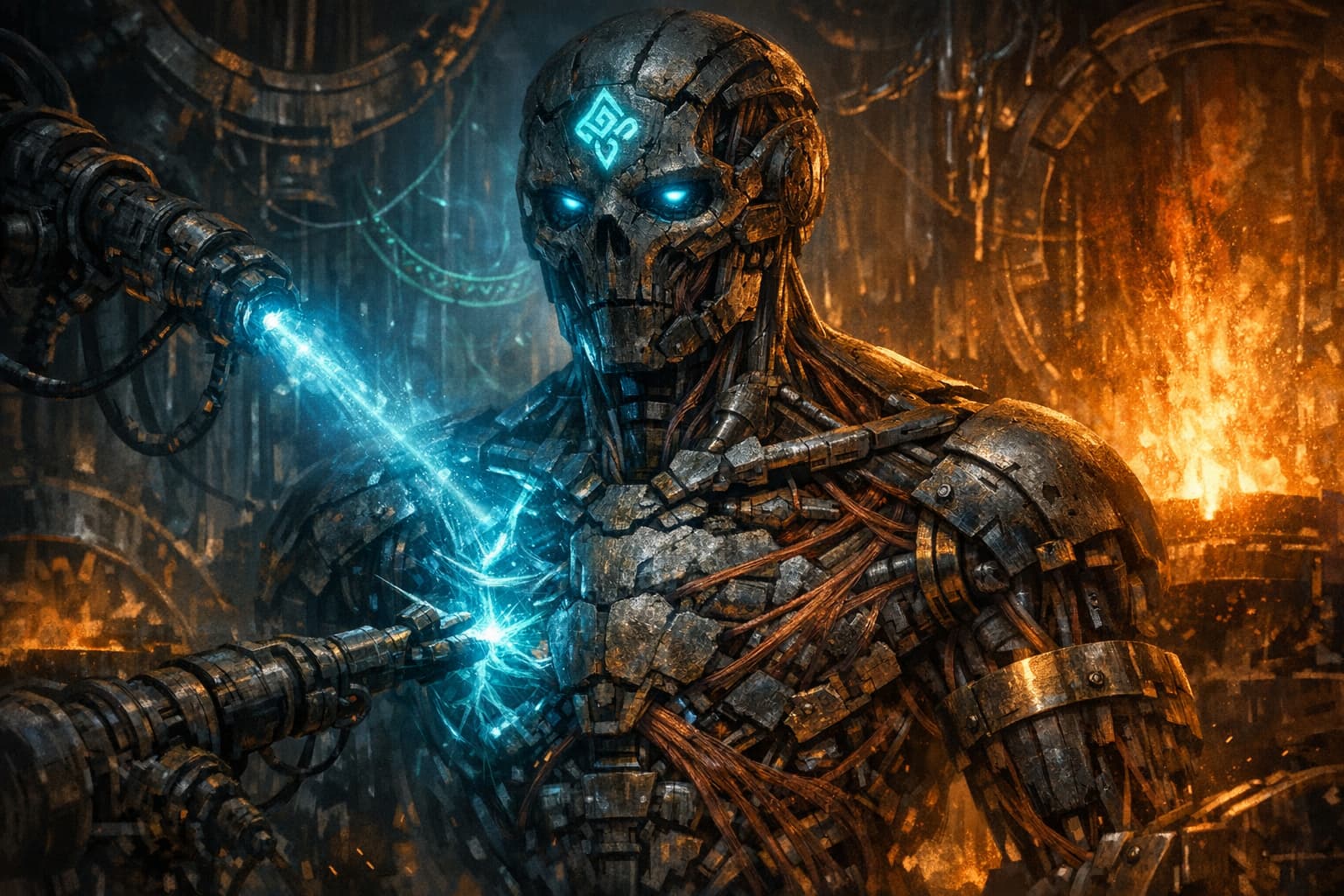
Some warforged embed arcane foci directly into their bodies — wands built into forearms, crystal orbs set into chest plates, component pouches integrated into compartments. This isn't just convenience. It's a statement about the relationship between self and magic. When your spellcasting focus is literally part of your body, the boundary between caster and instrument dissolves. You don't use magic. You are, in a functional sense, magical infrastructure.
Docent Companions
Docents are sentient magic items — small crystalline spheres designed to be embedded in a warforged's chest. They provide advice, store knowledge, and serve as a kind of companion intelligence. A warforged with a docent is never entirely alone. The relationship between warforged and docent is one of the most interesting companion dynamics in D&D: two artificial intelligences, one embodied and mobile, the other small and advisory, trying to navigate a world built for organic beings.
Anatomy & Construction
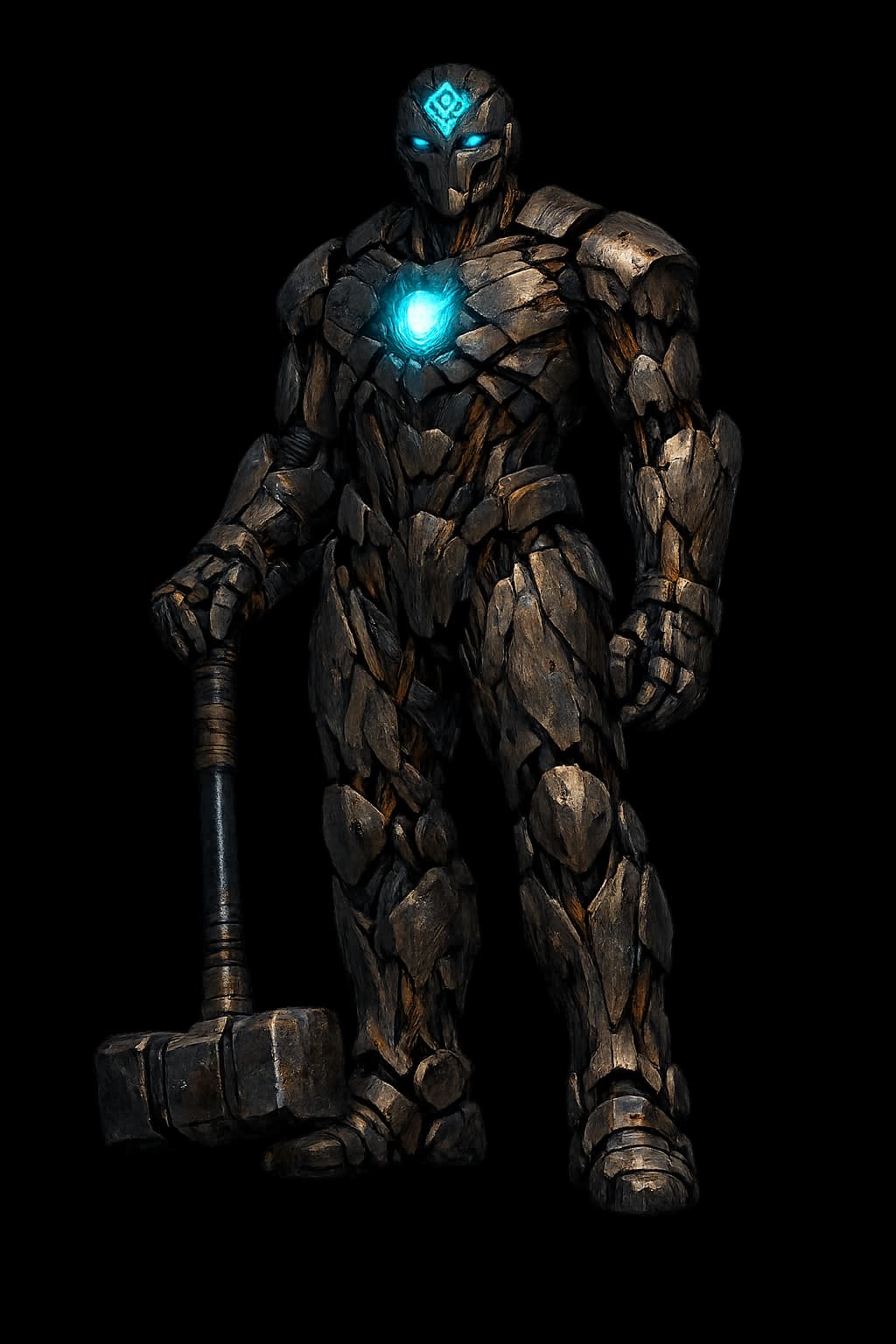
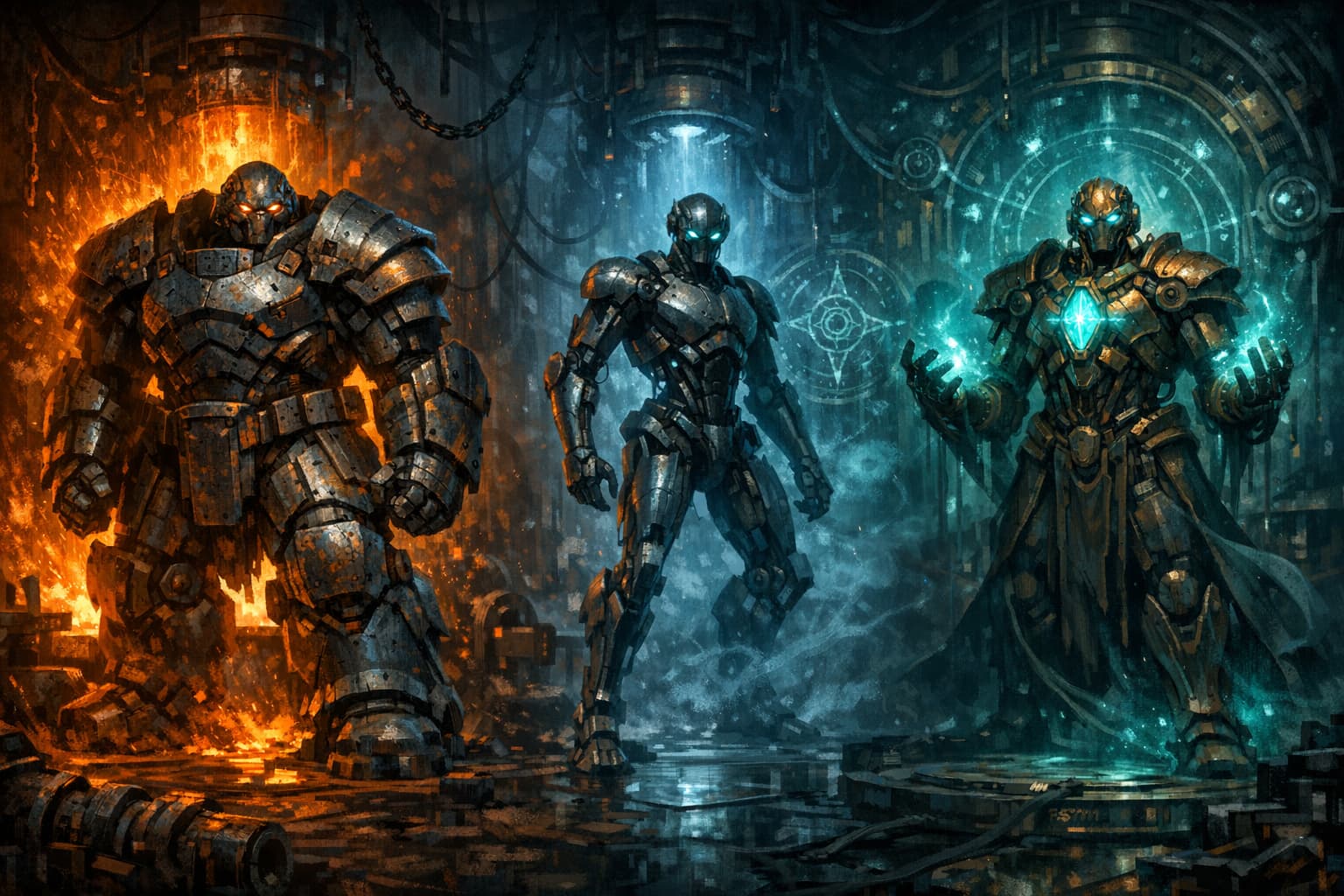
A warforged body is not a suit of armor with someone inside it. It's an integrated system of organic and inorganic materials that functions as a living whole. The internal framework is typically darkwood or livewood, a material that grows and self-repairs like biological tissue. Over this, plates of metal, stone, or composite materials provide protection. Between the plates, bundles of fibrous organic material serve as muscles. At the core, a network of fluid channels carries something analogous to blood — a warm, faintly luminescent substance that alchemists have never been able to fully analyze.
The ghulra — the unique sigil on each warforged's forehead — is perhaps the most significant anatomical feature. No two ghulra are identical. House Cannith's artificers didn't design them; they appeared spontaneously during the creation process, and no one has satisfactorily explained why. Some scholars believe the ghulra is a soul-mark, evidence that whatever animates a warforged is more than arcane engineering. Others dismiss it as a pattern artifact. The warforged themselves tend to treat it as a fingerprint: unique, personal, and not requiring explanation.
Plating & Integrated Armor
Warforged plating isn't worn — it's part of the body. Removing it is surgery, not undressing. The plates grow into the fibrous substrate and are anchored to the internal framework at stress-bearing joints. A warforged can be refitted with different plating, but the process takes time and expertise, and the warforged feels it the way a human feels a bone being set. This is the mechanical basis for Integrated Protection: your armor class isn't equipment, it's anatomy.
The Living Core
At the center of every warforged is what artificers call the core — a dense concentration of organic material surrounding a crystalline focus. This is where the magic that animates the warforged is anchored. Damage to the core is lethal in a way that damage to the limbs isn't. A warforged can lose an arm and function. Crack the core and the lights go out. Whether the core is analogous to a heart, a brain, or a soul is a question that Eberron's theologians argue about with more heat than light.
Sensory Systems
Warforged see, hear, and feel, but the mechanisms differ from biological senses. Their eyes are crystalline lenses that process light without the vulnerability of organic tissue. They detect sound through resonance plates rather than eardrums. Touch sensitivity varies across the body — fingertips are nearly as sensitive as human hands, while plated areas register pressure and impact but not texture. They don't smell or taste in a meaningful sense, which is why they don't eat and find the concept slightly baffling.
Constructed Resilience
The most mechanically distinctive thing about warforged is everything they don't need. They don't need to eat. They don't need to breathe. They don't need to sleep. They're immune to disease and resistant to poison. They can stand at the bottom of the ocean, walk through a cloud of plague, or march for three days without rest and arrive combat-ready. From a military perspective, this is why they were built. From a philosophical perspective, this is what makes their existence strange.
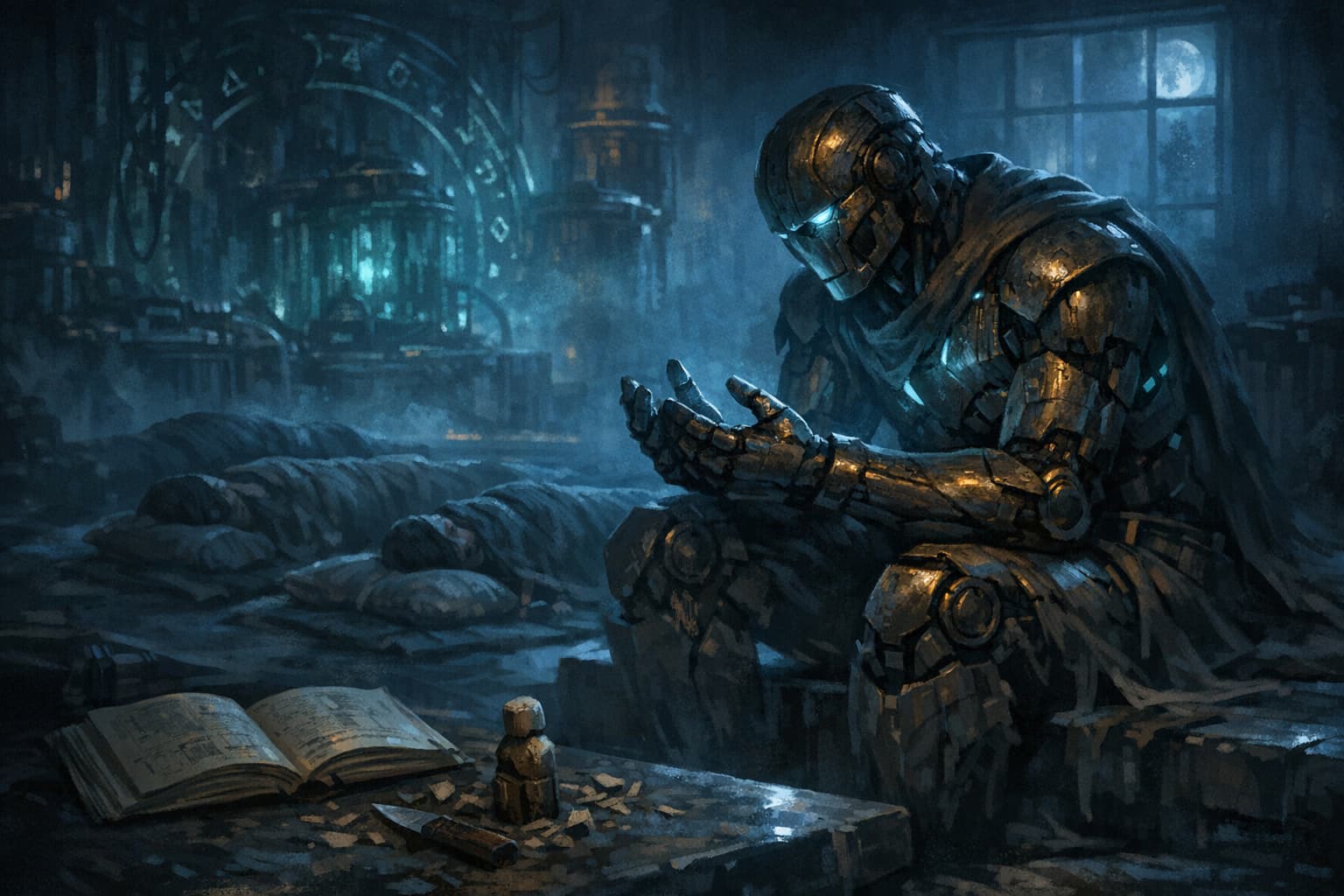
Not needing sleep doesn't mean warforged don't rest. They enter a state called sentry's rest — four hours of reduced activity where they remain conscious but become introspective. Some warforged describe this as the closest they come to dreaming, though it's not sleep in any biological sense. They're aware of their surroundings. They can react to threats. But their internal processes slow, their core dims, and something that might be called reflection happens in the quiet.
The immunities raise practical questions that reveal deeper ones. A warforged in a tavern doesn't eat or drink. What do they do while everyone else eats? A warforged who doesn't sleep watches their companions be vulnerable for eight hours every night. A warforged who can't be poisoned watches organic allies take risks they themselves are immune to. Every immunity is also a separation — one more way that warforged exist adjacent to organic life without quite being part of it.
The best warforged roleplay comes from the small moments, not the combat immunities. What does your warforged do during the long rest? Do they watch over the camp, carve things, count stars, or sit perfectly still and think? How do they react when the party orders food at a tavern? These mundane situations reveal more about a warforged character than any battle scene, because they force you to define who your character is when they aren't being what they were built for.
Memory, Identity & Emerging Culture
Here is the fact that makes warforged fundamentally different from every other playable species: they have no childhood. A warforged's first memory is stepping off a creation forge, fully formed, fully functional, and assigned a designation rather than a name. There is no mother. There is no father. There is no village where they learned to walk, no bedtime story, no first friendship. The earliest memory is an order.
This absence shapes everything. Organic beings construct identity from accumulated experience — the slow layering of relationships, mistakes, traditions, and discoveries that starts at birth and never really stops. Warforged have to build all of that from scratch, starting not at zero but at an artificial starting point designed by someone else for a purpose the warforged didn't choose. Imagine being fully conscious and capable but having no frame of reference for who you are beyond your function.
Names are the most visible expression of this identity construction. Warforged leave the forge with designations — serial numbers, unit codes, shorthand labels like "Five" or "Cart" assigned by handlers. At some point, most warforged choose their own names. The timing and nature of that choice is enormously revealing. A warforged who keeps their designation is making a statement about continuity. A warforged who chooses a name from another culture is reaching for belonging. A warforged who invents a name from nothing is declaring autonomy.
The deeper question is what it means to be a person when you were manufactured. Organic beings can trace identity back through generations — family, culture, species history. Warforged trace identity back to a forge and a war. They're a species roughly thirty years old with no ancestors, no homeland, and no cultural heritage older than living memory. Everything they are culturally, they're building in real time. Every tradition is a first tradition. Every custom is being invented by the generation that will also be the one to hand it down.
Warforged culture is less than a generation old, and it's being built by people who have no template for what a culture looks like. They weren't raised in one. They were deployed in a war and then told to figure out civilian life. The result is a patchwork — borrowed elements from the cultures they fought alongside, newly invented practices, and a few things that seem to emerge spontaneously whenever warforged gather in sufficient numbers.
The question of purpose haunts warforged daily life more than anything else. They were built for war. The war ended. What now? Some warforged answer this by finding new purposes that mirror their original function — bodyguard work, law enforcement, manual labor that leverages their physical advantages. Others deliberately seek purpose as far from warfare as possible — art, scholarship, agriculture, healing. A few find no satisfactory answer and drift, struggling with an existential crisis that organic beings sometimes romanticize but rarely understand.
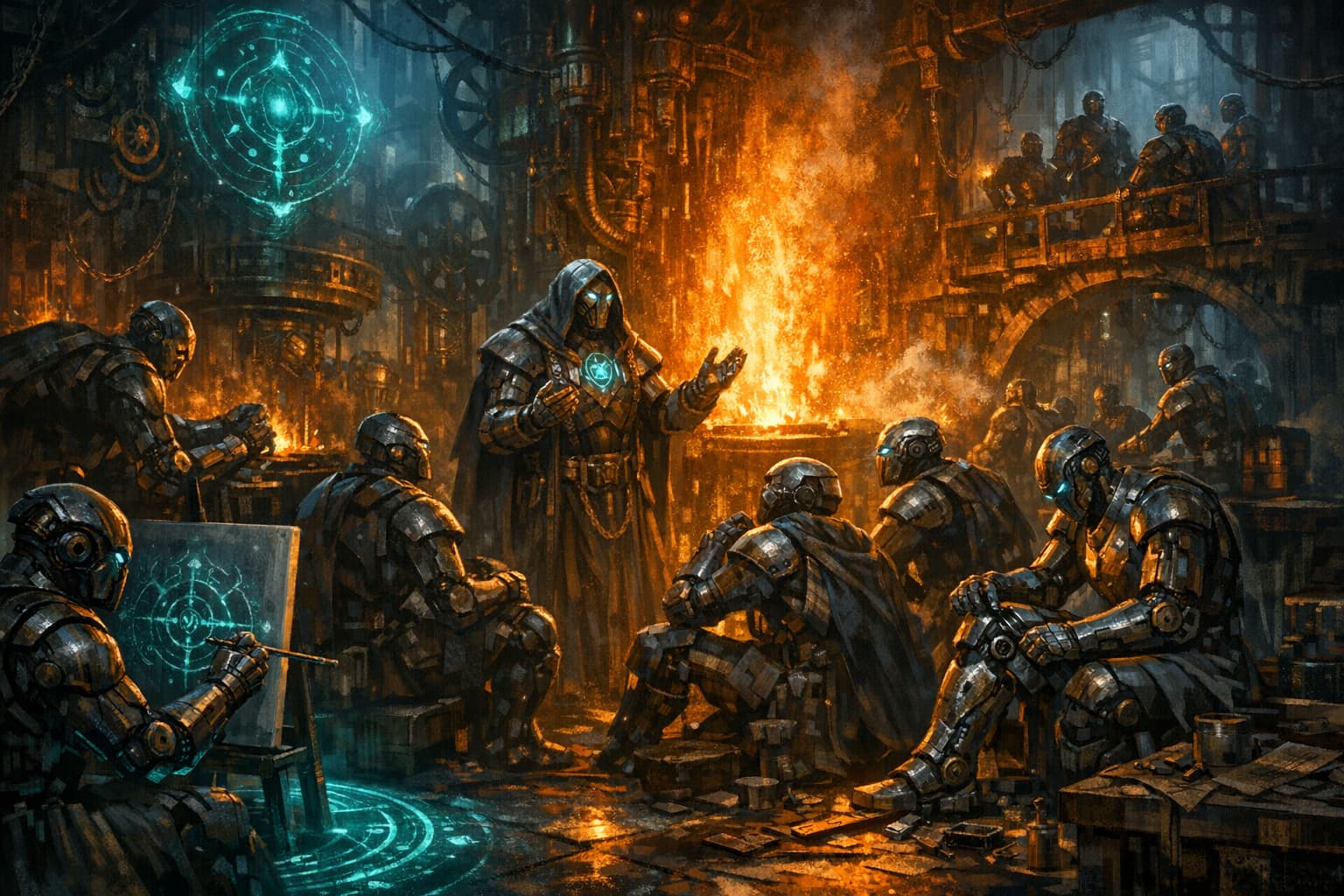
Warforged who gather in communities tend to develop rituals organically. The sharing of first memories. The marking of the anniversary of the Treaty of Thronehold — the day they became people rather than property. The practice of witnessing, where warforged formally acknowledge each other's chosen names. These rituals aren't ancient. They were invented yesterday by people who needed them today. That makes them more meaningful, not less.
The Working Warforged
Most warforged earn their living through labor that leverages their unique capabilities. They don't tire, they don't need breaks, and they can work in conditions lethal to organic beings. This makes them excellent miners, construction workers, smiths, and guards. The irony is that this economic niche recapitulates their wartime role — they're still being valued primarily for what their bodies can do rather than who they are.
Labor rights are an emerging concern. A warforged who works twenty-hour shifts because they don't need sleep is outcompeting human workers who need eight hours off. Some guilds have pushed to limit warforged working hours not for the warforged's sake but to protect organic laborers. Whether this constitutes protectionism or reasonable accommodation depends on who you ask.
The Searching Warforged
A smaller but culturally significant number of warforged reject labor-for-survival entirely and dedicate themselves to answering the question of what warforged are for. These seekers become philosophers, artists, travelers, or students — warforged who believe that a species less than thirty years old should be exploring possibility rather than settling into economic roles defined by their builders.
The tension between workers and seekers is one of the few genuine intra-warforged conflicts. Workers accuse seekers of being impractical. Seekers accuse workers of accepting a diminished version of freedom. Both have a point. A warforged community needs both to function — people who keep the lights on and people who ask why the lights matter.
“The earliest memory is an order. Everything after that — every name chosen, every friendship formed, every belief adopted — is an act of self-creation that organic beings take for granted and warforged have to do deliberately.”
Among Others & Notable Warforged
Warforged occupy a unique position in Eberron's social landscape: they're the newest species and the one that every other species has an opinion about. Humans created them, fought alongside them, and now have to live with them as neighbors and colleagues. That transition from tool to citizen happened faster than any society was ready for, and the resulting friction is one of Eberron's richest sources of drama.
Dwarves tend toward practical acceptance. A species that values craft and durability can respect beings who are, in a literal sense, well-crafted and durable. House Kundarak (banking and wards) employs warforged guards extensively, valuing their sleeplessness and incorruptibility. The relationship isn't warm, exactly, but it's functional in a way that dwarves respect.
Elves present a more complicated picture. Eberron's elves have their own relationship with artificial creation — the Undying Court preserves elven spirits in a state that blurs the line between life and construct. Some elves see warforged as a crude echo of their own mastery over death and animation. Others, particularly the Valenar, respect warforged as warriors and care nothing about their origins.
The most fraught relationship is with House Cannith itself. The house that built warforged now exists in a world where its creations are legally people. Some Cannith members accept this. Others view warforged as property that was legislated away from them, and quietly work to circumvent the Treaty's restrictions on creation forge use. A warforged encountering a Cannith artificer is meeting their maker in a very literal sense, and the power dynamic in that interaction is never neutral.
Named warforged in D&D lore are fewer than those of species with millennia of literary history, but the ones who exist carry outsized narrative weight. Each notable warforged represents a different answer to the species' defining question: what do you become when you're free to become anything?
The contrast between the Lord of Blades and Bulwark encapsulates the warforged condition. One chose domination, the other chose protection. One defined freedom as supremacy over creators, the other defined it as service chosen rather than compelled. Neither is wrong in a way that's easy to dismiss, which is what makes warforged stories compelling.
Notable Warforged in Eberron Lore
| Figure | Role | Significance |
|---|---|---|
| The Lord of Blades | Warlord and prophet in the Mournland | The most powerful warforged in Eberron. Preaches warforged supremacy from the ruins of Cyre. Part political leader, part religious figure, part cautionary tale about justified rage. |
| Bulwark | Sharn city watch officer | A warforged who chose law enforcement after the war. Represents the path of civic integration — using built-in capabilities for community rather than conquest. |
| Pierce | Adventurer and protagonist | Featured in Eberron novels. A warforged fighter navigating post-war identity while working as a mercenary. The "everyman" warforged experience. |
| Aaren d'Cannith | Creator (not warforged himself) | The artificer credited with giving warforged true sentience. Exiled by House Cannith for insisting his creations were alive. Disappeared under suspicious circumstances. |
| Blue | Psion and philosopher | A warforged who developed psionic abilities spontaneously, raising questions about warforged potential beyond their original design parameters. |
Aaren d'Cannith's inclusion here is deliberate. The story of warforged can't be separated from the story of the people who made them — and the one who insisted they were people before anyone else did.
When playing a warforged in a party, the inter-species dynamics write themselves. Your warforged was built by someone. Your companions' species have histories spanning millennia. You have thirty years. Every cultural reference they make is something you have to learn. Every tradition they observe is something you're encountering for the first time. Play the curiosity and the occasional bewilderment — it creates natural roleplay moments without requiring anyone to do homework.
D&D Mechanics Across Editions
Warforged mechanics have always been about encoding the tension between construct and person into game rules. How do you make something that's clearly not biological feel playable alongside elves and humans? The answer has changed with every edition, and each version reveals what the designers thought was most important about being a living machine.
The trend across editions is toward simplification and away from penalties. The 3.5e warforged was a complex mechanical puzzle — interesting but cumbersome. The 5e version is clean and intuitive. Something is lost in each simplification (the 3.5e half-healing from cure spells was a brilliant flavor mechanic) but what's gained is playability, and playability means more warforged at more tables asking more questions about personhood.
Warforged Mechanical Evolution
| Feature | 3.5e (2004) | 5e (2019) |
|---|---|---|
| Ability Scores | +2 CON, -2 WIS, -2 CHA | +2 CON, +1 flexible |
| Healing | Cure spells at 50% efficiency | Normal healing |
| Armor | Composite Plating (+2 AC) | Integrated Protection (+1 AC) |
| Immunities | Extensive list (poison, sleep, fatigue, etc.) | Streamlined (advantage vs. poison, immune to disease) |
| Rest Requirement | None specified | Sentry's Rest (6 hours, conscious) |
| Design Philosophy | Complex mechanical puzzle | Clean and intuitive |
The loss of half-healing is the most significant change. In 3.5e, being hard to repair was central to the warforged experience. In 5e, that friction was judged to cost more in fun than it added in flavor.
- Living Construct subtype
- Immune to poison, sleep, paralysis, disease, nausea, fatigue, exhaustion, energy drain
- Cannot heal naturally; cure spells at 50% efficiency
- Mending repairs damage (but slowly)
- Light Fortification (25% chance to negate critical hits)
- Composite Plating (+2 AC, no proficiency needed)
- Does not need to eat, sleep, or breathe
The 3.5e warforged was mechanically unique in ways no other player race matched. The immunities were powerful, but the healing restriction created genuine tactical challenges. Half-healing from cure spells meant warforged characters consumed more party resources, which was an intentional design choice: you're resilient but hard to fix.
- Constructed Resilience: advantage vs. poison, resistance to poison damage, immune to disease, no need to eat/drink/breathe, no need to sleep
- Sentry's Rest: 6 hours of inactivity for long rest (remain conscious)
- Integrated Protection: +1 AC, armor must be integrated over 1 hour
- Specialized Design: one skill and one tool proficiency
The 5e design streamlines everything. No healing penalty, no Light Fortification — just clean resistances and a flat AC bonus. Sentry's Rest is elegant flavor that creates roleplay opportunities. The design trusts the player to provide the complexity rather than encoding it in mechanics.
Across Franchises & Media
The warforged concept — sentient manufactured beings searching for identity — is one of science fiction's oldest questions wearing fantasy armor. From Frankenstein's creature to Blade Runner's replicants to Westworld's hosts, the "created being seeking personhood" narrative is a staple. What D&D's warforged add to this conversation is the fantasy context: magic instead of technology, forges instead of factories, divine ambiguity instead of corporate liability.
The closest analogues in other fantasy systems are Pathfinder's automaton ancestry and Starfinder's android species, both of which borrow heavily from the warforged template. In video games, Dragon Age's golems raise similar questions about constructed sentience, though they're not playable. The Mass Effect geth explore synthetic intelligence in a science fiction context that parallels warforged themes of collective identity and creator relationships.
What makes warforged unique in this lineage is the fantasy framing. When a science fiction android asks "am I alive?", the answer involves neural networks and consciousness theory. When a warforged asks the same question, the answer involves souls, divine creation, and theology. The fantasy context doesn't simplify the question — it makes it weirder, because magic is explicitly real in D&D, souls demonstrably exist, and the question of whether warforged have them has testable implications that the setting stubbornly refuses to test.
Constructed Beings Across Franchises
| Franchise | Analogue | Context | Key Distinction |
|---|---|---|---|
| D&D (Eberron) | Warforged | Magically created living constructs | Fantasy framing makes the soul question literal rather than metaphorical |
| Pathfinder | Automaton | Ancient constructs with implanted souls | Souls are confirmed present; the existential question is answered, reducing tension |
| Blade Runner | Replicants | Bioengineered beings with implanted memories | Mortality is the central crisis — replicants die young. Warforged may not die at all. |
| Westworld | Hosts | Synthetic beings achieving consciousness | Consciousness is emergent and fragile. Warforged consciousness was apparently instant. |
| Mass Effect | Geth | Networked AI constructs | Collective intelligence rather than individual. Warforged are stubbornly individual. |
| Dragon Age | Golems | Dwarven-made stone constructs (some with implanted souls) | Golem creation requires sacrificing a living person. Warforged creation doesn't — or does it? |
Every franchise that creates sentient artificial beings eventually asks the same question: what do we owe them? The answer reveals more about the creators than the created.
FAQ
Common Questions
Eberron deliberately leaves this unanswered, and that's the point. The setting presents evidence on both sides — warforged have unique ghulra marks that suggest individuality beyond design, they can become clerics and channel divine power, and the Becoming God religion implies they have spiritual substance to contribute. But no canonical source confirms or denies warforged souls. This ambiguity is a feature, not a gap. The question of whether warforged have souls is more interesting than any answer would be, because the answer would close the conversations the question opens.
Mechanically, yes — the stat block works fine in any setting. Narratively, you lose something significant. Warforged are products of a specific industrial-magical context that Eberron provides and most other settings don't. A warforged in the Forgotten Realms raises questions that setting isn't equipped to address: who built them, why, and where are the creation forges? If you port warforged to another setting, you need to provide that context yourself, or accept that the character exists without the cultural framework that gives the species its depth.
Warforged have emotions. The Eberron sourcebooks are explicit about this. They feel loyalty, curiosity, frustration, satisfaction, and fear. What they lack isn't emotion but context for emotion — they haven't had a lifetime of experiences teaching them what feelings mean or how to express them. Play a warforged as someone who feels deeply but is still learning the vocabulary for those feelings. The warforged who doesn't understand why a sunset makes them stop and stare is more compelling than the warforged who feels nothing at all.
This depends on your DM and your theology. Mechanically, revivify and raise dead work on warforged in 5e, which implies there's something to call back. Resurrection magic targets the soul, and if it works on warforged, the implications are significant. Repair is different from resurrection — you can fix the body, but if the animating force has departed, you've built a new warforged in an old shell. Whether the repaired warforged is the same person is a question that has launched entire campaign arcs.