Gold Dwarves
Traditionalist rulers of the Great Rift whose wealth, faith, and rigid hierarchies define dwarven orthodoxy in Faerûn
The Great Rift
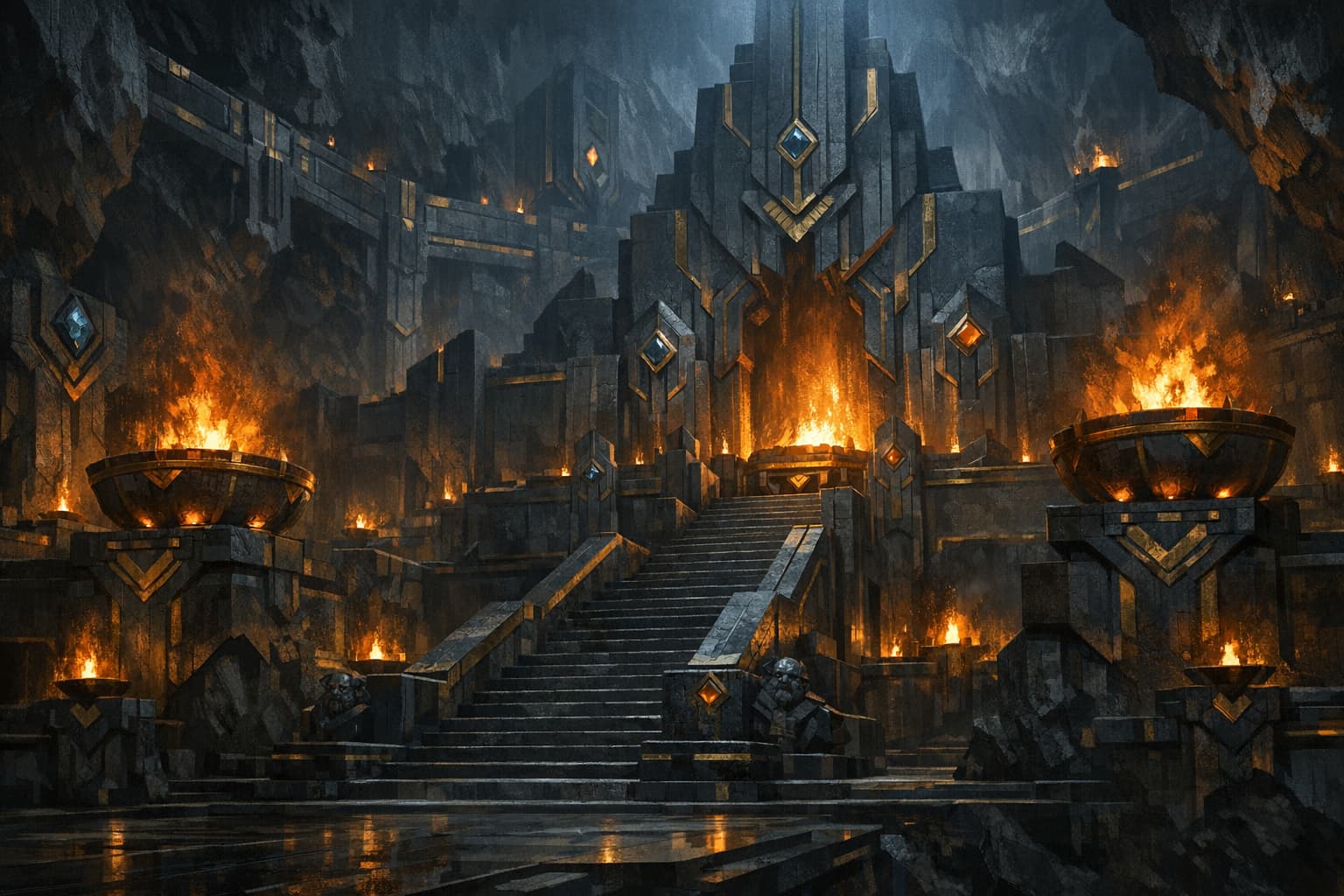
Gold dwarves built their civilization in the Great Rift, a massive chasm in southeastern Faerûn that made their homeland both a fortress and a statement. While shield dwarves scattered across the North in vulnerable citadels, gold dwarves consolidated in a single, nearly impregnable position. The Rift's sheer walls and controlled access points meant gold dwarves could be selective about who entered their territory, and they were very selective.
This geography produced a culture of consolidation rather than expansion. Shield dwarves built outward, founding new holds and losing them. Gold dwarves built inward, deepening existing halls and enriching established institutions. Their realm didn't grow in territory. It grew in density, complexity, and accumulated wealth. Every generation added layers to what already existed rather than striking out for new ground.
The result is a dwarven civilization that feels older and more settled than any other. Gold dwarf architecture isn't just functional. It's ornamental, reflecting centuries of refinement by artisans who could afford to prioritize beauty alongside durability. The Great Rift cities aren't rough-hewn mountain halls. They're polished, illuminated, decorated with gold leaf and precious stones because the gold dwarves had the resources and the security to invest in aesthetics.
Tradition as Law
Gold dwarf society is the most conservative in the Forgotten Realms, and conservative here means something specific. Every aspect of life follows established precedent. Craft methods, religious observances, social hierarchies, trade practices, marriage customs: all codified, all maintained, all enforced through social pressure that makes formal law almost unnecessary.
The reasoning is logical by dwarven standards: these traditions have sustained gold dwarf civilization for millennia. They work. Innovation risks breaking something that functions. The burden of proof falls entirely on the innovator, who must demonstrate not just that a new approach works but that it works better than the existing method, and that the transition itself won't cause disruption that outweighs the improvement.
This produces a culture that's simultaneously impressive and stifling. Gold dwarf craftsmanship is extraordinary because techniques have been refined across hundreds of generations. Gold dwarf governance is stable because the rules haven't changed in centuries. But gold dwarf society also suppresses individual expression, punishes deviation, and sometimes preserves traditions whose original purpose has been forgotten.
Young gold dwarves who chafe under tradition face a difficult choice. They can conform and gain the security of an established place in society. They can advocate for change through official channels and spend decades arguing cases that may never be heard. Or they can leave, which means abandoning everything the Great Rift provides: protection, wealth, community, and identity.
Gold dwarf conservatism isn't villainy. It's risk management applied across millennia. When your civilization has survived thousands of years, "don't fix what isn't broken" becomes a reasonable philosophy. The conflict comes when something actually is broken and the culture's immune system rejects the diagnosis.
Theocratic Governance
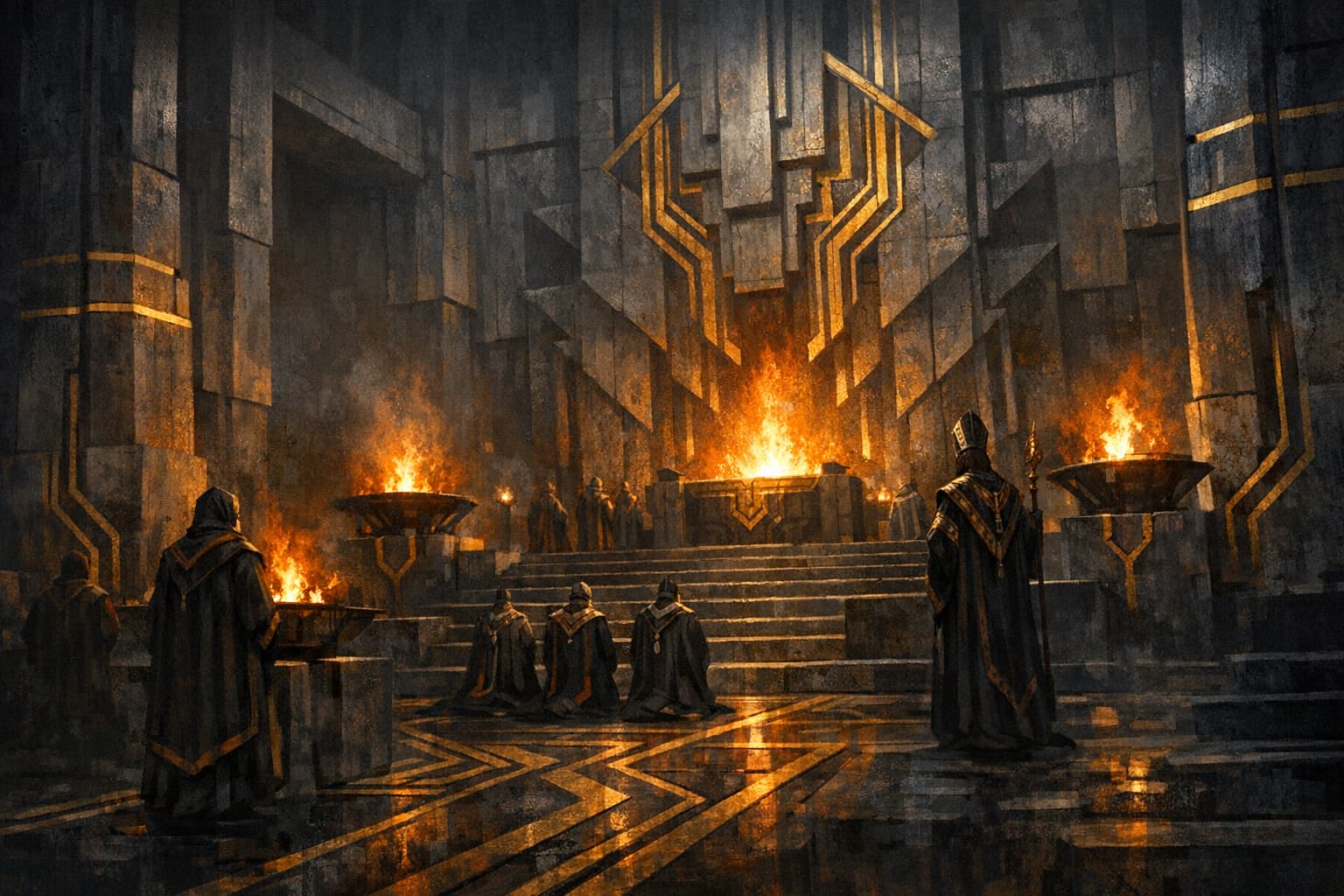
Religion plays a larger role in gold dwarf society than in any other dwarven culture. The temples of Moradin, Berronar, Dumathoin, and other dwarven deities aren't just places of worship. They're governing institutions whose priests hold authority rivaling or exceeding secular leaders. A high priest of Moradin in the Great Rift speaks with something close to divine authority, and the distinction between religious guidance and political command blurs constantly.
This theocratic element shapes everything. Craft traditions are maintained partly as religious observances. The rituals performed before mining, forging, or building aren't just ceremonies. They're requirements, and failing to perform them can result in religious sanctions that carry real social and economic consequences. A smith whose work isn't blessed by the appropriate temple may find their goods unsaleable.
The priestly class serves as the primary vehicle for social mobility. A talented gold dwarf from a minor clan can rise through temple hierarchies based on devotion and ability, achieving influence that their birth wouldn't otherwise allow. This makes the temples simultaneously agents of conservatism (preserving traditions) and agents of meritocracy (elevating talented individuals regardless of clan status).
For players, this means gold dwarf clerics aren't just adventurers who happen to worship a god. They're products of a system where religious authority is political authority, where temple training is elite education, and where priestly rank carries social weight that other cultures reserve for nobility.
Wealth and Trade
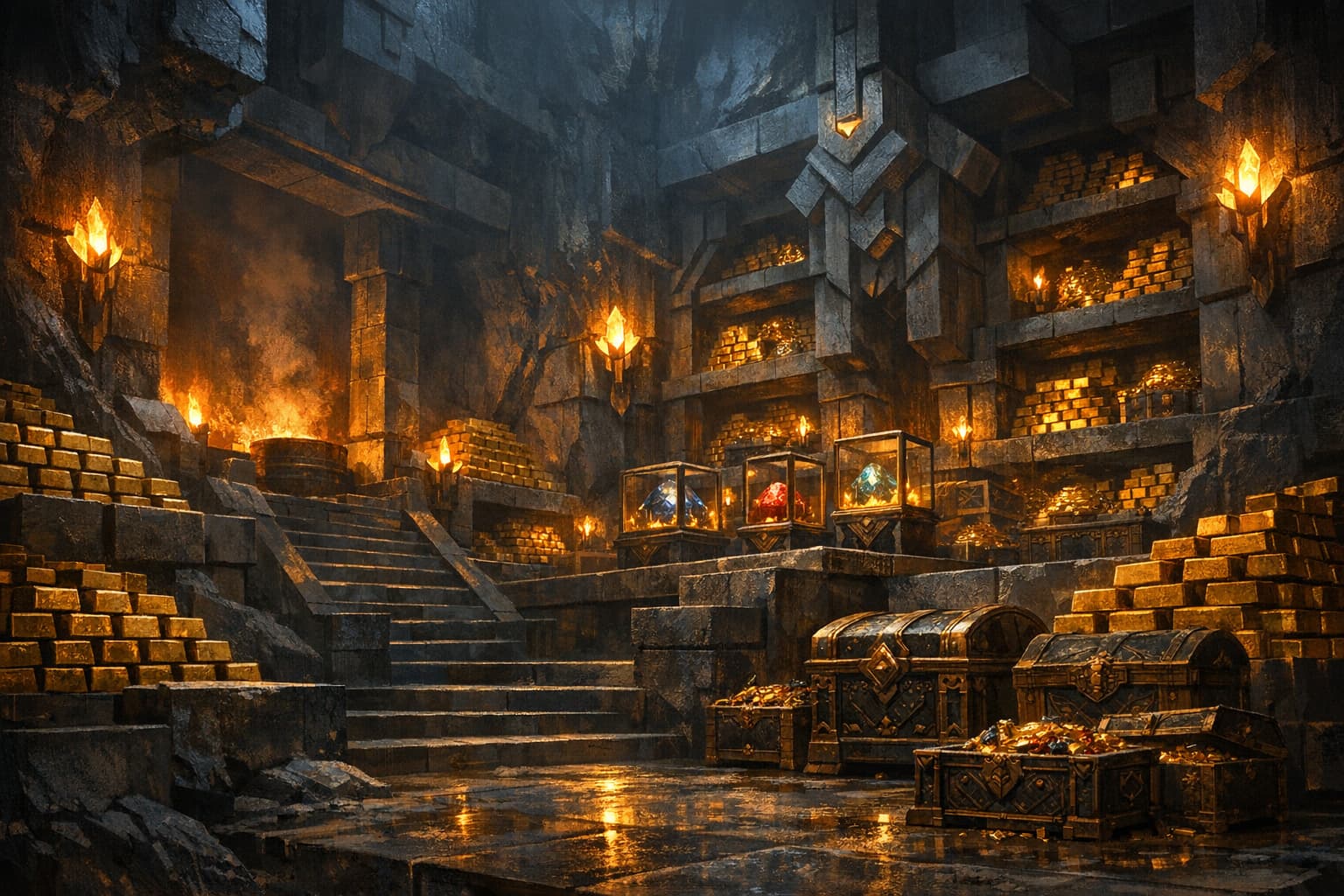
Gold dwarves are wealthy. Not "comfortable" or "prosperous." Wealthy in the way that centuries of accumulation without catastrophic loss produces. The Great Rift sits atop mineral deposits that have been mined productively for millennia, and gold dwarf trade networks extend across southeastern Faerûn and beyond.
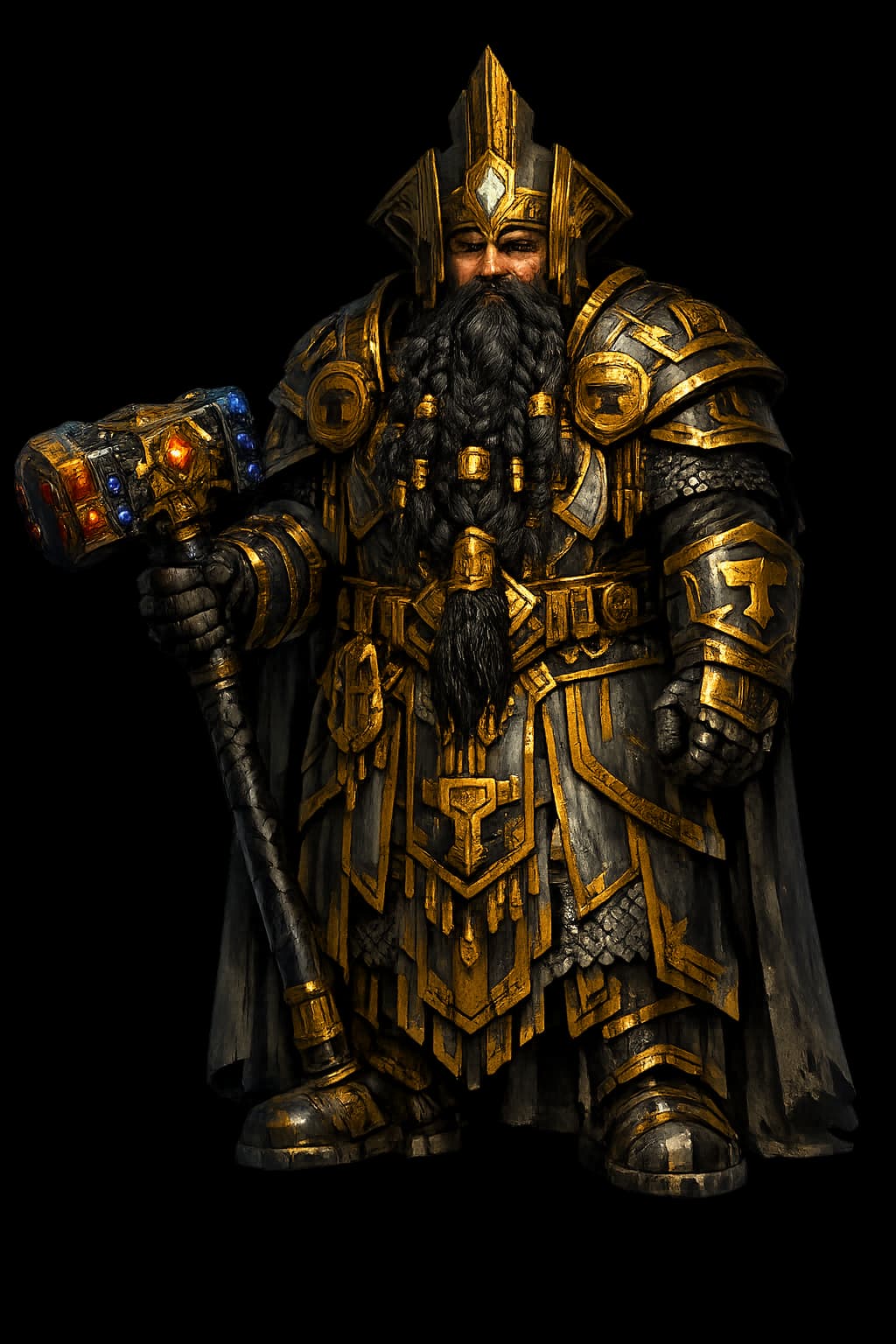
This wealth creates a culture where material display signals status and piety simultaneously. Gold dwarf armor is gilded not from vanity but because displaying craftsmanship honors Moradin. Gold dwarf halls are decorated lavishly not from excess but because beauty in stonework is a form of worship. The line between ostentation and devotion doesn't exist in gold dwarf thinking. They're the same thing.
Trade relations with the surface world are managed carefully. Gold dwarves sell finished goods of extraordinary quality at prices that reflect both material value and the centuries of technique invested in their creation. They buy raw materials, agricultural products, and intelligence about external threats. The trade balance consistently favors the gold dwarves, which creates resentment among trading partners who feel they're being exploited.
Internally, wealth distribution follows clan and temple hierarchies. The richest clans have been rich for centuries. The wealthiest temples control the most valuable mine access. Redistribution mechanisms exist but operate slowly, ensuring that gold dwarf society remains stratified in ways that would be politically explosive in a less tradition-bound culture.
A gold dwarf merchant house discovers a new gemstone deposit outside the Great Rift, in territory controlled by a human kingdom. The political implications cascade: the temple wants extraction rights blessed, the clan wants exclusive access, the humans want fair compensation, and a rival gold dwarf clan sees an opportunity to challenge the discoverer's monopoly.
Playing Gold Dwarves
Gold dwarf characters who leave the Great Rift are unusual by their culture's standards, and that unusualness should inform the character. Did the temple send them on a mission? Did a clan dispute force their departure? Did they leave voluntarily, driven by curiosity their culture considers dangerous?
The cultural shock of leaving gold dwarf society provides rich material. A gold dwarf encountering shield dwarf settlements might be appalled by their austerity and disrepair. A gold dwarf in a human city might be confused by the lack of clear hierarchies and religious authority. The abundance of options and the absence of tradition can be disorienting for someone raised in a culture where every decision has a prescribed answer.
Lean into the contrast between gold dwarf confidence and gold dwarf insularity. They know their civilization is superior. They can point to millennia of evidence. But they also know very little about how other cultures work, and their assumptions about universal values frequently prove wrong. The gold dwarf who assumes every society respects craftsmanship, or that every temple commands political authority, or that tradition is universally valued, learns otherwise through experience.
For class choices, cleric is the most culturally resonant option, but paladin (oath of devotion to dwarven ideals) and artificer (sacred engineering tradition) work equally well. Fighter and barbarian are less natural fits for gold dwarf culture, which values collective discipline over individual martial prowess. A gold dwarf barbarian would need a strong backstory explanation for a rage tradition that gold dwarf orthodoxy finds undignified.
Shield Dwarves vs. Gold Dwarves
The shield/gold divide is the central ethnic distinction in Forgotten Realms dwarven lore, and it mirrors real-world patterns of cultural divergence. Both groups share common ancestry. Both are recognizably dwarven. But millennia of different geographic pressures produced genuinely different cultures that view each other with a mixture of kinship and exasperation.
Shield dwarves see gold dwarves as wealthy isolationists who've never had to fight for what they have. The Great Rift's natural defenses mean gold dwarves never faced the constant orc invasions, drow incursions, and territorial losses that define shield dwarf history. Gold dwarves see shield dwarves as scattered, undisciplined, and wasteful: a people who keep founding holds they can't defend and then sentimentalizing the loss.
Both perspectives contain truth. Gold dwarf security came from geography, not superior virtue. Shield dwarf expansion was sometimes reckless. The mutual resentment reflects genuine differences in experience rather than simple prejudice. When shield dwarves and gold dwarves meet in a campaign, the friction should feel earned, rooted in legitimate cultural differences rather than arbitrary hostility.
Shield Dwarf View
Gold dwarves have never lost a hold. They don't understand sacrifice. Their wealth comes from sitting on resources, not from earning them through generations of blood.
They look down on our scattered citadels while ignoring that we're the ones actually fighting the threats that would reach the Great Rift eventually if we fell.
Gold Dwarf View
Shield dwarves keep repeating the same mistakes. They overextend, lose their holds, then glorify the loss as heroism. If they'd consolidated like we did, they'd still have their kingdoms.
Their "military tradition" is born from necessity they created. We maintained our civilization. They romanticize the failure to maintain theirs.
Sourcebook History
Gold dwarves entered Forgotten Realms lore through the original campaign setting boxed set (1987), which established the Great Rift as a major dwarven homeland in the South. The FR11 module Dwarves Deep (1990) provided the first detailed treatment, establishing gold dwarves as the wealthier, more traditionalist counterpart to northern shield dwarves.
The 3rd Edition Races of Faerûn (2003) was the definitive gold dwarf sourcebook, providing full cultural details, mechanical options, and the first comprehensive treatment of the shield/gold divide as a central element of Realms dwarven identity. The gold dwarf received the hill dwarf mechanics (+1 WIS equivalent in 3.5e terms), positioning them as the "wise and enduring" option.
Subsequent editions have given gold dwarves less individual attention. The 4th Edition Forgotten Realms Campaign Guide (2008) collapsed some distinctions. The 5th Edition Sword Coast Adventurer's Guide (2015) focused on the Sword Coast, which is shield dwarf territory, leaving gold dwarves as a referenced but underdetailed culture. This makes gold dwarves an especially rewarding choice for players willing to do setting research, since there's enough lore to build on but enough gaps to fill creatively.
Related
Other Dwarven Kindred
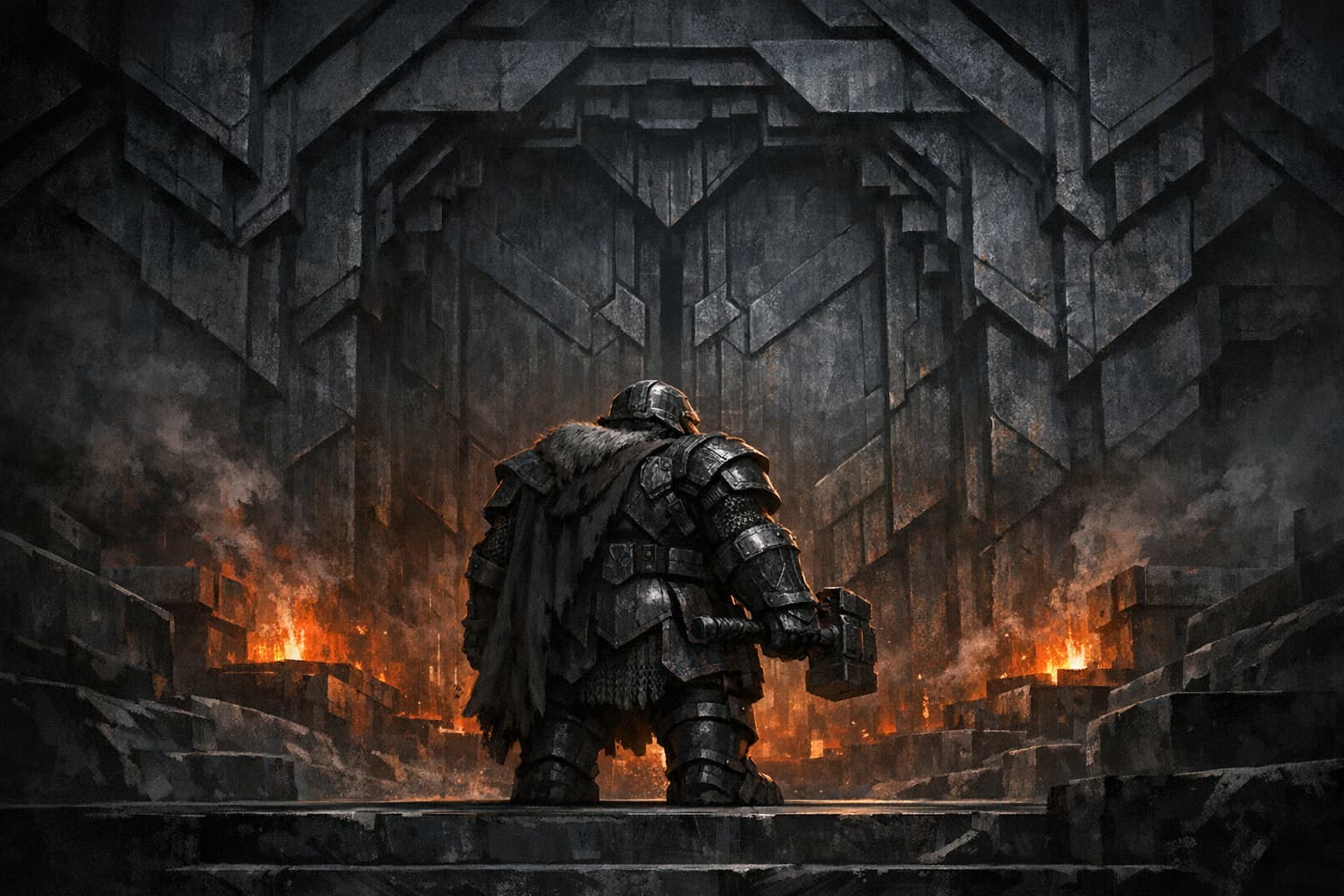 01
Mountain Dwarves
Fortress builders whose kingdoms endure inside living rock, measured in millennia rather than centuries
Read More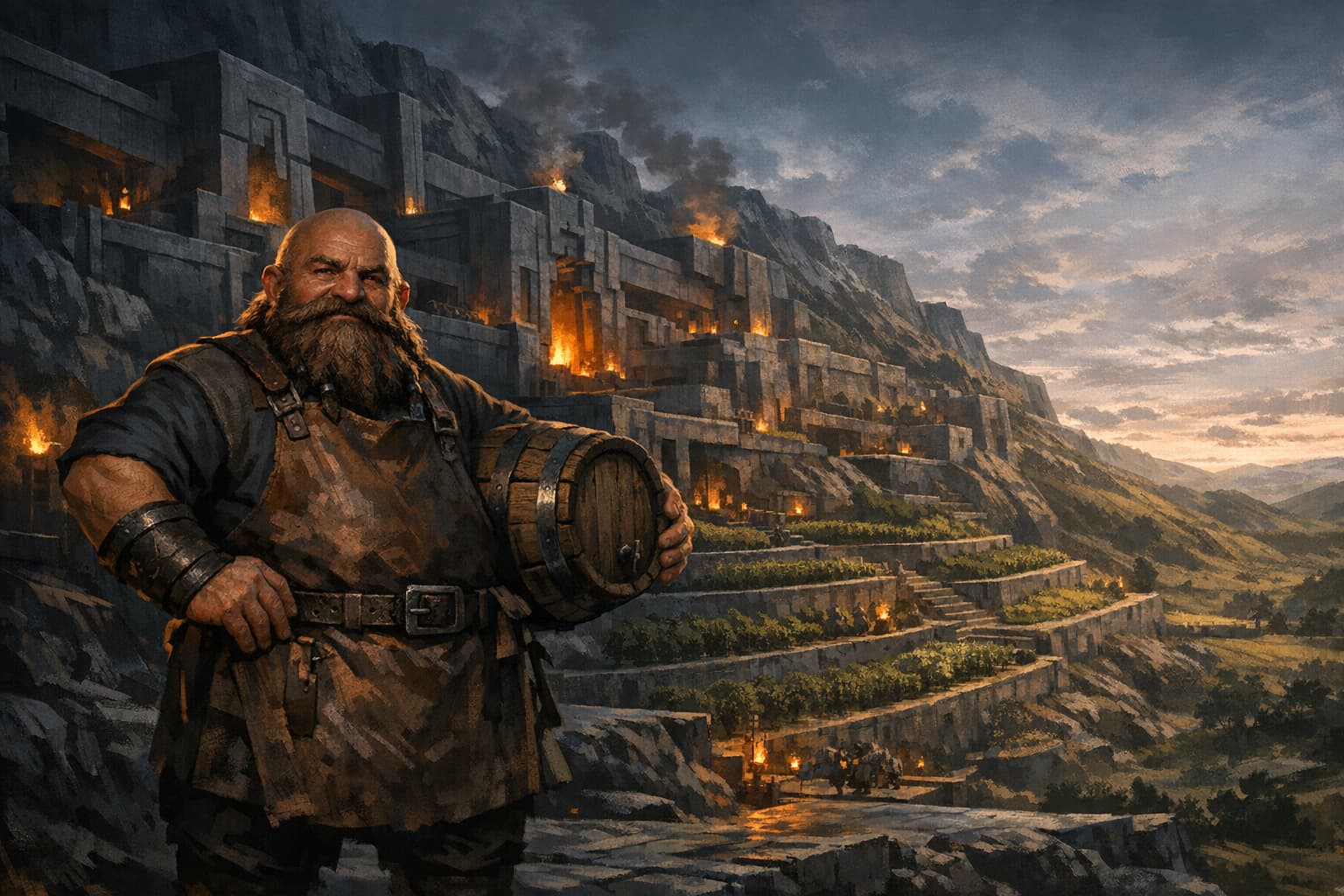 02
Hill Dwarves
Surface-oriented communities whose resilience comes from open skies and deep roots in the land
Read More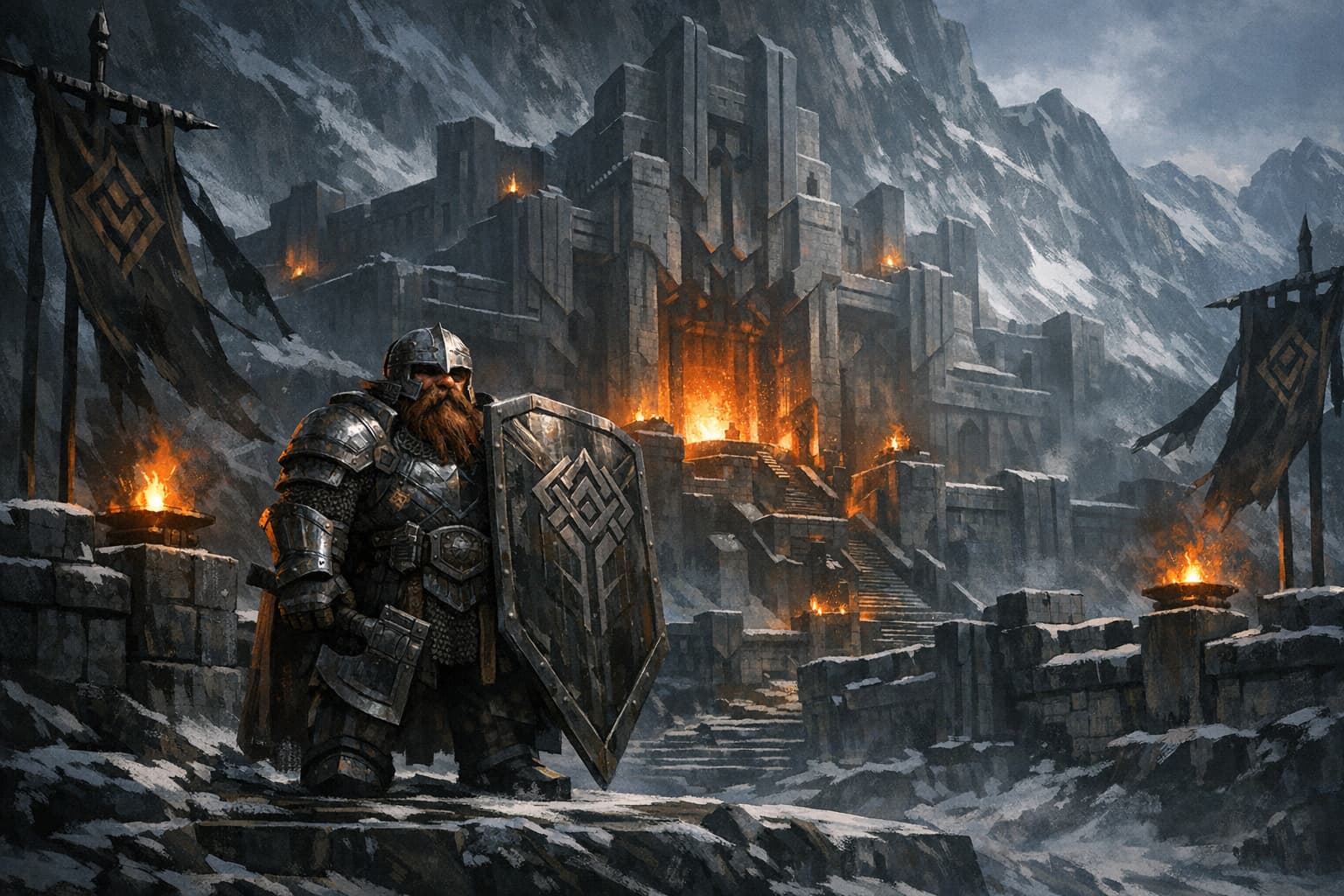 03
Shield Dwarves
Forgotten Realms defenders whose military heritage spans the length of the Sword Coast
Read More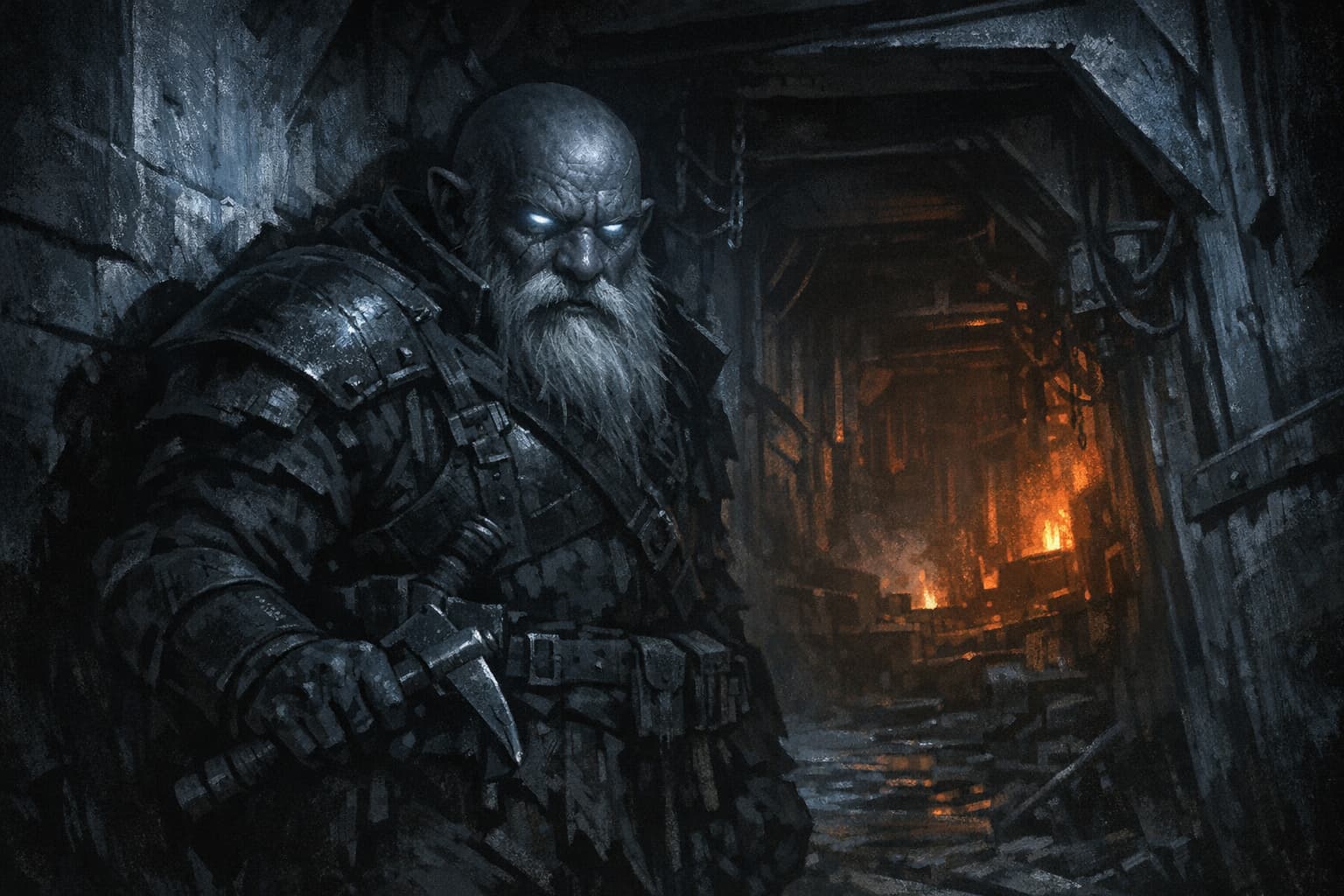 04
Duergar
Underdark survivors forged by psionic enslavement into something harder than the stone around them
Read MoreFAQ
Common Questions
Geography and philosophy. Gold dwarves are the dwarves of the South, centered on the Great Rift. They're wealthier, more religiously oriented, more traditional, and more isolated than shield dwarves. Their civilization didn't suffer the serial losses that define shield dwarf history, which made them more conservative but also less adaptable.
Both, depending on who you ask. Gold dwarves have genuine cause for confidence: their civilization has endured for millennia, their craftsmanship is extraordinary, and their theology is deeply developed. But that confidence can curdle into condescension when they interact with cultures they consider less accomplished. The line between justified pride and unjustified superiority is where the interesting character work happens.
Cleric is the most culturally aligned choice, given gold dwarf society's theocratic structure. Paladin works for gold dwarves sworn to uphold dwarven traditions. Artificer fits the sacred engineering tradition. Wizard is surprisingly appropriate: gold dwarves have the longest unbroken tradition of runic magic in the Realms, and a gold dwarf wizard represents a scholarly tradition rather than the stereotype of dwarves distrusting arcane magic.
Cautiously and hierarchically. Gold dwarves assume their culture is superior and interact with others from that assumption. This isn't hostile, exactly. It's patronizing in a way that gold dwarves don't recognize as patronizing. They trade fairly, honor agreements scrupulously, and treat guests with formal courtesy. But they also assume that non-dwarven customs are quaint at best and misguided at worst.