
Shield Dwarves
Forgotten Realms defenders whose military traditions and Sword Coast strongholds define dwarven identity in Faerûn
The North Is Theirs
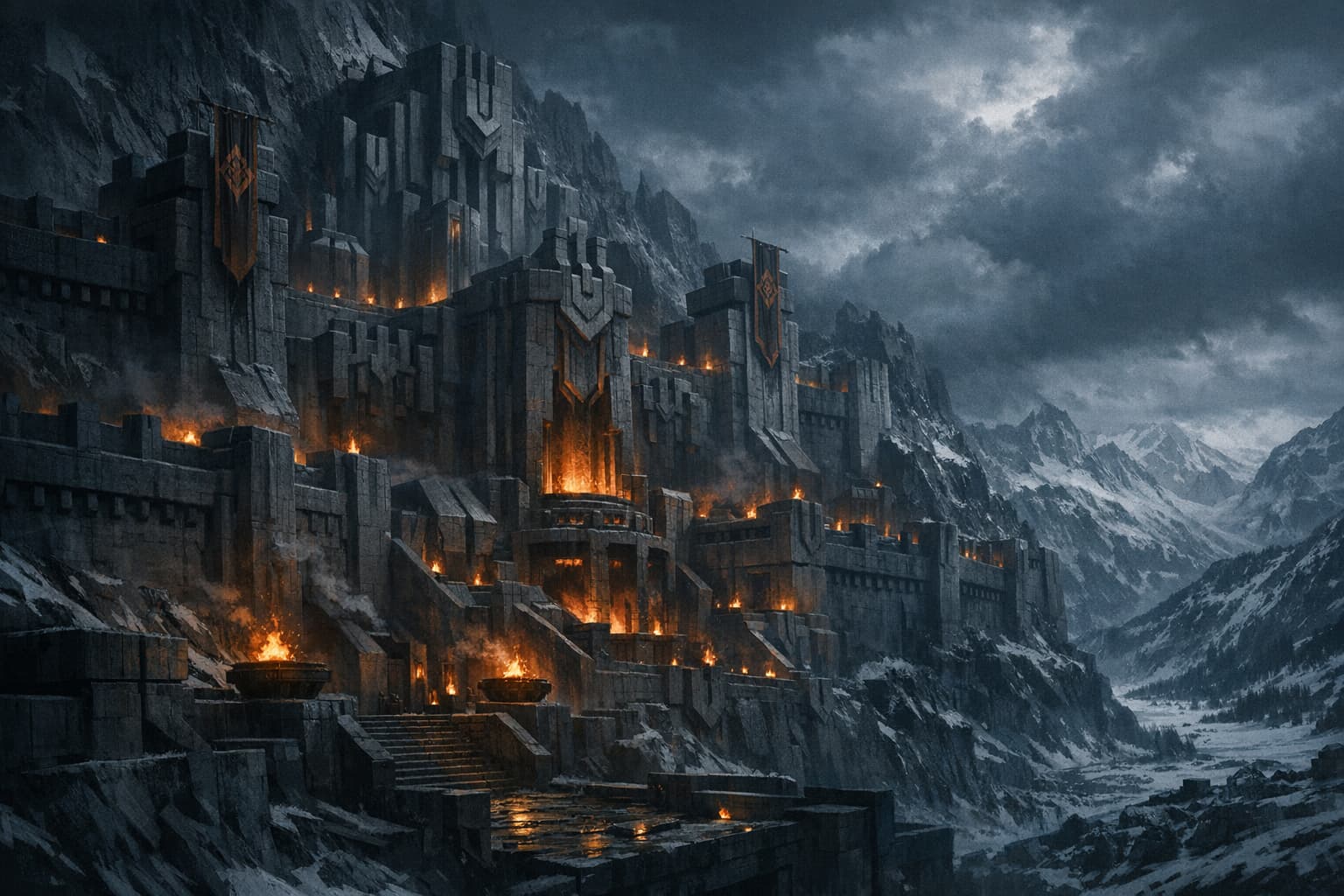
Shield dwarves are the dwarves of the Forgotten Realms' North. When you encounter dwarves in Baldur's Gate, Icewind Dale, or anywhere along the Sword Coast, they're almost certainly shield dwarves. This specificity matters because shield dwarves aren't generic fantasy dwarves wearing a Faerûnian coat of paint. They're shaped by a specific history of expansion, catastrophe, and slow reclamation that gives them a distinct cultural identity.
The shield dwarf homeland isn't a single mountain hold. It's a scattered network of citadels, mines, and settlements spread across the Savage Frontier and the Sword Coast North. Citadel Adbar, Citadel Felbarr, Mithral Hall, Gauntlgrym. Each name represents a different chapter of shield dwarf history, and shield dwarves know these chapters the way humans know national founding myths.
What makes shield dwarves "shield" dwarves rather than just "northern dwarves" is their military character. Their history is a long series of wars: against orcs, against drow, against dragons, against other dwarven clans. Every generation of shield dwarves has fought something. This produces a culture where military service isn't optional, where every clan maintains a trained militia, and where personal combat proficiency is a baseline expectation rather than a specialized skill.
The Reclamation Narrative
Shield dwarf culture is haunted by loss. They built vast underground kingdoms. Those kingdoms fell: to orcs, to drow, to dragons, to internal strife, to simple overextension. The list of lost shield dwarf holds is longer than the list of surviving ones. Mithral Hall fell and was reclaimed. Gauntlgrym fell and was reclaimed. Citadel Felbarr fell and was reclaimed. The pattern repeats across centuries.
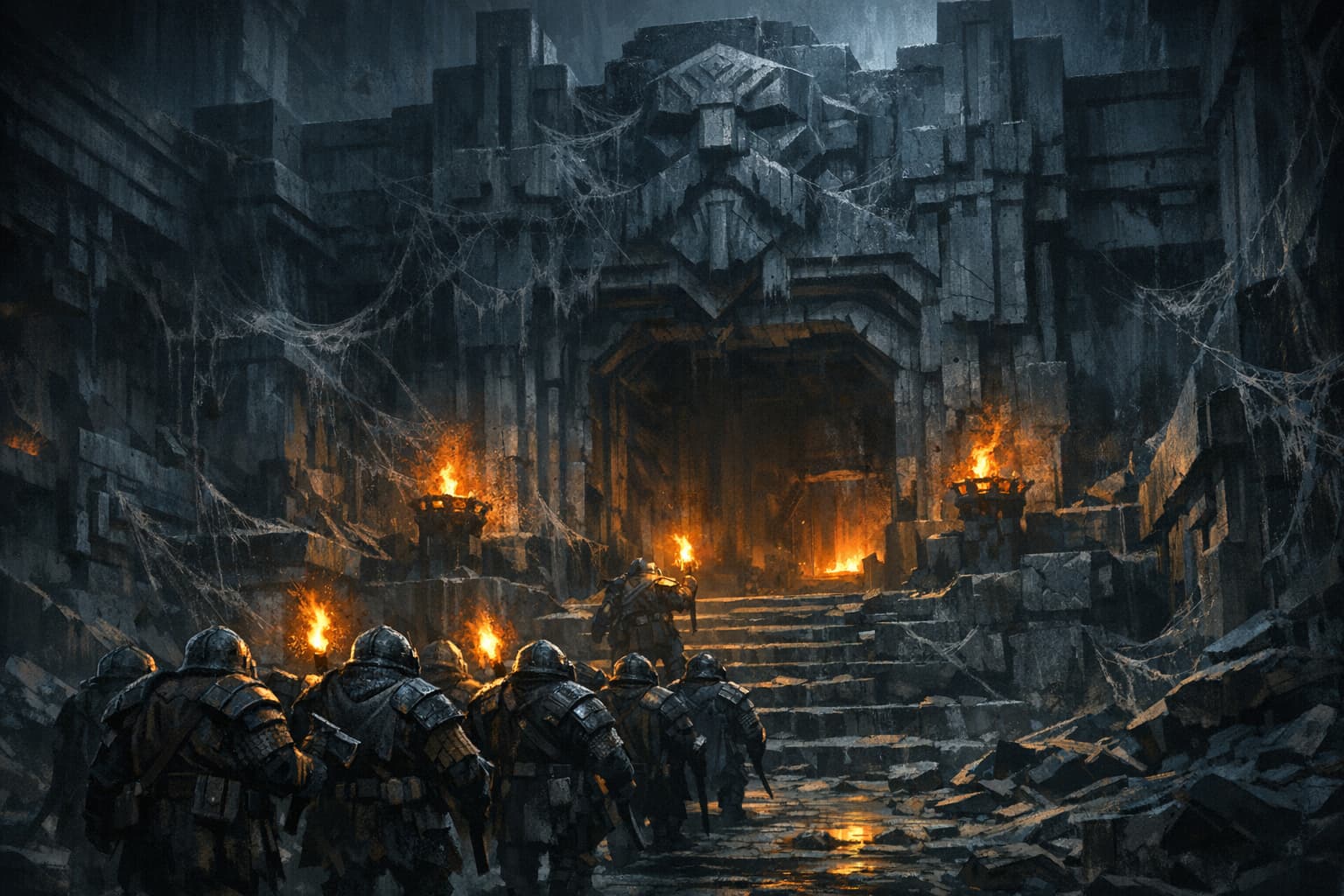
This creates the Reclamation as a cultural project. Shield dwarves don't just want to survive. They want to take back what was lost. Every generation produces heroes who march into fallen holds to clear out whatever moved in and restore dwarven presence. Some succeed. Many die trying. The attempts matter regardless of outcome because they demonstrate that shield dwarves haven't given up on their inheritance.
The Reclamation shapes shield dwarf characters in specific ways. They carry a sense of obligation to ancestors who built what was lost. They view current holdings as temporary unless continuously defended. They're motivated by a desire to prove that dwarven civilization can endure, not just in the abstract but in the specific halls their grandparents carved. This gives shield dwarf characters built-in motivation that generic dwarves often lack.
It also creates internal tension. The elder who insists on reclaiming a specific hold may be spending lives on a symbolic goal when those lives could secure existing settlements. The young dwarf who'd rather build something new instead of reclaiming something old challenges fundamental cultural assumptions. The pragmatist who suggests allying with humans to hold territory offends traditional notions of dwarven self-sufficiency.
The Reclamation is simultaneously shield dwarf culture's greatest strength and most dangerous impulse. The drive to reclaim lost holds has restored kingdoms. It has also led armies into traps, overextended defenses, and consumed resources that could have been invested in the future rather than the past.
Sword Coast Relations
Shield dwarves interact with human civilization more than any other dwarven subtype in the Forgotten Realms. The Sword Coast is densely populated with human cities, and shield dwarf settlements sit within or adjacent to human-dominated territory. Waterdeep, Neverwinter, Baldur's Gate: all of them have significant shield dwarf populations and economic relationships with shield dwarf holds.
This proximity creates a complicated dynamic. Shield dwarves need human allies to maintain their scattered holdings. Humans need shield dwarf metalwork, engineering, and military expertise. The relationship is mutually beneficial but not equal. Shield dwarves provide high-value goods and services. Humans provide food, trade goods, and numbers. Each side occasionally resents its dependence on the other.
Shield dwarf diaspora communities in human cities maintain dwarven identity under pressure. The shield dwarves of Waterdeep's South Ward keep their clan traditions alive in rented halls and improvised forges. They're still shield dwarves, but they're shield dwarves adapted to urban life, speaking Common as often as Dwarvish, and navigating human politics with an expertise their mountain-bound cousins find distasteful.
For adventuring parties, this means shield dwarf characters often have human contacts, understand human customs, and can operate in human social environments without the culture shock that other dwarven subtypes might experience. They're bilingual, bicultural, and pragmatic about working with non-dwarves because their survival has depended on it for centuries.
Military Heritage
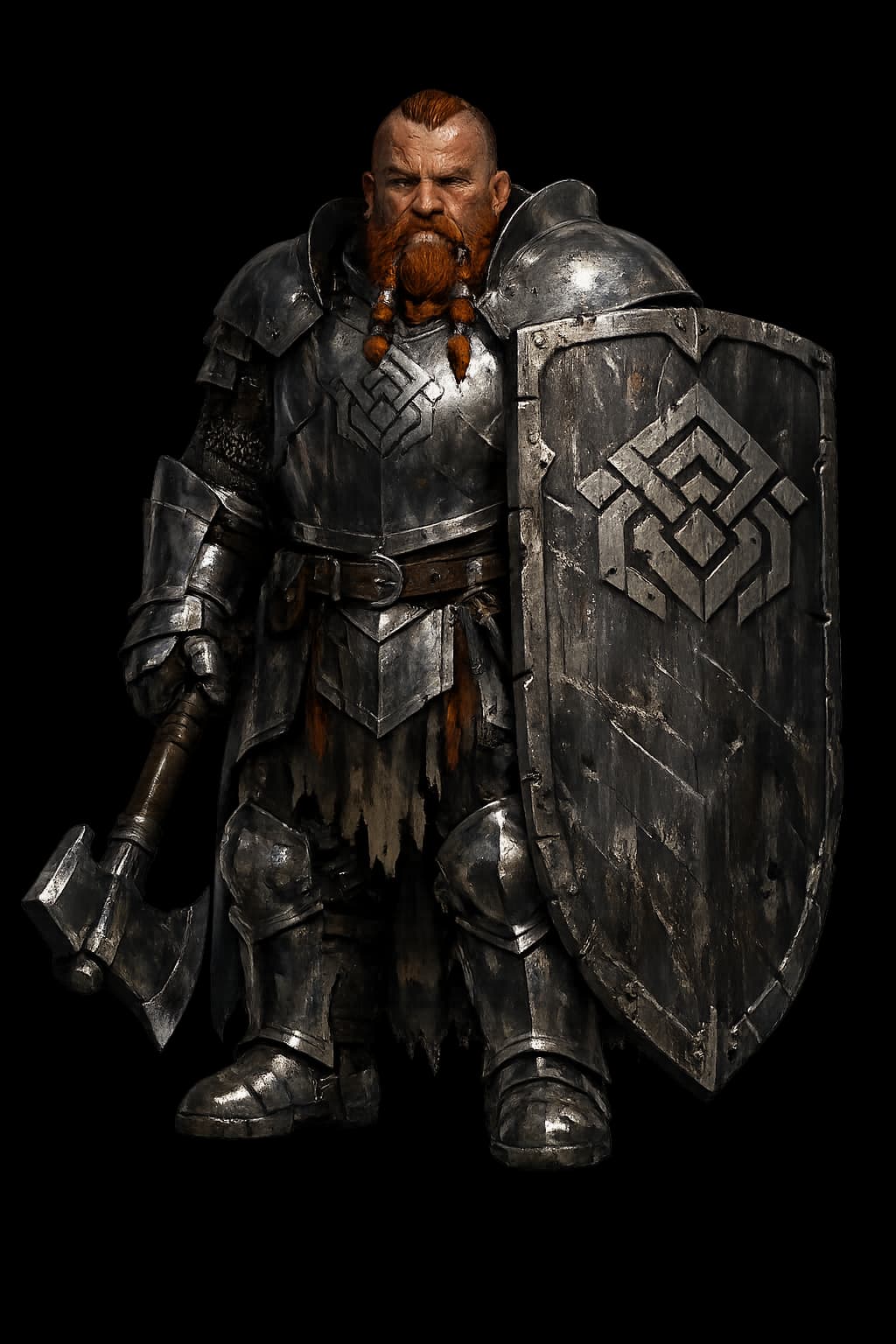
Shield dwarf military tradition is the most developed in the Forgotten Realms. Every hold maintains a standing force. Every clan contributes fighters. Every shield dwarf of fighting age has at least basic training with axe and shield. The clan shield isn't just a heraldic symbol. It's a piece of military equipment that every member knows how to use.
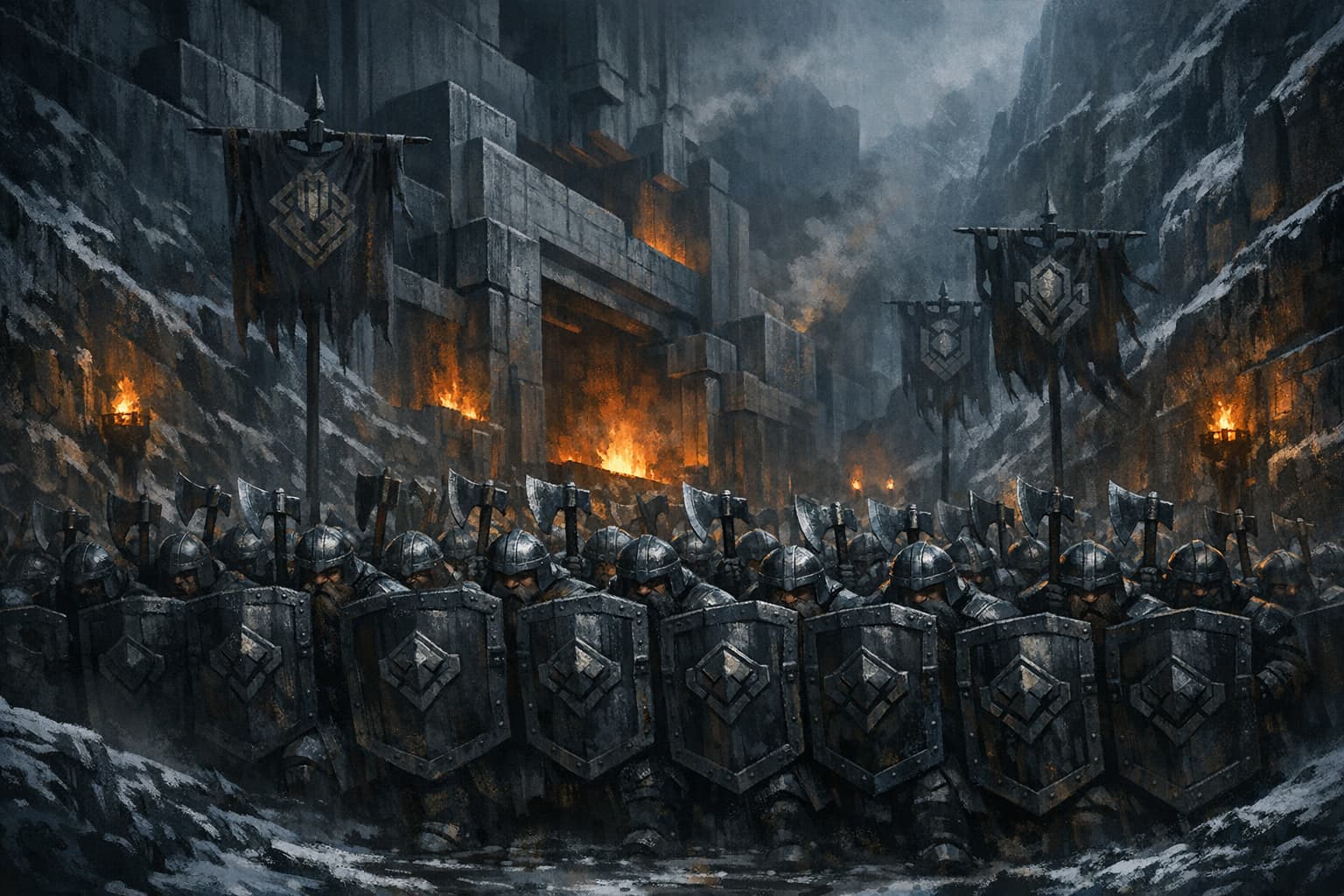
The tactical doctrine emphasizes defensive warfare, which is how the "shield" epithet originated. Shield walls in narrow corridors. Fortified positions at chokepoints. Layered defenses that make attackers pay for every foot of ground. Shield dwarves don't win wars by charging. They win by making the enemy break against their lines until the cost of attack exceeds the value of the objective.
This defensive orientation has exceptions. The Reclamation campaigns require offensive operations, and shield dwarf commanders have developed specialized assault doctrines for retaking underground strongholds. These involve sappers, siege engineers, and coordinated pushes through known tunnel systems. The planning for a Reclamation assault can take decades, with scouts mapping fallen holds over generations before the attack is launched.
Shield dwarf warriors identify deeply with their equipment. A clan shield passed through generations carries the history of every hand that held it. Weapons receive names after significant battles. Armor is maintained with a devotion that borders on religious practice. When a shield dwarf says their shield has "held against orc charges, dragon fire, and a hundred years of use," they mean it literally.
Shield dwarf military culture provides built-in proficiencies, equipment priorities, and tactical instincts for characters. A shield dwarf fighter doesn't just know how to fight. They know how to fight as part of a formation, how to hold a corridor, and how to coordinate with allies in confined spaces.
Playing Shield Dwarves
Shield dwarf characters carry setting-specific weight that generic dwarves don't. They have opinions about Bruenor Battlehammer. They know which holds have fallen and which still stand. They can name the orc chiefs who've threatened their people and the heroes who stopped them. This specificity makes them more grounded than "a dwarf from a mountain."
Build the character around a specific citadel or settlement. Are they from Mithral Hall, with its legacy of Bruenor's reclamation? From Citadel Adbar, the unconquered fortress? From Gauntlgrym, the ancient seat recently restored? Each origin implies different values, different politics, and different relationships with the wider world.
The military background doesn't mean every shield dwarf is a fighter. Clerics of Moradin, Clangeddin, or Dumathoin serve essential roles in shield dwarf communities. Artificers and engineers design the fortifications. Scouts and rangers patrol the deep roads between citadels. Even bards have a role: shield dwarf battle-chanters preserve history through song and bolster morale in combat.
For class choices, the 5e shield dwarf is mechanically identical to any PHB dwarf. The distinction is cultural, not statistical. A shield dwarf paladin sworn to reclaim a fallen hold plays differently from a generic paladin because the oath has specific, personal meaning. A shield dwarf rogue who scouts ahead of reclamation forces plays differently from a generic rogue because their stealth serves a collective military purpose.
Forgotten Realms Sourcebook History
Shield dwarves entered the Forgotten Realms through Ed Greenwood's original campaign notes, but their formal development came through a series of supplements that built their culture piece by piece. The Forgotten Realms Campaign Setting (1987) established the basic geography. Dwarves Deep (1990) by Ed Greenwood provided the first detailed look at dwarven society in the Realms.
The real crystallization came with Demihuman Deities (1998) and the 3rd Edition Races of Faerûn (2003), which formalized the shield dwarf/gold dwarf distinction as the Realms' primary dwarven ethnic division. Shield dwarves got associated with the North, with military culture, and with the Reclamation narrative. Gold dwarves got associated with the South, with wealth, and with tradition.
R.A. Salvatore's Drizzt novels did more for shield dwarf visibility than any sourcebook. Bruenor Battlehammer became the face of shield dwarves for millions of readers. His reclamation of Mithral Hall in The Crystal Shard (1988) and its sequels made the Reclamation narrative personal and dramatic rather than abstract lore.
The 5th Edition Sword Coast Adventurer's Guide (2015) provided the most recent comprehensive treatment, detailing shield dwarf society, religion, and relations with other species. The 2024 PHB's removal of subraces means shield dwarves now exist entirely in setting-specific material rather than core rules.
“Bruenor Battlehammer became the face of shield dwarves for millions of readers. His reclamation of Mithral Hall made the Reclamation narrative personal rather than abstract lore.”
— On R.A. Salvatore's influence
From Gold Box to Baldur's Gate 3
Shield dwarves have been playable in Forgotten Realms CRPGs since the Gold Box era. Pool of Radiance (1988) let players create dwarven fighters in a Realms setting, though the shield dwarf identity was implicit rather than explicit. The game's Phlan setting didn't emphasize dwarven ethnic distinctions.
Baldur's Gate (1998) made shield dwarves visible through companion characters and the Sword Coast setting. Icewind Dale (2000) went further, placing the action in shield dwarf territory and making dwarven culture part of the environment rather than just character creation. The frozen citadels and deep mines of the Dale were shield dwarf spaces even when the player character wasn't a dwarf.
Baldur's Gate 3 (2023) represents the current peak of shield dwarf CRPG implementation. Dwarven characters get unique dialogue options reflecting clan identity and cultural knowledge. The game's underground sequences feel like shield dwarf spaces: carved, defended, and haunted by the echoes of what was lost. The companion dynamics let non-dwarf players experience shield dwarf culture from the outside, which often conveys it better than playing a dwarf directly.
- Darkvision 60 ft.
- Stonecunning
- +2 racial bonus on saves vs. poison
- +2 racial bonus on saves vs. spells
- +1 racial bonus on attack rolls vs. orcs and goblinoids
- +4 dodge bonus to AC vs. giants
- Dwarven weapon familiarity (dwarven waraxe, dwarven urgrosh)
The 3.5e shield dwarf was mechanically identical to the PHB dwarf. Forgotten Realms distinguished shield dwarves through cultural flavor rather than unique mechanics.
- Darkvision 60 ft.
- Dwarven Resilience
- Dwarven Combat Training
- Stonecunning
- Choose mountain or hill subrace mechanics
In 5e, "shield dwarf" is an ethnic identity, not a subrace. Shield dwarves choose between mountain dwarf and hill dwarf mechanics, reflecting whether they live in deep holds or surface communities.
Related
Other Dwarven Kindred
 01
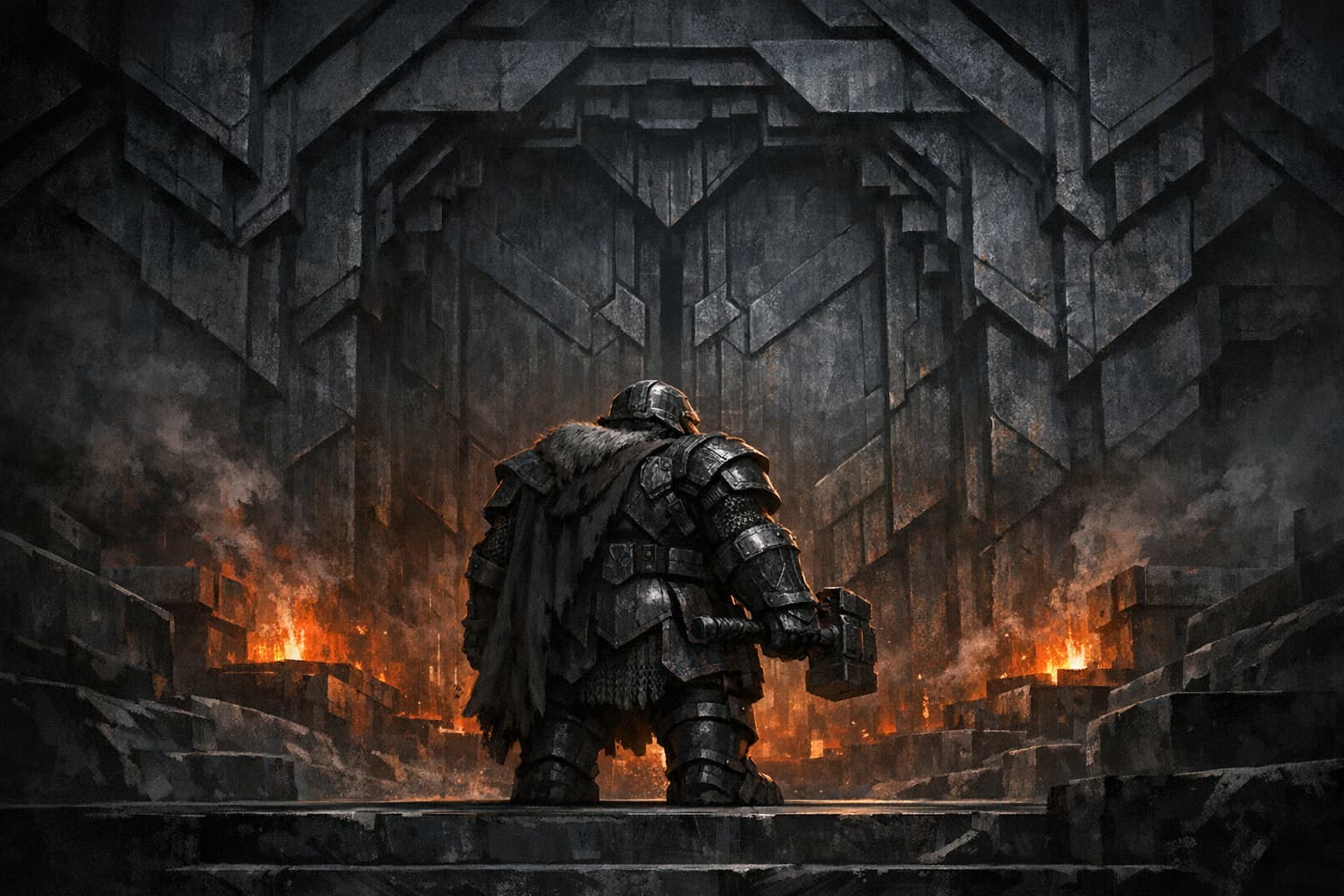
Mountain Dwarves
Fortress builders whose kingdoms endure inside living rock, measured in millennia rather than centuries
Read More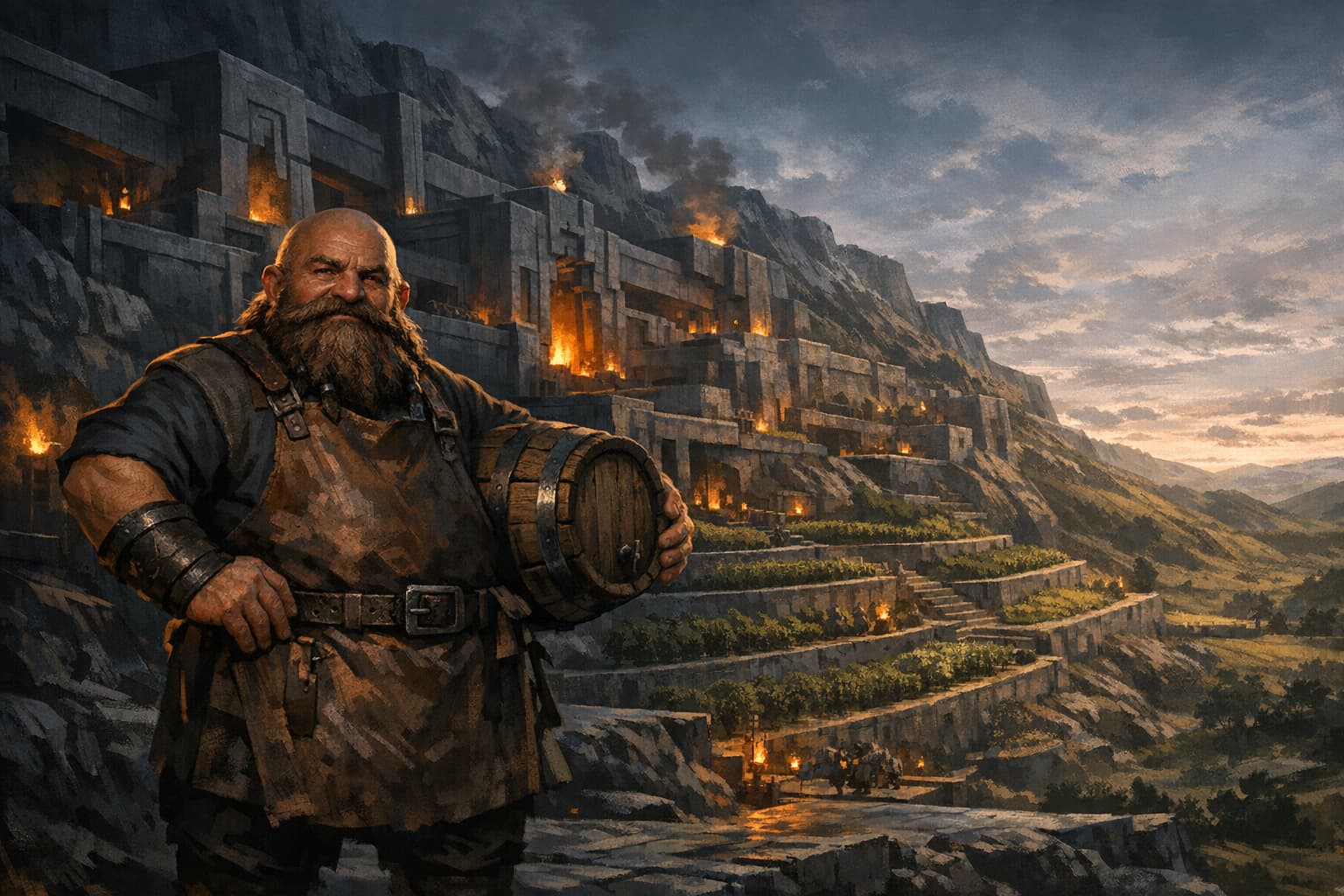 02
Hill Dwarves
Surface-oriented communities whose resilience comes from open skies and deep roots in the land
Read More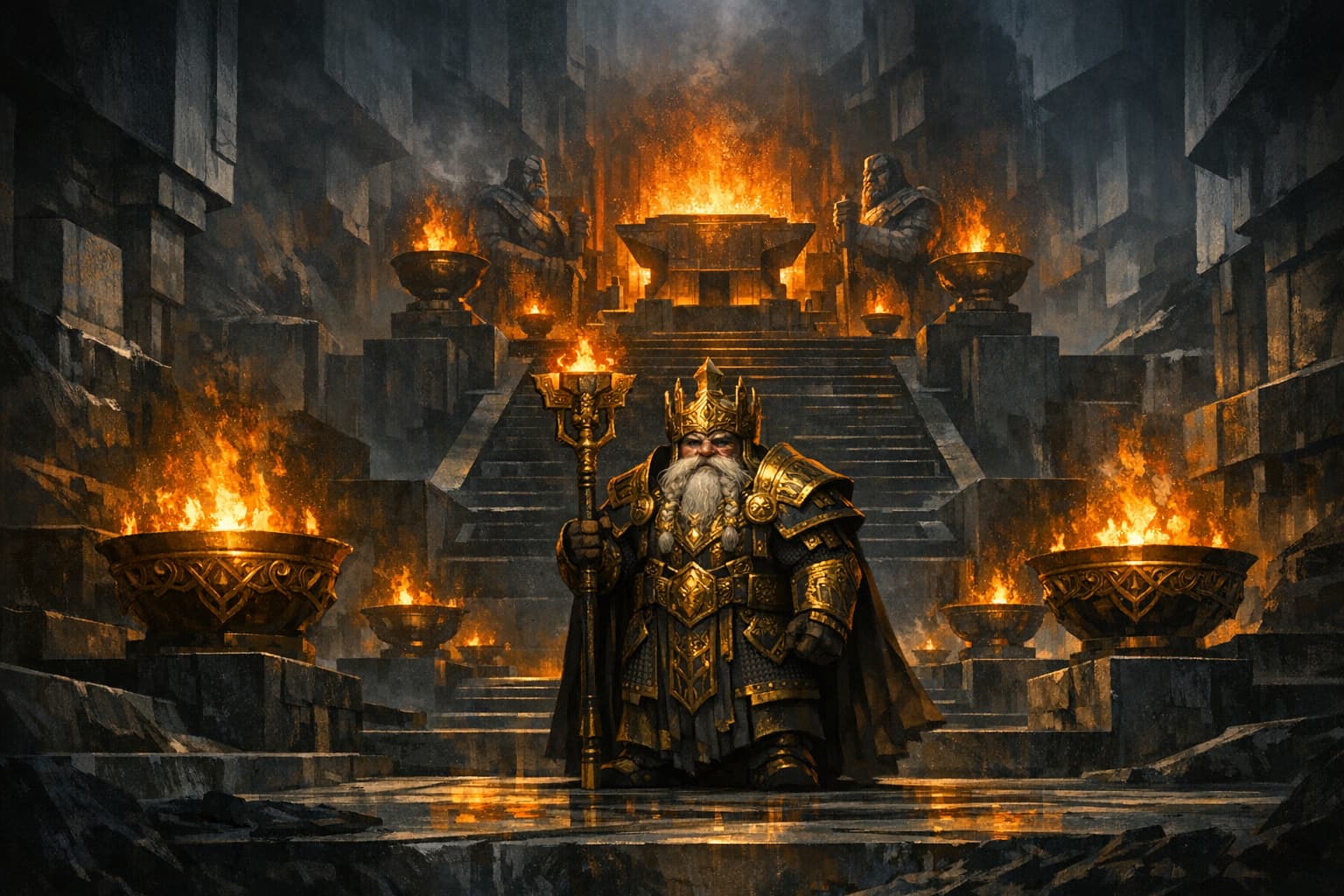 03
Gold Dwarves
Traditionalist rulers of the Great Rift whose wealth and faith define dwarven orthodoxy
Read More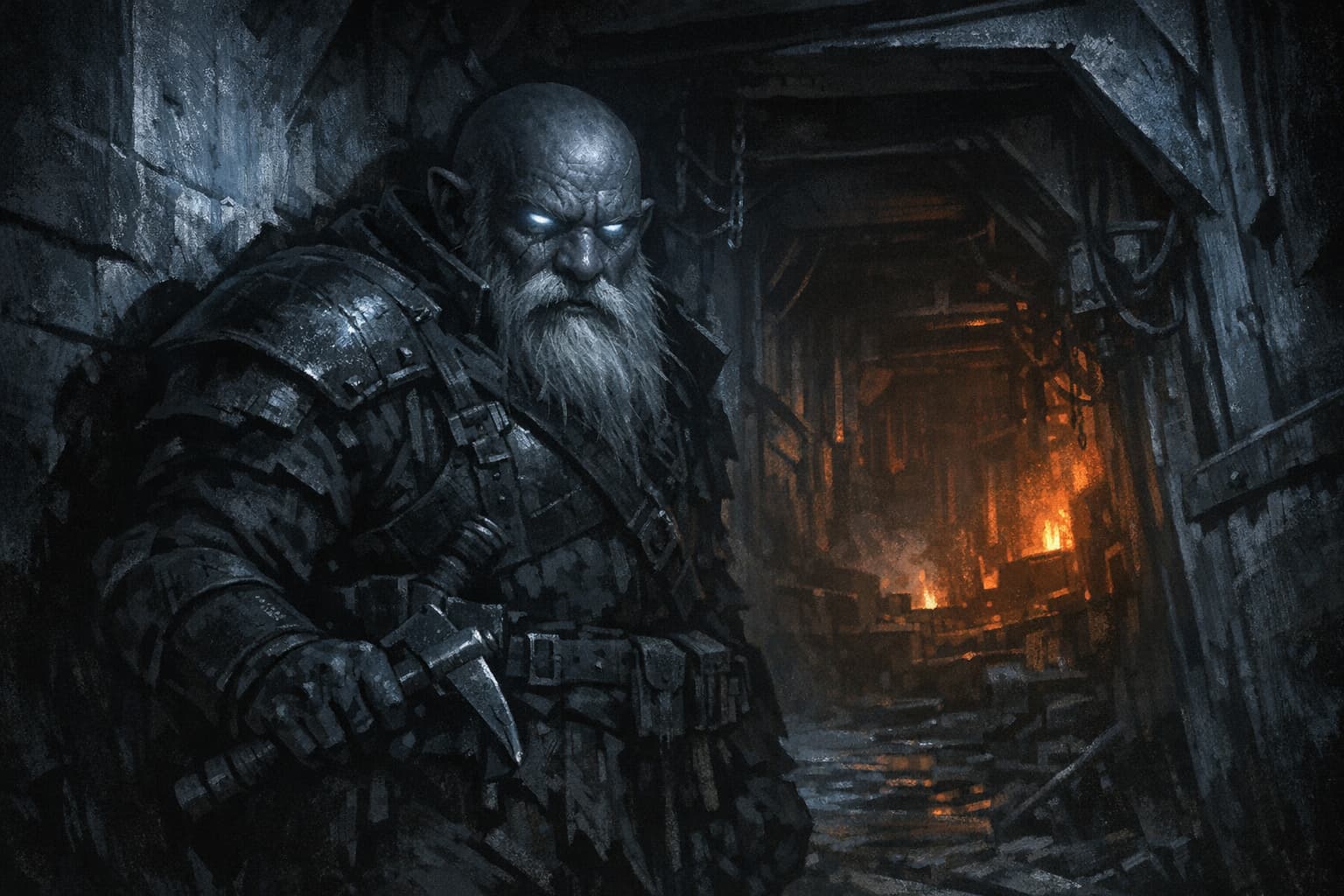 04
Duergar
Underdark survivors forged by psionic enslavement into something harder than the stone around them
Read MoreFAQ
Common Questions
Mountain dwarf is a generic D&D subrace with specific mechanics (+2 STR, armor proficiency). Shield dwarf is a Forgotten Realms ethnic group with specific lore (Northern Faerûn, Reclamation narrative, military culture). A shield dwarf character uses either mountain or hill dwarf mechanics. The distinction is setting-specific identity versus generic mechanical category.
Give your character a specific lost hold that matters to their clan. Maybe their great-grandmother helped reclaim Mithral Hall, or their family lost everything when Citadel Felbarr fell. The Reclamation should feel personal: not "dwarves want to take back their stuff" but "my clan's ancestral forge is occupied by orcs and I intend to light it again."
The name is Realms-specific, but the archetype works anywhere. A militaristic dwarven culture defined by defending scattered holdings against constant threats, with a tradition of reclaiming lost territory, translates to any setting. Change the names and specific history while keeping the cultural framework.
Distant cousins with different philosophies. Shield dwarves (North) are martial, scattered, and defined by loss and reclamation. Gold dwarves (South) are wealthy, consolidated, and defined by tradition and religious authority. They share a common ancestry but diverged culturally over millennia. Think of it as the distinction between frontier settlers and an established aristocracy.