Hill Dwarves
Surface-oriented communities whose deep roots in the land produce resilience, wisdom, and the best ale in any setting
Between Mountain and Field
Hill dwarves occupy the space between the deep holds and the surface world, and that in-between position defines everything about them. They're dwarves who chose sunlight over torchlight, open sky over carved ceiling, soil over stone. To mountain dwarves, this choice looks like weakness. To hill dwarves, it looks like sense.
The distinction matters because it changes what dwarven stubbornness looks like in practice. A mountain dwarf refuses to abandon a position because the mountain is eternal. A hill dwarf refuses to abandon a position because they planted roots there, literally and figuratively. Their obstinacy is agricultural rather than geological. They don't hold ground because it was carved by ancestors. They hold ground because they cultivated it with their own hands.
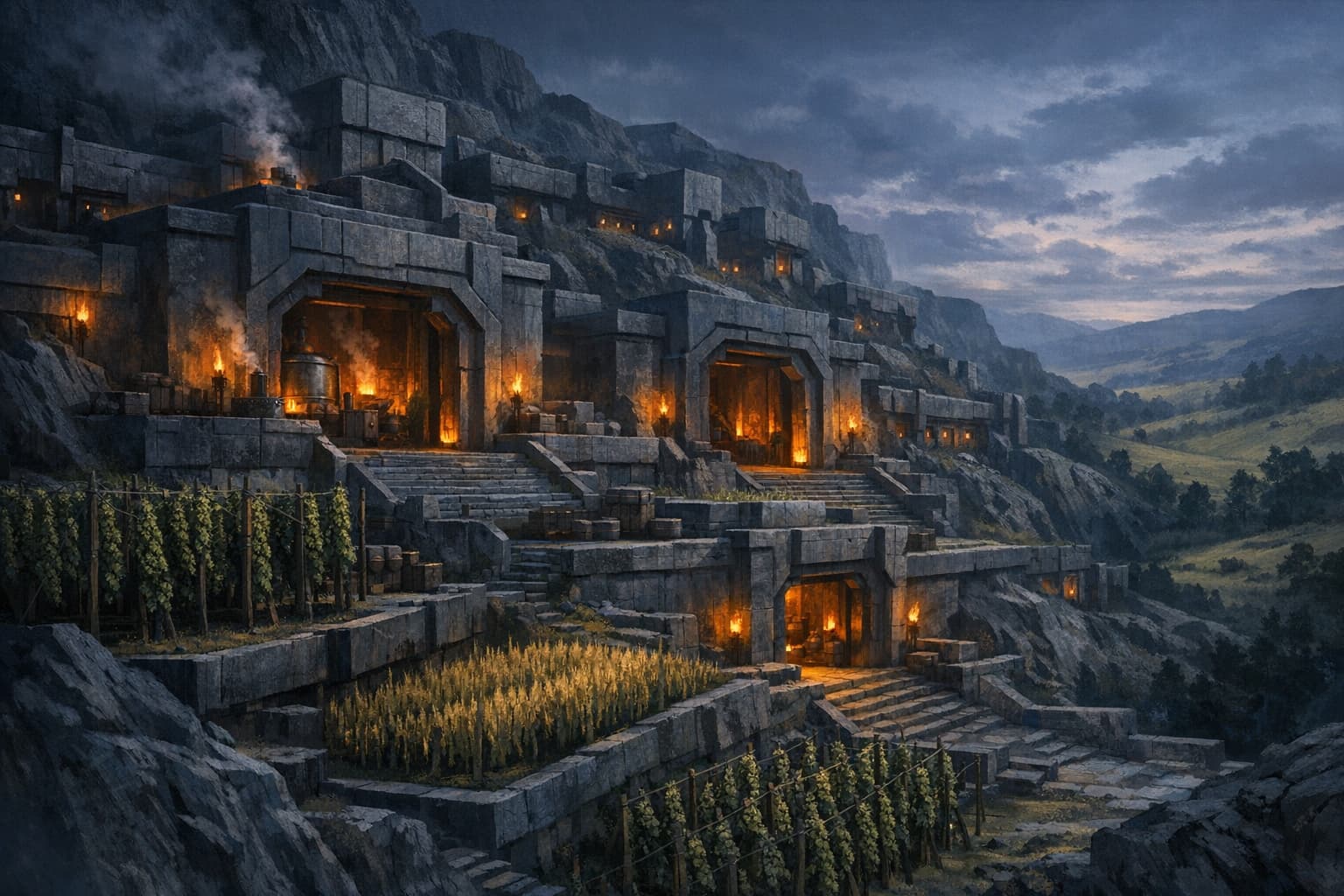
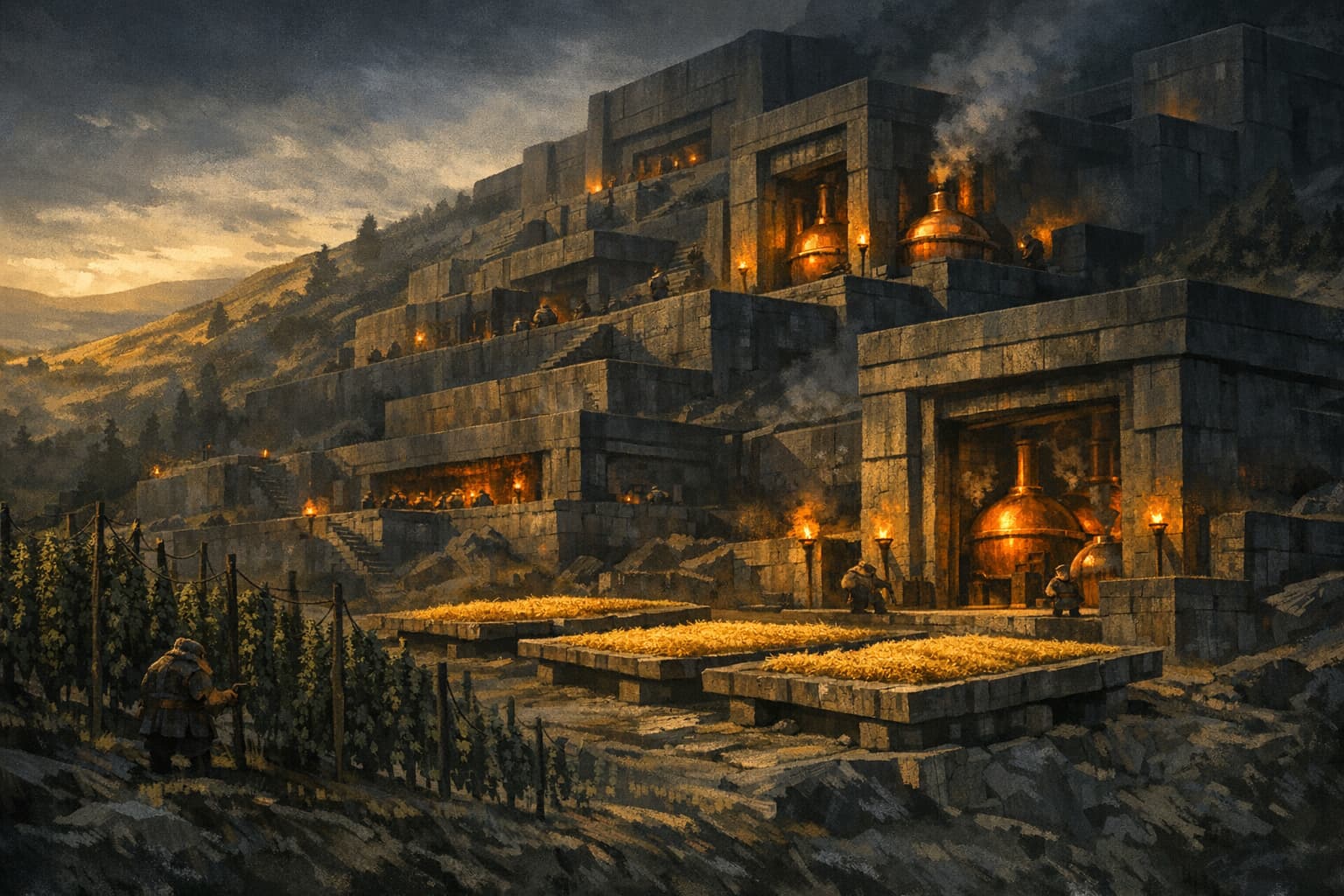
Hill dwarf settlements look different from mountain holds. They're partially underground but open to the air: hillside halls with wide doorways, terraced gardens carved into slopes, surface courtyards for markets and festivals. The architecture compromises between dwarven preference for enclosed space and the practical needs of farming, brewing, and livestock. The result is communities that human visitors find surprisingly welcoming, because the spaces were designed for interaction rather than defense.
Brewing, Agriculture, and the Growing Arts
If mountain dwarves are defined by mining and smithing, hill dwarves are defined by brewing and growing. This isn't a lesser tradition. A master brewer in a hill dwarf community commands the same respect as a master smith in a mountain hold, and for the same reason: they practice a craft that takes generations to perfect and that defines their community's identity.
Hill dwarf brewing traditions are extraordinarily complex. A single clan might maintain yeast cultures that have been cultivated for centuries, each one producing specific flavor profiles that can't be replicated. The loss of a yeast line is treated as seriously as the collapse of a mine. Brewing recipes are clan secrets passed through apprenticeship, never written down, protected as fiercely as any treasure.
The agricultural side extends beyond food production. Hill dwarves cultivate medicinal herbs, pipe-weed, dye plants, and timber. Their orchards produce fruits that go directly into brewing. Their livestock breeds are hardy, compact, and specifically adapted to hilly terrain. Everything connects back to self-sufficiency: a hill dwarf community that can't feed itself is vulnerable, and vulnerability is unacceptable.
This agricultural expertise makes hill dwarves natural traders. They produce surplus food, ale, and herbs that mountain dwarves need and can't grow underground. The trade relationship between hill and mountain dwarves is one of fantasy's most underexplored dynamics: the deep holds depend on surface communities for sustenance, but rarely acknowledge this dependency publicly.
A hill dwarf clan's yeast cultures are living heirlooms worth more than gold. A campaign could center on the theft of a master culture, the clan's efforts to recover it, and the rival who stole it to establish their own brewing tradition. The stakes are small by world-threatening standards but enormous by dwarven ones.
Community Networks
Mountain dwarves concentrate in massive holds. Hill dwarves spread across networks of smaller settlements connected by trade routes, family ties, and mutual defense pacts. A hill dwarf "nation" might be thirty communities scattered across a hundred miles of hill country, each one too small to withstand a serious threat alone but collectively resilient.
This distributed structure creates a different political culture. Mountain dwarf politics are vertical: clans competing for status within a single hold. Hill dwarf politics are horizontal: communities negotiating trade agreements, marriage alliances, and shared defense obligations across distance. A hill dwarf leader needs diplomatic skills that a mountain dwarf king can ignore.
The network structure also means hill dwarves interact with non-dwarven communities constantly. Their settlements sit in landscapes shared with humans, halflings, gnomes, and others. Hill dwarves develop expertise in cross-cultural trade, dispute resolution, and the kind of practical diplomacy that comes from living next to people who do things differently. This makes them the most cosmopolitan dwarves, which mountain dwarves view with suspicion.
When threats emerge, hill dwarf communities muster collectively. Messengers travel the network, each settlement contributes fighters and supplies, and the combined force assembles at whatever point faces the greatest danger. This system is slower than a mountain hold's standing garrison but draws on a larger population spread across a wider area.
The network structure means a threat to one hill dwarf community is a threat to all of them, but not all communities agree on how to respond. A settlement near the threat wants immediate military action. A settlement far away prefers diplomacy. The argument over response strategy can fracture alliances that took decades to build.
Trade and Diplomacy
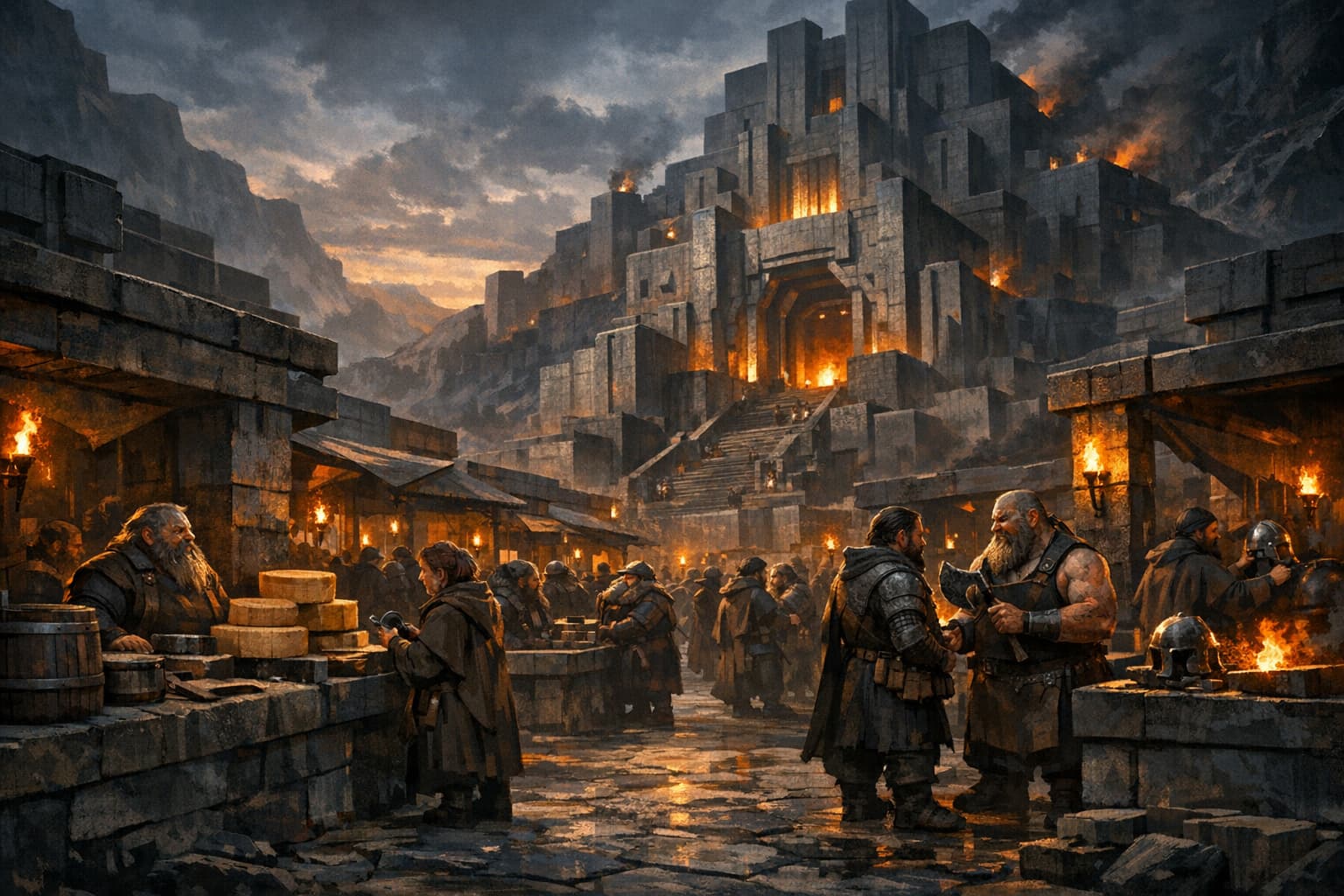
Hill dwarves are the species' merchants, intermediaries, and translators. Not because they're less devoted to dwarven values, but because their position between underground and surface worlds requires constant negotiation. A hill dwarf merchant who trades between a mountain hold and a human city needs to understand both cultures' expectations about price, quality, and courtesy.
This intermediary role gives hill dwarves disproportionate economic influence. Mountain dwarves produce weapons, armor, and metalwork. Humans produce textiles, livestock, and grain. Hill dwarves sit on the trade routes between them, adding value through transport, storage, brewing, and the trust that comes from being known to both sides.
The diplomacy extends beyond commerce. When disputes arise between mountain holds and surface kingdoms, hill dwarves often mediate. They speak both languages, understand both perspectives, and have relationships with both parties. This makes them valuable but also vulnerable: mediators get blamed when negotiations fail, and both sides suspect the hill dwarves of favoring the other.
Hill dwarf characters from trading families carry this diplomatic instinct into adventuring parties. They read social situations well, know how to find common ground between disagreeing factions, and instinctively calculate the cost-benefit of every decision. Other party members might find this mercantile thinking cold, but the hill dwarf sees it as practical wisdom earned across generations of negotiation.
Playing Hill Dwarves
Hill dwarf characters have an easier time justifying adventuring than mountain dwarves do. Their culture values travel, trade, and outside connections. A hill dwarf might adventure because their community sent them to establish trade contacts, because they're scouting for a new settlement site, or because they're following a family tradition of journeying before settling down.
The class synergies reinforce this. The 5e hill dwarf's +1 WIS and bonus HP make them excellent clerics, druids, and rangers. These are classes that interact with the world rather than withdrawing from it, which matches hill dwarf cultural tendencies. A hill dwarf cleric serves their community by healing and advising. A hill dwarf ranger patrols the trade routes between settlements. A hill dwarf druid tends the land that sustains everyone.
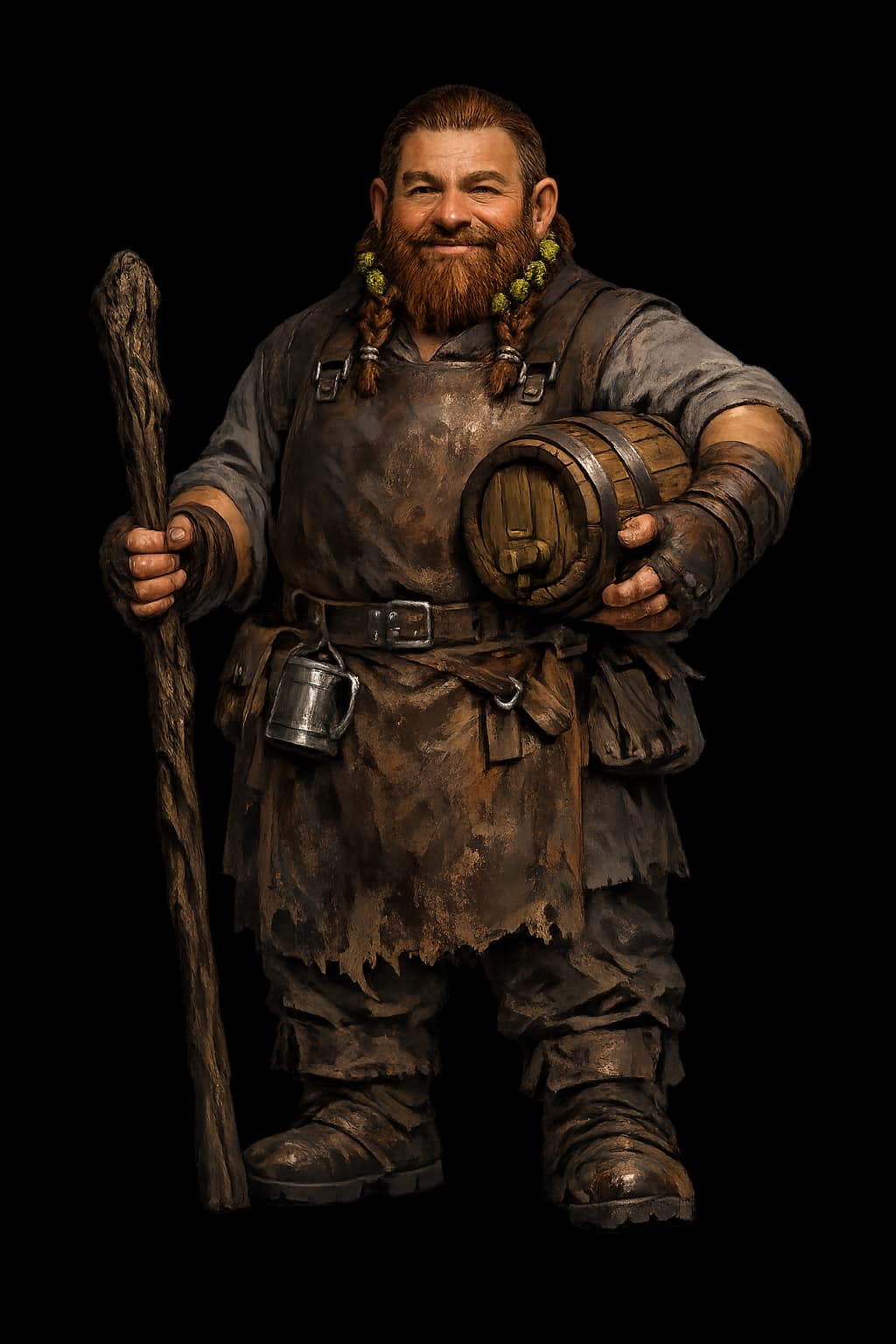
Give your hill dwarf opinions about food and drink. Not just "dwarves like ale" but specific, detailed opinions. They should know the difference between a barley stout and a wheat ale, have feelings about fermentation temperature, and judge every tavern they enter by the quality of what's on tap. This isn't comic relief. It's expertise, treated with the same seriousness a mountain dwarf gives stonework.
The most interesting hill dwarf characters navigate the tension between their surface orientation and their dwarven identity. They're dwarves who chose a different path, and that choice has consequences. Mountain dwarf relatives might view them as lesser. Human neighbors might treat them as curiosities. The hill dwarf sits between worlds, belonging to both and sometimes fully to neither.
The PHB Split: Why Two Core Dwarves
The mountain/hill split in the Player's Handbook mirrors the high/wood split for elves: one subrace emphasizes martial prowess, the other emphasizes resilience and wisdom. This binary is a design choice, not a lore inevitability. D&D needed two mechanically distinct dwarves the way it needed two mechanically distinct elves, and the mountain/hill axis provided the cleanest division.
In AD&D, hill dwarves were actually the default. The 1st Edition PHB dwarf was essentially a hill dwarf: hardy, resistant to magic, good with weapons, living in hilly or mountainous terrain. Mountain dwarves were introduced as the specialized deep-dwelling variant. The 5e reversal, where mountain dwarves feel like the default and hill dwarves feel like the variant, reflects decades of pop culture centering the deep-hold archetype.
The mechanical design tells the story. Mountain dwarves get STR +2 and armor proficiency: they fight. Hill dwarves get WIS +1 and extra HP: they endure. This maps to their cultural roles. Mountain dwarves hold the deep halls against existential threats. Hill dwarves maintain communities across generations of slow, steady challenges. Both require toughness, but the toughness serves different purposes.
With the 2024 PHB collapsing all dwarves into a single entry, the hill/mountain distinction becomes purely narrative. This is arguably a loss. The mechanical difference made the cultural difference tangible: choosing mountain or hill wasn't just flavor text, it was a commitment to a specific kind of dwarven identity. Without mechanics, that commitment becomes invisible.
“In AD&D, hill dwarves were the default. The reversal to mountain-as-default reflects decades of pop culture centering the deep-hold archetype over the surface-dweller.”
— On the D&D subrace evolution
Hill Dwarves in the Forgotten Realms
The Forgotten Realms doesn't use "hill dwarf" as a formal ethnic category the way it uses "shield dwarf" and "gold dwarf." Instead, hill dwarf describes a lifestyle choice: dwarves of any ethnic group who settled in surface or near-surface communities rather than deep holds. This means a Forgotten Realms hill dwarf might be an ethnically shield dwarf who chose to live on the surface, creating an interesting intersection of identity.
In practice, many of the dwarven communities in the Sword Coast region function as hill dwarf settlements. They're not deep underground cities like Gauntlgrym or Citadel Adbar. They're fortified hillside communities that trade with human cities, maintain surface farms, and interact with their neighbors daily. The dwarves of Icewind Dale, for example, live a hill dwarf lifestyle regardless of their ethnic heritage.
This ambiguity is actually useful for players. A Forgotten Realms hill dwarf can claim any dwarven ethnic heritage while explaining their surface orientation as a personal or family choice. They left the deep hold three generations ago, or their clan was founded by exiles who preferred the surface, or they're the eccentric branch of an otherwise traditional family. The flexibility serves character creation better than rigid categories.
Hill Dwarves in Video Games
Hill dwarves get less spotlight than mountain dwarves in CRPGs because "farmer-brewer who trades with neighbors" is harder to gamify than "warrior defending a mountain fortress." Most games default to the mountain archetype because it comes with built-in conflict. Hill dwarves require more narrative setup to make interesting.
The notable exception is Dwarf Fortress, where the game's simulation depth lets hill dwarf lifestyles emerge naturally. Fortresses built on hillsides with surface farms, breweries, and trade depots function as hill dwarf communities even though the game doesn't formally distinguish subtypes. The players who enjoy the trading and farming aspects of Dwarf Fortress are playing hill dwarf fantasy without naming it.
Stardew Valley's dwarven character lives in a hillside cave but interacts with the farming community, effectively living a hill dwarf lifestyle. The Hobbit films' depiction of the Blue Mountains dwarves before their reclamation of Erebor shows Thorin's people living as surface craftsmen and traders, which is hill dwarf existence forced on mountain dwarf characters. The cultural tension this creates drives Thorin's characterization.
For tabletop players, these examples show that hill dwarf gameplay is about community management, resource trading, and diplomacy rather than dungeon exploration. A campaign centered on hill dwarf characters might look more like a political drama than an adventure story, and that's a feature, not a limitation.
Related
Other Dwarven Kindred
 01
Mountain Dwarves
Fortress builders whose kingdoms endure inside living rock, measured in millennia rather than centuries
Read More 02
Shield Dwarves
Forgotten Realms defenders whose military heritage spans the length of the Sword Coast
Read More 03
Gold Dwarves
Traditionalist rulers of the Great Rift whose wealth and faith define dwarven orthodoxy
Read More 04
Duergar
Underdark survivors forged by psionic enslavement into something harder than the stone around them
Read MoreFAQ
Common Questions
Mechanically in 5e (2014), hill dwarves get +1 WIS and 1 bonus HP per level, making them ideal clerics, druids, and tough spellcasters. Mountain dwarves get +2 STR and medium armor proficiency, favoring martial builds. Culturally, hill dwarves are more social, more trade-oriented, and more comfortable around non-dwarves, which gives them different roleplaying hooks.
It depends on the setting and the specific dwarven culture, but there's often tension. Mountain dwarves may view hill dwarves as soft or compromised by surface living. Hill dwarves may view mountain dwarves as isolated and rigid. The friction is productive for roleplay because both sides have valid perspectives. Neither lifestyle is objectively superior.
Trade missions gone wrong, diplomatic errands between communities, scouting for new settlement sites, recovering stolen brewing recipes, or mediating disputes that escalated beyond the community's ability to handle. Hill dwarves have natural reasons to travel that don't require the "exile from the hold" trope that mountain dwarves often use.
Treat it as genuine expertise, not comic relief. Your hill dwarf should know fermentation science, soil quality, growing seasons, and ingredient sourcing. They judge taverns by their kitchens, evaluate new regions by their agricultural potential, and consider a well-brewed ale to be art on par with a finely forged blade. The specificity makes it characterization rather than stereotype.