Mountain Dwarves
Fortress builders and deep miners whose kingdoms endure inside living rock, measured in millennia rather than centuries
The Deep Halls
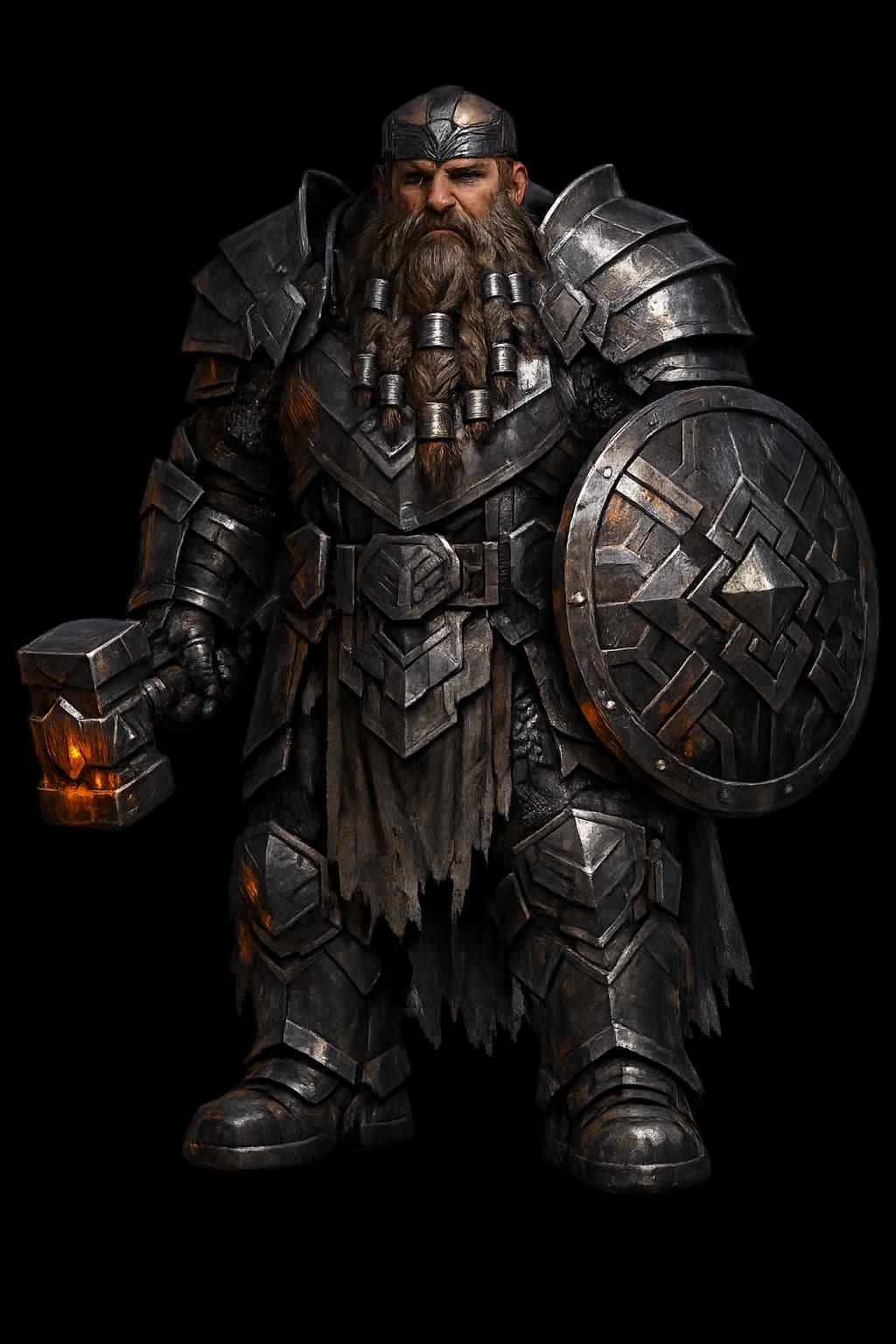
Mountain dwarves are the archetype. When someone says "dwarf" without qualification, they mean a mountain dwarf: stocky, armored, living inside a mountain, probably holding a warhammer and an opinion about stonework quality. This centrality is both an asset and a trap. The asset is instant recognition. The trap is that familiarity breeds assumption, and assumptions prevent interesting characters.
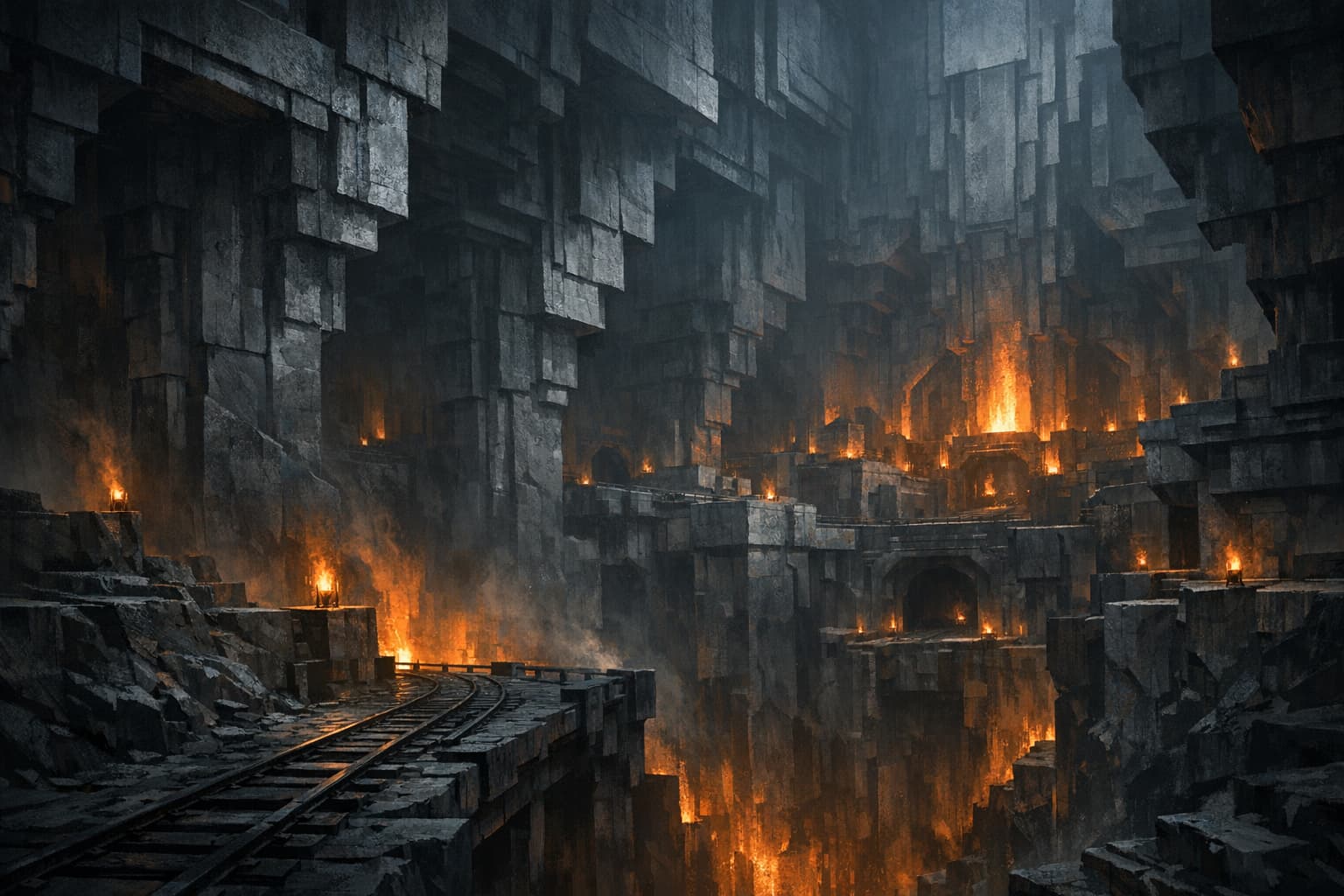
What defines mountain dwarves isn't the mountain itself but what living inside one for thousands of years does to a culture. Space underground costs labor. Every corridor, hall, and chamber was carved by someone's hands. This means space has value in ways surface-dwellers rarely appreciate. A mountain dwarf doesn't "build a house." They subtract rock from rock, leaving livable space behind. Architecture is sculpture. Construction is excavation.
This creates societies where infrastructure is identity. The clan that carved the Great Hall isn't just responsible for a room. They carved the space where the hold gathers, where kings are crowned, where treaties are sealed. Their work defines the community's shared experience. The reputation of that clan rests on every column, every arch, every flagstone. Shoddy work isn't embarrassing. It's an insult to everyone who uses the space.
Clan Hierarchies and the Vertical Hold
Mountain dwarf society organizes vertically, both literally and politically. The oldest, wealthiest clans live deepest, closest to the richest veins and farthest from surface threats. Younger or lesser clans occupy upper levels. This isn't arbitrary. Depth equals safety, and the clans that carved deepest proved their commitment across generations.
Clan rank determines almost everything: where you live, what resources you access, whom you marry, what craft traditions you inherit. A mountain dwarf born into a deep clan starts life with advantages that surface clans can't easily match. The best ores, the safest corridors, the most prestigious apprenticeships. Social mobility exists but moves slowly, measured in generations of demonstrated skill and loyalty.
This produces conservative societies where tradition carries genuine weight. When your clan's reputation rests on five centuries of accumulated craft, "trying something new" isn't innovation. It's risking everything your ancestors built. Mountain dwarf elders who resist change aren't being stubborn for stubbornness' sake. They're protecting an inheritance that took lifetimes to build.
The political structure reflects the vertical layout. A council of clan elders governs most holds, with the deepest clans holding the most seats. The king or high thane typically comes from the deepest clan, though not always. Succession disputes between deep clans have collapsed holds more than once.
The vertical organization of mountain dwarf holds creates natural social stratification without requiring artificial class systems. Depth equals status, and status is visible in your address. A character's level in the hold tells other dwarves exactly where they stand.
Mining as Spiritual Practice
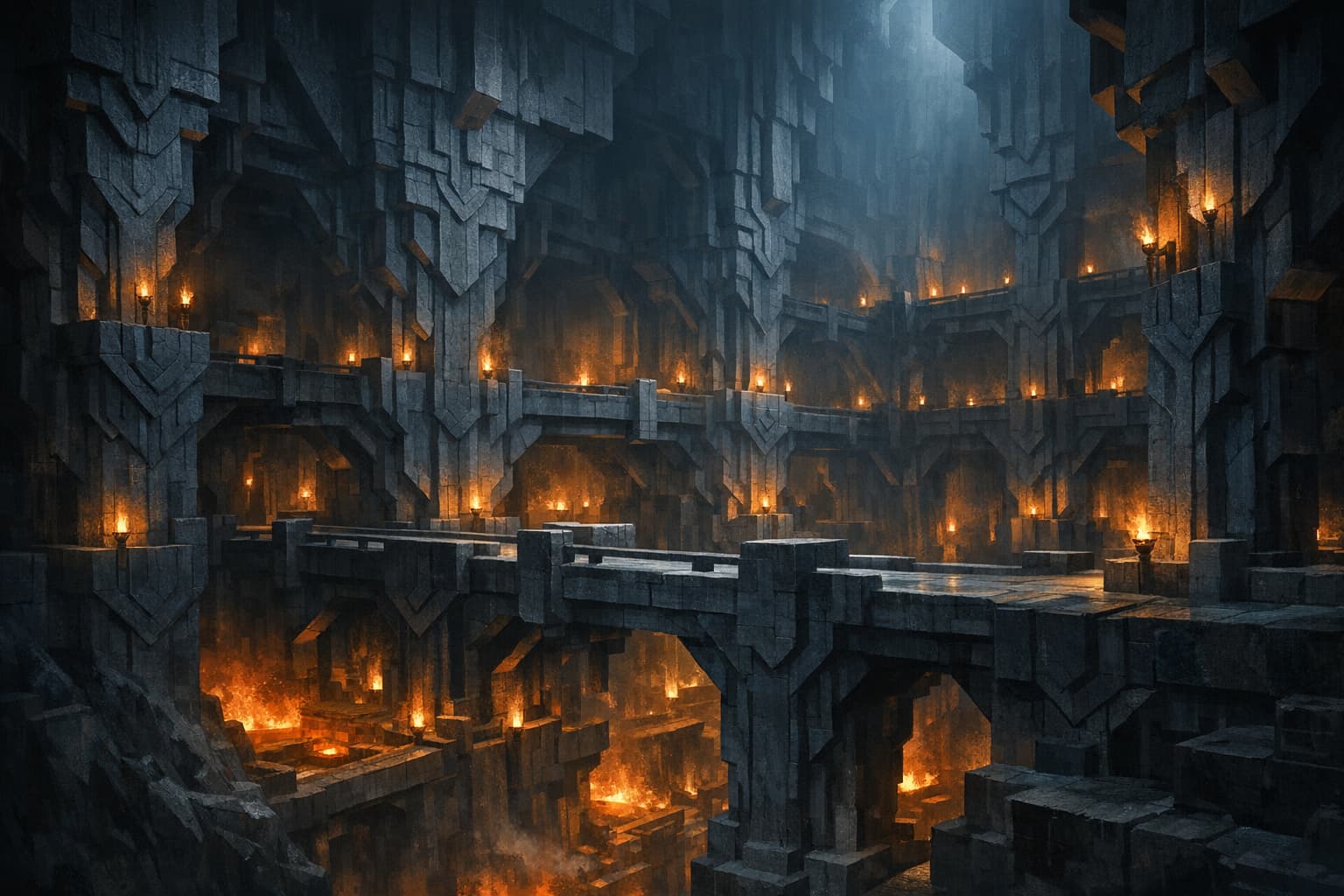
Mountain dwarves don't mine the way humans mine. Humans extract resources from earth they consider inert. Mountain dwarves interact with stone they consider meaningful. The vein of mithral isn't just valuable metal waiting to be pulled out. It's a gift the mountain placed there, and how you extract it matters as much as what you do with it.
Mining rituals vary by hold, but the core principle is consistent: you don't take from the mountain without giving back. This might mean leaving a portion of every vein untouched. It might mean carving prayers into the empty space where ore once sat. It might mean singing specific songs during extraction that acknowledge the mountain's sacrifice. The specific practice matters less than the principle: the mountain is a partner, not a resource.
This spiritual framework has practical consequences. Mountain dwarves rarely strip-mine. They follow veins carefully, extracting what they need and leaving the surrounding rock stable. Their mines last centuries because they're designed to, not because the dwarves are being cautious for economic reasons. The mines last because the miners believe the mountain deserves care.
When a mountain dwarf discovers a new vein, the response isn't excitement about profit. It's a complex reaction mixing gratitude, responsibility, and the solemn awareness that this vein will define generations of work. The discoverer's name enters clan records permanently. Their descendants will be known as the family that found the Deep Silver Vein or the Iron Root.
A mine collapse isn't just an engineering failure in a mountain dwarf hold. It's a spiritual crisis. Did the clan offend the mountain? Were the extraction rituals performed incorrectly? The investigation into a collapse involves priests as much as engineers, and the political fallout can reshape clan hierarchies.
Tunnel Warfare
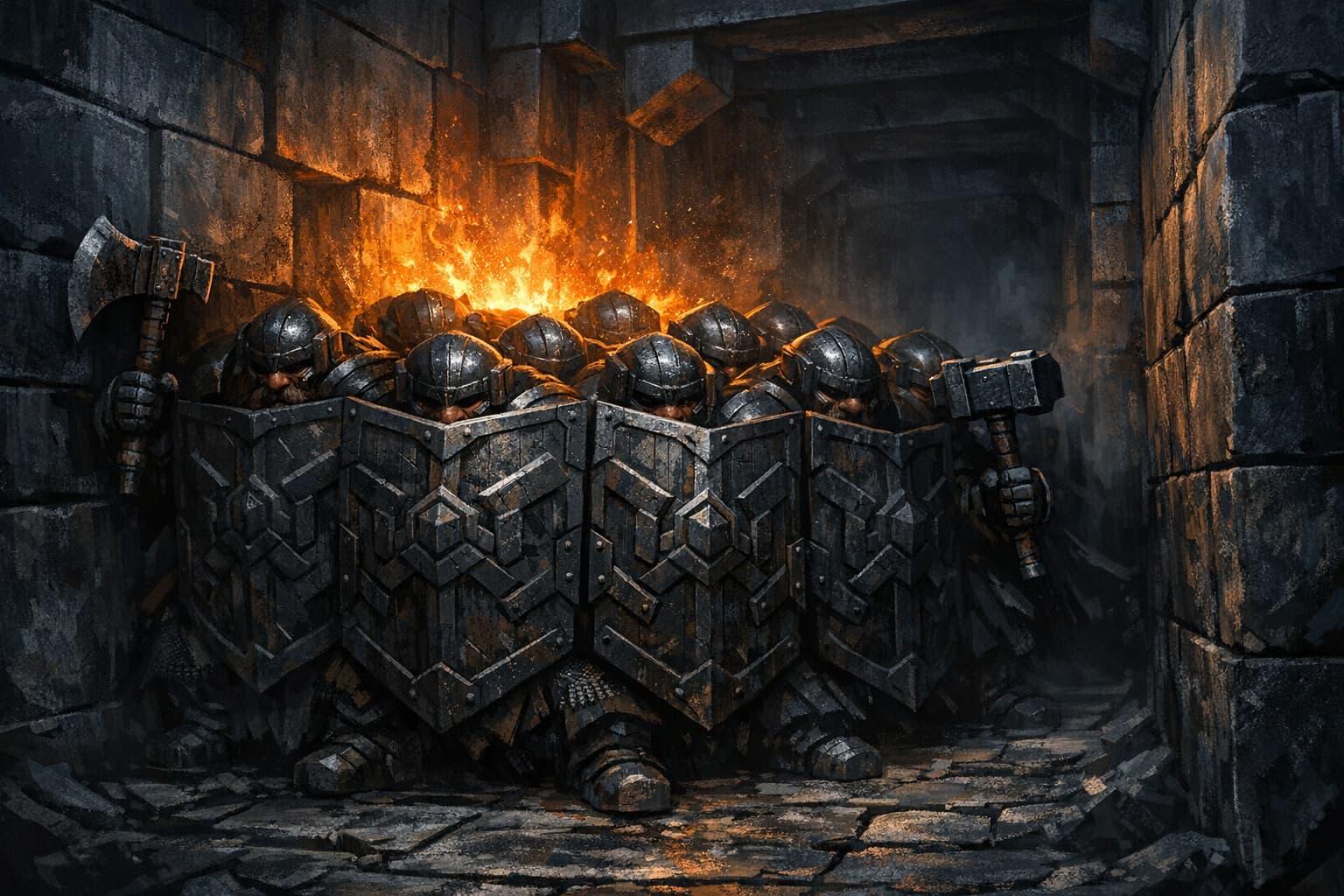
Mountain dwarves fight differently from every other species because their home terrain is three-dimensional, confined, and largely of their own construction. They don't meet enemies on open fields. They funnel invaders through corridors designed to be lethal, past traps built into the architecture centuries ago, into kill zones where twenty dwarves can hold off two hundred.
The defensive doctrine is simple: never fight in a space you didn't build. Every major corridor in a mountain dwarf hold has fallback positions, chokepoints, and emergency seals. Some holds can collapse entire sections to deny them to invaders, sacrificing real estate to preserve the deeper levels where the population shelters.
Offensive tunnel warfare is rarer but devastating. Mountain dwarf sappers can undermine enemy fortifications from below, emerging inside walls that were built to resist attack from the outside. They can redirect underground rivers to flood enemy positions. They can collapse the ground beneath enemy camps. Surface armies that fail to account for what's underneath them learn this lesson once.
This military tradition produces soldiers with specific skills: fighting in close quarters with heavy armor and short weapons, operating in darkness, communicating through vibrations in stone, maintaining discipline in formations where individual initiative can get your allies killed. Mountain dwarf warriors don't glory in individual combat. They glory in the wall that holds.
Playing Mountain Dwarves
The mountain dwarf character who left the hold needs a reason that matters. "Wanderlust" doesn't cut it for a species that considers home the most important thing in existence. Something pushed them out or pulled them away.
The exile works: a transgression against clan law, a political defeat, a failed apprenticeship that brought shame. The mountain dwarf exile carries the hold's standards with them but can never meet those standards away from the mountain. Everything above ground feels temporary, fragile, exposed. They judge surface architecture by deep-hold standards and find it wanting.
The emissary works differently: sent by the hold to accomplish something specific. Secure a trade route. Assess a threat. Recover a lost artifact. The emissary carries the hold's authority and its expectations. They succeed or they don't go home. This creates natural urgency and a clear relationship with the party: these people help me accomplish my mission, so their goals matter because mine depend on them.
Either way, give the character specific opinions about underground spaces. They should notice things others miss: air currents that indicate connecting tunnels, stone quality that reveals geological history, acoustic properties that map unseen chambers. Make their expertise useful to the party, not just atmospheric.
The PHB Archetype
Mountain dwarves entered D&D as one of two core subraces in the Player's Handbook, positioned as the "tougher, more martial" option opposite hill dwarves. This split mirrors the high elf/wood elf division: one subrace leans toward strength and armor, the other toward wisdom and endurance.
In AD&D, the distinction was less formal. Dwarves were dwarves, with hill dwarves and mountain dwarves existing as flavor text more than mechanical subtypes. The mountain variant was simply the one that lived deeper and hit harder. Second Edition's Complete Book of Dwarves (1992) expanded both into full cultural profiles, establishing mountain dwarves as the isolated, traditional option.
Third Edition formalized the split mechanically, and 5th Edition cemented it. The 5e mountain dwarf gets +2 STR on top of the base +2 CON, plus medium armor proficiency. This makes them the only PHB subrace that grants two +2 ability score bonuses, which created an optimization anomaly: mountain dwarf was statistically the best choice for almost any Strength-based build, including classes that aren't traditionally dwarven.
The "mountain dwarf wizard in medium armor" became a mechanical meme, illustrating how optimization can diverge from flavor. The 2024 PHB revision addresses this by decoupling ability scores from race entirely, but the mountain dwarf's identity as the mechanically powerful option persists in the community's memory.
- Darkvision 60 ft.
- Dwarven Resilience (advantage vs. poison, resistance to poison damage)
- Dwarven Combat Training (battleaxe, handaxe, light hammer, warhammer)
- Tool Proficiency (smith's, brewer's, or mason's tools)
- Stonecunning (+2x proficiency on History checks related to stonework)
- Dwarven Armor Training (light and medium armor proficiency)
The dual +2 bonuses made mountain dwarf the strongest stat package in the 2014 PHB, warping optimization discussions for a decade.
- Darkvision 120 ft.
- Dwarven Resilience (poison resistance, advantage on saves)
- Dwarven Toughness (+1 HP per level)
- Forge Wise (proficiency with two artisan's tools)
- Stonecunning (Tremorsense 60 ft. for 10 minutes, 1/long rest)
The 2024 revision merged mountain and hill dwarves into a single Dwarf entry, ending the subrace system entirely. Mountain dwarf identity now exists in flavor rather than mechanics.
Across Franchises
The mountain dwarf archetype is one of fantasy's most consistent species concepts. Every major franchise needs dwarves who live in mountains, forge weapons, and guard ancient halls. The variations come in how each setting handles the relationship between dwarves and the earth itself.
Mountain Dwarf Archetype Across Franchises
| Franchise | Name | Defining Trait | Key Distinction |
|---|---|---|---|
| D&D (generic) | Mountain Dwarf | Dual +2 STR/CON, armor proficiency | PHB core; the mechanically strongest dwarf option |
| Lord of the Rings | Durin's Folk (Longbeards) | Seven founding fathers, mithral-mining legacy | Moria defines the archetype: glory, loss, and reclamation |
| Elder Scrolls | Dwemer (Deep Elves) | Tonal architecture, reality-bending engineering | Not dwarves at all; disappeared entirely, leaving ruins |
| Warhammer | Dawi (Karaz Ankor) | Book of Grudges, ancestor worship, runic magic | Grudge mechanics are formal law; engineering over arcane magic |
| Dragon Age | Orzammar Dwarves | Caste system, lyrium mining, lost thaigs | Cut off from surface; caste is destiny unless you're casteless |
The Elder Scrolls Dwemer stand out for deconstructing the archetype entirely: their "mountain dwarves" were actually elves, their ruins are steampunk, and their disappearance is the setting's great mystery.
The Mountain Kings in CRPGs
Mountain dwarves have been a CRPG staple since the Gold Box era, and their implementation reveals what each game considers essential about the archetype. The Baldur's Gate series (1998–2023) uses Forgotten Realms mountain dwarves as tough frontliners. In BG1 and BG2, dwarf was the fighter-class race, picked for CON bonuses and saving throw advantages rather than cultural richness. BG3 changed this by giving dwarven characters unique dialogue reflecting clan pride and underground expertise.
Dragon Age: Origins (2009) offered the deepest CRPG mountain dwarf experience. Orzammar's caste system meant your dwarf's social position shaped the entire origin story. The noble dwarf and the casteless dwarf experience the same mountain from completely different perspectives. The noble takes the halls for granted; the casteless sees them as a prison. Both are mountain dwarves, but the difference in lived experience is stark.
Deep Rock Galactic (2018) distills mountain dwarf fantasy to its mechanical essence: mining, fighting in tunnels, drinking, and teamwork. The game never mentions D&D, but every system screams mountain dwarf. Procedurally generated caves create endless variations on the core experience. The mining itself is satisfying. The combat is claustrophobic. The camaraderie is genuine. It's the best mountain dwarf simulator ever made, and it doesn't know it.
Related
Other Dwarven Kindred
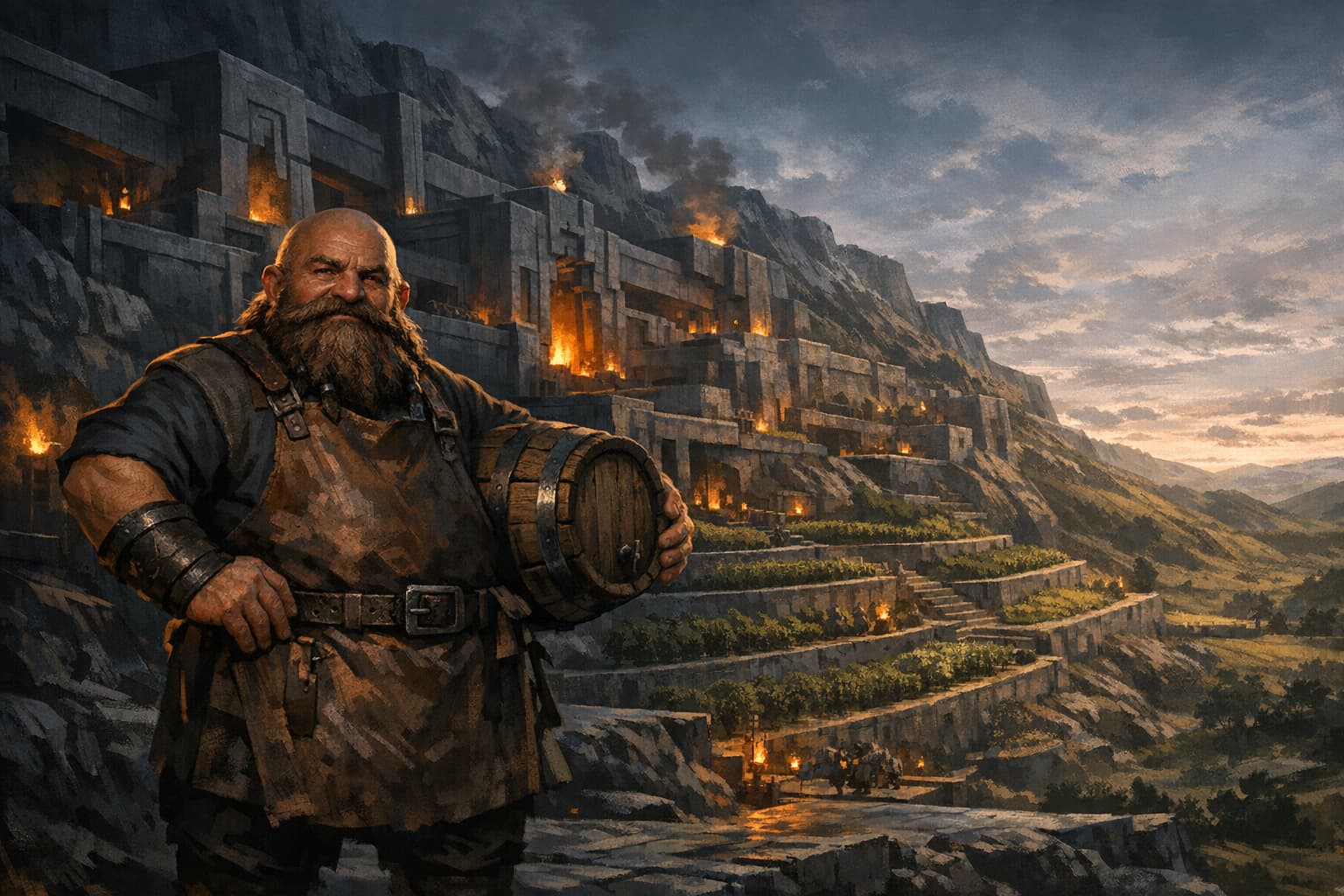 01
Hill Dwarves
Surface-oriented communities whose resilience comes from open skies and deep roots in the land
Read More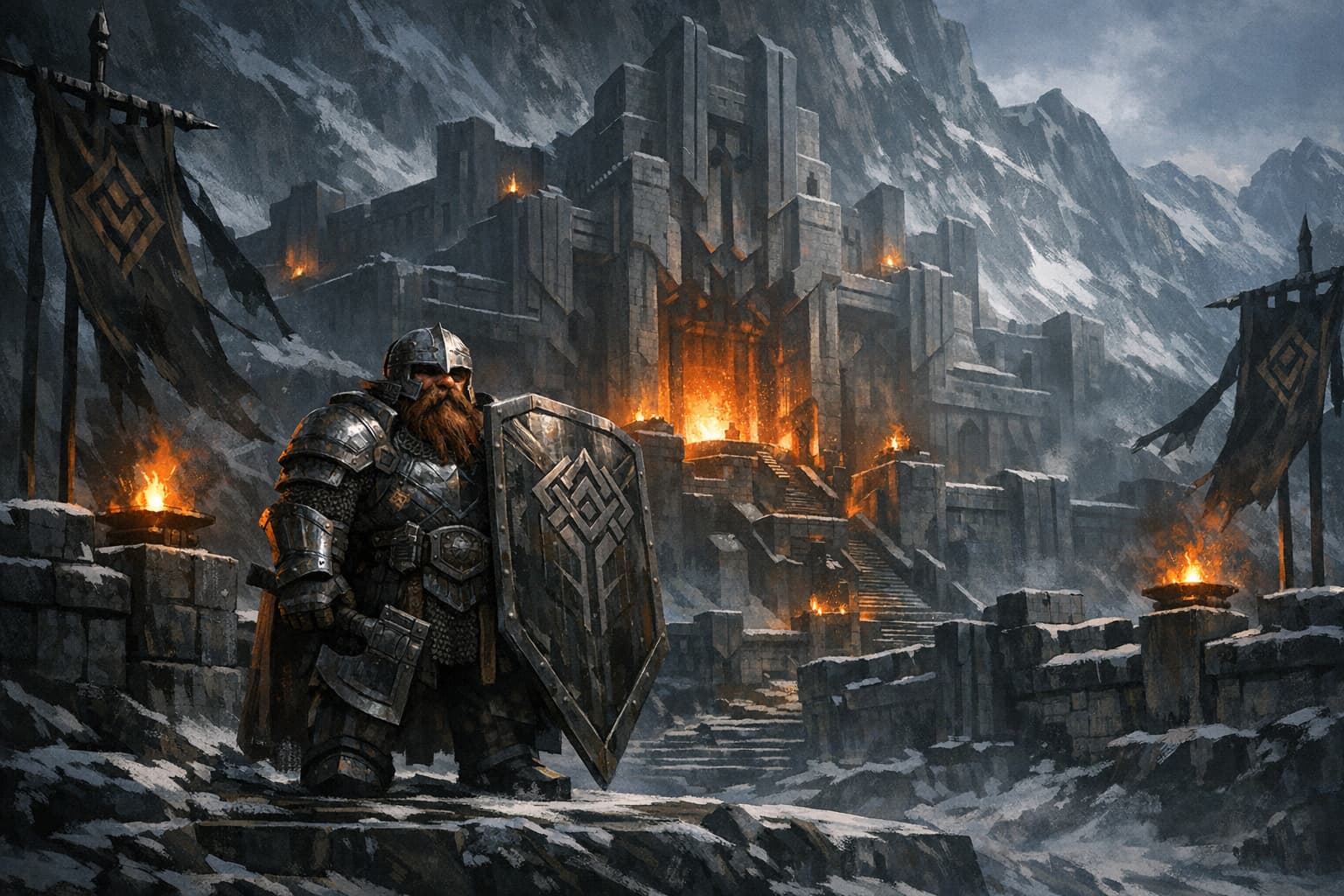 02
Shield Dwarves
Forgotten Realms defenders whose military heritage spans the length of the Sword Coast
Read More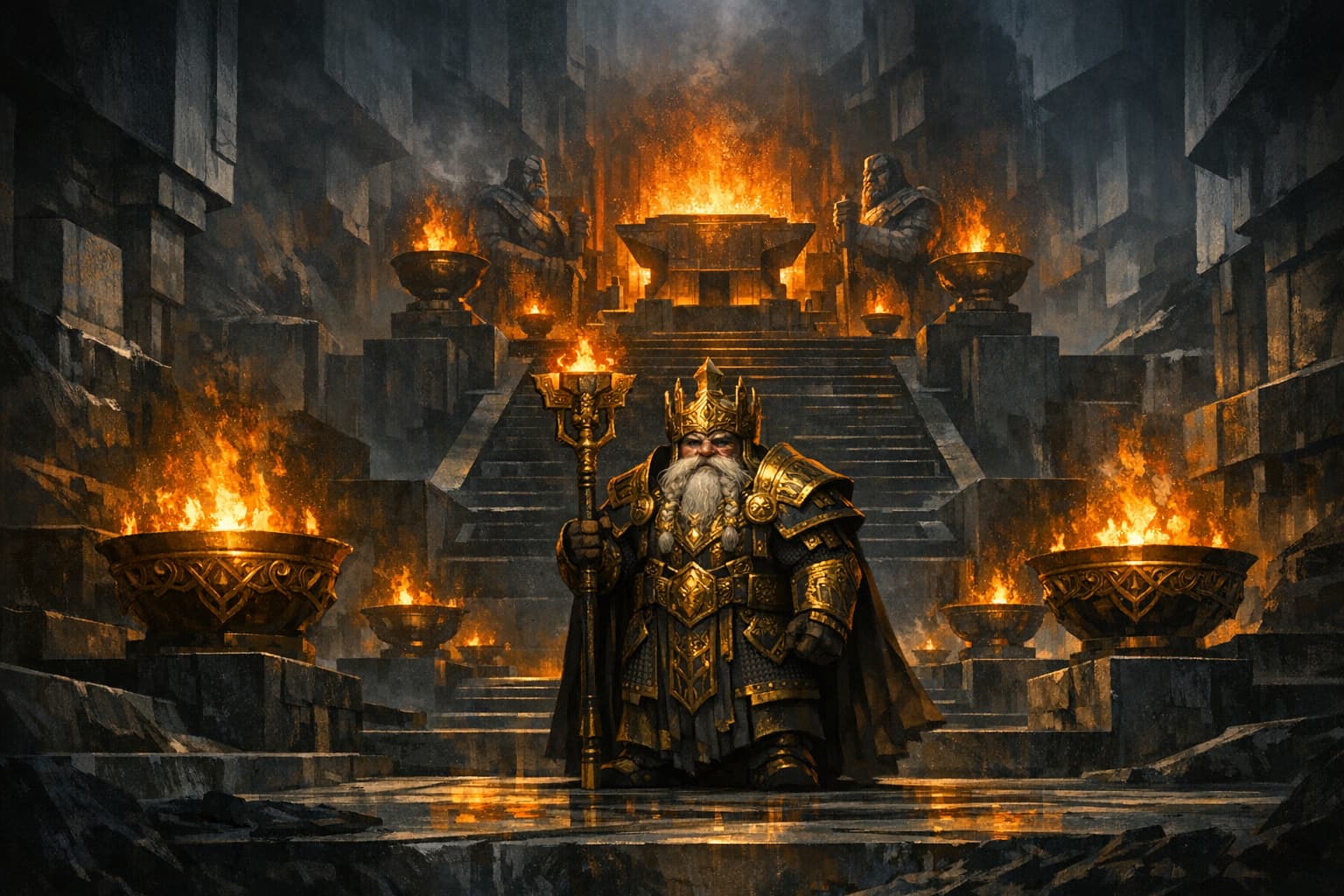 03
Gold Dwarves
Traditionalist rulers of the Great Rift whose wealth and faith define dwarven orthodoxy
Read More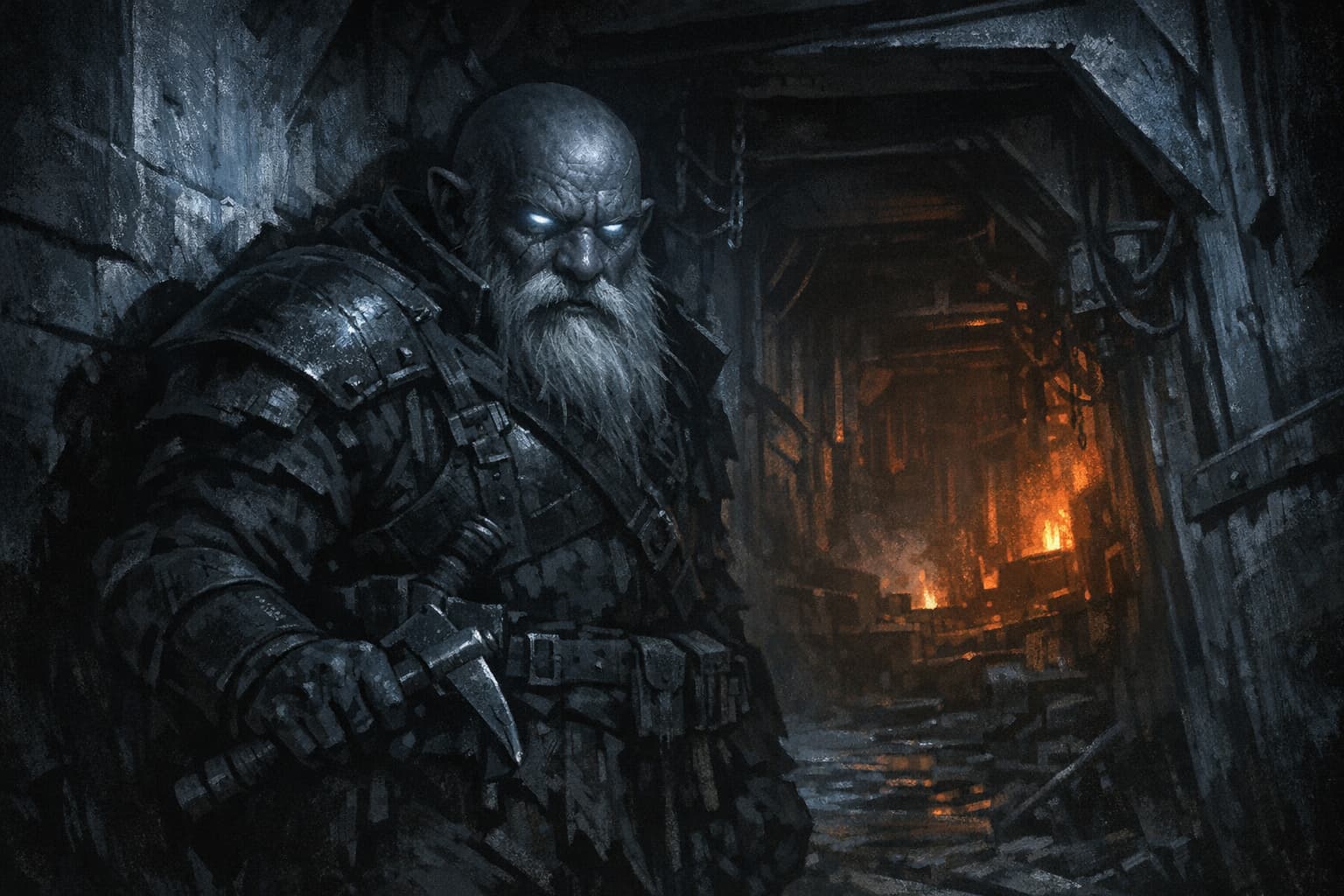 04
Duergar
Underdark survivors forged by psionic enslavement into something harder than the stone around them
Read MoreFAQ
Common Questions
In the 2014 PHB, mountain dwarves get +2 STR and medium armor proficiency, making them the martial option. Hill dwarves get +1 WIS and bonus HP, making them the durable caster option. Culturally, mountain dwarves live deeper underground in more isolated, traditional holds, while hill dwarves maintain closer ties to surface communities. The 2024 PHB merged both into a single Dwarf entry, making the distinction purely narrative.
The +2 STR/+2 CON and free medium armor proficiency meant mountain dwarf wizards got survivability no other wizard could match without multiclassing. Half plate and a shield with no arcane spell failure made them surprisingly tanky. The STR bonus was wasted, but the CON and armor more than compensated. It became a meme because the "optimal wizard" was a stocky dwarf in chainmail, which contradicts every wizard stereotype.
Give them a specific clan identity with specific traditions. Decide what their clan crafts, what level of the hold they come from, and what pushed them to the surface. A mountain dwarf from a deep mining clan has different values than one from a gate-ward military clan. Make their relationship with stone personal: do they miss the mountain's weight above them? Can they sleep without feeling enclosed? The specific details prevent the generic archetype.
Fighter and barbarian are natural fits given the STR and CON bonuses. Paladin works well for mountain dwarves from devout clans. Cleric of the Forge domain is almost tailor-made for the archetype. For less obvious choices, artificer reflects dwarven engineering traditions, and ranger suits a dwarf who patrols the deep roads between holds. The 2024 rules make any class viable since ability scores are no longer tied to race.