
Astral Elves
Cosmic wanderers who perceive reality from between the stars, where time bends and knowledge transcends
Origin Matters
Astral elves need a clear origin story that explains why they exist separately from other elves. "They live in space" isn't enough. You need to know how they got there, how long they've been there, and what being there has done to them.
One approach: astral elves are the original elves, and all other elven subspecies are descendants who settled on material planes. This makes astral elves the oldest, with perspectives that predate the worlds where campaigns take place. They remember when the material planes were new.
Another approach: astral elves are exiles or colonists who left material planes for the astral. Maybe they fled catastrophe. Maybe they sought knowledge unavailable on material worlds. Maybe they followed a god who withdrew from physical reality. The reason for leaving shapes their culture.
A third approach: astral elves never existed on material planes at all. They evolved in the astral, native to an environment that other species can barely survive visiting. This makes them genuinely alien rather than elves who moved.
Cosmic Perspective
Astral elves should think on scales that other species find incomprehensible. Not just long lifespans, which many elven subspecies share, but awareness of cosmic scope that dwarfs material concerns.
This perspective should affect how astral elves behave. They're patient in ways that frustrate other species. They view material conflicts as temporary disruptions rather than existential crises. They may seem detached or uncaring when they're actually operating on timescales that make immediate events look like minor fluctuations.
The cosmic perspective also creates knowledge asymmetries. Astral elves may know things about the universe that material species have never discovered. They've seen phenomena that don't exist on material planes. They've studied cosmic patterns that shape reality in ways material observers can't perceive. This knowledge can be power, but it can also be burden.
From the astral plane, material worlds look small. Individual planets become points of light. The empires that dominate those worlds are local phenomena, barely visible from astral perspective. Astral elves who've spent millennia watching civilizations rise and fall on dozens of worlds develop a perspective that makes material urgency seem quaint.
Time Works Differently
The astral plane traditionally exists outside normal time, and this should matter for astral elf psychology. They don't experience time the way material species do.
This might mean astral elves don't perceive time linearly. Past, present, and future blur together from astral perspective. Astral elves might discuss events that haven't happened yet as if they're historical, or reference ancient occurrences in present tense. This isn't prophecy exactly. It's a different relationship to temporal sequence.
The time difference also creates practical complications. An astral elf who visits a material plane for what feels like a week might return to find centuries have passed in the astral. Or the reverse. Relationships across planes become complicated when participants age at different rates or experience time in incompatible ways.
Astral elf society might organize around managing temporal displacement. Rituals that synchronize astral and material time. Records that track when events occurred in both reference frames. Social structures that account for individuals phasing in and out of temporal alignment with each other.
The Isolation of Understanding
Astral elves face a fundamental loneliness that comes from perceiving reality differently than other species. They see things others can't see. They know things others can't know. And they can't fully communicate what they perceive because the concepts don't translate.
The isolation affects astral elf culture. They tend to form tight communities with others who share their perspective. They develop art and philosophy that processes experiences no one else understands. They may seem insular or exclusive, but they're often just trying to connect with people who can actually understand what they're talking about.
Some astral elves respond to isolation by withdrawing entirely. Others become obsessed with translation, trying to bridge the gap between astral and material understanding. Both responses are psychologically coherent given the circumstances.
This creates a distinctive astral elf psychology. They're not arrogant exactly, though they often seem that way. They're people trying to have conversations across an unbridgeable comprehension gap. Imagine trying to explain color to someone who's never seen it. Now imagine that every conversation you have involves similar translation failures.
Society Built on Different Assumptions
Astral elf society should reflect the environment where they live. The astral plane has different rules than material worlds, and societies develop in response to their environment.
If the astral plane lacks physical scarcity, astral elf society won't organize around resource competition the way material societies do. Status might come from knowledge, creativity, or spiritual attainment rather than material wealth. Economic systems might be unrecognizable to material species.
If the astral plane is dangerous in ways material planes aren't, astral elf society will develop around managing those dangers. Maybe thought becomes reality in the astral, requiring strict mental discipline. Maybe astral predators hunt conscious minds, requiring defensive formations. Maybe planar instability makes permanent settlement impossible, requiring nomadic structures.
If the astral plane enables capabilities impossible elsewhere, astral elf society will develop around using those capabilities. Instantaneous communication across any distance. Memory that can be shared directly. Travel that ignores physical separation. These capabilities would reshape every aspect of social organization.
Magic and the Mind
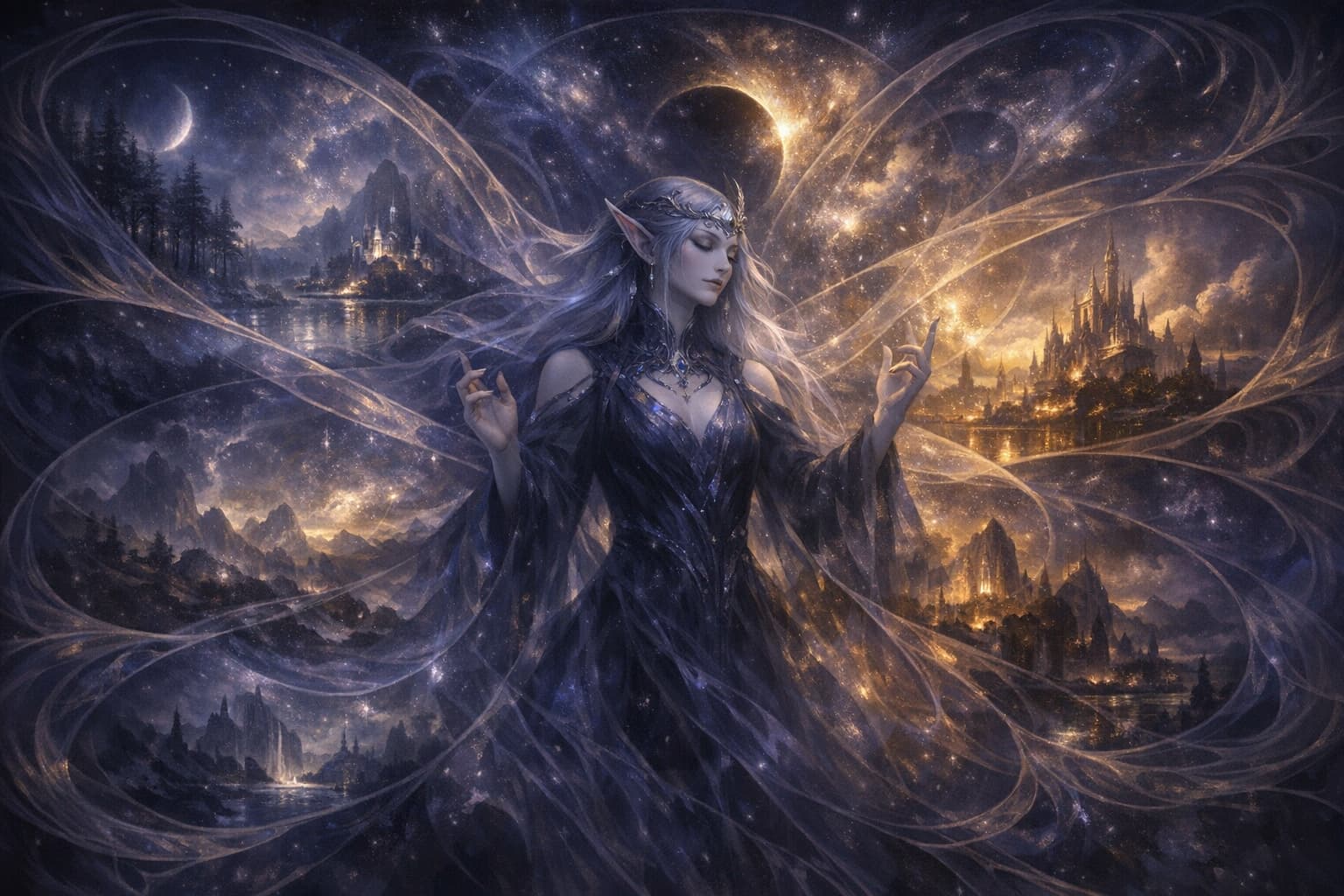
Astral elf magic should connect to mental and cosmic forces rather than elemental or nature magic. They manipulate thought, memory, probability, time, or planar boundaries. Their magic reflects what's possible in their native environment.
This creates different magical traditions than other elves practice. High elf magic often emphasizes scholarly understanding and arcane formalism. Wood elf magic connects to natural forces and living things. Astral elf magic works with the building blocks of reality itself.
The most distinctive astral elf magic might involve thought manipulation. Reading minds, sharing memories, implanting ideas. This creates obvious ethical complications. Astral elf societies likely have strict norms about mental privacy and consent that seem paranoid to species who can't casually access each other's thoughts.
Prophecy and temporal magic fit astral elf themes. If they perceive time non-linearly, they might be able to access information about events that haven't happened yet. This doesn't have to mean they can change the future. It might just mean they know things they can't explain knowing.
Spelljammer's Children
Astral elves exist because of Spelljammer — a D&D setting so strange that TSR wasn't sure anyone would buy it. Jeff Grubb's original Spelljammer: AD&D Adventures in Space (1989) placed sailing ships in the void between crystal spheres, turning D&D's cosmology into a setting where you could literally fly between campaign worlds. Elves were central to this vision: the Imperial Elven Navy patrolled wildspace, and elven Man-o-War ships were among the most iconic vessels in the setting.
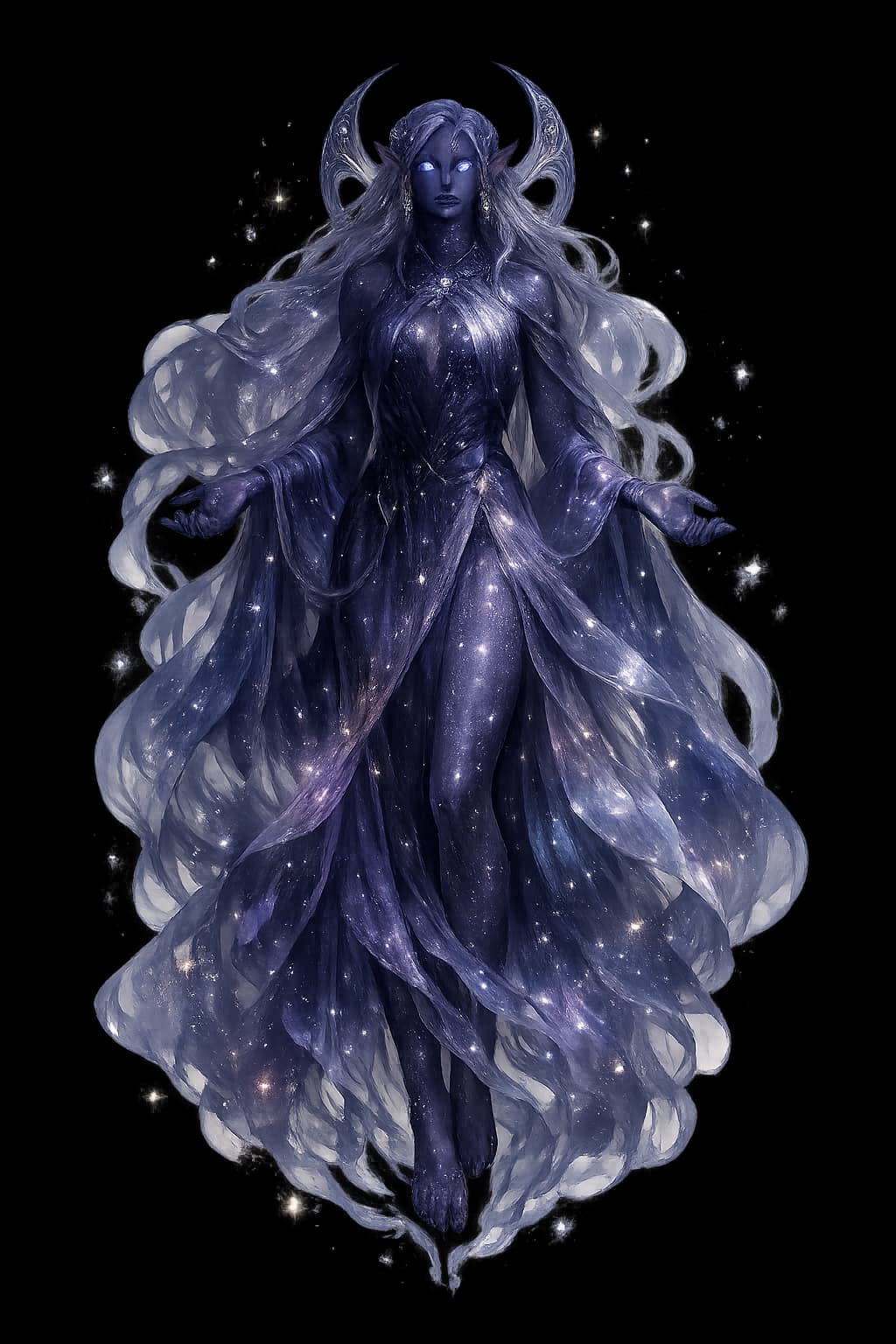
Those original space-faring elves weren't called "astral elves" — they were standard elves who happened to live in space. The astral elf as a distinct subrace emerged only with the 2022 revival. Spelljammer: Adventures in Space (5e) introduced astral elves as elves who had lived so long on the Astral Plane that the plane's timelessness had changed them fundamentally. They no longer aged. Their physical features took on a starlight quality. They had become something different.
The gap between the settings matters. Original Spelljammer (1989) ran for five years before being discontinued in 1993. For nearly thirty years, space-faring D&D was a niche memory, kept alive by dedicated fan communities and occasional references in other products. The 2022 revival condensed decades of community worldbuilding into a single hardcover and gave astral elves official mechanical identity for the first time.
The result is a subrace with an unusual relationship to D&D history: officially new (2022), conceptually old (1989), and carrying the weight of fan expectations built over three decades of the setting's absence.
Spelljammer Launches
Jeff Grubb's Spelljammer: AD&D Adventures in Space introduces space-faring D&D. Elves serve as an interstellar naval power. No distinct "astral elf" subrace exists yet.
Spelljammer Discontinued
TSR stops publishing Spelljammer material. The setting enters a thirty-year hiatus, surviving through fan communities and occasional official references.
Spelljammer: Adventures in Space (5e)
Wizards of the Coast revives Spelljammer for 5th Edition. The Astral Adventurer's Guide introduces astral elves as an official player race with the Starlight Step and Astral Fire features.
UA Playtest
Astral elves appeared in Unearthed Arcana: Travelers of the Multiverse before publication. Community feedback shaped the final version, particularly the Radiant Soul feature.
Mechanics & Reception
Astral elves arrived in D&D 5e with a stat block designed to feel otherworldly without being overpowered. Their mechanical identity — Sacred Flame or Thaumaturgy cantrip, Starlight Step teleportation, Astral Fire (radiant or necrotic damage riders) — positions them as elves touched by cosmic forces. The Starlight Step, a 30-foot teleport usable a number of times equal to proficiency bonus, became the standout feature.
Community reception was divided. Optimization-focused players appreciated the mechanical utility: Starlight Step is a powerful movement tool, and the free cantrip from the cleric or wizard list opened build options. Lore-focused players were less satisfied, arguing that the stat block felt generic — "elf with a teleport" rather than something that captured the strangeness of living on the Astral Plane for millennia.
The broader criticism of the 2022 Spelljammer revival affected astral elf reception. The hardcover was widely seen as underdeveloped — too little content spread across three slim booklets rather than one substantial volume. Astral elves received only a few pages of lore, leaving DMs to fill gaps that a setting with thirty years of fan expectations arguably needed more guidance on.
In actual play, astral elves function well as characters with mysterious backgrounds and cosmic perspectives. The mechanical package is solid if unspectacular. The narrative burden falls on players and DMs to make the "elf from the Astral Plane" concept feel meaningfully different from "elf who has traveled a lot," and not everyone succeeds.
- Creature type: Humanoid
- Darkvision 60 ft.
- Astral Fire (add radiant or necrotic damage to cantrip/spell damage, PB times per long rest)
- Fey Ancestry
- Keen Senses
- Starlight Step (30 ft. teleport, PB times per long rest)
- Astral Trance (Trance grants two weapon or tool proficiencies until next trance)
- Free cantrip: sacred flame or thaumaturgy (from cleric or wizard list)
Astral elves use post-Tasha's flexible ability scores. Starlight Step is the defining feature — a reliable, resource-efficient teleport that improves with level. Astral Trance provides unique daily flexibility.
Across Franchises
The "space elf" concept — an elf adapted to cosmic environments, carrying ancient wisdom into science-fiction-adjacent settings — appears across multiple franchises. These implementations range from elves-in-space to fully alien species that retain only the archetypal elegance and longevity of their fantasy cousins.
What connects these implementations is the design question: what happens when you take the longest-lived, most magically attuned fantasy species and give them access to the cosmos? The answer, across franchises, tends to be "they become insufferably powerful and cosmically detached" — a narrative challenge that each setting handles differently.
Space Elf Archetype Across Franchises
| Franchise | Name | Space Connection | Key Distinction |
|---|---|---|---|
| D&D (Spelljammer) | Astral Elf | Live on the Astral Plane; ageless, starlight-touched | Official since 2022; relatively underdeveloped lore |
| Warhammer 40K | Aeldari (Eldar) | Ancient spacefaring empire, Craftworlds, psychic power | The definitive space elves; their Fall echoes the Crown Wars |
| Starfinder | Elf (Castrovelian) | Native to jungle planet Castrovel; spacefaring culture | Pathfinder elves in space; science-fantasy hybrid |
| Star Wars EU | Various (Chiss, Hapans) | Not elves, but elf-coded alien species | Elegant, long-lived, strategically brilliant; elf-adjacent |
| Mass Effect | Asari | Longest-lived Council species, biotic power | Gender-fluid space elves in all but name; diplomatic/mystic role |
The Warhammer 40K Aeldari are the most fully realized space elf concept in fiction. Their fallen empire, psychic power, and existential Slaanesh threat provide a model that D&D's astral elves could learn from.
Related
Other Elven Kindred
 01
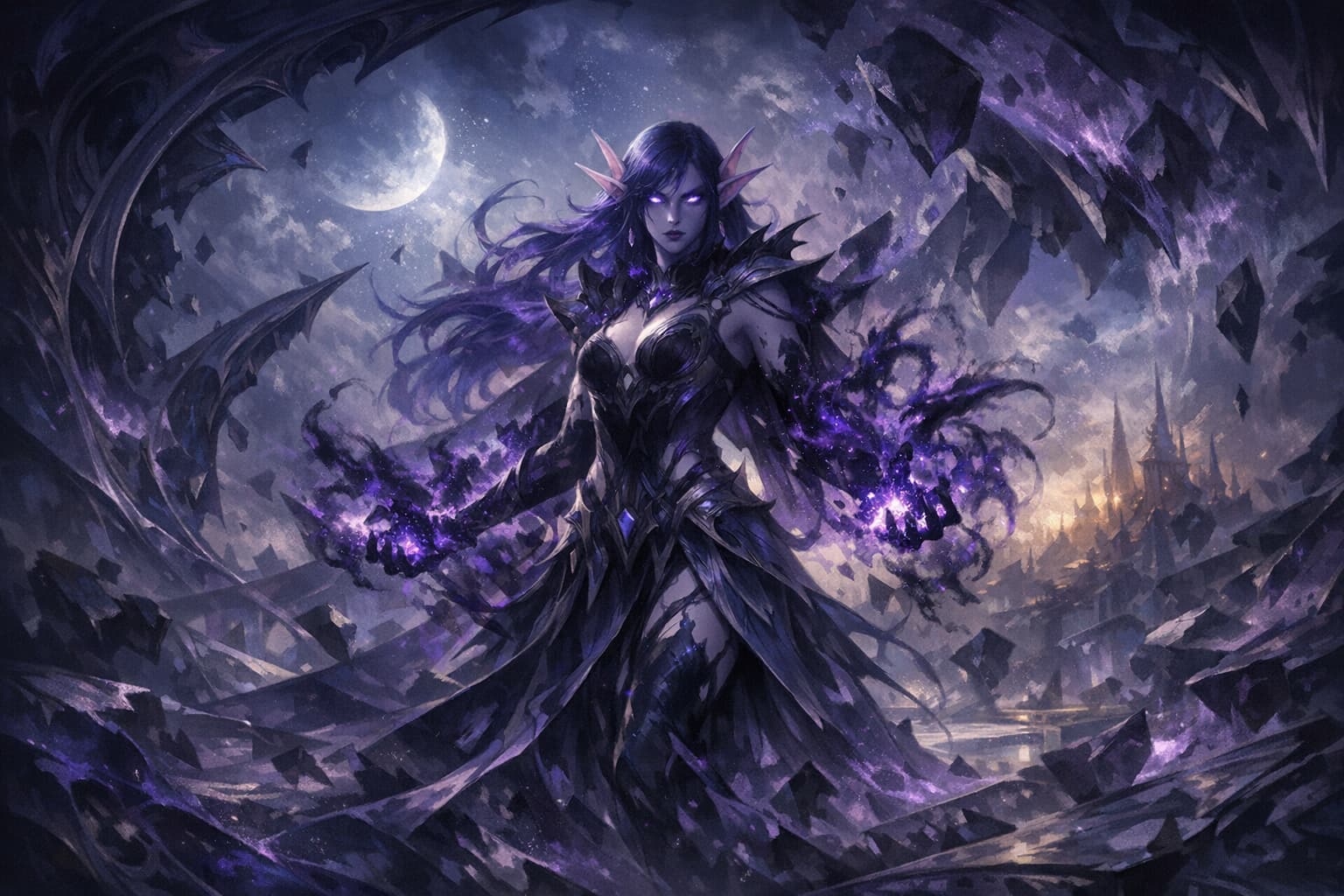
Void Elves
Transformed by the spaces between realities, wielding entropy's power at the cost of wh...
Read More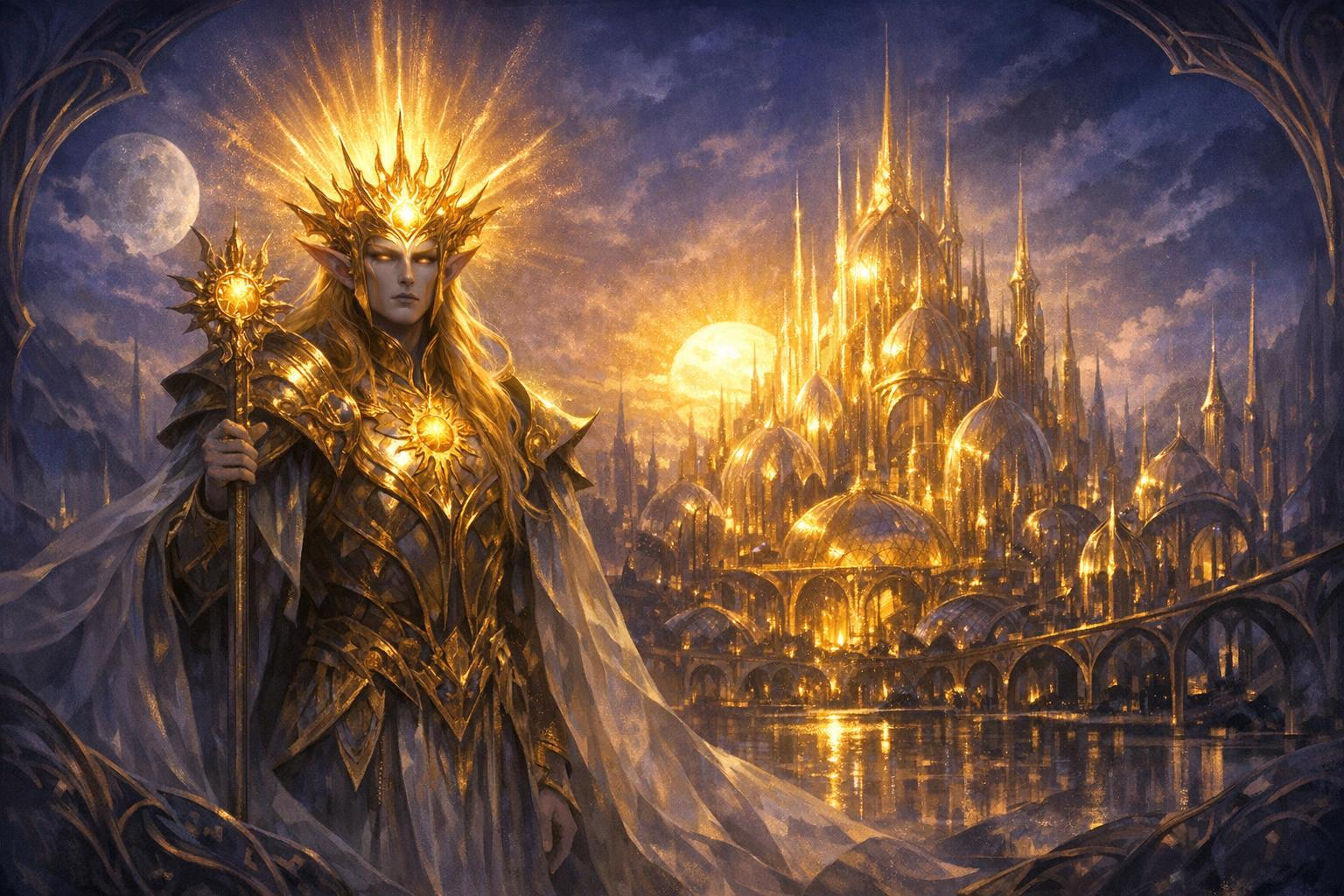 02
Sun Elves
Radiant lords of golden splendor whose light is both genuine power and blinding expecta...
Read More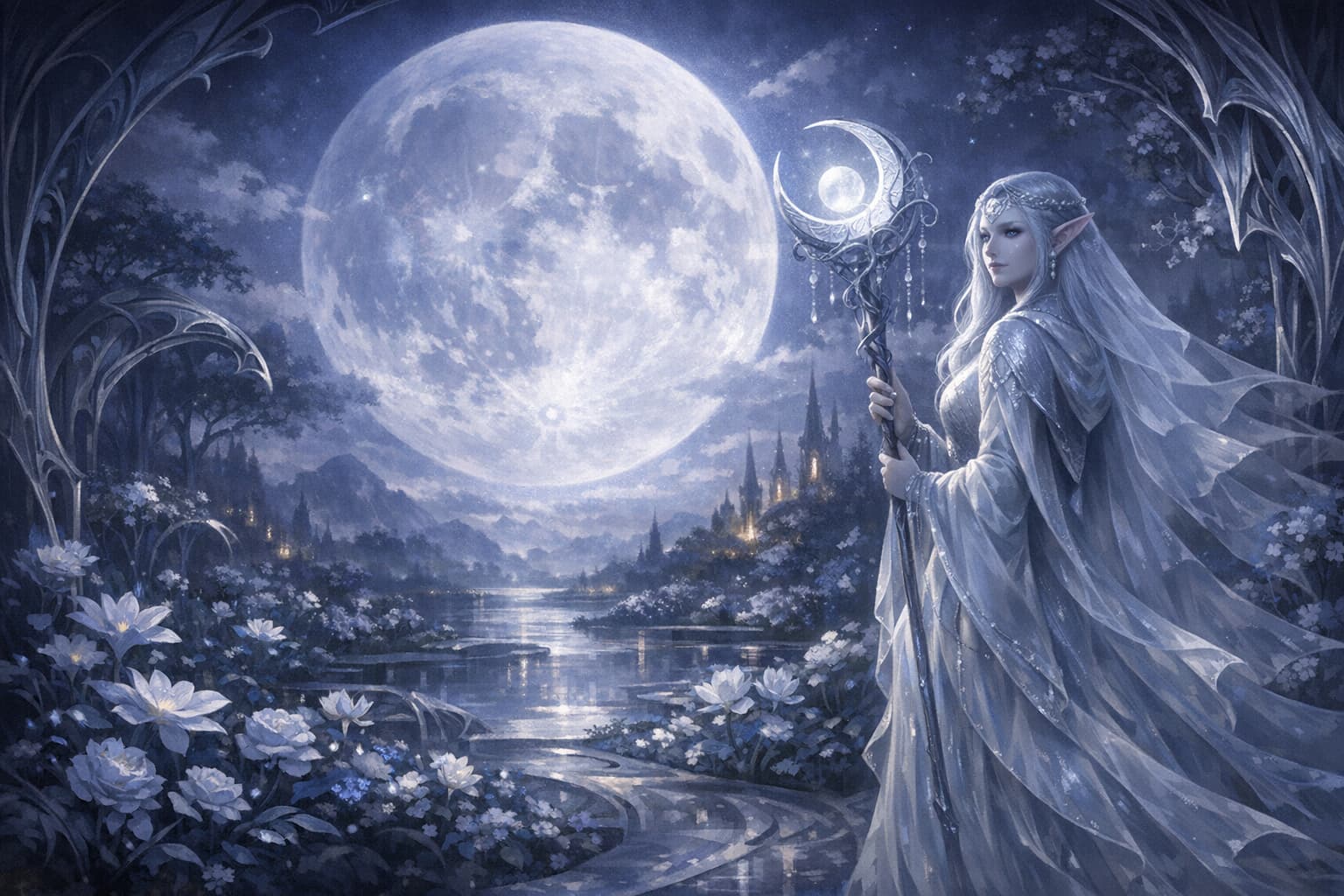 03
Moon Elves
Nocturnal mystics whose lives cycle with the moon, finding power in silver light and pa...
Read More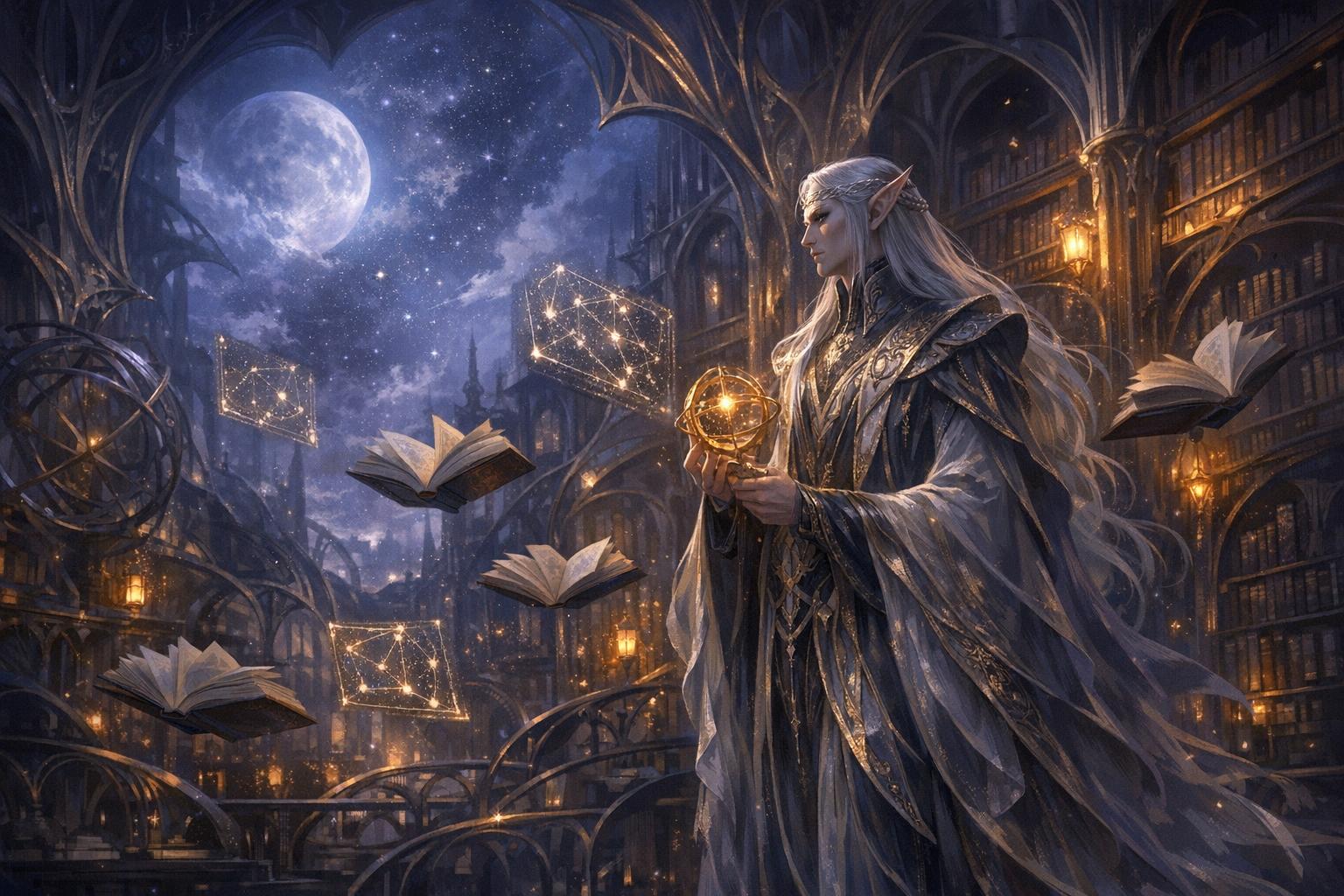 04
High Elves
Scholars and spire-builders whose institutions outlast empires and whose magic spans mi...
Read MoreFAQ
Common Questions
Treat the cosmic perspective as a lens that colors everything rather than a barrier that separates. The astral elf sees material concerns as smaller than other characters do, but they can still engage with those concerns from a different angle. Create specific moments where their time sense causes confusion or their knowledge reveals things others missed.
Curiosity about physical sensation and linear time, duty to guard planar boundaries from the material side, exile from the astral due to broken laws, or personal connections formed during previous visits. The cosmic perspective doesn't have to eliminate personal attachments.
They might discuss events that haven't happened yet as historical, or reference ancient occurrences in present tense. This isn't prophecy exactly, but a different relationship with temporal sequence. Use it for specific character moments rather than constant weirdness.
High elves accumulate knowledge through study and institutional memory. Astral elves perceive reality differently at a fundamental level. Their knowledge comes not from study but from direct perception of cosmic patterns that material species can barely detect. The difference is between learning about the ocean and living in it.