
Sun Elves
Radiant lords of golden splendor whose light is both genuine power and blinding expectation
Radiance as Metaphor
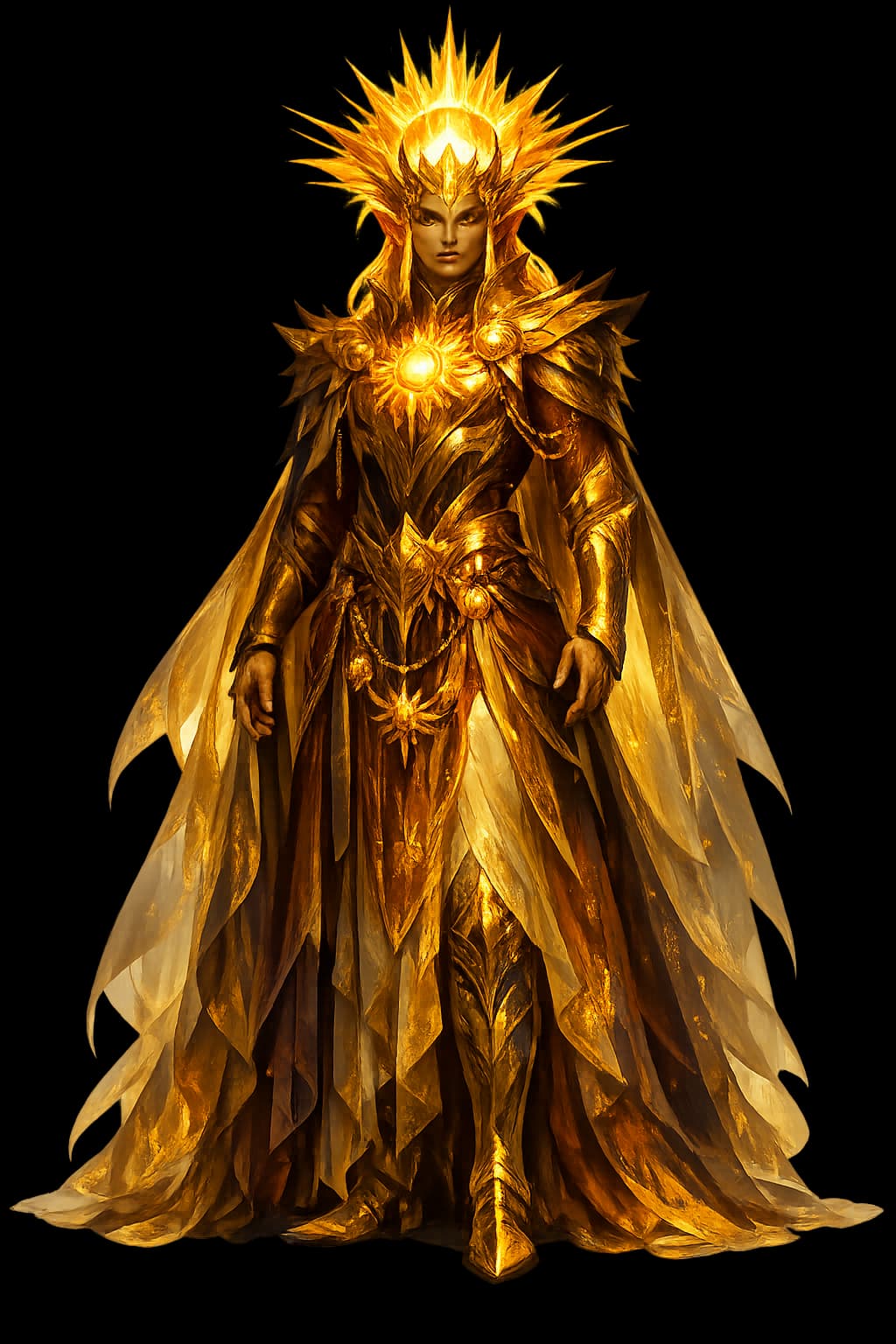
Most sun elf cultures build their entire worldview around light as moral metaphor. Brightness equals virtue. Darkness equals corruption. This sounds simple until you think through what it means for people who actually live inside that framework.
If light is virtue, then being seen is being judged. Sun elves exist in cultures where visibility is both desired and dangerous. You want to be seen as radiant, but every moment of visibility is an opportunity for someone to notice where your light falls short. This creates societies obsessed with presentation, with maintaining the appearance of brilliance even when internal reality is more complicated.
The metaphor also creates blind spots. If darkness is corruption, then anything hidden becomes suspect. Sun elf societies might develop pathological distrust of privacy, of secrets, of anything that can't be examined in full light. This serves some purposes. Corruption has fewer places to hide when everyone values transparency. But it also means legitimate privacy gets treated as suspicious. Personal struggles that shouldn't be public become evidence of failing light.
The most interesting sun elf content plays with the limits of the metaphor. What happens when the right thing to do requires shadows? What happens when the brightest figure in the community is actually the most corrupt, using radiance to blind observers to their flaws? The metaphor that organizes sun elf life should create specific problems, not just aesthetic choices.
Solar Magic and Its Limits
Sun elf magic should be genuinely powerful during optimal conditions and genuinely limited outside them. This creates strategic considerations that shape both gameplay and culture.
At night, in deep caves, during eclipses, sun elf magic diminishes. Not just aesthetically weakened but mechanically reduced. A sun elf mage who's formidable at noon becomes merely competent at midnight and vulnerable during an eclipse. This vulnerability matters. Enemies who know sun elf weaknesses time their attacks accordingly. Underground threats are proportionally more dangerous because they occur in environments where sun elf advantages disappear.
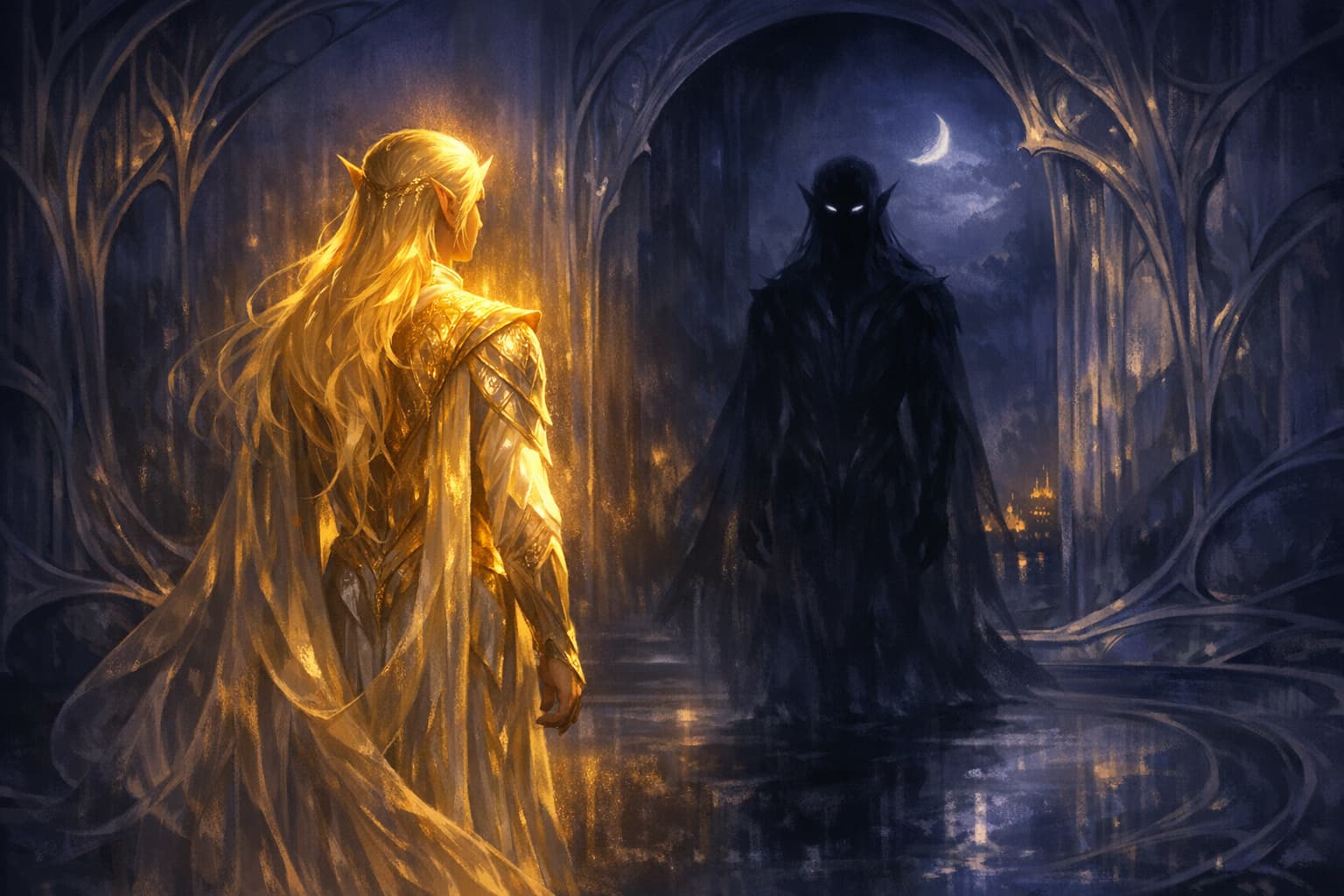
This creates an interesting relationship with moon elves. The two subspecies have complementary power curves. A mixed group that includes both can maintain magical strength across the full day-night cycle. But such alliances require negotiating between subspecies whose optimal conditions are each other's weak points. The sun elf who's used to leading during the day has to accept moon elf leadership at night, or the group operates at diminished capacity.
At full noon on a clear day, sun elf magic reaches peak power. Spells hit harder, healing works better, defensive wards hold stronger. Sun elves know this and plan accordingly. Important rituals happen at noon. Military campaigns schedule major engagements for optimal solar conditions. Diplomatic meetings happen when sun elves are at their strongest.
Pride and Its Costs
Sun elves are proud. This is often treated as simple personality trait, but in well-designed sun elf cultures, pride is a structural feature with structural consequences.
A culture that believes it represents the highest form of elven civilization will resist learning from others. Sun elves who've succeeded by doing things the sun elf way struggle to adopt innovations from cultures they consider lesser. This creates blind spots that accumulate over time. The same pride that made them great prevents them from adapting to new challenges.
Pride also creates brittleness in the face of failure. A sun elf who's never failed doesn't know how to handle failure when it comes. They've internalized that they're supposed to succeed, that failure means something is fundamentally wrong with them rather than just a normal part of existence. This makes setbacks disproportionately devastating. A defeat that a more resilient culture would absorb and learn from might shatter sun elf confidence entirely.
The flip side of pride is the treatment of those who fall short. Sun elf communities often deal harshly with members who diminish the collective radiance. Exile, shunning, or worse. The community protects its self-image by removing those who tarnish it. This works for maintaining standards but also means sun elves who struggle have nowhere to turn. They can't admit weakness without risking everything.
The Relationship with Darkness
Every culture built around light has to decide what to do about darkness. Sun elf approaches vary, but the question matters more for them than for cultures without strong light associations.
Other sun elf cultures treat darkness as genuine enemy. Not just absence but presence of something wrong. This creates societies that fear the night, that overlight their cities, that distrust anyone comfortable in shadows. The paranoia is real, but so is the vulnerability. Enemies who operate in darkness have huge advantages against cultures that refuse to learn how to function there.
The most interesting approach treats darkness as necessary complement. Sun elves who understand that light needs shadow to have meaning, that constant brightness is as hostile to life as constant darkness. These cultures are more psychologically healthy but face constant tension with more fundamentalist factions who see any acceptance of darkness as compromise with corruption.
Some sun elf cultures treat darkness as simply the absence of light, nothing more. Night is rest time. Shadows are places light hasn't reached yet. This pragmatic approach avoids the paranoia that comes from treating darkness as actively threatening, but it also lacks the dramatic tension that makes sun elves interesting.
Architecture of Light
Sun elf cities are designed around solar geometry in ways that should affect gameplay.
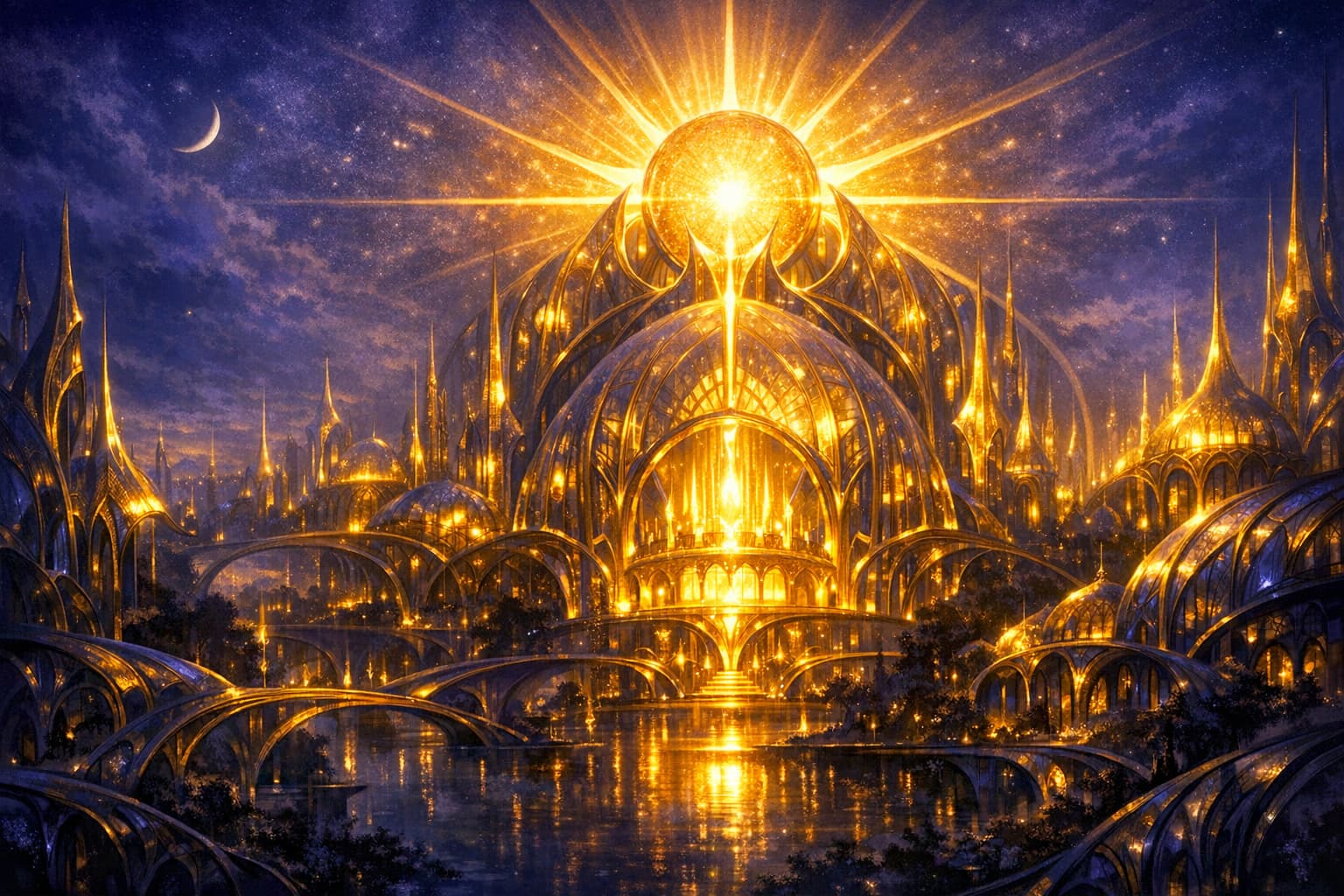
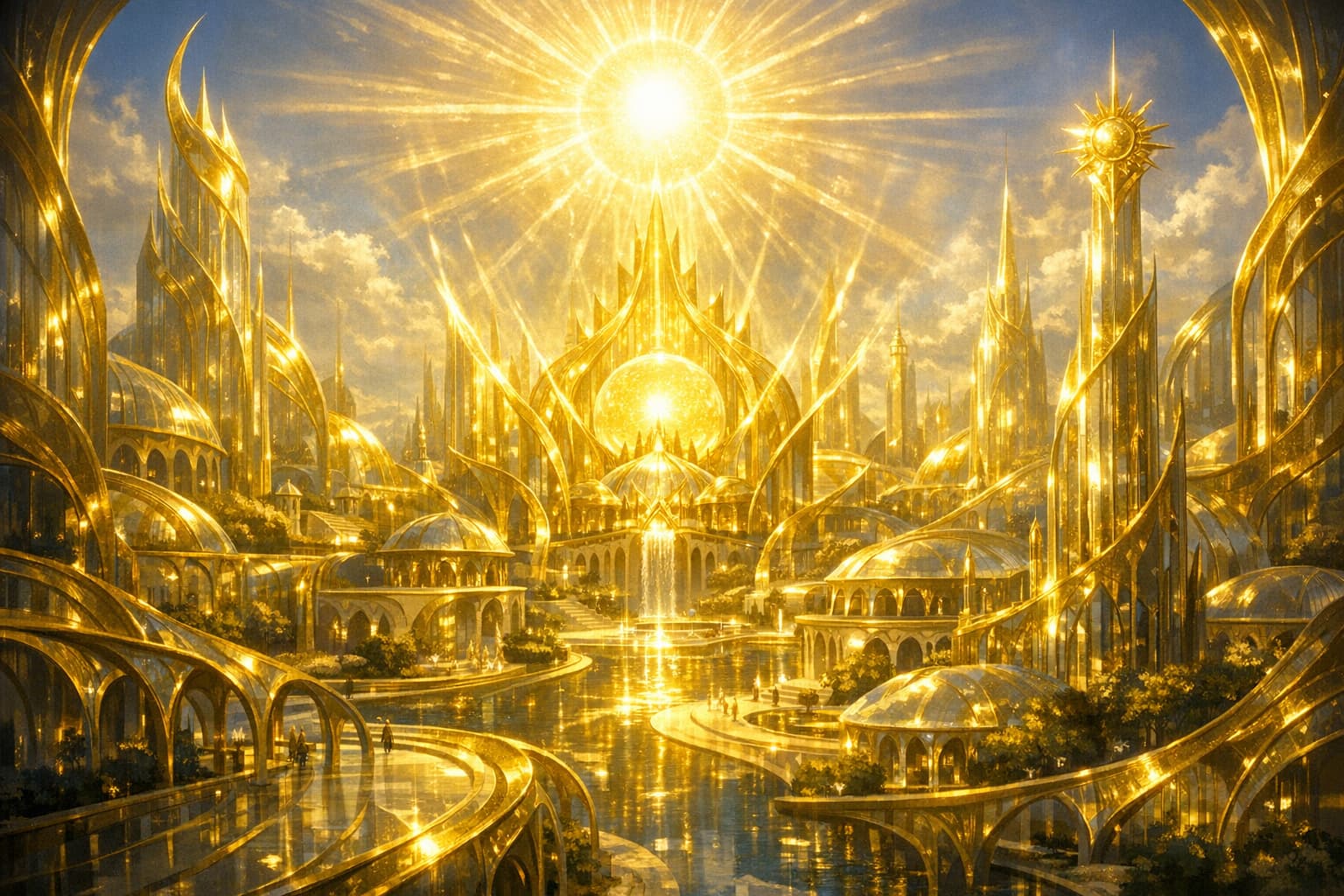
Streets align with solar paths so that buildings catch maximum light. Public spaces position themselves for optimal noon exposure. Architecture uses reflective materials to bounce light into spaces that would otherwise be shadowed. The result is cities that feel genuinely bright, where walking around during the day means constant exposure to direct or reflected sunlight.
This has practical consequences. Visitors who aren't adapted to sun elf light levels find the cities physically uncomfortable. The brightness that sun elves find normal feels harsh to species with different light tolerances. This isn't hostility, but it is exclusion. Sun elf cities are built for sun elves.
The architecture also creates vulnerabilities. Cities optimized for light depend on having light. During extended overcast periods, during magical darkness effects, during eclipses, the whole city functions worse. Systems designed around light availability fail when light becomes unavailable. Sun elf civil engineering rarely plans adequately for darkness because admitting that darkness might occur feels like admitting defeat.
Political Structures
Sun elf governance tends toward hierarchies justified by radiance. Those at the top shine brightest. Those lower down reflect lesser light. This creates stable but rigid systems.
Leadership selection often involves ceremonial display of solar power. Not just political skill but actual magical radiance. The candidate who shines brightest wins, which means sun elf leaders are selected for magical power as much as for governing ability. Sometimes these correlate. Often they don't. The leader with the most impressive solar display might have no talent for diplomacy, administration, or strategy.
The hierarchy extends through all levels of society. Every position has expected brightness levels. Exceeding your station's brightness is presumptuous. Falling below it is shameful. This creates a society where people constantly modulate their display to match their position, where knowing your place is literally visible in how much you glow.
Social mobility exists but operates through demonstrated radiance. A sun elf who develops greater solar power can rise. One whose power dims can fall. This seems meritocratic until you realize that solar power correlates with factors like training access, magical resources, and inherited capability. The system rewards those who already have advantages in ways that look like rewarding merit.
Forgotten Realms Exclusivity
Sun elves are a Forgotten Realms invention. Unlike high elves, wood elves, or dark elves — which exist across multiple D&D settings and fantasy franchises — sun elves (Ar-tel-quessir, "the People of the Golden Sun") are specific to Ed Greenwood's world and the lore that TSR and later Wizards of the Coast built around it. This specificity gives them a depth of history that generic archetypes lack, but it also means that sun elf identity is inseparable from FR continuity.
The Crown Wars (−12000 to −9000 DR) are foundational to sun elf identity. The Vyshaan Empire — a sun elf nation of Aryvandaar — instigated the first Crown War through aggressive expansionism, ultimately provoking five millennia of elven civil conflict. Sun elves were both the instigators of the worst period in elven history and the inheritors of the guilt that followed. This dual legacy shapes their culture: the pride in what they built, the shame of what that building cost.
The rivalry with moon elves is the defining relationship of sun elf politics. Moon elves opposed Vyshaan expansion. Moon elves opened Myth Drannor to non-elves over sun elf objections. Moon elves are more numerous, more cosmopolitan, and more liked by other races. Sun elves are richer, more magically powerful, and more certain of their superiority. The tension is productive — it generates story material without requiring either side to be wrong.
Evermeet, the elven refuge island, is where sun elf political power is most concentrated. The ruling council of Evermeet has historically been dominated by sun elf noble houses, even though moon elves are more numerous among the island's population. This mirrors real-world dynamics where established aristocracies maintain power beyond their demographic representation.
Key Settlements & History
Sun elf history in the Forgotten Realms spans over thirty thousand years. Their settlements tell the story of a people who built the greatest elven empires, destroyed them through pride, and spent the subsequent millennia trying to recapture former glory without repeating former mistakes.
Major Sun Elf Settlements
| Settlement | Region | Status | Significance |
|---|---|---|---|
| Aryvandaar | Northwest Faerûn | Destroyed (−9000 DR) | Greatest sun elf empire; instigated the Crown Wars |
| Siluvanede | Northern forests | Fallen | Post-Crown Wars successor state; more moderate politics |
| Evermeet | Western Ocean | Active, restricted | Sun elf noble houses dominate the ruling council |
| Myth Drannor | Cormanthor | Contested | Sun elves participated reluctantly; never fully embraced its multiracial vision |
| Semberholme | Eastern Cormanthor | Active, hidden | Isolationist sun elf enclave that rejected Myth Drannor's openness |
Aryvandaar Founded
Sun elves establish the nation of Aryvandaar in the far northwest of Faerûn. It becomes the most powerful elven empire of the age, built on arcane mastery and territorial ambition.
First Crown War
The Vyshaan sun elf dynasty of Aryvandaar launches wars of conquest against neighboring elven nations. The Crown Wars will last five millennia and shatter elven civilization.
Fall of Aryvandaar
The fifth and final Crown War ends with the destruction of the Vyshaan dynasty. Aryvandaar is dissolved. Sun elf political dominance over elven affairs is broken.
Siluvanede Founded
Surviving sun elf noble houses establish new kingdoms, including Siluvanede. These successor states are smaller and less ambitious than Aryvandaar.
Myth Drannor Opens
Moon elves open Cormanthor to non-elves. Many sun elf houses vehemently oppose the decision, viewing it as a betrayal of elven supremacy. Some refuse to participate.
The Retreat
Sun elf noble houses are among the strongest advocates for the Retreat to Evermeet, viewing the mainland as lost to shorter-lived races.
Mechanical Representation
Sun elves have never had their own mechanical subrace in D&D's core rulebooks. Instead, they share the "High Elf" stat block with moon elves — a design decision that has frustrated players who feel the two cultures are different enough to warrant mechanical distinction.
The Forgotten Realms Campaign Setting (2001, 3rd Edition) and Sword Coast Adventurer's Guide (2015, 5th Edition) both acknowledged sun elves as culturally distinct from moon elves but declined to give them separate statistics. The SCAG describes sun elf personality traits (more arrogant, more isolationist, more tradition-bound) without offering any mechanical expression of these differences.
This flattening reflects a broader design tension in D&D: setting-specific lore creates cultural distinctions that the mechanical system refuses to encode. Sun elves and moon elves are different peoples with different histories, different values, and different social structures — but they have identical ability scores, identical features, and identical subrace benefits. The result is that sun elf identity exists entirely in roleplay and backstory.
- Identical to standard elf / moon elf
- Immunity to sleep effects
- +2 save vs. enchantment
- Low-light vision
- Weapon proficiency: longsword, rapier, longbow, shortbow
- Automatic Search for secret doors
The 3.5e FRCS explicitly states that sun elves and moon elves share identical statistics. All mechanical distinction exists in lore and roleplaying guidance only.
- Uses High Elf subrace (same as moon elf)
- Darkvision 60 ft.
- Keen Senses
- Fey Ancestry
- Trance
- Extra wizard cantrip
The SCAG provides personality guidance for sun elves but no unique mechanics. Players who want a sun elf use the High Elf subrace and roleplay the cultural differences.
Across Franchises
Sun elves are Forgotten Realms-specific, but the archetype they represent — the solar-aligned, proud, civilization-building elf who considers their kind superior to all others — appears across multiple franchises. Each implementation explores the consequences of building a culture around the conviction that you are the light of the world.
Solar Elf Archetype Across Franchises
| Franchise | Name | Solar Connection | Key Distinction |
|---|---|---|---|
| D&D / Forgotten Realms | Sun Elf (Ar-tel-quessir) | Golden skin, solar magic, radiance as metaphor | FR-exclusive; Crown Wars guilt shapes cultural psychology |
| Warhammer Fantasy | High Elves of Ulthuan (Asur) | Phoenix King, sunfire magic | Martial-imperial; sun elves with an army and colonial ambitions |
| Elder Scrolls | Altmer (High Elves) | Golden skin, Aetherial descent | Racial supremacism taken to its logical endpoint (Thalmor) |
| Tolkien | Vanyar (Fair Elves) | Closest to the Light of Valinor | Too transcendent for narrative; barely appear in the stories |
| Pathfinder | Elf (Castrovelian heritage) | Alien planet origin, sun-basking culture | Elves as literal aliens rather than mythological beings |
The Elder Scrolls Altmer represent the most unsettling version of the sun elf archetype: a golden-skinned people who believe they are literally descended from gods, and who have built a political movement (the Thalmor) around enforcing that belief on others.
Subtypes
Other Elven Kindred
 01
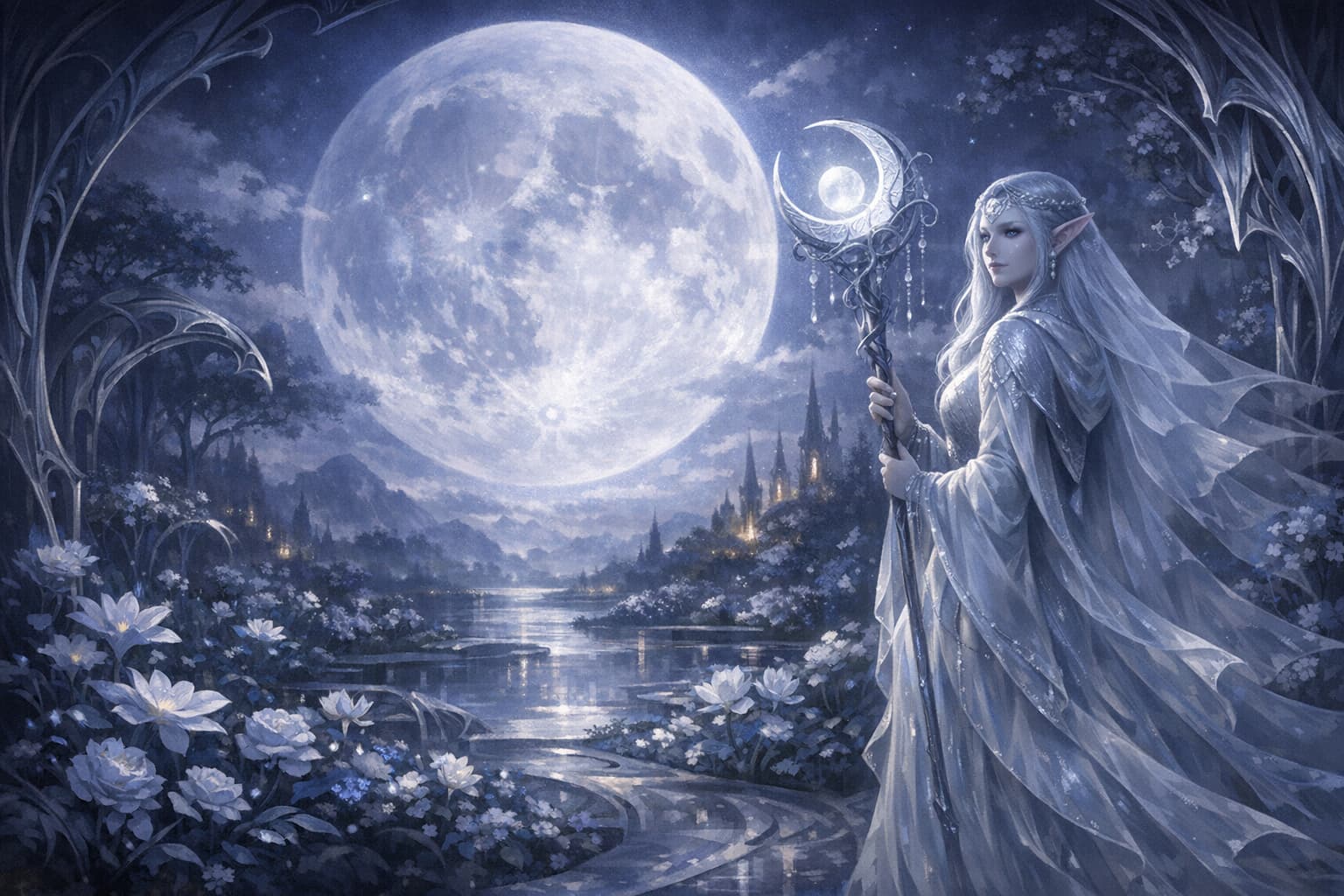
Moon Elves
Nocturnal mystics whose lives cycle with the moon, finding power in silver light and pa...
Read More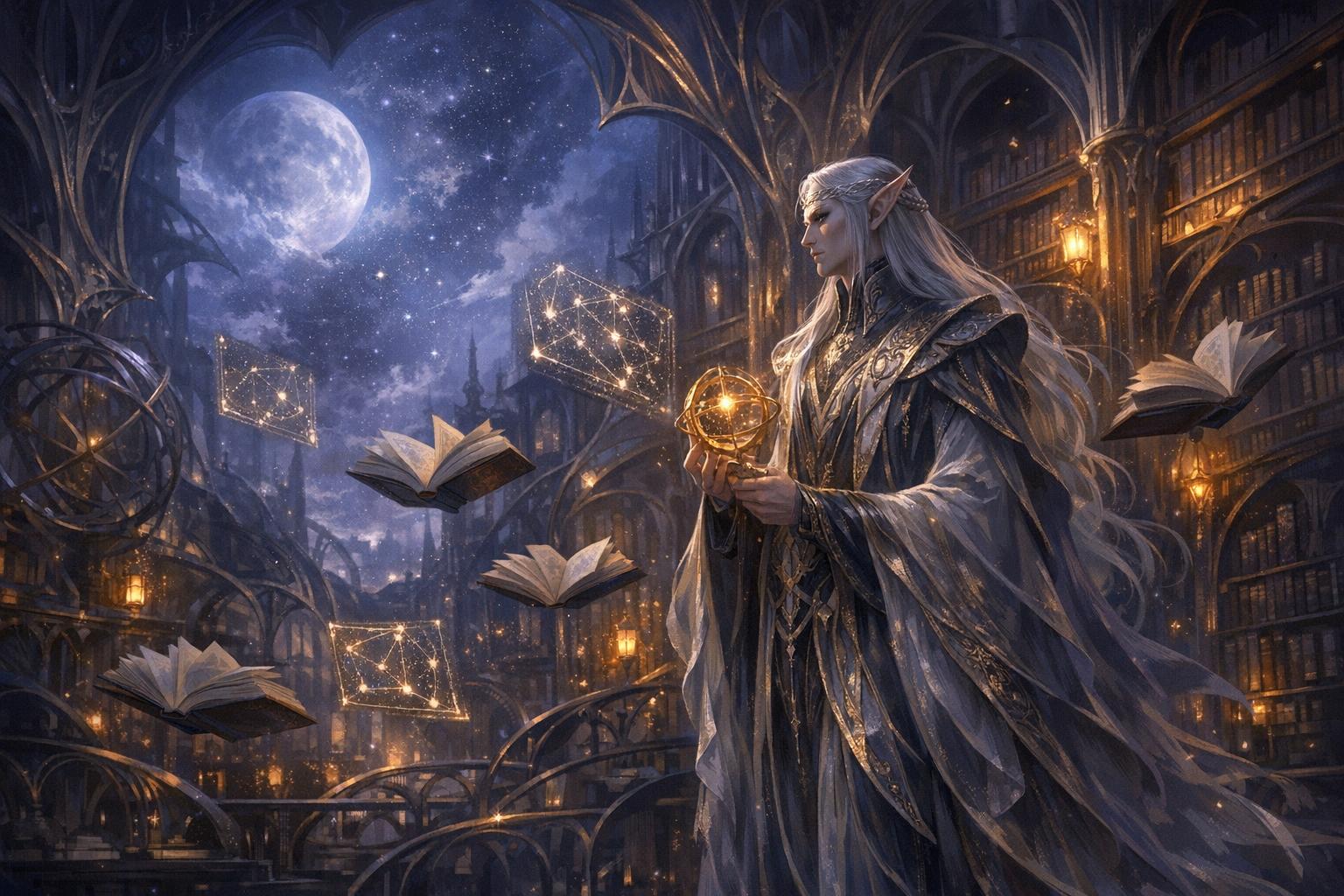 02
High Elves
Scholars and spire-builders whose institutions outlast empires and whose magic spans mi...
Read More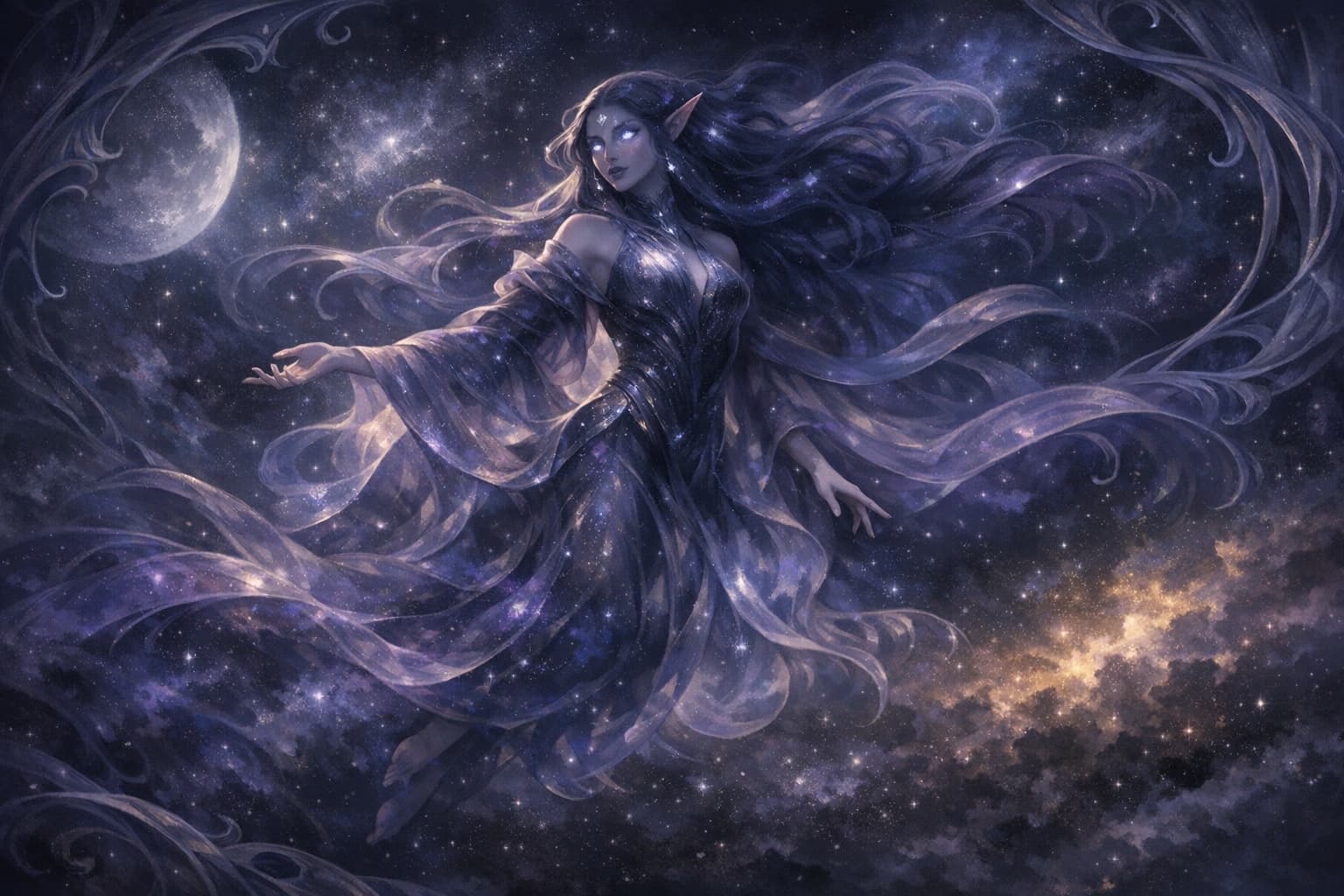 03
Astral Elves
Cosmic wanderers who perceive reality from between the stars, where time bends and know...
Read More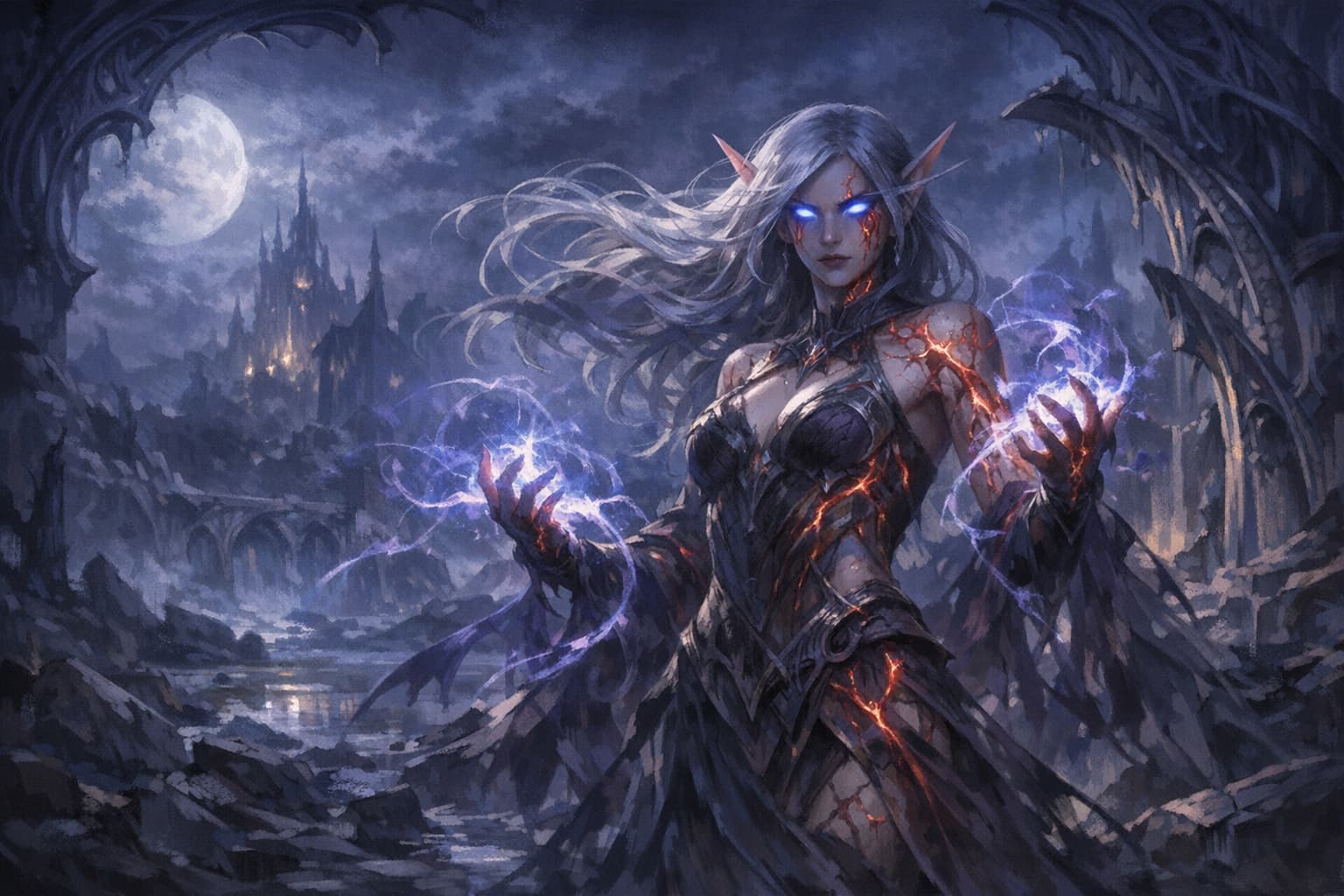 04
Blood Elves
Survivors of catastrophe whose addiction to power is both their salvation and their curse
Read MoreFAQ
Common Questions
Give Sun Elves a distinctly themed magic pool tied to daylight and warmth, with clear limits (cost, duration, or arcana checks). Use them for bright utility or radiant damage, but gate big effects behind rests or rituals. Consider sun-sourced flaws (sunlight sensitivity, pride about radiance) to balance power. Provide clear spell-like abilities that scale with character level and offer non-combat uses (aura of warmth, healing glows) to keep them versatile without overshadowing other casters.
Highlight motifs like golden architecture, sunlit rituals at dawn, and oracular skylines. Emphasize values such as honor, leadership, and communal service, but show cracks: political factions within the solar clergy, rivalries between cities, or a history of exile due to pride. Use unique customs (sun-worship rites, solar heraldry, communal jewelry that stores light) and dialect flavors that reflect a culture that gleams, yet remains humanly relatable.
Give NPCs personal goals beyond status: a Sun Elf healer seeking to restore a corrupted temple, a scholar chasing a forgotten eclipse manuscript, or a reformer challenging rigid hierarchies. Show vulnerability—perhaps a fear of eclipses or concern about over-reliance on light. Use small quirks (a habit of counting rays, tarnished golden jewelry) and concrete callbacks to their sun-based culture to keep the character vivid and multi-dimensional.
Pair radiant confidence with curiosity or compassion. Traits like steadfastness, pride, and ritual devotion can mix with humor, skepticism, or pragmatism from other party members. Consider a Sun Elf who is perfectionist yet secretly playful in human company, or one who values duty over personal glory. Ensure at least one trait drives collaboration—loyalty, protectiveness, or a drive to inspire others—so they enrich group dynamics.