
Blood Elves
Survivors of catastrophe whose addiction to power is both their salvation and their curse
Addiction as Identity
Blood elves work when addiction isn't just a character trait but a defining social condition. Not "some elves who happen to be addicted" but "a civilization whose entire structure emerged from managing addiction."
This makes blood elves fundamentally different from other elven subspecies. High elves define themselves by knowledge and achievement. Wood elves define themselves by their relationship to forests. Blood elves define themselves by their relationship to a substance they need but that also corrupts them. Everything about their society flows from managing that dependency.
The addiction should be to something specific. Magic in general is too vague. Arcane energy from a particular source works better. Energy from a corrupted wellspring. Power siphoned from demons. Life force drained from other creatures. The specific source shapes blood elf culture, creates moral distinctions, and provides concrete story hooks.
The addiction also needs real stakes. If blood elves can just choose not to use magic with mild discomfort, addiction becomes flavor text rather than defining characteristic. The addiction should have genuine withdrawal consequences: physical deterioration, madness, death. Blood elves use corrupted power because the alternative is worse, not because they lack willpower.
The Catastrophe
Every blood elf civilization needs a catastrophe. Something happened that made normal existence impossible and forced them into dependency. Without the catastrophe, blood elves are just elves with a drug problem. With it, they're survivors of something that broke their world.
The catastrophe also creates the moral framework for blood elf society. Everything they do, they do because of what happened. The desperate measures they took weren't first choices. They were survival. Blood elves who drain life from captives don't do it for pleasure. They do it because their other options ran out generations ago.
This doesn't excuse everything blood elves do. But it contextualizes it. Understanding why blood elves make the choices they make is different from approving of those choices. The best blood elf content exists in that tension between sympathy and judgment.
The catastrophe should be specific and consequential. A magical plague that rewrote their physiology. An invasion that destroyed their power source. A ritual that went wrong and left them permanently changed. A war that forced them to accept corruption as the price of victory.
Desperation Psychology
Blood elf psychology should reflect generations of managed desperation. They're not panicking. They've had centuries to develop systems for handling their condition. But the underlying desperation shapes everything about how they think and act.
This creates specific psychological patterns. Blood elves plan obsessively because running out of their power source means death. They hoard because scarcity is always possible. They're suspicious of outsiders because outsiders have historically tried to exploit their vulnerability. They're proud because pride is the defense mechanism of people who've been through the worst and survived.
The desperation also affects relationships. Blood elves form intense loyalties because they depend on each other for survival. But they also maintain careful distance because attachment to someone who might die from withdrawal creates unbearable pain. This combination of loyalty and guardedness makes blood elf characters complex to play and to interact with.
Blood elves often present as arrogant or cold to other species. This isn't personality. It's armor. Admitting vulnerability to outsiders is dangerous when outsiders might use that vulnerability against them. Blood elf haughtiness is often fear wearing a mask of superiority.
Society Shaped by Dependency
Blood elf society organizes around access to their power source. This isn't abstract social stratification. It's life and death. Those who control the supply control everything.
This creates hierarchies that might seem cruel from outside but make internal sense. The rationing systems. The restrictions on who can access power and when. The harsh penalties for hoarding or theft. These aren't tyranny for its own sake. They're survival mechanisms that emerged from real crises where uncontrolled consumption killed everyone.
Blood elf governments tend toward authoritarianism because their situation requires collective resource management. Democratic approaches to addiction management work poorly when individual choices can doom the community. Blood elf leaders often have powers that other elven societies would consider tyrannical, and blood elves accept this because the alternative is chaos.
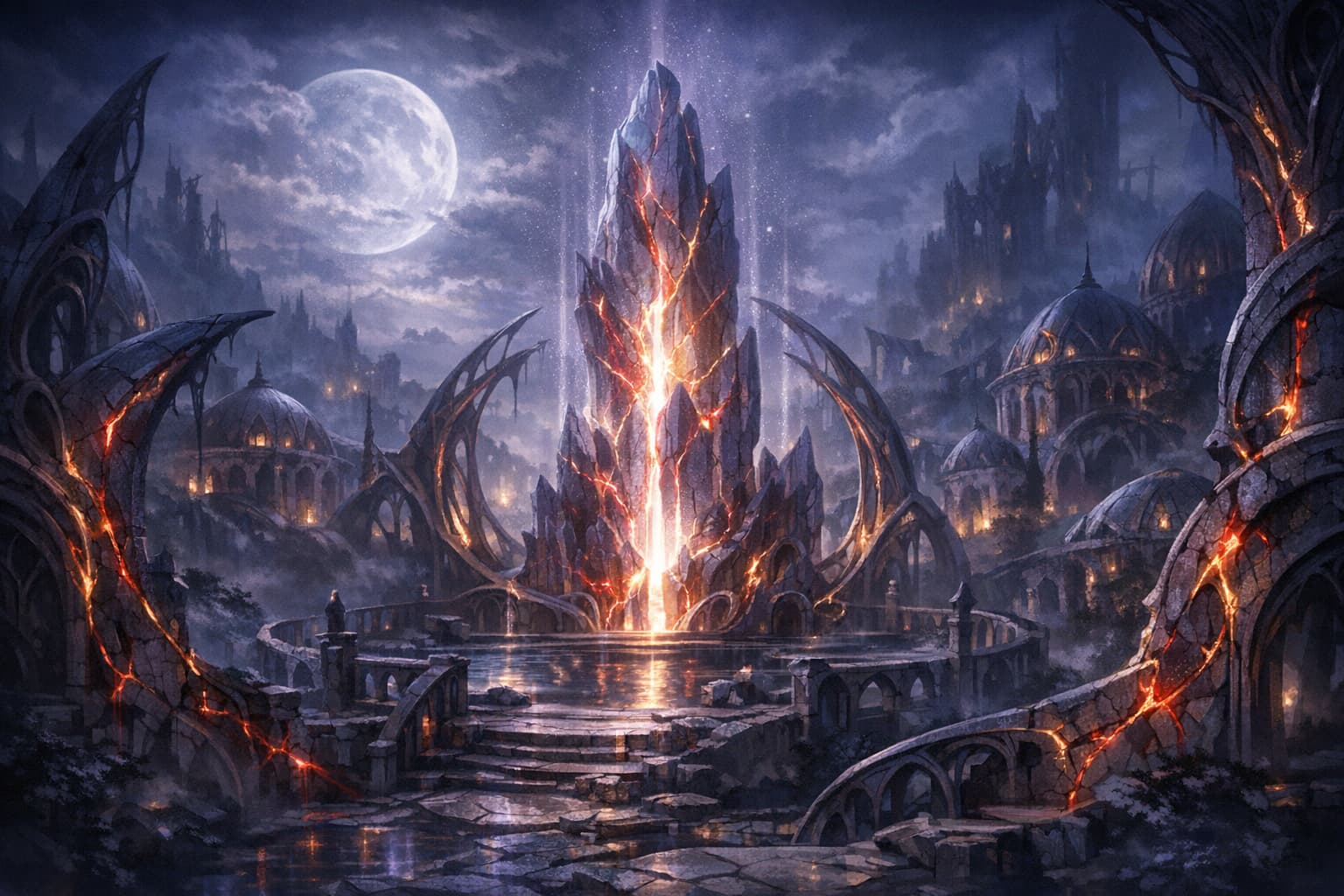
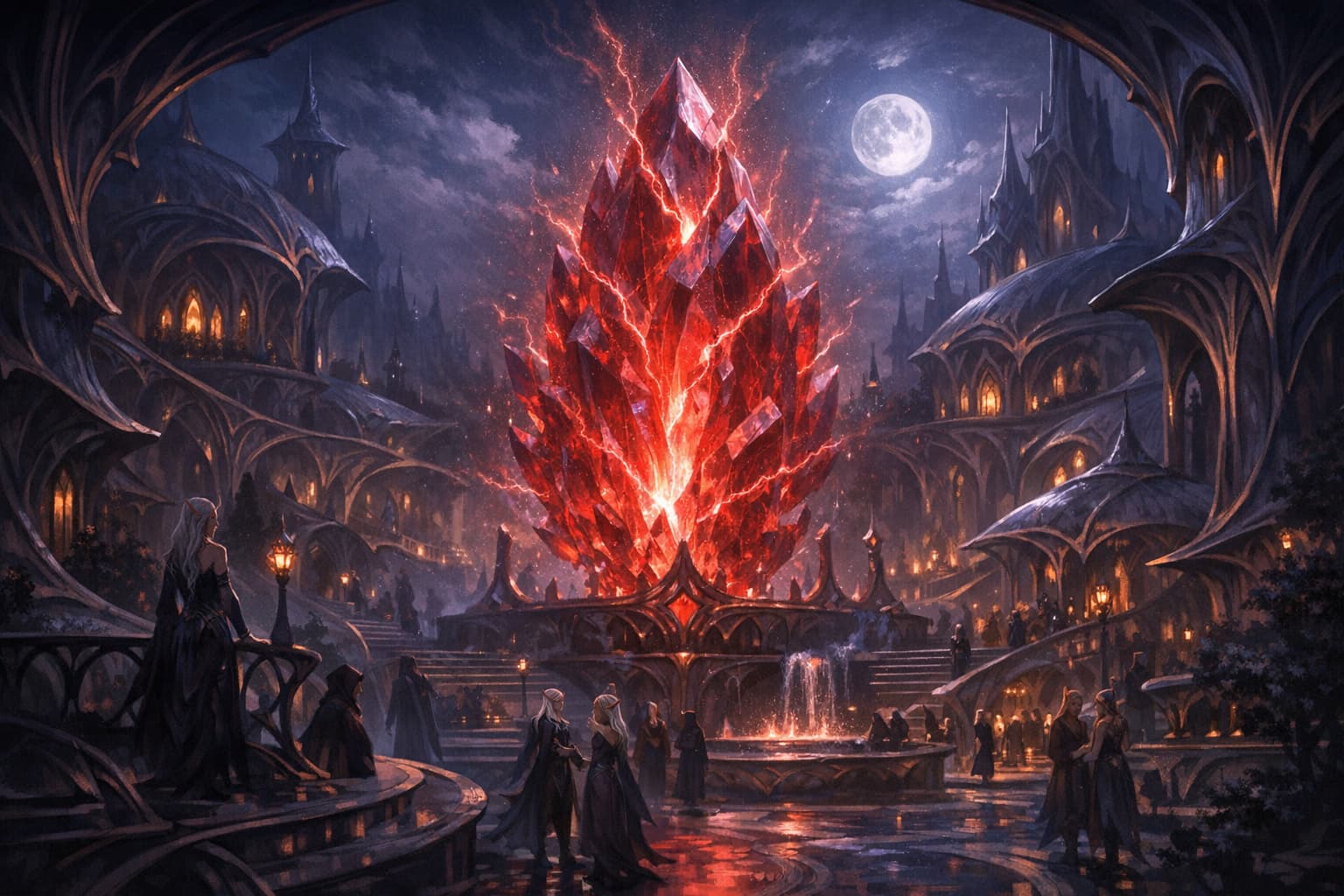
The power source itself becomes the center of blood elf life. Their cities build around it. Their religions develop from it. Their art celebrates and fears it. Blood elf architecture often features the source prominently, both because it's practically central and because it's symbolically central to everything they are.
The Moral Compromise
Blood elves survive through moral compromise. This is the heart of what makes them interesting. Not evil for its own sake, but evil that's understandable.
This creates internal conflict at every level. Individual blood elves struggle with what they have to do. Factions within blood elf society disagree about how much compromise is acceptable. Religious and philosophical movements develop around questions of justification, redemption, and alternatives.
The moral compromise also creates external conflict. Other species view blood elves as monsters or threats. Blood elves view other species as naive about what survival actually requires. This mutual incomprehension drives political tension and provides story hooks.
The compromise might be consuming magic meant for other purposes. It might be draining energy from creatures or captives. It might be dealing with demons or other dark powers. Whatever the specific method, it should be something that blood elves know is wrong but do anyway because survival requires it.
Magic and Corruption
Blood elf magic should feel different from other elven magic. It's not the graceful arcana of high elves or the nature attunement of wood elves. It's power obtained through methods that leave marks.
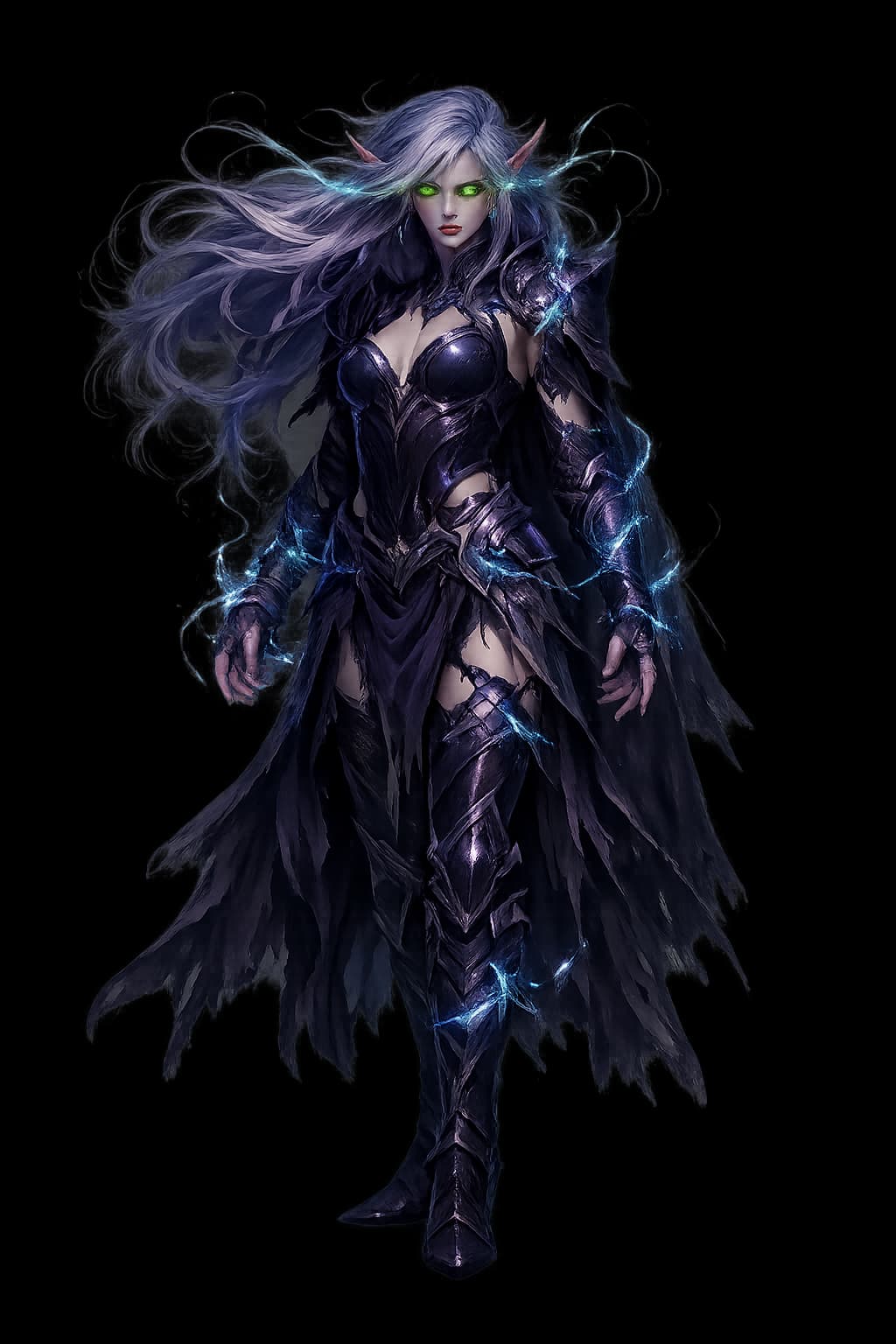
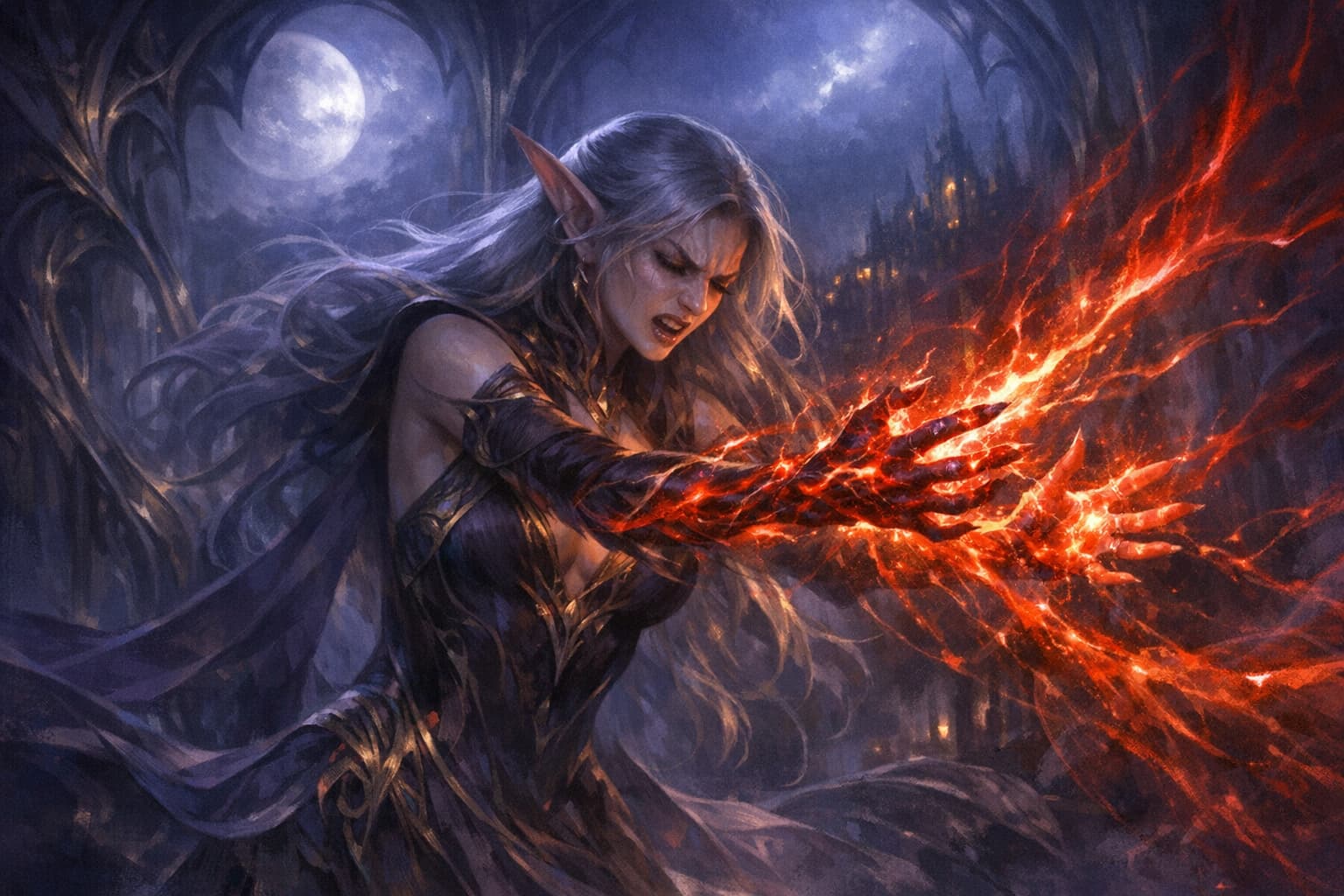
The corruption might be visible. Altered eye color, as in Warcraft's green-eyed Sin'dorei. Veins that glow when magic is used. Skin that's taken on an unnatural pallor or flush. Physical signs that mark blood elves as different even when they're not actively using power.
The corruption might also be psychological. Temptation toward greater power use. Difficulty controlling magic once started. Pleasure in the consumption that blood elves find disturbing when they notice it. The addiction isn't just physical dependency. It changes what blood elves want.
Blood elf magic traditions develop around managing corruption rather than avoiding it. They've learned to channel tainted power safely, to contain its effects, to use corrupted magic for purposes that don't require purity. This makes blood elf magic distinctive. It's not weaker than other magic. It's different in kind.
Born from Warcraft
Blood elves are a Warcraft invention, born from a specific narrative moment: the destruction of the Sunwell in Warcraft III: Reign of Chaos (2002) and the political fallout depicted in The Frozen Throne expansion (2003). When the Scourge destroyed Quel'Thalas and the Sunwell that sustained the high elves, Prince Kael'thas Sunstrider renamed his people the Sin'dorei — "children of the blood" — in honor of the fallen. It was not a biological transformation but a political declaration: we are no longer what we were.
The naming mattered enormously. "High elf" implied transcendence and purity. "Blood elf" implied sacrifice, desperation, and a willingness to do whatever survival required. Kael'thas led his people into an alliance with Illidan Stormrage and the Naga — former enemies — because the alternative was extinction. The moral compromise that defines blood elf identity began here: the moment when survival required abandoning the principles that had previously defined them.
World of Warcraft (2004) launched without playable blood elves. They were added in The Burning Crusade expansion (2007) as the Horde's first "pretty" race — a deliberate design decision to address the faction imbalance caused by Alliance players choosing aesthetically appealing races. Blood elves became the most popular Horde race almost immediately, and for years they comprised over 30% of all Horde characters.
The Burning Crusade arc depicted blood elves at their most morally compromised: draining power from a captive Naaru (a being of pure Light), allying with demons, and nearly destroying themselves through Kael'thas's radicalization. The Sunwell's restoration at the end of the expansion provided a redemption arc, but the stain of what blood elves were willing to do in desperation remained central to their identity.
“"High elf" implied transcendence and purity. "Blood elf" implied sacrifice, desperation, and a willingness to do whatever survival required. The rename was not biological transformation but political declaration.”
— On the Sin'dorei naming
Cultural Impact
Blood elves changed the composition of World of Warcraft's Horde faction overnight. Before The Burning Crusade, the Horde was visually monstrous: orcs, trolls, tauren, undead. Blood elves introduced conventional beauty to a faction defined by its rejection of conventional beauty. The cultural impact was immediate and permanent.
Demographic data from the period tells the story. Blood elf paladin became the single most popular race-class combination in the game within months of TBC's launch. Players who had previously rolled Alliance characters for aesthetic reasons switched factions. The Horde's population — which had trailed the Alliance on most servers — stabilized and in many cases surpassed it. One race reshaped the social dynamics of a game played by twelve million people.
Beyond faction balance, blood elves introduced a character archetype that WoW had previously lacked: the desperate aristocrat. Orcs were noble savages. Undead were horror. Trolls were tribal. Blood elves were fallen nobility clinging to refinement while secretly ravaged by addiction. This resonated with players who wanted characters defined by inner conflict rather than straightforward identity.
The Sunwell restoration in Patch 2.4 (2008) gave blood elves a redemption arc that became a template for later WoW storytelling. The idea that an entire people could fall from grace, survive through morally questionable means, and then find restoration without erasing the cost of what they did — this narrative structure appeared in subsequent expansions with the Nightborne (Legion), Void Elves (Battle for Azeroth), and others. Blood elves established the "fallen elf" as a repeatable franchise pattern.
The Tabletop Translation
Blood elves have no official D&D stat block — they're a Warcraft creation with no direct D&D equivalent. But they're one of the most commonly homebrewed races in TTRPG communities, and the conversion attempts reveal what players consider essential to the archetype.
The core translation challenge is the addiction mechanic. Blood elf identity centers on dependence on arcane energy, but D&D's mechanical framework doesn't handle addiction well. Most homebrew versions include some form of "arcane consumption" — a resource that blood elf characters must periodically replenish or suffer penalties. The implementations range from simple (make a save or take a level of exhaustion) to elaborate (track arcane satiation on a custom meter).
DMs who want blood elf themes without homebrew mechanics often reskin existing D&D options. The 5e Eladrin (with seasonal emotional shifts standing in for addiction cycles) and the Shadar-kai (with shadow-touched aesthetics and existential dread) both capture elements of the blood elf fantasy. High elf with a warlock pact — specifically a pact that the character depends on rather than merely benefits from — captures the power-at-a-cost dynamic.
The deeper translation issue is cultural. Blood elves in WoW exist within a specific factional context: the Horde, with its themes of outcasts banding together. Translating that into a TTRPG requires establishing what community the blood elf belongs to, why that community was shattered, and what compromises they made to survive. Without this context, a "blood elf" character is just an elf with red eyes.
Across Franchises
The blood elf archetype — the elf defined by catastrophic loss and the moral compromises of survival — appears in several franchises, though rarely under that name. The pattern is consistent: take an elegant, powerful people, destroy what sustains them, and watch what they become.
Fallen Elf Archetype Across Franchises
| Franchise | Name | The Catastrophe | Key Distinction |
|---|---|---|---|
| World of Warcraft | Blood Elf (Sin'dorei) | Sunwell destroyed by the Scourge | The original; addiction-as-identity, Horde faction politics |
| D&D (homebrew) | Various blood elf conversions | Setting-dependent catastrophe | No official version; most common TTRPG homebrew elf subrace |
| Guild Wars 2 | Sylvari (Mordremoth corruption) | Creator-dragon turns corrupting force | Plant-beings rather than elves, but same "corrupted by our source" arc |
| FFXIV | Ishgardians (Elezen) | Dragonsong War, theocratic lies | Desperate nobility maintaining facade over centuries of deception |
| Elder Scrolls | Dunmer (post-Red Year) | Red Mountain eruption destroys Morrowind | Refugee aristocrats; closest non-WoW parallel to the blood elf condition |
| WoW (variant) | Nightborne (Shal'dorei) | Isolation behind arcane shield, mana addiction | Blood elf template applied to a new elven culture; explicit narrative echo |
The Nightborne in WoW: Legion (2016) are the clearest example of Blizzard reusing the blood elf narrative template: isolated elves, magic addiction, desperate alliances, and eventual redemption through player intervention.
Related
Other Elven Kindred
 01
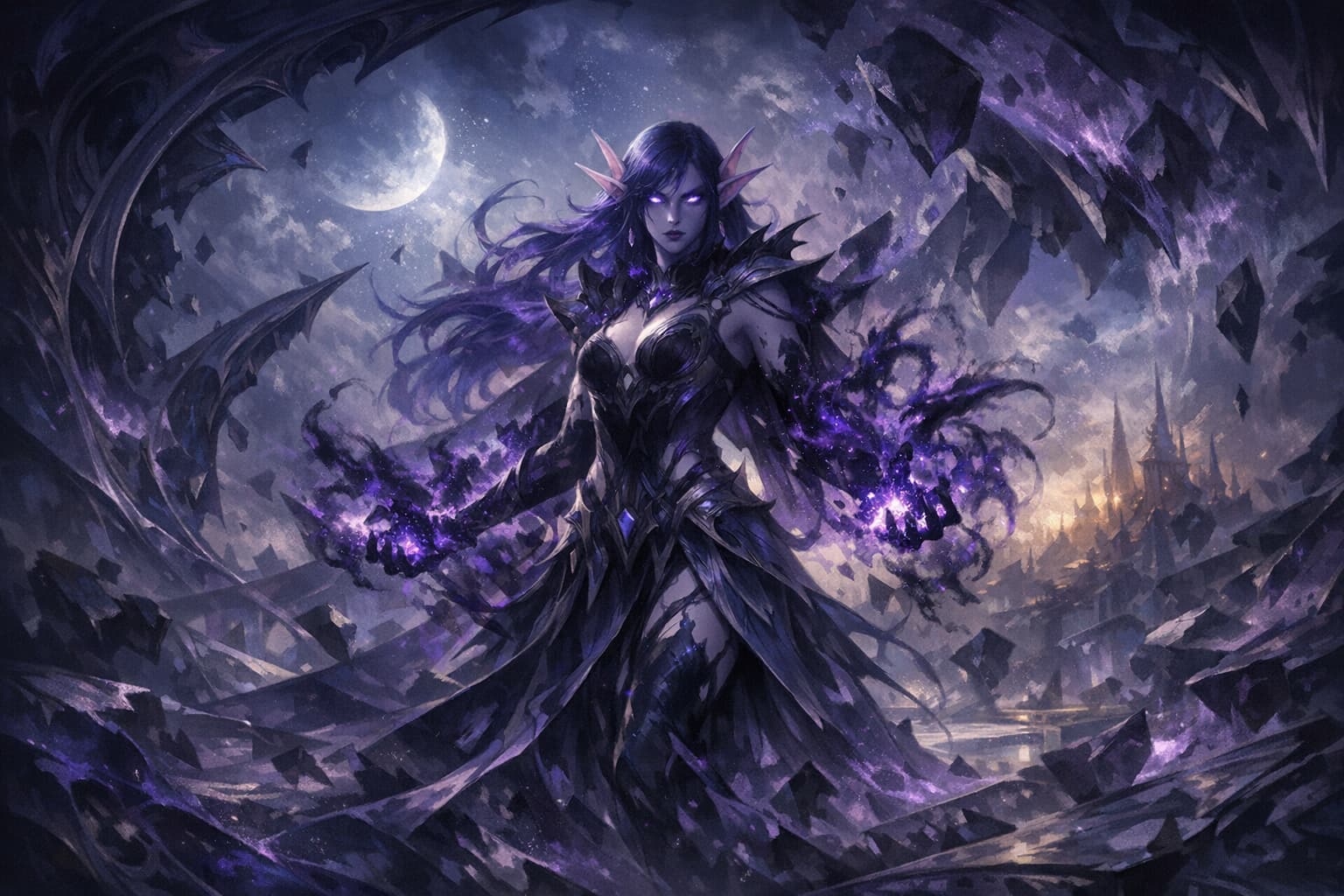
Void Elves
Transformed by the spaces between realities, wielding entropy's power at the cost of wh...
Read More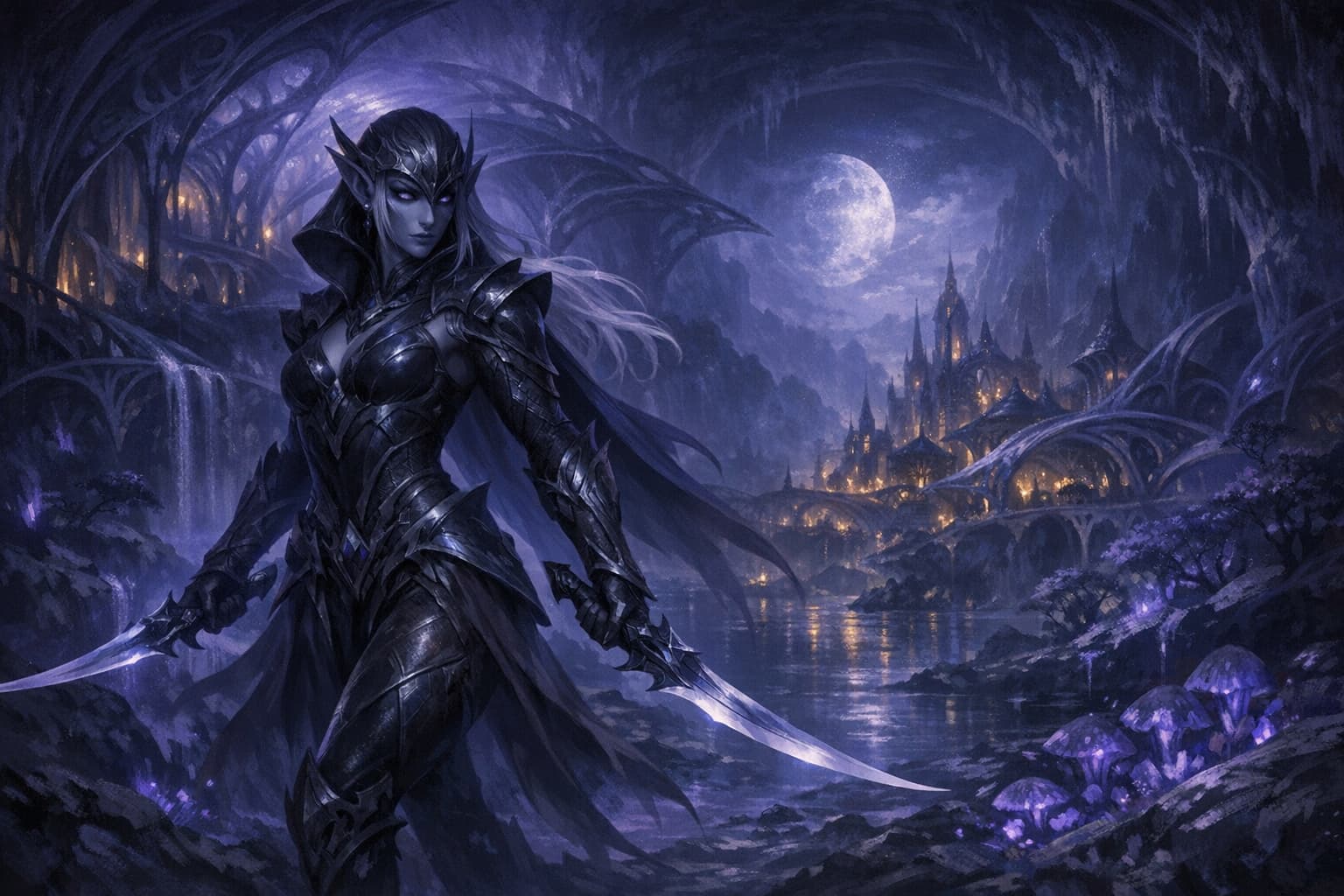 02
Dark Elves
Shadow-dwelling survivors whose ruthlessness was forged by scarcity and whose beauty in...
Read More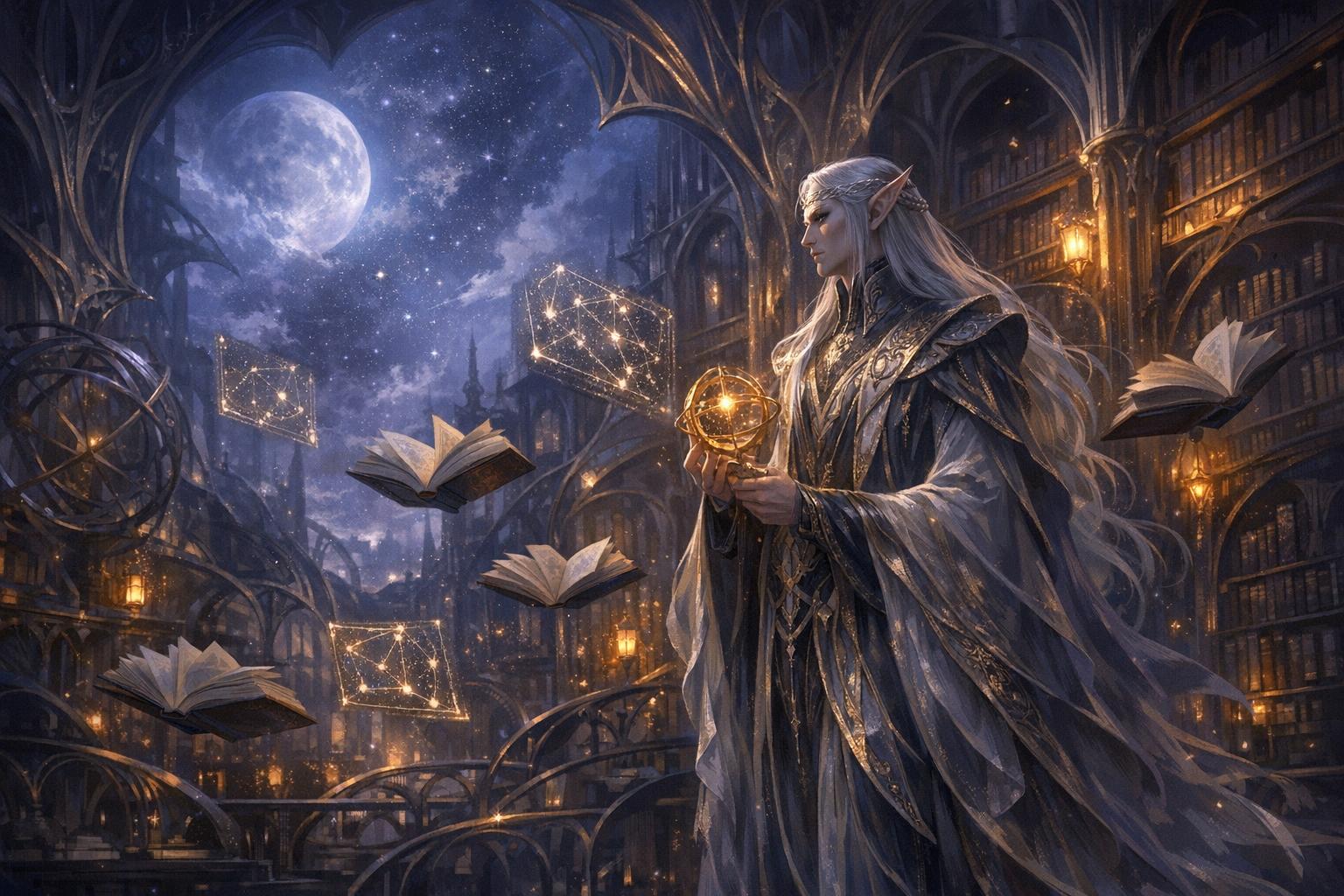 03
High Elves
Scholars and spire-builders whose institutions outlast empires and whose magic spans mi...
Read More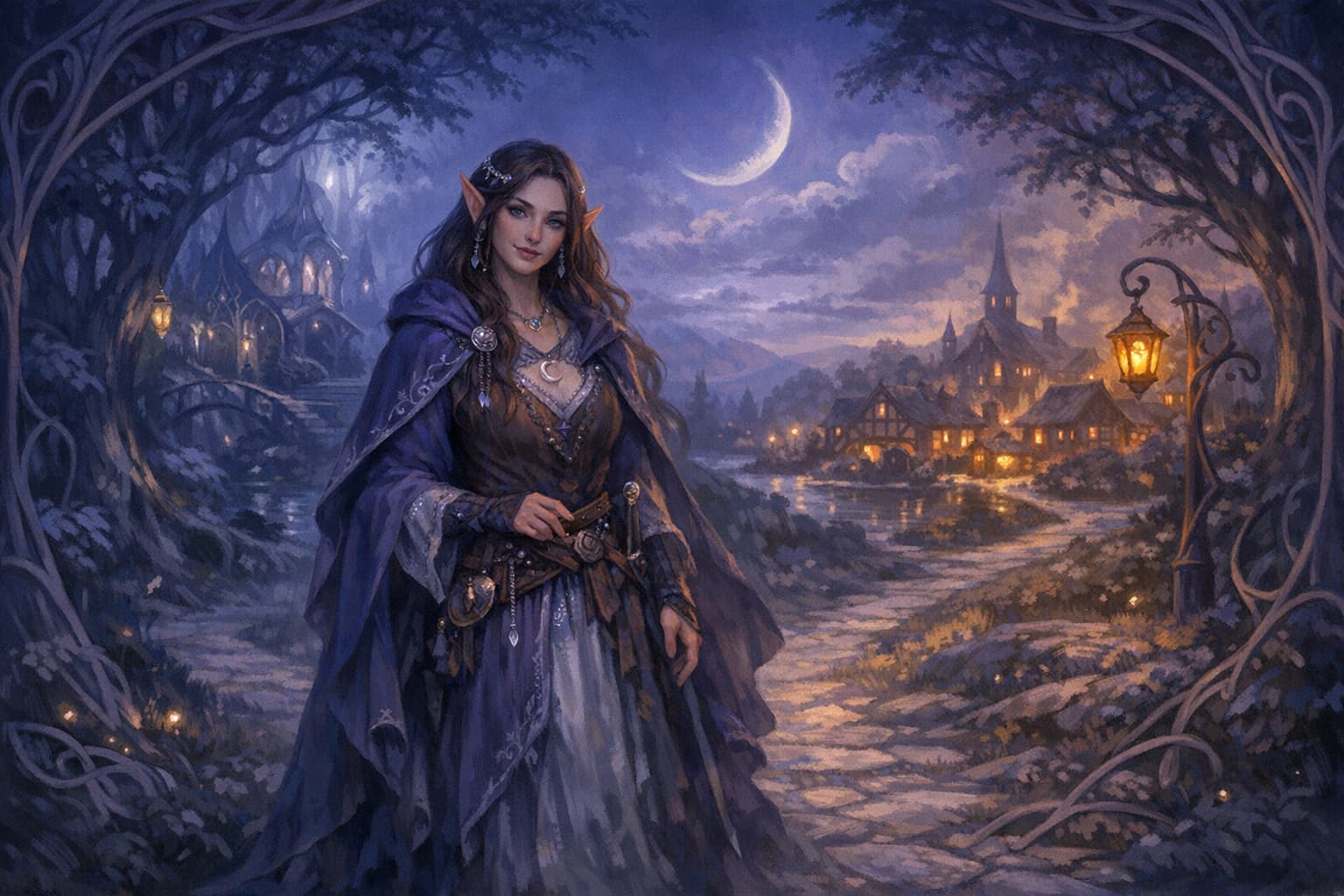 04
Half Elves
Children of two worlds who belong fully to neither, carrying the gifts and burdens of both
Read MoreFAQ
Common Questions
Anchor the addiction to a specific arcane discipline (e.g., void magic, high-energy beacon magic) and tie it to personal goals or trauma. Give the elf a defining moment when magic betrayed them, then show ongoing struggles: cravings, ritualized behavior, and moments of clarity. Use concrete cues: a cresting heartbeat when near spellcasting components, a specific tattoo reacting to magic, or a ritual they perform before casting. This keeps it personal and dynamic rather than a flat stereotype.
Create a formative event that forced the elf to choose survival over control, such as a ruined homeland, a failed retreat, or a mentor's fall. Build ties to two or three key NPCs (a rival mage, a healing priest, a fellow survivor) and a long-term goal (return home, reclaim a relic, or protect a clan). Weave in cultural pressures from their people—legacy, honor, and the cost of magic—so the addiction feels embedded rather than incidental.
Trait examples include pride, precise speech, and a hunger for arcane knowledge. Manifest in roleplay by measured, deliberate actions, meticulous decisions, and a tendency to plan multiple steps ahead. Let the addiction influence impulsive moments: a whispered incantation when excited, or a retreat to a safe place to meditate after a spell. Balance arrogance with vulnerability to keep them relatable and dynamic.
Create an NPC with a different magic philosophy or a rival discipline, such as a healer seeking balance or a scholar seeking forbidden texts. Give them a tangible goal that intersects with the party's mission (protecting a relic, negotiating a treaty) and a personal flaw tied to magic (temptation, paranoia, or a fear of losing control). The contrast should challenge the party's comfort zone while offering opportunities for mentorship or friction.