
High Elves
Scholars and spire-builders whose institutions outlast empires and whose magic spans millennia
Knowledge as Power
High elven civilization runs on accumulated knowledge. Where wood elves pass down ecological wisdom and dark elves pass down survival techniques, high elves pass down everything. Magical research, historical records, artistic traditions, philosophical debates, technological innovations. All of it preserved, analyzed, and built upon across millennia.
This accumulation creates genuine power. A high elf archmage draws on magical theory developed by dozens of predecessors over thousands of years. The youngest high elf scholar enters their field knowing more than most human experts will learn in their entire careers. High elven craftspeople work with techniques refined across generations longer than human memory extends.
But knowledge accumulation has costs. Information preserved is information that must be maintained, organized, protected. High elven cities dedicate enormous resources to their libraries, archives, and academies. Scholars spend centuries mastering bodies of knowledge rather than creating new work. The weight of the past becomes harder to carry with each passing generation.
The most dangerous failure mode is when preserved knowledge becomes dogma. High elves who've studied the same texts for five hundred years develop deep expertise, but they also develop deep grooves in their thinking. They know what the authorities say. They may have forgotten how to question whether the authorities are right.
Civilization as Achievement
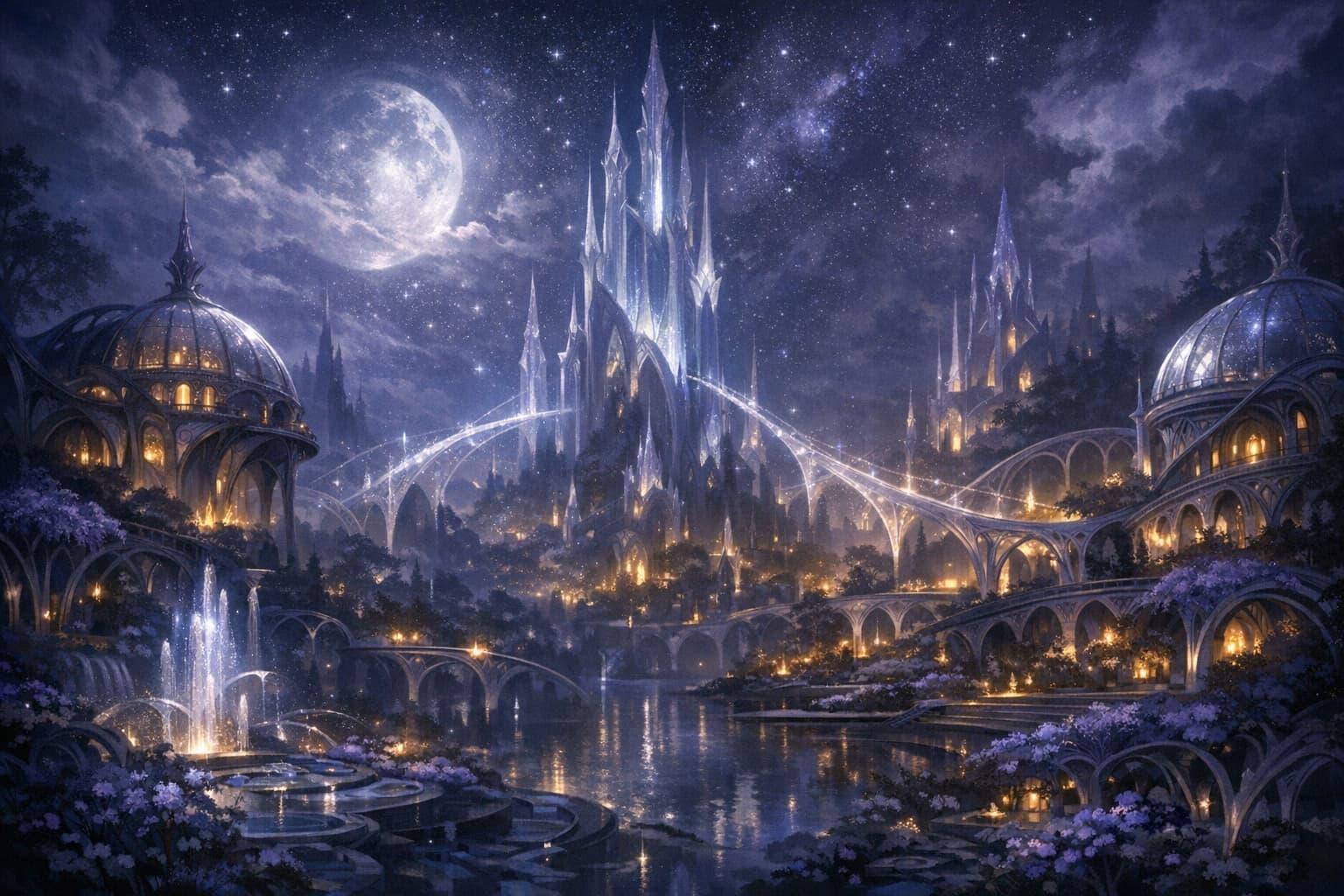
High elves build to last. Their cities are designed to endure for millennia, their institutions structured to persist across generations, their cultures oriented toward continuity rather than change. This produces stability that shorter-lived species find either reassuring or stifling depending on their temperament.
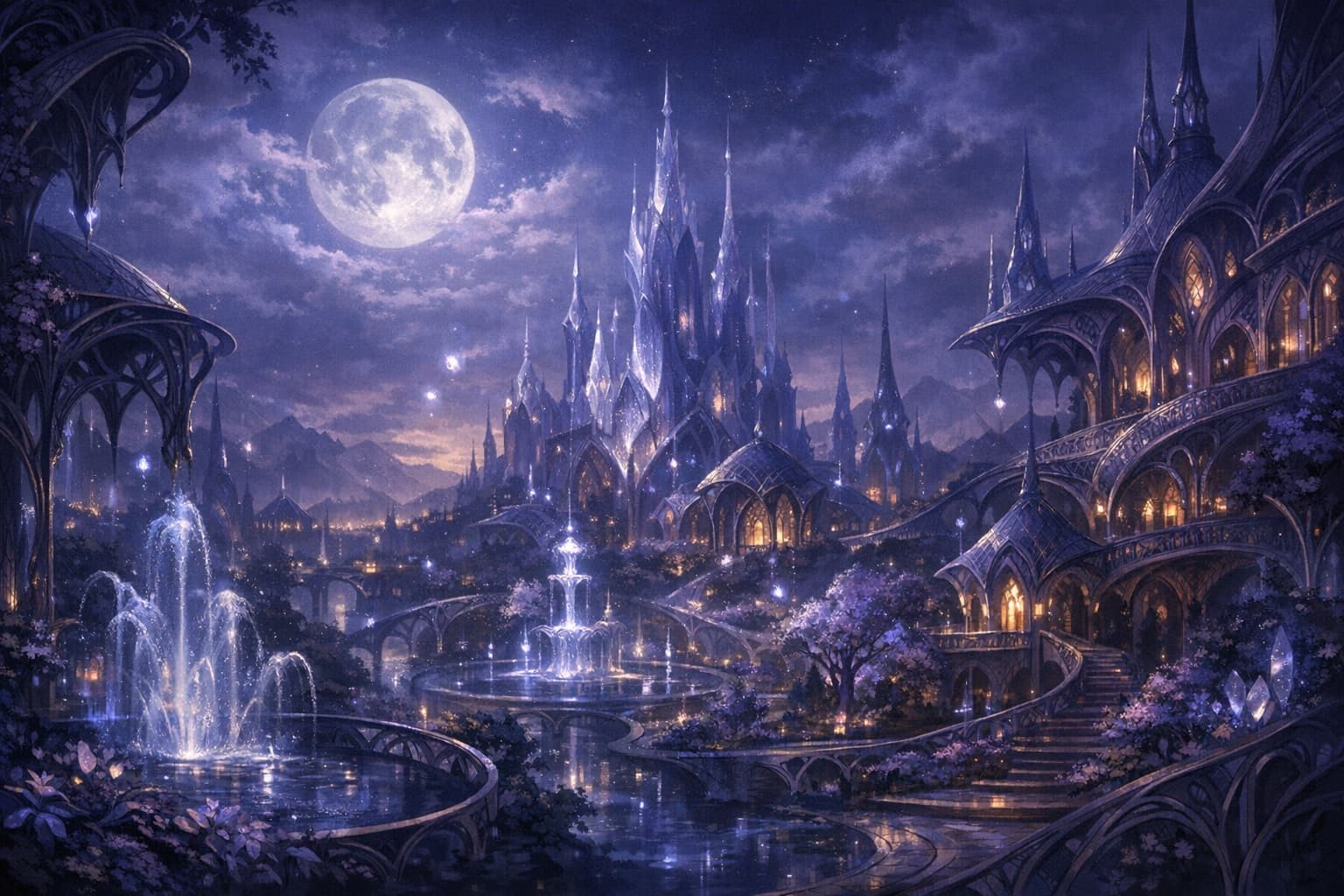
The great high elven cities represent centuries of continuous effort. Spires that took fifty years to construct because rushing would compromise the enchantments. Gardens that have been tended by the same families for a thousand years. Libraries where books are still being annotated by students who were present when they were written. Everything in a high elven city carries the weight of accumulated intention.
This creates environments that feel simultaneously impressive and oppressive. Every surface is decorated because generations of artisans have had time to decorate it. Every custom is elaborate because centuries of refinement have added layers of meaning. Every interaction follows protocols developed over ages to minimize friction and maintain harmony.
High elven cities can be beautiful in ways that overwhelm visitors. They can also be exhausting for those who haven't internalized the thousands of small rules that govern daily life. The high elf who returns to their city after years among humans often feels both relief at homecoming and frustration at remembered constraints.
The great high elven cities represent centuries of continuous effort. Spires that took fifty years to construct because rushing would compromise the enchantments. Gardens that have been tended by the same families for a thousand years. Libraries where books are still being annotated by students who were present when they were written. Everything in a high elven city carries the weight of accumulated intention.
The Aristocracy Problem
High elven society tends toward hierarchy. This makes sense given their values: if knowledge and skill are the highest goods, those with more knowledge and skill deserve more authority. In practice, this produces aristocracies of age and achievement that can be very resistant to new blood.
The eldest high elves have had the most time to accumulate knowledge and perfect their crafts. They've also had the most time to accumulate power, influence, and institutional positions. A high elf seeking advancement competes not just against their peers but against predecessors who've been building their positions for centuries.
This creates a particular dynamic among younger high elves. The ambitious ones may leave high elven society entirely, seeking achievement in arenas where their youth isn't a disadvantage. The patient ones settle in for the long climb, accepting that significant influence may be centuries away. The frustrated ones form factions advocating for change, though such movements often dissolve when their leaders age into the establishment they once opposed.
High elven adventurers often fall into the first category: ambitious individuals who found the traditional paths to achievement too slow. They seek power, knowledge, or influence in the wider world because the positions they want at home are occupied by elves who've held them since before the adventurer was born.
Magic as Identity
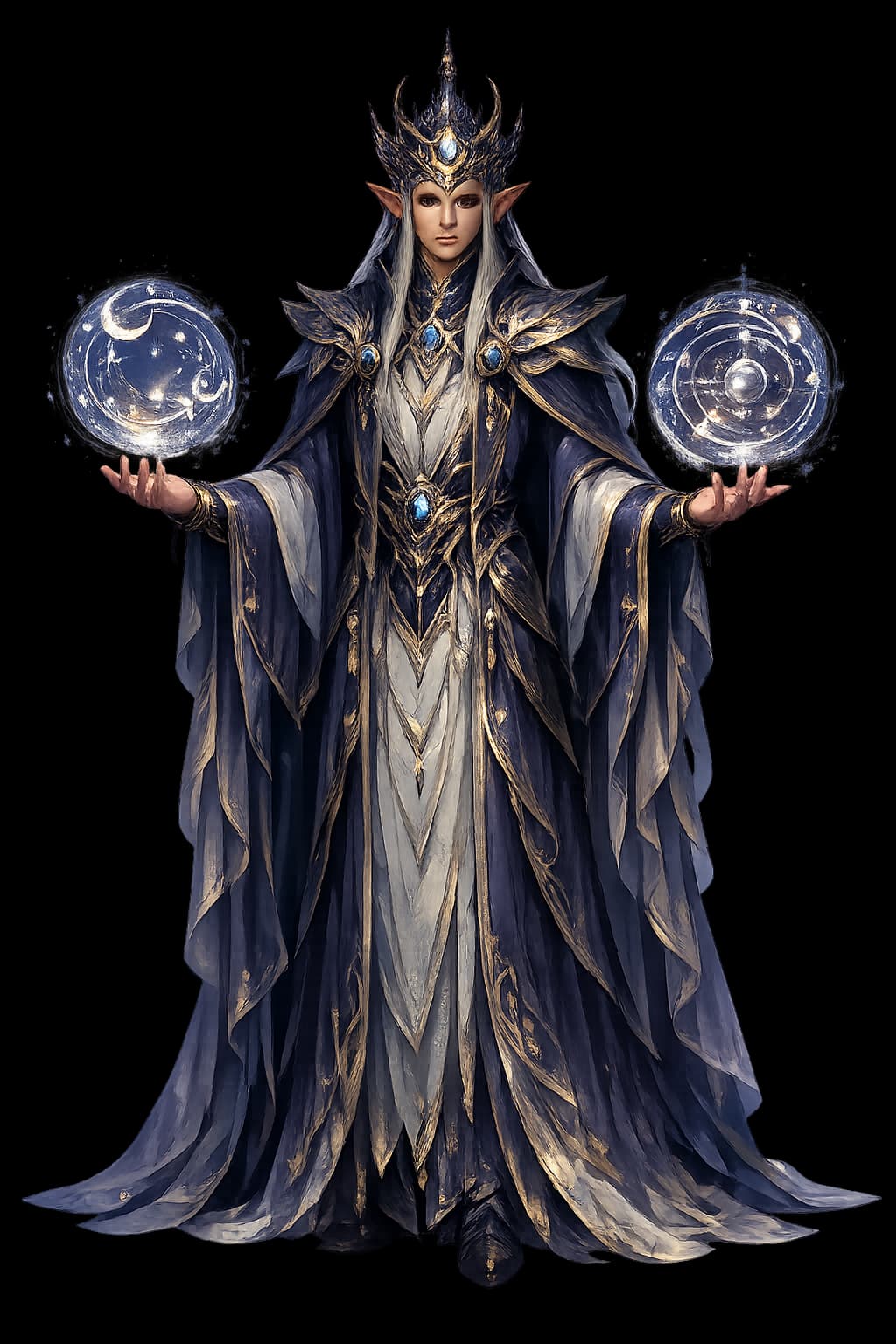
For high elves, magic isn't just a tool. It's a fundamental expression of what high elven civilization represents. Their greatest achievements are magical. Their most respected figures are archmages. Their most valued knowledge is magical theory. To be a high elf is, in some fundamental sense, to be oriented toward magic.
This creates problems for high elves who lack magical talent. In human society, a person without magical ability simply pursues other paths. In high elven society, lack of magical talent means exclusion from the culture's most valued activities. The high elf warrior, scout, or craftsperson may be respected for their skills, but they'll never achieve the status of a middling mage.
High elven magic itself tends toward the elaborate. Where human wizards develop spells that work, high elven mages develop spells that work beautifully. Their magical traditions emphasize elegance, efficiency, and theoretical sophistication. A high elf might spend decades refining a spell that a human would consider perfectly adequate, seeking small improvements in power cost, casting time, or effect clarity.
This perfectionism produces magic that's genuinely superior in controlled conditions. It can also produce mages who struggle to adapt when conditions aren't controlled. The high elf wizard who's spent two centuries mastering elegant theory may be outperformed by a human hedge wizard who's spent twenty years learning what actually works in muddy battlefields.
This creates problems for high elves who lack magical talent. In human society, a person without magical ability simply pursues other paths. In high elven society, lack of magical talent means exclusion from the culture's most valued activities. The high elf warrior, scout, or craftsperson may be respected for their skills, but they'll never achieve the status of a middling mage.
Relations with Other Peoples
High elves often struggle to relate to shorter-lived species. They may genuinely respect individual humans, dwarves, or halflings while still treating those species as fundamentally lesser. The condescension isn't malicious; it's more like how adults relate to children. Fond, perhaps, but not as equals.
This attitude creates friction even when high elves are trying to help. The high elf advisor who treats human kings as students rather than colleagues. The high elf merchant who refuses to haggle because their prices are correct. The high elf diplomat who's genuinely confused when short-term concerns override long-term interests. These interactions damage relationships despite good intentions.
Other elven subraces often have complicated relationships with high elves. Wood elves may see high elven civilization as a betrayal of elven connection to nature. Dark elves may resent high elven judgment of their survival-focused cultures. Half-elves may find high elven society even more exclusionary than human communities. The high elven assumption that their way is the proper elven way doesn't endear them to elves who chose different paths.
Yet high elven resources and knowledge make them valuable allies despite the social friction. When an ancient evil awakens, high elven libraries may contain the only records of how it was defeated before. When magical catastrophe threatens, high elven mages may be the only ones capable of addressing it. Other peoples maintain relationships with high elves because they have to, even when they'd rather not.
Internal Conflicts
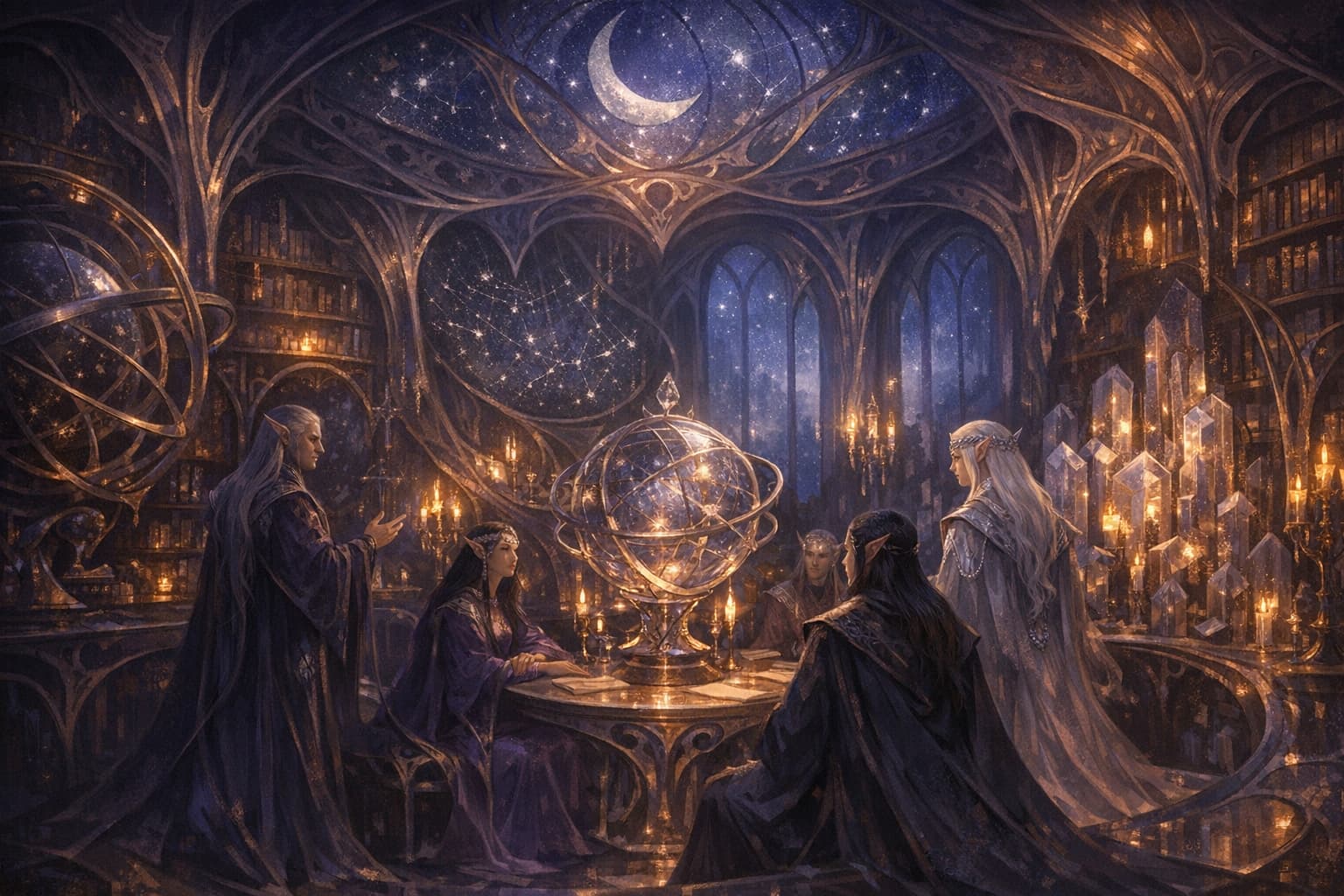
High elven society appears unified from outside but contains significant divisions. The most fundamental is between preservationists who want to maintain existing knowledge and progressives who want to create new knowledge. In a culture that values both accumulated wisdom and active inquiry, the tension between these priorities creates constant friction.
Preservationists argue that the most important work has already been done. Ancient high elven mages achieved heights that modern practitioners can barely understand. The proper response is to study, preserve, and protect what exists rather than risking it through experimentation. Every new spell might destabilize existing magical systems. Every new theory might contradict established truths. Better to perfect what works than to chase novelty.
Progressives argue that knowledge which isn't growing is dying. The ancient masters achieved what they did through active inquiry, not through reverence for their own predecessors. A culture that stops creating becomes a museum rather than a civilization. The greatest dangers often require new solutions rather than applications of old ones.
Neither side is wrong, which makes the conflict intractable. High elven politics often revolves around this tension, with factions forming around specific institutions, research programs, or individual leaders who embody one position or the other.
Origins in Tolkien & Wargaming
The high elf archetype begins with Tolkien, though the name maps imperfectly. His Noldor — the "Deep Elves" who pursued Morgoth to Middle-earth — are the closest analog: fiercely intelligent, builders of great cities like Gondolin and Nargothrond, masters of craft and lore, and fatally proud. The Vanyar, "Fairest of Elves," who remained in Valinor and rarely appeared in the narrative, contributed the sense of high elves as beings who existed above the concerns of the mortal world. Between the Noldor's ambition and the Vanyar's transcendence, the high elf template emerged.
Gary Gygax's Chainmail (1971) introduced elves as a wargaming unit with both fighting and magical capability — the first mechanical expression of elves as warrior-mages. Original D&D (1974) allowed elves to switch between fighting man and magic-user, embedding the high elf's dual martial-arcane identity at the system level. By AD&D 1st Edition (1978), "high elf" became an explicit category in the Player's Handbook, distinguished from wood elves and grey elves by superior Intelligence scores and broader class access.
The codification mattered. Once "high elf" had a stat line, the archetype crystallized. High Intelligence, weapon proficiency in longswords and bows, resistance to sleep and charm, infravisión — these mechanical choices reinforced a specific fantasy: the ancient, learned, martially competent, slightly arrogant elf. Every subsequent edition iterated on this template rather than reinventing it.
“Between the Noldor's ambition and the Vanyar's transcendence, the high elf template emerged — builder-scholars whose greatest strength and deepest flaw is the same conviction: that they know best.”
— Synthesis of Tolkien's influence on D&D
Across the Editions
High elf mechanical identity has remained remarkably stable across five decades of D&D, even as design philosophy shifted dramatically. The core has always been the same: an elf with stronger arcane capabilities than its woodland cousin, trading some physical resilience for magical versatility.
High Elf Mechanical Evolution
| Feature | AD&D 1e | 3.5e | 5e (2014) | 2024 |
|---|---|---|---|---|
| Ability Scores | +1 DEX, -1 CON | +2 DEX, -2 CON | +2 DEX, +1 INT | Flexible |
| Unique Mechanic | Multi-class F/MU | Secret door Search | Free wizard cantrip | None specific |
| Vision | Infravision 60 ft. | Low-light vision | Darkvision 60 ft. | Darkvision 60 ft. |
| Sleep Immunity | 90% resistance | Full immunity | Full immunity | Full immunity |
| Subrace Status | Default elf | Default elf | Explicit subrace | No subraces |
| Design Role | Class-defining | Stat modifier | Minor variant | Narrative only |
The 2024 PHB removes elf subraces entirely. High elf identity becomes purely a worldbuilding and roleplay choice with no mechanical expression.
- Infravision 60 ft.
- 90% resistance to sleep and charm
- Secret door detection (1-in-6 passive, 2-in-6 active)
- Fighter/Magic-User multiclass available
- Longsword, short sword, and bow proficiency
The 1e "elf" was the high elf by default. No subraces in the core PHB — Unearthed Arcana (1985) later added grey elves, wood elves, and others.
- Immunity to sleep effects
- +2 save vs. enchantment
- Low-light vision
- Weapon proficiency: longsword, rapier, longbow, shortbow
- Automatic Search check within 5 ft. of secret doors
The "elf" entry in the 3.5e PHB is the high elf. The -2 CON penalty reinforced the "fragile scholar" archetype and made elven wizards pay a real HP cost.
- Darkvision 60 ft.
- Keen Senses (Perception proficiency)
- Fey Ancestry (advantage vs. charm, immune to magical sleep)
- Trance (4 hours replaces 8 hours sleep)
- Extra wizard cantrip (High Elf subrace feature)
- Extra language of choice
The 5e High Elf subrace is the mechanical home for both high elves and moon elves. The free wizard cantrip was the most impactful subrace feature at launch, making High Elf the default choice for optimized wizard builds.
Forgotten Realms: The Sun Elf Overlap
In the Forgotten Realms, "high elf" is not a single category but an umbrella that covers two distinct cultures: moon elves (Teu-tel-quessir) and sun elves (Ar-tel-quessir). This creates a persistent source of confusion. The PHB's "High Elf" subrace is the mechanical representation for both, but FR lore treats them as culturally distinct peoples with a history of tension stretching back to the Crown Wars.
The distinction matters because generic "high elf" from Greyhawk, Dragonlance, or homebrew settings carries different connotations than FR's version. In Greyhawk, high elves are the standard elves of Celene and the Vesve Forest — cosmopolitan, somewhat aloof, but without the specific baggage of FR's moon-versus-sun divide. In Dragonlance, the closest equivalent is the Silvanesti, whose rigid hierarchy and isolationism map more closely to FR sun elves than to the generic archetype.
Forgotten Realms also introduced grey elves — rare, even more magically potent, and more isolated than standard high elves. These were folded into sun elf lore by 3rd Edition, further complicating the taxonomy. The result is that "high elf" in a Forgotten Realms game means something different than "high elf" in nearly any other setting, and DMs should clarify which version they mean during Session Zero.
The 5e Sword Coast Adventurer's Guide attempted to sort this out by explicitly mapping moon elves to the PHB High Elf and sun elves to a variant with different personality norms but identical stats. This satisfied no one. The mechanical identity of moon and sun elves remained identical while the lore demanded they be different peoples.
Across Franchises
The high elf archetype — learned, magically gifted, culturally superior, politically organized — appears in nearly every major fantasy franchise. Comparing implementations reveals how different designers interpret the same core concept: what happens when an immortal species decides that civilization, not nature, is the highest calling?
What remains consistent: arcane mastery, city-building, a tendency toward hierarchy, and a cultural arrogance that other species find either impressive or intolerable. What varies: whether the arrogance is justified, whether the civilization is in ascent or decline, and how the franchise handles the moral implications of a species that genuinely outperforms others in specific domains.
High Elf Archetype Across Franchises
| Franchise | Name | Defining Trait | Key Distinction |
|---|---|---|---|
| D&D (generic) | High Elf | Arcane tradition, wizard cantrip | Default elf; most broadly defined version |
| Forgotten Realms | Moon Elf / Sun Elf | Split into cosmopolitan (moon) and isolationist (sun) | Two cultures sharing one stat block |
| Warhammer Fantasy | Asur (High Elves of Ulthuan) | Martial-magical empire in decline | Explicitly colonial; Phoenix King politics |
| Elder Scrolls | Altmer (High Elves) | Racial supremacist Thalmor government | Willing to unmake reality to achieve divine status |
| Pathfinder | Elf (Aiudara heritage) | Planar-connected, long-abandoned homeland | Returned from exile; alien perspective |
| Dragon Age | Dalish (noble clans) | Lost civilization, reclaiming ancient lore | Colonized rather than colonizer; inverted power dynamic |
The Elder Scrolls Altmer and Warhammer Asur explore what happens when high elf supremacism becomes imperial policy — a direction D&D has traditionally avoided by splitting the archetype into "good" (moon) and "arrogant" (sun) variants.
Subtypes
Other Elven Kindred
 01
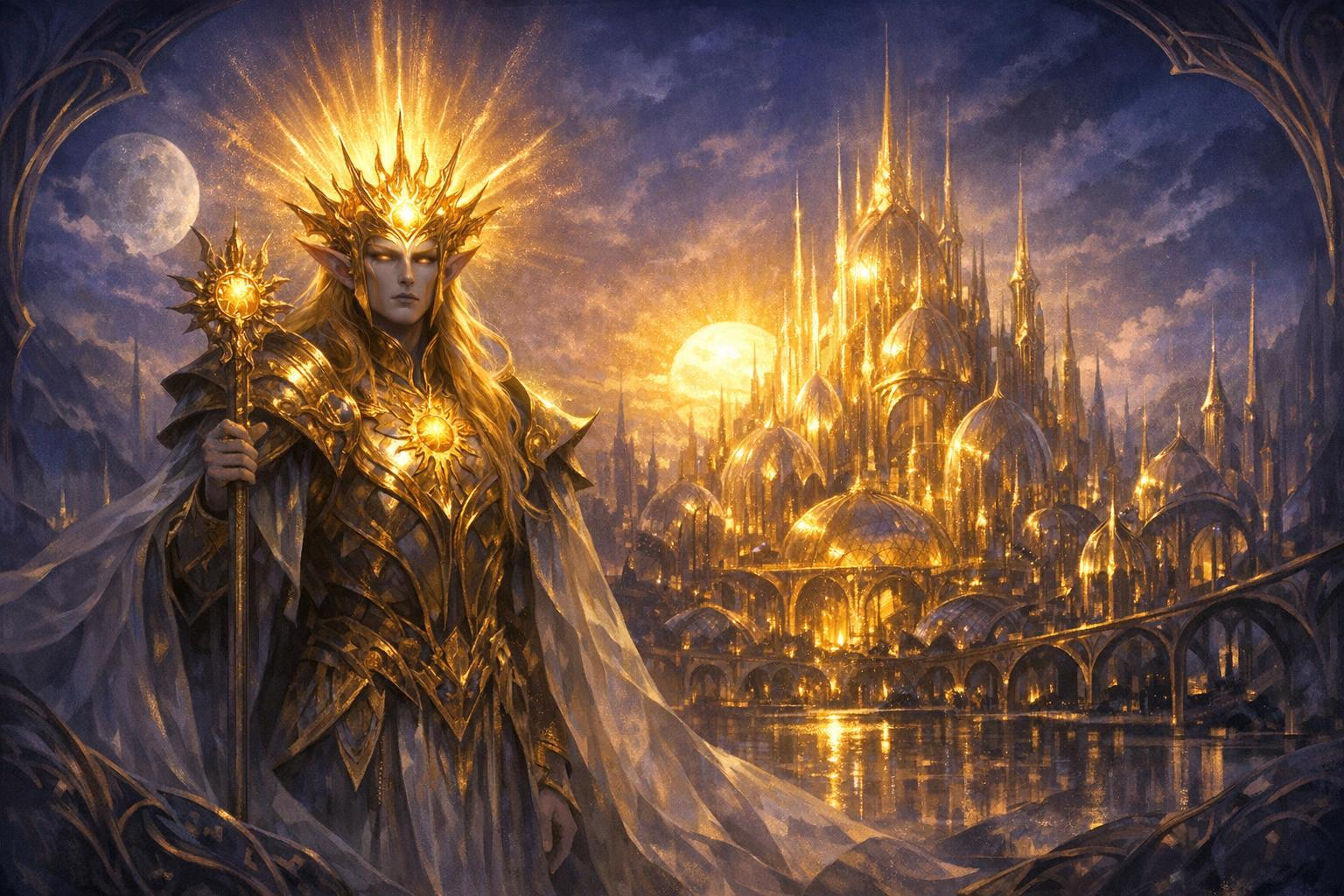
Sun Elves
Radiant lords of golden splendor whose light is both genuine power and blinding expectation
Read More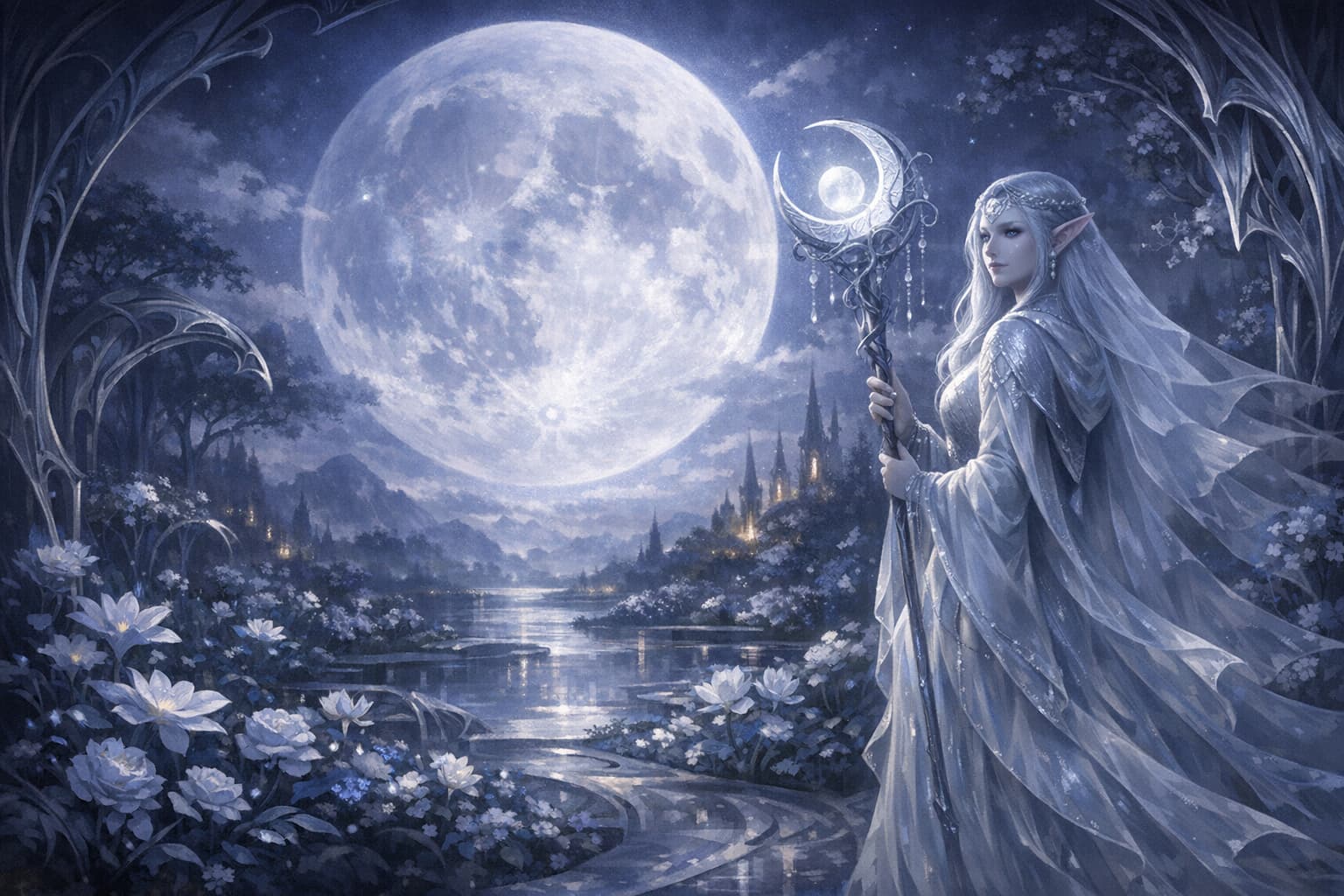 02
Moon Elves
Nocturnal mystics whose lives cycle with the moon, finding power in silver light and patience
Read More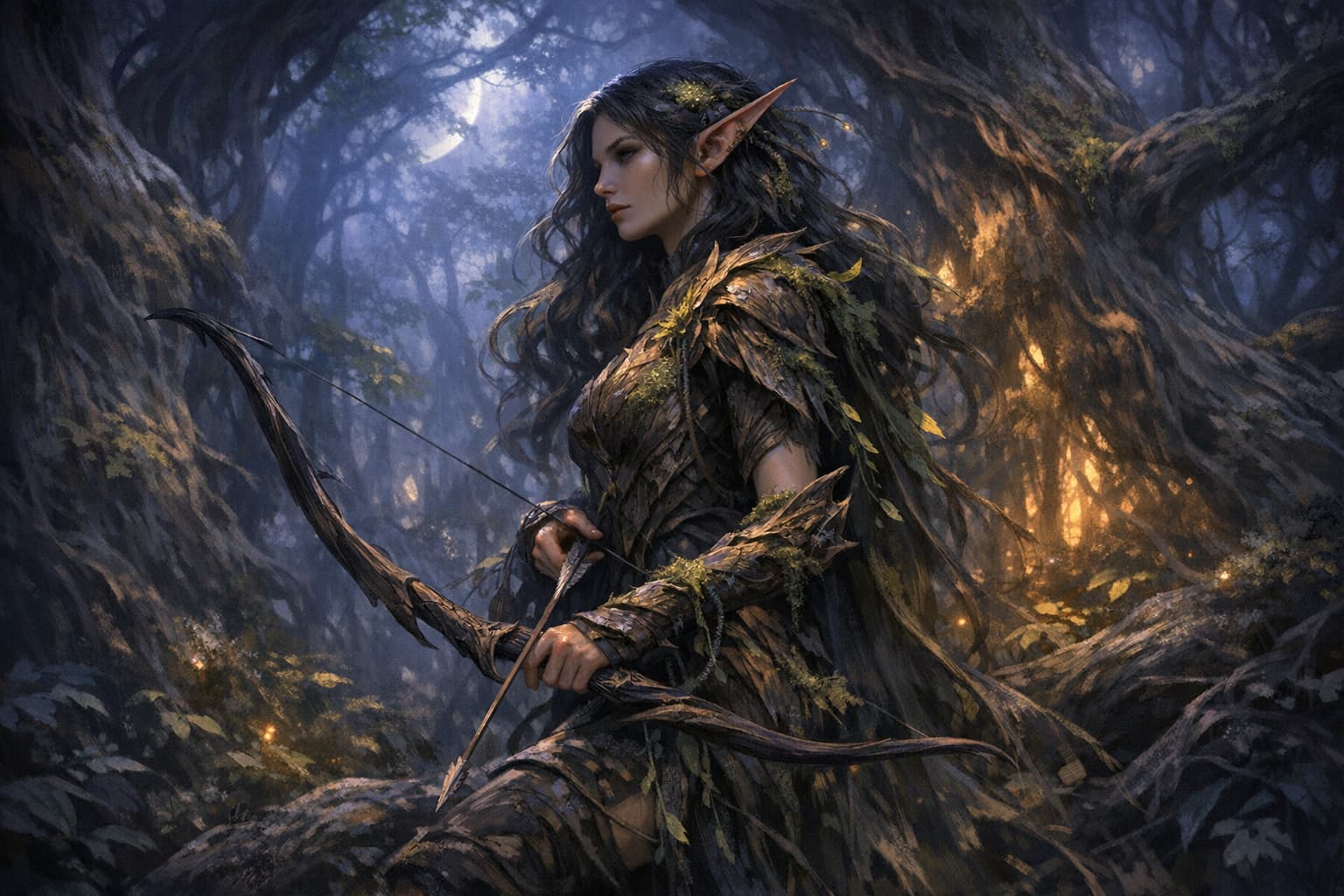 03
Wood Elves
Forest stewards who measure time in growth rings, whose patience runs as deep as ancient roots
Read More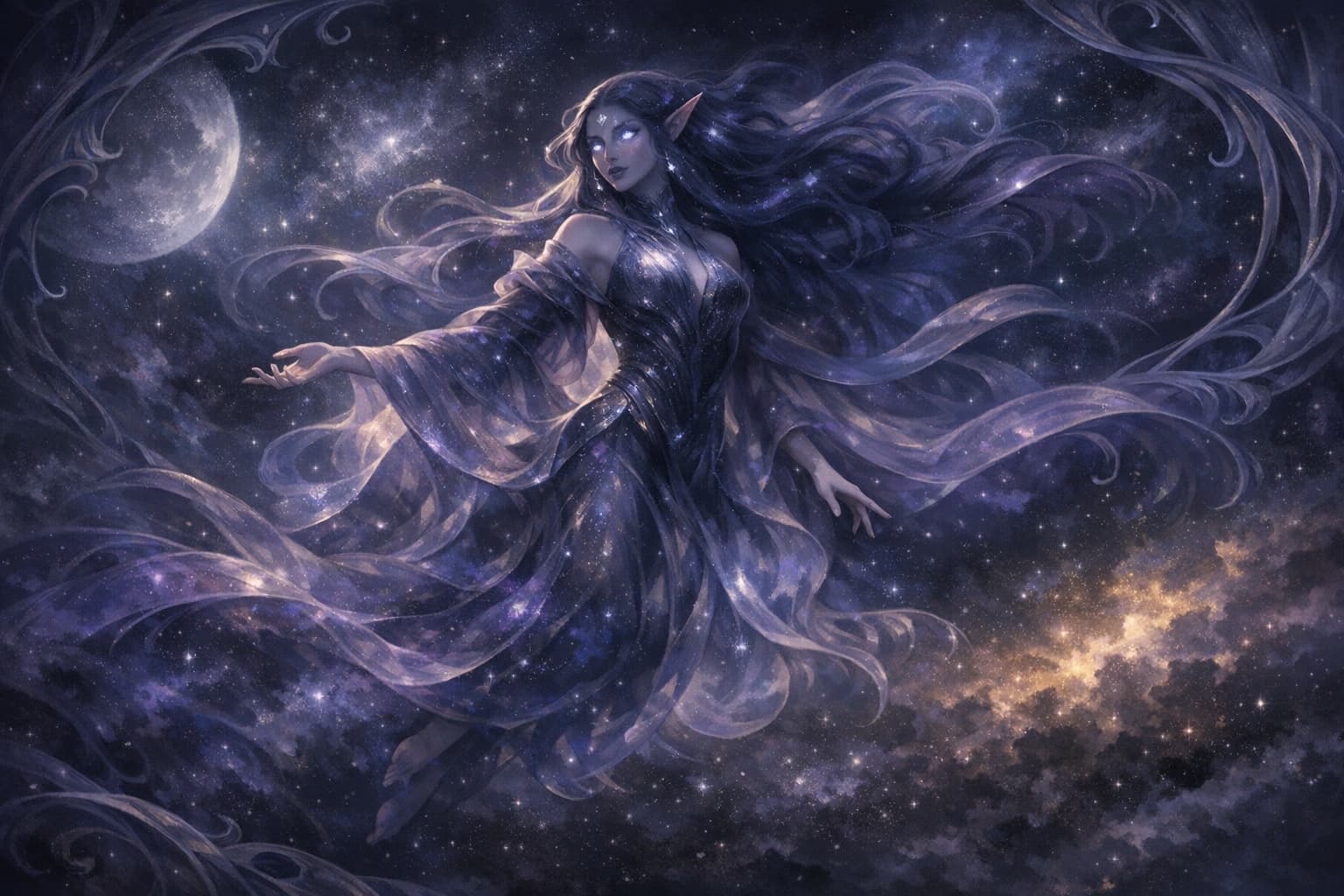 04
Astral Elves
Cosmic wanderers who perceive reality from between the stars, where time bends and knowledge transcends
Read MoreFAQ
Common Questions
Make their arrogance specific rather than general. A high elf might genuinely know more about arcane theory than anyone in the party while being completely helpless in a tavern brawl. Let their expertise shine in their domain while showing real limitations elsewhere. The goal is a character who's impressive and frustrating for understandable reasons.
Young high elves may not yet be bound by cultural expectations and seek achievement in arenas where their youth isn't a disadvantage. Others grow frustrated with ossified politics where positions are held by elves who've occupied them for centuries. Scholarly missions to gather knowledge unavailable in towers also work well as motivations.
High elves have centuries of accumulated technique but often can't adapt quickly. Humans have fresh perspectives and willingness to experiment. The best party dynamics emerge when both approaches prove necessary at different times, with the high elf learning that accumulated wisdom has blind spots.
Every surface is decorated because generations of artisans had time to refine it. Customs are elaborate because centuries added layers of meaning. Magic is infrastructure rather than spectacle. The result should feel simultaneously beautiful and slightly oppressive, like visiting a museum where everyone lives.