
Dark Elves
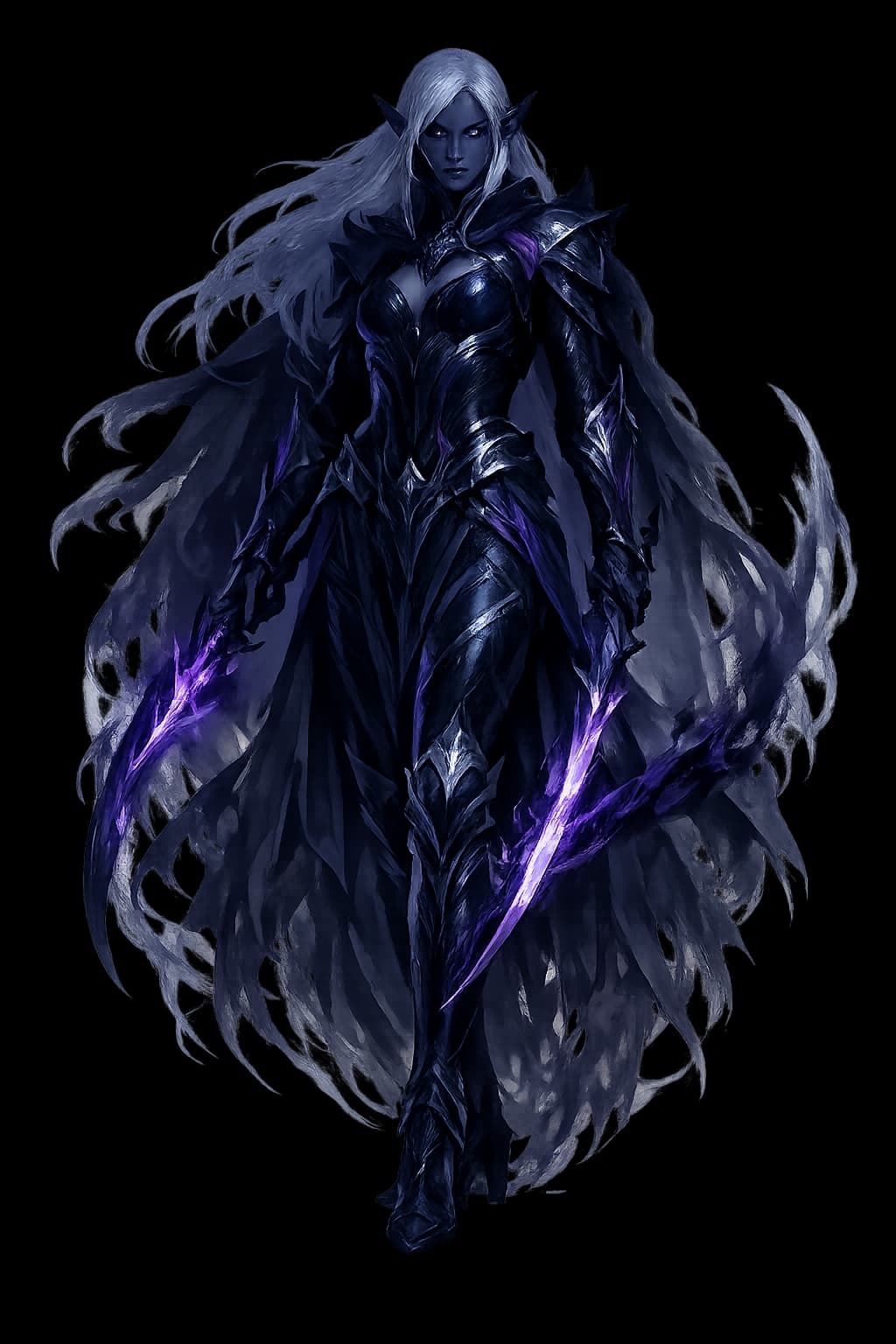
Shadow-dwelling survivors whose ruthlessness was forged by scarcity and whose beauty includes the terrible
Scarcity Shapes Everything
The fundamental difference between dark elves and their surface cousins is resource pressure. High elves build magnificent cities because they have time and materials. Wood elves maintain their forests because those forests provide abundance. Dark elves formed their cultures in environments where neither condition applies.
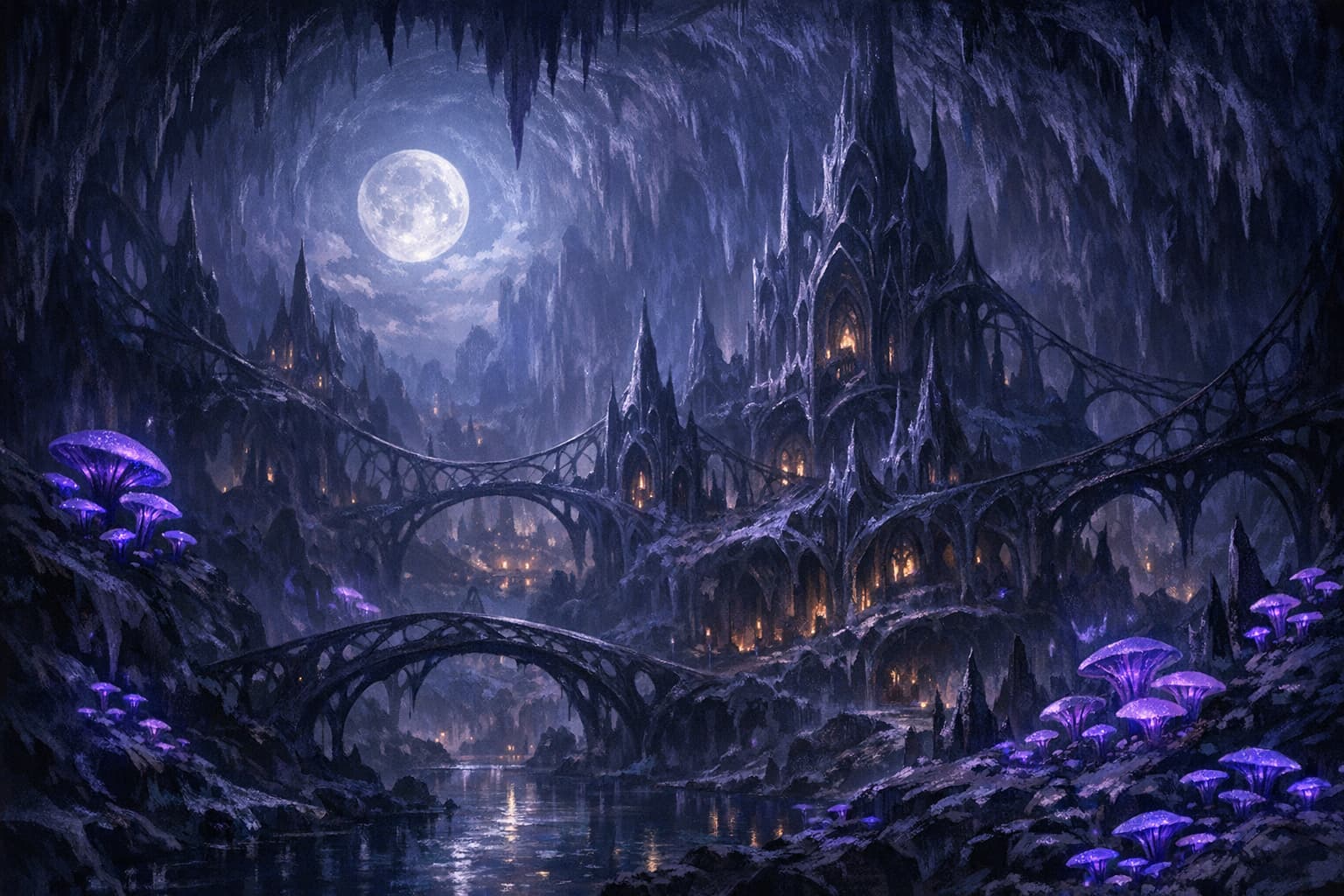
Underground caverns, blighted wastes, or territories stripped of resources by conquering powers. Dark elves emerged from places where survival itself required constant effort. This scarcity doesn't produce evil. It produces pragmatism that other elves find disturbing.
When resources are limited, every decision involves tradeoffs. Feeding this person means not feeding that one. Defending this territory means abandoning that one. Trusting this ally means becoming vulnerable to that enemy. Dark elven culture developed to navigate these calculations efficiently. The result looks cruel to outsiders because cruelty and efficiency often overlap when stakes are high.
High elves can afford elaborate courtesy because courtesy costs them nothing. Wood elves can afford patience because their forests provide while they wait. Dark elves learned that unearned trust gets people killed and wasted resources mean communities die. Their directness isn't rudeness. It's the elimination of luxuries their ancestors couldn't afford.
Hierarchy as Technology
Dark elven societies are typically rigid hierarchies, and this gets misread as simple authoritarianism. It's actually a survival technology, developed because strict hierarchies make faster decisions with fewer resources wasted on deliberation.
When a threat emerges, dark elves don't debate. The hierarchy determines response. When resources must be allocated, dark elves don't negotiate endlessly. The hierarchy distributes according to established rules. When conflicts arise, dark elves don't hold prolonged trials. The hierarchy resolves disputes through precedent and power.
This efficiency has costs. Innovation struggles in rigid hierarchies. Individual talent gets wasted when it doesn't fit established roles. Injustice gets encoded into systems that resist change. Dark elves live with these costs because their ancestors calculated that the alternative costs were worse.
The interesting question for campaigns isn't whether dark elven hierarchy is good or evil. It's whether the conditions that made it necessary still apply. A dark elven community that's achieved security might find its hierarchy becoming oppressive rather than protective. A dark elven exile might discover that surface societies' apparent chaos actually works better than expected. The hierarchy was a solution to a problem. What happens when the problem changes?
When a threat emerges, dark elves don't debate. The hierarchy determines response. When resources must be allocated, dark elves don't negotiate endlessly. The hierarchy distributes according to established rules. When conflicts arise, dark elves don't hold prolonged trials. The hierarchy resolves disputes through precedent and power.
Matriarchy Without Misandry
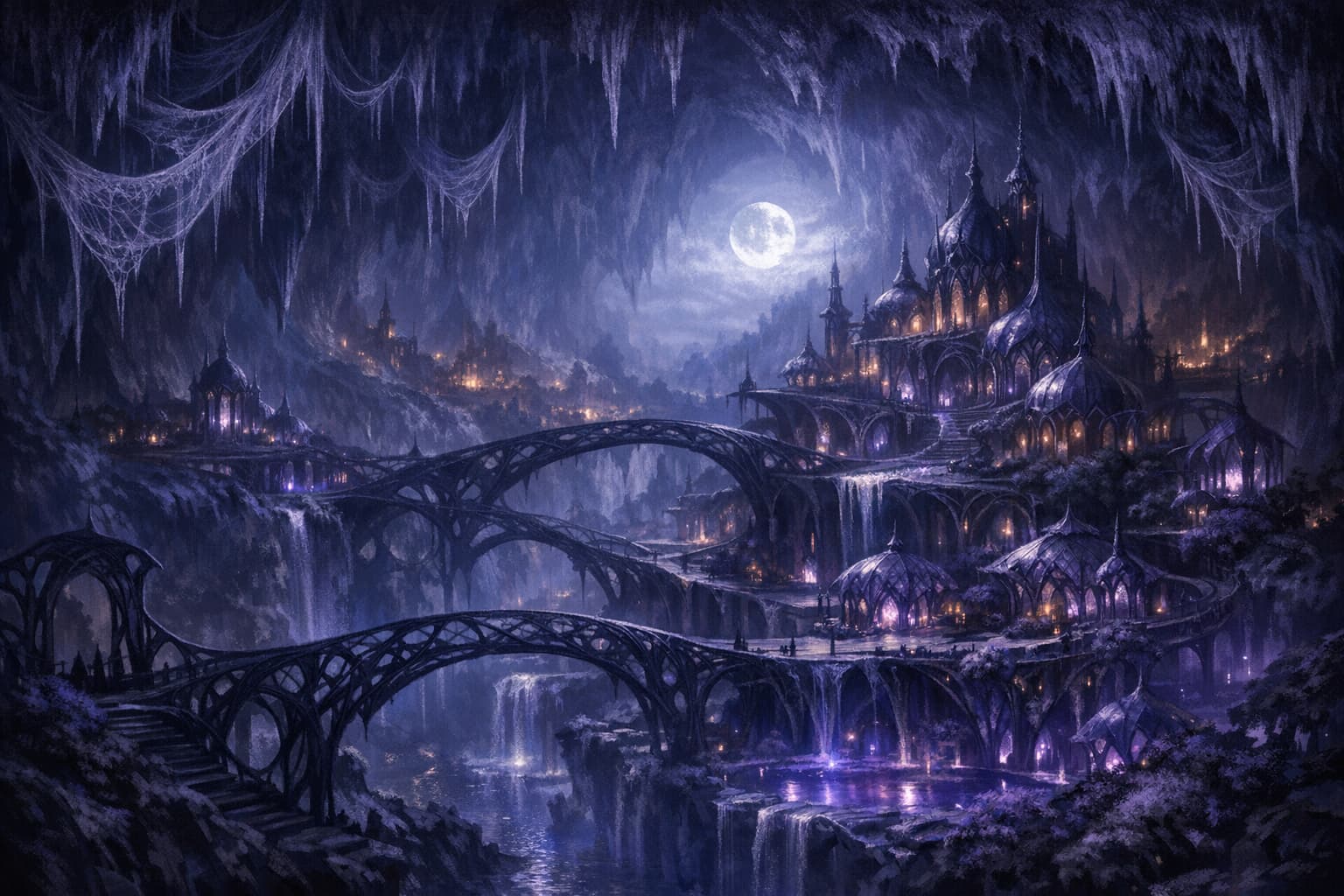
Many dark elf settings use matriarchal social structures, often poorly. The lazy version just inverts surface sexism: women rule, men serve, done. This produces nothing interesting. It's the same power dynamics with different genders assigned to the roles.
Matriarchy makes sense for dark elves when it emerges from their specific circumstances. In environments where every birth risks both mother and child, where population pressure is constant, where the species' survival depends on successful reproduction, the ability to bear children becomes strategically essential. Those who can reproduce are too valuable to risk in combat or dangerous labor. Protection becomes privilege. Privilege becomes power.
This logic produces a matriarchy where women rule not because they're inherently superior but because their survival mattered more during the formative period of dark elven society. The men who accepted this arrangement lived. Their descendants maintained the culture. The communities that organized differently died out.
The result isn't a society of oppressed males any more than medieval nobility oppressed its heirs by keeping them from front-line combat. It's a society where reproductive capacity determined social organization in ways that became tradition, then custom, then sacred order. Modern dark elves might not even remember the original logic. They just know how things are done.
Religion of Necessity
Dark elven religion typically centers on deities that other cultures consider evil. This makes sense once you understand what dark elves needed from their gods.
High elves worship gods of knowledge, craft, and beauty because their circumstances allowed them to pursue these values. Wood elves worship nature spirits because their environment rewarded harmony with natural systems. Dark elves worship gods of darkness, poison, deception, and survival because these were the powers that kept their ancestors alive.
A deity who rewards cunning and punishes naivety makes sense for a people who learned that trust was dangerous. A deity who governs poison and assassination makes sense for a people who couldn't afford fair fights with stronger enemies. A deity who rules through fear and demands absolute obedience makes sense for a people who needed social cohesion without the luxury of building it through persuasion.
The gods dark elves worship aren't evil in the sense of opposing good. They're gods whose portfolios match what dark elves needed to survive. The cruelty in dark elven religion reflects the cruelty of the conditions that shaped it. Take any culture and subject it to centuries of existential threat, and its religion will develop hard edges.
The Drizzt Problem
Any discussion of dark elves has to address Drizzt Do'Urden and the narrative template he established: the exceptional dark elf who rejects their society's evil and proves themselves through heroism.
This works once. It stops working when it becomes the default. If every dark elf player character is a noble soul who rejected their upbringing, dark elven society becomes mere backstory rather than an active cultural force. The exception proves nothing about the rule when everyone's an exception.
More interesting: dark elves who are products of their culture rather than rebels against it. A dark elf who genuinely believes the hierarchy serves the community. A dark elf whose ruthlessness comes from love of family rather than personal ambition. A dark elf who finds surface morality not appealing but confusing. How can they waste so much? How can they trust so freely? How do their societies even function?
The dramatic tension comes not from rejecting dark elven culture but from negotiating between it and other value systems. A dark elf adventurer might find they agree with their party members on goals while disagreeing fundamentally on methods. They might learn to appreciate surface approaches in some contexts while recognizing their own culture's advantages in others. They might change, but change means integrating new values with existing ones, not replacing one identity with another.
This works once. It stops working when it becomes the default. If every dark elf player character is a noble soul who rejected their upbringing, dark elven society becomes mere backstory rather than an active cultural force. The exception proves nothing about the rule when everyone's an exception.
Biology in Darkness
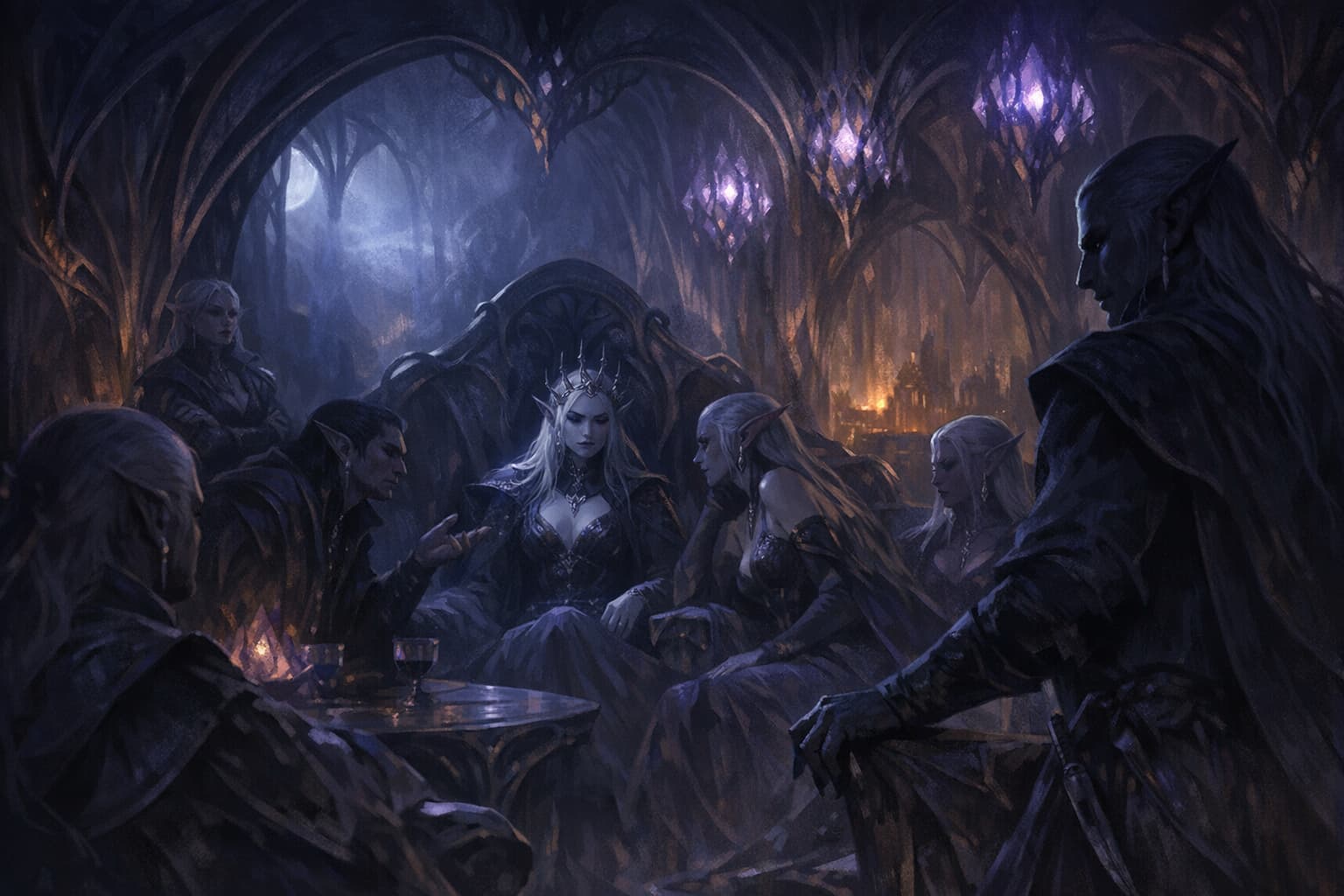
Dark elves' physical adaptations should matter for play. Living underground or in dark environments for generations produces real changes that affect how characters interact with the world.
Light sensitivity isn't just a mechanical penalty. It's a different relationship with illumination itself. Dark elves might find torch-lit taverns not just uncomfortable but disorienting. Bright sunlight might not just hurt but feel fundamentally wrong, like gravity suddenly shifting. This physical reality shapes psychology. The surface world isn't just culturally foreign. It's physically hostile.
Enhanced darkvision changes how dark elves perceive space. In complete darkness, they see clearly while surface-dwellers are helpless. This isn't just tactical advantage. It's a fundamentally different experience of environments that surface people consider terrifying. The dark elf walking calmly through lightless tunnels isn't being brave. They're walking through their native environment while their surface companions stumble blind.
Other adaptations might include sensitivity to vibration, ability to navigate by air currents, or physical builds suited to climbing rather than walking. Each adaptation creates moments where dark elves experience the world differently from their companions. These differences should come up in play, not just in character creation.
From Dökkálfar to Drow
Dark elves have the deepest mythological roots of any elven subtype. The Norse Prose Edda describes the dökkálfar — "dark elves" — as dwelling in the earth, contrasted with the ljósálfar in the heavens. Snorri Sturluson's description is brief and tantalizingly ambiguous: they are "blacker than pitch" and dwell in Svartálfaheimr, a realm that may or may not overlap with the dwarven Niðavellir. The conflation of dark elves and dwarves in Norse mythology created a template that D&D would later split into two separate fantasy species.
Gary Gygax introduced the drow in the module D3: Vault of the Drow (1978), the climactic adventure in the Against the Giants/Descent into the Depths series. The original drow were a genuinely alien threat — a matriarchal, demon-worshipping civilization hidden in the Underdark. Gygax's drow drew on Norse dökkálfar, the dark fairy traditions of European folklore, and the pulp adventure trope of a hidden underground civilization. The result was terrifying rather than sympathetic.
The critical transformation came from a different source. Gygax's drow were villains. R.A. Salvatore's Drizzt Do'Urden, introduced in The Crystal Shard (1988), made the drow playable by creating the "noble exception" template: one good drow who proves the species isn't inherently evil. This single character reoriented the entire dark elf archetype from antagonist species to "misunderstood culture with heroic individuals" — a shift that shaped dark elf narratives across the entire RPG industry.
The Salvatore influence cannot be overstated. Before Drizzt, "I play a dark elf" meant you were playing a villain. After Drizzt, it meant you were playing a brooding antihero with a tragic past. The drow went from Gygax's Lovecraftian horror to Salvatore's romantic rebel in less than a decade.
“Before Drizzt, "I play a dark elf" meant you were playing a villain. After Drizzt, it meant you were playing a brooding antihero with a tragic past. One character reoriented the entire dark elf archetype.”
— On R.A. Salvatore's influence
The Drow in Print
Drow literature follows a clear arc from dungeon threat to cultural protagonist. Tracking the major publications reveals how the RPG community's relationship with dark elves evolved over four decades.
The Menzoberranzan boxed set (1992) was a watershed moment. For the first time, drow society received the kind of detailed worldbuilding previously reserved for surface civilizations. The set described House politics, Lolth worship rituals, the Underdark economy, and daily life in a drow city. It made the drow legible as a culture rather than just a threat. That legibility made them playable in ways that Gygax's original vision never intended.
The War of the Spider Queen series (2002-2005) — a six-book sequence by different authors including Richard Lee Byers, Thomas M. Reid, and Lisa Smedman — depicted drow society in crisis when Lolth went silent. The series portrayed drow characters with complex motivations and genuine emotional depth, further moving the species from "evil by nature" to "shaped by a cruel system."
Baldur's Gate 3 (2023) represents the current endpoint of drow evolution. The game makes drow a standard player race with no alignment restrictions, features sympathetic drow NPCs, and treats Lolth worship as a cultural institution that individuals can accept or reject. Millions of players who never read a Salvatore novel encountered drow through BG3, and the version they met was already post-redemption.
D3: Vault of the Drow
Gygax introduces the drow as the ultimate Underdark threat. They are alien, matriarchal, demon-worshipping, and unambiguously antagonistic.
The Crystal Shard
R.A. Salvatore introduces Drizzt Do'Urden in the Icewind Dale Trilogy. The noble drow rebel archetype is born.
Homeland
Salvatore's Dark Elf Trilogy depicts Menzoberranzan from the inside. Drow society becomes a setting, not just a threat.
Menzoberranzan Boxed Set
TSR publishes a complete sourcebook for drow civilization. Detailed maps, politics, and daily life make drow playable as PCs.
War of the Spider Queen
Six-book series depicts drow society in crisis. Multiple perspectives show drow with complex motivations beyond Lolth worship.
Baldur's Gate 3
Larian Studios makes drow a standard player race. Millions of new players encounter drow as playable characters for the first time.
Across the Editions
Drow mechanical evolution tracks the broader cultural shift in how D&D handles inherently "evil" species. Early editions encoded drow darkness as mechanical penalty and moral constraint. Later editions gradually loosened these restrictions until the 2024 revision removed the concept of racial alignment entirely.
Drow Mechanical Evolution
| Feature | AD&D 1e | 3.5e | 5e (2014) | 2024 |
|---|---|---|---|---|
| Sunlight Penalty | -2 attacks | Dazzled 1 round | Disadvantage on attacks/Perception | Removed |
| Magic Resistance | 50% + 2%/level | SR 11 + class level | None | None |
| Innate Spells | Yes (extensive) | Yes (3 spells) | Yes (3 spells) | Heritage-based options |
| Playability Cost | NPC-only (core) | +2 Level Adjustment | Sunlight Sensitivity | None |
| Alignment | Chaotic Evil required | Usually CE | Typically CE (suggested) | No racial alignment |
| Design Intent | Antagonist species | Playable with penalty | Playable with drawback | Fully normalized |
The removal of Sunlight Sensitivity and racial alignment in the 2024 PHB represents the final step in a 46-year arc from "drow are monsters" to "drow are people."
- Magic resistance (50% + 2%/level)
- Innate spellcasting: dancing lights, faerie fire, darkness
- Infravision 120 ft.
- Sunlight sensitivity (-2 to attack, enemies +2 to saves)
- Detect secret doors
- NPCs only in core rules; player drow via Unearthed Arcana with severe restrictions
The 1e drow was intentionally overpowered — high magic resistance and innate spells balanced by sunlight penalties and the assumption that PCs would rarely be drow.
- Spell resistance 11 + class level
- Innate spellcasting: dancing lights, darkness, faerie fire (1/day each)
- Darkvision 120 ft.
- Light blindness (dazzled in bright light for 1 round)
- +2 Will save vs. spells
- Level Adjustment +2 (significant cost to play)
The +2 Level Adjustment made drow PCs always two levels behind the party, a blunt-force balancing tool that effectively discouraged drow PCs in optimized play.
- Superior Darkvision (120 ft.)
- Sunlight Sensitivity (disadvantage on attacks and Perception in sunlight)
- Drow Magic (dancing lights cantrip; faerie fire at 3rd; darkness at 5th)
- Fey Ancestry
- Trance
- Drow Weapon Training (rapier, shortsword, hand crossbow)
Sunlight Sensitivity remained the defining mechanical drawback. Community reception was divided: some saw it as appropriate fiction, others as punitive design that discouraged playing drow in outdoor campaigns.
Across Franchises
The dark elf archetype — subterranean or corrupted, morally complex, aesthetically striking — appears across most major fantasy franchises. Each implementation reveals different answers to the core question: are dark elves evil by nature, by circumstance, or by choice?
Dark Elf Archetype Across Franchises
| Franchise | Name | Defining Trait | Key Distinction |
|---|---|---|---|
| D&D | Drow | Matriarchal Lolth-worship, Underdark civilization | The original; defined the archetype for the industry |
| Elder Scrolls | Dunmer (Dark Elves) | Ancestor worship, Morrowind ash culture | No inherent evil; cultural complexity from Tribunal theology |
| Warhammer Fantasy | Druchii (Dark Elves of Naggaroth) | Slave-taking raiders, Khaine worship | Explicitly evil by choice; no redemption arc offered |
| Pathfinder | Drow | Demon-corrupted, Darklands-dwelling | Closer to Gygax's original vision; less Salvatore influence |
| Dragon Age | City Elves / Tevinter slaves | Oppressed urban underclass | Inverted power dynamic; "dark" is social status, not species |
| Baldur's Gate 3 | Drow / Lolth-sworn | Player-choice driven moral flexibility | Most accessible modern version; drow identity as spectrum |
The Elder Scrolls Dunmer stand apart by making dark elves culturally rich without requiring a "noble exception" narrative. Their darkness is aesthetic and cultural, not moral.
Subtypes
Other Elven Kindred
 01
Night Elves
Ancient guardians of dark places whose vigilance spans millennia and whose roots run deep
Read More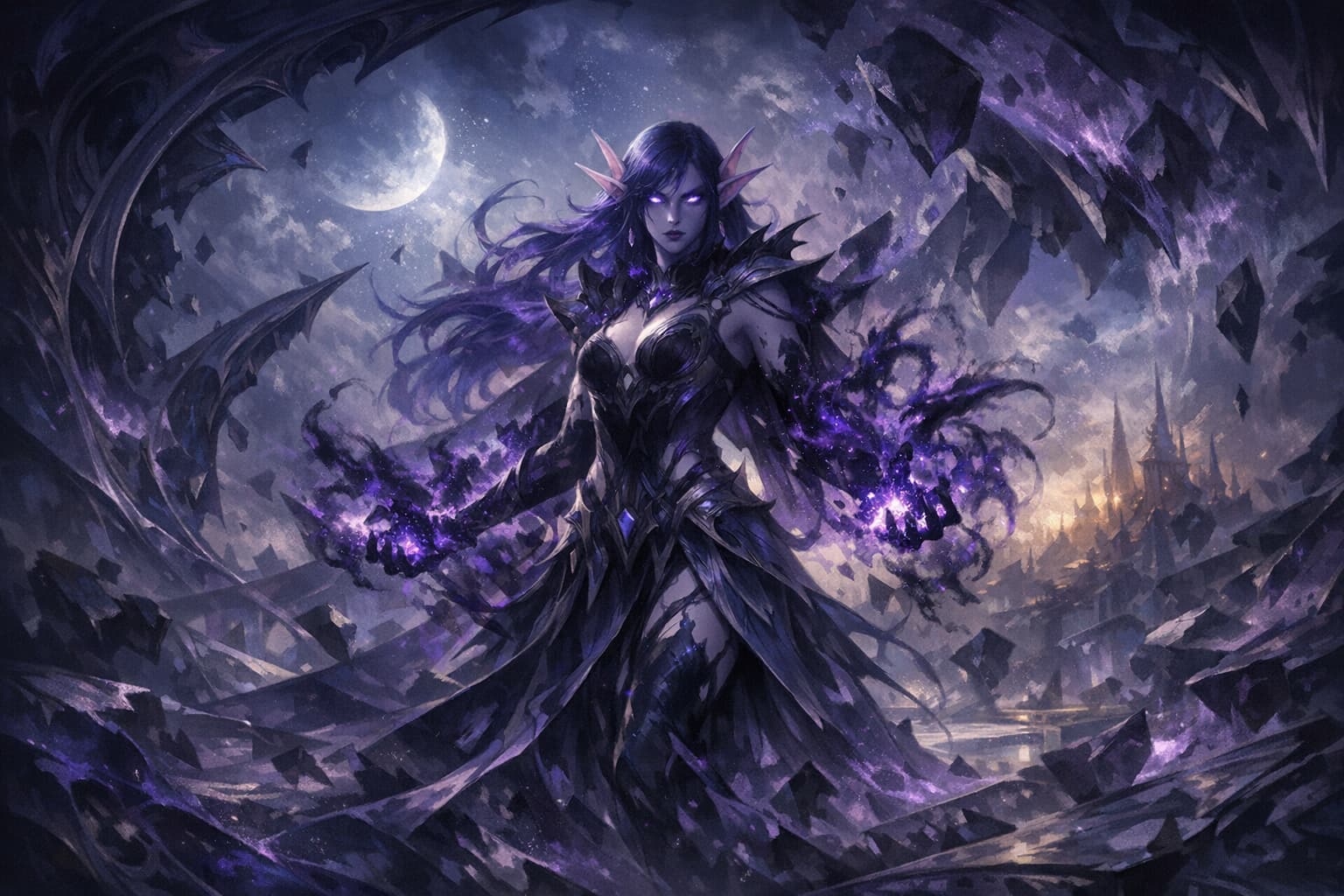 02
Void Elves
Transformed by the spaces between realities, wielding entropy's power at the cost of what they were
Read More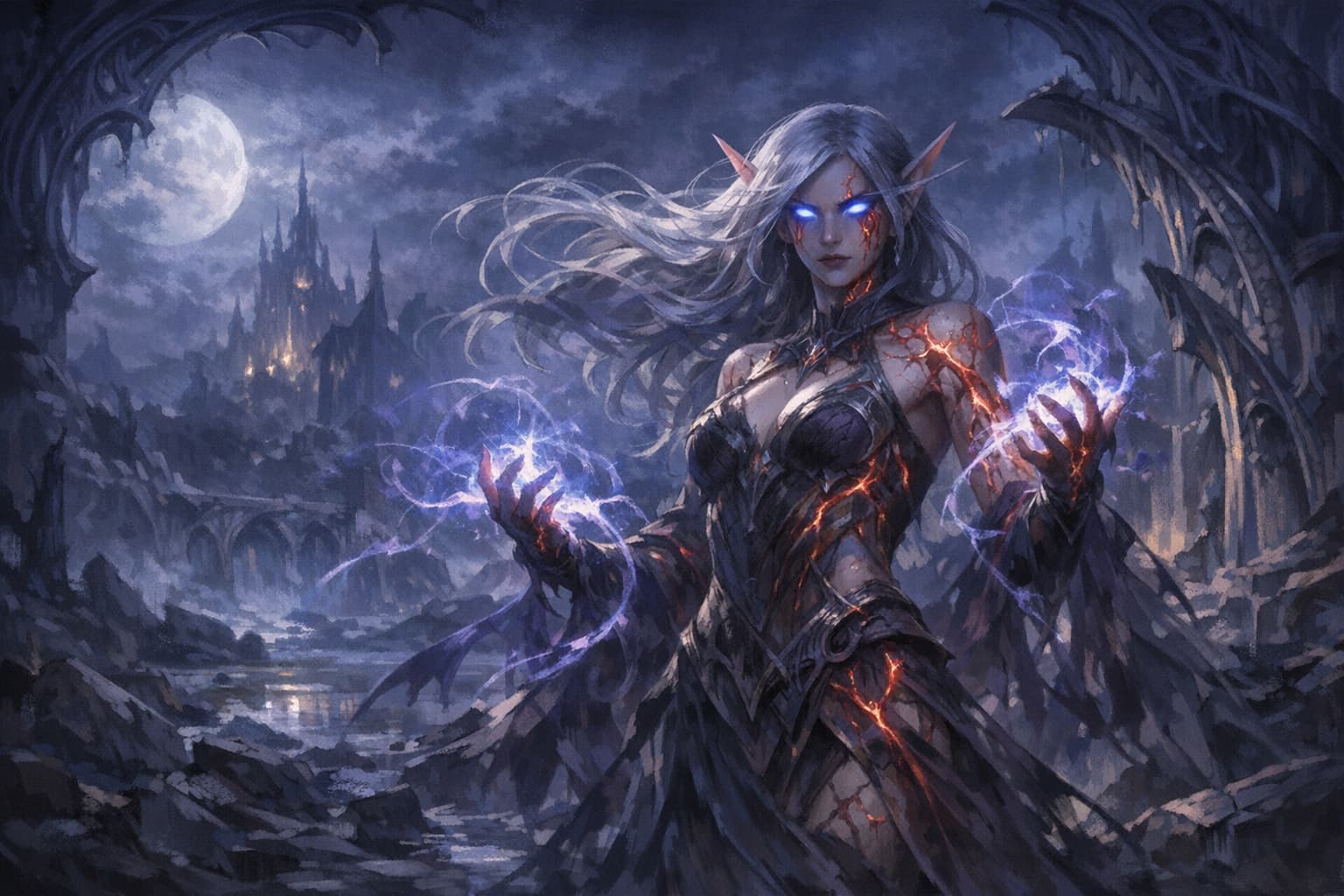 03
Blood Elves
Survivors of catastrophe whose addiction to power is both their salvation and their curse
Read More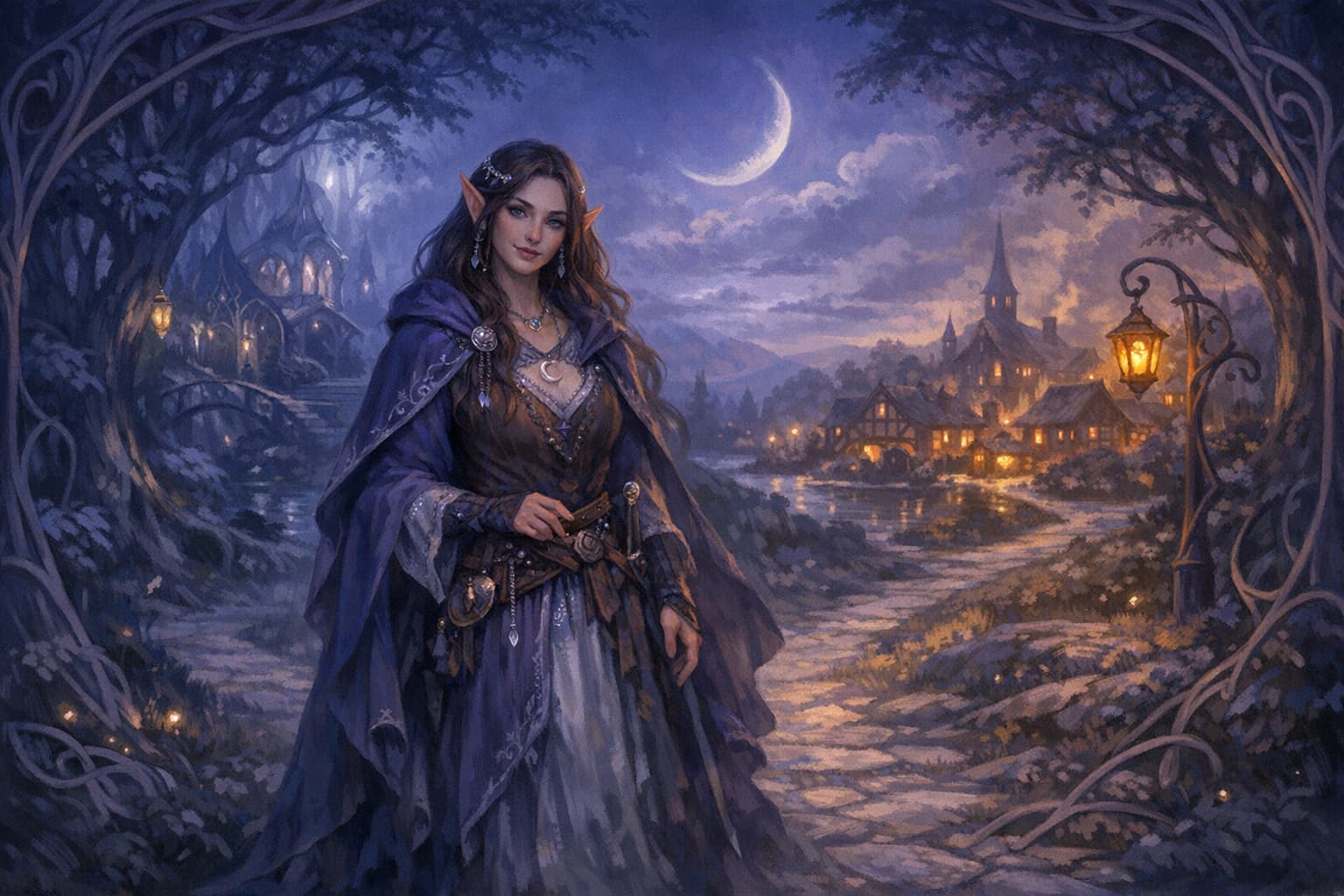 04
Half Elves
Children of two worlds who belong fully to neither, carrying the gifts and burdens of both
Read MoreFAQ
Common Questions
Play a dark elf who is a product of their culture rather than a rebel against it. Someone who genuinely believes hierarchy serves the community, whose ruthlessness comes from love of family rather than personal ambition, who finds surface morality not appealing but confusing. The tension comes from negotiating between value systems, not from choosing one over the other.
Treat it as more than a mechanical penalty. Bright environments feel fundamentally disorienting, like gravity suddenly shifting. The dark elf walking calmly through lightless tunnels isn't being brave. They're walking through their native environment. Use these perceptual differences to create character moments.
Their hierarchy is a survival technology, not simple authoritarianism. In environments of genuine scarcity, strict hierarchies make faster decisions with fewer resources wasted. The interesting question isn't whether their system is good or evil but whether the conditions that made it necessary still apply.
The culture should create specific behaviors. A dark elf might evaluate every alliance by asking what happens when it ends. They might find surface peoples' optimism alarming rather than charming. These differences create roleplay opportunities where both sides learn to navigate the gap, sometimes successfully, sometimes not.