
Night Elves
Ancient guardians of dark places whose vigilance spans millennia and whose roots run deeper than memory
Guardians of Dark Places
Night elves work best when they're protecting something. Not just living in forests but actively guarding them against threats that would destroy what they value. This guardian role explains why they're ancient, why they developed the abilities they have, and why they interact with the world the way they do.
The protected thing doesn't have to be a forest. It could be ancient ruins containing dangerous magic. It could be a sleeping god whose awakening would be catastrophic. It could be a dimensional boundary that keeps something terrible on the other side. The specifics matter less than the role: night elves exist to prevent bad things from happening, and their entire culture developed around that mission.
This guardian identity creates specific psychology. Night elves are vigilant because their purpose requires vigilance. They're secretive because revealing what they protect might draw threats. They're patient because the things they guard have existed for millennia and will continue existing. They're suspicious of outsiders because outsiders have historically been threats rather than allies.
The guardian role also creates the fundamental dramatic tension for night elf stories: what happens when the protection fails, changes, or becomes unnecessary? Night elves whose purpose is fulfilled have to find new meaning. Night elves whose protection is breached face existential crisis. Night elves who realize their protection was always futile confront devastating reassessment.
Ancient Without Being Static
Night elves are typically among the oldest civilizations in their settings. This age should matter for how they think and act, not just for their backstory.
Ancient civilizations also accumulate problems. Old grudges that predate current nations. Obligations and treaties from eras no one else remembers. Infrastructure that's been maintained for so long that no one understands how it works anymore. Night elf cities should feel like places where layers of history have built up until the present is just the topmost layer of a very deep excavation.
The danger with ancient civilizations is making them static. If nothing has changed for ten thousand years, why would anything change now? Night elf societies need internal tensions that create the possibility of change. Generational conflicts where younger night elves question traditions. External pressures that force adaptation. Crises that reveal the inadequacy of old approaches.
An ancient civilization has seen patterns repeat. They've watched younger civilizations make mistakes that the night elves made millennia ago. They've observed cycles of rise and fall that give them perspective shorter-lived peoples lack. This makes them simultaneously wise and frustrating. They know things that would help others, but they've also learned that others rarely listen until they've made the mistakes themselves.
The Nocturnal Difference
Night elves are nocturnal, and this should create practical differences from both moon elves and daylight species.
Where moon elves organize their lives around lunar cycles, night elves simply prefer darkness. The moon is useful illumination, not a cosmic organizing principle. Night elves are comfortable under new moon as well as full moon. Their connection is to night itself, not to any celestial body.
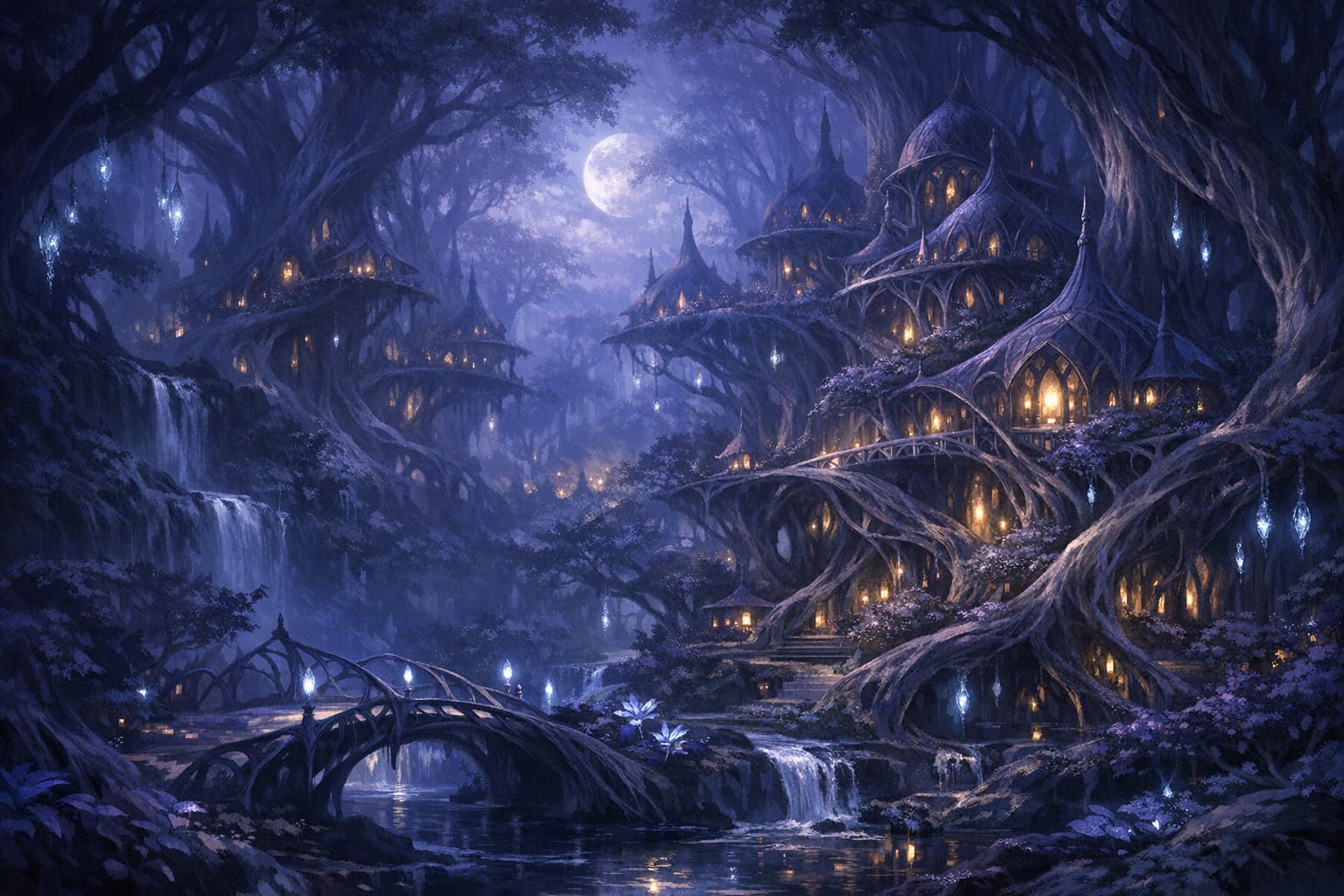
This makes night elf territories feel different from moon elf ones. Moon elf cities are designed to catch moonlight. Night elf cities might actively block it, preferring deeper darkness. Moon elves track phases religiously. Night elves care about phases mainly for practical reasons like illumination levels.
The nocturnal lifestyle affects social interactions with daylight species. Night elves can function during the day but prefer not to. Meetings with daytime cultures require someone to compromise their schedule. Trade happens during dawn and dusk rather than peak hours for either side. This scheduling friction creates low-level tension that can escalate or become story material.
Nature Magic Without Tree-Hugging
Night elf magic typically connects to nature, but the connection should be specific and meaningful rather than generic environmentalism.
This specificity creates interesting limitations. Night elf magic might be stronger in their home territory and weaker elsewhere. Their power might depend on maintaining relationships with specific nature spirits who have their own agendas. Their abilities might require that their home forests remain healthy, giving them concrete stakes in environmental outcomes.
The nature magic also creates potential conflicts with other nature-oriented elves. Wood elves might have different approaches to nature magic that night elves consider wrong or dangerous. The groups might compete for relationships with the same nature spirits. They might disagree about how to handle threats to shared territories.
Night elves don't worship nature in an abstract sense. They have relationships with specific forests, specific creatures, specific magical phenomena. A night elf druid might be bonded to a particular ancient tree. A night elf ranger might have spent centuries learning one ecosystem's patterns. The connection is personal and local, not ideological and universal.
Matriarchy as Structure
The Warcraft model established night elves as matriarchal. This works as world-building when it emerges from their history and circumstances rather than just inverting gender politics.
One logic: night elf society formed around priestesses who communed with their goddess. Religious authority became political authority. Men developed different roles that complemented priestess leadership rather than competing with it. The structure persisted because it worked, not because of inherent gender superiority.
Another logic: reproduction is particularly significant for long-lived species with low birth rates. Those who can bear children became culturally central because children are rare and precious. Power concentrated around the capacity that most constrained the civilization's continuation.
Either logic creates a matriarchy that makes internal sense without requiring that men be oppressed or women be inherently better. The system works for night elves because of their specific circumstances. It might not work for other species with different circumstances. This keeps the matriarchy from becoming a simple political statement.
Isolation Versus Engagement
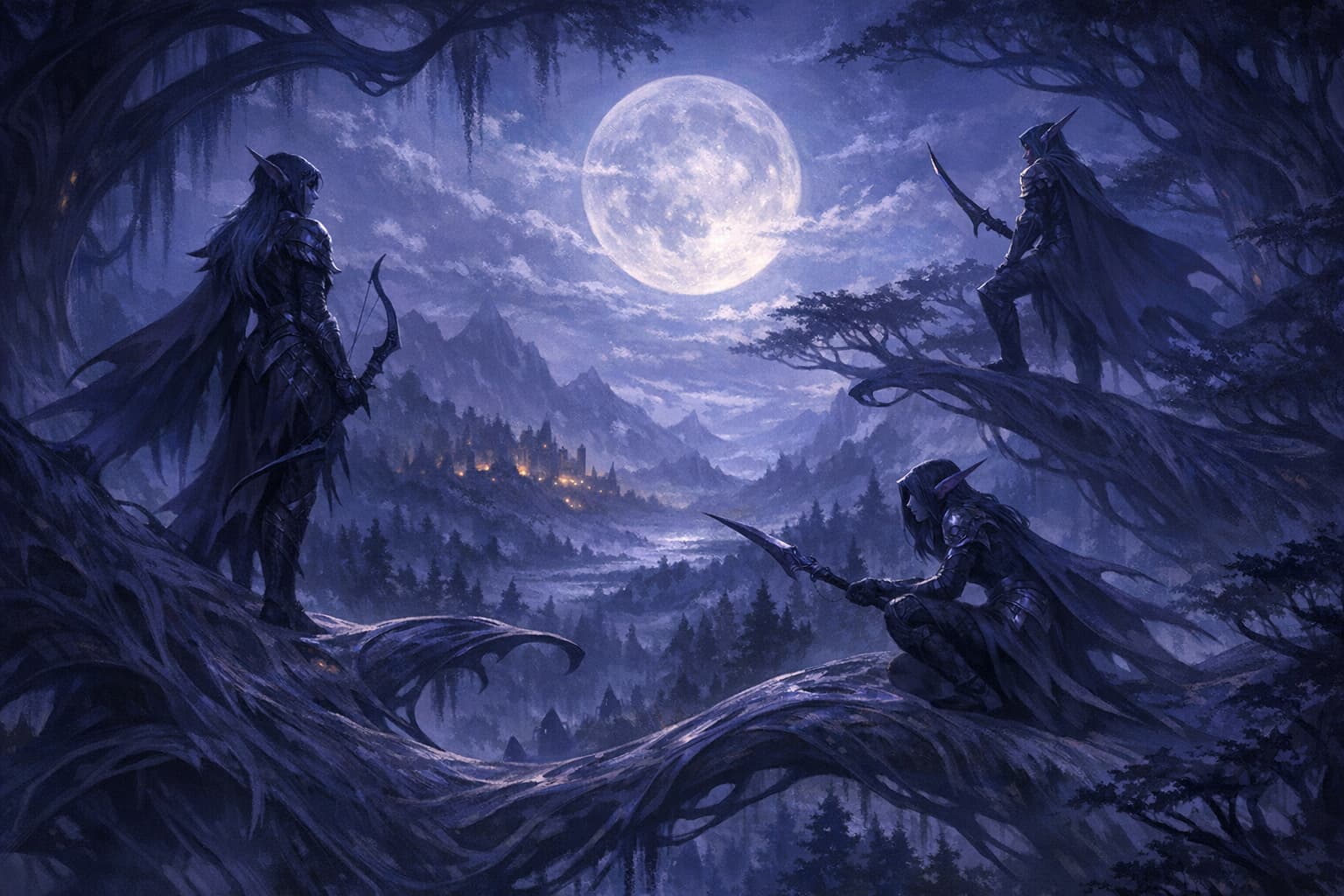
Night elves typically struggle with how much to engage with the wider world. Their guardian role encourages isolation. Their need for allies against major threats encourages engagement. This tension should drive internal politics and provide story hooks.
The isolationist position has real logic. Every time night elves opened their borders, something went wrong. Outsiders brought new threats, violated sacred spaces, or learned secrets that caused problems later. The safest approach is to maintain barriers and deal with the outside world as little as possible.
The engagement position also has real logic. The threats night elves face are bigger than they can handle alone. Allies bring resources, perspectives, and capabilities that night elves lack. Isolation means fighting alone when fighting together might succeed.
Most night elf communities contain both factions in varying proportions. Recent events push the balance one way or another. A recent betrayal by outsiders strengthens isolationists. A recent threat that required outside help strengthens engagers. The balance at any given moment shapes how NPCs treat the party.
Kaldorei Origins
Night elves are a Blizzard Entertainment creation, debuting in Warcraft III: Reign of Chaos (2002) as the game's fourth playable faction. The Kaldorei — "children of the stars" — were introduced as ten-thousand-year-old forest guardians who had sacrificed their immortality to destroy the demon lord Archimonde at the Battle of Mount Hyjal. This origin established every defining night elf trait: extreme antiquity, druidic nature magic, matriarchal priestess leadership, and a civilization defined by the thing it gave up.
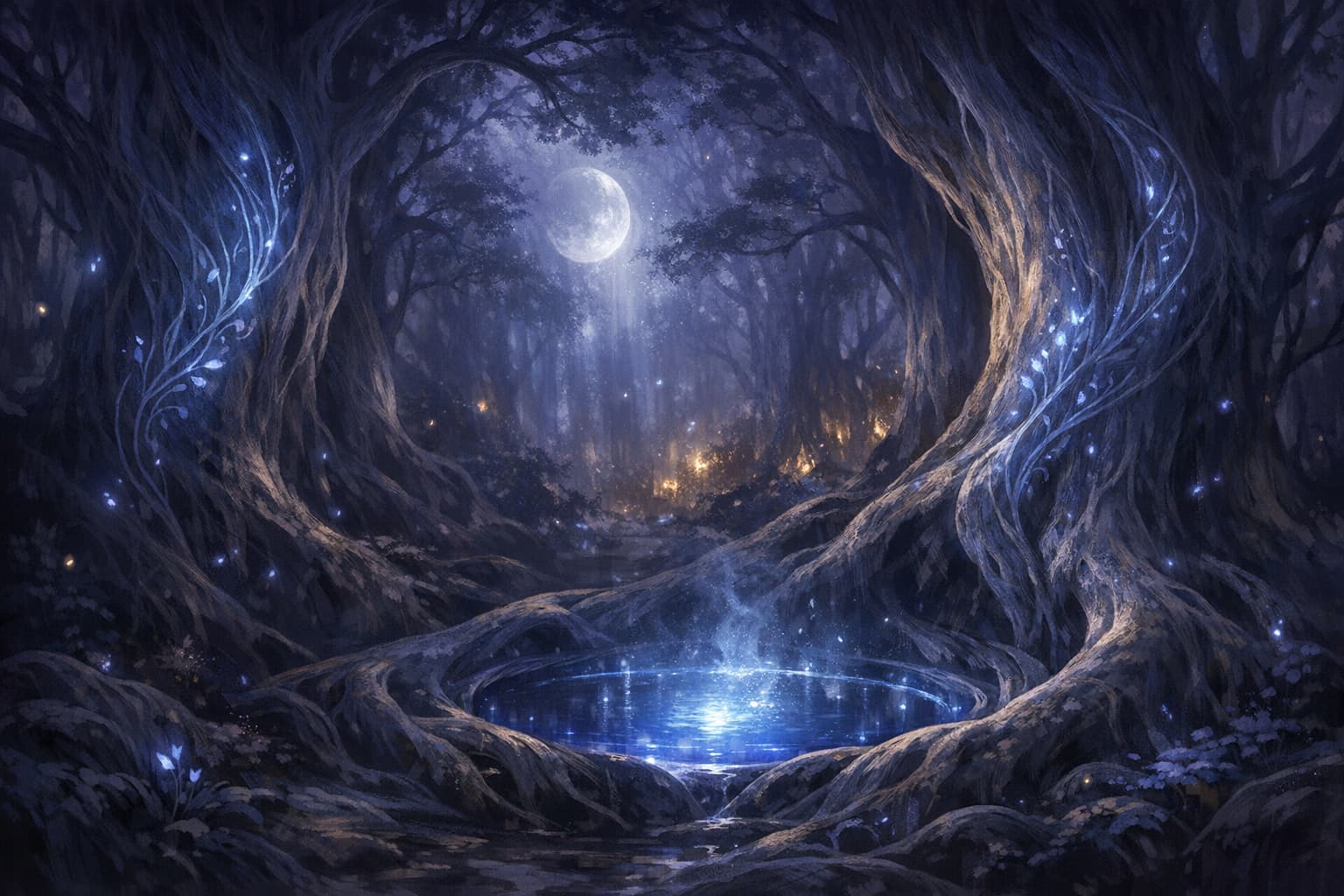
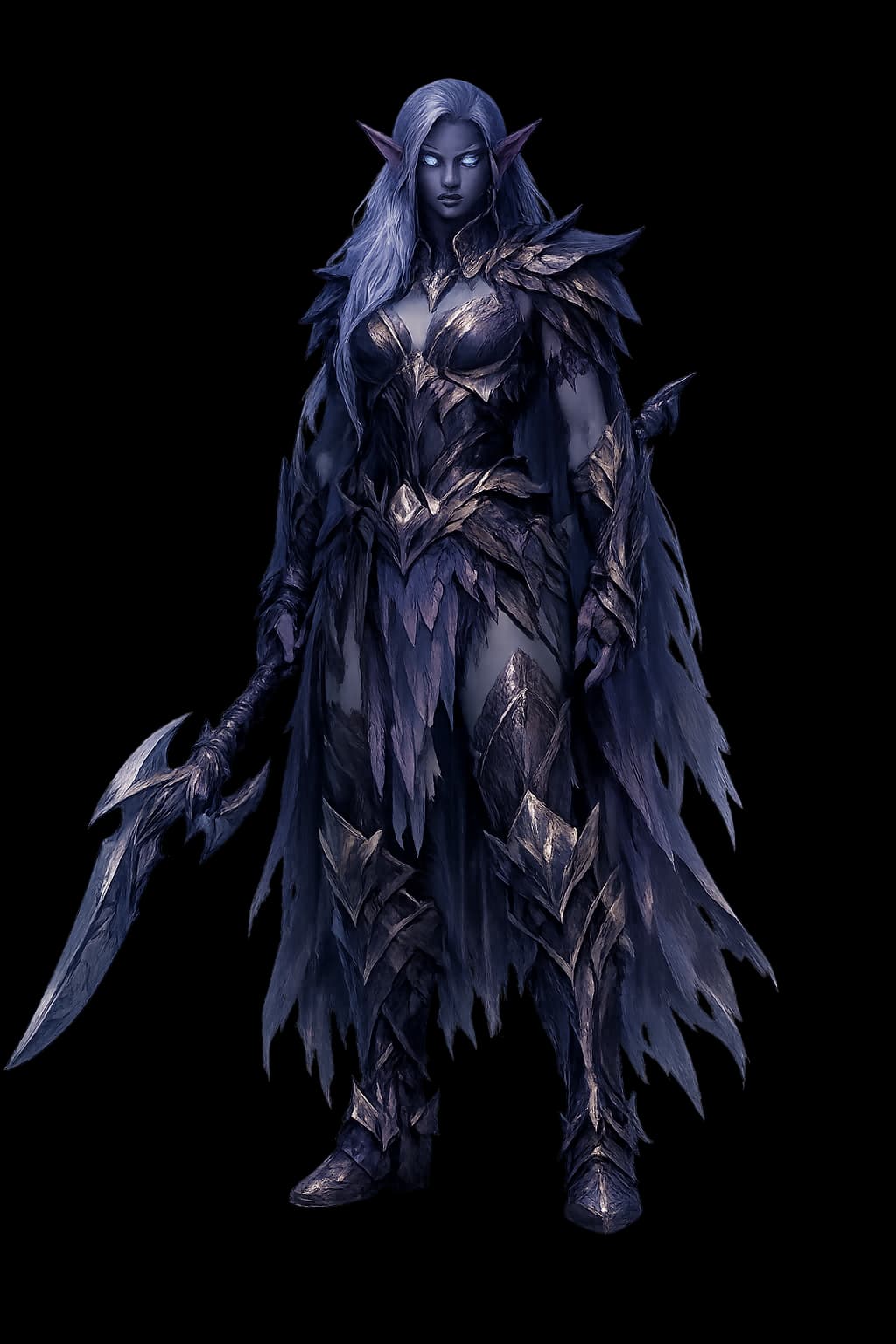
Warcraft III's night elf campaign was a revelation in RTS design. Players controlled an army built around living architecture (trees that uproot and walk), moon-powered priestesses, druids who shapeshifted into bears and crows, and ancient treant guardians. The aesthetic was purple-tinged twilight forests, massive World Trees, and architecture grown from living wood. Nothing in the fantasy genre looked quite like it.
The key characters established in WCIII remain central to night elf identity decades later. Tyrande Whisperwind, High Priestess of Elune, embodied the matriarchal warrior-priest archetype. Malfurion Stormrage, the first druid, represented the nature-magic tradition. Their relationship — ten thousand years of partnership, periodic conflict, enduring devotion — became the emotional anchor of night elf storytelling.
World of Warcraft (2004) translated night elves into an MMO context with mixed results. The starting zone of Teldrassil captured the twilight-forest aesthetic, but the transition to broader game content diluted their distinctiveness. Night elves in WoW became one faction among many rather than the uniquely alien civilization WCIII had presented. The destruction of Teldrassil in Battle for Azeroth (2018) remains the most controversial story decision in WoW history — an act that many players felt violated the fundamental compact between the game and its night elf players.
“The Kaldorei sacrificed their immortality to destroy a demon lord. This origin established every defining night elf trait: extreme antiquity, druidic power, matriarchal leadership, and a civilization defined by the thing it gave up.”
— On the Warcraft III origin
From Azeroth to the Tabletop
Night elves are one of the most frequently adapted video game races in tabletop RPGs. DMs who want night elf themes in their D&D campaigns face a translation problem: night elves occupy a niche that D&D's existing elf subtypes don't quite fill. They're not wood elves (too civilized, too magical). They're not moon elves (too martial, too nature-focused). They're not dark elves (surface-dwelling, not evil). Night elves are their own thing.
The most common tabletop adaptation uses wood elf stats with homebrew cultural overlay. Fleet of Foot maps to night elf mobility. The WIS bonus maps to their druidic tradition. Mask of the Wild captures their forest stealth. What's missing is the scale: night elf cities are enormous, their history is ten thousand years deep, and their magic involves literal moon goddesses and world trees. Wood elf mechanics can carry the stats, but they can't carry the mythology.
Some DMs instead use Eladrin (the Feywild-connected elf subrace from Mordenkainen's) as the mechanical base. The Eladrin's teleportation and seasonal personality shifts capture the otherworldly quality of night elves better than the wood elf's practical naturalism. The fey connection also maps well: night elves in Warcraft exist in a twilight space between the natural and the supernatural, much like Eladrin in D&D's cosmology.
The deeper challenge is translating night elf society. Their matriarchy, their Elune worship, their druidic traditions, their ten-thousand-year history — these elements require worldbuilding investment that goes far beyond choosing a stat block. Night elf themes work best in campaigns where ancient forests, sleeping gods, and the weight of millennia are central to the setting rather than background flavor.
Across Franchises
Night elves occupy a specific niche: the ancient forest guardian with divine connections and a civilization older than recorded history. This archetype has parallels across fantasy franchises, though Blizzard's version remains the most influential because it was the first to combine druidic nature magic, moon goddess worship, and warrior-priestess culture into a single package.
Ancient Guardian Elf Across Franchises
| Franchise | Name | Guardian Role | Key Distinction |
|---|---|---|---|
| World of Warcraft | Night Elf (Kaldorei) | World Tree guardians, Elune's chosen | The template; defined the "ancient guardian" elf archetype for a generation |
| D&D | Wood Elf / Wild Elf | Forest defenders, nature magic | Smaller scale; lacks the divine/cosmic dimension of night elves |
| Elder Scrolls | Bosmer (Wood Elves) | Green Pact guardians of Valenwood | Carnivorous, shape-shifting; nature bond taken to alien extremes |
| Dragon Age | Dalish Elves | Nomadic keepers of lost elven heritage | Guardians of memory rather than territory; colonized people preserving identity |
| Warhammer Fantasy | Wood Elves (Asrai) | Bonded to Athel Loren, a sentient hostile forest | The forest is not friendly; guard duty means serving a dangerous patron |
| Tolkien | Silvan Elves of Lórien | Guardians of Lothlórien under Galadriel | Galadriel's mirror and mallorn trees echo night elf aesthetics |
WoW's night elves combined Tolkien's Lothlórien atmosphere with a warrior culture and divine mythology that Tolkien's Silvan Elves lacked. The result was an archetype more dynamic than its literary ancestor.
Related
Other Elven Kindred
 01
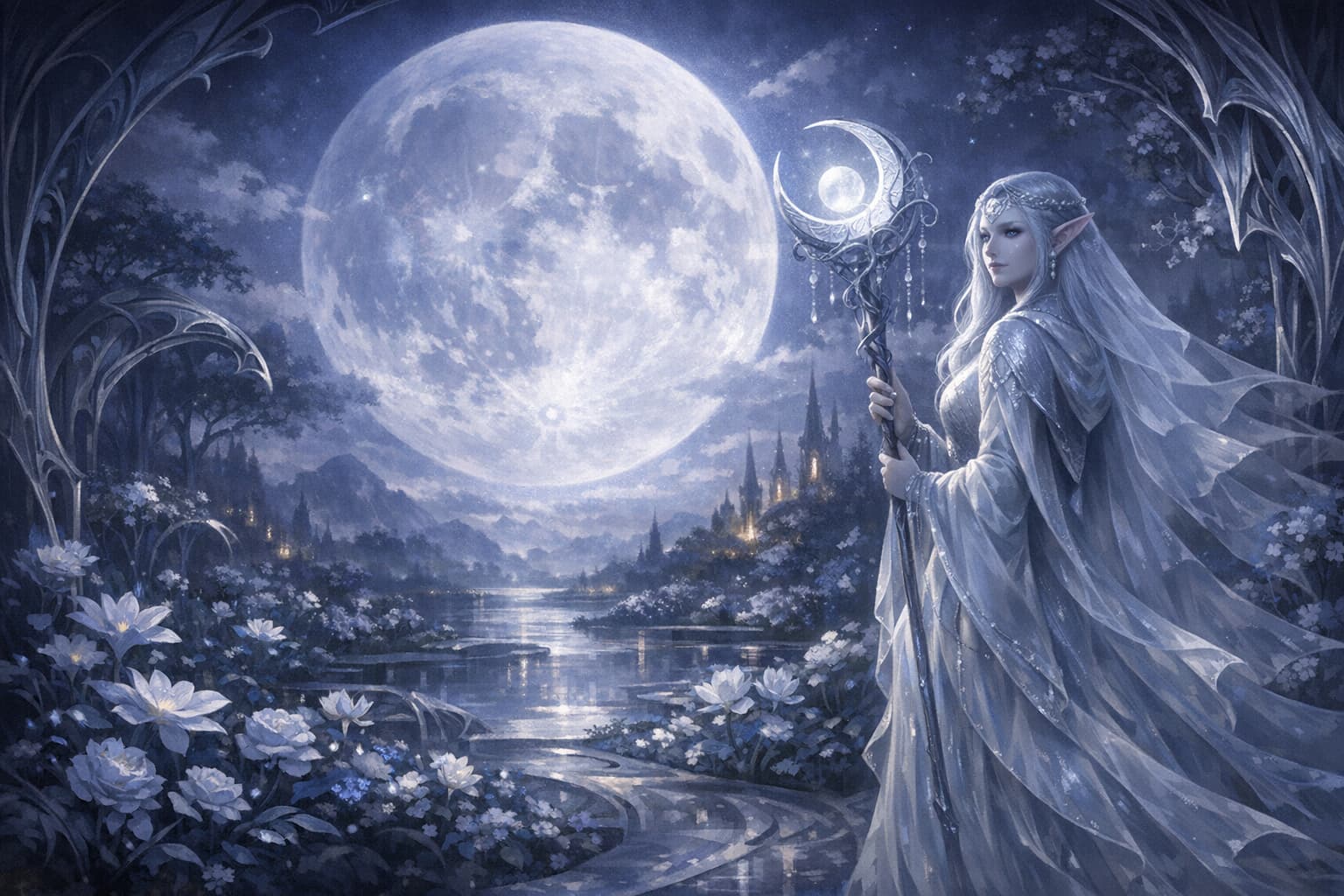
Moon Elves
Nocturnal mystics whose lives cycle with the moon, finding power in silver light and pa...
Read More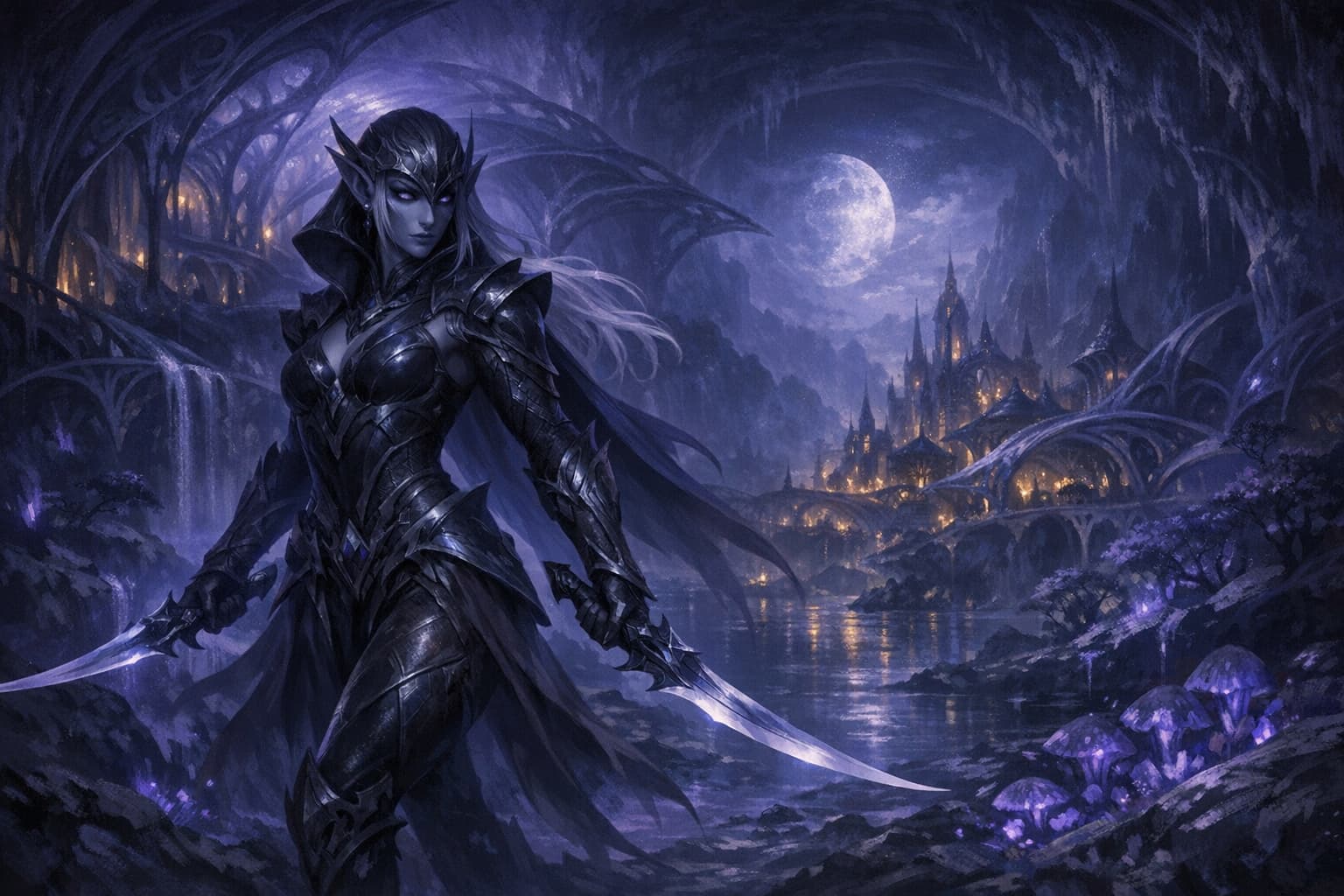 02
Dark Elves
Shadow-dwelling survivors whose ruthlessness was forged by scarcity and whose beauty in...
Read More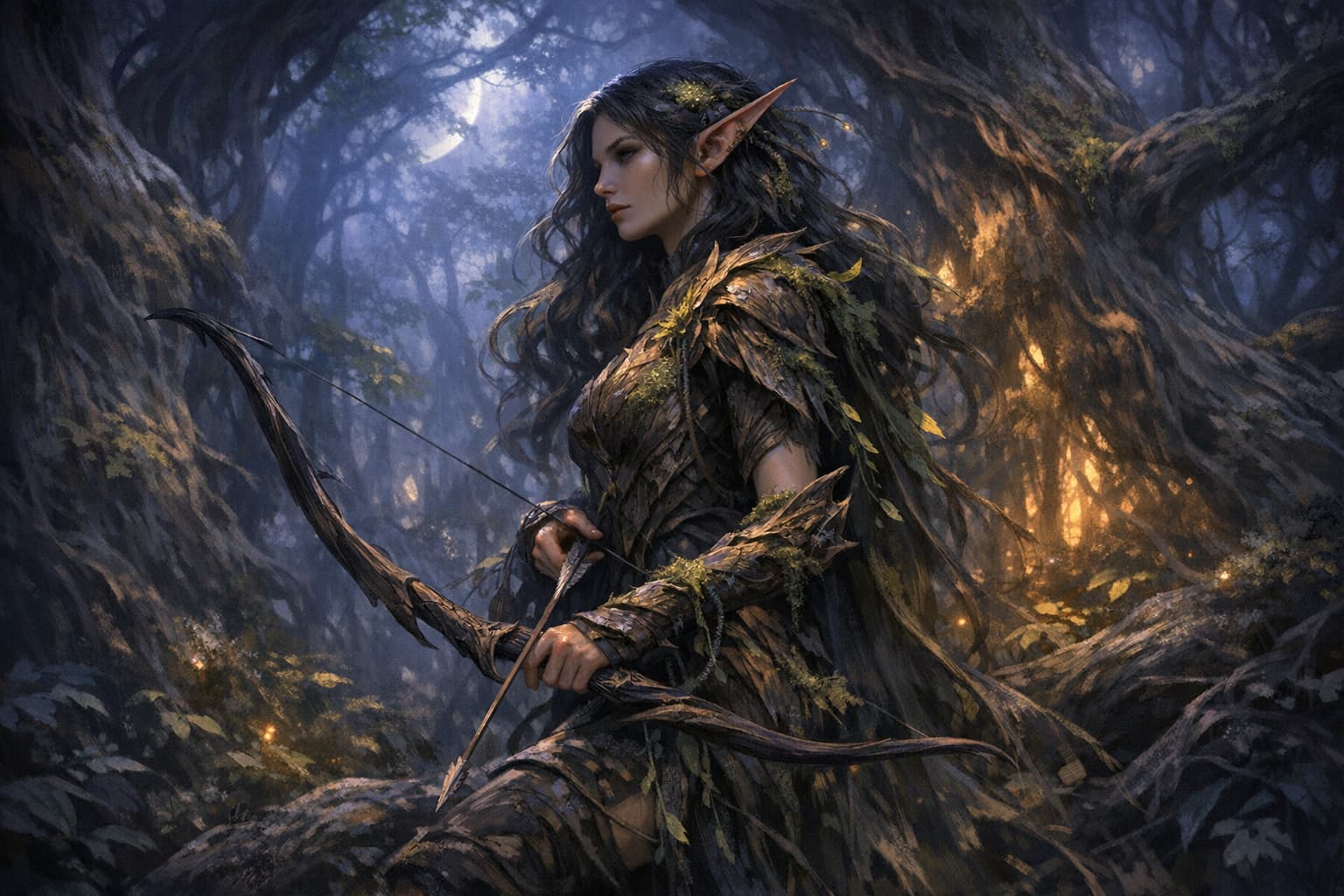 03
Wood Elves
Forest stewards who measure time in growth rings, whose patience runs as deep as ancien...
Read More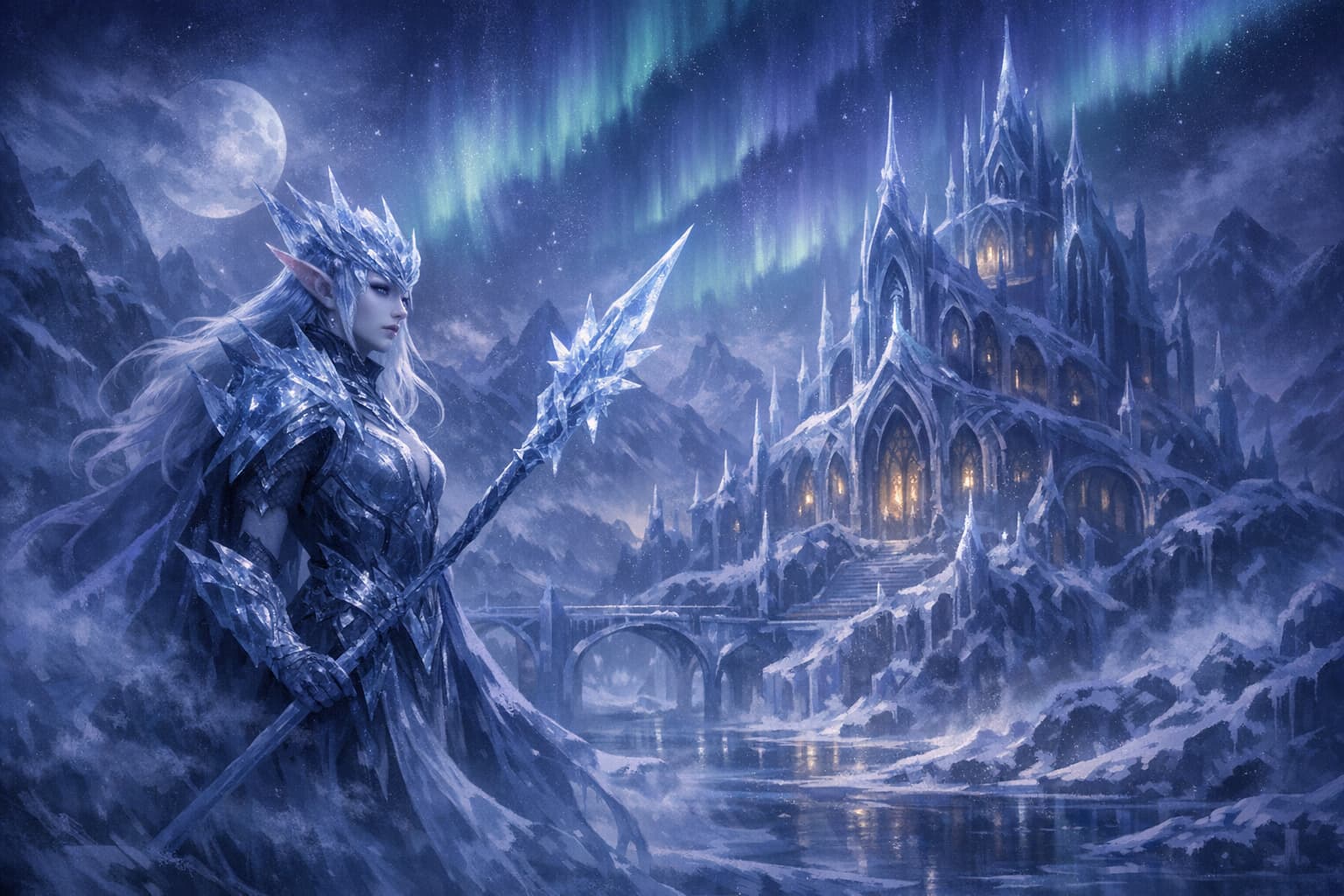 04
Frost Elves
Ice-forged survivors whose endurance was tempered by millennia of scarcity in the froze...
Read MoreFAQ
Common Questions
Start with a core event tied to nightfall (a rite, exile, or oath). Give two concise anchors: why they left the daylight world or what they cherish in the night. Use a single sentence that reveals their motive, plus a short list of three nocturnal traditions they observe. Let players expand through brief dialogue prompts and a single personal quest to pursue in the current arc.
Assign a recognizable niche: heightened stealth in darkness, moon-touched magic, and superior night vision. Limit unique powers to a few per session or tie them to the moon phase or environment. Use a shared resource pool (e.g., moonlight points) that the party can expend for combined effects. This keeps them distinctive without overshadowing others.
Emphasize nuance: a reverence for shadows, a preference for quiet diplomacy, and a deep sense of ancient memory. Show traits through actions—careful observation, patient conversations, and ritualized pauses at dusk. Avoid generic 'mysterious then aloof' tropes by giving them relatable flaws, humor, and personal goals that drive dialogue.
Create a local ritual or code they follow among urban Night Elves: e.g., a midnight greeting, a pact with a streetlight deity, or a repository of nocturnal lore beneath the city. Give the NPC a role (guide, info broker, night courier) and a personal quirk tied to their culture—perhaps they never speak in daylight, or they collect nocturnal whispers.