

Frost Elves
Ice-forged survivors whose endurance was tempered by millennia of scarcity in the frozen wastes
Cold as Culture
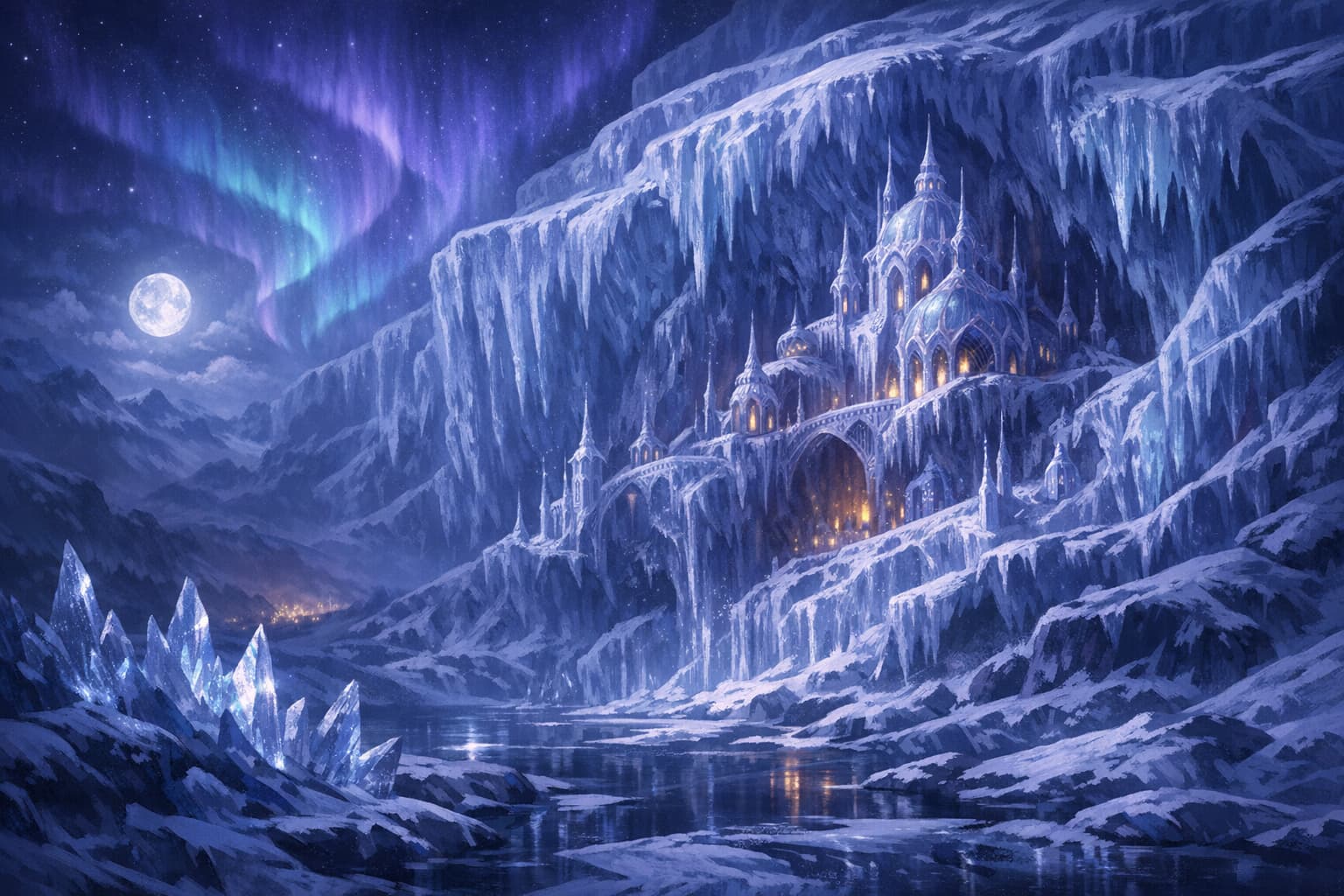
Frost elf culture should emerge from their environment the way wood elf culture emerges from forests. Not just adaptation but integration. The cold isn't hostile to frost elves. It's home. Their comfort zone is what other species consider dangerously harsh.
This creates genuine alienness. Frost elves don't understand why other species find cold unpleasant. They don't instinctively grasp that visitors need warming when they visit. A frost elf host who forgets to provide heat isn't being rude. They're failing to remember that other species work differently. This kind of environmental blindspot creates friction that's more interesting than intentional hostility.
Frost elf aesthetics should reflect cold as beautiful rather than merely tolerable. Their art uses ice, snow, and the aurora. Their music might incorporate the sounds of wind and cracking ice. Their architecture uses cold-weather materials in ways that seem impossible to warmer species. They've had centuries to develop craft traditions suited to their environment.
The seasonal cycle matters more to frost elves than to temperate species. The difference between summer and winter in frozen regions is the difference between manageable difficulty and existential threat. Frost elf cultures develop around these seasonal rhythms in ways that shape everything from governance to magic.
Endurance as Virtue
Frost elf values center on endurance. Not just physical toughness but the capacity to maintain effort through extended difficulty. Their heroes aren't warriors who win single battles. They're leaders who kept communities alive through harsh winters, scouts who maintained watch through blizzards, healers who stretched inadequate supplies to cover everyone.
The endurance emphasis affects how frost elves approach problems. They don't look for quick solutions. They look for sustainable ones. A solution that works brilliantly for one year but creates problems in year two isn't actually a solution. Frost elves think in longer timeframes because their environment punishes short-term thinking.
This can frustrate other species who want immediate action. Frost elves may seem slow, cautious, or passive when they're actually being prudent. They've learned that rushing produces mistakes, mistakes waste resources, and wasted resources kill people. The caution isn't cowardice. It's experience.
This creates different social hierarchies than other elven cultures. Frost elves respect demonstrated reliability over flashy achievement. The elder who's kept their community fed through a dozen hard winters commands more authority than the warrior who won dramatic battles. Past performance predicts future reliability.

Ice Magic and Its Logic
Frost elf magic should connect to their environment in ways that make internal sense. They don't just cast cold spells because cold is their theme. They've developed magical traditions suited to their circumstances over millennia.
Preservation magic makes sense for a culture where storing food through long winters is survival-critical. Frost elves might have developed sophisticated preservation spells that other cultures haven't because other cultures didn't need them as desperately. This creates trade opportunities and diplomatic leverage.
Weather magic matters when weather is the primary threat. Frost elves who can predict or influence blizzards have genuine power. The ability to create shelter during storms, to find paths through whiteout conditions, to keep a community warm when fuel runs low. These aren't flashy combat abilities, but they're more useful in frost elf life than fireball.
Ice construction magic allows building with materials that are abundant in frozen environments. Frost elves might construct with ice in ways that seem like magic to warmer species but are actually skilled application of cold-weather craft knowledge. The distinction between magic and expertise blurs when both produce the same results.
Relations with Snow Elves
The relationship between frost elves and snow elves varies by setting, but they're typically distinct subspecies with different approaches to similar environments.
Another approach: frost elves and snow elves represent historical split, like different human cultures that developed in similar climates but in different regions. They share some traits but have distinct identities. Interactions between them might involve recognition of similarity complicated by different cultural assumptions.
Either approach creates story opportunities. Frost elves and snow elves might compete for limited resources in shared territories. They might maintain ancient alliances or ancient grudges. They might have knowledge that the other subspecies lacks. The relationship provides ready-made NPC dynamics and faction politics.
One approach: frost elves are the main cold-environment culture, and snow elves are a variant or offshoot. Maybe snow elves adapted to different specific conditions, or developed different cultural responses to cold. The subspecies coexist as cousins with different traditions.
Political Structures
Frost elf governance tends toward practical rather than theoretical structures. When survival is constantly at stake, leaders who can't keep people alive lose authority quickly. This creates selection pressure for competent governance that more comfortable cultures don't experience as intensely.
Small communities might govern through consensus among experienced elders. Larger populations might develop councils where different essential functions are represented: food procurement, weather prediction, external relations, conflict resolution. The key is that every leadership position connects to survival functions.
Hierarchy in frost elf society typically reflects demonstrated capability rather than inherited status. The best hunter leads hunting. The best weatherseer advises on travel timing. The best diplomat handles external relations. This meritocratic tendency emerges from environments where incompetent leadership has obvious, deadly consequences.
Factionalism exists but often organizes around practical disagreements rather than ideological ones. Should the community stay in current territory or migrate to better conditions? Should they trade with outsiders or maintain isolation? Should they adopt new techniques or preserve traditional methods? These disputes can be intense, but they're grounded in survival considerations rather than abstract principles.

Playing Frost Elves
Frost elf characters should approach problems with practicality shaped by scarcity conditioning. They notice waste that other characters ignore. They think about resource implications of decisions. They plan for bad outcomes because their culture teaches that bad outcomes are normal.
The endurance mindset affects combat and social situations alike. A frost elf in combat isn't looking for glorious victory. They're looking to win with minimum cost. A frost elf in negotiation isn't interested in dominance. They're interested in sustainable agreements. The measured, efficient approach to everything can seem cold to more emotionally expressive species.
Physical cold tolerance should matter in play. Frost elf characters have advantages in cold environments that other party members lack. They should advocate for winter operations and resist summer travel. They should be comfortable when everyone else is suffering from cold. These advantages and preferences create party dynamics.
The relationship with warmth should be complicated. Frost elves aren't hurt by heat the way other species are hurt by cold, but they're uncomfortable. Warm environments drain them. Tropical settings feel oppressive. The party's frost elf might function fine in a desert, but they won't enjoy it and their magic might be unreliable.
The Homebrew Tradition
Frost elves are not an official D&D race. They have never appeared in a Player's Handbook, Monster Manual, or first-party supplement under that name. Yet "frost elf" is one of the most persistent homebrew concepts in TTRPG history — a subrace that the community has collectively willed into existence through decades of independent creation.
The concept emerges from an obvious gap in official D&D elf taxonomy. There are forest elves, high elves, dark elves, sea elves, and (since 2022) astral elves. But there is no official cold-adapted elf despite D&D having extensive arctic settings (Icewind Dale, the Great Glacier, Frostfell, the Spine of the World). The gap invites filling, and DMs have been filling it since at least the 1980s.
DMsGuild and similar platforms host dozens of frost elf homebrew documents, ranging from simple reskins (wood elf with cold resistance) to elaborate supplements with custom subclasses, spells, and cultural lore. The variation is enormous, but common threads emerge: cold resistance or immunity, ice-themed magic, Wisdom or Constitution bonuses, and cultures built around survival in extreme environments.
Third-party publishers have also contributed. Kobold Press's Midgard setting includes frost elves (the Windrunner Elves of the Northlands) as an established part of their world. Other third-party settings feature similar arctic elf concepts under different names. The archetype is considered generic enough that no single publisher can claim ownership — frost elves belong to the community.
“Frost elves have never appeared in a Player's Handbook. Yet they are one of the most persistent homebrew concepts in TTRPG history — a subrace the community willed into existence through decades of independent creation.”
— On the homebrew tradition
Arctic Elves in Published Material
While "frost elf" has no official D&D stat block, cold-adapted elf concepts appear in published material across multiple editions and systems. The most substantial is D&D 3.5e's Frostburn: Mastering the Perils of Ice and Snow (2004), which provided comprehensive rules for arctic campaigns.
Frostburn introduced environmental rules for extreme cold (frostbite, hypothermia, altitude sickness, whiteout conditions) and cold-themed character options that DMs could apply to any race. The "Frozen Folk" chapter provided templates and guidance for creating cold-adapted versions of standard races, including elves. While it didn't name a "frost elf" subrace, it gave DMs the mechanical tools to build one within the official rules framework.
Pathfinder's Golarion setting includes the Snowcaster Elves — arctic elves who inhabit the Crown of the World, the setting's polar region. Snowcasters are a fully developed culture with published lore: they are nomadic, follow caribou-like herds, practice aurora-themed magic, and maintain a warrior tradition suited to fighting in extreme cold. They represent the most complete "official" arctic elf in any major TTRPG system.
D&D 5e's Rime of the Frostmaiden (2020) provided setting support for arctic elf themes without creating a dedicated subrace. The adventure's Icewind Dale setting, with its supernatural cold, frozen-in-time communities, and aurora-based magic, offers rich material for frost elf campaigns. DMs who want to include frost elves in Rime have a ready-made environment that supports the concept without requiring homebrew mechanics.
Arctic Elf Presence in Published RPG Material
| Source | System | Year | What It Provides |
|---|---|---|---|
| Frostburn | D&D 3.5e | 2004 | Environmental rules, cold-adapted character templates, ice magic |
| Pathfinder: Snowcaster Elves | Pathfinder 1e/2e | 2012+ | Full arctic elf culture with published lore and mechanics |
| Rime of the Frostmaiden | D&D 5e | 2020 | Icewind Dale setting with supernatural cold themes |
| Midgard (Kobold Press) | D&D 5e / PF | 2018 | Windrunner Elves: third-party frost elf with full cultural write-up |
| DMsGuild homebrew | D&D 5e | Ongoing | Dozens of community frost elf stat blocks and supplements |
The gap between "no official frost elf" and "extensive arctic campaign support" suggests that WotC considers the concept viable but not worth a dedicated subrace — perhaps because arctic themes apply to any elf rather than requiring a new one.
Across Franchises
The frost elf concept — the cold-adapted elf shaped by arctic survival — is surprisingly rare as a named archetype across major franchises. Most settings handle cold-adapted elves as regional variants rather than distinct subtypes. The Elder Scrolls' Snow Elves are the major exception, and even they are better known for their tragic fall than their frozen origins.
Cold-Adapted Elf Across Franchises
| Franchise | Name | Relationship to Cold | Key Distinction |
|---|---|---|---|
| D&D (homebrew) | Frost Elf (various) | Community-created cold resistance and ice magic | The most persistent homebrew elf; no canonical version |
| Elder Scrolls | Snow Elf (Falmer) | Ancient arctic civilization, devolved remnants | Defined by tragic fall rather than cold adaptation itself |
| Warhammer Fantasy | No direct equivalent | Kislev borders but no elf presence | Warhammer notably lacks a cold-adapted elf; Kislev is human territory |
| Pathfinder | Snowcaster Elves | Crown of the World nomads, aurora magic | The most fully realized "official" frost elf in any major system |
| D&D 3.5e (Frostburn) | Arctic Elf (template) | Environmental adaptation rules, not a named subrace | Mechanical framework without dedicated identity |
The absence of frost elves from most major franchises is itself notable. Arctic environments in fantasy tend to belong to humans, dwarves, and giants — the elf's association with temperate forests and warm magic resists cold-weather adaptation in most designers' imaginations.
Related
Other Elven Kindred
 01
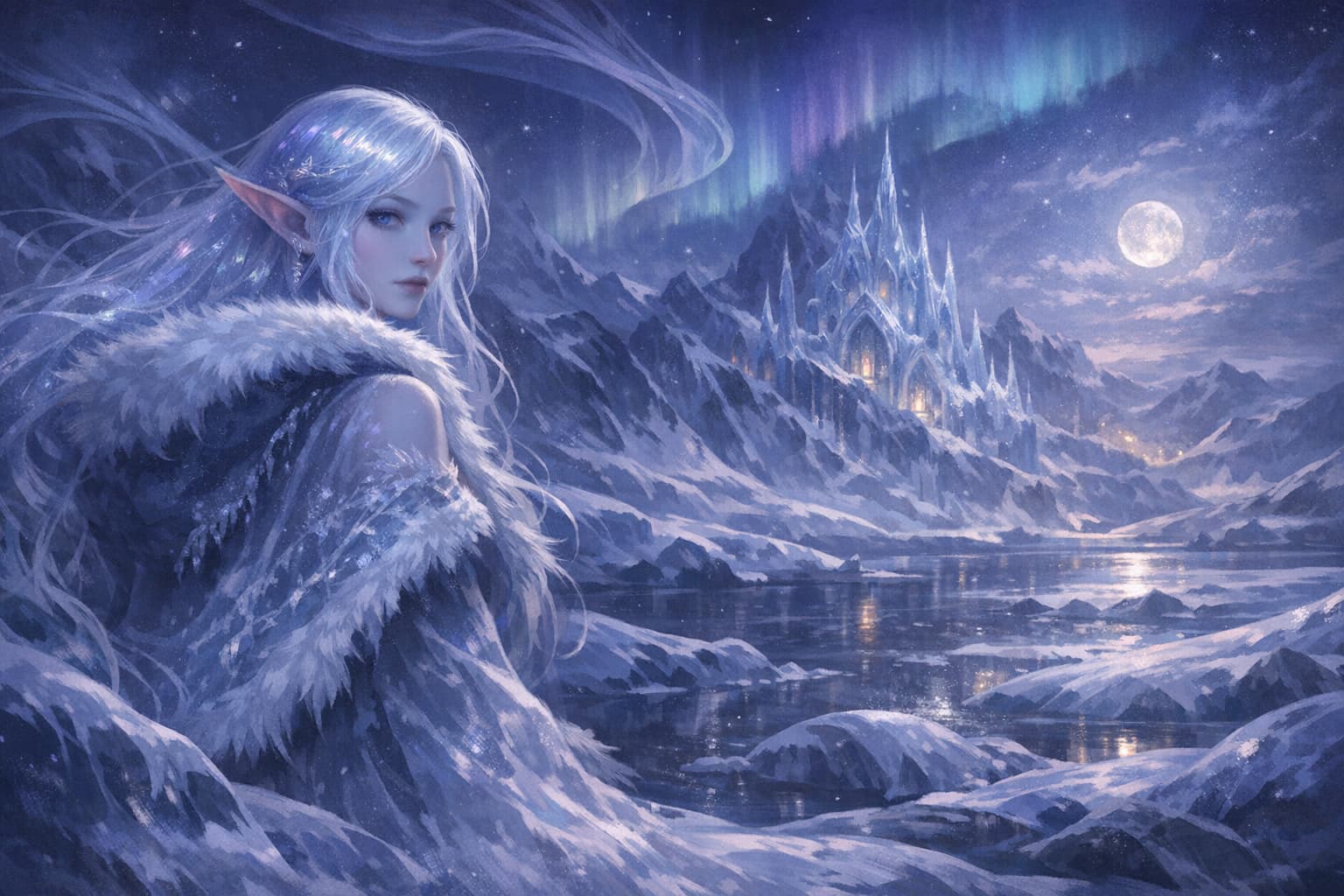
Snow Elves
Hidden kingdoms of eternal ice where isolation became both shield and prison across the...
Read More 02
Night Elves
Ancient guardians of dark places whose vigilance spans millennia and whose roots run de...
Read More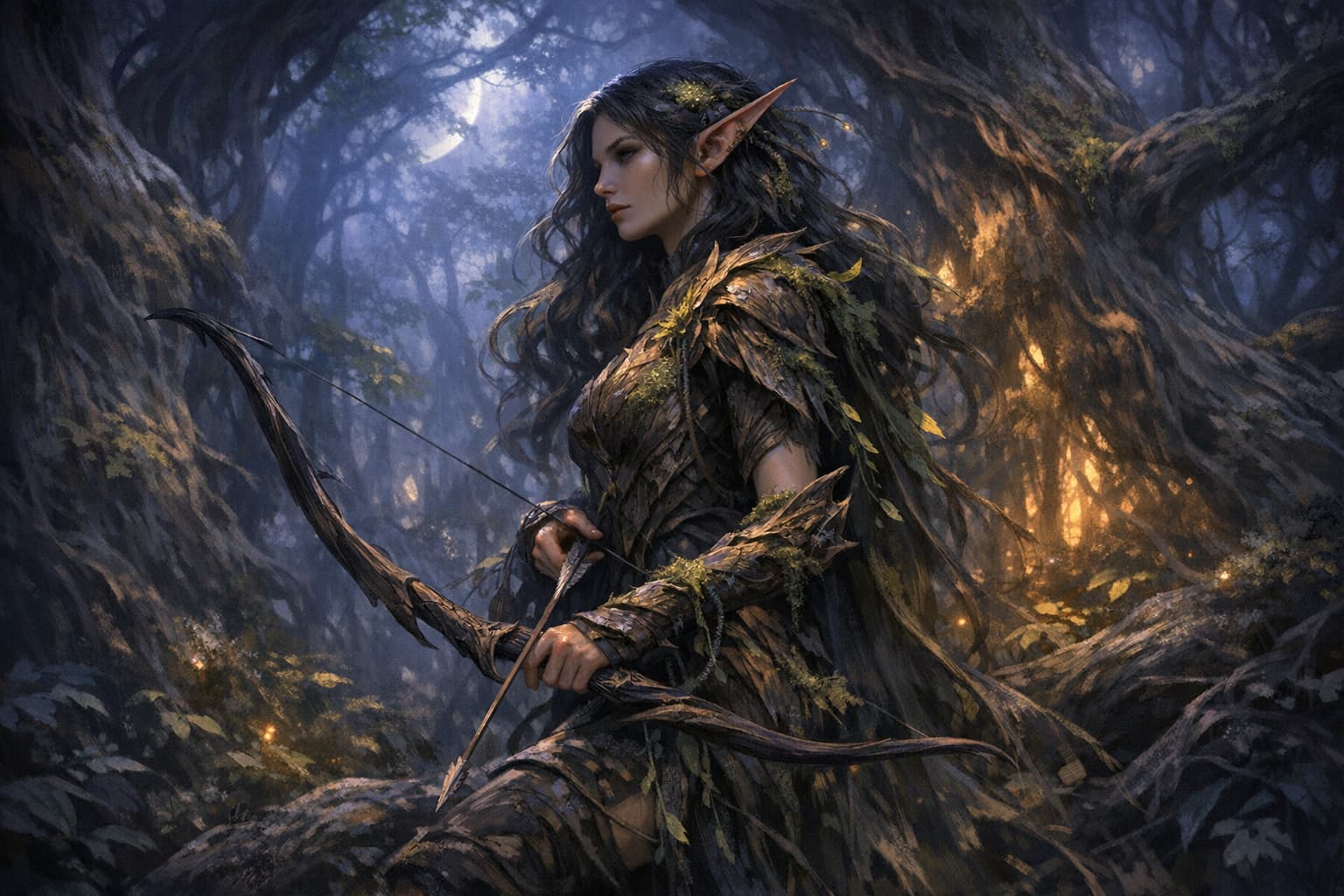 03
Wood Elves
Forest stewards who measure time in growth rings, whose patience runs as deep as ancien...
Read More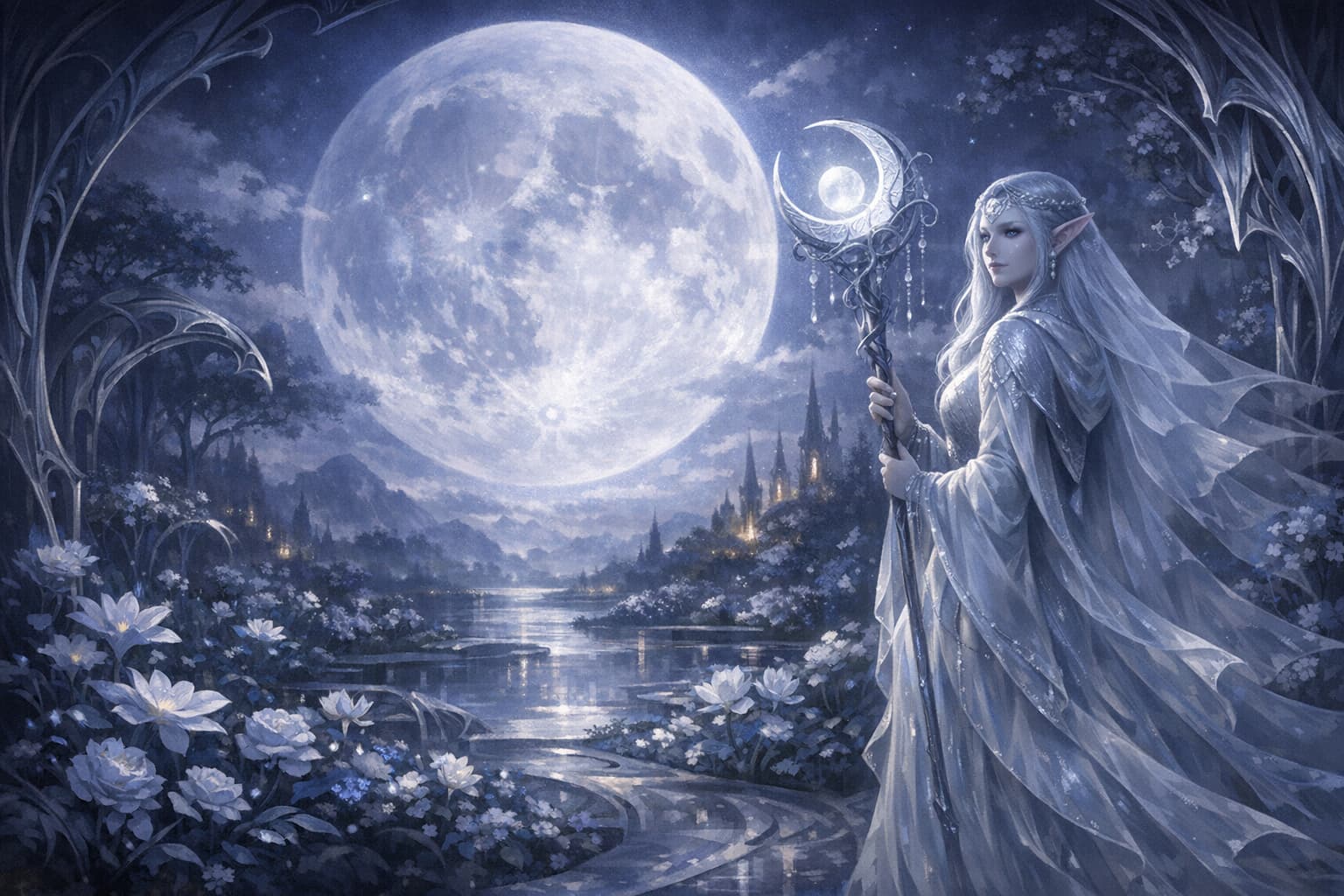 04
Moon Elves
Nocturnal mystics whose lives cycle with the moon, finding power in silver light and pa...
Read MoreFAQ
Common Questions
Core traits typically include cold-resilience, frost-touched magic, and a measured, disciplined demeanor. When designing abilities, lean into ice magic, endurance in extreme cold, and utilitarian senses (tracking, survival). In party dynamics, frost elves excel as skirmishers or support casters, offering crowd control and protective buffs. Choose strengths over flashy tricks to fit their stoic culture, and pick a personality that complements the party's needs—calm tactician or icy-liberator who motivates teammates.
Give your frost elf a pivotal event tied to their homeland (e.g., a migration, a famine ritual, or a treaty with frost giants). Use a single motif—ice, wind, or memory—to connect their past to present goals. Include a personal quest (quest for a lost artifact, seeking a glacial shrine) and a few core relationships (mentor, rival). Keep the backstory concise and malleable so the GM can weave it into sessions without heavy exposition.
Translate frost elf traits into tangible mechanics: resistance to cold, bonus to cold-related spells, and free mobility in icy terrains. Use a limited-use ice magic pool or situational buffs (advantage on stealth in snow, enhanced tracking in frost). Include a cultural drawback, like distrust of heat or coupled obligations (honor-bound duties). Ensure these traits scale with level so they remain balanced and flavorful rather than disruptive.
Frost elf culture often values restraint, ritual, and collective well-being. Roleplay cues include measured speech, precise honor conventions, and ritualistic responses to conflict. In social interactions, they may defer to elders or mediators, resist bold risks, and emphasize loyalty and history. Use subtle cultural markers: a specific greeting, a frost sigil, or a ritual during meals. These cues help others read the character without heavy exposition.