
Snow Elves
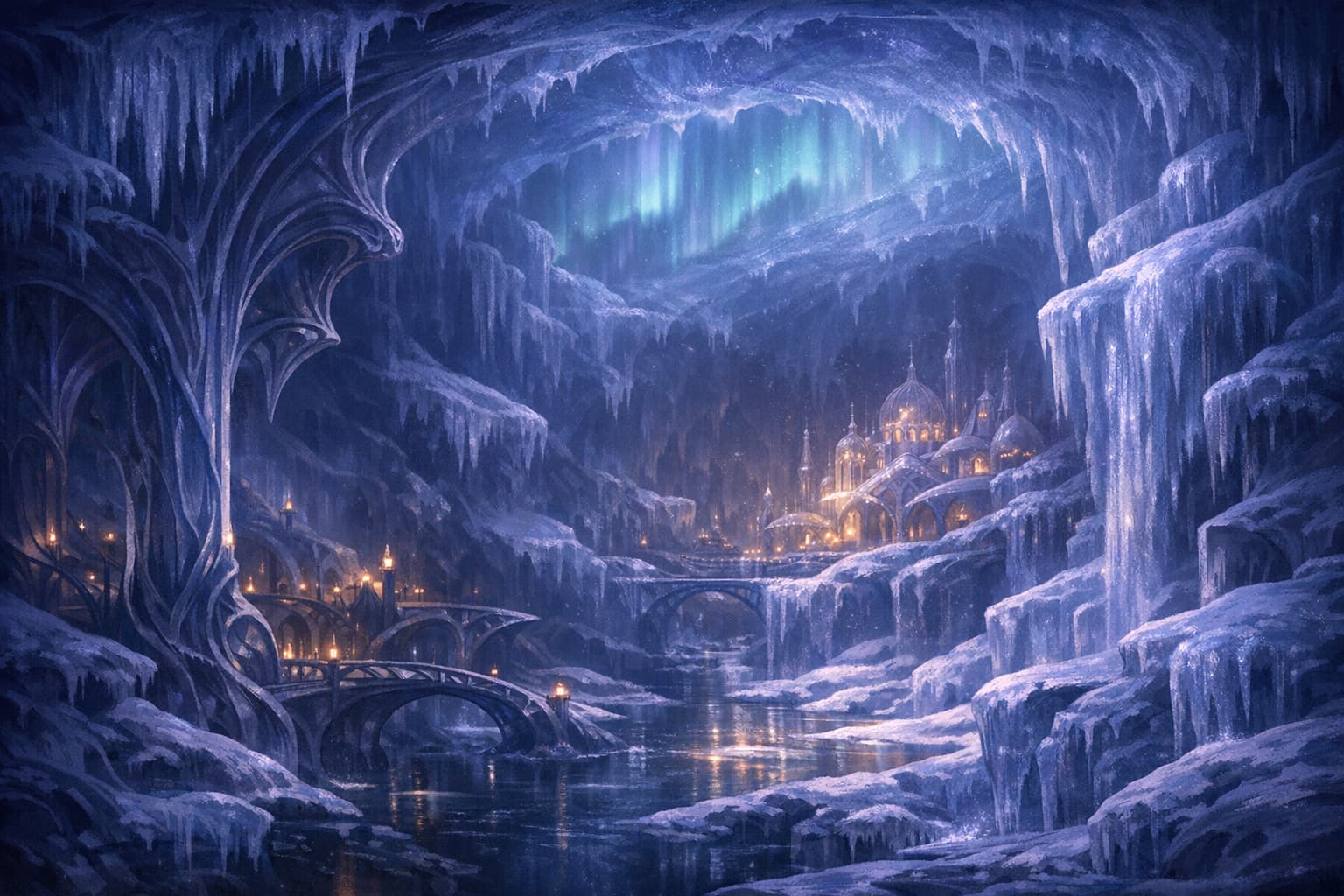
Hidden kingdoms of eternal ice where isolation became both shield and prison across the ages
The Falmer Warning
The Elder Scrolls introduced the most memorable snow elf treatment: the Falmer, a once-great civilization reduced to blind, corrupted creatures living in caves. This tragic arc works because it shows what happens when a proud, isolationist civilization encounters a threat it can't handle alone.
This doesn't mean your snow elves have to be corrupted or fallen. But the Falmer demonstrate that snow elf isolation creates vulnerability. A civilization that doesn't maintain relationships with the outside world has no allies to call on when crisis comes. The same isolation that protected them becomes the reason no one knows or cares when they're in trouble.
The Falmer provide a template for snow elf stories that isn't about current power but about fallen glory. Snow elves who were once greater than they are now. Ruins that hint at past achievements. A species dealing with the long aftermath of a catastrophe that happened generations ago.

Polar Extremity
Snow elf environments should be genuinely extreme. Not just cold but cold in ways that would kill other species quickly. The polar night that lasts months. The temperatures that freeze exposed flesh in minutes. The storms that make travel impossible for weeks at a time.
This extremity explains why snow elves are isolated. Other species simply can't reach them or survive in their territories. It also explains snow elf abilities. They've adapted to conditions that push the limits of biological possibility. Their cold tolerance isn't just resistance. It's fundamental difference in how their bodies work.
The extremity creates adventure design considerations. Parties that enter snow elf territory need magical protection, special equipment, or snow elf guides. The environment is as much a challenge as any monster. Resource management becomes critical when being outside for too long means death.
Society of Survivors
Snow elf culture should reflect generations of living in the harshest possible conditions. Everything about them is about survival. Their art serves survival. Their religion serves survival. Their politics serve survival. Nothing exists purely for luxury or entertainment.
Social structures in snow elf communities tend toward the communal. Individual survival in extreme environments is nearly impossible. Snow elves learned early that they either support each other or die separately. This creates egalitarian tendencies born from necessity rather than ideology.
Leadership in snow elf communities typically selects for competence rather than lineage. When bad leadership means people freeze to death, communities quickly develop methods for identifying and promoting capable leaders. Political maneuvering for personal power is dangerous when the consequences of bad governance are so immediate and lethal.
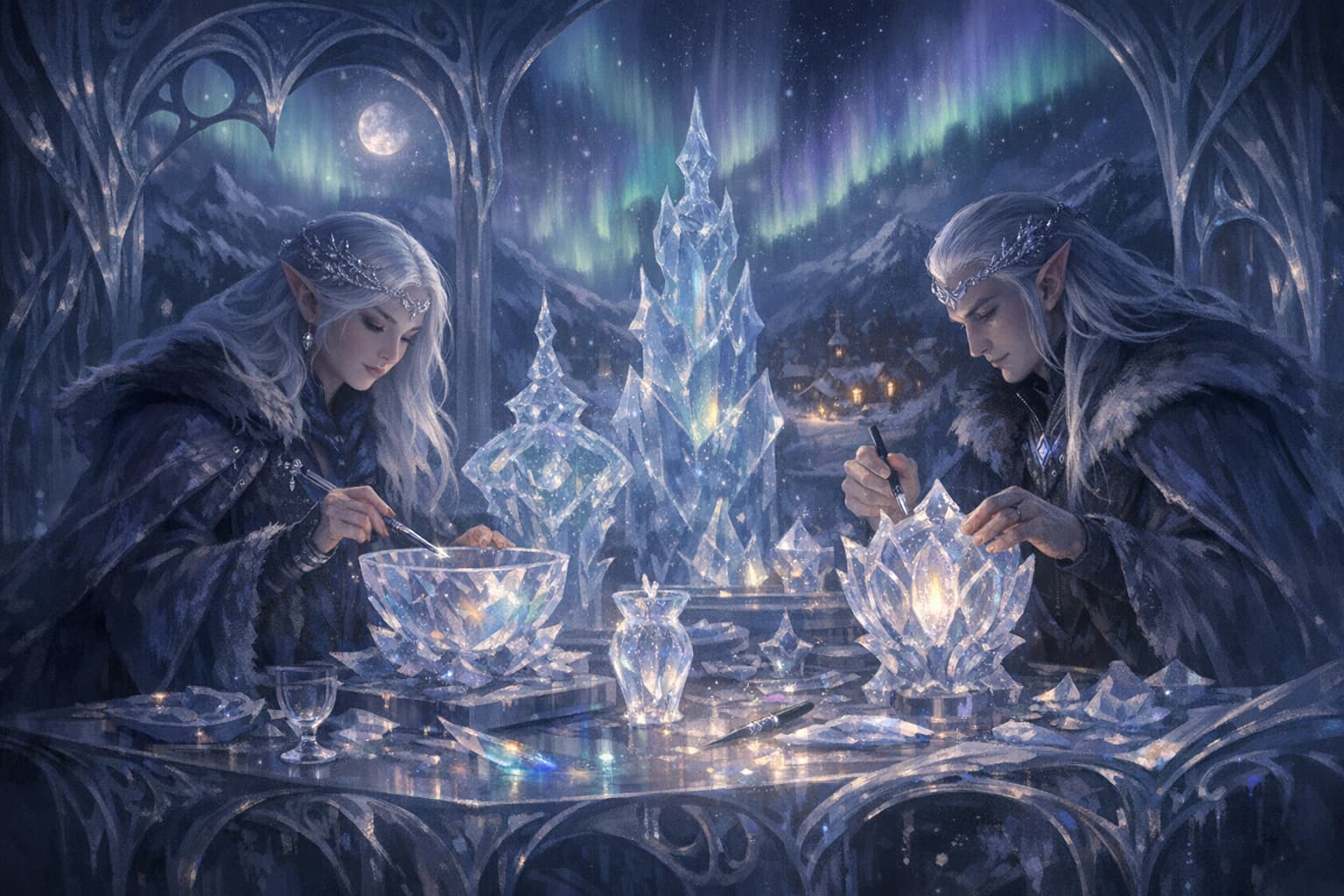
This doesn't mean snow elves are grim or joyless. It means their joy connects to survival. Celebrations of successful hunts. Festivals marking the return of the sun after polar night. Art that depicts the beauty of ice formations that also provide shelter. The beauty and the function are inseparable.
Magic of Deep Cold
Snow elf magic should connect to the extreme cold of their environment. Not just ice spells but magic that manipulates the unique phenomena of polar regions: aurora borealis, magnetic disturbances, the strange acoustics of frozen air.
The polar night creates different magical possibilities than normal night. Months of darkness develop different magical traditions than cultures with daily day-night cycles. Snow elf magic might be phase-based like moon elf magic but on a seasonal rather than monthly scale.
Cold preservation creates unique magical opportunities. Things frozen in snow elf territories stay frozen for millennia. Ancient artifacts, preserved bodies, frozen moments of time. Snow elf magic might specialize in preservation, stasis, and the manipulation of time through cold.
Playing Snow Elves
Snow elf characters need reasons to leave their hidden kingdoms and work with outsiders. The isolation that defines their culture makes this difficult by design.
One option: the character was exiled, either justly or unjustly. They can't return home and must survive among species they barely understand. This creates character arcs about adaptation and about possibly earning return someday.
Another option: the character is an official representative sent to assess the outside world. Snow elf isolation may be ending, either by choice or necessity. The character gathers information about what's changed since their people withdrew.
Either option should emphasize the snow elf's alienation from normal society. They don't understand customs that other species take for granted. They're surprised by things that happened while their people were isolated. They bring perspectives shaped by extreme conditions that don't apply in temperate climates.
The Falmer Legacy
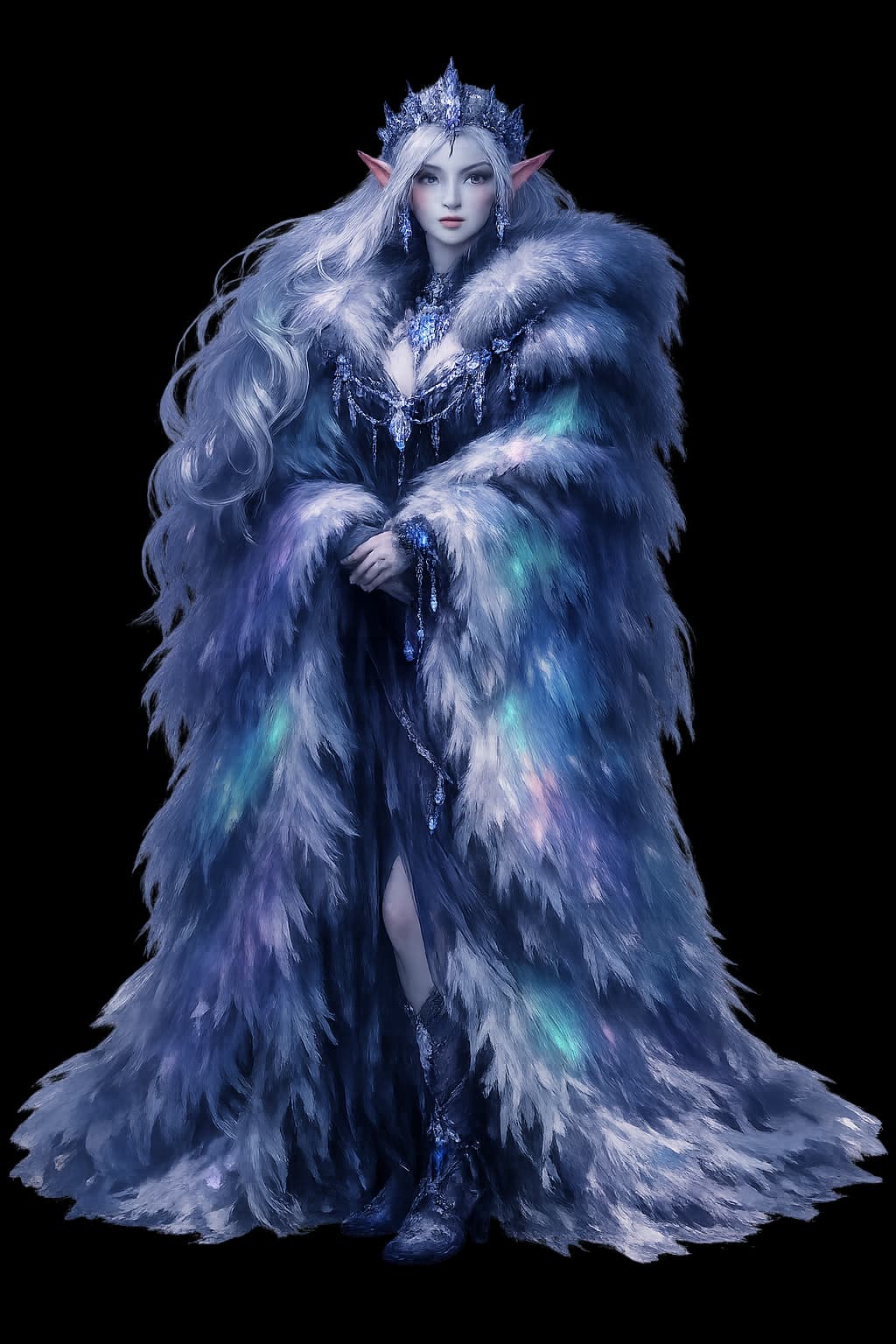
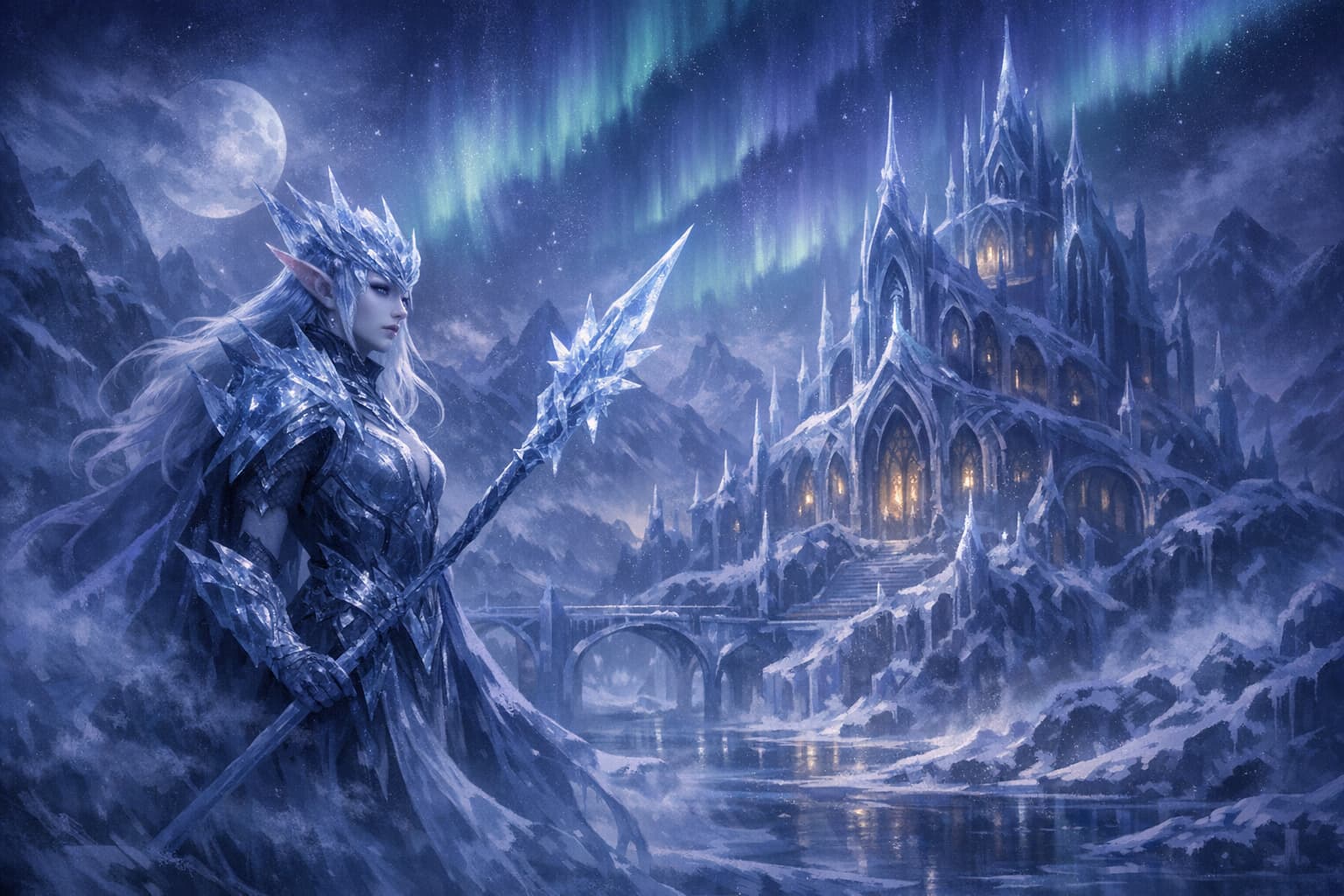
The most influential snow elf in modern fantasy isn't from D&D — it's from Bethesda's Elder Scrolls. The Snow Elves (also called Falmer in their uncorrupted form) were one of the original Merethic Era elven civilizations of Tamriel. They built a sophisticated society in Skyrim's frozen north, complete with crystalline architecture, Auri-El worship, and magical traditions adapted to arctic conditions. Then the Nords came.
The Night of Tears — when the Nords attacked the Snow Elf city of Saarthal — began a conflict that ended with the Snow Elves' near-total destruction. The survivors fled underground to the Dwemer (Deep Elves), who offered shelter at a terrible price. The Dwemer fed them toxic fungi that blinded them, then enslaved them for generations. Over millennia, the Snow Elves devolved into the Falmer: blind, feral, chitinous creatures that haunt Skyrim's underground ruins. The fall from enlightened civilization to bestial horror is one of the most tragic arcs in fantasy gaming.
The Dawnguard DLC (2012) introduced Knight-Paladin Gelebor, the last uncorrupted Snow Elf. His existence transforms the Falmer from a cautionary footnote into a living tragedy. Gelebor remembers his people as they were. He has spent thousands of years tending a forgotten shrine, watching his civilization's remnants crawl through darkness below. His quiet grief is more devastating than any dramatic monologue.
Gelebor also demonstrates what makes the Snow Elf archetype compelling: the survivor who carries a civilization's memory alone. This is a powerful RPG character template. A snow elf PC or NPC who is the last of their kind, or one of very few, carries inherent dramatic weight. They don't need a complex backstory. Their existence is the backstory.
“Knight-Paladin Gelebor has spent thousands of years tending a forgotten shrine, watching his civilization's remnants crawl through darkness below. His quiet grief is more devastating than any dramatic monologue.”
— On the Elder Scrolls' last Snow Elf
Tabletop Adaptations
Snow elves have no official D&D stat block, but arctic elf concepts appear in published material across multiple editions. The most significant is Frostburn: Mastering the Perils of Ice and Snow (2004), a 3.5e supplement that provided extensive rules for arctic campaigns, including cold-adapted races, environmental hazards, and freezing-weather spellcasting.
Frostburn didn't include a "snow elf" subrace specifically, but it provided the mechanical infrastructure for building one: cold resistance templates, frostfell terrain rules, and magic items suited to polar environments. DMs running arctic campaigns have used Frostburn's framework to create custom snow elf stat blocks for nearly two decades.
Icewind Dale — both the Forgotten Realms location and the CRPG series — provides the most natural D&D setting for snow elf concepts. The region's extreme cold, isolation, and ancient mysteries map directly to snow elf themes. The Rime of the Frostmaiden adventure (2020) expanded the Icewind Dale setting with supernatural cold, aurora-based magic, and frozen-in-time civilizations that echo the snow elf archetype.
For DMs building snow elf content from scratch, the most effective approach combines wood elf or high elf stats with environmental adaptation. Cold resistance (similar to the Goliath's Mountain Born trait) and a modified Mask of the Wild (applying to snowy terrain rather than vegetation) capture the mechanical feel without requiring homebrew stat blocks. The heavy lifting is cultural rather than mechanical: building a convincing arctic civilization with its own history, religion, and relationship to the frozen environment.
Across Franchises
The snow elf archetype — the arctic-adapted elf defined by isolation, endurance, and the tension between hidden civilization and the frozen wastes — appears in several franchises. The Elder Scrolls' Falmer dominates the conversation, but other implementations offer distinct approaches to the same concept.
Arctic Elf Archetype Across Franchises
| Franchise | Name | Arctic Adaptation | Key Distinction |
|---|---|---|---|
| Elder Scrolls | Snow Elf / Falmer | Crystalline civilization, Auri-El worship, devolved remnants | The definitive version; tragic fall narrative sets the standard |
| D&D (3.5e) | Arctic Elf (Frostburn) | Cold-adapted environmental rules, no dedicated subrace | Framework for building snow elves, not a complete implementation |
| D&D (5e) | Icewind Dale setting (Rime) | Supernatural cold, aurora magic, frozen civilizations | Setting-level support for arctic elf themes without a dedicated race |
| Pathfinder | Snowcaster Elves | Golarion arctic elves, Crown of the World region | Official arctic elf option; cold-adapted cultural traditions |
| Homebrew tradition | Frost/Snow/Ice Elf variants | Community-created cold resistance, ice magic | Persistent TTRPG homebrew concept spanning decades of community content |
Pathfinder's Snowcaster Elves are the closest thing to an "official" tabletop snow elf — a fully developed arctic elf culture with published lore, though they remain niche compared to core elf subtypes.
Subtypes
Other Elven Kindred
 01
Frost Elves
Ice-forged survivors whose endurance was tempered by millennia of scarcity in the froze...
Read More 02
Moon Elves
Nocturnal mystics whose lives cycle with the moon, finding power in silver light and pa...
Read More 03
Wood Elves
Forest stewards who measure time in growth rings, whose patience runs as deep as ancien...
Read More 04
Night Elves
Ancient guardians of dark places whose vigilance spans millennia and whose roots run de...
Read MoreFAQ
Common Questions
Give Snow Elves a high Dexterity and Wisdom to reflect agility and perceptiveness in harsh environments. Include a cold resistance trait, proficiency in survival and nature, and a unique ability like Froststep (short-range teleport across snow and ice) or Glacial Vision (advantage on tracking in snowy terrain). Tie abilities to lore (e.g., wind-sung songs that calm blizzards) so the mechanics feel thematic, not gimmicky. Balance by limiting uses per long rest and ensure weaknesses (e.g., vulnerability to heat or iron).
Use small, personal stakes: a forbidden romance with a rival clan, a vow to guard a sacred ice spring, or exile for a failed rite. Tie their past to polar geography (lost clan vault, weathered pilgrimage route) and a mystic relic. Make hooks personal (family heirloom, childhood friend) and scalable for party involvement (teaming up with the party to recover a relic or defend a settlement).
Develop a few clear cultural pillars: reverence for winter, communal decision-making, and precision in craftsmanship. Use distinctive rituals (ice-carving, wind-writing, aurora omens) and subtle speech patterns (allusions to constellations, measured cadence). Show differences between clans—some egalitarian, others hierarchical—so you can pick a niche that fits a character while avoiding clichés.
Traits: disciplined, stoic, patient, and empathetic toward the vulnerable. They prize endurance and careful planning. In-game, they may speak softly, wait for subtle cues, and offer cautious optimism. Use moments of warmth to contrast their chill demeanor—showing humor or generosity when conditions allow. This creates memorable, multi-dimensional characters.