
Half Elves
Children of two worlds who belong fully to neither, carrying the gifts and burdens of both
The Lifespan Problem
Half-elves typically live two to three times as long as humans but far shorter than full elves. This sounds like a reasonable middle ground until you think through the implications.
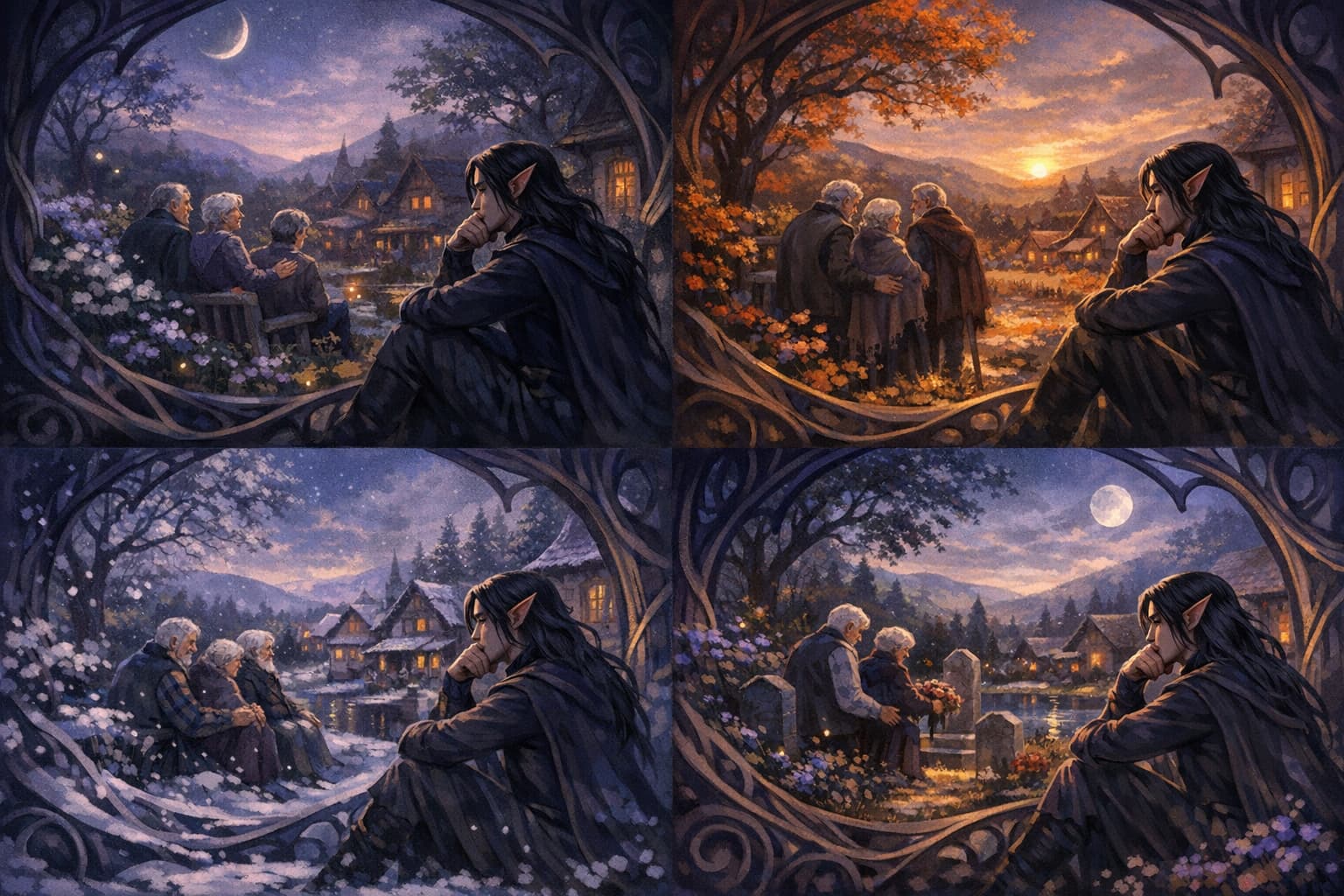
A half-elf born to a human mother watches that mother age and die while the half-elf is still young by elven standards. They might have a human father who remarries, has more children, grows old. The half-elf attends their father's funeral, their stepmother's funeral, their half-siblings' funerals. They might attend the funerals of their half-siblings' children. All while the half-elf is, biologically, somewhere in late middle age.
Now consider the elven parent. If the half-elf was raised by their elven side, they spent their childhood in a household where their parent's friends remember events from before human kingdoms existed. Stories that sound like ancient history to the half-elf are personal anecdotes to the elves around them. The half-elf will die while their elven parent is still alive. Their parent will attend their funeral.
This isn't just sad. It's disorienting. Half-elves experience time differently than anyone around them. Too slow for humans, too fast for elves. This temporal displacement should shape their psychology in ways that go beyond "they're patient" or "they live in the moment."
Neither Fish Nor Fowl
Human societies tend to view half-elves as elves. Elven societies tend to view half-elves as humans. Neither is quite accurate, but both perspectives shape how half-elves navigate social situations.
Among elves, a half-elf carries human roughness. They age visibly. They make mistakes that a properly raised elf wouldn't make. Their cultural references are wrong, their timescales are off, their very presence reminds the community of messy entanglements with shorter-lived species. The half-elf who wants to fit in among elves fights against being seen as temporary, crude, fundamentally lesser.
The interesting half-elf characters don't pick one side. They navigate between both, developing fluency in contexts that each require different presentations. The half-elf diplomat who speaks differently to human merchants than to elven nobles. The half-elf adventurer who's learned which aspects of their heritage to emphasize in which situations. This isn't deception. It's survival.
Among humans, a half-elf carries elven mystique. They're more graceful, longer-lived, possibly magical. Human communities might treat them with deference, suspicion, or fascination depending on how that community views elves generally. The half-elf who wants to fit in among humans fights against being seen as exotic, different, other.
The Diplomacy Trap
Settings often make half-elves natural diplomats and mediators. This makes sense given their cross-cultural experience. It also becomes a trap when it's the only role available to them.
Not every half-elf wants to spend their life bridging gaps between communities. Some resent being expected to translate, mediate, and explain. They didn't ask to be born between cultures. Why should that birth accident define their entire career path?
The more interesting half-elf characters push against the diplomat archetype. The half-elf fighter who refuses to discuss cultural politics. The half-elf wizard who studies magic for its own sake rather than as a bridge between elven and human magical traditions. The half-elf who's simply tired of being everyone's go-between and wants to pursue their own goals for once.
When you do play the diplomat role, make it complicated. The half-elf who understands both sides doesn't automatically sympathize with both sides. They might understand exactly why the elves are being unreasonable and have no patience left for explaining it gently. They might leverage their position for personal advantage rather than noble bridge-building. Access to both cultures is power. Power gets used in interesting ways.
Biology as Identity
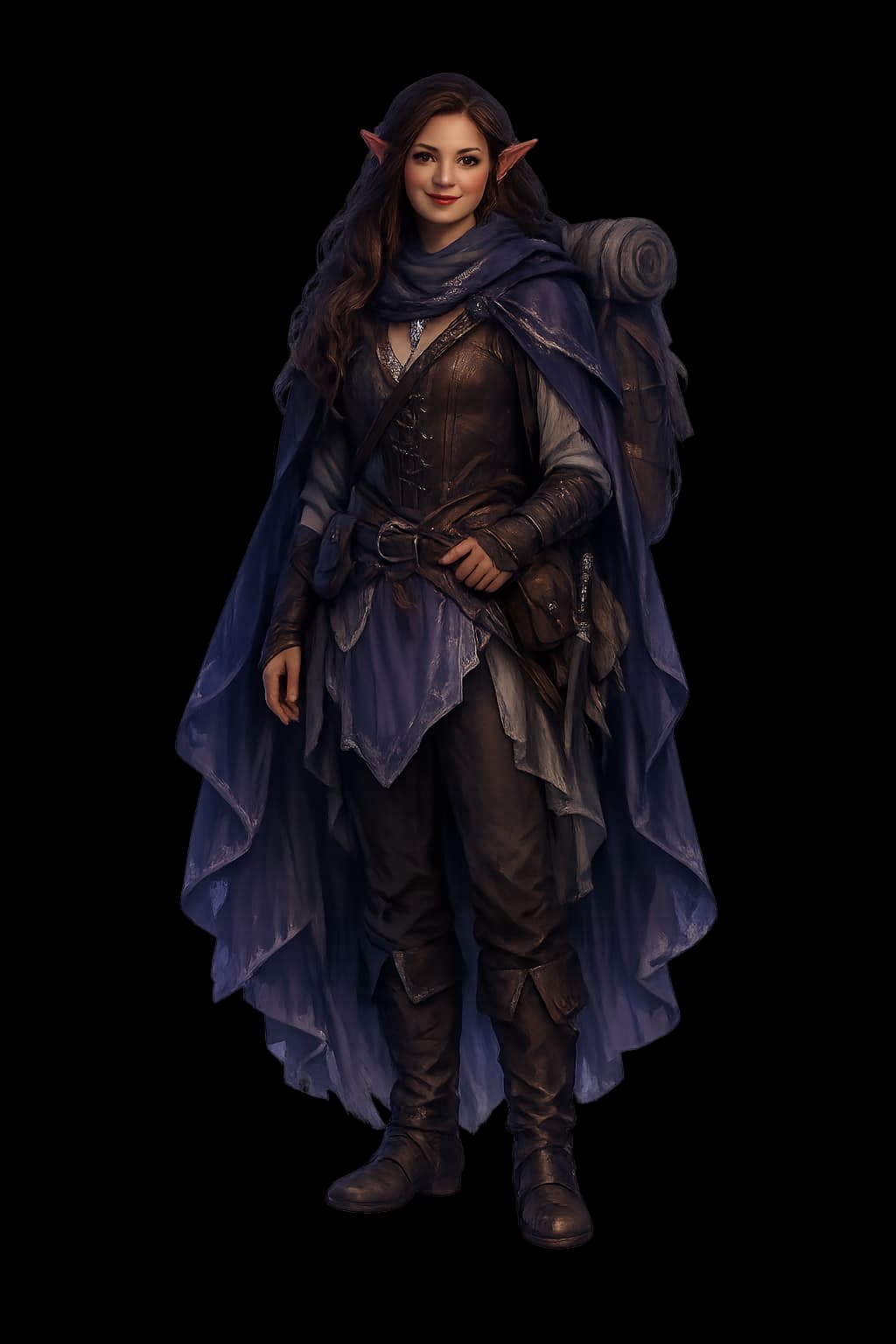
Half-elves' physical nature matters beyond stat bonuses. They look almost human and almost elven without fully passing as either. The ears are slightly pointed but not as pointed as a full elf's. The features suggest elven ancestry but human observers can tell something's different. Elven observers definitely notice the human elements.
Some half-elves lean into one heritage through dress, behavior, and presentation. They emphasize human clothing and mannerisms to pass better among humans, or adopt elven aesthetics to claim that identity. Others develop distinctive half-elven styles that deliberately split the difference or reject both templates entirely.
The physical in-between-ness should come up in play. The moment when a half-elf realizes they're being categorized. The choice about how to present in a new city. The irritation when someone makes assumptions based on appearance rather than asking.
This perpetual almost-ness affects how half-elves move through the world. They can't fully hide either heritage. Every new person they meet makes an assessment: more human or more elf? That assessment shapes the interaction before the half-elf says a word.
Family Complications
Half-elves exist because an elf and a human had a child. This means dealing with the mechanics of that relationship and its aftermath.
The human parent aged while the elven parent didn't. If they stayed together, the human partner grew old while the elf remained eternally middle-aged. If they separated, the half-elf grew up navigating two households with radically different temporal rhythms. Either scenario creates family dynamics unlike anything full humans or full elves experience.
Siblings complicate things further. A half-elf might have full human half-siblings who are decades younger biologically but appear much older. They might have full elven half-siblings who are centuries older but appear the same age. Family reunions get weird when your younger brother looks like he could be your grandfather.
Extended family on both sides presents its own challenges. Human relatives might be gone within the half-elf's lifetime, leaving them the last living member of that side of the family. Elven relatives might still be around but treat the half-elf as a temporary houseguest in the long sweep of family history.
The Community Question
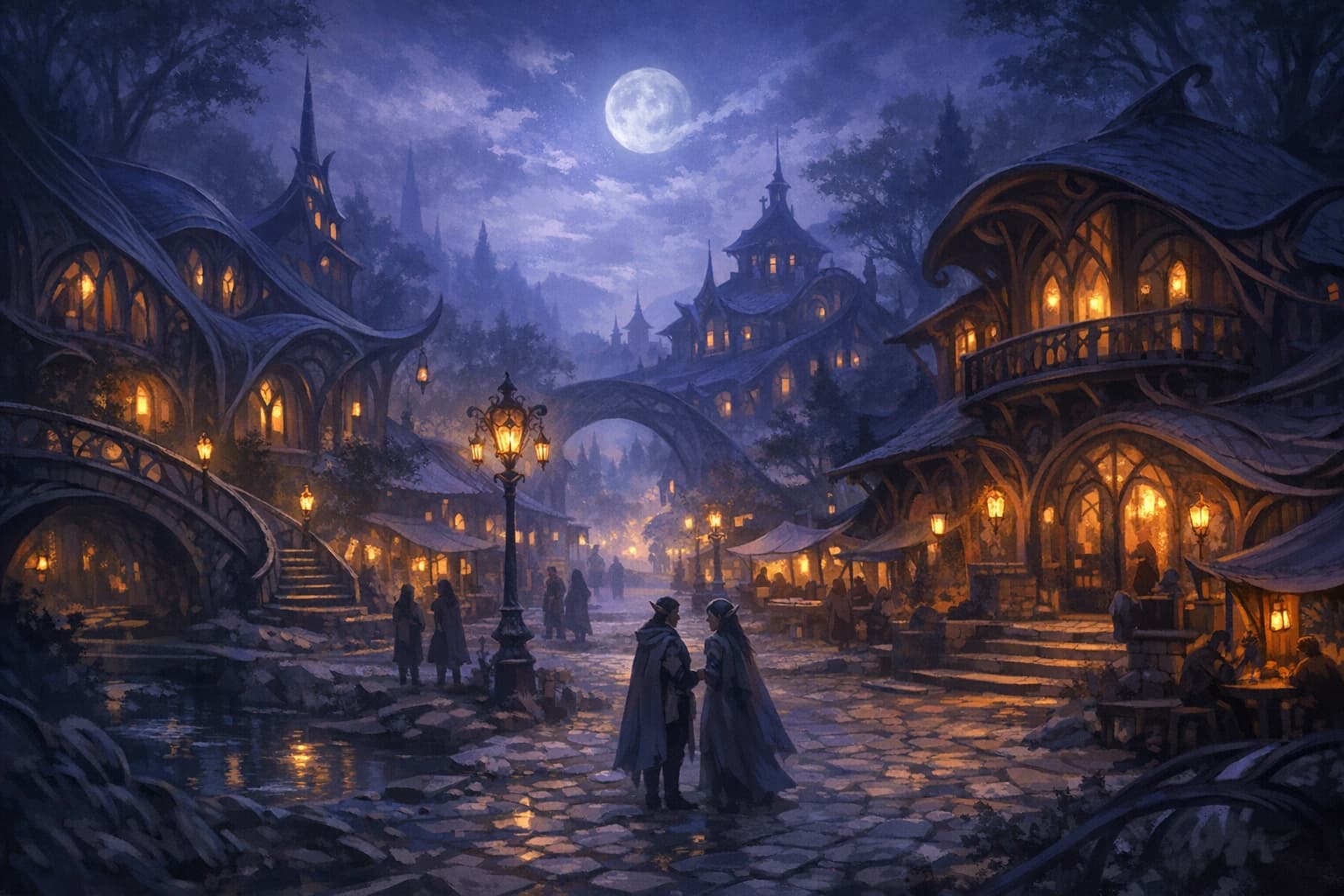
Where do half-elves live? The answer determines a lot about how they develop.
Some half-elves grow up in human communities where they're the only one of their kind. They learn human culture thoroughly but experience it as outsiders who will still be young when everyone they knew is dead. This produces half-elves who know human ways deeply but feel disconnected from them.
Some grow up in elven communities where they're curiosities. They learn elven culture but always as students rather than inheritors. The nuances that full elves absorb unconsciously require deliberate study for half-elves. This produces half-elves who know elven ways intellectually but lack the instinctive understanding that comes from centuries of immersion.
Some grow up in mixed communities where half-elves are common enough to form their own social circles. These half-elves might develop hybrid cultures that don't fully match either parent species. This produces half-elves with strong half-elven identity but potentially weaker connections to either parent culture.
The Original Hybrid
Half-elves originate with Tolkien, and his treatment remains the most philosophically rich. Elrond Half-elven was given a choice: to be counted among Elves or among Men. He chose the Eldar and immortality. His brother Elros chose mortality and became the first King of Númenor. This was not a blended compromise but a forced binary — the exact opposite of how D&D would later treat half-elves as a "best of both worlds" race.
Tolkien's half-elves were rare, exceptional, and cosmically significant. Each one existed because of a union between great houses — Beren and Lúthien, Tuor and Idril, Aragorn and Arwen. The choice of mortality was a theological act with eternal consequences. There was nothing casual about being half-elven in Middle-earth.
D&D stripped the theological weight and kept the concept. The original D&D (1974) mentioned half-elves briefly. AD&D 1st Edition (1978) made them a full player race with a clear mechanical niche: they could multiclass more freely than humans and had limited infravision and secret door detection. The half-elf became the gateway to multiclassing — mechanically defined by flexibility rather than specialization.
This mechanical identity — the jack-of-all-trades, the character who can do a bit of everything — has defined half-elves for fifty years. It is both their strength and the reason some players dismiss them as lacking a clear identity. Where a dwarf is tough and an elf is graceful, a half-elf is... versatile. Versatility is powerful but rarely exciting as a concept.
“Elrond chose the Eldar and immortality. His brother Elros chose mortality. Tolkien's half-elves faced a forced binary — the exact opposite of how D&D treats them as a "best of both worlds" race.”
— On Tolkien's theological half-elves versus D&D's pragmatic ones
Mechanical Identity Crisis
Half-elf mechanics have swung between "multiclassing gateway" and "Charisma generalist" across editions, never quite settling on a single identity. This instability mirrors the thematic uncertainty at the heart of the archetype: if half-elves are defined by being between two things, their mechanics will always struggle to be about one thing.
The 5e half-elf became one of the most powerful racial choices in the game — not because any single feature was overpowered, but because +2 CHA plus two floating +1s made them optimal for paladins, sorcerers, warlocks, and bards simultaneously. The "versatility" theme translated into mechanical dominance through ability score flexibility. In optimization communities, "play a half-elf" became the default advice for most Charisma-based builds.
The 2024 revision addressed this by removing fixed racial ability score bonuses entirely. Every species now uses flexible ability scores, which eliminates the half-elf's statistical advantage. The result is that half-elves lost their strongest mechanical hook without gaining a replacement. Their identity is now almost entirely narrative — which is either liberating or gutting depending on how much you think mechanics should express racial fantasy.
Half-Elf Mechanical Evolution
| Feature | AD&D 1e | 3.5e | 5e (2014) | 2024 |
|---|---|---|---|---|
| Core Identity | Multiclass gateway | Diplomacy/skills | Charisma generalist | Narrative only |
| Ability Scores | No bonuses | +0 (no adjustments) | +2 CHA, +1/+1 flexible | Fully flexible |
| Unique Mechanic | Expanded multiclass options | +2 Diplomacy, +2 Gather Info | Skill Versatility (2 free skills) | Fey Ancestry |
| Power Level | Moderate (niche access) | Moderate (skill focus) | High (optimal for CHA classes) | Average |
| Design Role | The flexible option | The social option | The optimized option | The narrative option |
Half-elves have been mechanically reinvented more than any other core race, reflecting ongoing uncertainty about what "half" should mean in game terms.
- Infravision 60 ft.
- 30% resistance to sleep and charm
- Secret door detection (variable)
- Can multiclass as Fighter/Cleric, Fighter/Thief, Fighter/Magic-User, and more
- Can advance without level limits in some classes
- Languages: Common, Elven, plus alignment language
The 1e half-elf's primary value was multiclass access. They could combine classes that neither humans (single-class only at the time) nor elves (restricted combos) could achieve.
- Darkvision 60 ft.
- Fey Ancestry
- Skill Versatility (two skill proficiencies of choice)
- Extra language
- Flexible +1 to two ability scores of choice
The 5e half-elf was widely considered the strongest racial choice for Charisma builds. +2 CHA plus two floating +1s outperformed dedicated races for paladins, sorcerers, and bards.
The Cultural Conversation
Half-elves sit at the center of the RPG community's evolving conversation about "half" races and what biological determinism means in fantasy worldbuilding. The 2024 D&D revision rebranded half-elves and half-orcs under broader species categories, reflecting a design philosophy that moves away from treating hybrid heritage as a distinct racial identity.
The sensitivity concern is real: "half" races can imply that mixed heritage is inherently abnormal, that it requires a separate category rather than being a natural variation. The counterargument is that half-elves' unique identity — the lifespan displacement, the cultural in-between-ness — creates storytelling opportunities that disappear when they're folded into "elf" or "human."
The community response has been mixed. Some players welcomed the change as overdue, arguing that half-elves were always defined by absence (half of this, half of that) rather than presence. Others saw it as erasing a beloved archetype that resonated precisely because it explored themes of belonging, identity, and the space between cultures.
For worldbuilders, the practical question remains: how do you handle the children of elves and humans in your setting? The answer shapes fundamental aspects of your world. If half-elves exist as a recognized group, they need communities, cultures, and social positions. If they don't exist as a category, you need to explain why — are such unions impossible, rare, or simply unremarkable? Each answer creates different stories.
Across Franchises
The half-elf concept varies dramatically across franchises — from D&D's mechanical race to settings where the concept barely exists. How each franchise handles mixed heritage reveals its underlying assumptions about species, biology, and social identity.
Half-Elf Archetype Across Franchises
| Franchise | Name | Defining Trait | Key Distinction |
|---|---|---|---|
| D&D (5e) | Half-Elf | Charisma bonus, skill versatility | Mechanically powerful; iconic as "the flexible choice" |
| D&D (2024) | Elf (with human heritage) | No separate race; narrative only | Folded into elf category; cultural conversation ongoing |
| Tolkien | Half-elven (Peredhil) | Choice between mortality and immortality | Cosmic significance; each one is world-historically important |
| Dragon Age | City Elf / Human heritage | No separate category; elven blood is recessive | Children of elf-human unions are fully human; erasure rather than blending |
| Elder Scrolls | Breton | Separate race descended from ancient human-elf unions | Thousands of years removed; no longer "half" anything |
| Pathfinder 2e | Half-Elf (human heritage) | Human with Elf ancestry feat | Mechanically attached to the human base; elf is the modifier |
Dragon Age's approach — where elf-human children are simply human — is the most radical departure. It treats elven heritage as a recessive trait that disappears rather than blending, raising questions about cultural erasure that D&D has not engaged with.
Related
Other Elven Kindred
 01
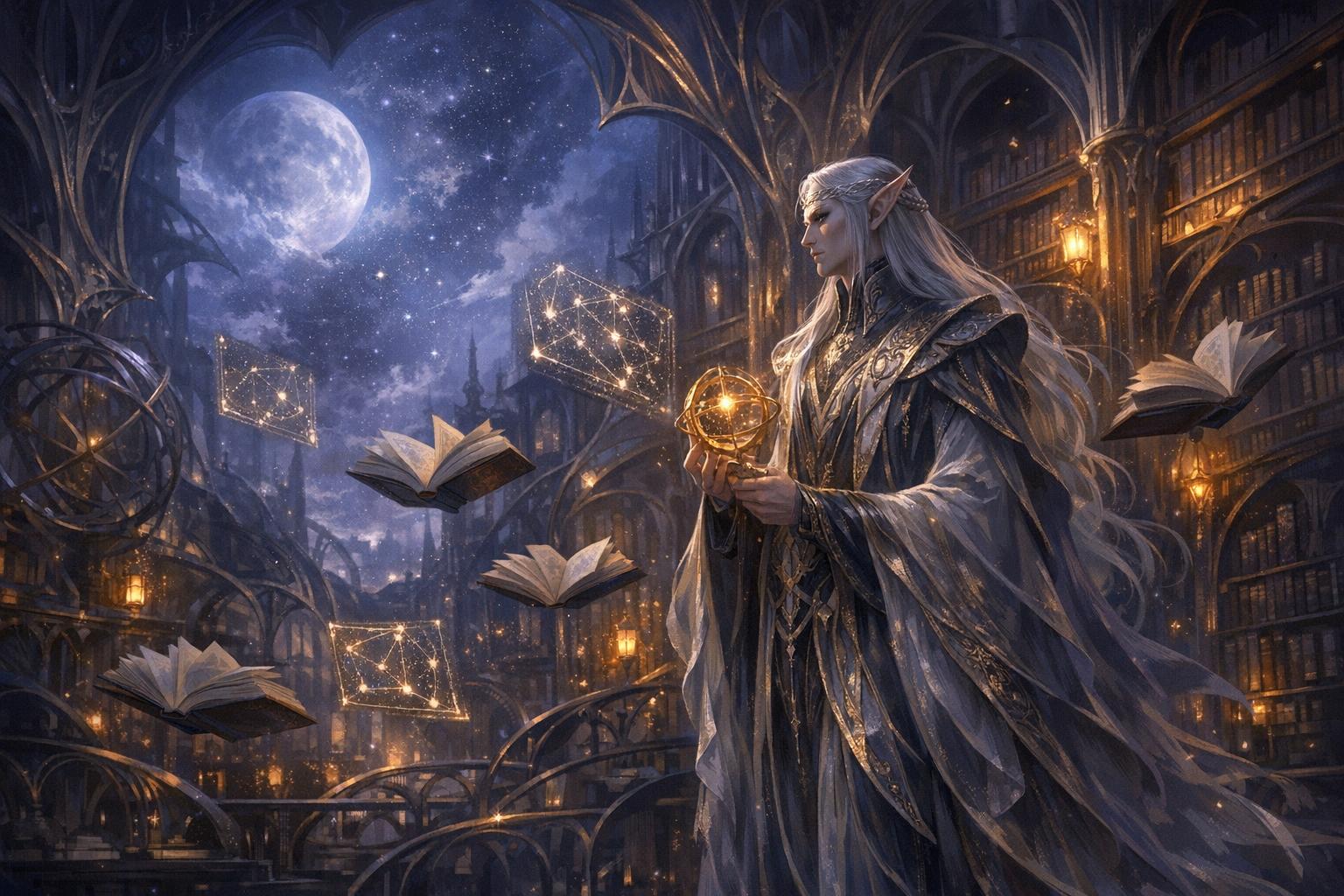
High Elves
Scholars and spire-builders whose institutions outlast empires and whose magic spans mi...
Read More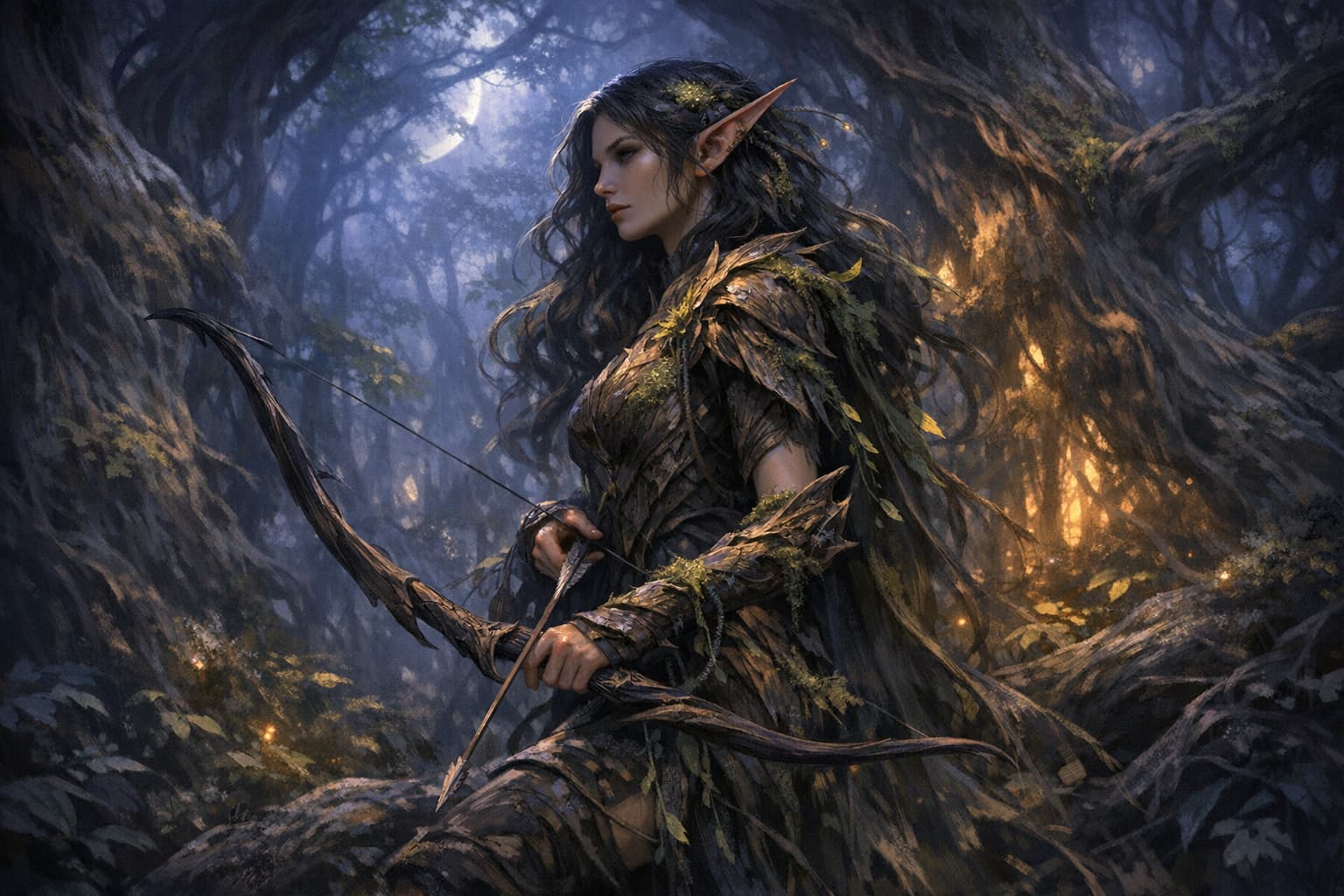 02
Wood Elves
Forest stewards who measure time in growth rings, whose patience runs as deep as ancien...
Read More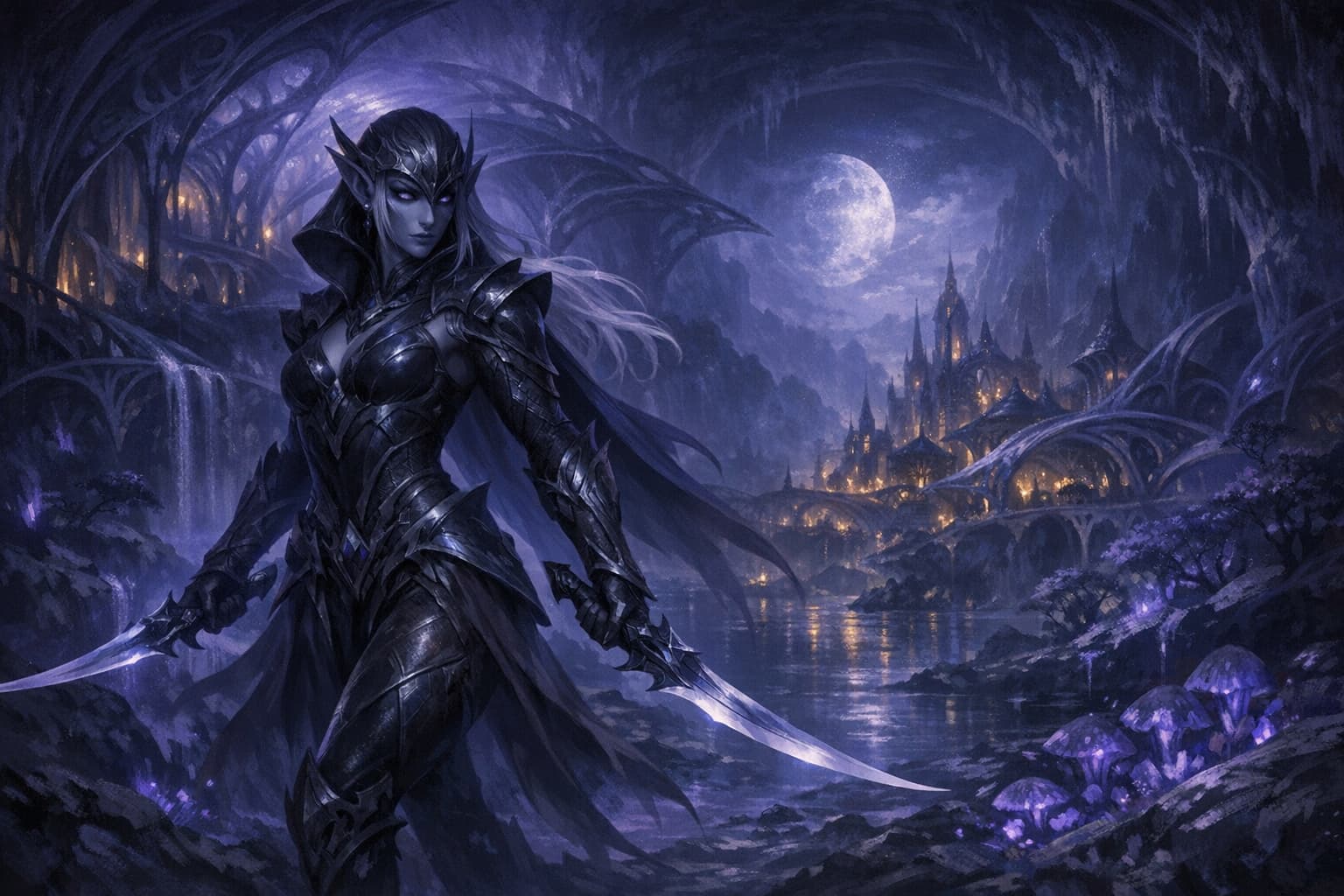 03
Dark Elves
Shadow-dwelling survivors whose ruthlessness was forged by scarcity and whose beauty in...
Read More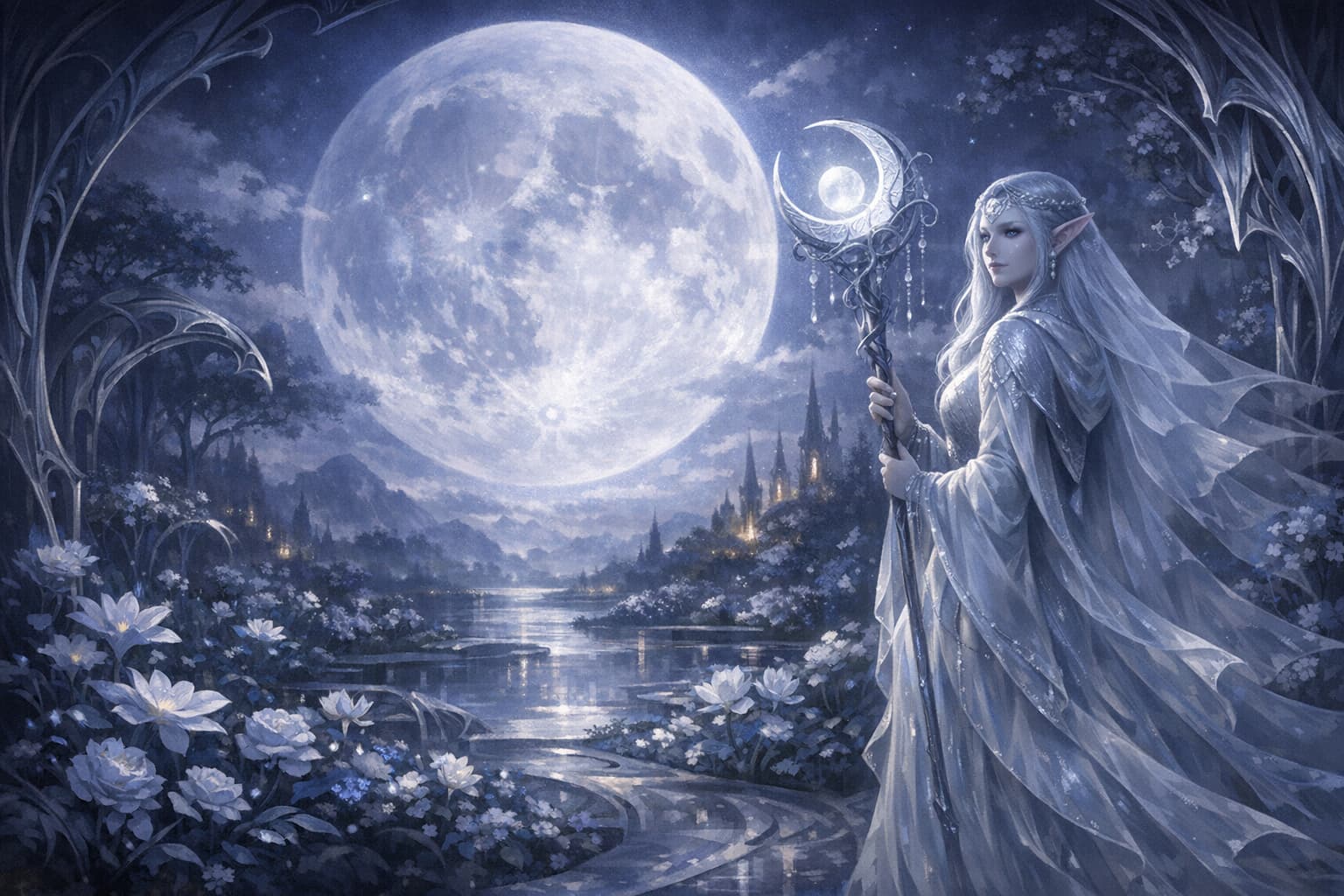 04
Moon Elves
Nocturnal mystics whose lives cycle with the moon, finding power in silver light and pa...
Read MoreFAQ
Common Questions
Define a clear origin for your half-elf: they might be the result of a long-ago union, a magic-bred lineage, or a mixed-culture upbringing. Establish physical traits and a societal perception that reflect this hybridity. When building stats, consider moderate bonuses in both finesse and charisma, plus a few situational drawbacks (e.g., intolerance from both sides, or a sense of not fully belonging). Use these contrasts to guide choices in abilities, gear, and role in the party.
Create hooks that leverage dual heritage: a lost elven mentor, a human city oath, or a secret elven homeland the character was raised away from. Tie these to specific plot threads: a legacy artifact, a forbidden romance, or a divided family. Ensure the hook offers personal stakes (identity, belonging, or duty) and easy hooks for party involvement (a shared problem it touches on). This gives players immediate motivation to engage.
Half-elves often feel pulled between worlds—courteous and adaptable, but secretly wary of belonging anywhere fully. Roleplay with charm and diplomacy, tempered by flashbacks or moments of fatigue when expectations clash. Use a tempering voice: quick to laugh in social situations, yet contemplative when faced with choices that affect both human and elven communities. Let these tensions shape decisions and reactions.
Give the NPC a distinct motive tied to their mixed heritage: conflicted loyalty between human cities and elven enclaves, a quest to prove themselves, or a skill set unique to their lineage (dual-language fluency, dual training in both archery and diplomacy). Their goals should intersect with the party's in a way that creates tangible consequences. Give them a memorable weakness, too, such as a fear of losing their dual identity in combat.