
Void Elves
Transformed by the spaces between realities, wielding entropy's power at the cost of what they were
What Is the Void?
Before you can design void elves, you need to know what the void is. "The opposite of everything" is too vague. "Dark energy from between the stars" is aesthetic without substance. You need something specific enough to generate culture, psychology, and story hooks.
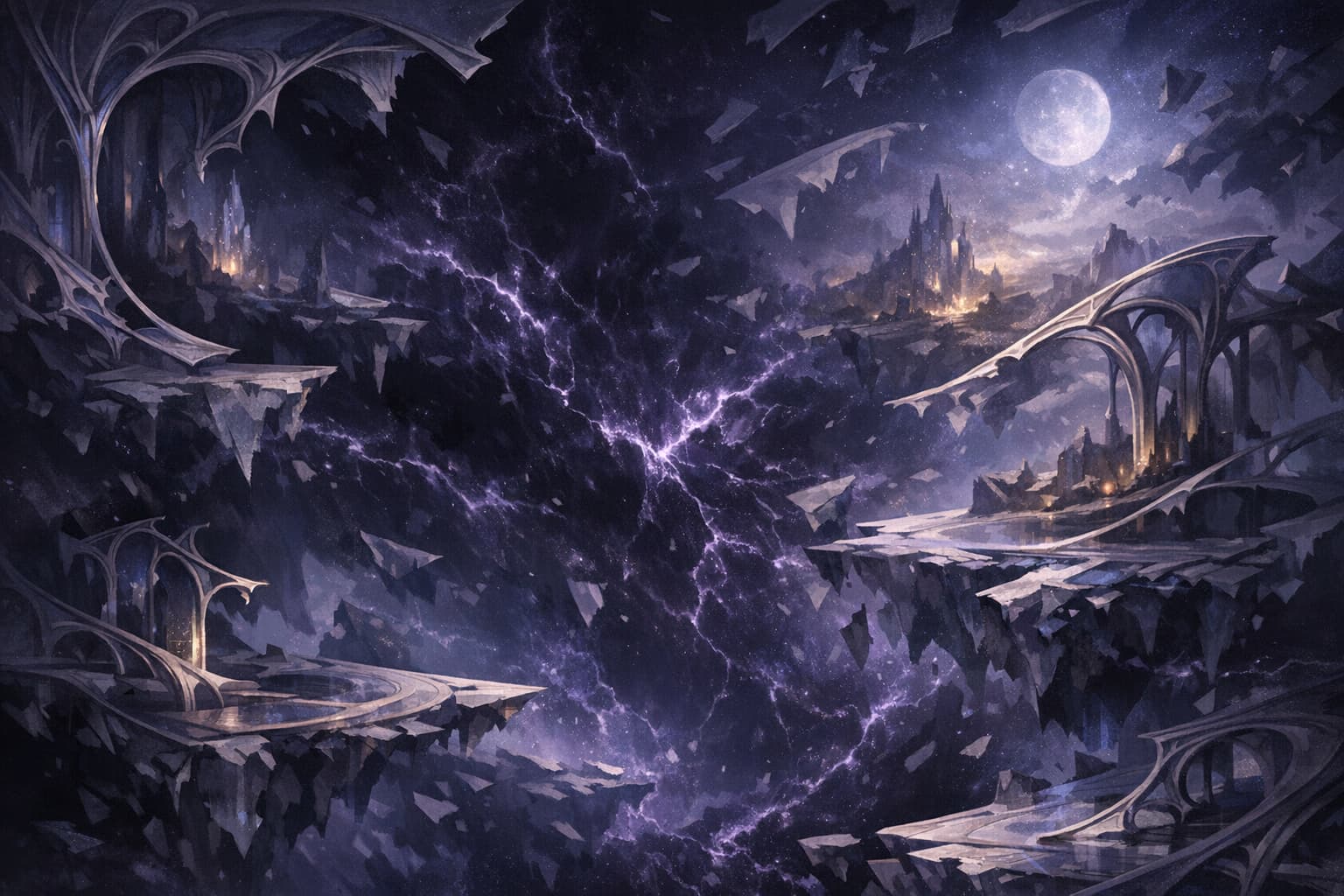
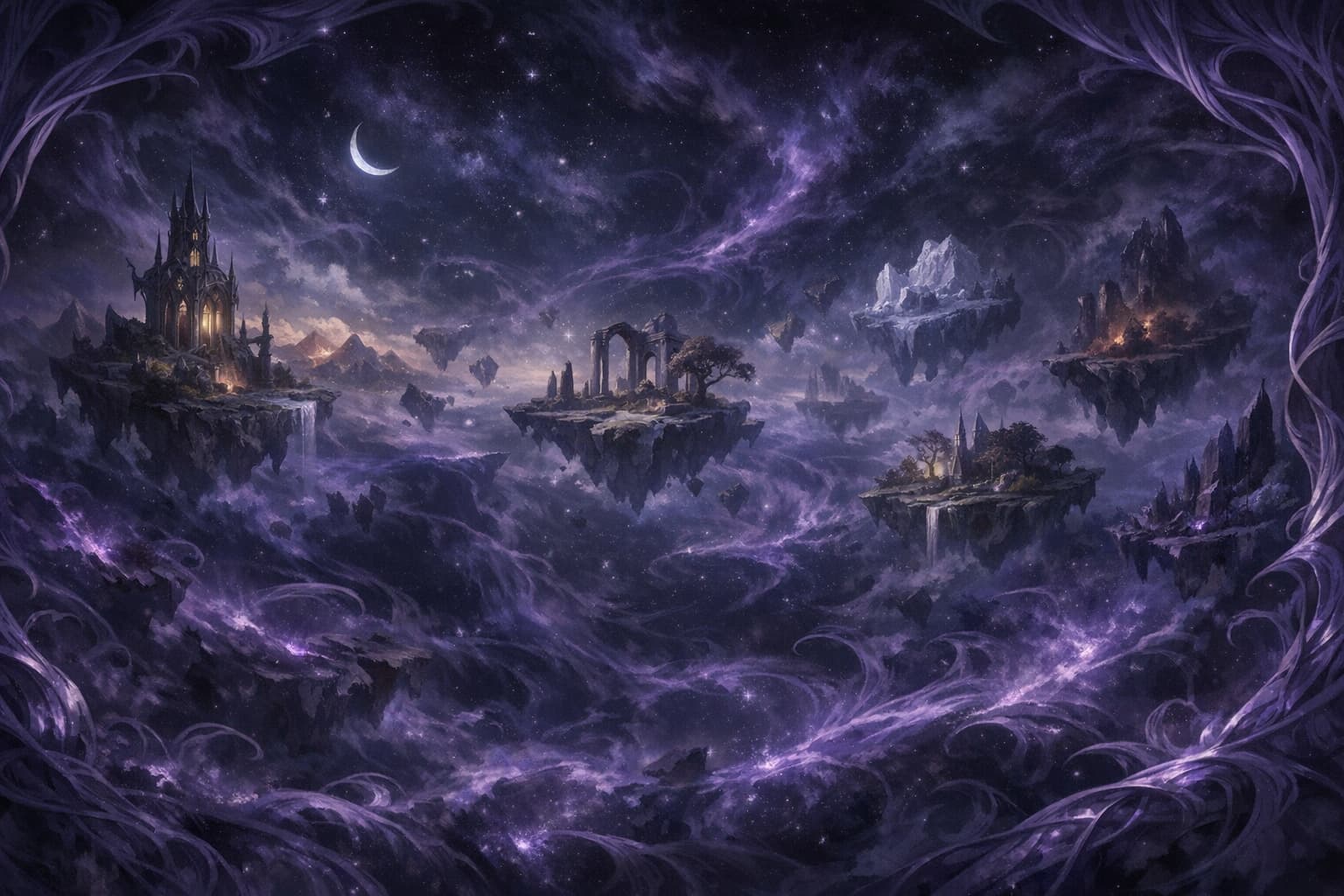
One approach: the void is the space between realities. Not another plane exactly, but the gaps that separate planes. Void elves learned to access these gaps and draw power from them. This makes them different from astral elves who occupy a positive space. Void elves occupy negative space, the absence that defines presence.
Another approach: the void is entropy given form. Not destruction exactly, but the tendency of all things toward dissolution. Void elves channel this tendency, which is why their magic unmakes rather than creates. This connects void elves to fundamental cosmic principles rather than just scary aesthetics.
A third approach: the void is a hostile dimension that corrupts everything it touches. Void elves are people who touched it and survived, but the touch left marks. They're contaminated in ways that can't be fully reversed, which creates their social position and psychological burden.
Transformation, Not Birth
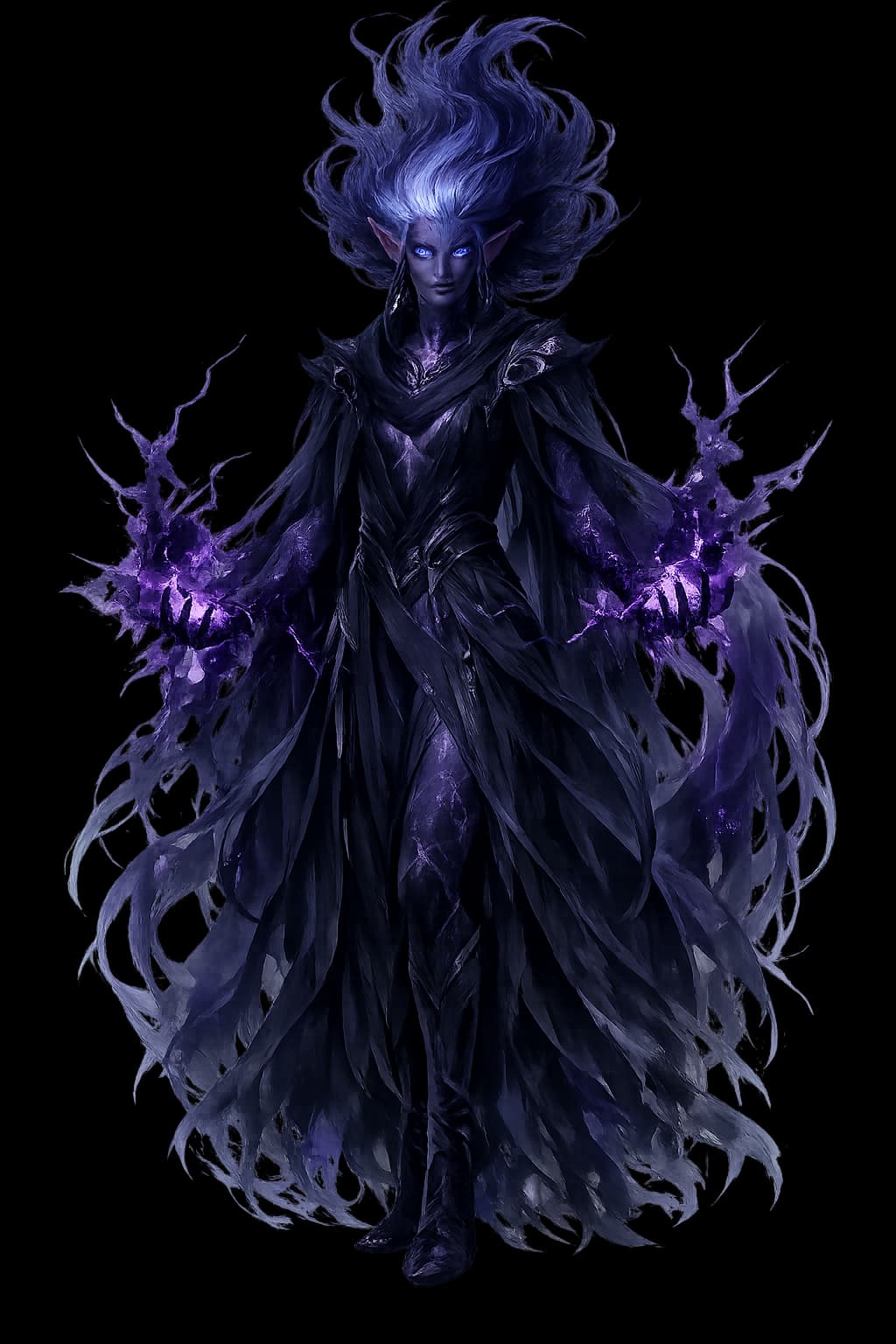
Void elves work best as a transformed state rather than a natural subspecies. They weren't born void elves. They became void elves through exposure to forces that changed them permanently. This distinguishes them from most other elven subspecies who are simply born into their condition.
This creates specific psychological conditions. Void elves are people who remember being something else. They can compare their current state to their previous state. They know what they lost. They might also know what they gained, but the loss is always present as context.
The transformation also creates social dynamics. Void elves weren't always void elves, which means other elves knew them before. Family members, friends, colleagues who now relate to someone fundamentally different than the person they knew. These relationships carry weight that born subspecies don't have.
The transformation should be significant. Not just learning void magic but being fundamentally altered by it. Their bodies changed. Their minds changed. Their relationship to reality changed. They can't go back to what they were before, even if they wanted to.
The Corruption Question
Void elves inevitably raise questions about corruption. Is void exposure corruption in the moral sense? Does touching the void make you evil? Does it compromise your judgment? Does it create urges or compulsions that void elves have to resist?
The interesting answer is usually "it's complicated." Void exposure changes people. Those changes might include psychological effects that feel like corruption from outside. Void elves might hear whispers, see things others don't, or feel drawn toward void-related phenomena. Whether that's corruption or just difference depends on perspective.
What makes void elves interesting is the ambiguity. If void exposure simply makes you evil, void elves are just villains with pointy ears. If void exposure has no negative effects, the transformation is meaningless drama. The interesting space is where void elves struggle with changes that might be corruption or might be evolution, and where they're genuinely uncertain which.
This uncertainty should create internal conflict. Void elves who worry about their own judgment. Void elves who wonder if their desires are authentically theirs or void-influenced. Void elves who can't tell whether they're becoming something better or something worse. This internal conflict is more interesting than simple good-versus-evil struggles.
Power and Its Price
Void magic should be powerful. If void exposure is all cost and no benefit, void elves are just victims. They need to have gained something that makes their transformation worth the price, at least for some of them.
But the power should come with genuine costs. Not just aesthetic costs like "you look spooky now" but functional costs that affect void elf lives. The void might demand ongoing attention. Using void powers might create cumulative effects. The transformation might be progressive rather than stable, meaning void elves are always changing, always uncertain where they'll end up.
The costs create the dramatic tension that makes void elves interesting. They can do things others can't, but they pay prices others don't have to pay. Every use of void power is a calculation about whether the benefit is worth the cost. That calculation drives character decisions and creates story opportunities.
Void magic might do things other magic can't. Access spaces that don't otherwise exist. Perceive realities that remain hidden to others. Manipulate probabilities or cause effects without traceable causes. The void is absence, and working with absence creates capabilities that presence-based magic lacks.
Society in Shadow
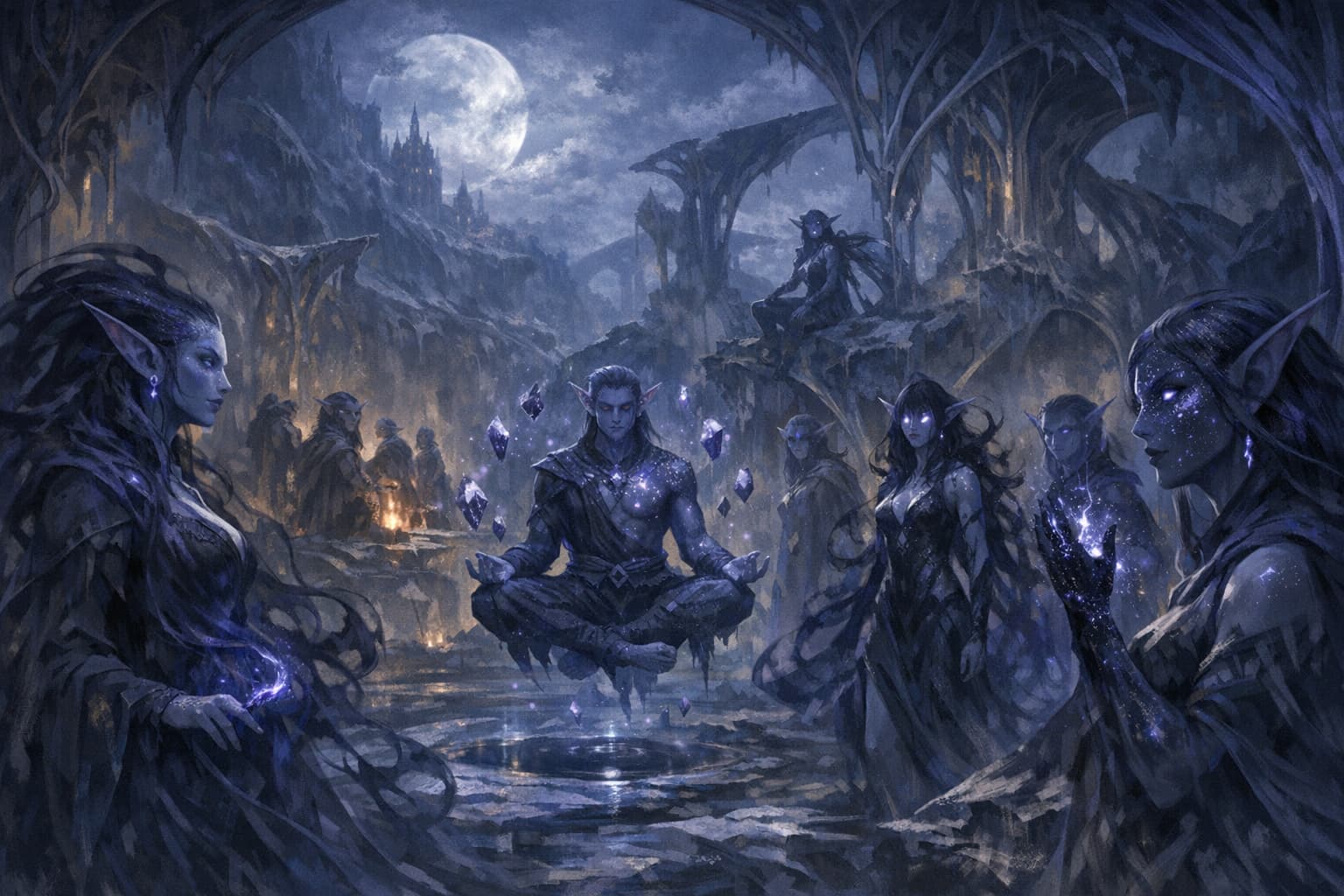
Void elf society, to the extent it exists, should reflect their transformed state. They're people united by shared experience rather than shared heritage. They didn't grow up together. They became void elves from different origins and came together afterward.
This creates a specific social dynamic. Void elf communities are communities of survivors or converts rather than communities of kinship. The bonds are based on shared condition rather than shared history. Someone who became a void elf last year belongs as fully as someone who transformed decades ago.
The shared transformation creates understanding that outsiders don't have. Void elves know what it's like to hear the whispers, to see the gaps in reality, to wonder if they're losing themselves. This shared experience creates solidarity even between void elves who have nothing else in common.
Void elf society might also be defensive. If other species view them as corrupted or dangerous, void elves need each other for protection as well as understanding. They form communities because isolation is dangerous for people that others fear and reject.
Relationships with Other Elves
Void elves typically have complicated relationships with whatever elven subspecies they came from. They're not what they were, but they remember being it. Former high elves or former blood elves who now exist in a condition their former communities reject or fear.
The original subspecies often views void elves as warnings. Look what happens when you go too far with forbidden magic. Look what you become when you cross lines that shouldn't be crossed. Void elves are cautionary tales to their former kin, and that's a painful role to occupy.
Individual relationships across the transformation are particularly charged. The void elf who returns to visit family and sees fear in their eyes. The void elf whose friends treat them like a stranger wearing a familiar face. The void elf whose community exiled them not for anything they did but for what they became.
These relationships create story opportunities. Void elf characters often have unfinished business with their former lives. People they want to reconnect with, wrongs they want to right, communities they want to convince that they're not monsters. The transformation didn't erase their history. It complicated it.
Battle for Azeroth's Children
Void elves are World of Warcraft's youngest elven race, introduced in Battle for Azeroth (2018) as an Allied Race for the Alliance faction. Their origin is specific: a group of blood elf scholars led by Magister Umbric studied the Void against the Sunstrider dynasty's prohibitions. When they were exiled from Silvermoon for their research, they traveled to Telogrus Rift — a shattered fragment of a world destroyed by the Void — where they were nearly transformed into Void creatures. Alleria Windrunner, who had herself been changed by Void exposure during the Argus campaign, intervened and taught them to control the transformation rather than be consumed by it.
The character of Alleria Windrunner is essential context. She was a high elf ranger from Warcraft II (1995) who disappeared into the Twisting Nether for decades. Her return in Legion (2017) revealed that she had been exposed to Void energy and learned to wield it without losing herself. Alleria became the template for void elf identity: someone who carries a dangerous power and must constantly resist its influence. Her story also provided the political link — as a hero of the Alliance, she gave void elves a faction home despite their blood elf origins.
The Allied Race system required players to complete a questline to unlock void elves, which meant engaging with their origin story directly. This design choice ensured that every void elf player understood the transformation narrative. The unlock questline depicted the moment of transformation, Alleria's intervention, and the choice to embrace Void power at the cost of permanent exile from blood elf society.
Reception was mixed for reasons beyond lore. Many players felt void elves were a hasty addition — created to give the Alliance a "blood elf equivalent" after years of player requests for high elves. The customization options in Shadowlands (2020) that added natural skin tones to void elves (allowing them to look like unconverted high elves) confirmed this interpretation for many in the community. Void elves became, functionally, the Alliance's answer to the high elf request.
“Alleria Windrunner became the template for void elf identity: someone who carries a dangerous power and must constantly resist its influence. She was changed but not consumed — and she taught others to do the same.”
— On the Alleria Windrunner template
The Void in Fantasy RPGs
Void elves translate into tabletop RPGs through the lens of shadow magic, warlock pacts, and aberration lore — D&D's existing mechanical expressions of "power from the spaces between." The conversion isn't one-to-one, but the thematic ingredients are all present in 5e's existing framework.
The Shadow Magic sorcerer origin (Xanathar's Guide, 2017) captures the void elf's relationship with darkness: innate power drawn from a dangerous source, with mechanical features that reflect the cost (Strength of the Grave, Hound of Ill Omen). A shadow sorcerer elf who was transformed by their power source rather than born with it maps directly to the void elf narrative.
The Great Old One warlock patron offers another angle. Void elves hear whispers, see things others can't, and struggle with the question of whether their perceptions are genuine or delusions. The GOO patron's telepathic features and madness-adjacent themes capture this psychological burden. An elf who made contact with something from the Far Realm and was changed by the experience is mechanically and narratively close to a void elf.
The "transformed elf" archetype — an elf who was altered by contact with an alien power — has broader applications. D&D's Shadar-kai (elves transformed by the Shadowfell), the Eladrin (elves shaped by the Feywild), and homebrew void elves all explore the same question: what happens when an elf touches a plane of existence that rewrites their nature? Each answer produces a different kind of elf, but the underlying structure is identical.
Across Franchises
The void elf archetype — the elf transformed by contact with entropic, shadow, or extradimensional forces — appears across franchises under different names. The pattern is consistent: take an elf, expose them to something that fundamentally alters their nature, and explore whether the transformation is corruption, evolution, or something that resists either label.
Void-Touched Elf Across Franchises
| Franchise | Name | Transformation Source | Key Distinction |
|---|---|---|---|
| World of Warcraft | Void Elf (Ren'dorei) | Direct Void exposure at Telogrus Rift | The template; transformation as political exile and power source |
| D&D | Shadar-kai | Centuries in the Shadowfell under the Raven Queen | Official D&D "transformed elf"; emotional numbness rather than whispers |
| Warhammer 40K | Drukhari (Dark Eldar) | Soul-draining existence in Commorragh | Corruption as lifestyle; no redemption arc offered or desired |
| Path of Exile | Shadow archetype / Void themes | Entropic corruption, Wraeclast's influence | Mechanical rather than narrative; void as damage type and gameplay system |
| D&D | Hexblood / Dhampir (Gothic Lineages) | Supernatural transformation (various) | Same "transformed being" framework applied to non-elf races; parallel design space |
| WoW (related) | Nightborne (Shal'dorei) | Nightwell arcane isolation | Transformation through isolation rather than Void; addiction rather than whispers |
The D&D Shadar-kai are the closest official analog to void elves — elves whose nature was rewritten by planar exposure. The difference is emotional: Shadar-kai feel nothing, void elves feel too much.
Subtypes
Other Elven Kindred
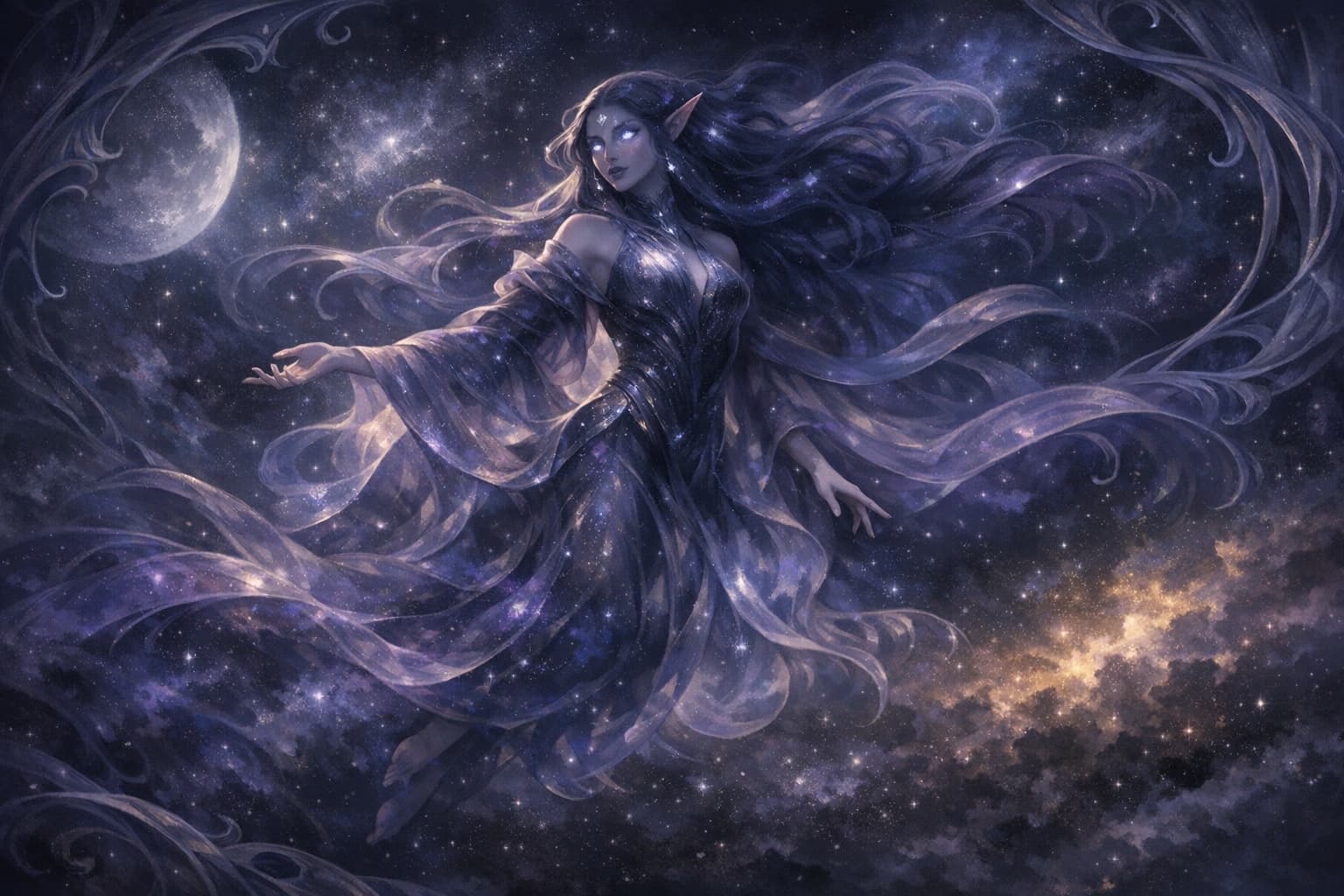 01
Astral Elves
Cosmic wanderers who perceive reality from between the stars, where time bends and know...
Read More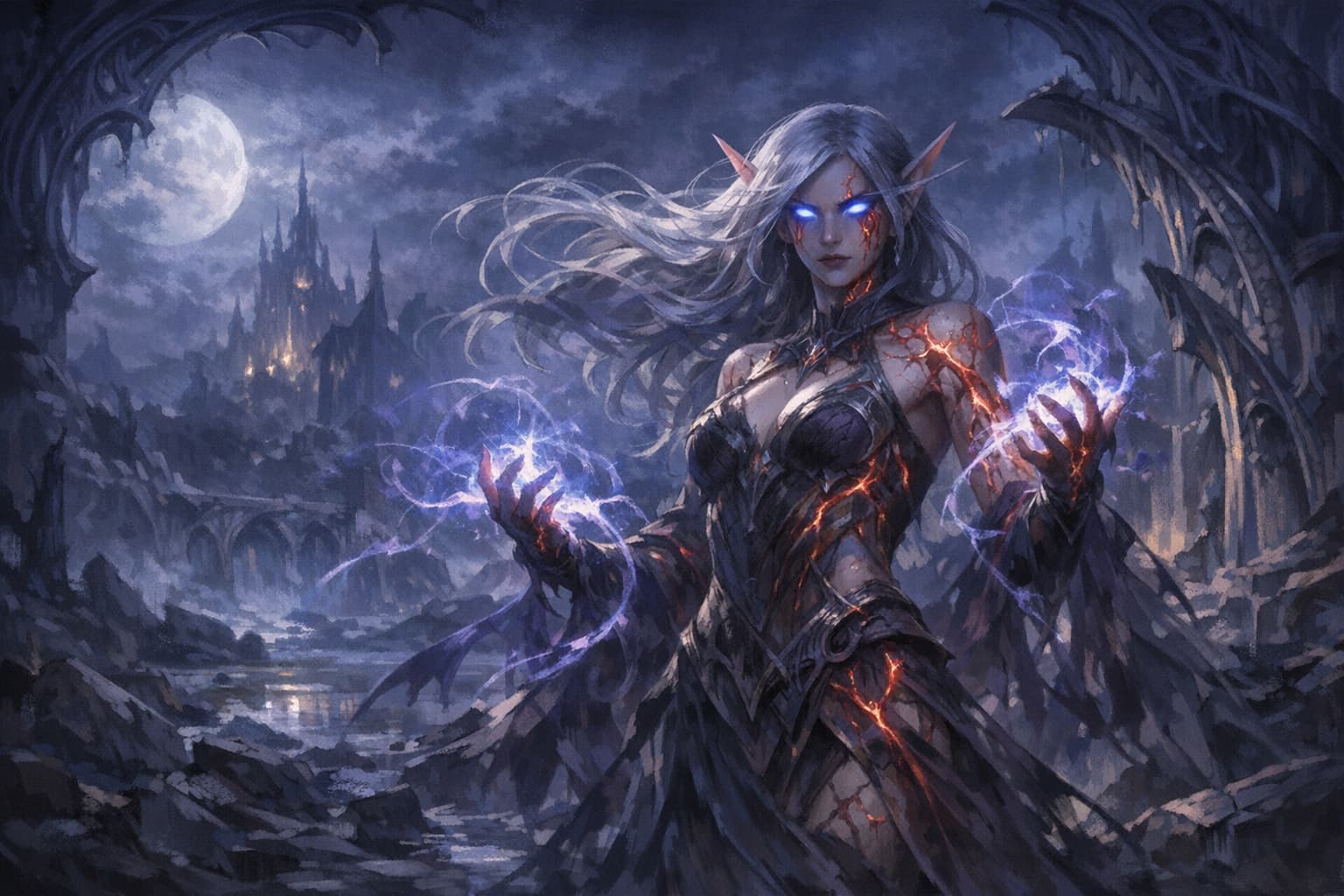 02
Blood Elves
Survivors of catastrophe whose addiction to power is both their salvation and their curse
Read More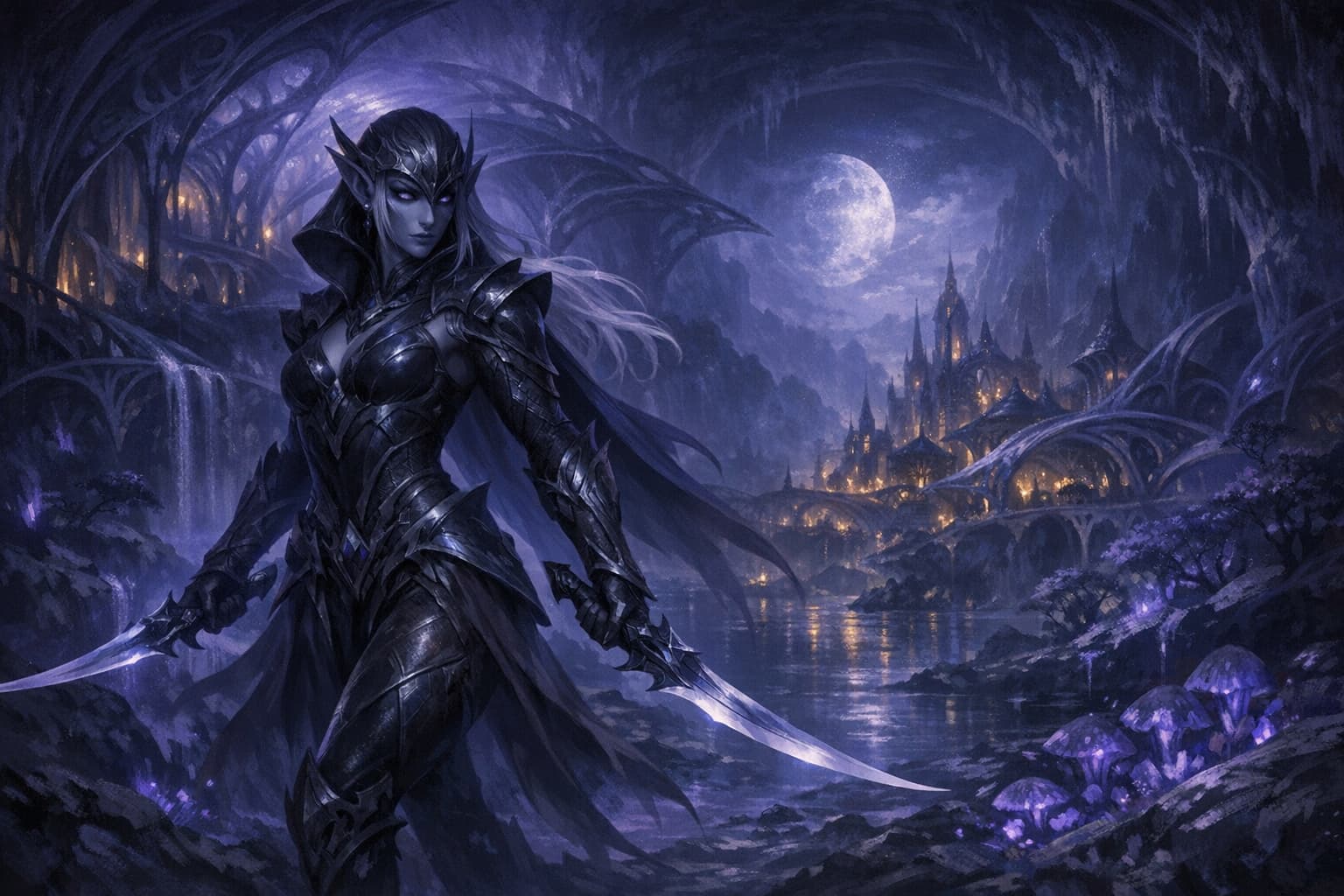 03
Dark Elves
Shadow-dwelling survivors whose ruthlessness was forged by scarcity and whose beauty in...
Read More 04
Night Elves
Ancient guardians of dark places whose vigilance spans millennia and whose roots run de...
Read MoreFAQ
Common Questions
Define a clear mechanical niche for void magic (e.g., reactive defense, entropy manipulation, subtle curses) and tier its power to fit character level. Give Void Elves a unique spell-like ability that scales with XP but avoid raw damage spikes. Pair it with drawbacks (muttering echoes, entropy backlash) to ensure balance. When designing, outline three signature moments per tier and map them to roleplay hooks rather than constant throughput.
Use a modular backstory: origin (born amid a void rift, exiled, or trained by cryptic scholars), a formative event (a failed ritual, a personal loss), and a cultural memory (silenced choir, entropy rites). Avoid one-note origin stories; provide two or three plausible paths (accursed lineage, scholarly awakening, or cosmic accident) that a player can personalize. Include a short cultural memory that explains their community's etiquette and fears.
Give them a core trait (calm, calculating, or mercurial) and two secondary quirks (counts seconds during conversations, hears whispers of entropy). Use entropy magic as a cue for emotional state—when excited, their power flares; when unsettled, it recoils. Encourage roleplay prompts: choose between preserving a friend or bending entropy for a greater goal. Reward cooperation with moments of vulnerability and shared moments when the party neutralizes entropy threats together.
Create a cultural trailed landscape: a Void Choir as a societal memory, entropy ceremonies during celestial events, and a tradition of hush-keeping where words can fray reality. Distinguish aesthetics (starlit tattoos, obsidian jewelry, whispering fabrics) and etiquette (silence before action, measuring outcomes before speaking). Provide 2-3 cultural rites that players can reference in scenes, plus a symbolic artifact unique to each character (an amulet, a ritual blade, or a shard of void glass).